
Wearing one of my other hats as vice-chair of IVBA, we held our annual conference & AGM recently.
We were lucky enough to have Dr. Gary Landsberg speak about reducing stress for pets during vet visits.
His promotion of the generous and extensive use of food during veterinary interactions struck me, and inspired.
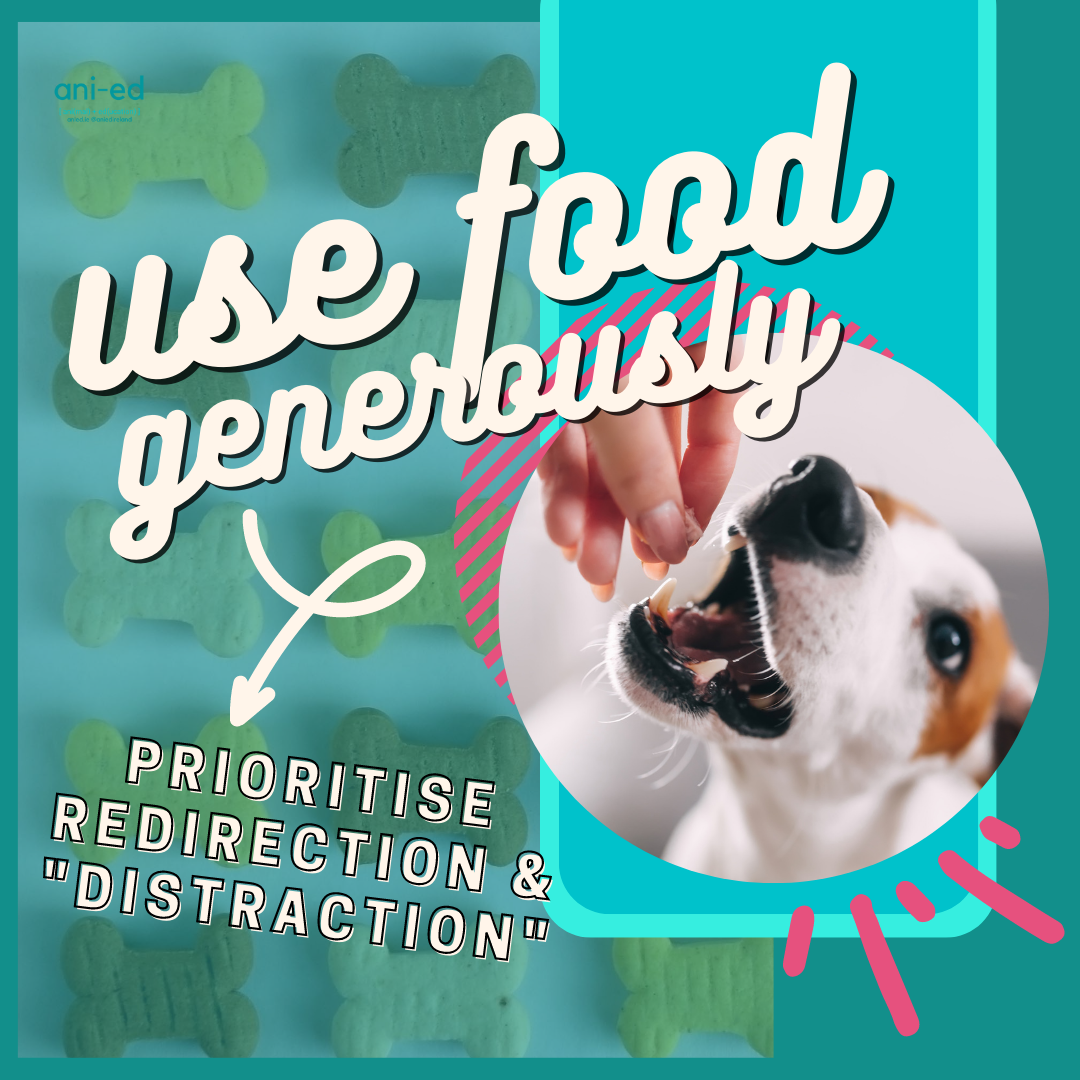
Using food has always been controversial in dog training, with traditional beliefs dictating that dogs should do our stuff out of their love for us  . I am a proud user of food, as reinforcers and otherwise, in a lot of my teaching and interactions with others. But sometimes, it can feel more effective to downplay food use, at least a little, in some contexts when attempting to get our message across.
Food is a tool, and like any other tool its use is sometimes very effective and necessary, and at other times may contribute to issues or be applied improperly.
Dr. Landsberg unashamedly recommended the use of food across every stage of the dog’s vet visit, and before and after.
Can you count how many food rewards are given to this dog during his blood draw procedure?
While there might be some classical/respondent benefits, as in the dog associates the veterinary context with yummies, the real benefits, in the examples we discussed during his talk, came from redirecting the dog’s attention away from procedures.
Essentially, procedures, interactions, and their surroundings, pale into the background as the dog is “distracted” with yummy foods and absorbed in eating behaviours.
Here’s an example with a then foster dog, having her ears cleaned and treated:
Can’t Eat/Won’t Eat
Nil-by-mouth:
In some situations, a dog can’t be given food due to preparations for anaesthesia, for example.
Dr. Landsberg argues that more recent evidence supports shorter fasting periods and that food, carefully introduced and used, may offset stress that could be even more damaging in terms of sedation and anaesthetic. The small risks may be outweighed by the careful use of food, particularly lappable foods which pass through the body more rapidly (Westlund 2015).
Stress can inhibit appetite:
For many dogs, the vet-experience is sufficiently stressful that they do not want to eat, even the tastiest treats.
Where a dog can’t eat due to stress or illness and nausea, employ other tools to prevent them experiencing any further stress associated with the veterinary context.
Food, glorious food
This might include anxiolytic medication, sedation, environmental or olfactory redirection, and time. Give them more time.
Simultaneous conditioning may lead to overshadowing, so while the dog isn’t learning new skills, we are prioritising maintaining their comfort. This may lead to improved comfort for subsequent visits and help facilitate more efficient learning of new skills (Riemer et al, 2021).
A sufficiently and significantly aversive experience can also impact other stimuli present. Including food. Feeling scared and the veterinary context may ‘poison’ the presence of food (Murrey 2007). Often when dogs are this distressed they may not eat but care should be taken in introducing food, that’s refused, and that food being associated with this stressful context.
Use high value foods, but not completely novel foods. Make food available rather than attempting to lure directly or encourage them to eat.
Fun with Food at every stage

Prepare for vet visits not just so you are ready to go, but also so that you have a plan in place. Run through each step of the entire process and prepare in advance for what you’ll need and your approaches, including your Plan A, Plan B, Plan C and so on.
For more see Vet Ready!
Practice run throughs with Happy Visits so both you and your dog are well-rehearsed at movements in and around the veterinary environment.
Use food scatters & breadcrumb trails, taught targeting behaviours and even toys when moving into and through, including on and off the weighing scales.
Food lapping is a nice way of keeping your dog busy, and possibly calmer, during examinations, diagnostics and procedures.
By practicing clear communication, your dog learns they are being listened to. When your dog moves away from lapping or snuffling, stop. They learn that stopping with eating leads to a pause in the proceedings and they don’t need to struggle or aggress to take a break.
Have some play and fun at the end too. This allows for releasing some tension and helps form positive last memories of their time there.
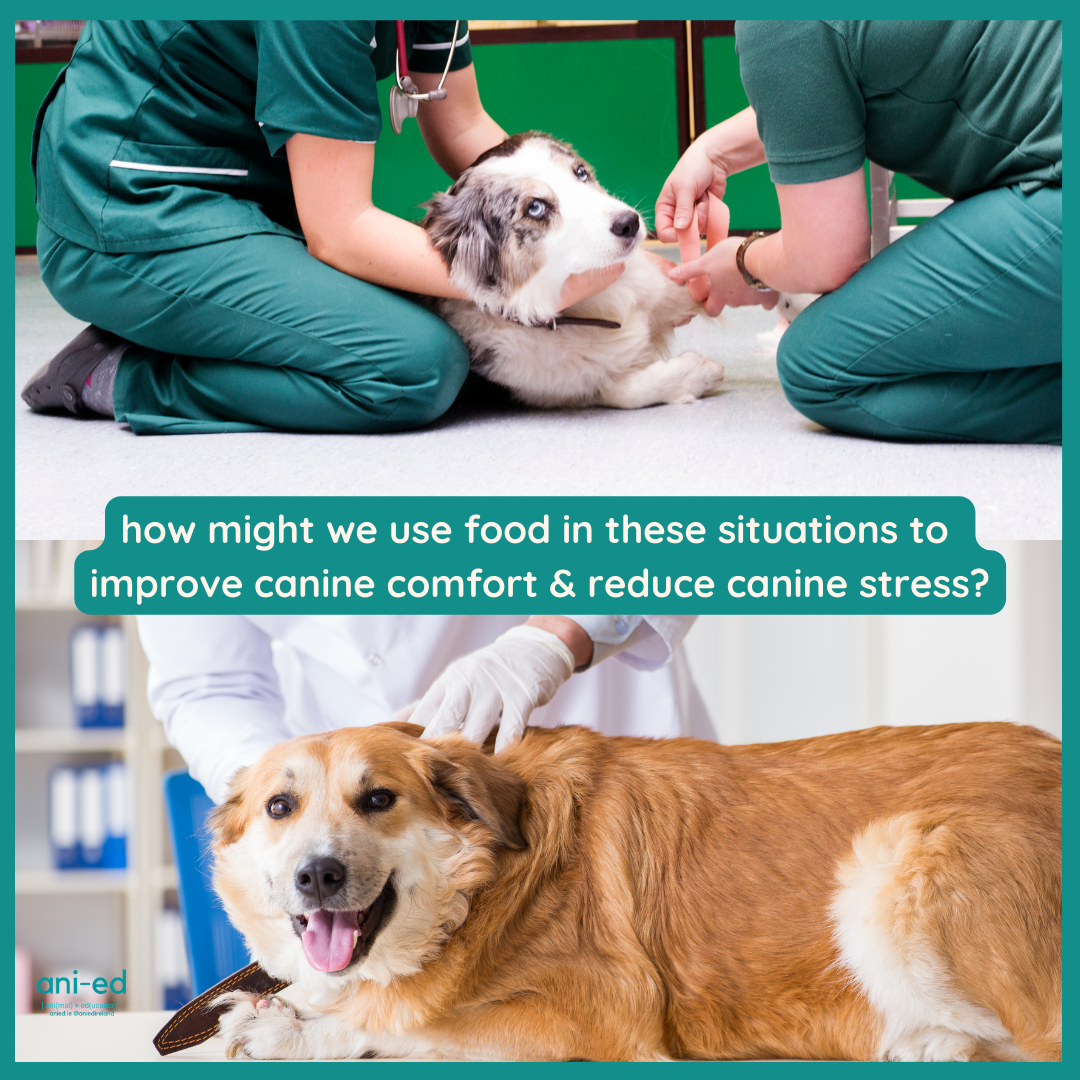
There are lots of caveats to all of this because of the individual nature of behaviour, and these contexts. But using food appropriately should be at the top of our list of tools with the primary goal of redirecting the dog’s focus to make the veterinary experience just not such a big deal.
 AniEd Ireland