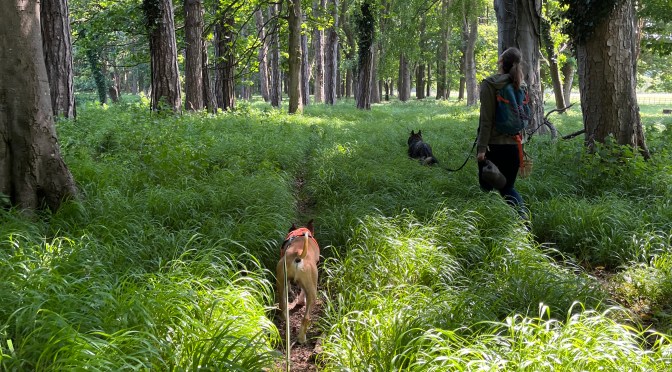
I don’t really follow other trainers online so I’m often out of the loop when it comes to the latest and greatest in trainer-town.
As a result, I was recently called out on the use of the term “neutral” to describe dog-dog interactions, and in its use to describe ‘neutral dog walks’. I had no idea the term neutral could be so contentious…
Trainer Terminology
This illustrates a real challenge in our industry, that is, terminology.
Because professionals enter our industry from diverse backgrounds and we lack standardised & validated terminology, trainers can make up names for approaches to teaching dogs. That means terms may be poorly defined and applied less accurately.
I am clearly guilty of this too!
My neutrality faux pas
Upon being made aware of my possibly unsuitable use of the term, I did a little digging to reveal the errors of my ways.
Apparently “neutrality walks” or some version of that concept, have become quite a popular tool among UK trainers, and possibly elsewhere too. What I found does not represent how we do things at all and certainly doesn’t portray what I would consider neutral social responses from the dogs involved.
I don’t really like to discuss what others might do in the name of training, and instead, prefer to discuss what we do.
But for clarity, these “neutrality walks” often appear to consist of groups of dogs, with their humans, being walked in close proximity to one another, on pretty tight leads, with many showing lowered heads, appearing check out, with tense movement.
That doesn’t seem like neutrality to me!?

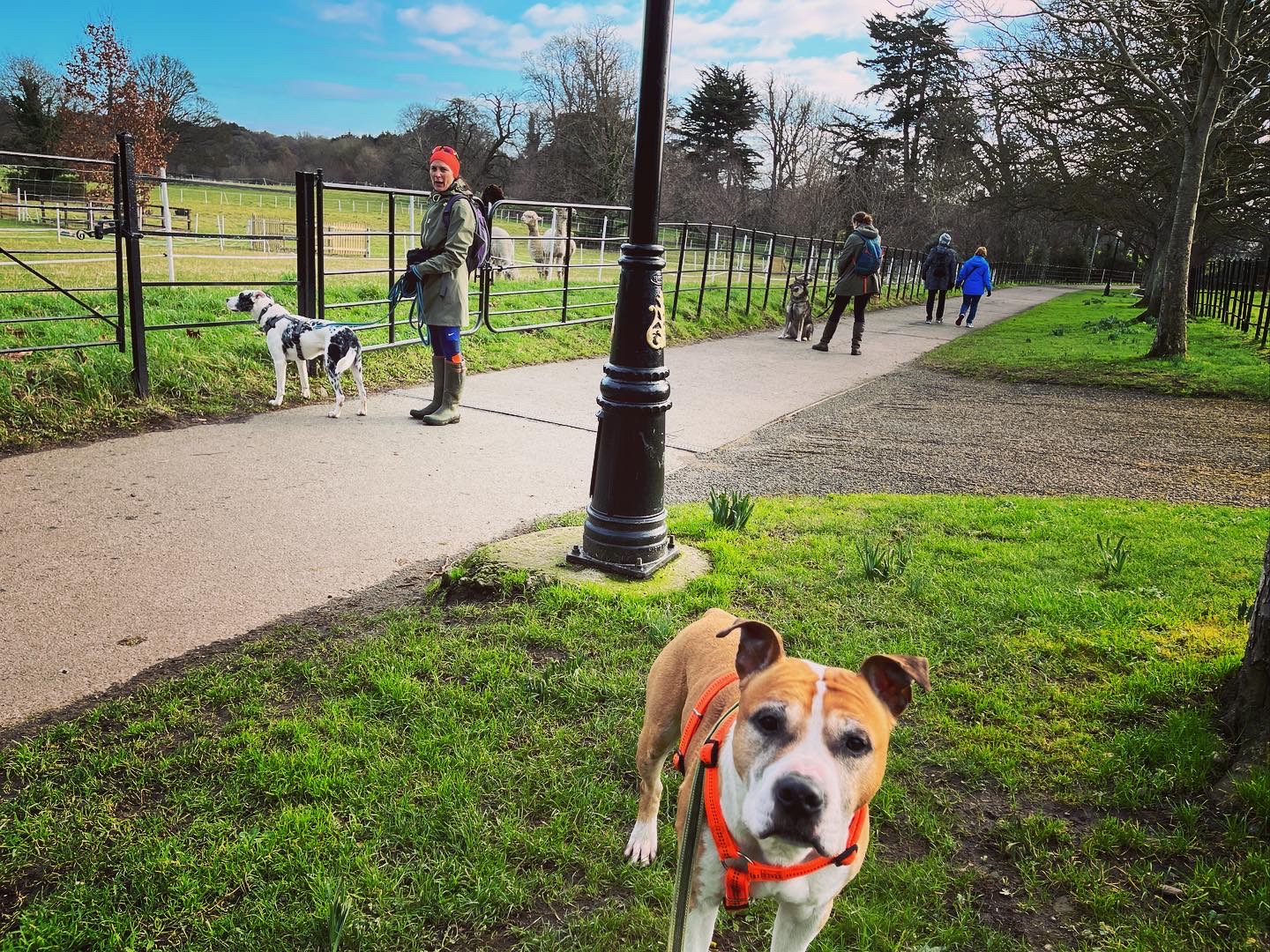

Night & Day
In my defense, in using the term, I was describing something very different.
On our Neutral Dog Walks:
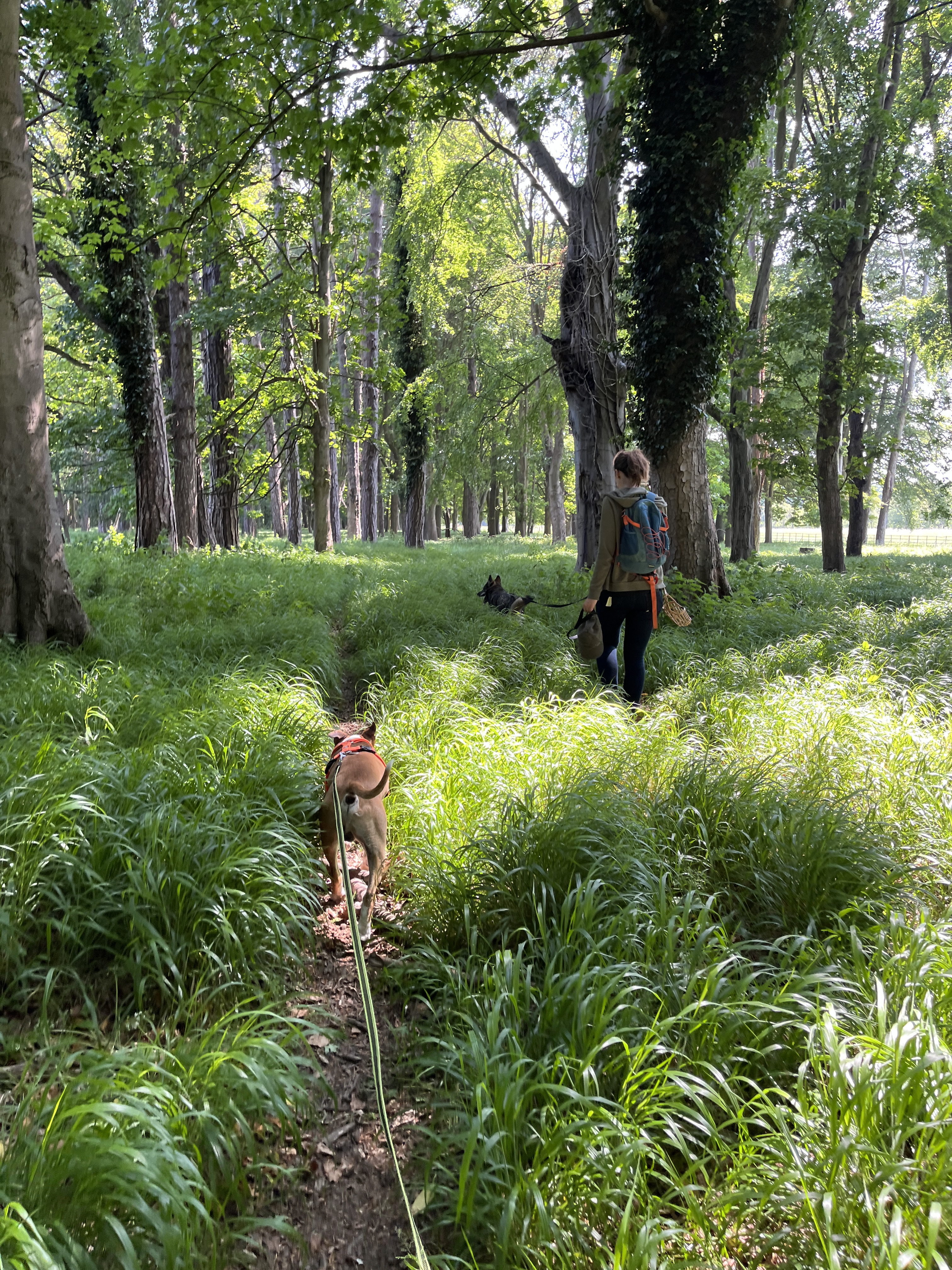
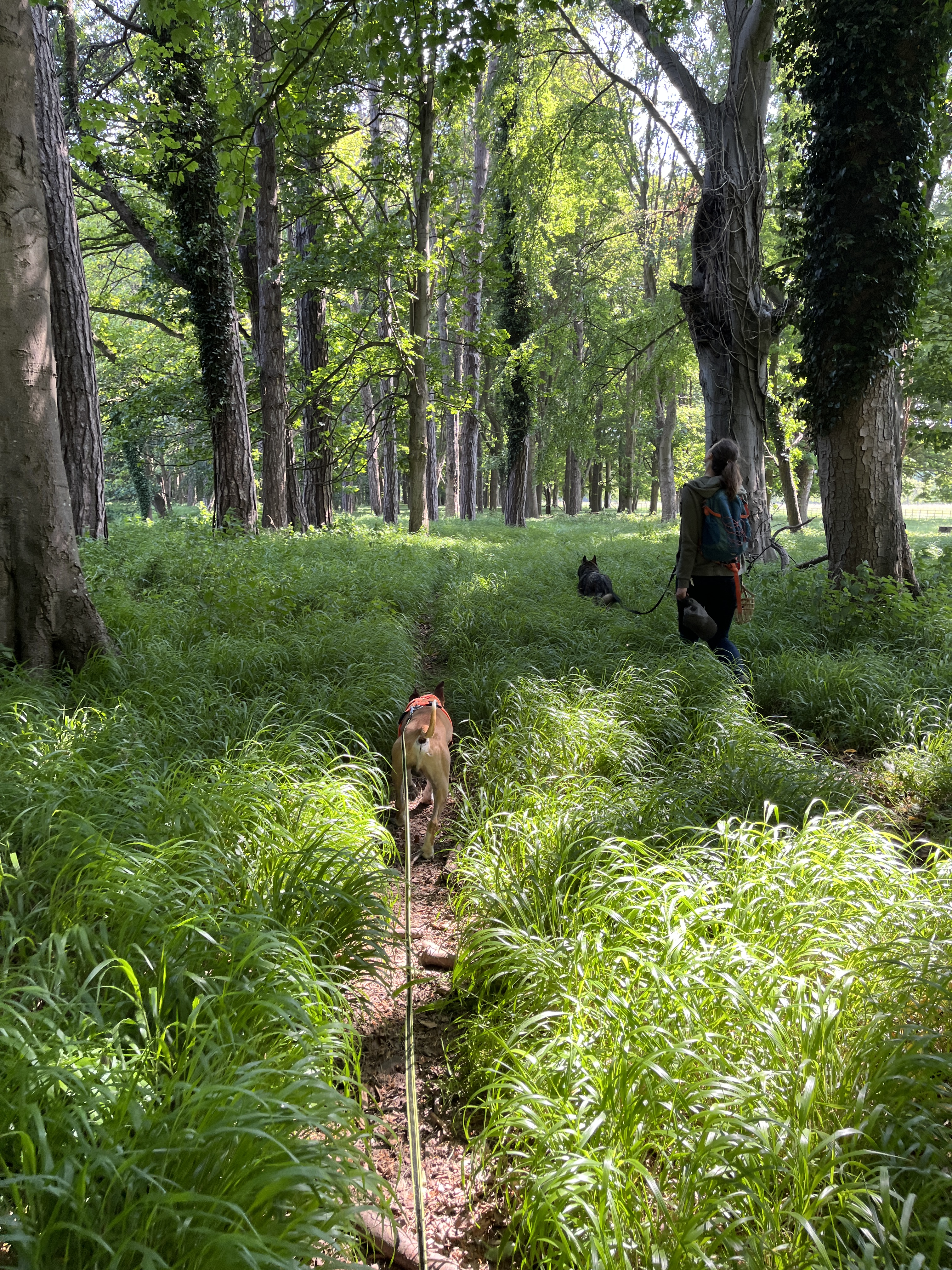
- there are no more than three or four teams
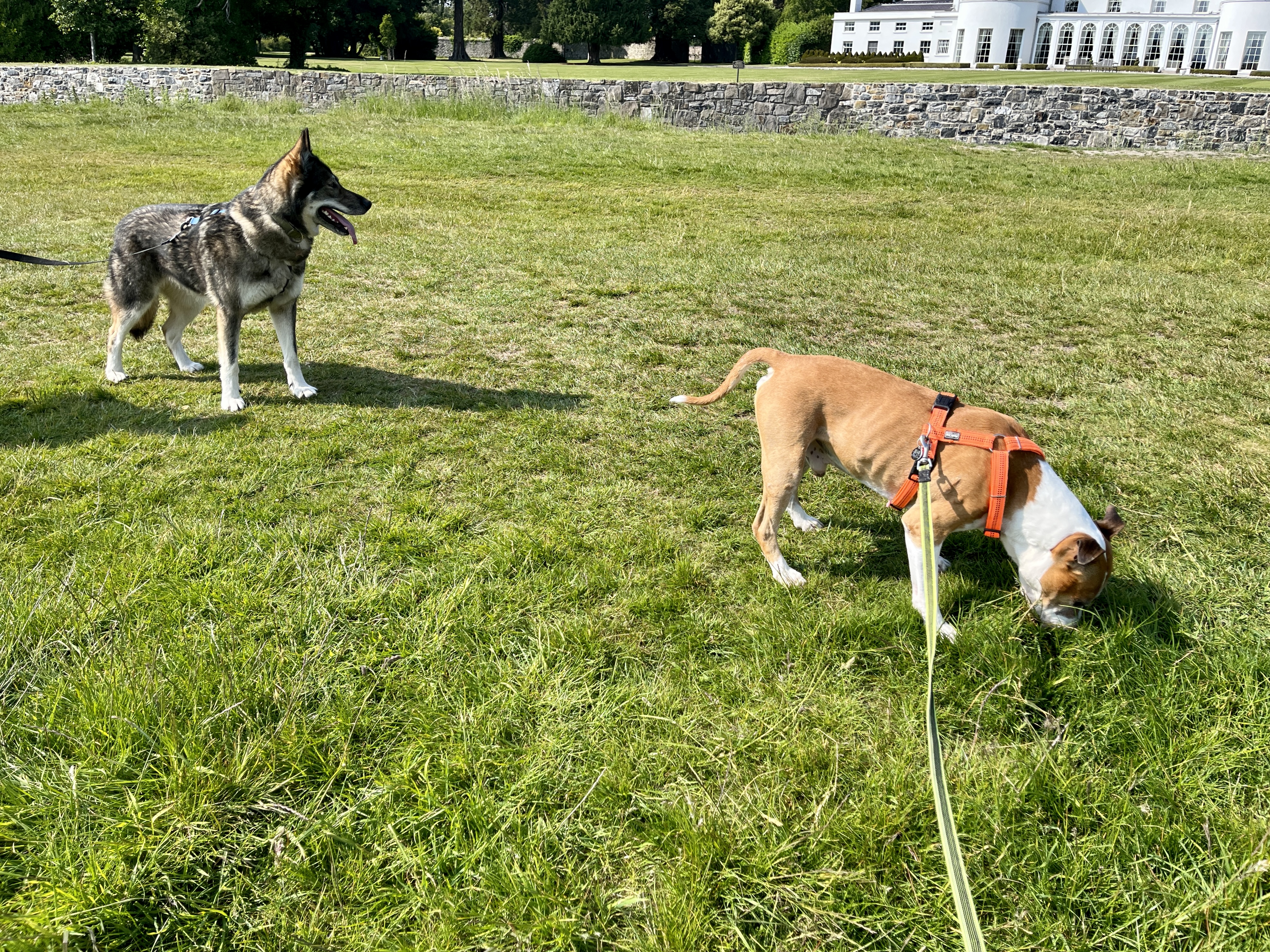
- dogs are on long lines and are free to move about
- we use distance and engagement to maintain everyone’s comfort
- we pay close attention to each individual’s space bubble over time and across contexts
- we are in enriching and interesting environments so the presence of other dogs and their humans is somewhat diluted
- each dog’s preferences are considered – some dogs might want to meet or be closer to a compatible individual, but some might not and this is not prioritised
- they get opportunities away from one another to engage in their interests with their human, without the pressures from other teams

What do we mean by ‘neutral’?
The difficulty with the term neutral is that it may be interpreted as the dog not reacting or responding. Maybe this conjures up images of robot-dogs, which can be very attractive to many pet owners, who, understandably just want a “good” dog, but is so often achieved through pretty heavy social pressure, intimidation and coercion.
Neutral is a label and like all labels, it’s only useful when it’s understood across users, through clear and agreed-upon definitions.
And of course, we are not labelling dogs as “neutral” but more so responses. Problems arise when we start with “the dog is —” as we should be describing behaviours and the conditions under which they happen; what the dog does, rather than what (we think) the dog is.
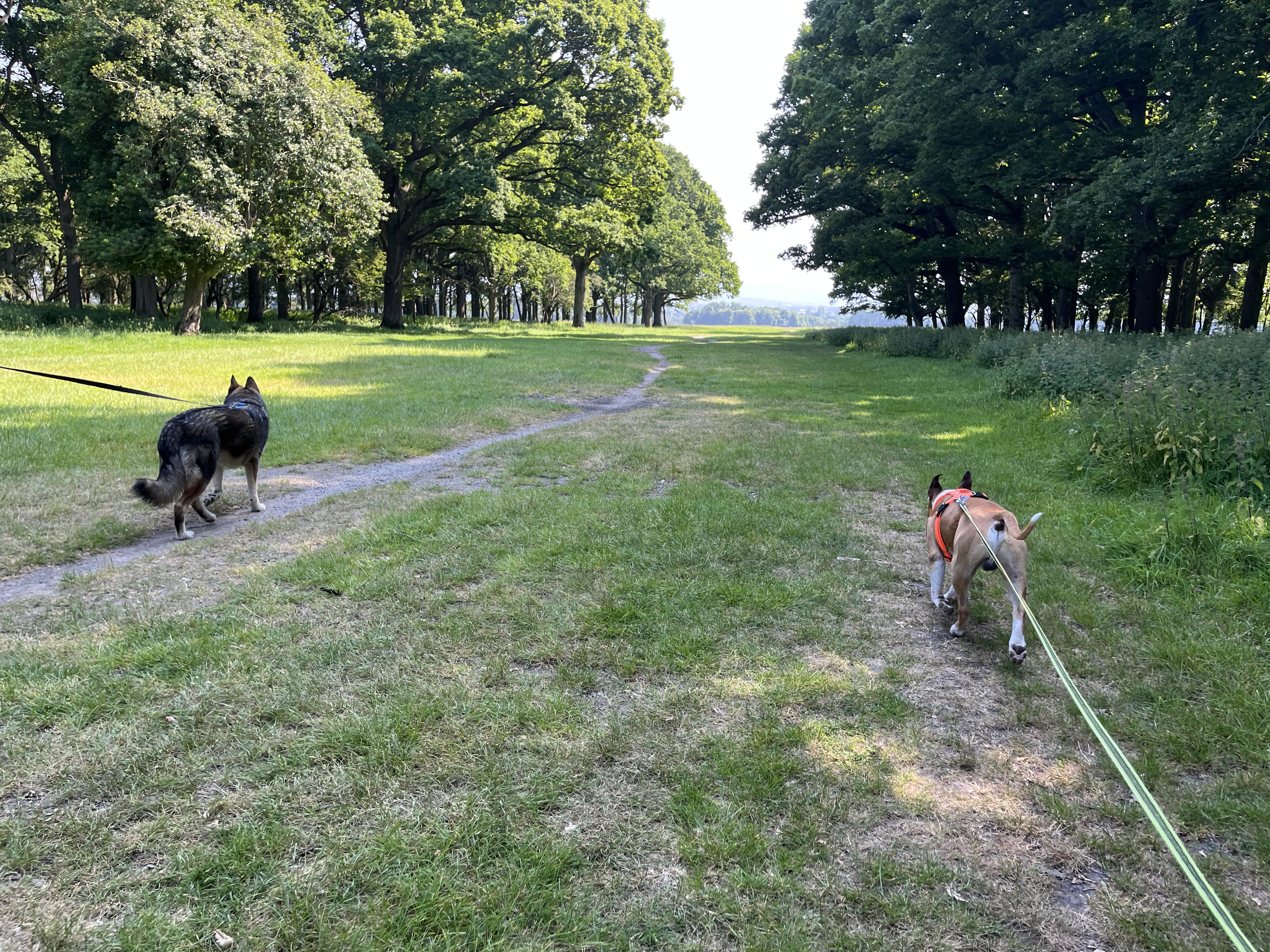
Neutral responses are “whatever!” or “so what!” responses.
The dog perceives some interesting occurrence such as another dog, a cyclist, maybe even a squirrel, and they have enough time and space to make some choices about their next move.
It doesn’t mean that the dog has no response (if they’re alive, they’re responding!) but that they are able to respond and recover, without too much stress.

Goals
Our outings are goal oriented, but the outcomes for each dog will be individual and evolving.
The humans are developing skills in managing their dog’s exposure by adjusting distance, reinforcing engagement and participating in their dog’s exploration with them.
The dogs are learning to feel safe and are developing skills in these contexts that don’t require swings of excitement and escalations.
We try to have a model dog present too, a dog whose responses are well known, pretty predictable and generally low-key. Decker is very environmentally sound and doesn’t have any interest in interacting with other dogs. The way he navigates his world may be a helpful model for other dogs who might find things exciting or worrying.
And to make sure he is able to do that, everyone understands his preferences, just as we make sure everyone else’s preferences are respected.
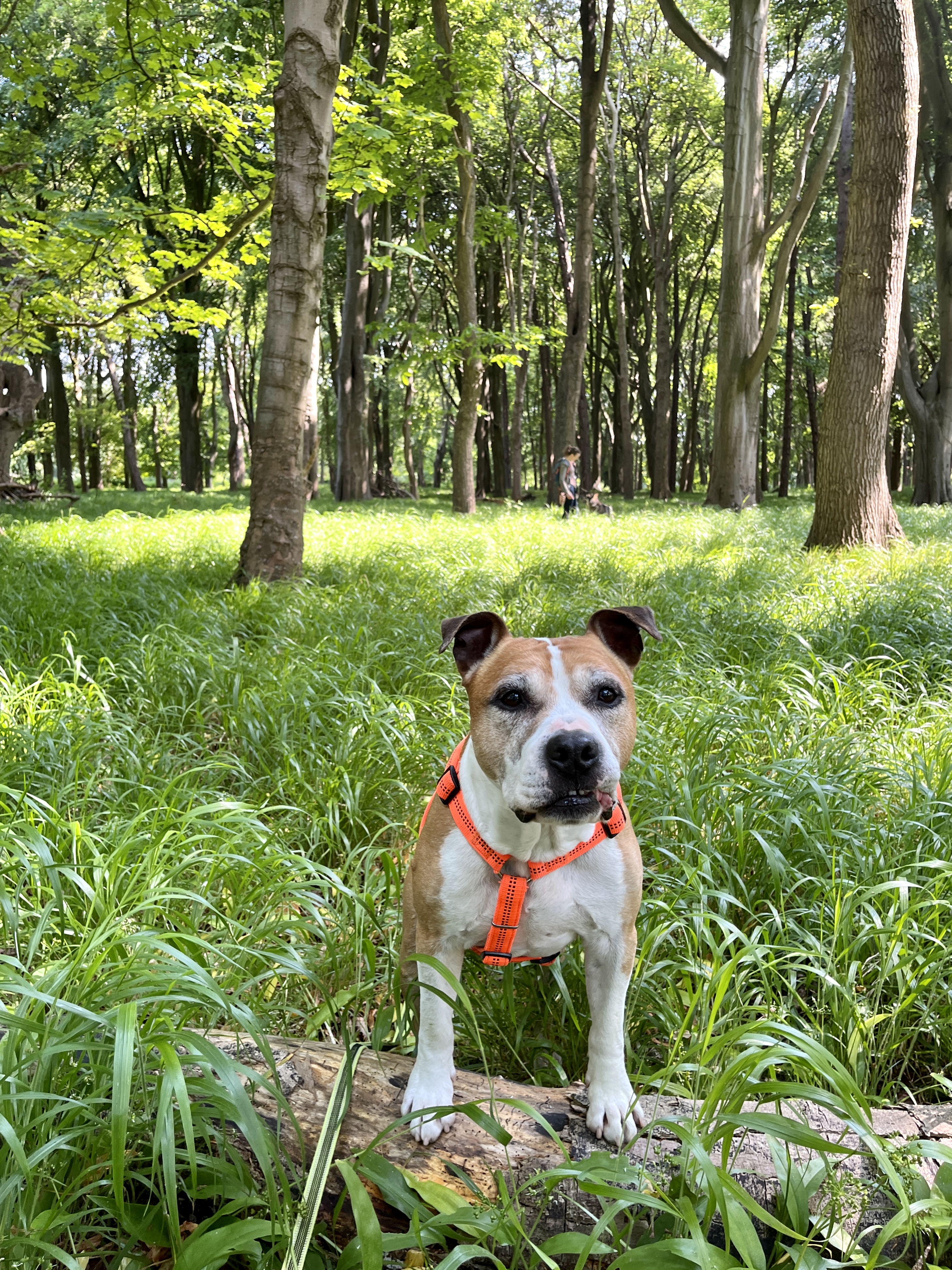


Our outings are based in engagement. The dog learns to choose to engage without cueing, leash jerking or tightening or nagging. We adjust their world rather than attempt to mould or coerce them.
The dog’s behaviour is information. If they are having difficulty recovering from stress or their owners feel the need to use a tight lead or other coercion, then we need more distance and an updated plan.
Our ultimate goals are happy, loose dogs, confident humans and lots of team-work.
And now, it looks like we have to come with a new name…ideas welcome!
 AniEd Ireland
R3 walk (or 3R walk)! (Respect, respond, recover)
LikeLike
Ah brilliant!
LikeLike