In developing a program for in-home care visits, I really wanted the opportunity to hang out with cool dogs. Just me + your dog!
I recognise that there are lots of dogs who will benefit most from hanging out at home, while their humans are away, rather than going somewhere else for care. I want to help these special dogs but really I want to hang out with some cool dogs!
What happens during in-home care visits? Recently I provided six visits, over three days for Mo, who is Behaviour Matters team member.

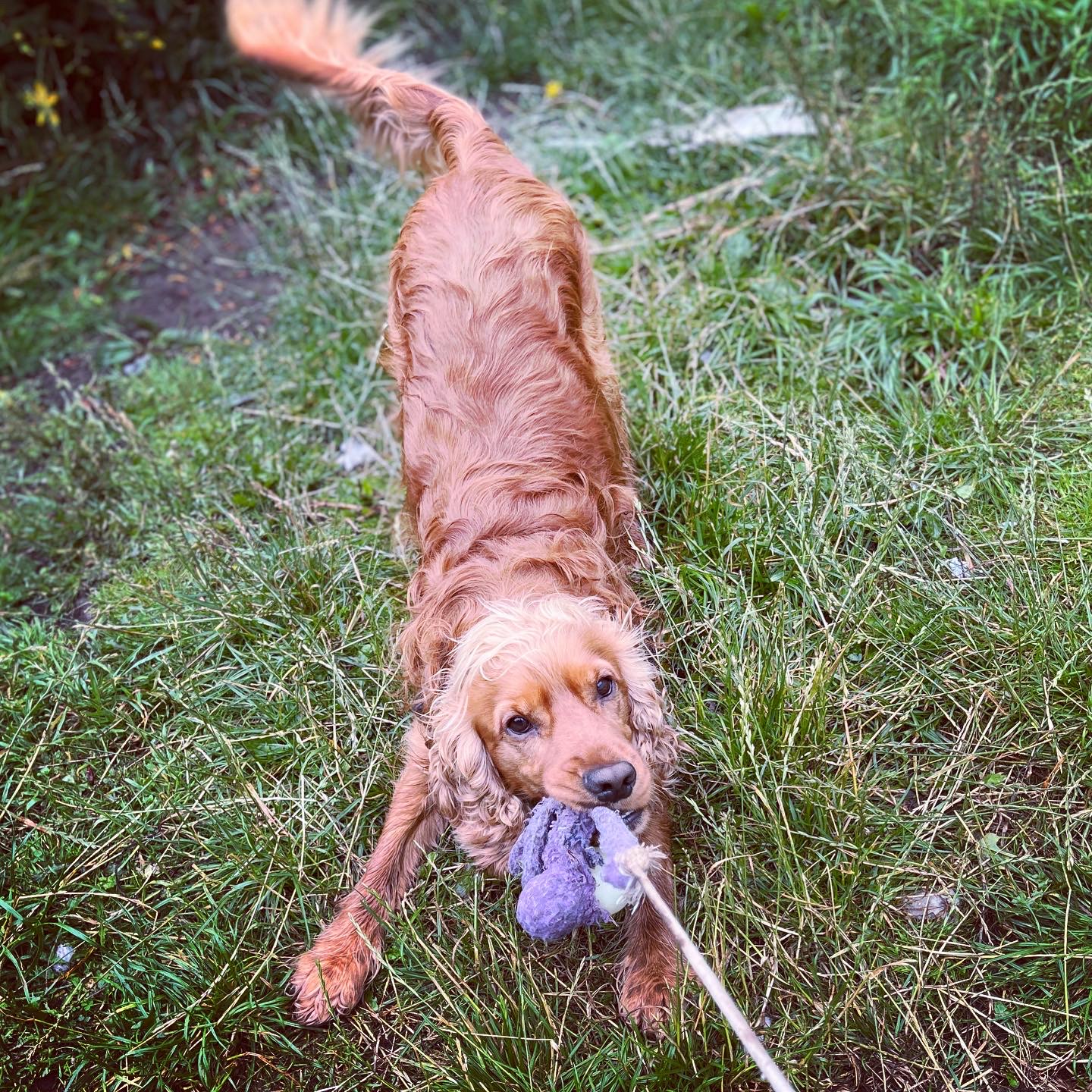
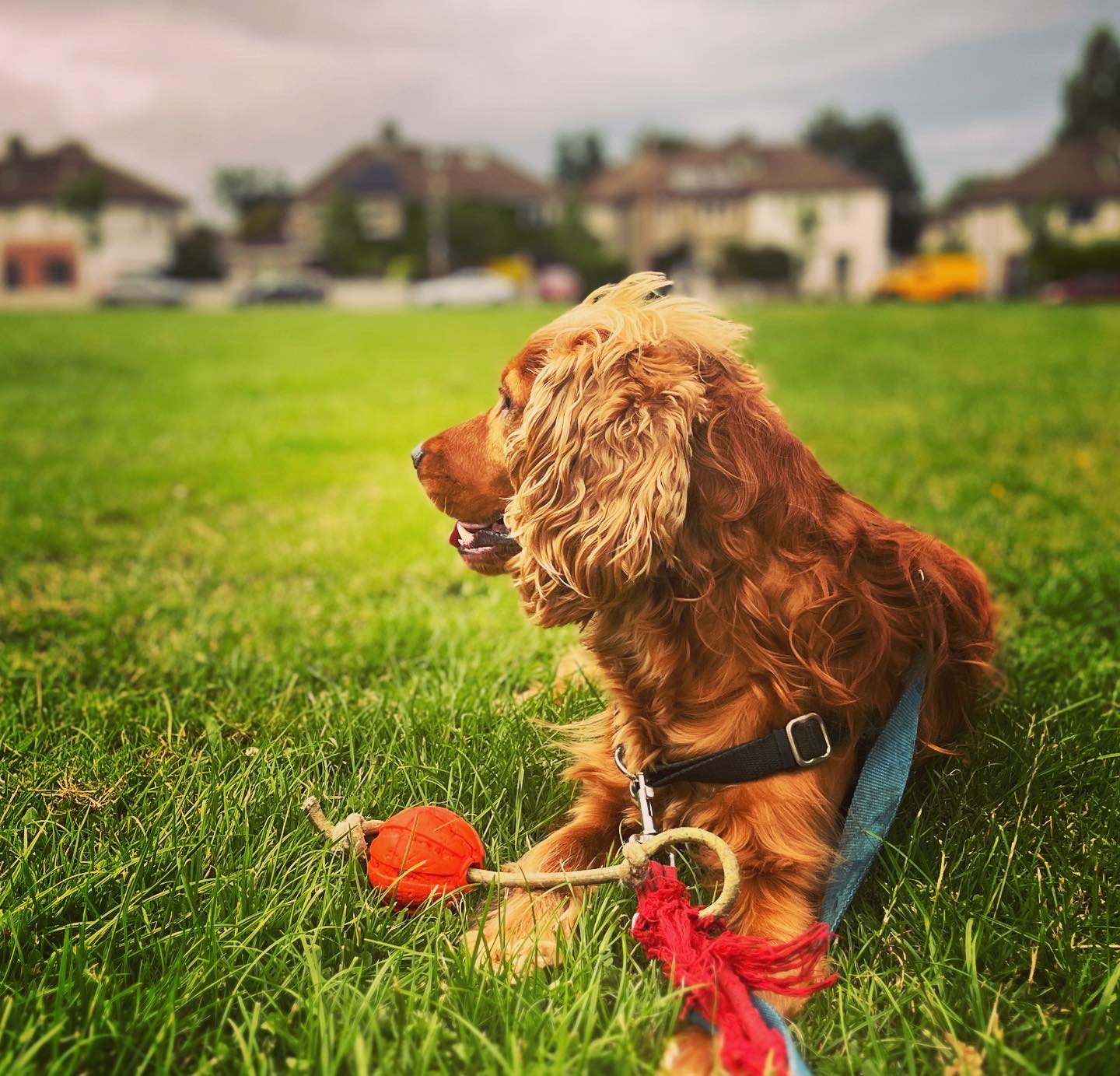
Given our understanding of canine behaviour and managing canine stress, we can structure these visits so that the dog has appropriate outlets for their stress and to facilitate their recovery so that they can relax until their next visit.
Initial Crazies
When a person enters the home, whether familiar or unfamiliar, the dog is expected to experience a surge in arousal, which prepares them for interactions, positive, negative or unknown.
In a new context, with their humans away, spending time alone, and a person entering, we might expect the dog to experience greater swings in these responses.
Rather than attempting to “calm” the dog, I prefer to channel it and provide the dog with outlets to redirect their experiences. These are the initial crazies!

the crazies out just yet so football should continue!
Usually providing something for the dog to bite at, chew, or even just carry can help. I might pair that with some chasing or other energy expenditure that allows for focusing on something. That’s what arousal does; it hones focus so that the dog can deal with that specific challenge.
As the crazies begin to reduce in intensity, we can switch to some games that encourage a little more thinking through arousal, and rollercoaster in some sniffing breaks.
This helps the crazy to taper off a little so that we can clear the way for some sniffing and get ready for further activities that provide more well rounded activities.
The Go Find It! game is one of my favourites for bridging those gaps and rollercoastering.
Activities
Once we have some of the initial crazy out, we can structure a visit to allow for both physical and mental exercise and entertainment.
We start with more engrossing and exciting activities and rollercoaster throughout.
Activities will depend on the individual dog, their circumstance and preferences. Their behaviour is information telling us what they need, and what reinforcers their behaviours. These will be the activities they will seek out so I want to make sure there is an abundance of reinforcers available for that dog.
One of my favourites, particularly if the dog isn’t going on adventures with me, are SNIFFARI boxes, bringing the smellside inside!
Just add water for more fun!
Mo loves bubble chasing but as a less arousing and exerting version of this game, we played bubble-hunting instead! By firing the bubbles into the longer grass, they remain stuck, allowing for more systematic hunting.
Watersports!
Outings
Walks and outings just won’t be the same without their humans and I’m definitely going to be taking some extra precautions if bringing the dog out and about. At the very least, I will often add one extra point of connection, just in case their primary equipment should fail for any reason.
Once the dog has been able to come down a little from those initial crazies, and we have worked a little on engagement, we can go adventuring.
Outings are not “obedience exercises”, but we do practice lots of engagement exercises. Engagement means that the dog chooses you, without cueing, nagging, jerking. We know it’s time to work on engagement, when the dog chooses to engage.
Sniffy walks are the best for dogs in general, but also when their routine is otherwise messy, they provide for excellent exercise, both mentally and physically, and outlets for stress.
While we always make time for sniffing & exploration, we also make sure there’s plenty of silliness too!
Rollercoasters are for outings too! After some time ‘up’, we take a break.
Hanging out
Just being is my favourite thing to do with dogs. But it doesn’t necessarily come easily to dogs and certainly not when their background level of stress may be raised due to their humans being absent and the subsequent routine changes.
By directing and redirecting their stress related behaviours, they will be able to calm and settle themselves. With rounds of rollercoasters, a wind down can be applied allowing the dog to be nice and chilled by the time I’m leaving.
There is no reason for us to expect to be able to touch a dog or that our touching them will be comforting to them.
When the dog seeks out contact, I will very respectfully ask them where and how. By capping touching to no more than a 3-count and only when solicited, the dog learns how to control those interactions boosting comfort and safety.
We take time for hanging out and just being on outings too; winding down before we get back home too.
Winding down starts at least 30 minutes before departure, but may depend on the dog. Making calmer and exploration based activities available along with peaceful hanging out, facilitates the dog finding it easier to choose calming in preparation for alone time.
Rollercoasters
It’s all rollercoasters! Listening to the dog and allowing their behaviour inform our approach means that we can provide acceptable outlets for stress and help them to recover.
More about rollercoasters and winding down here; trust me, you and your dog need this!
 AniEd Ireland