
Not having been kind to his body one day throughout his long life has really started to catch up with Decker, this year in particular. He’s over 13 now, old for dog and pretty ancient for an AmStaff.

More for seniors, not less
He’s still super active. He regularly swims for 30 minutes in the sea and most days will hike at least about 6-8km. We train regularly and still have lots of fun. He does puzzles and continues to invent games, training me with his exquisite teaching skills.
He’s totally deaf now and although always an epic sleeper, he sleeps so deeply now; he has lots of memory foam beds, blankets and favourite comfy spots in the sun.
All in all, seniors require just as enriched a life and world in their later years as they did throughout life.
But the older body needs more support and dogs aren’t always super clear about telling us they’re in pain, they’re tired, that they’re aging body needs a break. We’ve gotta look real close and observe carefully, learning not to dismiss what their body tells us as “just being old”.

When the spirit is willing but the flesh is weak
Of course, Decker doesn’t know he’s old and that his body is failing. He has mild arthritic change in his TTA knee (way less than would be expected) and some very very early neuromuscular changes mildly affecting the pelvic limbs.
His right elbow has been giving trouble for a while, wear and tear due to compensation for a long standing shoulder injury. And now his left elbow is showing some pain indicated by posture changes and occasionally, transient acute lameness. Ouch!
This means extra care is required, because he sure isn’t going to mind himself. We have some good pain relief on board and plenty of adjustments in place that are supporting him right now.


Behaviour happens in the environment
Our outings have to look a little different now with steady pottering and sniffing being much more beneficial, and safe for his body, than crazy carry-on and life-threatening antics.
Instead of seeking ways to calm the silly-boy or “training”, ask, under what conditions does steady pottering & sniffing happen?
While also asking under what conditions the crazy stuff happens…
Decker likes a path with a verge. A verge of trees, a verge of undergrowth, a verge of lawn.
When we walk along a verge, he sniffs and potters steadily, checking in, sniffing and pottering.
If we want to increase specific behaviours, we can recreate the conditions under which these behaviours happen. Visualise what it looks like when the dog is doing these behaviours…what’s the picture?
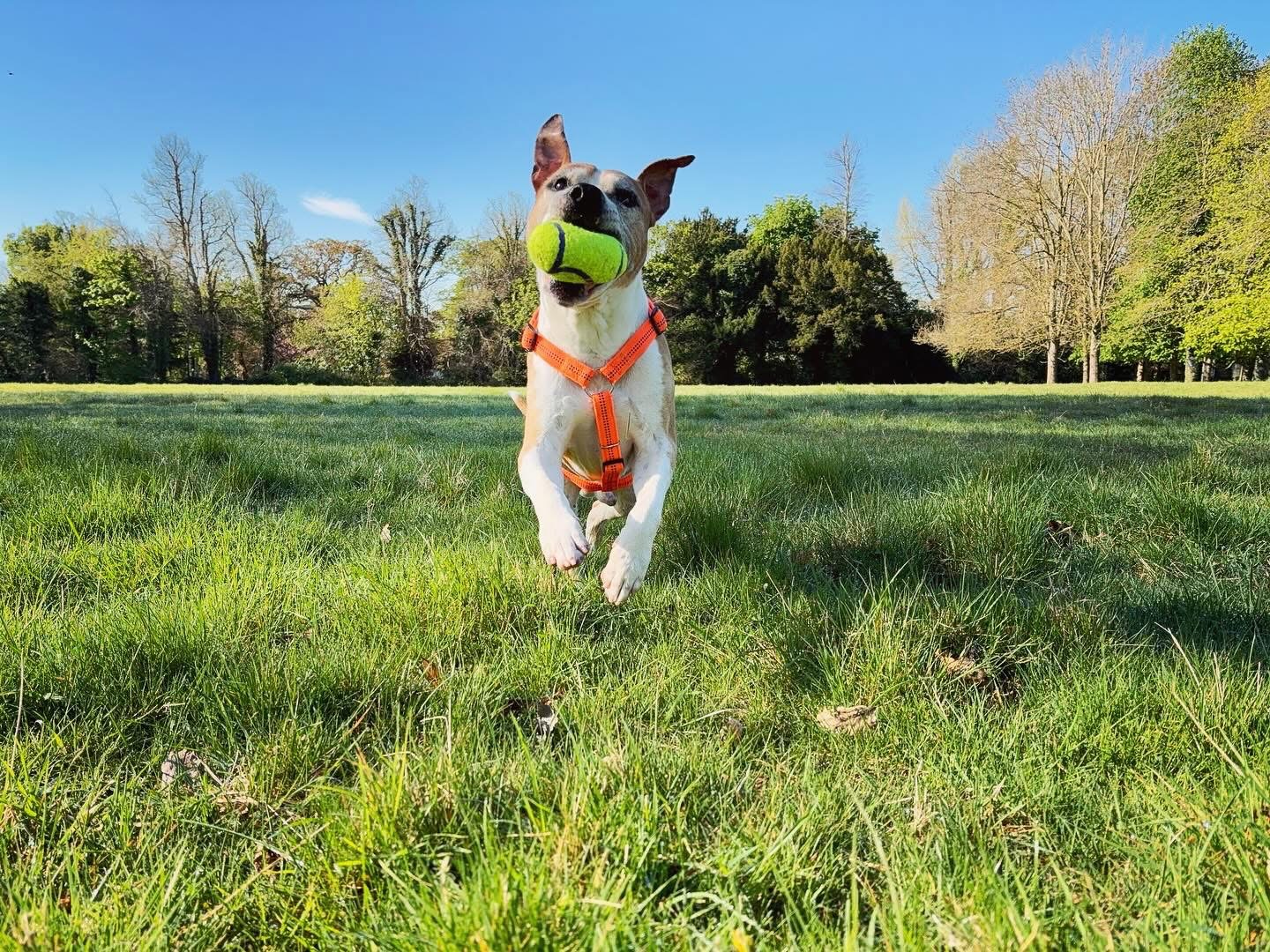
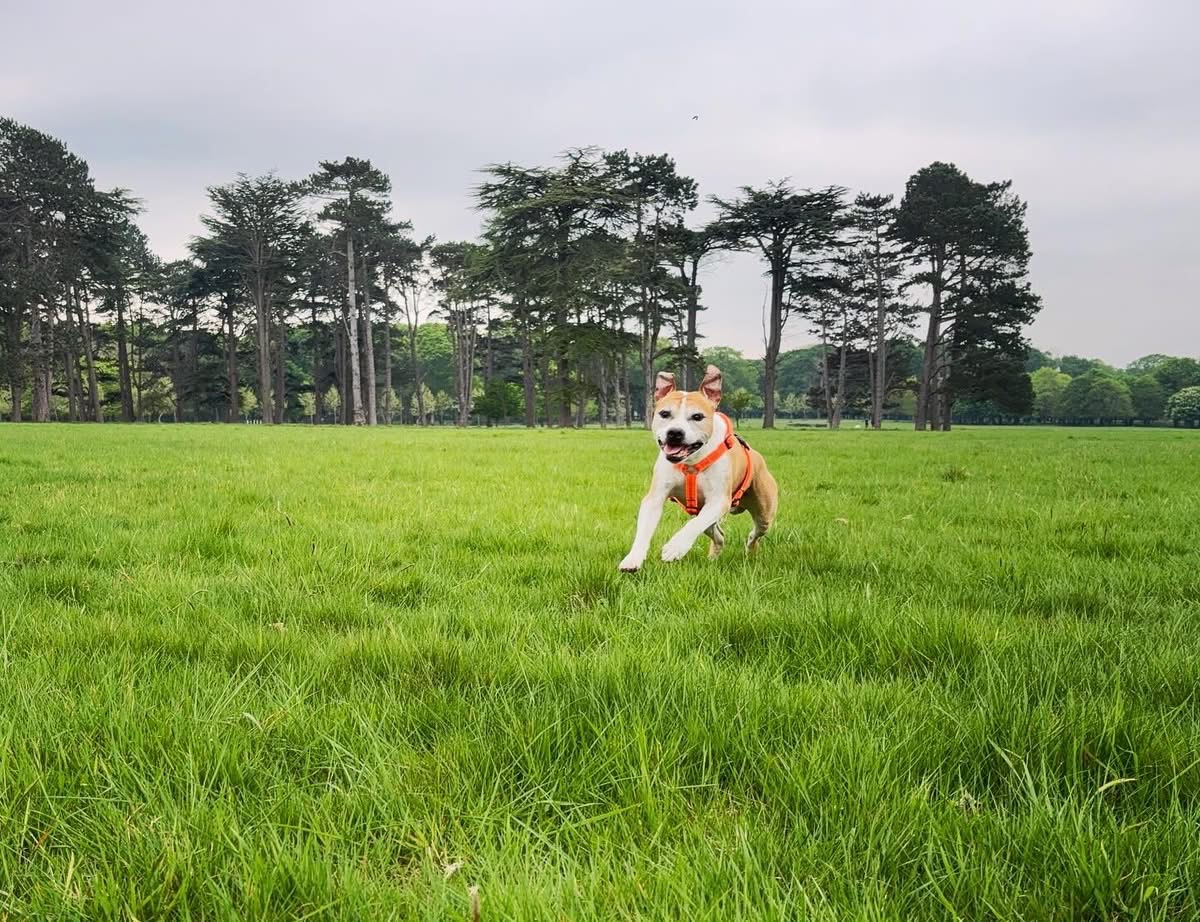
More open space, particularly grassland and long grass, or water…any water… and that picture starts to look a whole lot crazier and more active. He still gets to do that, these behaviours are important too and his behavioural health matters as well.
Understanding the conditions under which steady sniffing and pottering happens means we can do lots of that by going to those places, by being in those pictures.
And we can intersperse that picture with the other too, for some relief, for release and just for fun.
Instead of thinking in terms of the behaviours you don’t like, think of the behaviours you want to see…and then learn about the conditions under which they happen. Go there, do that. Be in those pictures.
 AniEd Ireland