The main focus of toilet training is to establish appropriate substrate preference and understanding these processes, and realigning expectations with reality, help to reduce the considerable distress often experienced by guardians.
New dogs, regardless of age, and dogs in new or exciting places may have toileting lapses. And obviously when dogs are ill, they may have accidents.
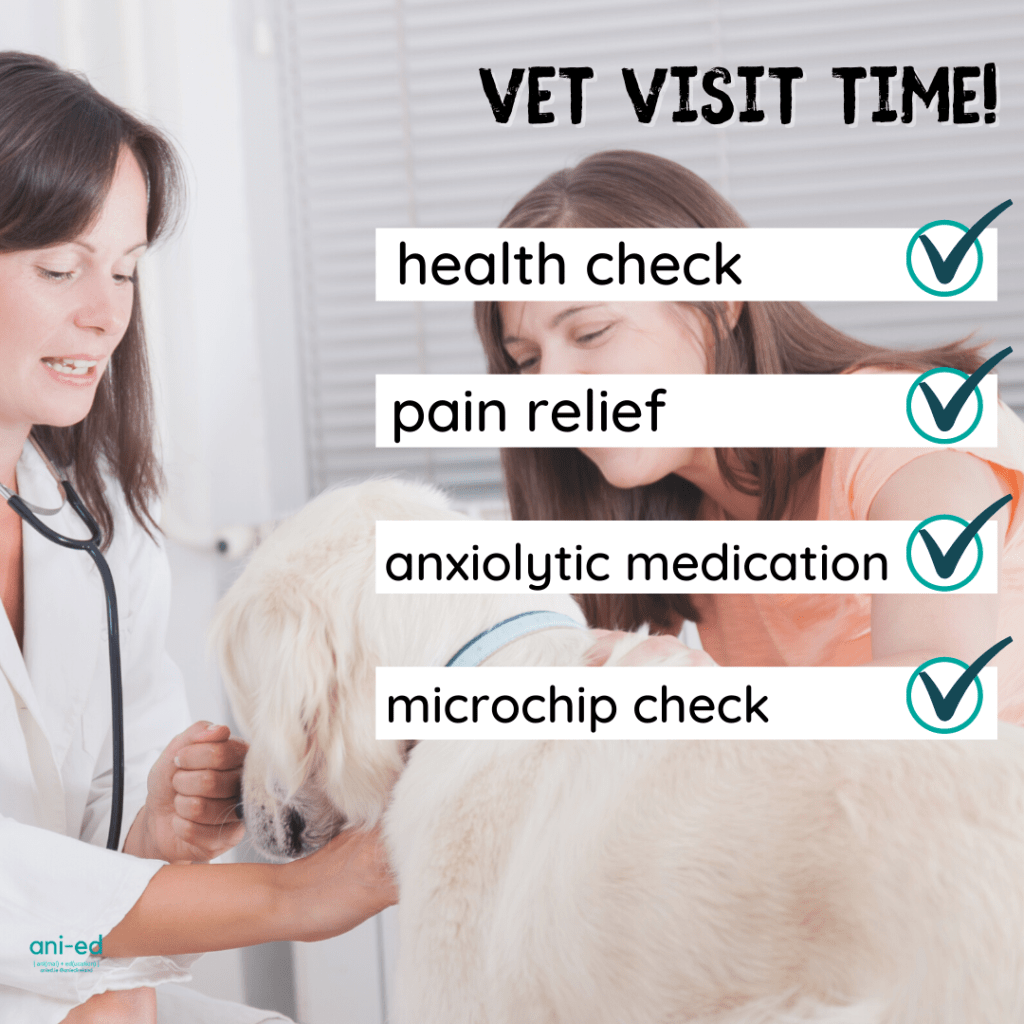
So much so, toileting accidents in dogs who have been pretty reliable, indicate that a vet visit is needed.
Dogs for adoption, advertised as ‘toilet trained’ may raise unrealistic expectations. Instead, new dogs who may have appeared toilet trained previously should be given some time after a move. They need time to learn where they go, how they get there, if and when it’s safe, and so on. Expecting them to be clean right off the bat is not realistic, or fair. As with all aspects of settling in, it takes time and usually more time than we expect.
With young dogs, it’s not physically possible for them to wait and control their urge to toilet, for very long and this isn’t mature until dogs are into adolescence. I tend to find that toileting becomes more reliable by 9-12 months of age, but with so much individual and situational variation.
Establish a toileting routine
Make it easy for the dog to access preferred substrates and toileting spots with very regular trips and extra trips after any changes, activity or excitement.
Most dogs will prefer to toilet on absorbent substrates which makes sense from a hygiene point of view.
be clear about choosing appropriate toileting areas and recognise how they might be perceived by the dog
bring the dog to suitable toileting areas regularly, rather than just leave the door open or leave them outside
prepare a little pot of AWESOME treats and leave them just inside or outside the door
remain outside with the dog and be boring…business first, fun after
learn to spot your dog’s behaviours that tell you they need a toilet break and just before they go Most dogs will circle, apparently move aimlessly close to doorways and then will circle or pace more purposefully just before they squat.
remain pretty still and quiet while your dog prepares and goes
wait for them to move away from the magic-spot and then praise enthusiastically (or whatever works for your dog) and bound back in toward the toileting-treat-pot It’s very important that you let them finish – we reward emptying most generously!
have a treat party: scatter some treats (away from toileting areas), toss treats for catching, play food-games, have some cuddles or relaxing time to bring them down again
spend some time with your dog after successful toileting This is an important step often missed. Our dog toilets, we might reward and then go about our business. The dog learns that toileting ends the fun & interaction so they are trying to hold it…usually unsuccessfully! This is often a troubleshoot for dogs who have accidents after being brought out for toileting.
With that ongoing…and going and going and going…make sure to do your best to prevent accidents in other areas. The dog having an accident is no big deal – don’t sweat the small stuff, we can build appropriate toileting behaviour.
Accidents are to be expected and dealt with quietly and calmly. Making a fuss, or worse, scolding a dog, about accidents will lead to a dog who is worried about toileting when you’re around rather than teaching them not to toilet in that spot.
Clean it up carefully and limit the dog’s access to that area or context unless they’re empty. Get help for extra guidance and support, the earlier the better.
A note about marking
Marking, as opposed to toileting, often requires extra considerations. It’s social behaviour, rather than just needing to toilet, and can be intensified after sniffing, social interactions, and particularly relating to increased stress levels, social or otherwise.
Establishing a solid toileting routine is still important but there may also be some analysis required to get to the root of marking behaviours.
Get help! Keep a diary of toileting behaviour and the goings on surrounding it, and learn to diligently manage accidents. The fewer toileting accidents your dog has had by the time you call in the cavalry, the more successful we all can be!
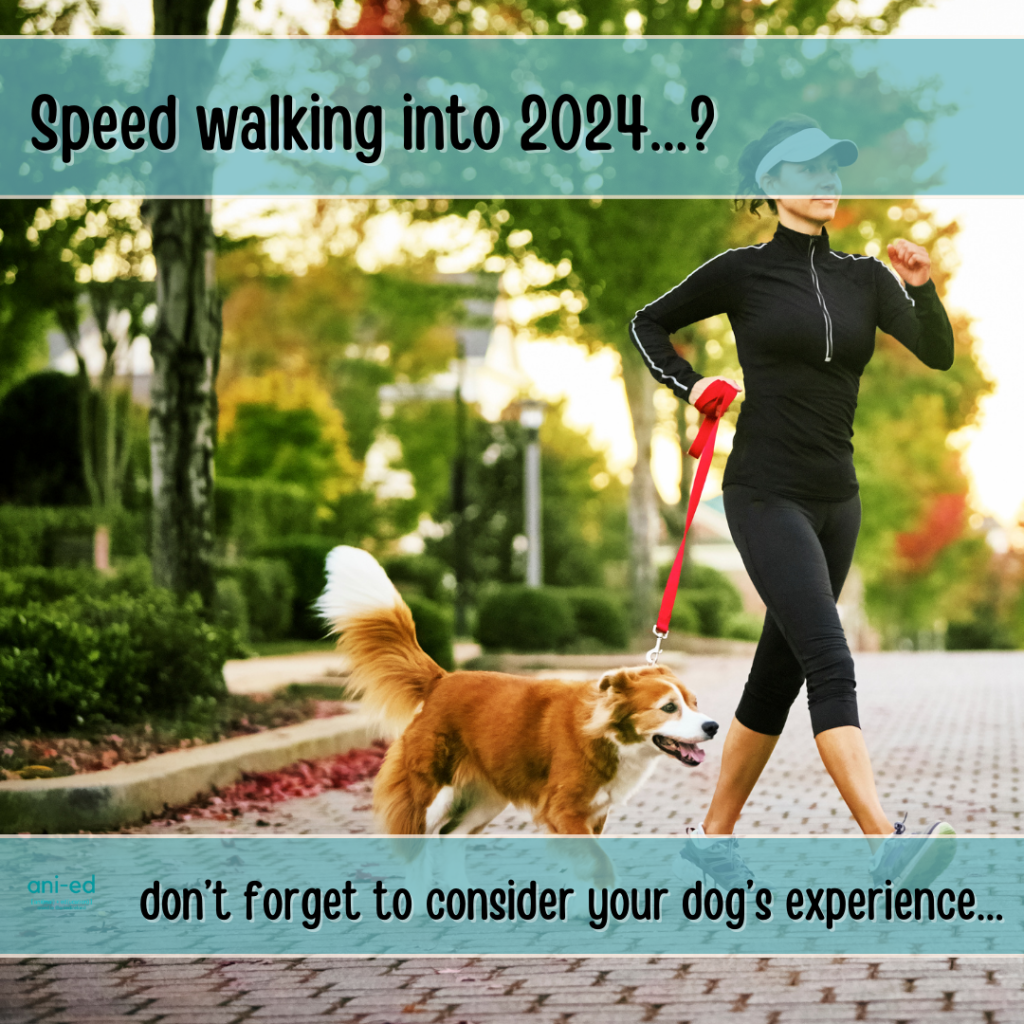
It’s that time of year again when I often see many dogs apparently reluctant participants in their human’s fitness resolutions…
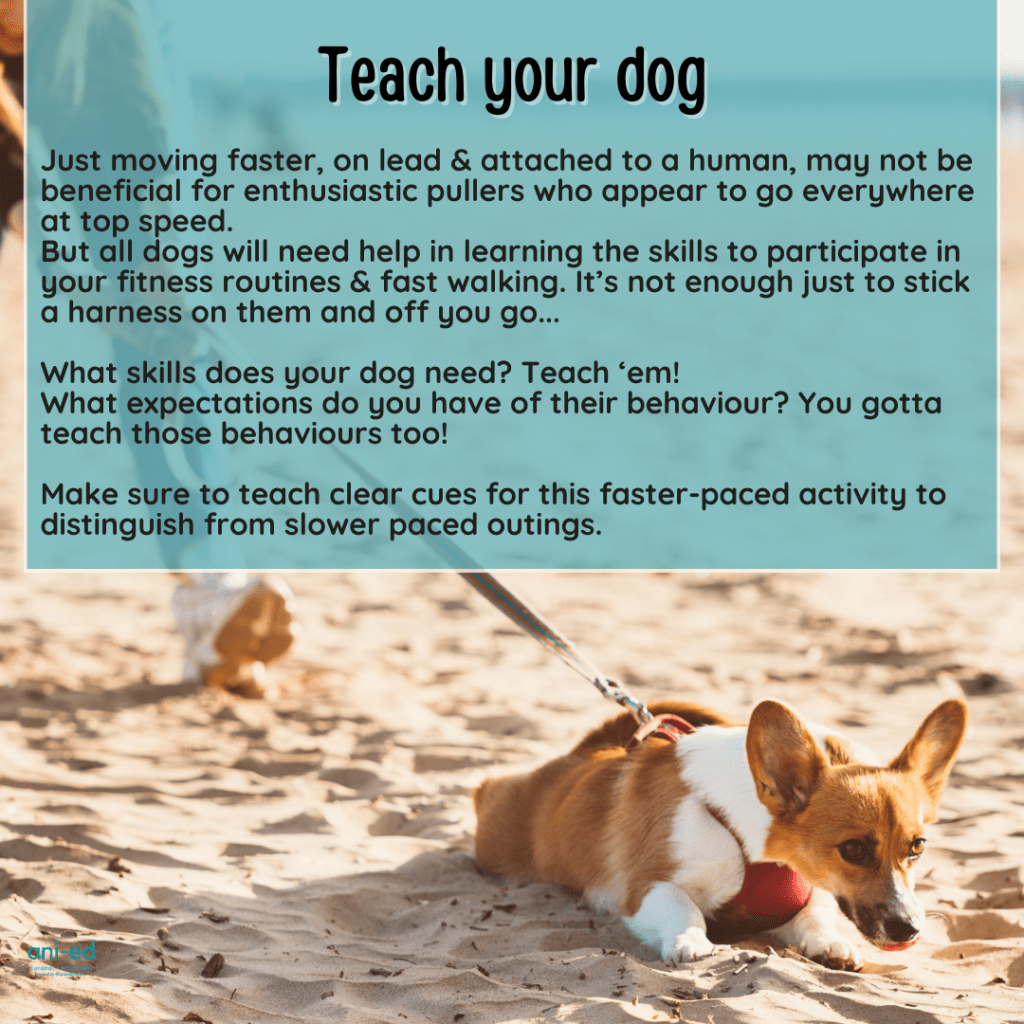
Getting healthy is great and including your dog can be a winner for them as well but we need to consider their physical and behavioural health too…
But we do have funny notions about “walking dogs” and generally approach it from an anthropocentric point of view. As in, we look at how walking our dogs affects humans, rather than having a whole lot of consideration for the experiences of our dogs.
Sometimes we see works that look at effects of walking on dogs and their humans (e.g., Akiyama & Ohta 2021) but relatively speaking, there is little about the experiences of dogs during these outings.
Modern pet dogs live a pretty socially & environmentally restricted life (Meyer et al 2021). And the more we ask them to inhibit their behaviour and assimilate into our world, the more we have to compensate.
I certainly don’t want to suggest we further restrict their already limited lives. But if bringing the dog out in a way that causes them further stress, it’s not very enriching and likely quite damaging.
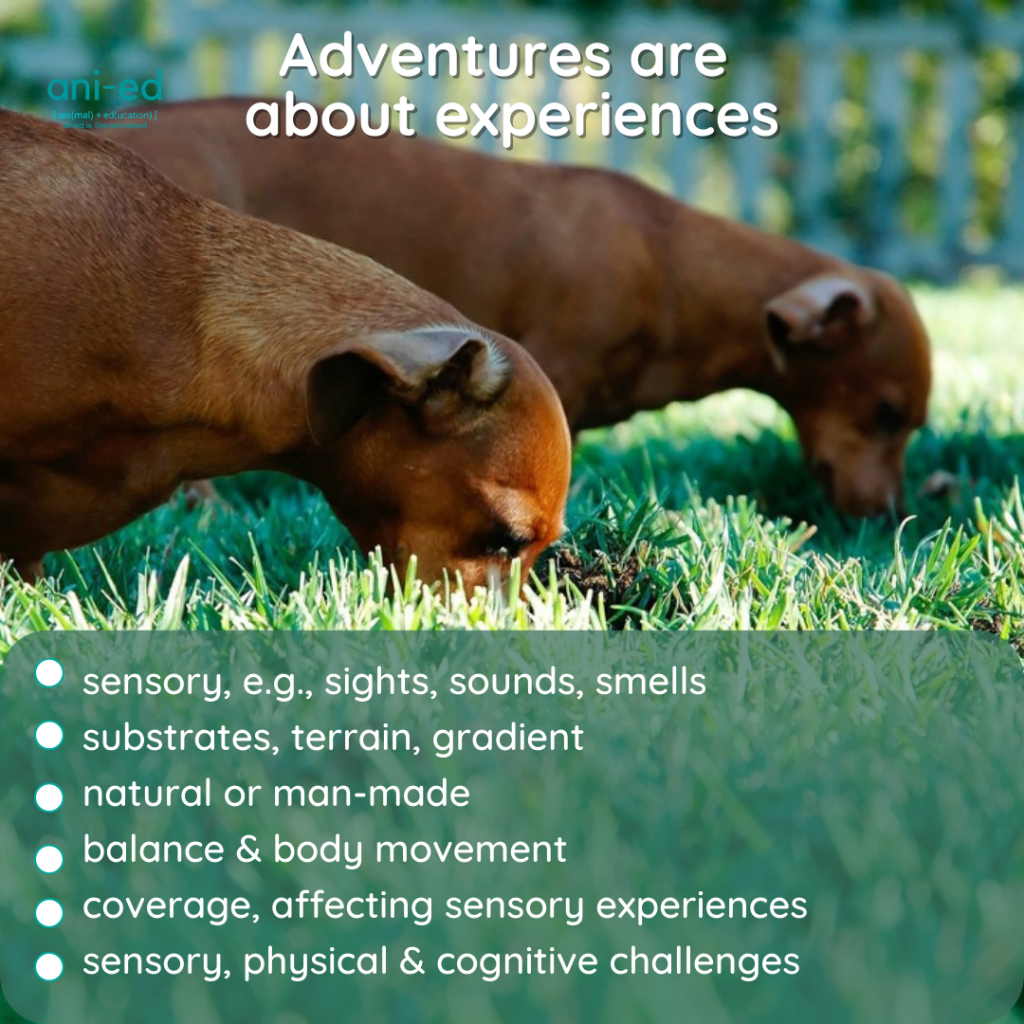
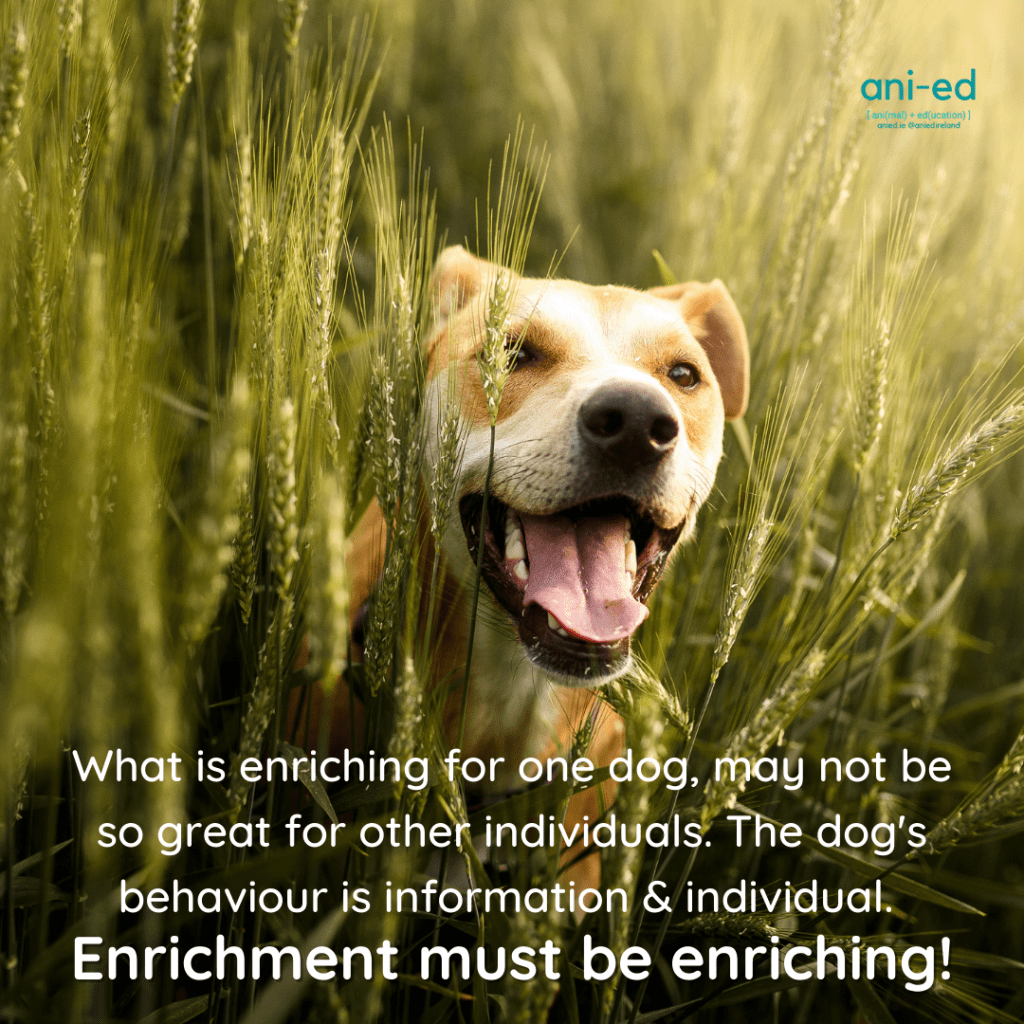
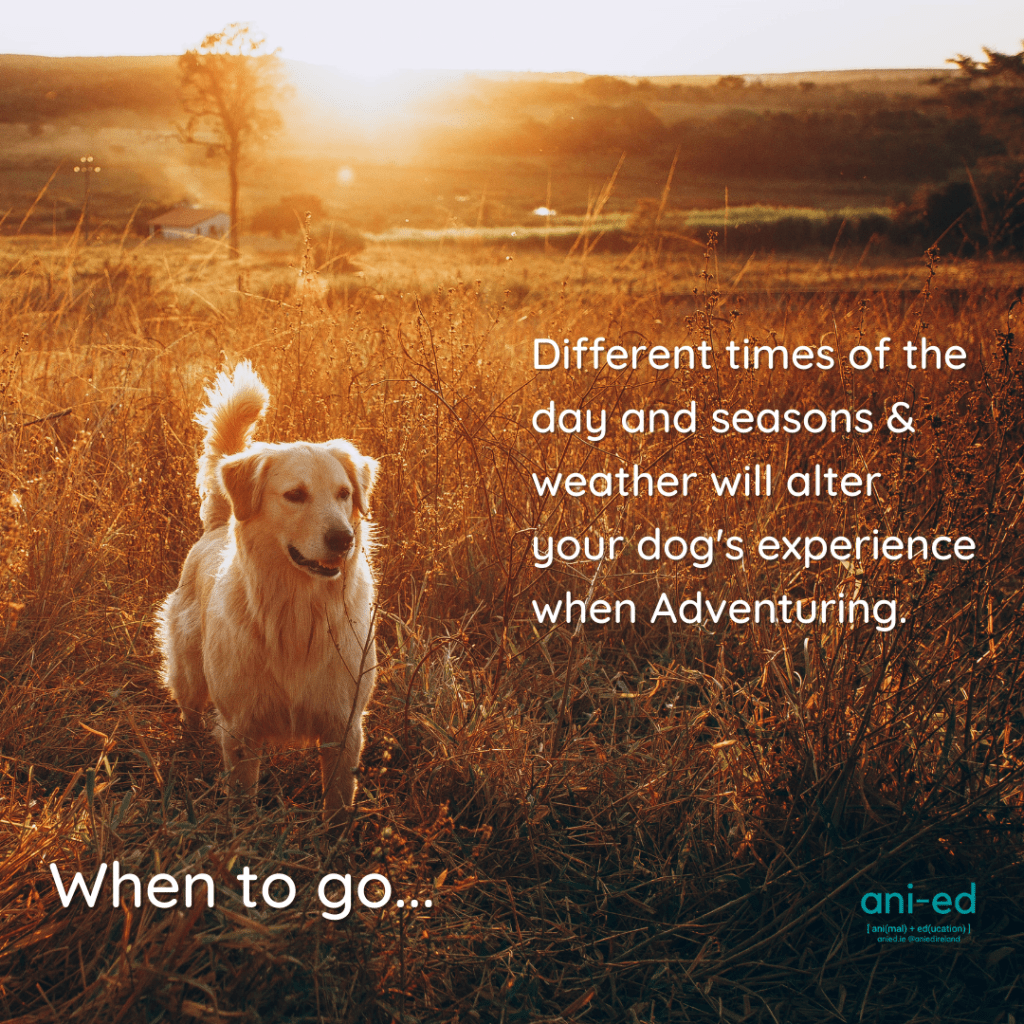
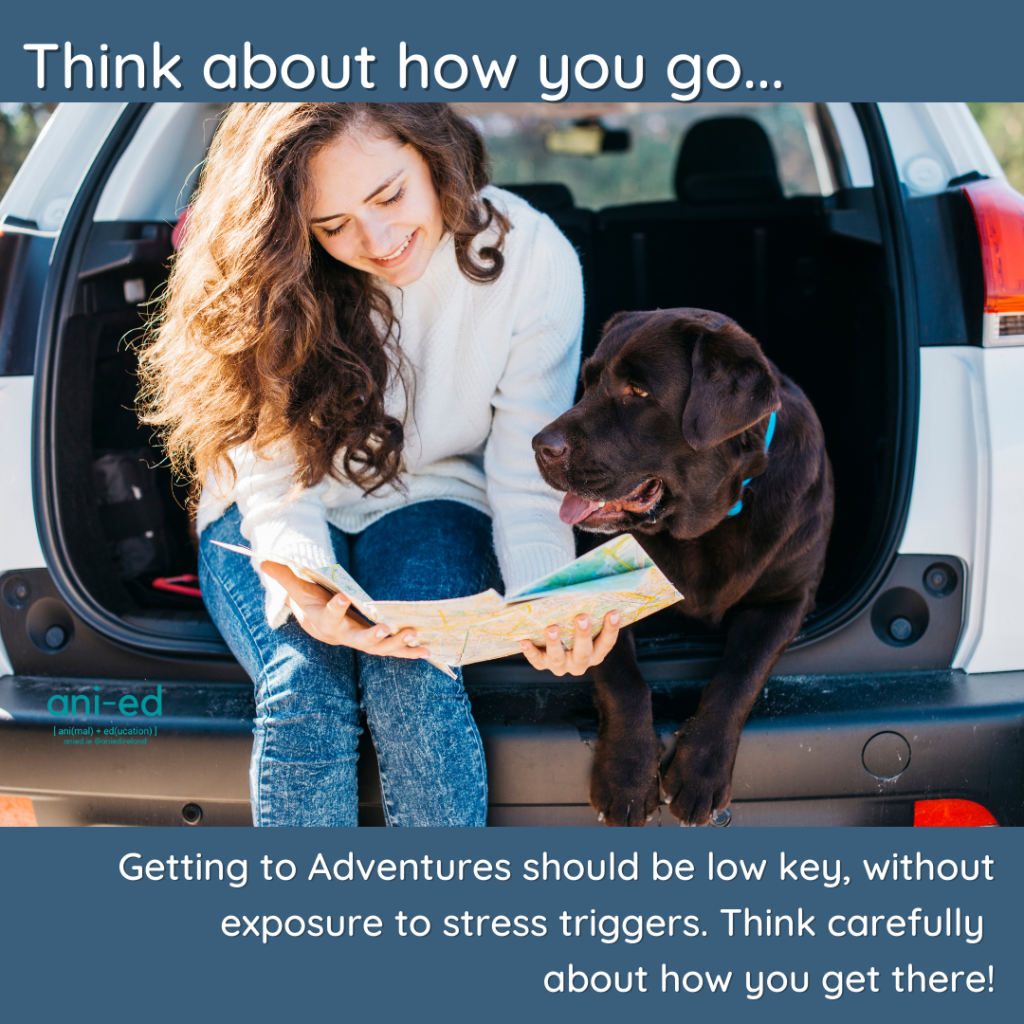
Dogs need activity and entertainment and by shifting the focus beyond walks and alongside walks, we may be better able to provide for their needs. Outings might form part of that, possibly in different or varied ways, but there must be more regardless of whether walks are a part of that program or not. That’s why 100 Days of Enrichment exists!
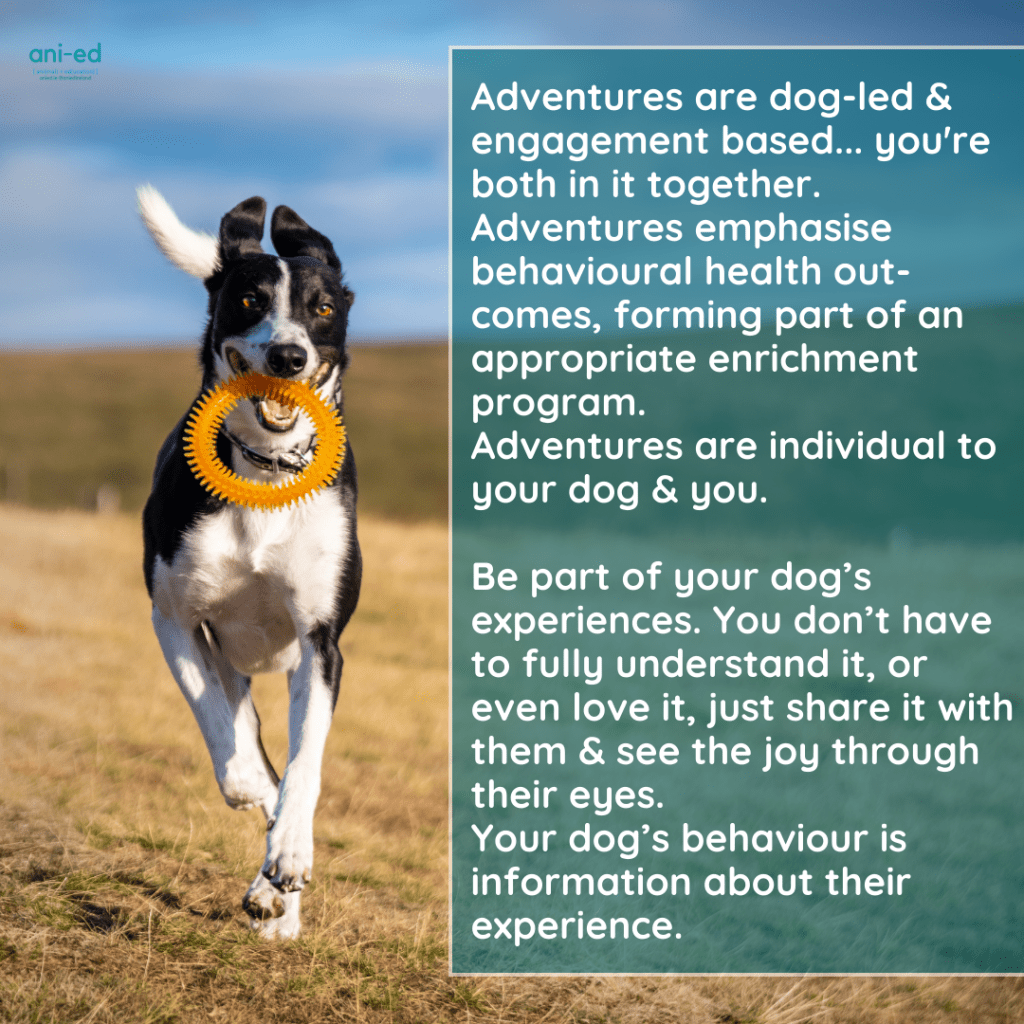
Go Adventuring instead!
Go beyond ‘traditional’ walks for dogs, Adventure everywhere and anywhere.
It takes a village
When you do go out and about, spare some thoughts for how we can all help our fellow dog walkers. Just with some of these tips in place, we might be able to lift restrictions for lots of dogs and provide appropriate outings for pets & their people.
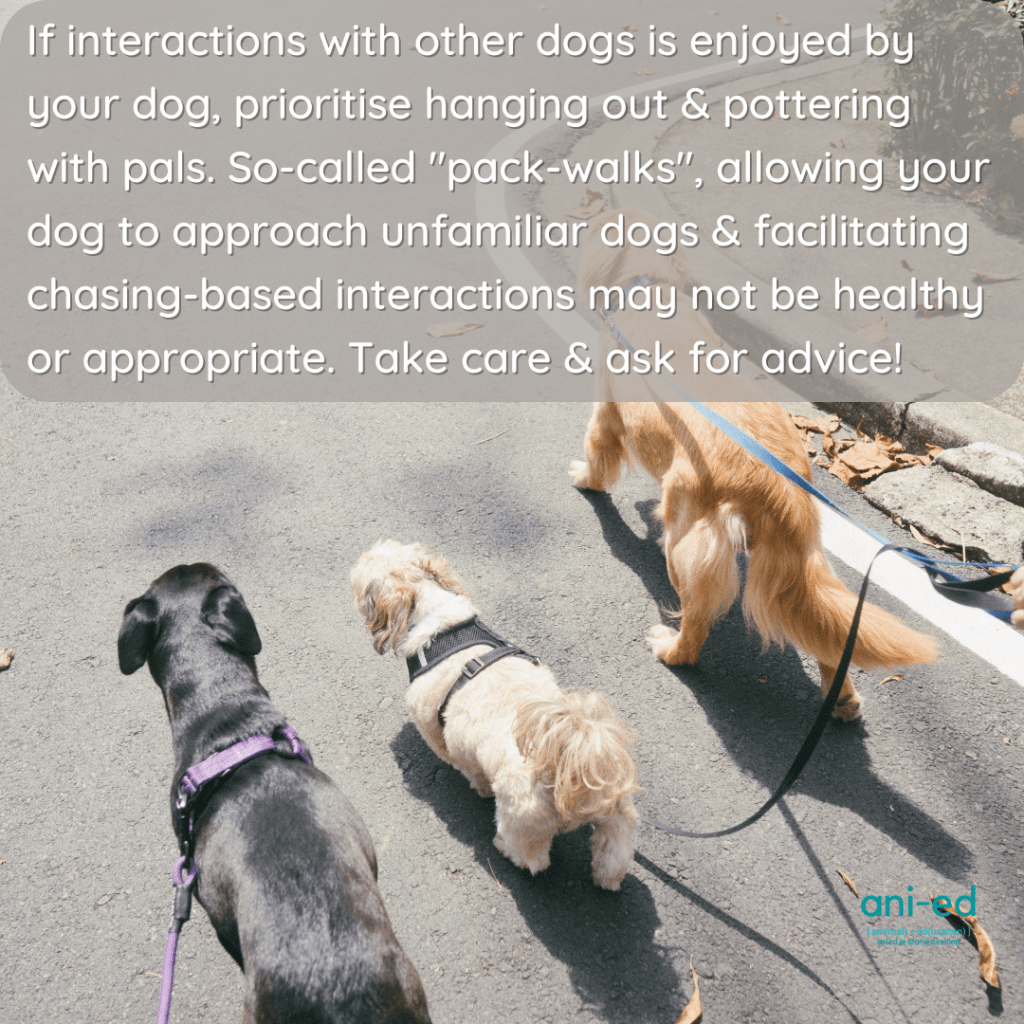
And mostly, don’t allow your dog be a nuisance for others. Your dog is not being “friendly”, and you are not “socialising” by allowing your dog run up to others unsolicited.
Think beyond walks for dogs. Shake it up and shift focus to provide for our dogs’ needs appropriately and safely.
2023 has come to a close and we have moved into a New Year. And rather than this be a time for resolutions, it’s a time for reflection.
It was a year of ups and downs for me, and AniEd, with some serious downs around the middle and some temporary and unofficial suspensions of services for mental health breaks. It ended in a whirl wind, and on the up, that I think I’m still processing.
And not just last year, but the last few years. We, as a global society, emerged from the strangest of times…from a Pandemic that I certainly don’t think we’ve taken the space or time to process.
And that’s affected the world of dogs, and dogs for this world, greatly.
2023 Stats
In review of last year, about 64% of the dogs I saw (through AniEd’s Behaviour Matters programs) had come home during Pandemic conditions, which in Ireland, went on and on. These dogs had even higher expectations thrust upon them…dogs were seen as cure-alls to treat your lockdown-ills throughout that time.
These dogs came home when the world was very odd indeed, and of course those conditions couldn’t persist and within, on average, 1-3 years of arriving home, they and their humans required intense and very specialised help.
There wasn’t a dog to be got throughout the country from pounds, rescues, breeders, DBEs…or from anywhere. Such was the panacea that dogs, at that time, represented.
Over the 12 months of 2023 I saw more cases involving behavioural euthanasia than ever before. 23% of my cases ended sadly and all but one of those dogs came home during Pandemic conditions. Another 4% were rehomed due to their behaviour too.
That’s over a quarter of these dogs, and their humans, suffering under their current environmental conditions. And I do mean suffering.
No shaming. No blaming.
While these data make me sad, they also make me regretful, frustrated, exhausted, and sometimes even angry.
Let me be very clear here. This is not about guardian-bashing. Pet owners/guardians are our most vulnerable stakeholders in our industry; high expectations, little support, substandard education yet all the blame and all the shame is directed at guardians. We don’t shame or blame here.
But I am going to hold our animal care industries and dog producers, including breeders and rescues, to higher standards than guardians. We are supposed to be the ones setting the tone, providing the support, being ambassadors, guiding and educating.
When I work through histories with each guardian, on behalf of their dog, I spot markers along their journeys where if only they had received the right guidance, if only their decisions had been better directed, if only they had got in touch…if only…
If only…sourcing
If only we could have been there to support and guide these prospective guardians in choosing a suitable source for their dog.
I don’t care about ideologies, I care about welfare. So when dogs are reared, kept, or handled in ways that do not support welfare and behavioural health, that that dog has come from a rescue organisation, from a DBE, from a breeder, is not a priority to me. What does the dog’s behaviour say about their experiences? What does the dog’s behaviour say about what they are going to need to remain healthy (behavioural health is health) and for welfare to be maintained?
60% of the dogs I saw last year in relation to behaviours of concern had been reared outside of a home environment and/or spent time in kennels/outside home environments during vulnerable behaviour developmental periods.
Dogs, who are expected to live as companion animals in family environments, are less likely to be successful when reared like livestock. Dogs have different developmental periods to livestock and require careful exposure to the worlds with which they are expected to cope when they are young. Not to mention the expectations thrust upon dogs by humans and society.
Did you know that the first FIVE weeks of a puppy’s life are exceptionally important to support brain building?! Did you know that the first THREE-ish months of a puppy’s life are exceptionally important to support brain development? Did you know that the FIRST year (at least) of their life is exceptionally important to support social behaviour development?
We have so little time to do so much so carefully. And it’s very difficult to do this when the dogs are not developing in enriched environments, supported through enriched experiences.
If only…country folk & city folk
Just like with early rearing experiences, during puppyhood and adolescence, the world in which a dog has been living prepares them for that world.
So when we take dogs from rural, quiet circumstances and bring them a world away to the city and the depths of suburbia, there will often be difficulties.
And that’s exactly what happened 57% of the dogs I saw last year. Dogs who had been provided with minimal exposure and then expected to slot into the hustle and bustle of Dublin. Of family comings and goings. Of traffic and doorbells and bangs and construction. Of seemingly non-stop action. Having been prepared for a quieter and slower life.
If only…too little, too late
We well understand that guardians tend to seek help for their dog’s behaviour reactively and usually when their dog’s behaviour becomes obstructive for the humans.
Sadly, just 23% of guardians had sought any training from a professional (calling themselves trainers, behaviourists, vets) regarding their dog’s behaviour but only when things were going South. Just 4% had any professional training in place proactively…before any behaviours of concern had reared their ugly heads.
My entire hope in developing AniEd as an educator for trainers was to reduce reactivity and promote proactivity. By getting the best trainers out there and into the lives of guardians and their pets, surely we can prevent behaviours of concern arising…right?!
Guardians who had rehomed their dogs had little to no support post-adoption, with most not being able to source recommendations for help from the organisations from whom they had adopted dogs. Just 2% of guardians (who had adopted from a rescue organisation) had help in place for their newly adopted dog in their first three months home…and that was mainly me…because their dog’s behaviour had deteriorated to concerning levels during this time.
88% of cases that sadly ended with behavioural euthanasia had been dogs adopted from rescue organisations. Guardians, new adopters and rescue organisations need better and more support to make sure that dogs go to the right homes, stay in those homes, are safe in those homes and thrive in those homes.
If only…let’s get physical
The connections between physical and behavioural health are well established…behavioural health is health.
And 53% of the dogs I saw relating to behaviours of concern were experiencing or suspected to be experiencing physical contributors, most commonly signs relating to musculo-skeletal pain and gastro-intestinal inflammation. Behaviours can be considered clinical signs of pain and physical disorder.
Almost all of these dogs had no treatment or veterinary plan in place relating to their physical disorders before we started our program. For the most part, seeking veterinary consultation has been an important part of program development and we need veterinary personnel on board to treat pain and GI discomfort proactively. Dogs are stoic and they don’t make the diagnosis of chronic pain easy for us.
What’s more, 41% of dogs were assessed as overweight at the beginning of our program and most guardians had not been aware. Of course, this is never an easy conversation to have but carrying extra weight is contributing to a welfare crisis for companion animals In Ireland, and beyond.
Correlation is not causation
These data are just from one small business for whom these are not our primary services. How meaningful are they in the grand scheme of things?
But, to me, these data are impactful. The numbers tell me about the experiences of these dogs, and their humans.
And most importantly, they tell me where our efforts are needed, where our industry needs to direct its attention.
But we need help. While we, as an industry, must present ourselves as educated professionals with years of experience and years of building knowledge and skills, guardians must begin to recognise that.
Every single guardian I work with experiences revelations during our first conversations. The level of knowledge of canine behaviour and skill in teaching and handling pet dogs, among guardians (and many pros too) needs a lot of building and development. We are all learning always, including me. Every case teaches me so much.
Decades of shaming and blaming guardians has been emphasised by TV training and now, social media, where it seems you can’t do anything right for your dog. Almost all guardians who come to work with me express that they have experienced that and that they have sought help with trepidation.
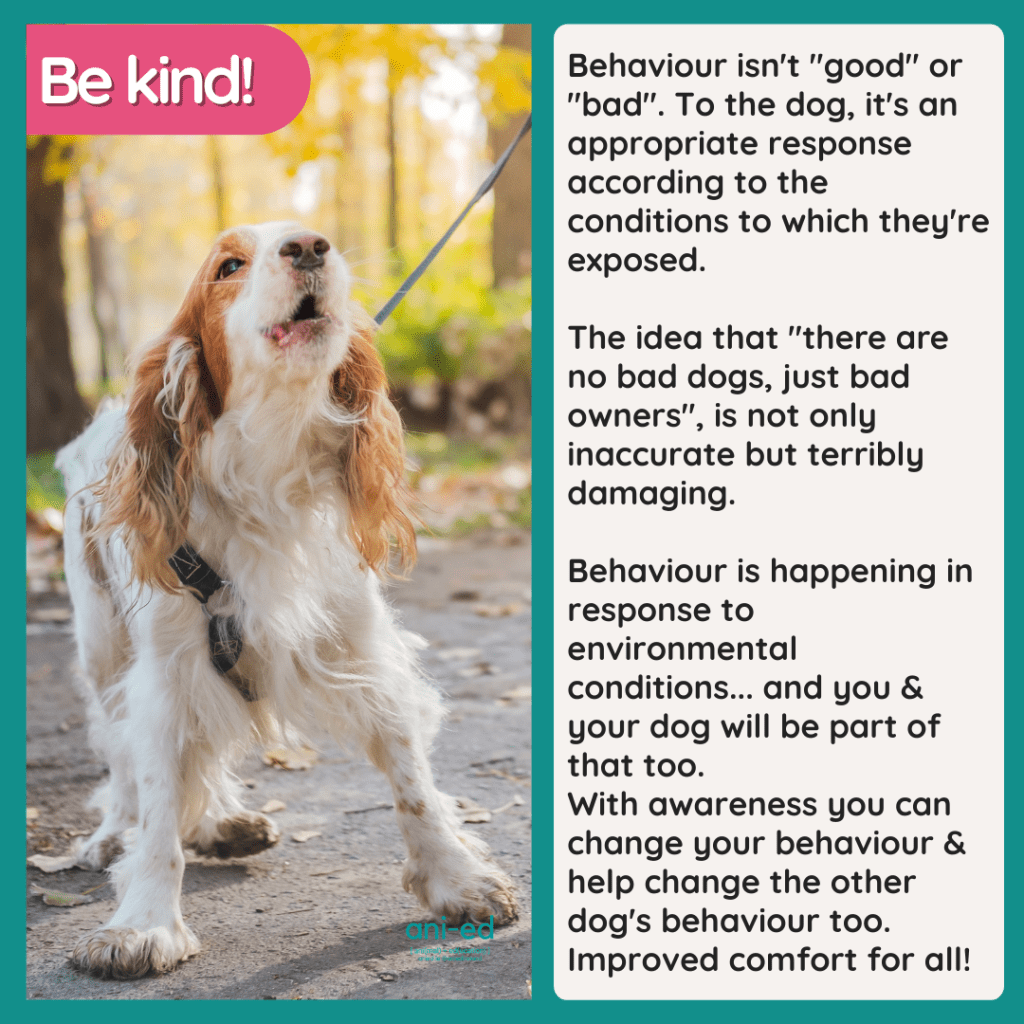
When the prevailing culture says that “there are no bad dogs, just bad owners“, that “puppies are clean slates” or “it’s all in how they’re raised” and other myths, it’s no wonder we have difficulty reaching our target market in time.
Reflections
In reflecting on the year past and stepping into this New Year coming, I see plenty of ways we can make things better for dogs and their humans. But we need help, we need collaboration and connection. Working together with a central focus on welfare allows us to dig our way out of these many pits, and progress.
And besides all that serious stuff, make this New Year more dog. At a time so obsessed with deprivation in all that New-Year-New-You marketing, make 2024 MORE DOG.
I haven’t added pictures and funny memes to this one in respect of this reflection. Sorry if it’s all been a bit wordy (about 1600-ish words) so if you’ve made it this far, thank you! Let’s start digging and making progress in the lives of pets & their people!
We’ve had a few recall cue blow-offs….not any old casual recall cue… Decker’s do-or-die almost 100% fluent & reliable recall cue…
No real harm was done and he was never in any danger but these were clear blow-offs and the dog’s behaviour is information.
What’s going on?
As humans we look for rhyme and reason behind behaviour so that we can rationalise it, understand it, and shape our responses.
Settle in for some story-time before we get to the point…
Why?
A little before Christmas we were out, close to dark in squally winds. Decker had been running about, but appeared a little vigilant, stopping to sniff the wind, and look behind him with a lowered tail, before moving on again. This in itself would be unusual for this dog and I have maybe seen this response a handful of times in his life (he’s just under twelve!).
Ambling along, and suddenly he took off, directly with nose to the ground, in a bouncy gait. I would associate that with scent trailing…and I got a bit of a fright. This is also very unusual for this guy.
I yelled and yelled, and he eventually turned from about 50m away and returned, apparently unscathed. Recovered, moved on and no further recurrence.
Maybe he detected something worth worrying about, maybe his mind was on that, inhibiting his ability to respond to competing cues. Maybe.
Why?
In the last couple of weeks in this location, we’ve met four separate and different bitches in heat. Owners called out, but only one of these dogs was on lead. I mean…c’mon…
Decker is an entire male but isn’t really interested in face-to-face interactions with other dogs. Although, he is all about sniffing the girl-wee and spots where others have marked.
But he didn’t show any interest in these passing girls and I gave them all plenty of distance.
Maybe his interest in girl-wee is piqued significantly here and at this time…maybe one of these girls had passed our way just before us. Maybe.
Why?
Decker is an old guy and will soon turn 12. What’s more, that’s very old for his type, who are not long lived. At all.
As we age, our brains change affecting our behaviour. And as we age, changes to our brain, including atrophy of various areas, impact inhibitory control. This may causes increases in impulsivity and in sensitivity to delays in gratification. (Drobetz et al, 2014) (Morales-Vives & Vigil-Colet 2011)
On top of aging and an impulsive personality type (which is largely unchanged since he was a youngster), when he was about 9.5 years old he develop cachexia after a stomach/gut impaction and intussusception. This increased his desire to eat all things edible (and many things not edible), and there have been notable changes in his ability to inhibit his responses across a range of contexts since then.
Maybe Decker just can’t resist moving onto sniff and gather olfactory information, continue to interact with his environment and experience glorious sensory feedback due to increased impulsivity. Maybe.
Why?
After a gradual slow-down over the last few months, we started Decker on Librela and December marks his third dose. After his first dose there was a very noticeable increase in activity, silliness and running about. With the third dose has come a whole new level of nuttiness and running. So much running and jumping and go-go-going.
Maybe all this increased activity, comfort and enjoyment just makes recalling not on the cards. Running about is so much more fun and he has time to make up for! Maybe.
Explanatory Fictions
Any or all of these whys could be in play; of course they’re possible. But we could fill in all sorts of details to satisfy some explanation.
What does the evidence say? Ask the dog! Remember, the dog’s behaviour is information.
When behaviour does or doesn’t happen, look at function. How does the unwanted behaviour (recall-blow-off) meet the dog’s needs? What’s he getting out of it?
What would I advise?
Herein lies the problem. I would immediately be able to offer many words of wisdom to any guardian with whom I’m working, to help and support their and their dog’s progress. But it’s hard to see the wood for the trees with your own dog.
My initial jump was to take it personally. I ran toward him and grabbed his harness, attaching his line. All thoughts of potentially startling him or poisoning this wonderful, all-powerful cue with my urgency. You don’t get to blow off that recall cue. Nope. No way.
I couldn’t take that objective step back that I so advise my clients…”it’s just behaviour”, I say. “He’s not doing this to torture you...” I think.
All my knee-jerk human responses immediately kicked in. I lost my objective trainer hat pretty efficiently!
Perspective & a plan
We had three recall blow-offs, one each day three days in a row. In the same place and under similar conditions.
After the first one, I greatly increased the number of recalls when he wasn’t apparently interacting with something specific and rewarded with tossed kibbles and the opportunity to return immediately, or a ball throw or tug if he asked. We still had a 98+% recall rate so all is not lost. Perspective.
His behaviour is telling me what he needs. And it’s probably not more recall-drilling. He needs more time to do what he wants to do without me nagging him with recall cues, he needs to get to run around safely. His blowing me off is telling me that.
We haven’t really been drilling recalls at all, instead working on visual cues for engagement. So perhaps we can work on olfactory interests becoming recall cues too. Make it fun and functional.
Behaviour ebbs and flows. There’s no such thing as a completely learned and certain response. Many biological and environmental factors affect behavioural responses all the damn time. Good teaching makes behaviour pretty predictably but neither dogs, nor their humans, are automates. We can’t expect anything but canine and human responses, respectively, and we shouldn’t.
The dog’s behaviour is just behaviour; just information about what they need. We just need to step back to see it.
Once we get through this, and Chinese/Lunar New Year in February, we have a relatively clear few months and that’s when we can really get stuck into fireworks work…
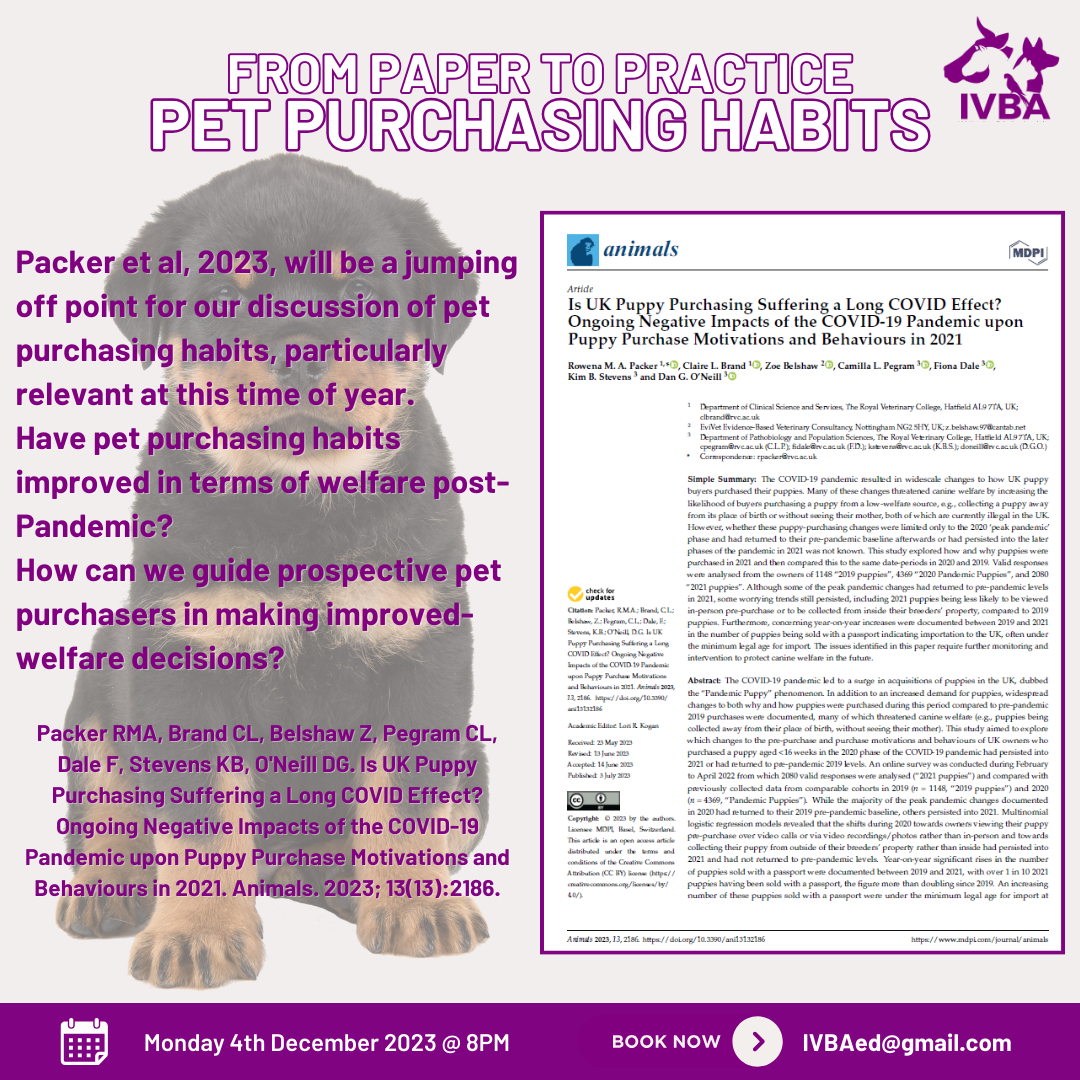
Join us for a brilliant and FREE webinar on Monday evening!
This is such a relevant topic given the time of year.
This paper will just be the jumping off point for us discussing pet purchasing behaviours, particularly pre-, during and post- Pandemic. And that allows us to examine the effects of acute increases in demand…similar to what can happen for all pet species around Christmas and the Season.
If you work with pets and their people, please come along. This is a truly an interactive event and we want to hear from you so that we can all collaborate on learning and ultimately improving the welfare of pets and their people!
To book your spot, email IVBAed@gmail.com and I will respond as soon as possible with all the details.
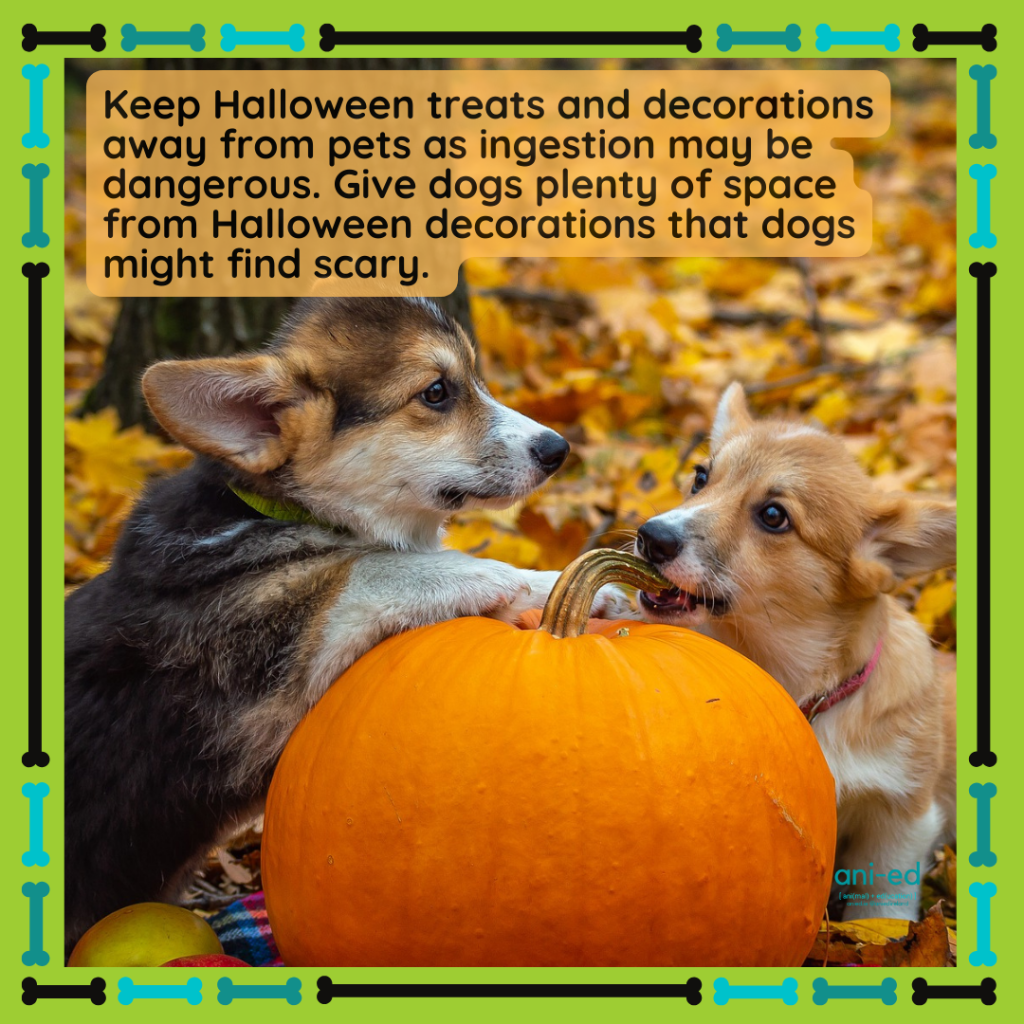
Halloween is just upon us and over the last month or so, we have been trying to spread the word about planning to support our pets on the night, particularly in relation to fireworks, but other activities too.
The distress and stress associated with Halloween don’t end once the night itself is over. Not only might fireworks continue, the stress response elicited on the night might continue to impact your dog’s physical and behaviour health.
This is a pretty low-stakes situation. He’s a pretty resilient fella and will recover immediately, it’s a bike and there’s no person or animal nearby and we have space to move on and by.
He’s certainly seen bikes parked here before and people doing all sorts of odd things, without batting an eyelid.
Why was it more meaningful on this occassion? I don’t know.
But here’s a consideration that might not always be prioritised: physical issues including pain.
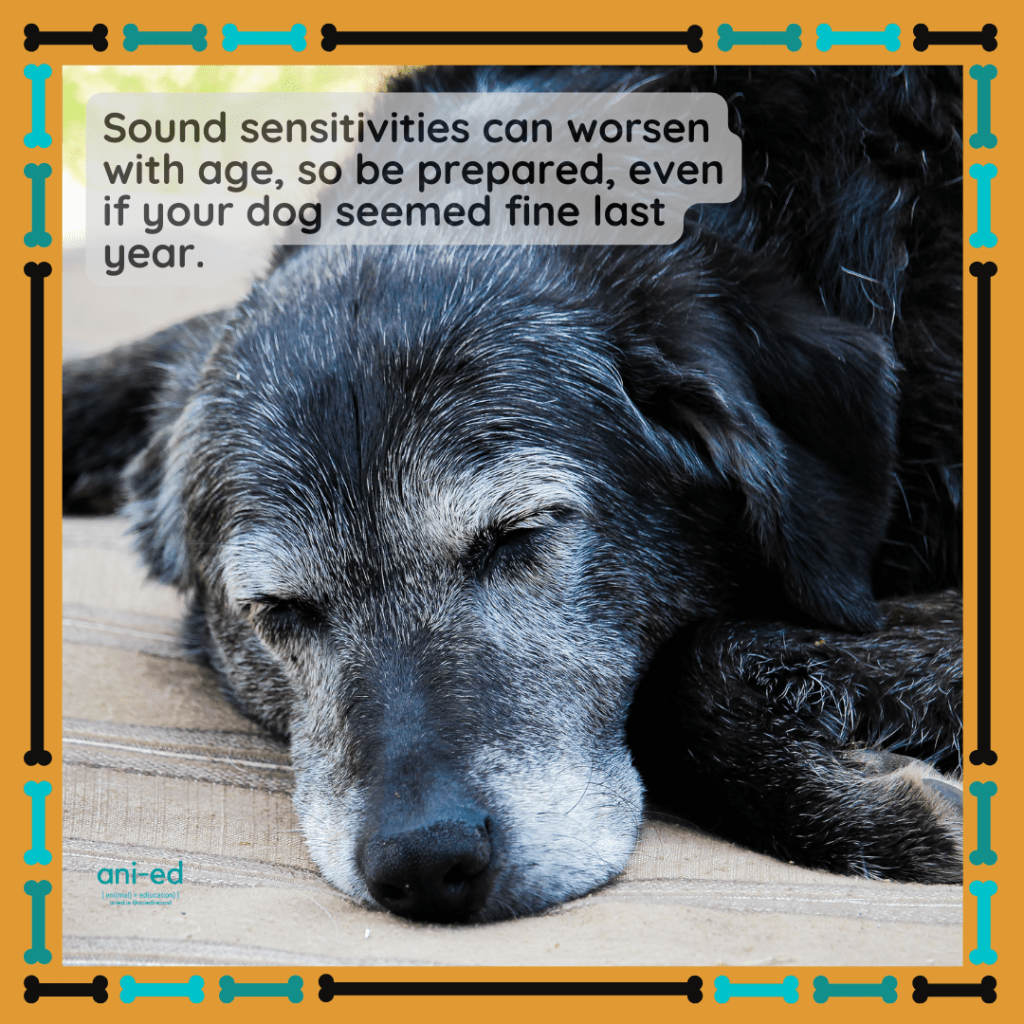
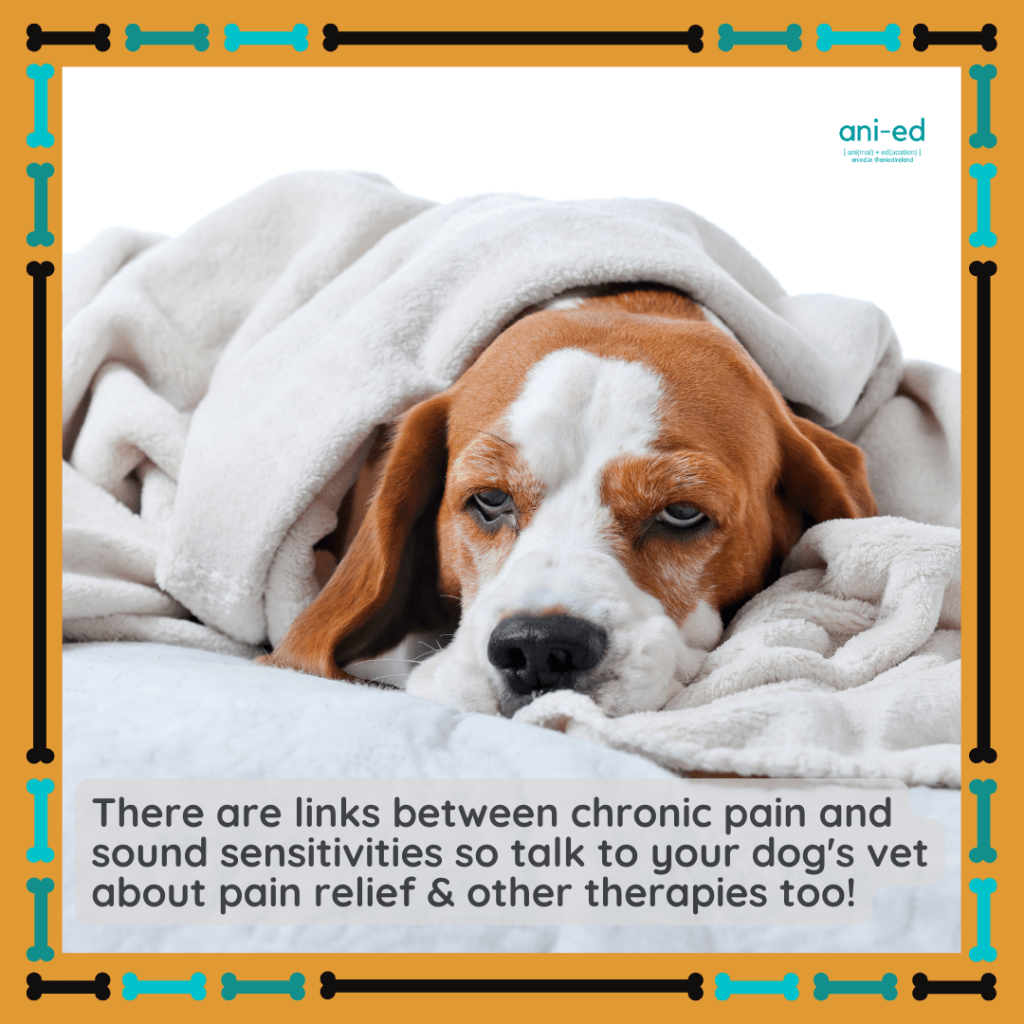
Chronic pain (relating to OA) is linked with sound sensitivities (Lopes Fagundes et al 2018), so it’s reasonable to link pain with other environmental sensitivities, particularly if the seemingly sensitive response is unusual for the individual or for the context. (Mills et al, 2020)
When this happened, Decker was undergoing some treatment for an infection and was also taking pain relief. Seeing this, I supplemented his pain relief afterwards and made sure he got some good rest with appropriate activity.
We can be social models and supports for our dogs when something scary happens, reassure them, give them space and time to recover.
Also recognise that while behavioural responses are always environmental, the environmental conditions may be more or less salient dependent on the internal condition.
Pain, for example, may cause things to be more or less salient and may mean that fear related behaviour is more effective at keeping the behaver safe.
Fear related behaviours like these cautious and avoidant responses are more reinforcing (R-) when the body is experiencing stress and pain, and therefore functional and more likely to be repeated.
Dogs can’t be in pain. The better we become at spotting less obvious signs suggesting the dog may be in pain, the more efficiently we can treat pain, even if just-in-case. Check out Mills et al, 2023, and consider pain as well as discomfort.















































 AniEd Ireland