Category Archives: #100daysofenrichment

Day 55 Sniffing Saturday

Welcome to Day 55 of #100daysofenrichment and thank you for joining us on this journey!

Although our challenges are directed mainly at dogs, we want all species to enjoy and benefit from #100daysofenrichment so, please join in, adjust and adapt to help your pet or companion live a more enriched life.

Don’t forget to review all the information leading up to #100daysofenrichment and more here on playing safe. Know your dog!
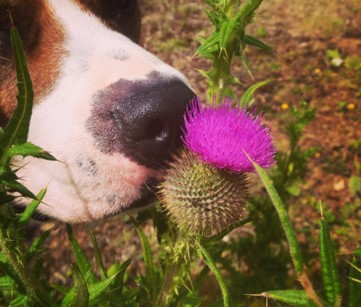
sniff

Sniffing Courses

Saturdays during #100daysofenrichment are all about emphasising the dog in all our dogs; all about sniffing and doing dog things.

Today we are going to formalise searching and hunting a little, by setting up courses specifically for sniffing and finding a particular hide.

For our work today, we are going to be searching for food rewards or toys, but this training may be more and more formalised and the dog learn to search for specific odour, for example.

Let’s keep it fun and light, rather than competitive, and have our dogs search for their favourite foods or toys.

We have already worked on putting sniffing on cue, now the cues are going to be the obstacles on our course.

Sniffing courses don’t need to be elaborate. Just 3 or 4 obstacles and you’re set! (Clip)

How The Nose Knows

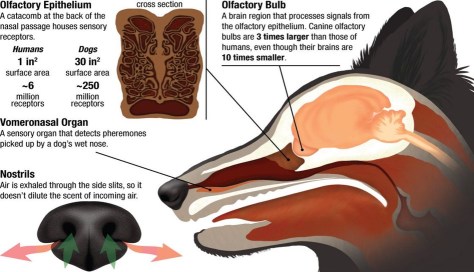
Air is inhaled and warmed and humidified. Scent chemicals are processed by sensory cells via cila (tiny projecting hairs) that extend into the nasal cavity, with cilla housing numerous scent receptors and each scent receptor has tens of connections delivering messages to the olfactory bulb.
Picture1
That cross section shows the turbinate bones, a beautiful network of scrolling bones that are lined with scent detecting tissue.

For this complex system to work, the dog’s nose must be moist and lubricated. The philtrum, which is the tiny crack running from the dog’s top lip to its nose, will move fluid up from the mouth to the nose via capillary action.
That’s why it’s important that water is always available for your dog during sniffing activities. 

Images and more from here

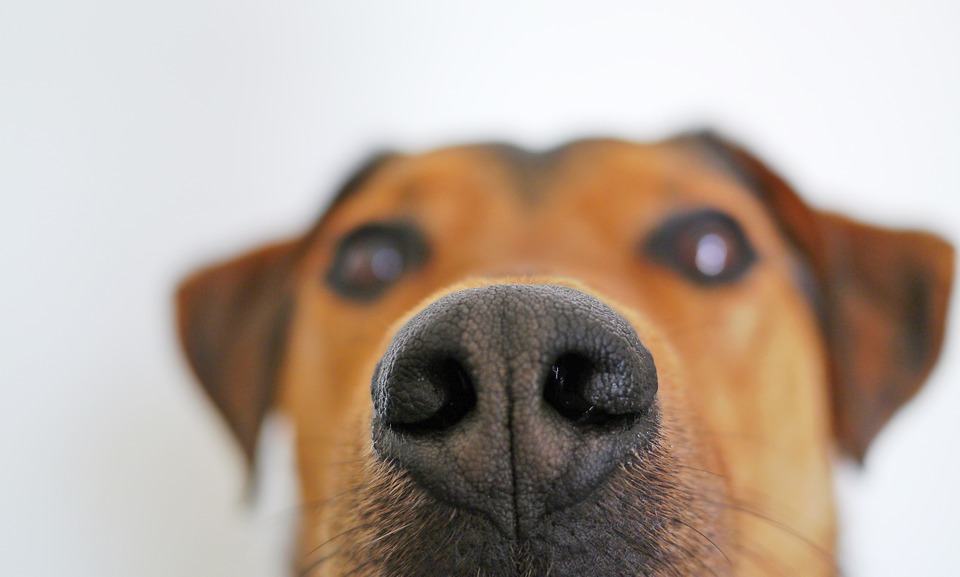
Dogs have a much greater surface area within the nasal cavities than humans. This nasal cavity tissue is covered in sensory cells, well over 125 million (we, pathetically, have about 5-10 million!). This huge amount of input can use to a third of the dog’s brina power when they sniffing.

Not only that, but they have two olfactory (sniffing) systems! The vomeronasal organ doesn’t link up with the olfactory bulb, like the nose does, and instead links up with the accessory olfactory system.

The Scent Puzzle

To understand the sort of puzzle you are setting your dog, and to get a little understanding of the puzzling they undertake when sniffing, having an understanding of how scent works can be helpful.

Clip

How Scent Works

The scent puzzle is affected by:

  • airflow

The scent plume is the shape created by airflow as the scent becomes weaker the further it moves from source.
Airflow moves scent and scent diffuses from the source in a scent cone.

Airflow will be affected by windows, doors, heaters and so on.

  • layout of area

Height of the ceiling and the room shape will affect airflow and the scent puzzle. Scent will diffuse around the space.
The scent will pool in corners, bouncing off the floor, walls and ceiling.

  • ambient temperature

Heat distributes scent and cold contains scent.

  • surfaces

Scent may soak into softer surfaces as it passes over them and it will pass more smoothly over shiny surfaces.

Damp areas may retain scent for short periods.

  • obstacles

Scent will travel around, through, over, and under obstacles. If it can’t, scent will travel upwards and then fall down again causing pooling.
Scent will move smoothly over round, smooth obstacles and angled obstacles will cause scent to travel up and over the top of the item, circling (turbulence) before falling away on the other side, causing pooling.

  • disturbance

Someone walking in the area will disrupt the scent cone. As you move about the sniffing course, think about you might disrupt the scent. When organising the sniffing course and moving obstacles, move several about. When you move or disrupt an obstacle, you cause a disturbance of the scent and if you just move one obstacle, the target obstacle for example, the dog may learn just to seek out disturbance rather than odour.

Setting up Searches

For our sniffing courses today we will be using food and familiar items, the dog’s toys.

You need only use very small amounts of food and it’s a good idea to use food that your dog really likes, to motivate them to work out that scent puzzle.

If you can smell the search item, then your dog will find it very strong and possibly even aversive. Very strong scents can overwhelm the scent receptors, making it harder for the dog to source the hide.
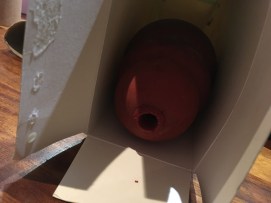
IMG_2471

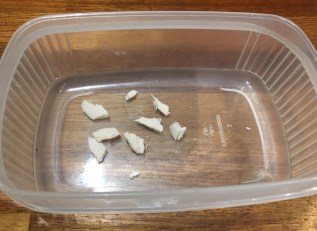
Use a specific plastic or metal tub or container for your searches. Put your search items, the food or toy, into the tub and hide that.
This prevents you contaminating obstacles with odour, which will confuse and frustrate your dog.

In scent based sports, there’s a lot of talk about the dog’s indication. This is the behaviour the dog shows when they have found odour.

For our purposes, indications don’t really matter as the dog can source the target immediately, and eat it or play with it. But, it can be fascinating exercise to observe your dog closely and learn to ready him or her.

What might tell you that your dog is on to the target scent? Your dog might go still, become more focused, close their mouth, do a double take, change speed of movement or tail change and you might observe air scenting. 

Watch those noses workin’! (Clip)

Safety First

When choosing a search area, check it carefully before bringing the dog in and beginning the search.

Check for cables, sockets, glass, sharp objects or corners, machinery or moving parts, nails or staples, hot surfaces, slippery surfaces, hazardous substances, distractions from scents; even things like doors or steps can cause the dog to bring their head up suddenly, striking it.

Check each obstacle that you use too.

Always play safe!

Designing searches

Arrange the obstacles in a sort of rough circle. This will keep odour within a smaller search area so that it makes for a better puzzle and teaches your dog to stay within the course, rather than needing to search the entire space.

Having each obstacle facing or opening in toward the centre of the circle will contain scent and make for a more fun and straight forward search.

Think about the scent puzzle before introducing your dog.

We can’t possibly imagine what it’s like to live in an olfactory world, like our dogs. But, we can understand the way scent moves, a little, by imagining it to be like the flow of water.
Stand in the room or space where you will set up your course. Picture water seeping into the room from all the available gaps, and as it flows in, how it moves about the space. What does it do when it meets an obstacle?
How does it behave when it hits a wall or door?

This example shows the movement of fog to represent how odour might move in a space and around obstacles:

Clip link

This visualisation will help you to experience just a hint of how airflow moves scent around the space and what your dog is dealing with.
 

Clip

Ideally, work with your dog off lead, but if that’s not safe, use a long lead and hold it without tension. Walk behind your dog so as not to disturb the scent.

When just starting out, the dog might be unsure of what they are doing. Make the first searches really obvious and it’s not a big deal if the dog finds the hide visually. Just let them learn that this set-up means the reward is available; soon they will start to search for it.

If the dog is really stuck, walk across the sniffing course, close to the hide. This will usually draw them across the scent plume and helps them to catch it and follow their nose again.

Don’t be concerned if they begin to manipulate or play with the obstacles. This is normal exploratory behaviour and may be very enriching for them. Make the food or toy really easy to find so that they begin to go directly to work, with some practice. 

Clip

Keep your dog out of sight while you set up. I find that, with one course set-up, I can move the hide around 3-5 times. Each time, I reset the dog elsewhere, go back and set up and then release the dog to search again.
You can use your sniffing cue, or develop a new one for this game; lots of people who compete in scent based sports, use the verbal cue “Google!“, which I think is perfect!

Clip

As soon as your dog finds the hidden food, move in and drop a couple more treats in the same spot. This encourages the dog to stay at source a little longer, and rewards them for working hard.

Sniffing courses are especially wonderful for puppies and shy dogs. The dog is encouraged to interact with its environment, with weird things that are set-up and they get to take the lead. This is their thing, that they excel at.
This boosts their confidence and allows them to navigate their world on their terms. 

Clip

You can use your dog’s favourite toys too. Set up just as you would with food. 

Clip

Start easy and to raise criteria, increasing the challenge, you can add a minor bump in difficulty by adding one of the following at a time:

  • hide in smaller boxes; while bigger boxes dilute the scent, they create a bigger scent cone
  • use height – as soon as odour is off the floor, the dog will find it much more difficult so add height carefully and sparingly
  • obstacles in the scent cone
  • lay hides in corners, at the start line, in the middle of the area, along the perimeters
  • close or turn boxes

But for maximum fun and sniffing enjoyment, keep it simple and the dog successful. Sniffing courses should be about the dog winning!

Sniffing on cue

We don’t need to teach our dogs to sniff; they got that down. But, we can teach them the meaning of a specific signal: see this set up…sniffing for food.

Cues (or antecedents) are the things that tell an animal to do a behaviour because it results in reinforcement (or tells them to avoid a behaviour that results in punishment). All behaviours are naturally cued by things that happen around the animal and teaching is about helping the animal learn the meaning of cues we introduce.

Cues can be sounds, words, hand signals, gestures or other environmental signals, like our sniffing course set-up; anything that the dog can perceive.
Different types of cues work better in different environments, for different dogs, and for different behaviours.

Today’s challenges will rely on environmental cues – your sniffing course set-up.

Sniffing for food

Ideally, we would like our dogs to be sniffing out their regular meals, as much as possible. But, some dogs will need a little help to get them going and we can have our dog sniffing for treats too!

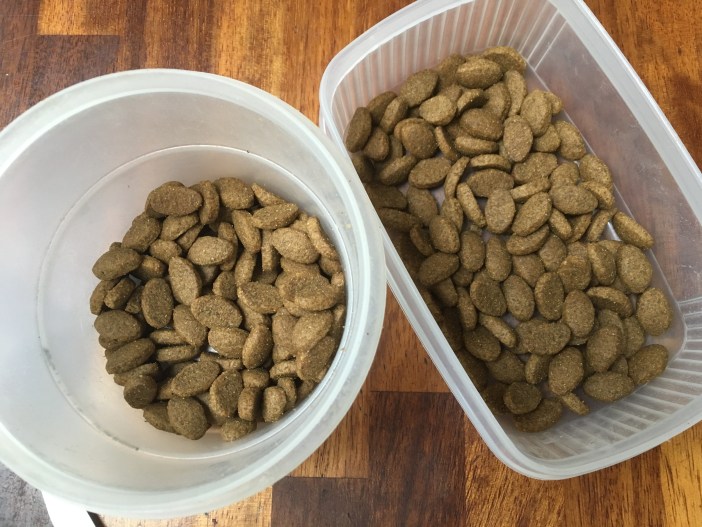
Kibble is a pretty versatile food type for enrichment type feeding, and works well for this exercise.

You can add kibble in with other yummier treats and toss those. Or you can make a Training Mix so that kibble smells and tastes yummier, but without having to add extra calories or other foods, should the dog be sensitive or restricted.


Link

You can improve the smell/taste of kibble by grilling it a little, so that it becomes crunchier and oilier. You might also soak it in stock or other flavouring.

Wet and fresh foods can be a little more challenging:

  • Fresh meats and meat mixes (e.g. raw and home prepared diets) – cut up into small pieces, boiled or baked, frozen in small ice cube trays or pyramid baking mats for small individual treats.
    Alternatively, you could use dried or semi-moist meats and cut them into small pieces for tossing. (Note that you feed a smaller volume of dried or dehydrated foods as they are more concentrated.)


  • Wet feeds (e.g. canned foods) – frozen in small ice cube trays or pyramid baking mats for small, individual treats.

Don’t forget fruit and vegetables too, if you’re dog likes them. Frozen peas are one of Decker’s favourite for sniffing!

Your challenge

Now it’s your turn. Show us what you and your pets, of any species, can do with these challenges!

Post to your social media accounts, using the #100daysofenrichment so that we can find you and join our Facebook group to share your experiences, ideas and fun!
You can comment right here too 🙂

We look forward to hearing from you and your pets – have fun & brain games!


Day 54 Freestyle Friday

Welcome to Day 54 of #100daysofenrichment and thank you for joining us on this journey!

Although our challenges are directed mainly at dogs, we want all species to enjoy and benefit from #100daysofenrichment so, please join in, adjust and adapt to help your pet or companion live a more enriched life.

Don’t forget to review all the information leading up to #100daysofenrichment and more here on playing safe. Know your dog!

Freestyle Friday

Now it’s your turn to get creative! Every Friday is Freestyle Friday. We’ll give you the ingredients for a puzzle or enrichment device and you build it.

Rules:

  • you must use all the ingredients
  • you can add anything else you like, or nothing at all
  • whatever you come up with must be enriching

Day 54 Ingredients

You must use the following:

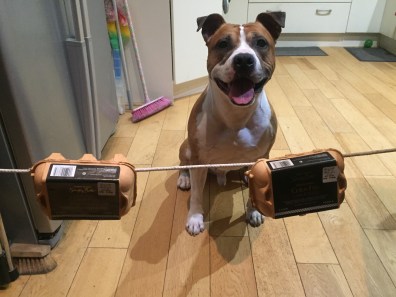
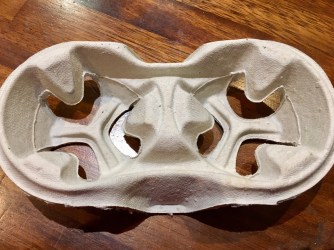
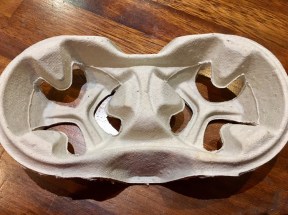
  • cardboard cup holder/s

cupholder

You can add food or toys or anything else appropriate, if you like. Or you can use this as it is.

We can’t wait to see what fun and brain games you and your pet get up to with this one!

Your challenge

Now it’s your turn. Show us what you and your pets, of any species, can do with these challenges!

Post to your social media accounts, using the #100daysofenrichment so that we can find you and join our Facebook group to share your experiences, ideas and fun!
You can comment right here too 🙂

We look forward to hearing from you and your pets – have fun & brain games!
Week 9 Equipment List

Week 9 brings us over the half-way point and into the countdown to Day 100!

Keep up with all the resources and challenges relating to #100daysofenrichment here
and join our Facebook group too!

All challenges are presented with multiple options so you won’t lose out if you don’t have one or two of the items.

For Week 9 you will need:

And for Freestyle Friday you will design your own enrichment device with the following ingredients:

  • tubs of different shapes and sizes

We have lots more fun and brain games for you for next week. Start getting ready…

Subscribe to this blog so that each day’s plan is delivered right into your inbox each morning.


Day 53 Suspended Puzzles Pt.1

Welcome to Day 53 of #100daysofenrichment and thank you for joining us on this journey!

Although our challenges are directed mainly at dogs, we want all species to enjoy and benefit from #100daysofenrichment so, please join in, adjust and adapt to help your pet or companion live a more enriched life.

Don’t forget to review all the information leading up to #100daysofenrichment and more here on playing safe. Know your dog!

20190227_225647202_iOS

Suspended Puzzles

At a glance:

  • taking puzzles to a new height, literally, changes the challenge greatly
  • you really can suspend any puzzle, but today we are starting with a more gentle introduction to suspended puzzles to help our dogs gain the skills
  • food and cognitive based enrichment
  • get the family involved in this one – kids love making puzzles for pets and these challenges offer lots of opportunities for children to use their imagination to come up with the best puzzle for their pets.
    Remember, supervise children in all enrichment activities and interactions with pets.
  • Suspended puzzle prep will probably take you about 5-10 minutes – having a collection of puzzle stuff is a good idea…it will resemble a pile of rubbish or recycling!


What do you need?

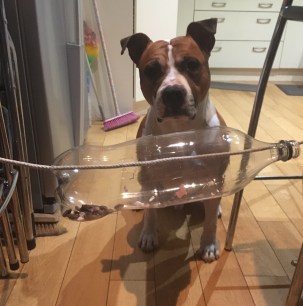
  • plastic bottles from soft drinks, for example
  • a range of food rewards
  • a toy or toys that your dog loves
  • paper for stuffing and packing
  • dog lead, cord, shoe lace, rope or similar (you cold even use a bamboo stick or similar)
  • Stuffables
  • Pringles tubes or similar
  • toilet roll tubes
  • a basket with holes

Enrichment Goals:

  • to encourage a wide range of foraging and exploratory behaviours
  • to do more feeding related behaviour than eating
  • to encourage the development of strategies (behaviours) for getting the food out of  the suspended devices
  • by varying the design of suspended bottles we will facilitate carrying out a range of different behaviours, broadening the dog’s repertoire

While this challenge is certainly food based, they are also experiencing cognitive, sensory and environmental enrichment, with lots of crossover between categories.

Working out how to get to the food and developing dexterous skills in manipulating the suspended puzzles are examples of cognitive challenge.

Sniffing out, tasting and chewing food all offer sensory pay off, but so does finding their way through each food puzzle, determining its value,  and engaging in the puzzle of getting to the good stuff.

Suspended puzzles encourage pets to interact with their environment – just the very interaction with the bottle is encouraging the pet to manipulate their surroundings, to get the things they like.

By carefully layering the challenge, so that they don’t give, we want to help the dog expand their range of puzzle-busting behaviours and facilitate your pet applying strategies from other puzzles to new ones; that’s a true cognitive gift and is growing your dog’s brain!

What goals can you add to this list for your pets?

How can we achieve these goals?

  • give your pet plenty of space for working on suspended puzzles and bear in mind there will be mess, so think about spaces that are easier for clean up
  • the more difficult you have made the challenge, the higher the value the reward must be so use HIGH value foods to motivate exploration and experimentation and make it VERY easy to get the food (no frustration!)
  • if your dog just dives in, in full on destruction mode that might also be an indicator that they need an easier challenge so they get to experiment with a broader range of behaviours

What adjustments will you make for your pets?

20190213_213605135_ios.jpg

Applications of Suspended Puzzles:

Suspended puzzles are a great to expand your puzzling-arsenal and carefully increasing the challenge will really stretch the dog’s puzzling abilities.

These puzzles offer lots of different possibilities for expanding the dog’s behavioural range, truly engaging them cognitively.

Suspended puzzles are truly adaptable – there really is no limit to how they can be adapted to suit different puzzling levels.

What I tend to see, though, when puzzles are given to dogs, is that well-meaning owners go waaaaay over board, coming up with the most elaborate designs to really challenge their pet.

Suspending puzzles can be quite a change for many dogs so taking it easy and increasing challenge very gradually is more worthwhile.

While it’s great to go for challenge, it’s important that enrichment remain enriching. That means that the challenge must be made appropriate and doable for the individual puzzler.

Our job is to adjust the puzzle difficulty so that our dog uses a range of behaviour and gets to the goal pretty quickly.

This is the true way to improve the dog’s confidence in puzzling (and in life) and help them expand their behavioural repertoire.

20190104_215452792_iOS

Because of the home made nature and variable materials used in suspended puzzles, it’s best to supervise your pet carefully when they have access to this puzzle.
Know your dog! If you have an ingester, these may not work.

If you are concerned about your dog ingesting non-food items during puzzling, have a pocketful of HIGH value treats in your pocket and be ready to toss a couple toward your dog, across their eyeline, if you think they are thinking about eating the bottle.
Making sure the challenge is very doable and they can get to the hidden food rewards quickly is key to modifying their behaviour and expectations during puzzling.

Check all your equipment for this challenge carefully and make sure to remove tape, staples, other fastners, small pieces and plastic pieces. With bottles, remove the lid and plastic ring before giving to your pet. Play safe!

Enrichment Options

Suspending puzzles increases challenge suddenly and drastically. It’s important to work incrementally to help your dog develop skills (behaviours) to solve these puzzles.

Increase or decrease difficulty by lowering and loosening the line, and by working against a wall or surface or have the puzzles freestanding.

Beginners: 

  • puzzle is suspended at or lower than your pet’s chin height
  • the line is looser
  • puzzle is suspended against a wall or surface

Intermediate:

  • puzzle is suspended at or slightly above your pet’s chin height
  • the line is tighter
  • puzzle is suspended against a walk or surface

Advanced:

  • puzzle is suspended at or slightly above your pet’s chin height
  • the line is tighter
  • puzzle is freestanding

Option 1 Jumblers

Simple and fun introduction to suspended puzzles!

Tubes!

Simple puzzles, with quick wins, so are the perfect introduction to Suspended Puzzles!

Link

Activity Food Dispenser

Add a couple of holes to a tube or bottle, add food rewards and suspend it!

Tube: 

Link

Bottle:

Link

Free standing tube jumbler: 

Link

Option 2 Hanging Basket

Suspend your dog’s favourite toy or stuffable in a hanging basket for an extra level of challenge to toy games. Have a fun game when the dog gets the toy, and then set up for another hanging basket challenge!

Link

Option 3 Bottle Spinner

Be careful where you pierce the bottles, to pass through the line on which they are suspended. Further up the bottle, toward the lid, makes it more difficult for the dog to spin to win.

Link

Option 4 Suspended Stuffables

Lots and lots of stuffable options and suspending them make the challenge more interesting and tricky.

Link

Option 5 Suspended Paper Treat Parcels

Start with suspended paper treat parcels:

Link

Add paper treat parcels to an egg box:

20190227_225647202_iOS

Add paper treat parcels to toilet roll tubes:

20190227_230635484_iOS

Link

There are more Suspended Puzzles, offering new and different challenges, over the 100 days!

Your challenge

Now it’s your turn. Show us what you and your pets, of any species, can do with these challenges!

Post to your social media accounts, using the #100daysofenrichment so that we can find you and join our Facebook group to share your experiences, ideas and fun!
You can comment right here too 🙂

We look forward to hearing from you and your pets – have fun & brain games!
Day 52 Your Favourite Trick

Welcome to Day 52 of #100daysofenrichment and thank you for joining us on this journey!

Although our challenges are directed mainly at dogs, we want all species to enjoy and benefit from #100daysofenrichment so, please join in, adjust and adapt to help your pet or companion live a more enriched life.

Don’t forget to review all the information leading up to #100daysofenrichment and more here on playing safe. Know your dog!

sgb

Tricks

At a glance:

  • trick-training is often approached differently and thought of differently
  • there’s no such thing as “just a trick”
  • it’s ALL tricks to the dog
  • trick-behaviours can be used to teach all sorts of applicable behaviours and skills for all sorts of situations
  • get the family involved in this one – children can be great dog trainers with lots of guidance, and lots of these behaviours are child-friendly, and make maintaining the peace with kids and K9s easier.
    Remember, supervise children in all enrichment activities and interactions with pets.
  • training exercises can be practiced in individual sessions of no more than 30 seconds at a time; have as many sessions as you can!

What do you need?

  • food rewards – you can use your dog’s regular food, a training mix, commercial treats, home prepared treats such as cut up meats, cheese, vegetables or homemade treats such as liver or tuna cake
  • toys or access to anything that your dog will work for

I am not a massive ‘trick training’ fan. But, I do love the enthusiasm and lightness that people bring to teaching trick behaviours – it’s seen as frivolous and fun…all teaching should be approached in the same way because it’s all tricks to the dogs.

Enrichment Goals:

Teaching simple behaviours, without the pressure of OBEDIENCE, brings benefits to both ends of the lead.

For the dog:

  • confidence & relationship building
  • mental exercise
  • appropriate physical outlets, rehab & conditioning
  • fun, positive associations with training
  • more relaxed approach to training
  • break up duration behaviours
  • might improve the image of a dog
  • the dog learns how to learn – this is just another puzzle to your dog…”how do I train the human to make rewards available?!“…it’s all human training, for dogs!
  • to teach the dog that their human will ask for behaviour and will make sure reinforcement is available – this reduces stress by improving predictability and controlability

For the human:

  • lots of practical applications to real life situations
  • might facilitate diversions, stress-reduction, focus & engagement, managing behaviour
  • fun, positive associations with training
  • improved approach to training
  • more relaxed approach to training
  • involve kids in teaching appropriate tricks
  • improves trainer skills – mechanical skills, observation skills, planning
  • learn how your dog learns

While training exercises certainly fall into the cognitive enrichment category, they can provide so much more.

Providing dogs with cues allows for a complex level of communication between two species; you are merely requesting that the dog perform behaviour (he might already know how to do the behaviour) and that request comes with a contract. Respond appropriately to this signal and rewards are coming your way. That’s the deal…that’s what being a good teacher is about – keeping your word and making it easy for your dog to train you.

This forges the most healthy of relationships between our two species. This is a level of social enrichment that’s tricky to replicate.

When we talk about enrichment being enriching, this is never more clear than when we start to teach behaviours intentionally. It’s the human’s job to set the dog up for success by making sure the behaviour is doable and that rewards are fast-flowing.

There’s no test at the end of this and you and your pet are not under any pressure. Learn to enjoy the time together, whether you achieve the goal behaviour or not. That’s what’s enriching here…the social and cognitive outlets such exercises provide (for both species).

What goals can you add to this list for your pets?

How can we achieve these goals?

  • although you can use any reward that your dog will work for, using small food rewards that are quick to eat are best for these exercises so we can have lots of fast repetitions
  • keep it simple and split behaviour – reward approximations toward the final behaviour, rather than hoping that your dog will offer the goal behaviour quickly
  • take your time and work in many short sessions
  • try for 30 seconds at a time, 5-10 rewards each session, and then take a break
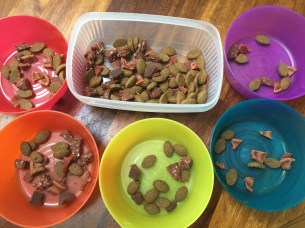
  • portion out your dog’s daily food and allot some for training exercises

20190105_121250580_ios

  • make a training mix by adding in something yummier and leaving it all to ‘cook’ together in the fridge; the smells will mingle, harder foods will soften a little, and everything will become more valuable

20190105_121536763_ios

  • remember to adjust your pet’s diet accordingly to accommodate the extra calories from treats added, where relevant
  • split your food rewards into little bowls with just the right number of rewards in each bowl so that you are ready to go; stick bowls of rewards in places where you may need to teach and reward behaviours so that you have rewards ready to go

20190105_121833562_ios

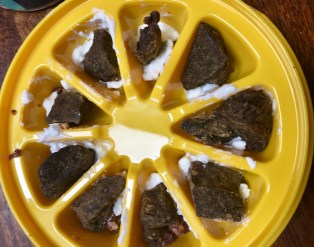
If you are feeding wet or fresh foods, cut up small or mash to a paste and present on a wooden spoon or spatula. Alternatively you can freeze in small ice cube trays or a pyramid baking tray so that you can use small portions and individual treats.

IMG_9387

What adjustments will you make for your pets?

Applications of trick behaviours

I prefer to approach tricks from the applicable point of view. How can these behaviours offer real-life benefits?

What behaviours can I teach, with a tricks-attitude, that really benefit the dog’s experience?

We’ve talked lots about targeting already – this forms the basis for some of the best and most applicable ‘tricks’.

Managing behaviour – for stress related behaviours:

  • head turns (divert behaviour, prevent hard-staring, diffuse tension, conditioning & rehab, re-focus, move and position the dog, maintain position, husbandry training) – nose targeting, diffuse and divert
  • middle/’peek-a-boo’ (we are going to work on this later in the #100days)
  • circle the handler, walk behind
  • hand targets for re-focus
  • chin targets for calming and resetting
  • nose targeting to teach LLW, focused walking, competition heeling
  • nose targeting for recall

Moving & positioning:

  • hand targets, chin targets
  • body targeting
  • perch work, pedestal work, platform work
  • moving around an item
  • moving to a target
  • maintain position for husbandry training

Conditioning, fitness, rehab work:

  • hand targets, chin targets, foot targeting, body targeting e.g. hip/shoulder targeting
  • perch work, pedestal work, platform work
  • moving around an item, to a target
  • rear end awareness & improved body awareness
  • sit pretty, paws up, walk/move on hind legs
  • bows, crawling

Husbandry training:

  • hand targets, chin targets
  • foot targeting
  • body targeting e.g. hip/shoulder targeting – to move and maintain position
  • roll over, play dead, paws up

Retrieving items:

  • picking up items
  • tug items
  • tidy away items
  • assistance dog type behaviours
    For example, close doors, pick up/place items, take socks off, empty washing machine etc.

Enrichment Options

Today is for tricks your dog already knows and ones that you love to practice with them. What fun and simple behaviour will you and your pet practice today?

Need some inspiration? We’ve written and filmed plans for teaching some fun and simply tricks here, check it out!

Have fun, take the pressure off and remember, it’s all tricks to the dogs!

Your challenge

Now it’s your turn. Show us what you and your pets, of any species, can do with these challenges!

Post to your social media accounts, using the #100daysofenrichment so that we can find you and join our Facebook group to share your experiences, ideas and fun!
You can comment right here too 🙂

We look forward to hearing from you and your pets – have fun & brain games!

IMG_9709


Day 51 Compound Puzzles

Welcome to Day 51 of #100daysofenrichment and thank you for joining us on this journey!

Although our challenges are directed mainly at dogs, we want all species to enjoy and benefit from #100daysofenrichment so, please join in, adjust and adapt to help your pet or companion live a more enriched life.

Don’t forget to review all the information leading up to #100daysofenrichment and more here on playing safe. Know your dog!

img_7807

Compound Puzzles

At a glance:

  • get a box (or other safe container), stuff with puzzles
  • puzzles within puzzles within puzzles
  • the Russian Dolls of puzzles!
  • food based enrichment
  • get the family involved in this one – kids love making puzzles for pets and these challenges offer lots of opportunities for children to use their imagination to come up with the best puzzles for their pets.
    Remember, supervise children in all enrichment activities and interactions with pets.
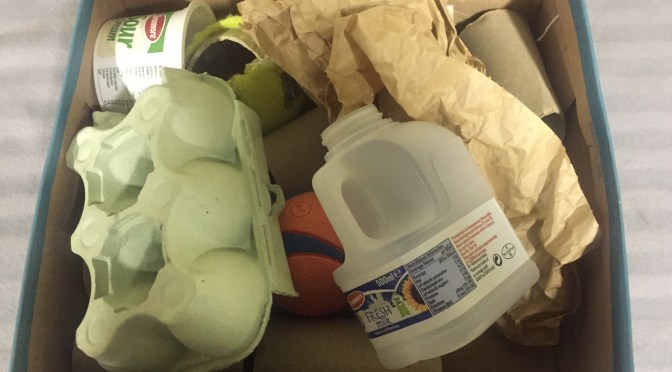
  • Compound puzzle prep will probably take you about five-ten minutes – having a collection of puzzling stuff is a good idea…it will resemble a pile of rubbish or recycling!

What do you need?

  • cardboard boxes or plastic tubs or similar, any container that is open (and safe)
  • paper e.g. packing paper, kitchen roll, newspaper etc.
  • eggboxes
  • balls
  • paper cups
  • plastic tray inserts from sweets, biscuits etc.
  • cardboard cup holders

cupholder

Enrichment Goals:

  • to encourage a wide range of foraging and exploratory behaviours
  • to do more feeding related behaviour than just eating
  • to encourage the development of strategies (behaviours) for getting the food out of  the puzzles
  • by varying the design of each puzzle we will facilitate carrying out a range of different behaviours, broadening the dog’s repertoire

While this challenge is certainly food based, they are also experiencing cognitive, sensory and environmental enrichment, with lots of crossover between categories.

Working out how to get to the food and developing dexterous skills in manipulating each puzzle are examples of cognitive challenge.

Sniffing out, tasting and chewing food all offer sensory pay off, but so does finding their way through each food puzzle, determining its value,  and engaging in the puzzle of getting to the good stuff.

Compound puzzles encourage pets to interact with their environment – just the very interaction with it is encouraging the pet to manipulate their surroundings, to get the things they like.

By offering a variety of puzzles in puzzles, we want to help the dog expand their range of puzzle-busting behaviours and facilitate your pet applying strategies from other puzzles to new ones; that’s a true cognitive gift and is growing your dog’s brain!

What goals can you add to this list for your pets?

How can we achieve these goals?

  • give your pet plenty of space for working on compound puzzles and bear in mind there will be mess, so think about spaces that are easier for clean up
  • the more difficult you have made the challenge, the higher the value the reward must be so use HIGH value foods to motivate exploration and experimentation and make it VERY easy to get the food (no frustration!)
  • if your dog just dives in, in full on destruction mode that might also be an indicator that they need an easier challenge so they get to experiment with a broader range of behaviours

What adjustments will you make for your pets?

img_7556

Applications of Compound Puzzles:

Compound Puzzles are truly adaptable and you can dress them up for more challenge or just use the bare essentials to make a quick and easy puzzle.

Don’t make the challenge beyond your dog, it’s important that enrichment remain enriching. That means that the challenge must be made appropriate and doable for the individual puzzler.

Our job is to adjust the puzzle difficulty so that our dog uses a range of behaviour and gets to the goal pretty quickly.

This is the true way to improve the dog’s confidence in puzzling (and in life) and help them expand their behavioural repertoire.

Because of the home made nature and variable materials used in compound puzzles, it’s best to supervise your pet carefully when they have access to this puzzle.
Know your dog! If you have an ingester, some of these puzzles may not work or you might try using a plastic tub and supervise them closely. They will still eat plastic, it will just take them longer.

If you are concerned about your dog ingesting non-food items during puzzling, have a pocketful of HIGH value treats in your pocket and be ready to toss a couple toward your dog, across their eyeline, if you think they are thinking about eating something they shouldn’t.
Making sure the challenge is very doable and they can get to the hidden food rewards quickly is key to modifying their behaviour and expectations during puzzling.

Check all your equipment for this challenge carefully and make sure to remove tape, staples, other fasteners, small pieces and plastic pieces. Play safe!

Enrichment Options

Go nuts today! How many puzzles can you get into one puzzle?

Add packing paper:

Link

Link

Add treat parcels:

Add Stuffables!

stuffable in box

Add stuffed tubes:

Add teasers:

  • add paper treat parcels to each space in the tray and stick that in the box

add packing to tray to box

  • use toilet rolls wedged into suitably sized spaces in the tray, over each treat

tube teaser

  • pop food rewards into each tray space and wedge paper cups over each treat
  • add food rewards to each space in the tray and then stack the trays

Add paper cups:

Add boxes to other boxes:

Link

Add tubs and eggboxes

Add pulleys

treat on a string

Add blankets and things for digging or snuffling.

Add things for dissection and destruction or chewing

Add bottles:

Add puzzles to puzzles to puzzles!

Your challenge

Now it’s your turn. Show us what you and your pets, of any species, can do with these challenges!

Post to your social media accounts, using the #100daysofenrichment so that we can find you and join our Facebook group to share your experiences, ideas and fun!
You can comment right here too 🙂

We look forward to hearing from you and your pets – have fun & brain games!

mess
You just need to clean up the mess!

Day 50 Body Awareness – rear end awareness

Welcome to Day 50 of #100daysofenrichment and thank you for joining us on this journey!

Although our challenges are directed mainly at dogs, we want all species to enjoy and benefit from #100daysofenrichment so, please join in, adjust and adapt to help your pet or companion live a more enriched life.

Don’t forget to review all the information leading up to #100daysofenrichment and more here on playing safe. Know your dog!

Deck2

Rear-end Awareness

At a glance:

  • it is not at all uncommon for dogs to appear as if they have poor rear-end awareness
  • rear end awareness allows the dog to move each limb independently and consciously
  • cognitive and sensory based enrichment
  • often used in training for sports dogs and for rehab after injury, trauma or surgery
  • get the family involved in this one – kids love setting up challenges like this for their pets. It’s probably better than an adult to help the dog move over the obstacles though as this requires a level of care and coordination, particularly at the beginning.
    Remember, supervise children in all enrichment activities and interactions with pets.
  • practice in very short sessions of 2-5 minutes at a time – this can be very tiring, both mentally and physically so it’s important that you work for very short sessions

What do you need?

  • flat, shallow box, large book or similar shallow platform
  • mop, broom handles
  • hula hoop

Enrichment Goals:

  • to help dogs develop awareness of how their body moves, where their limbs are and how to adjust and shift their weight to compensate during physical challenge
  • to provide physical and mental challenge to pet dogs
  • to encourage dogs to interact with novel or weird things in their environment
  • to help dogs develop confidence through enhanced body awareness
  • to help dogs slow down and think about how they move and physically interact with their environment
  • to help prevent injury, improve fitness, lengthen stride, increase back and core strength

Rear-end awareness exercises are something that most dogs will benefit from; being able to ‘find’ and ‘control’ each limb, especially the hind limbs, is particularly challenging for many dogs.

For dogs who train or compete in sports, especially those that require repetitive activities, and dogs recovering from injury or surgery, these exercises can be very beneficial.

While this challenge is certainly cognitive, the dogs are also experiencing sensory challenge and we are adding enrichment to their environment, with lots of crossover between categories.

Body awareness exercises can be especially helpful for puppies, whose brains are forming, resulting in improving coordination as the relevant brain areas mature, and for older dogs whose cognitive abilities and coordination may be disimproving as they age.

Shy puppies can be particularly helped and given a big confidence boost with body awareness work. They are learning to interact with their environment, being exposed to novel stimuli and sensory experiences, and engaging their cognitive and sensory systems…literally growing puppy brains!

Link

What goals can you add to this list for your pets?

How can we achieve these goals?

  • take your time with this one and listen carefully to your pet
  • some dogs can be reluctant to pass over things, especially when going backwards, and that’s ok
  • set up as you did for cavaletti or other body awareness exercises and leave it out for your dog to investigate and check it out in their own time, without you using food to lure them or encouraging them too much
  • setting up rear-end awareness on grass or on a non-slip rug or runner, bath mat or yoga mat can help improve the dog’s comfort and increase their willingness and confidence; this is also safer
  • this is not a race – the goal here is to help the dog find their rear legs, so that they need to think about placing each foot, weight shifting and compensating for position
  • it’s better to work on these exercises off lead so think carefully about where you set up
  • often, there is a temptation to walk toward, loom or move toward the dog when working on back-up behaviours; there is no need to attempt to intimidate or push into the dog!
  • don’t lure your pet, with food in your hand; again, no need, and may cause the dog to sit or lie down
    Luring or moving into the dog can cause the dog to use front led movement – their front legs are doing all the work, and their hind end is just shuffling backwards. We want rear movement, that comes from the rear!

What adjustments will you make for your pets?

Applications of Rear-End Awareness:

Dogs who develop good rear end awareness probably have improved balance, fitness, collection, recovery and injury prevention, and over all better performance

But, this work really can help in other, ‘everyday’ ways too.

My favourite application of body awareness exercises is with dogs who can have difficulty coping with the ups and downs of the world; dogs who exhibit behaviour associated with cautiousness, shyness or fear, dogs who may show behaviours associated with excitability, frenetic movements, and who have a hard time calming after getting wound up.

Although these dogs’ responses may seem very different, their behaviour may be associated with having difficulty coping with swings in stress, having a hard time recovering and are losing control fast.

Getting them thinking about their movement helps them to think rather than react and boosts their confidence on a number of levels.

img_8879

Enrichment Options

Option 1: REVERSE!

This really is a tough challenge for most dogs, especially young and large dogs. Work for very short sessions of a couple of minutes at a time.

Beginners; foundations can be practiced anywhere:

  • stand facing your dog
  • move your feet just wider than shoulder width apart
  • have some food rewards ready in your hand or pocket
  • if you use a clicker or other precise marker, this is a good exercise to use it
  • toss a treat through your legs, so that your dog moves just the front third of their body through (any further and they might walk all the way through and just turn around)
  • watch one of your dog’s hind legs (pick either the left or right, it doesn’t really matter which)
  • as soon as your dog lifts and moves the chosen hind leg back, mark and toss another reward between your leg

You are using the treat positioning to prompt the backing-up behaviour and set the dog up for the next repetition.

Practice about 5-7 times per session and then take a break.

Link Baby Decker gets started with “Reverse!”

Link

You can work this one sitting in a chair too and just fire the treat a little ways under the chair. Working in front of a mirror also helps you to assess what’s going on and make marking/rewarding all the more accurate.

Intermediate; backing over something:

To encourage the dog to step over and really think about food placement, use a prop for them to step over such as a hula hoop or broom handle.

  • you can work sitting on a chair, which is great for smaller dogs, or standing up, which can be better for bigger dogs
  • whether sitting or standing, have your feet further apart then should-width
  • if using a hula hoop, have the chair in the hoop or stand in the hoop, and position it so that your dog must step over the hoop in just one stride/step backwards
  • if using a broom handle or pole, have it positioned so that your dog must step over it in just one stride/step
  • do exactly as you did with the Beginners exercises – toss the treat under and watch for that hind leg movement

Practice about 5-7 times per session and then take a break.

Link

Link

Advanced: backing onto something

This option is set up exactly as you have done so far, except we will use a shallow platform (a book or box, for example) for the dog to move onto.

You are marking and rewarding that hind leg hitting the platform.

Start with very shallow platforms and build height as your dog improves.

Link

Lots of dogs will be helped by draping a blanket over the shallow platform. Not only does this offer better non-slip but also provides for a more continuous, softer surface making for a more gradual incline.

Link

Decker works out this shaping puzzle by using his already established backing-up behaviour to get his back feet onto the boxes more efficiently:

Link

Link

Reversing onto a more difficult, higher surface:

Link

Advanced: backing on and off a platform

While reversing over and onto platforms of different heights presents many challenges to dogs, it emphasises weight on the front end most of the time. To equally exercise both brain and body, teach the dog to reverse off a platform too; they are learning to go backwards, stepping down as well as up.

These are not mutually exclusive exercises and should both be present as part of a work out. Having Decker recovering from injury rest and exercise restriction in the last couple of months, a big part of getting his fitness up again, has been going back to our cross training and platform work, that we really prioritised when he was younger and maturing.

This clip shows snippets from this work. We start with reversing on to the platform and then add in reversing onto it and off it, and then forward again. This really challenges coordination, so is a great brain AND body workout!

Clip link

Up and down a little hill:

Clip link

Option 2 Pivoting

Pivoting starts by teaching the dog to get their front feet up on a perch, like a shallow box or upturned bowl.

Keeping the dog’s front end pretty fixed, allows for quick understanding of his rear end.

Beginners:

  • shape your dog to step up on to the perch (a paws up foot targeting exercise can be applied)
  • you can help them by luring them up, bringing your food hand up high so that they step up
  • if they are nervous or worried, at all, shape by rewarding the dog for looking at the perch, approaching the perch, raising one paw onto the perch, raising the second paw on to the perch
  • when the dog gets up on the perch, reward up high with a couple of food rewards
  • toss a food reward off at different angles to help encourage your dog to turn
  • when they return, they will get up onto the perch from an angle and might start to move to line up with you for reward

Link

Intermediate:

Once the dog can perch, and keep their front feet up there, we can add more definite rear end movement.

Lure with food rewards in your hand; lure the dog’s head to his right, for left rear movement and vice versa.

Bringing the food reward across your body and moving slightly around the perch, will help encourage more movement.

Decker works on his least favourite pivoting direction:

Link

Advanced:

Pivoting and moving the rear end, without the perch at all, is generally applied to teaching a competitive heelwork position. This involves the dog learning to keep their back end in, their body straight, their shoulder at your leg and their head in the correct position – not at all easy for any dog.

Each bit is taught and perfected separately.

Link

Link

Your challenge

Now it’s your turn. Show us what you and your pets, of any species, can do with these challenges!

Post to your social media accounts, using the #100daysofenrichment so that we can find you and join our Facebook group to share your experiences, ideas and fun!
You can comment right here too 🙂

We look forward to hearing from you and your pets – have fun & brain games!

img_4677

Day 49 Sunday Fun Day!

Welcome to Day 49 of #100daysofenrichment and thank you for joining us on this journey!

Although our challenges are directed mainly at dogs, we want all species to enjoy and benefit from #100daysofenrichment so, please join in, adjust and adapt to help your pet or companion live a more enriched life.

Don’t forget to review all the information leading up to #100daysofenrichment and more here on playing safe. Know your dog!

IMG_1285

Every Sunday during #100daysofenrichment is Sunday Funday! This means you and your pet repeat your favourite challenge or challenges from the week.

You can do it exactly as you did first time round, you can try a different option, build on your progress already established, reinvent and rejig it…what ever you want to do with the last week of challenges!

Day 43 Fast & Fun Recalls

Day 44 Puzzle Chains

Day 45 Hanging out – on the road

Day 46 Teasers

Day 47 Freestyle Friday

Day 48 Sniffing Saturday – SNIFFING STATIONS

Your challenge

Now it’s your turn. Show us what you and your pets, of any species, can do with these challenges!

Post to your social media accounts, using the #100daysofenrichment so that we can find you and join our Facebook group to share your experiences, ideas and fun!
You can comment right here too 🙂

We look forward to hearing from you and your pets – have fun & brain games!

IMG_0858

Day 48 Sniffing Saturday

Welcome to Day 48 of #100daysofenrichment and thank you for joining us on this journey!

Although our challenges are directed mainly at dogs, we want all species to enjoy and benefit from #100daysofenrichment so, please join in, adjust and adapt to help your pet or companion live a more enriched life.

Don’t forget to review all the information leading up to #100daysofenrichment and more here on playing safe. Know your dog!

sniff

SNIFFING STATIONS!

Saturdays during #100daysofenrichment are all about emphasising the dog in all our dogs; all about sniffing and doing dog things.

On Day 20 we started to put sniffing on cue so, as a behaviour, we can use it in training situations. Today we will be refining applications of sniffing in specific training situations to both manage and modify behaviour, with sniffing…everyone wins!

What are SNIFFING STATIONS?

Each sniffing station is a particular spot where your dog will learn to sniff for food. While these can be set up or planned in advance, we might also quickly establish an impromptu sniffing station by tossing food rewards on the ground or floor to redirect our dog’s focus away from some trigger.

We have talked about using the Go Find It! game to redirect a dog’s behaviour to something more appropriate and calming.

Clip link

Clip link

What do you need?

  • a sniffing station can be a small bowl or any other visual target that tells the dog there is food there, such as small cones
  • food rewards
  • your dog’s lead and collar, or whatever gear they wear
  • a snufflemat or similar is also a great addition and can make a wonderful sniffing station for some of today’s exercises
  • strong tape, such as duct tape or similar helps to secure the sniffing stations in place

Sniffing on cue

We don’t need to teach our dogs to sniff; they got that down. But, we can teach them the meaning of a specific signal: ‘get your nose down the on the ground and search for food!’.

Don’t worry if you haven’t been working to get sniffing on cue or maybe you have just joined us in the #100days. No matter, today’s exercises can be started afresh, without necessarily using the verbal cue, “Go Sniff!”.

Cues (or antecedents) are the things that tell an animal to do a behaviour because it results in reinforcement (or tells them to avoid a behaviour that results in punishment). All behaviours are naturally cued by things that happen around the animal and teaching is about helping the animal learn the meaning of cues we introduce.

Cues can be sounds, words, hand signals, gestures or other environmental signals; anything that the dog can perceive.
Different types of cues work better in different environments, for different dogs, and for different behaviours. But, for the most part, dogs learn about body movements, gestures, positions and facial expressions better than they do words.

We often believe our dogs are performing behaviours on verbal cues, words, but often, the dog is reading our signals and movements (that we might not be aware we are doing) and performing behaviour any way.

To add a cue to a behaviour, you will need to make sure that the presentation of the cue is clean.
The cue must be presented just before the behaviour and just before any other signals that trigger behaviour, such as you moving your hand into a hand signal, or you moving your hand or body toward the food rewards.
These are just some of the basic mechanics of teaching animals.

Link

Because dogs don’t actually understand words, you can use any verbal cues you like. We just need to be consistent in the teaching the meaning of the word to the dog.
For this exercise for Decker, I use “Go Find It!” to mean search the ground for food, and “Go Play!” to mean ‘you’re off the clock, go be a dog’.

For today’s challenges, you might only use visual cues that lead our dog on stepping-stone path of sniffing…

20190222_165658000_iOS

Applications of SNIFFING STATIONS

For the most part, I work with regular pet owners who don’t necessarily want to spend time developing really clean dog training skills. They want to be able to work with their dog on little niggling issues so that they can each enjoy one another’s company that much more.

Although for lots of these applications, there are a number of training plans and behaviours we could teach, sometimes that’s not the priority for a pet owner, especially when we want to work on lots of other bits and pieces.

Most frequently, I will use sniffing stations with clients where we have lots of other work and this approach offers a quick and easy way to manage their pet’s behaviour, so we have sufficient resources to invest where there aren’t as simple short cuts available.

The main areas that sniffing stations can help:

  • managing leash and pulling behaviour, especially in areas associated with lots of pulling and dragging
  • getting out the door
  • getting in a door, greetings
  • getting to and from a scary or arousing situation
  • to redirect the dog’s behaviour during some arousing or triggering situation

Changing the dog’s motivation for behaviour, and reducing his expectation (that crazy behaviour is required) will help to prevent behaviour associated with arousal and over-excitement.

Clip link

Instead of the dog heading forward, all guns blazing, he is learning to stop and search. Plus, sniffing is a great calming aid so we might be helpful modify his underlying emotional response too.

Getting from A to B without too much craziness

  • to get a dog from a kennel to an exercise area
  • to get a dog to an exit (or entrance)
  • to get your dog out the door

The dog’s expectations at the door change; from bursting through to sniffing sniffing sniffing. This example applies treats tossed to the floor, in almost every step at the beginning, to change the dog’s expectations.
Add in new cues, for these new expectations; your hand on the door means treats are about to be available for sniffing, instead of get ready to burst out!

I tend not to worry too much, at this stage, about the behaviour inside the door and I don’t like to ask over-excited dogs to sit or be stationary; this can increase frustration and stress.
Instead, think about what we want the dog to do on the other side of the door; that’s the behaviour that really matters!
Have a sniffing station right outside the door, just on the other side of the door. With practice, the dog’s expectations change to slowing and stopping in anticipation of the opportunity to sniff the treats on the ground.

Pre-loaded Sniffing Stations:

Start with securing each station every couple of steps to the target. Load each with a couple of food rewards.

Allow the dog to forage from each sniffing station without their lead on or any activity at the or around the target, such as the door.

Practice several times in each session and have a few brief sessions as often as possible.

Once the dog is readily checking each station, you can add their lead. Practice in the same way and make sure there is no extra excitement or distraction, away from the stations, before moving to the next stage.

Add treats to the last of the stations, open and close the door. Repeat and if the dog shows interest in the door, open more gradually and feed further from the target.

When approaching the door is a non-event, it’s time to add an external sniffing station. Work with your dog on lead and with the door open. Add the external sniffing station real obvious as soon as the dog approaches the doorway.

With some practice, we can close the door. As your dog feeds from the last or second to last station before the door, open it, so that they can get to the external sniffing station without delay.

It can help to load each station as you go, especially if the dog is a little distracted.

To get too and from an arousing situation – something scary or exciting

  • to get your dog from the house to the car, or from the car to the park or from one spot to a very exciting place
  • to teach your dog that they can safely approach and retreat from some scary situation, in their own time

Approaching something scary or arousing may be associated with pulling toward or away.

Help the dog by teaching them how sniffing stations work. Begin with just one or two stations, toward something scary, and when the dog can do that, add one more station at a time.

This may take many sessions but it’s important that the dog get to move toward and then away from the situation. Make the target a sniffing station too and then allow the dog come away again.

If this is an exciting rather than scary situation, you might move quicker through the stages, but it’s especially important that if the dog is fearful, that progress is much slower and gradual.

I like to use Sniffing Stations to help to establish predictable patterns that can help to increase a dog’s confidence in a situation. For example, with a dog who is scared of a particular context, such as when a stranger is present,

In this clip, the dog learns to enter, eat from a sniffing station (a bowl) and leave again. Soon he is able to enter the room, without distress related behaviour directed at the stranger (me) and leave. Setting this pattern up will help him to develop greater comfort in association with strangers in the house – strangers make the predictable plan happen, make high value yummies available, and always result in him being able to escape interaction.

Clip link

To get past, toward or through distracting or triggering situations

This helps to manage the dog’s leash walking behaviour especially as we approach and pass distracting or exciting triggers.

To get the dog to another person, dog or location in a calmer fashion use a Breadcrumb Trail.

To help establish calmer greeting behaviour inside doors

Set up a sniffing station in areas where greetings take place. Establish this with familiar people who have just stepped out for a moment first.

Enter and immediately cue the dog to sniff and toss treats into a snufflemat, a little sniffing station bowl or on to the floor.

Practice entering, cueing the dog to sniff and then running with them to get the treats; have treats ready to go close to the door.

Lots of practice to help establish this one with familiar people before it can be applied to new people or a familiar person who has gone for a while.

Doorbell Games

Doorbell = Snuffle Party

Teach your dog that the doorbell signals a snuffle party! Instead of your dog running to the door, they run to you and their Sniffing Station to snuffle for treats; then you can bring your guests in calmly and quietly.

Establish a Sniffing Station with a snufflemat, a snuffle puzzle, or simply scattering treats on the floor, on a blanket or towel, or in their bed.

Practice in short sessions of just a minute or so at a time.

Begin working close to the door so your dog can quickly check that there’s nobody actually there. But as their comfort increases, you can move your Sniffing Station to the spot you want your dog to go to when the door bell sounds, such as another room, a confinement area, a crate or their bed.

Be exciting as you bound to their Sniffing Station – it’s a snuffle party after all!

Clip link

Use a recording of your door bell or a similar sounding bell. The one I use can be found here.

You gotta practice door management games before you really need them but they are simple to work into your daily routine and require only 30-60 seconds practice per day.

More on managing greeting behaviour here.

dog-838242_960_720

Using sniffing stations in contexts like these will not only help to improve the dog’s engagement and focus, but also may help to associate good things with potentially distracting and worrying triggers.

Sniffing for food

Ideally, we would like our dogs to be sniffing out their regular meals, as much as possible. But, some dogs will need a little help to get them going and we can have our dog sniffing for treats too!

Kibble is a pretty versatile food type for enrichment type feeding, and works well for this exercise.

You can add kibble in with other yummier treats and toss those. Or you can make a Training Mix so that kibble smells and tastes yummier, but without having to add extra calories or other foods, should the dog be sensitive or restricted.

Link

You can improve the smell/taste of kibble by grilling it a little, so that it becomes crunchier and oilier. You might also soak it in stock or other flavouring.

Wet and fresh foods can be a little more challenging:

  • Fresh meats and meat mixes (e.g. raw and home prepared diets) – cut up into small pieces, boiled or baked, frozen in small ice cube trays or pyramid baking mats for small individual treats.
    Alternatively, you could use dried or semi-moist meats and cut them into small pieces for tossing. (Note that you feed a smaller volume of dried or dehydrated foods as they are more concentrated.)
  • Wet feeds (e.g. canned foods) – frozen in small ice cube trays or pyramid baking mats for small, individual treats.

Don’t forget fruit and vegetables too, if you’re dog likes them. Frozen peas are one of Decker’s favourite for sniffing!

Your challenge

Now it’s your turn. Show us what you and your pets, of any species, can do with these challenges!

Post to your social media accounts, using the #100daysofenrichment so that we can find you and join our Facebook group to share your experiences, ideas and fun!
You can comment right here too 🙂

We look forward to hearing from you and your pets – have fun & brain games!

Day 47 Freestyle Friday

Welcome to Day 47 of #100daysofenrichment and thank you for joining us on this journey!

Although our challenges are directed mainly at dogs, we want all species to enjoy and benefit from #100daysofenrichment so, please join in, adjust and adapt to help your pet or companion live a more enriched life.

Don’t forget to review all the information leading up to #100daysofenrichment and more here on playing safe. Know your dog!

Freestyle Friday

Now it’s your turn to get creative! Every Friday is Freestyle Friday. We’ll give you the ingredients for a puzzle or enrichment device and you build it.

Rules:

  • you must use all the ingredients
  • you can add anything else you like, or nothing at all
  • whatever you come up with must be enriching

Day 47 Ingredients

You must use the following:

  • dog lead, cord, rope, old tights/stockings, shoe lace or similar
  • basket
  • fabric/cotton/canvas shopping bags
    (Please be very careful with your choice of bags – nothing that is plastic based, plastic or plastic coated, or similar, and use breathable bags only.)

You can add food or toys or anything else appropriate, if you like. Or you can use this as it is.

We can’t wait to see what fun and brain games you and your pet get up to with this one!

Your challenge

Now it’s your turn. Show us what you and your pets, of any species, can do with these challenges!

Post to your social media accounts, using the #100daysofenrichment so that we can find you and join our Facebook group to share your experiences, ideas and fun!
You can comment right here too 🙂

We look forward to hearing from you and your pets – have fun & brain games!