Welcome to Day 4 of #100daysofenrichment and thank you for joining us on this journey!
Although our challenges are directed mainly at dogs, we want all species to enjoy and benefit from #100daysofenrichment so, please join in, adjust and adapt to help your pet or companion live a more enriched life.
Today, there’s no big plans or training exercises. Today, we are dialing it way back and hanging out.
Learning to just be is not a skill that comes to most pet dogs easily, and indeed to many people. Just being is a lost art; in the age of smart phones and on-demand entertainment, we don’t have to be very often or for very long.
But, this is such an important skill for companion animals, who, at the whim of their humans, must be able to be in environments that don’t always cater for their natural tendencies.
Find your happy place
What do you like to do together?
Where do you like to go together?
Where and when you both can just be. You don’t have to be engaged in any particular activity, just be. Together.
There are no training cues or food rewards, or even toys, required. No smart phones for the humans, no thoughts about what you should be doing.
Be calm and quiet. Sit close or just in one another’s presence.
You don’t have to touch. Humans are tactile, we grip and use our fingers. Dogs are not so much into that. They don’t need petting, touching or grabbing to be.
Dogs often like to lean or touch off one another’s bodies. They might lie back to back, or they might spoon.
Hang out
Dogs and other companion animals must learn how to be around people and people-goings-on. Dogs gain these skills by being around people, especially when they are young.
Spending time isolated from opportunities to be around people is detrimental to behavioural and social development. Dogs who are alone for large portions of the day, especially young dogs, may be at risk of suffering negative effects.
To help these dogs, we are tempted to spend the little available time with them go, go going. We think we are making up for lost time by providing the dog with activity, exertion and excitement. While all that stuff may be a good addition, consider just being as just as important a skill and a vital part of helping and supporting them, when you can spend time with them.
Here I am hanging out with Theo while he was spending time in kennels. Helping him be. So that he can cope with life in kennel accommodation, in virtual isolation.
Shy girl Faith appreciated lots of time to be, when she first came from the pound.
How to be
This can be tricky for dogs, and people. If this is a dog who is in kennel accommodation, it might be easier to do this from outside the kennel, while the dog has something stuffable to work on initially. Or it might be better to try this away from kennel life, out and about.
For dogs who find it hard to be, try when they are already calm, initially when they are settling with a stuffable, when the house is quiet. It can take some time to build this ability, for both species.
Put away your phone, concentrate on being, in the moment, with your pet.
They may or may not want contact or touching. Try not to make this a grooming or scratching session. Massage them calmly and briefly, withdraw and allow them to be. Repeat if they want that. But, it’s not necessary, to be.
How you be
There are no rules. Work on being. Work on finding what helps your dog be. Work on finding what helps you be.
Build slowly. Develop being incrementally. Avoid frustration, fidgeting, agitation and excitement. Maybe, you will only be for very short durations, seconds, minutes. That’s ok. It’s a work in progress.
Your challenge
Now it’s your turn. Show us what you and your pets, of any species, can do with these challenges!
Post to your social media accounts, using the #100daysofenrichment so that we can find you and join our Facebook group to share your experiences, ideas and fun!
You can comment right here too 🙂
We look forward to hearing from you and your pets – just be!
Welcome to Day 3 of #100daysofenrichment and thank you for joining us on this journey!
Although our challenges are directed mainly at dogs, we want all species to enjoy and benefit from #100daysofenrichment so, please join in, adjust and adapt to help your pet or companion live a more enriched life.
improve your pet’s comfort with handling and grooming procedures
all dogs must be handled, in often invasive ways, throughout their lives for grooming, health care and first aid
social and cognitive based enrichment
although children can make great dog trainers with the right guidance, this exercise is best established by the adults in the household
Children might help by preparing treats for practicing this exercise.
these exercises can be practiced in individual sessions of no more than 30 seconds at a time; have as many sessions as you can!
What do you need?
food rewards – you can use your dog’s regular food, a training mix, commercial treats, home prepared treats such as cut up meats, cheese, vegetables or homemade treats such as liver or tuna cake
small towel, such as a face cloth, tea towel, or hand towel
a brush or comb for your pet
Most pet owners presume that their dog is pretty comfortable with handling and manipulation, and while many are, most dogs are good at tolerating human behaviour. For this exercise, we don’t want to achieve mere tolerance, we want joy!
This is also the first time we are going to ask you to really observe your dog’s behaviour and think about how they might signal that they are voluntarily and happily opting in.
It’s not our pets’ obligation to opt in to handling or physical manipulation; our pets are individuals who have likes and dislikes, and good and bad days. They are allowed to say “STOP!” and “WAIT!” if they need to.
And what’s more, teaching them that they can opt in, or not, is confidence boosting and bond boosting. You become a beacon of trust, you become predictable and reliable.
This is why I have included this in this project. Helping our companions bond over a trust-account, built on communication and choice.
Establishing predictability and controlability are important functions of enrichment.
This clip shows a summary of the stages to building Decker’s comfort with having drops applied to his ear, treatment for painful ear inflammation. Not only is this process helping him to feel better about ear manipulation and medication application, but also because he gets to decide when and how this happens to him. He is being rewarded with food rewards (and catching) and choice. That makes uncomfortable medication delivery more bearable and possibly even enjoyable.
You can check out a full playlist of each session helping Decker become comfortable and willing in ear treatment here.
Enrichment Goals:
to improve the dog’s comfort with hands approaching, touching, handling and grooming various body areas
to teach the dog that they can opt in to, delay or refuse handling and manipulation
reduce stress associated with loss of predictability and controlability
to encourage a dance of communication, choice, and connection between dog and human
to build that bond between dog and human
to have a fun and rewarding experience in social situations, between dogs and humans
While training exercises certainly fall into the cognitive enrichment category, they can provide so much more.
This process highlights the complex social relationships forged between humans and companion animals. It’s a level of social enrichment that’s tricky to replicate.
By helping the dog learn that they have control over what happens them, in interactions with humans, the world becomes a safer place for them.
When we talk about enrichment being enriching, this is never more clear than when we start to teach behaviours intentionally. It’s the human’s job to set the dog up for success by making sure the behaviour is doable and that rewards are fast-flowing.
There’s no test at the end of this and you and your pet are not under any pressure. Learn to enjoy the time together, whether you achieve the goal behaviour or not. That’s what’s enriching here…the social and cognitive outlets such exercises provide (for both species).
What goals can you add to this list for your pets?
How can we achieve these goals?
work with toys or other rewards that your dog enjoys – associate each handling interaction with a reward and after many pairings, handling becomes just as enjoyable
make it very easy for your dog by gradually adding handling or pressure
watch your dog closely for any signs of reluctance; they might go still, or duck or lean away, they may lick at or mouth your hand or the brush, they might pull away
if the animal shows the slightest reluctance, stop immediately
review your approach and don’t go quite so far next time
working like this teaches the dog that, to object, they only need show minor discomfort because you are listening; to gain relief, they don’t need to growl, snarl or snap
keep it simple and split behaviour – reward approximations toward the final behaviour, rather than hoping that your dog will offer the goal behaviour quickly
take your time and work in many short sessions
try for 30 seconds at a time, 5-10 rewards each session, and then take a break
plan each session – what behaviours are you looking for and rewarding?
watch the clips and try out the exercise
portion out your dog’s daily food and allot some for training exercises
make a training mix by adding in something yummier and leaving it all to ‘cook’ together in the fridge; the smells will mingle, harder foods will soften a little, and everything will become more valuable and rewarding
remember to adjust your pet’s diet accordingly to accommodate the extra calories from treats added, where relevant
split your food rewards into little bowls with just the right number of rewards in each bowl so that you are ready to go; stick bowls of rewards in places where you may need to teach and reward behaviours so that you have rewards ready to go
If you are feeding wet or fresh foods, cut up small or mash to a paste and present on a wooden spoon or spatula. Alternatively you can freeze in small ice cube trays or a pyramid baking tray so that you can use small portions and individual treats.
for handling exercises, we love to use a lappable stuffable (see Day 1) – reward the dog by allowing them to have a few licks and then withdraw the toy
What adjustments will you make for your pets?
Applications of handling comfort:
These exercises ensure your dog’s comfort in all sorts of situations and interactions with humans. This means that these interactions become safer and more pleasant for everyone.
Every dog will require veterinary treatment at some point through their lives and most dogs will require some first aid and grooming procedures, sometimes on a daily basis.
Dogs, when super stressed, either go very still and quiet, or move about, struggle and aggress (or somewhere in between). When they are still and quiet, they are presumed to be ‘well behaved’ and tolerant. When they struggle and aggress, we label them ‘difficult’, ‘vicious’ or ‘dominant’, none of which is accurate.
Either way, this isn’t pleasant for our dogs and as the humans (with the big primate brains), we know that our dogs will need to endure such treatment throughout their lives. It’s our job to prepare them for this so it’s a little easier all round.
Helping the dog feel predictability and controlability has wider positive implications, with some research suggesting that these effects generalise to other areas of the animals’ lives. Reducing stress is a good thing!
When we work on handling and husbandry preparations, we establish husbandry comfort at different levels that range from management and distraction, to building comfort, to teaching cooperative behaviours.
Throughout our 100 day project, we will introduce exercises from these categories.
We help pet owners establish a simple opt-in test with their puppies, early on during puppy education.
Using a yummy stuffable toy, filled with something delicious, we teach the puppy that if they stop lapping at the toy, we stop the procedure immediately.
We want to make this simple and straight forward for puppy owners, who might not have the time or skill to work on cooperative care behaviours, and to help puppies associate something fabulous with handling plus giving them a voice. Win-win-win!
Enrichment Options
Throughout these exercises we are attempting to establish a CER or Conditioned Emotional Response. This means that our dogs learn that one stimulus makes another very reliably happen; reaching toward the dog’s head or collar, for example, makes yummy treats happen.
A CER helps the dog feel differently about a particular situation. A dog may already have developed a negative CER toward having his ears reached toward due to pain from an infection or uncomfortable cleaning or treatment. To help form a positive CER, we must undo the negative one (by not exposing the dog to that situation) while building a new, positive association.
This requires lots and lots and lots of practice. In the case of an established negative CER, it might take many tens of thousands of repetitions over many months to turn it around.
We are always following the rules that we have laid out for our dogs:
building progress gradually
allowing the dog decide how comfortable they are, or not
always pairing any move with something yummy, no matter what
listening to the dog
For a CER to be established, we must also get the sequence right:
reach toward the dog and then reach toward the treat
reaching toward the dog makes you produce a treat
if you reach toward the treat at the same time as you reach toward the dog, or if you have the treat out and visible while you reach toward the dog, the dog might not even notice you reaching toward them so no association will be formed
A perfect example of a CER, that I am sure you recognise! Just as the rustling wrapper predicts yummies, we want husbandry and handling contexts to do the same.
Decker recently suffered a very serious injury to his toe that required regular dressing and bandage changes, sometimes daily.
From the beginning, I made bandage change time a big chicken party! Me preparing his bandages and setting up at our bandage station made a lot of chicken tossing happen. That’s right, I established a CER to bandage prep so that even if dressing changing itself was uncomfortable he always looks forward to the process.
Note that when he jumps up he nudges the laid out dressings and not the lunchbox of chicken…bandages make chicken happen!
Even now, months later, if I take out cotton wool, he’s up and super excited, such is the power of a well established CER!
Option 1: Happy Hands
Lots of dogs are, understandably, a little concerned about hands reaching toward them, especially over their head.
The head is a sensitive, delicate area that many animals will show some avoidance or defensive behaviour when reached toward or grabbed. We presume that dogs like to be patted or scratched on the head, and while many learn to enjoy this, most tolerate it or will find it unpleasant in certain contexts.
We are going to start with exercises that teach dogs that a human reaching toward them or over their head makes good things happen, and is never overwhelming.
Beginners:
have 10-20 tiny treats ready
reach toward your dog, without touching them
stop your approach with your hand in mid-air and withdraw that hand
immediately reach for a treat with your other hand and feed it to your dog
as you bring one hand closer to the dog, you withdraw the other hand
repeat 5-10 times per session and take a break
It doesn’t matter what your dog is doing, just make sure that your hand approaching makes a treat happen.
Watch your dog closely for ANY signs of reluctance. Adjust your approach by not reaching so close, next time. We will build more gradually, and that’s ok.
If your dog is comfortable with that sort of reaching, let’s work on building their comfort with having their collar reached for and touched.
We tend to grab our dogs’ collars and restrain them, or even worse, drag or reprimand them via their collars, so it make sense that lots of dogs develop negative associations with having their collar reached for, handled or grabbed.
This is pretty much the same as the above Beginners exercise, except we are reaching toward their collar and touching it gently, providing the dog consents.
With enough practice, your dog will develop so much comfort that they will want you to touch their collar…”here human, touch my collar, ‘cos that makes yummies happen!”
When you get to that point, you’re ready to introduce Collar Grab Games.
These essentially teach your dog a recall, without you even needing to call them…they ask you to catch them!
The catching part can be a tricky bit of recall training to teach because it invariably leads to the dog losing out on fun.
When teaching recalls we need to make sure that being caught, by their collar, makes the yummies happen AND results in them being released again.
To help this, we teach an exercise we call Runaway Recalls, which teaches the dog that if they return to their human, they get two rewards: a treat and the opportunity to go away again.
Note that access to water is just about the most reinforcing thing in the whole wide world, to Decker. Coming away from water is difficult for him so it takes A LOT of work to get engagement in anything else when water is available.
Option 2: Touch 4 Treat
Beginners:
This is our foundation handling comfort exercise that we do with all dogs; because all dogs will require handling at some stage and all dogs deserve to learn that they can consent, or not.
Get a yummy lined stuffable ready and practice this exercise in 30-60 second sessions as many times a day as possible.
We concentrate on building positive associations with handling the face, ears, each foot, tummy and tail.
Listen to your dog if they show the slightest reluctance. You can work harder on that area to boost your dog’s comfort – this might be especially relevant with your dog’s feet, as many dogs will find handling feet uncomfortable.
Be prepared so that you can run through each part of the exercise efficiently. You want to be able to deliver the food reward almost immediately after touching the dog’s body area.
Some dogs are going to need more grooming and handling than others, in different contexts. For example, this Miniature Schnauzer puppy, Scout, is going to have lots of face handling for grooming, clipping, scissoring and physical manipulation. That means we need to work hard on helping build his comfort with this sort of handling.
After some practice, we can begin to apply Touch4Treat to other handling contexts. The first one we will work on is towel drying.
Along with other potential signs of reluctance or discomfort, with towel drying we are also looking for signs that the dog is trying to bite or mouth at the towel. That tells us that we aren’t rewarding fast enough and we are going too far, too fast.
We start with a face cloth, because it’s less concerning for a dog, especially a small dog or puppy, and is easier to control for the human.
When your dog is comfortable with that, you can use a hand towel and finally a bigger towel that suits their size.
This is essentially a Touch4Treat exercise, you just have your hand through the towel and carrying out the exact same motions. Because you have changed something, go back to where you started with Touch4Treat, rather than diving straight in there with the towel.
With your dog more comfortable with this procedure, you might even be able to use your dog’s already established ‘give-the-paw’ behaviour for towel drying:
If your dog is not comfortable with the handling and towel parts of this, you may run the risk of poisoning your ‘paw’ trick, so take care.
Advanced:
If your dog is truly comfortable with Touch4Treat and towel drying, adding a brush or comb will go smoothly.
The same guidelines apply, in that we start off really easy with just the brush approaching or barely touching the dog to their side or back and then immediately rewarding them.
Build very slowly, particularly if the dog has longer hair or is tangled. In the case of matting, it may be better to contact a professional groomer for help.
Husbandry procedures such as grooming and medical treatments can mean high stress for lots of pets.
Thankfully, reducing stress in association with husbandry is becoming more well known and popular, particularly among training and behaviour professionals. Lots of positive moves are being made in veterinary treatment too! Good news for pets 🙂
Cooperative care behaviours are the ultimate in husbandry training; teaching the animal behaviours that allow them to be willing participants in their treatment, such as this amazing example.
Pet owners may not have the time or skill to work on this but there are other things we can do to improve our pets’ comfort and manage their experience. Here are some tips:
bring a mat or bed from home
bring HIGH value food rewards – lappables are best so bring a stuffable toy filled with something your dog can lap
Not only is this more convenient to handled, but also lappables are less likely to cause reflux or aspiration should sedation be required.
make sure the things you bring the vet’s are washable so that they can be cleaned to avoid transferring bugs
you don’t need to wait in the waiting room!
These are high stress places and usually pretty tight. Go in, without your pet, and let them know that you have arrived. Sit in the car, take your pet to toilet, hang out somewhere quiet.
Bring notes with you – what questions do you want to ask the vet?
be a good advocate for your pet – discuss how you would like your pet handled and what you can do to help
stay calm, breathe deeply and massage your pet with long strokes, if they enjoy that
if your dog will require a muzzle, fit that before the examination and bring some yummy baby food in a packet that has a dispenser so it’s easy to deliver through the muzzle
allow your pet to investigate the consultation room, before they are examined
medium and large dogs may prefer to be examined on the floor
use the pet’s mat on the table, or on the floor, for them to stand on during examination, to reduce slipping
stay at your pet’s head, delivering the lappable treats
organise happy visits to the vet’s or groomer’s – go in, have a game or a stuffable and go home, no treatment and no stress
consider the urgency and severity of the pet’s condition – do we really need to do this right now?
sometimes, acute stress is better than chronic stress so it may be better to get a procedure over and done with quickly
talk to your vet about the use of sedation, chemical restraint, rather than putting the animal through distress
More in-depth help on preparing for vet visits, from us, here: Vet Ready!
Your challenge
Now it’s your turn. Show us what you and your pets, of any species, can do with these challenges!
Post to your social media accounts, using the #100daysofenrichment so that we can find you and join our Facebook group to share your experiences, ideas and fun!
You can comment right here too 🙂
We look forward to hearing from you and your pets – have fun & brain games!
Welcome to Day 2 of #100daysofenrichment and thank you for joining us on this journey!
Although our challenges are directed mainly at dogs, we want all species to enjoy and benefit from #100daysofenrichment so, please join in, adjust and adapt to help your pet or companion live a more enriched life.
a release cue is a signal, probably a word, used to ask the dog to let go of a toy or item
teaching a toy release, to drop something, apply it to games and tricks
cognitive based enrichment
toy release, relinquishing stealables, play/play/play, tricks
get the family involved in this one – children can be great dog trainers but, for this, it’s best to add smaller children when the pet is responding reliably to the toy release cue to avoid any caught fingers!
Remember, supervise children in all enrichment activities and interactions with pets.
training exercises can be practiced in individual sessions of no more than 30 seconds at a time; have as many sessions as you can!
What do you need?
favourite toys such as tug toys, ropes, tennis balls
Just some of Decker’s toys…I know, I have a problem….but check out the range and differences, all to encourage different types of play and interaction.
food rewards – you can use your dog’s regular food, a training mix, commercial treats, home prepared treats such as cut up meats, cheese, vegetables or homemade treats such as liver or tuna cake
stealables like socks, tissue
maybe even a load of washing and laundry basket…
We will talk about human-dog play throughout this program, and one of the first lessons in learning to play with toys, with humans attached, is to teach the dog to release the toy so that the game can continue!
We want to be able to use a word to ask for an item to be released, whether that’s a toy, a ‘stolen’ item, or a random item for tricks such as loading and emptying the washing machine!
This is an early session of Decker learning to put something into the washing machine; he LOVES emptying the washing machine!
Enrichment Goals:
to teach the dog that the release cue, for example, “THANK YOU!”, means something rewarding is about to happen
to teach the dog that their human will ask for behaviour and will make sure reinforcement is available – this reduces stress by improving predictability and controlability
to encourage more appropriate toy play between dog and human
Toy play has been a vital part of helping scaredy-dog Cara develop confidence and appropriate behaviours for coping with her world.
to build that bond between dog and human
to have a fun and rewarding experience in social situations, between dogs and humans
to learn about learning – this is just another puzzle to your dog…”how do I train the human to make rewards available?!“…it’s all human training, for dogs!
While training exercises certainly fall into the cognitive enrichment category, they can provide so much more.
Providing dogs with cues allows for a complex level of communication between two species; you are merely requesting that the dog perform behaviour (he already knows how to do the behaviour…they can already drop things) and that request comes with a contract. Respond appropriately to this signal and rewards are coming your way. That’s the deal…that’s what being a good teacher is about – keeping your word and making it easy for your dog to train you.
This forges the most healthy of relationships between our two species. This is a level of social enrichment that’s tricky to replicate.
When we talk about enrichment being enriching, this is never more clear than when we start to teach behaviours intentionally. It’s the human’s job to set the dog up for success by making sure the behaviour is doable and that rewards are fast-flowing.
There’s no test at the end of this and you and your pet are not under any pressure. Learn to enjoy the time together, whether you achieve the goal behaviour or not. That’s what’s enriching here…the social and cognitive outlets such exercises provide (for both species).
What goals can you add to this list for your pets?
How can we achieve these goals?
work with toys or other rewards that your dog enjoys – the reward for giving up the toy or item must be worth it and it’s the dog that decides something is worth working for!
keep it simple and split behaviour – reward approximations toward the final behaviour, rather than hoping that your dog will offer the goal behaviour quickly
take your time and work in many short sessions
try for 30 seconds at a time, 5-10 rewards each session, and then take a break
plan each session – what behaviours are you looking for and rewarding?
watch the clips and try out the exercise
portion out your dog’s daily food and allot some for training exercises
make a training mix by adding in something yummier and leaving it all to ‘cook’ together in the fridge; the smells will mingle, harder foods will soften a little, and everything will become more valuable
remember to adjust your pet’s diet accordingly to accommodate the extra calories from treats added, where relevant
split your food rewards into little bowls with just the right number of rewards in each bowl so that you are ready to go; stick bowls of rewards in places where you may need to teach and reward behaviours so that you have rewards ready to go
If you are feeding wet or fresh foods, cut up small or mash to a paste and present on a wooden spoon or spatula. Alternatively you can freeze in small ice cube trays or a pyramid baking tray so that you can use small portions and individual treats.
What adjustments will you make for your pets?
Applications of toy release cues:
We use the release cue “thank you!” because it’s a relatively novel cue for most pets, and it’s difficult to say it in anger. When wanting something off a dog, the temptation is to attempt to intimidate the dog, using a stern tone, but that’s not needed.
If a dog isn’t doing some behaviour, it’s because you have to teach it better, not shout louder!
Even when my tug-lover is really into the game and tugging the life out of that toy, I can cue a release gently, without intimidation.
By practicing this over several sessions you will teach your dog that the phrase “thank you!” means to check the floor for yummies. By conditioning this cue reliably, your dog will begin to drop things to search the floor for a treat.
Advanced:
With some practice, you can begin to apply your conditioned release cue to play. Just about our favourite toy game to play is tug and contrary to popular belief playing this game won’t lead to behaviour problems.
We love tug because:
the human and the dog has the toy most of the time
the fun is happening with the human
we can easily control and vary the intensity and duration of the game to better manage arousal
it’s an excellent confidence booster; check out shy-girl Cara’s confidence increase in this tug game here
playing tug training games is a great way to play body and mind games, all in one
This video provides you with a tutorial for teaching tug and release:
We want games to be fun but recognise that dogs need to learn some rules about playing with humans, especially because play can get very exciting.
Playing with toys for short periods is a great way to introduce reinforcers other than food rewards, while boosting your relationship with your pet and their joy in engaging with you. Bringing this game on the road is an excellent way to improve recalls and responsiveness while out and about.
Beginners:
Fetch games, although often loved by humans and found addictive by dogs, present some problems.
First of all, the repetitive, intense and exerting nature of fetch games can cause spikes in arousal so constant that they can raise the dog’s overall baseline for stress and being wound up, leading to other problems.
That’s why it becomes ‘addictive’ and dogs can’t seem to get enough, bringing about all sorts of high stress behaviours. Watch your dog’s behaviour the next time you play – note their intensity for the ball, the hard panting, tight mouth, possibly with vocalising and barking…all associated with such levels of arousal that the dog may be losing control.
Second, the dog is being rewarded for moving away from their human. There is such a disconnect between dog and human, especially where those ball launcher devices are used.
We even see automated fetch devices available on the market now – no human needed 😦
More on how to integrate fetch games in a healthy manner:
To help make sure fetch games are actually fun and playful, while being beneficial for your dog’s behavioural health, we start by solidifying a ball release cue so that you can safely throw the ball again. Once that’s established, we can get the ball, have an obedience break and start the game going again.
This game works great with puppies and young dogs, and also dogs that are really into tug games who can happily switch between a tug toy and food rewards.
Some dogs will find it tricky to move from food rewards back to a toy, so you can teach Tug & Thank You! with two toys instead:
In lots of dog sports and training, we use different cues or signals to communicate to the dog what sort of reinforcer to expect, where it will show up and how it will be presented. This helps to refine training and communication, and makes things very clear and predictable for the dog.
For example, for Decker, “tug” means to bite the toy in my hand and I will hang on, “Geddit” means grab the toy on the ground (I should refine this more to indicate what will happen with the toy afterwards, whether to tug or run away with it or to return to me and so on), “thank you” always means relinquish an item, no matter what.
In this clip, we are working on “switch”, which means release one toy and tug the other.
You will see that I continue to prompt his behaviour with more established cues (“thank you” and “tug”) but he starts to learn that the new cue, “switch”, means there’s more fun to be had!
If your dog already has an established release cue, you can introduce a switch cue to add lots of fun to the game!
If your dog’s is a TUG-ADDICT, using your release cue to let the dog know to switch to another available toy, is a great way of teaching that release cue.
Say the release cue, reveal the other toy and make it live (wiggle it, jiggle it, make it irresistible) and when your dog switches, hide the first behind your back. Switch ever 3-5 seconds of tug.
Option 3: Building motivation for toy play
For some dogs, ending the game isn’t the problem…instead, getting the game going is more difficult.
Gaps in human-dog play are often associated with humans coming on too enthusiastically, overwhelming their dog, or humans not splitting play behaviours down into small enough pieces making it difficult for the dog to find their mojo.
Tips for boosting motivation for play:
really short sessions – 30 seconds to one minute at a time
get their attention first and ask if they might like to engage
invite play – show them what you have to offer
get consent and continue to ask consent throughout – is this ok? is what I am doing to you or with the toy ok?
Play will feature throughout our 100 day project and we will continue to build the enjoyment and engagement for both ends of the lead!
Beginners:
Use a stuffable toy or a sock, or similar.
Level 1:
initially, keep this special toy out of reach
play with the toy, away from the dog (but where he can see you) – several 30 second sessions, every day – act as if this is the most fascinating thing ever, lots of ooohs and aaahs, and tossing it in the air and catching it
when the dog starts to show interest in this process go to Level 2
Level 2:
stuff the toy with treats and play with it by throwing it in the air and catching it.
If the dog shows interest, drop the toy and when the dog approaches, open and allow the dog to eat the treats. Practice only 2 or 3 times per session.
each successive session, be slower to help the dog get the treats so he has to interact more and more with it.
when the dog starts to manipulate the toy more, reduce the food in it
continue to build manipulation and participation by reducing the food rewards and increasing engagement with the toy and with you
Make sure to allow the newbie-player to control the game; this clip shows how we helped Molly learn to love this game, boosting her confidence and helping her get over her initial reluctance:
Sometimes, we just want to get a little more interest and engagement in toy play, with our dogs. Again, this comes from us drumming up just enough interest in the toy to get them hooked, and then making it about the interaction between both dog and human, rather than just the toy.
Here I work with Brady, getting him hooked on interacting with me with the toy, rather than just the toy or not at all:
use long toys that can be traced along the ground to encourage interest
try using real fur toys (if you are ok with this, fake fur if not) – you can get rabbit skin toys and some dogs love them
try lacing a particular toy with hunting scents – work best on fleecy type toys
use a sock with food or stuffable toys on a rope
So important is this, that it forms a crucial part of our puppy program curriculum and many of our training and behaviour modification programs. Building engagement and relationship through play, by teaching your dog that the toy is the most fun with a human attached!
Teaching your dog to pick things up might be key to teaching the dog to release things and to play with you with a toy.
For some dogs, who like to mouth and bite things, just wriggling the toy along the floor will encourage them to try to pick it up, just like Brady in the clip above. But for some dogs we might need to work a little harder to help build value in picking things up.
The entire picking-a-thing-up behaviour can be broken down into smaller, simpler components:
looking at the item
approaching the item
reaching toward the item
opening mouth close to the item
biting the item
picking up the item
lifting the item off the floor
We could add further components to the list to include moving with the item and ultimately dropping the item again.
For the more reluctant dog, we can shape and freeshape this behaviour by working on each of the components, a little at a time.
For the trainer, this is an exercise in timing and delivering rewards.
This clip shows the shaping plan put into action with Boomer. This from our learners’ work on a mechanical skills course.
Boomer is a little reluctant and not into playing tug. The learners build from Boomer moving toward the toy, through to beginning to place the toy in a human hand.
You can see our wonderful students work through some of the problems presented, but note that the dog is only offering behaviour that’s been clicked. You get what you click, not what you want!
This exercise can also help to teach a dog a fetch behaviour. Once the dog is picking the item up reliably, and placing it in a human hand, placing the item further away will encourage the dog to bring it back. Soon, you will be able to toss or roll the toy for the dog to retrieve.
Option 5: Tidy up!
Once we have a dog who is picking things up, we can teach the dog to put the item somewhere specific, whether that be a human hand or a tub or box.
This can be applied to teaching tricks such as ‘tidy your toys away’ and we’re going to apply it to something just as helpful…
Start with teaching your dog to pick up an item and place it in your hand. Then you can gradually fade your hand so that your dog is dropping the item into a specific container.
In this clip the stages Decker goes through include:
picking up sock and dropping in human hand, over the basin
picking up sock and dropping in lowering human hand, over basin
picking up sock and dropping in one hand, over basin
picking up sock and dropping in to basin, with point prompt
In this clip, I am using a YES! marker. This means, to the dog, that that behaviour is the one to repeat and that your treat is coming. Decker hears “YES!” and drops the sock to get his treat so I just need to line him up so that he is dropping the sock in the basin.
If you have front loading washing machine, this is a fun and, not to mention, useful trick to teach your dog.
This exercise is just an application of options 4 and 5 so once you have those behaviours established, this one will be a breeze.
One of Decker’s most favourite behaviours that I have every taught him is to empty the washing machine. He comes running when he hears the machine door open and is ready to tug-tug-tug those clothes outta there with his trademark enthusiasm...!
For safety, keep your washer and dryers closed securely at all times, especially when not supervising pets (or children).
Emptying the washing machine
This is one is a little easier and is really the same idea behind picking up an item. If your dog needs help, start by placing their toy or stuffable in the machine and reward them for retrieving it.
Use the same item you used for teaching the dog to pick up and place it just at the opening, at first, so that they don’t have to stick their whole head in until more confident.
Start to work on this as you did when teaching the dog to place an item in a container, so that’s a part of the set up from the beginning.
This takes place-a-toy-in-a-container trick to another level but is essentially taught in the same manner.
Start with your dog just picking up the item and dropping into your hand and, once that’s established beside open machine, start to move your hand a little closer to the door opening each go.
Soon, your pet will be dropping the item into your hand in the machine, so you can start to turn your hand into a pointing motion. To fade that, each go, move your pointing hand a little further out of the machine opening.
Now it’s your turn. Show us what you and your pets, of any species, can do with these challenges!
Post to your social media accounts, using the #100daysofenrichment so that we can find you and join our Facebook group to share your experiences, ideas and fun!
You can comment right here too 🙂
We look forward to hearing from you and your pets – have fun & brain games!
Welcome to Day 1 of #100daysofenrichment and thank you for joining us on this journey!
Although our challenges are directed mainly at dogs, we want all species to enjoy and benefit from #100daysofenrichment so, please join in, adjust and adapt to help your pet or companion live a more enriched life.
durable toys or items with a hollow space within for stuffing
food based enrichment
line them, stuff them, freeze them, hide them, suspend them
get the family involved in this one – kids love making puzzles for pets and these challenges offer lots of opportunities for children to use their imagination to come up with the best stuffables for their pets.
Remember, supervise children in all enrichment activities and interactions with pets.
stuffable prep will probably take you 5-10 minutes – do a bulk batch and store in the freezer so you always have stuffables ready to go
What do you need?
stuffable toys, such as Kongs, K9Connectables, Toppl, or any hollow toy suitable for your pet
apples, wafer ice cream cones
a range of food types
a dog lead (a shoe lace or a length of rope will do too)
Stuffables form the basis of many of our enrichment programs with pet dogs. Although many of these toys can be used without food for play and chewing, they will feature in today’s challenges with food.
Above: Monty shows the fun a dog can have with an empty Kong toy, encouraging a wide range of behaviours from the canid repertoire!
Enrichment Goals:
to encourage lapping and chewing – these behaviours are relaxing for dogs and can help them recover from stress (including excitement)
to slow eating
to help dogs settle themselves and soothe themselves
We teach pet owners how to Park their Pups! This can be a great way of helping puppies, new or active dogs learn to chill when everyone else is relaxed and for bringing your pet places such as outdoor cafes (set up clip here).
to encourage the development of strategies (behaviours) for getting the food out of stuffables
For example, Decker will lie down, holding it with one paw and lap at it; he might chew it, squeezing it in his mouth, to loosen the contents so they come out easier; his favourite is to throw it around the place as violently as possible so that food goes flying out of it in every direction!
Using different types of toys with different types of fillings, the dog can get a real work out, developing different strategies for solving the puzzles:
Dogs often start with this torpedo approach and sometimes working on it upside down, before learning to hold it under their food for lapping.
While this challenge is certainly food based, they are also experiencing cognitive, sensory and environmental enrichment, with lots of crossover between categories.
Working out how to empty the stuffable and developing dexterous skills in manipulating the stuffable are examples of cognitive challenge.
Sniffing out, tasting and chewing food all offer sensory pay off, but so does finding each stuffable, determining its value, and engaging in the puzzle of getting to the good stuff.
Stuffables encourage pets to interact with their environment – just the very interaction with the stuffable is encouraging the pet to manipulate their surroundings, to get the things they like.
What goals can you add to this list for your pets?
How can we achieve these goals?
provide a comfy safe space for working on the stuffable – this means that your pet won’t be approached or fussed with when there so that they can work away on their stuffable without too much pressure
fill the toy with foods that encourage lapping and chewing
if the pet is new to stuffables, use HIGH value foods to motivate exploration and experimentation and make it VERY easy to get the food (no frustration!)
if your pet is a novice, give a suitable stuffable when they are calm and chilled and when the house and humans/other pets are calm and quiet – this will help them to associate calm with the stuffable, which in turns helps to calm them further
What adjustments will you make for your pets?
Applications of stuffables:
Once the pet’s use of stuffables is established and they get the game, we can begin to use stuffables in their day to day lives to achieve our enrichment goals.
make stuffables available after stress or excitement
It’s great to have stuffables ready for after walks, games, training sessions, after people come home or after a more stressful event such as getting a fright, after barking and so on.
use stuffables to manage and redirect behaviour
Have stuffables ready when guests come in, to keep your pet busy in another room while guests settle and to give to your pet so that they are busy when guests are present.
help to keep them entertained, busy and to settle
Stuffables can be great to give when you can’t supervise your pet, when you need them to be safe and busy, when you need them to entertain themselves and to settle themselves.
sometimes stuffables can be comforting to a confined or alone pet
But, it’s not a good idea to use stuffables if your pet is already uncomfortable with being confined or alone, or likely to be. They may still become upset and may associate feeling this way with the appearance or addition of a stuffable.
Enrichment Options
Stuffables are versatile and you are only limited by your imagination and your pet’s preferences!
Always carefully check ingredients labels for additions that may be harmful to dogs such as onion powder or sweeteners like xylitol.
Ingredient ideas
Liners:
pates, meat or fish pastes
cream cheese, soft/spreadable cheese, cottage cheese, yoghurt, butter or spreads
peanut butter or other nut butters
coconut oil
kibble mash (soak kibble in warm water (or flavouring like a gravy) and mash with a fork)
cooked and mashed potato, carrot, sweet potato, squashes, apple
mashed banana
baby food
commercial wet food, such as good quality tinned foods
Marmite
scrambled egg
Stuffers:
meats such as chicken, turkey, pork, beef, lamb and so on
offal such as small amounts of liver, kidneys, hearts
deli meats such as sliced chicken, turkey, salami, roast beef, corned beef and so on
processed meats such as hotdog, sausages, cabanossi, black and white pudding
tinned fish such as small amounts of tuna, mackeral, pink salmon, sardines (rinse off oils and sauces before use)
vegetables (for the most part it’s best that these are properly cooked and then cooled) such as potato, sweet potato, squashes, kelp, spinach, kale, spirulina, carrots, baby sweet corn, peas (I love to use frozen peas as treats!)
fruits such as apples, pears, banana, mango, melon, berries like strawberries, raspberries, blue berries
breakfast cererals such as Cheerios, Rice Krispies, Corn Flakes
pasta, rice, porridge oats and other grains
beans, in small amounts, such as kidney beans, chickpeas, butter beans (make sure they have been soaked and cooked correctly before feeding)
good quality kibbles or dry foods
good quality wet foods like canned foods
commercial dog treats such as biscuit dog treats, soft dog treats, freeze dried treats, meat based treats
commercial raw foods such as minces and nuggets (stuff the toy with them as frozen and then you don’t need to freeze the entire toy)
Use ice-cube trays to freeze small portions of wet, raw or other foods for stuffing into stuffable toys or using, like treats or kibble, in other enrichment activities, like sniffing, and devices.
These triangular ice cube trays are a great shape for stuffing into stuffable toys. Here I freeze dried beef with cottage cheese (I add more to completely fill each gap) for stuffables and scavenger hunts – yum!
Tantalisers
meats, offal, deli and processed meats, and harder cheeses like cheddar – stuff in at the bottom of the stuffable and use to jam the opening too
long chews such as chicken or turkey feet, pizzles, fish skins and so on – jam through the toy and the mix of foods within
Gravies and flavourings
To entice your pet and to make the stuffable better for freezing, mixing the contents with something yummy is usually a winner!
yoghurt, soft and spreadable cheeses
water/ice
low-sodium stock
gelatin (small amounts as it causes flatulence)
mash wet foods into pastes, add water to thin if required. to make a ‘gravy’
meat or vegetable juices/water (allow it to sit so that the fat can be skimmed and removed)
baby foods
Devise recipes for each stuffable by pulling a couple of examples from each category.
Choose a liner and add a tantaliser to the bottom. Mix a gravy with stuffers and fill the toy. Top with a tantaliser.
Recipe ideas:
Searching the internet will give you lists and lists and lists of stuffables ideas but work on designing ones that work best for you and your pets. Here are some simple ideas, just for fun:
Tuti Fruiti stuffable:
mash some banana or cooked (allow it to cool) apple to line the stuffable
layer fruit and cream cheese throughout the stuffable
Meat & 2 Veg:
layer meat and two mashed vegetables throughout the stuffable
pour in a gravy/flavouring and freeze
Breakfast smoothie stuffable
jam the bottom of the stuffable with cheese
allow a small amount porridge oats soak in water or yoghurt over night
add yoghurt and oats mix with berries, melon and mango
freeze
Dante, professional Kong cleaner
Option 1: Line it
Using a spreadable, line the inside of the stuffable.
Make sure the challenge is appropriate – start off easy and only increase the challenge if your pet is able for it.
If your pet is new to stuffables, this is the place to start!
Beginners:
spread the lining at the widest most accessible point or on the outside of the toy to encourage interaction, without frustration
Having lined stuffables ready to go in the freezer is a convenient tool for managing dog behaviour!
Simple lined stuffables with cheese slices mashed into the toy:
Option 2: Stuff it
Stuff the toy with your pet’s regular food, with treats or chews, or with meats, vegetables and fruits.
If your pet is just starting out with stuffables, get them working for lined-stuffables first so that they get the game. Then you can begin to loosely stuff the toy and increase the challenge as they develop strategies to empty the toy. Use your pet’s behaviour guide the extent of the challenge.
Take care when stuffing toys if blocking one or both of the holes in the toy. There is lots of talk online about dog’s tongues being suctioned into the toy and swelling. This is exceptionally rare and am not sure how much we should worry about it – I have fed thousands of dogs probably a million Kongs and nothing like this has even remotely happened.
But, that doesn’t mean it can’t happen and that we shouldn’t put measures in place to prevent it.
If stuffing a toy, it’s best to add some kibble or other hard food to the bottom around the second hole, just to allow for some air flow, especially if freezing the toy.
Freezing the stuffed toy with a drinking straw down through the toy, out through both holes, may also help to maintain air flow, although once the dog starts to work on it, every thing will move about so care may still be required.
Beginners:
line the toy first with a high value spreadable
add some of your dog’s favourite treats or high value foods like meat or tinned fish
loosely pack the toy so that food comes out readily
Try adding your dog’s favourite long chews to a Kong toy or similar. Jam the chew right through the toy. Once the toy is a safe and appropriate size for the dog, when the dog chews down to the Kong, he will have eaten the safe length of the chew. This also allows you to easily monitor the size of chews as your dog works through them.
For dogs who find Kongs, K9 Connectables frustrating or difficult to empty, you might try a different toy. I particularly like the Toppl from West Paws, which is more open and easier, while still being a satisfying stuffable.
This option might be particularly useful for dogs who are likely to ingest stuffable toys, and when they can’t be supervised.
Because we are using ice, essentially, this may only be suitable in warm, comfortable temperatures. Don’t give dogs ice cold things to eat if they are very hot or after exerting exercise – allow them to cool a little first.
Line a lunchbox or tub with a freezer bag (or just use the bag) and add water or low-sodium stock. Add some kibble, regular food, treats, meats, vegetables.
Close the bag and freeze for a couple of hours.
Remove the frozen mix from the tub and peel away the bag (reuse it for the next one!)
Give to your pet to work on.
You can also use gravies, yogurt or cream cheese instead of or mixed with the water.
Freeze with in a dog bowl or other container, such as an ice cube tray or cup cake pan for smaller, ready-to-go treats.
Option 4 Edible Stuffables
Like Pupsicles, these provide options when a toy isn’t available or safe to leave with a pet. These also provide different exploration options for pets and they can eat the entire stuffable!
These also might provide more options for dogs in kennel accommodation, for example, as there will be less clean-up and improved safety.
We have found the ones that work best are apples and wafer ice-cream cones.
You could also use fresh lamb or bovine hearts and serve raw, frozen or cooked and dried beef trachea or gullet can also be used, although I am careful about not feeding these too often.
Although ice-cream cones are certainly better for small dogs and puppies, Decker loves the frozen, stuffed ice-cream cones and they are great for scavenger hunts. I like to hide them around the house and garden for him to sniff out and enjoy!
Stuffable cones are lighter than other stuffable toys so can be handy for travelling or bringing stuffables out and about, and a great way of travelling on outings with raw foods or wet foods.
Coring and hollowing out the apples requires a little work and I have found that red apples are a little easier. They are probably preferred as they tend to be less sharp and a little sweeter too.
These also make great wild bird feeders, lined with peanut butter and stuffed with seed, so if your dog doesn’t mind sharing, you can help out the birds visiting your garden too!
Option 5 Suspended Stuffables
Suspending any puzzle provides entirely new challenges and sensory experiences for animals. Not only does it look and act differently, they now need to develop new strategies for figuring it out!
In this clip, the stuffable toys used are stuffed with baby food and frozen, but you can use an lining, stuffing and/or tantaliser.
Even working on stuffable toys, with the rope or line running through them, not suspended, changes and increases the challenge.
Your challenge
Now it’s your turn. Show us what you and your pets, of any species, can do with these challenges!
Post to your social media accounts, using the #100daysofenrichment so that we can find you and join our Facebook group to share your experiences, ideas and fun!
You can comment right here too 🙂
We look forward to hearing from you and your pets – have fun & brain games!
No going back now…we are nearly ready to get started with #100daysofenrichment…
Make sure you have checked out all the information surrounding enrichment and our project – it’s all here.
Join our Facebook group and keep an eye on our Facebook and Instagram pages. To get each day’s challenges delivered straight to your inbox, just subscribe or follow this blog!
There’s no stopping now – we can’t wait to get started with you and to hear how you and your pets are enjoying the fun 🙂 Just one more sleep…
When talking about stress, most people are referring to the negative effects largely associated with chronic stress. Stress is a normal part of life and nobody can be insulated from it.
Stress responses are experienced at neurobiological, physiological, psychological and behavioural levels. This involves a complex interplay between body and brain systems.
Dogs and other mammals, (and probably birds), all have similar biological ‘equipment’ for experiencing stress – the parts involved in stress responses are very ancient and likely evolved in more simple creatures. That’s because stress keeps us alive.
If stress is needed to keep us alive, how can it be bad?
Stress acts at a number of different levels, depending on the nature of the stressor. Different stressors elicit different types of stress responses.
Any time the body is faced with challenge, it must produce a response that helps it cope with that challenge. If the individual has the neurobiological, physiological, psychological and behavioural tools to rise to the challenge, all is good.
This version of stress is beneficial – it involves goal oriented behaviour, it enhances performance and the more practice an individual gets at ‘good’ stress, the better they become at coping with their world.
But, where the individual doesn’t have the right tools, they may experience the negative effects associated with stress such as neurological damage affecting learning, memory and future sensitivity to stress, feelings of loss of control and anxiety, physical damage to organs and behaviour that may appear fearful, anxious, or aggressive.
Avoidance of the stressor is really the brain’s main aim – the brain would rather be stressed than dead. So, stress causes the individual to be more vigilant, on the look out for stressors to avoid. In dog training, we often called this raised state of awareness arousal.
Your dog on stress
When the stress systems engage, everything is escalated: the individual’s sensitivity, vigilance, activity. But the body can’t perform in this heightened state over long periods; increases in breathing, heart rate, blood pressure, circulation of stress related hormones and neurochemicals will have detrimental effects on body and brain over time.
To counter this, an opposing system is activated to help turn off the stress response and bring the body back to a more even keel. That’s certainly how things are supposed to work but this is where it can get tricky…
Just like us, animals develop skills (or behaviours) for coping with stress, helping the body calm. And they need help in developing these skills, especially during adolescence.
Stress responses happen in ancient parts of the brain, in and around the Limbic system, and when this is engaged in monitoring the environment and keeping the body safe, higher thinking parts of the brain, in the cortex, are inhibited.
This makes sense – if the brain is worried about safety, wasting time on thinking may not be terribly helpful.
When stressed, the brain and body are in a more reactionary state and not as well able to think through problems.
Enrichment, challenge and stress
Instead of referring to it as stress, using the term ‘challenge’ may be a better fit in terms of understanding how stress can benefit us, as well as have negative effects.
When the body is challenged it must be able to adapt so that it can cope with and recover from stress.
Good stress will be appropriately challenging, motivating the animal to respond – they will have the tools to cope with the challenge and therefore recover once they have dealt with it.
This might not be the case where the animal doesn’t have the necessary behaviours allowing it to rise to the challenge, where it is exposed to cumulative or sequential stressors so doesn’t have sufficient time to recover in between, or where they are unable to escape exposure.
Enrichment must be enriching; that means that appropriate enrichment must provide the animal with outlets and opportunities for good stress. Otherwise, it’s not enrichment.
make sure it’s individual – set it up so that it’s enriching for your individual pets
have a goal – what should your pet get out of a particular challenge? what behaviours should they demonstrate or would you like to evoke via this particular challenge?
be adaptable – be ready to step in, adjust the challenge, rearrange the set-up
maintain appropriate challenge – how will you know when your pet is beginning to feel in over their head? how do they show frustration? when do they look to give up?
it’s better to prevent them becoming overwhelmed than to wait for frustration before jumping in – that means you start with the easiest challenge and build challenge to coincide with their progress
the buck stops with you – always think how you can adjust each challenge to work for your pet so they experience good stress
The first week of #100daysofenrichment is just around the corner and as it’s the first week, we are going to keep it pretty simple and straightforward.
Keep up with all the resources and challenges relating to #100daysofenrichment here
and join our Facebook group too!
All challenges are presented with multiple options so you won’t lose out if you don’t have some of the items.
Any of these toys, just like the classic red Kong, can be used as stuffables for appropriate pets!
For Week 1 you will need:
a range of foods suitable for stuffing such as your pet’s regular food, spreadable yummies, chews and treats, higher value foods such as meats and fish (for dogs and cats) (more detail here)
toys that can be stuffed which basically means any toys that are somewhat durable (appropriate to your pet) and have two holes (two holes are better for safety).
This might include Kong toys, K9 Connectables, Zogoflex Toppl or Tux, and any durable toy with a hollow section.
Check out Tough Enough for Charlie‘s range of stuffable toys – an Irish toy supplier and run by an AniEd trainer, so you know it’s going to be good!
small towels such as hand towels, face cloths
favourite fetch or tug toys (you could even use popular stealables such as socks)
brushes, combs or similar grooming equipment
thin dog lead, shoe laces, length of rope or blind-cord
apples
wafer ice cream cones
And for Freestyle Friday you will design your own enrichment device with the following ingredients:
cardboard box or boxes of various sizes (remove all staples, tape, fastening and so on)
paper e.g. packing paper, newspaper, kitchen roll, shredded paper (again, play safe and remove staples, clips and so on)
More details to follow on Freestyle Friday too.
Week 1 starts on Monday so get ready to get started! Subscribe to this blog so that each day’s plan is delivered right into your inbox each morning.
Probably the easiest way to provide enrichment for pets is to have them working for their food.
We don’t really like food bowls and believe they contribute to lots of problems so reducing or eliminating their use generally does good things for pets and their people.
During this project, we are not going to get religious about any of this stuff. You do what works for you and your dog – you are here, adding enrichment to your dog’s life and we are delighted to have you…even if you do have several food bowls stashed!
Food Based Enrichment
Animals come with installed motor patterns that relate to feeding behaviour. All dogs have inbuilt predatory behaviours that are found in wild canids including tracking, stalking, chasing, pouncing, biting, dissecting & chewing, caching and consuming.
Food bowl feeding limits a lot of this, so providing enrichment is important; feeding is more than just eating, after all.
Using food for #100daysofenrichment
No matter what diet or type of food you feed your pet, food can be used as part of our enrichment program.
It is preferable that you use your pet’s daily ration, for the most part. This helps to control calorie intake and makes sure that your pet is eating a balanced diet.
Higher value foods will generally be higher in fat, protein and calories – that’s what makes them yummier. A small amount of higher value foods may be required to build motivation and help pets learn behaviours they need for challenges.
If you are watching your pet’s weight closely or your pet has dietary restrictions, there are things you can do to boost the value of regular food:
our favourite are training mixes; this can be adapted to suit the individual’s needs
warming food, to just about body temperature, can help increase motivation to eat it
getting the pet working for food can increase its value as it becomes harder to get…#100daysofenrichment will help!
making sure the challenge is appropriate to prevent frustration and giving up
playing with the animal can raise arousal just a little, increasing their motivation to eat
While kibble is often an easy to use, versatile food type for many enrichment applications, all food types can be adapted too.
Kibble and dry feeds – used as is, soaked and softened, mashed into a paste, grilled, frozen in water, low-sodium stock or other flavouring
Meats and meat mixes (e.g. raw and home prepared diets) – cut up into small pieces, boiled or baked, mashed into pastes, frozen in small ice cube trays or pyramid baking mats for small individual treats
Wet feeds (e.g. canned foods) – feed in smaller portions from a spoon, lining enrichment devices, frozen in small ice cube trays or pyramid baking mats for small, individual treats
If we are to add other foods to our pets’ diets, we must make sure they are safe and that the individual can tolerate them.
My dog has a very varied diet, consisting of a limited number of proteins, and in an average day he will have kibble, raw and cooked foods as part of his normal diet. He can tolerate a wide range of foods and this is likely associated with some genetic predispositions as well as careful introduction to a range of food as a youngster.
And that sometimes includes poop…
But again, this relies on you knowing your pet.
If you are adding foods, you need to take care, as additions can increase calorie intake and change the nutritional balance of the pet’s diet. This is particularly important with young, growing animals, those with dietary or environmental sensitivities, pets with specific dietary needs and so on.
As such, additions may not be possible and, at the very least, if you are adding stuff, you will need to adjust the pet’s diet to compensate.
Examples of foods that might be useful for #100daysofenrichment:
spreadables for lining and freezing like pate, cream cheese, soft cheeses, yoghurt, peanut butter
Use very small amounts, really as tantalisers, as these will generally be quite high calorie.
Make sure to use peanut butter that is just peanuts, rather than with lots of sugars and sweeteners, some of which can be dangerous to dogs, e.g. xylitol.
Pates are usually LOVED by dogs but must be used in small amounts as most will contain onion and garlic powders. There are some brands that do without and in general, fish pates tend not to have these additions.
good quality kibbles, commercial wet foods, some prepared raw diets like nuggets
various meats – to reduce calorie content choose leaner cuts and boil then skim the fat to prepare
tinned fish – probably the best addition as they provide a more well rounded nutritional profile (for the most part), and especially when added to a kibble diet, are usually cheap and can be an effective flavour enhancer in even small amounts
edible chews – commercial or “natural” dried chews and treats
commercial treats and biscuits
fruits and vegetables – take care and make sure they’re safe for dogs.
Small pieces of carrot, apple (seeds removed), small amounts of mashed banana, cooked broccoli, frozen peas, water melon, blue berriers and raspberries are often favourites, safe and well-tolerated by the majority of dogs
cereals such as rice, pasta and so on are unlikely to be a high value or adequately nutritional addition, unless as part of a balanced diet
Beyond food
Throughout #100daysofenrichment we will be adding in lots of enrichment activities that are not primarily food based. You might add in food rewards, for example, but we have lots of activities that involve other categories of enrichment.
Lots of enrichment ideas that span different categories!
We loosely base our approach on the Shape of Enrichment categories: social, cognitive, habitat, sensory and food. Each week I have tried to cover as many of these as possible and also develop enrichment devices and strategies that incorporate as many as possible, in one, to get more enrichment bang for your buck!
Most people, when thinking of enrichment, think food based and Kong toys, and while these are some of our favourites, there are gaps, especially for lots of pet dogs. Food based enrichment and food dispensing toys alone will not plug those gaps and a more rounded enrichment experience is needed.
Within the enrichment literature, as limited as that is for dogs, active (enrichment interacts with the animal) and socially based enrichment strategies seem to be the most beneficial and welfare friendly. As such, providing dogs with outlets for social contact is important and for pet dogs, or dogs destined to be pets, that must mean social contact and interaction with humans.
So, what does that mean for dogs who are home alone while their owners work and commute all day? What about dogs in ‘rescue’ and kennel accommodation?
Different categories of enrichment are super important for these dogs too, while also maximising the time humans can hang out with them; we want to make sure it’s quality time, and not just quantity.
We gotta talk about health and safety in all our enrichment endeavours. An awareness of what might go wrong will help us keep our pets safe, because, let’s face it, they don’t always look to keep themselves safe!
Dogs will injure themselves in all sorts of ways, especially when it comes to edibles or things they think should be edible…
What follows are general tips but there may be more specific guidelines appropriate to your pet. There will also be more specific safety tips with particular challenges. But, the bottom line is, you need to know your dog and their tendencies.
Always supervise pets with puzzles.
Again, knowing your pet is important here – there are some things that can be given to some dogs to keep them busy when alone. Choosing appropriate toys or devices will need to be appropriate to the dog’s size and chewing/play style. Toys or devices should look too big for your dog’s mouth and be tough enough that they can’t break off small pieces and ingest them, should that be what they’re into.
Know your pet’s puzzling, chewing and play styles. For example, does he have a tendency to ingest non-food items? This might happen accidentally, while chewing and puzzling, but we are more concerned about the dog that intentionally ingests non-food items.
Some adjustments and close supervision may be required for some individuals.
It’s a good idea to have a pocketful of HIGH value treats while you pet is puzzling. If they attempt to ingest or chew something inappropriate, quickly toss some of these treats across your pet’s eye line to redirect their attention.
Make sure to clean away remnants of puzzles carefully so your pet can’t get them. This might be relevant for the ingesters but also may cause resource guarding in some dogs, who will guard access to even scraps from a puzzle from people or other pets.
Many puzzles are designed to give your pet more acceptable outlets for destruction and dissection, which are normal, natural, necessary behaviours for dogs, so make sure that you are preventing them accessing anything you don’t want destroyed or dissected at other times.
Human training required in putting things away and closing doors!
With both acceptable destruction and careful management in place, your dog seeking less appropriate outlets will decrease.
Never just take or grab something off a dog, especially something higher value like puzzles or treats.
Not only is it important to allow your dog work it out without too much human interference, some dogs may be uncomfortable with people or other dogs approaching them, reaching for them, touching them or attempting to take something from them.
This may cause them to demonstrate resource guarding related behaviour such as freezing, growling, snapping or even biting.
To prevent this, when you want to remove a puzzle, divert their attention so that they move away. You might try throwing some treats in the other direction, go to the fridge, rustle some packing, pretend to get ready to go out.
Let your dog finish up and move away from the area before you reclaim the puzzle and tidy up. It can be better to allow them to move into another room so you can close the door if necessary or when they are not aware of what you are doing.
If you have more than one pet participating, many will prefer just to work on each puzzle alone. This may be especially true in the case of food or toy based challenges; by making it more difficult to get the reward we may increase its value. This means that dogs may be more likely to guard access from one another and people.
Children love making puzzles for pets and it can be a great and safe way of involving them in the care of their pet. Make sure to supervise all interactions between dogs and children directly. Teach and guide children to give the dog lots of space to enjoy and work on their puzzles on their own. Humans observe, rather than participate too much or too closely!
Lots of puzzles will reuse items such as packing and containers. Carefully check all items and remove loose or unsafe bits such as lids, staples, tape, plastic pieces or loose parts.
Enrichment planning requires just that, planning. And enrichment programs are usually goal oriented.
Let’s explore that a little.
What behaviours might your dog show now that you feel are troublesome, for you or your pet?
What enrichment have you in place already?
What would you like to get out of this program?
There are no right or wrong answers. But there are some rules to our enrichment endeavours.
Enrichment must be individualised.
Although each day’s challenge will be presented with adjustments providing some options, you can further adapt each one to your pet’s preferences and abilities.
Take their response to the challenge as information and use that feedback to adjust and upgrade the challenge to best benefit your pet.
For example, make the puzzle simple and straight forward and use highly valued motivators for beginner-puzzlers to keep them engaged in the process.
The Wobbler wobbling is a little worrying to Billie, so we break it down and introduce it to her first by teaching her the skills she will need, for a big payoff!
This clips shows Benny, a senior dog, working on a snufflemat. Lay out blankets or runners for older dogs or those with injuries, joint discomfort or mobility issues so that they are better able to move about, so that they don’t have to move too much after a sliding enrichment device, and to encourage them to lie down should they need to.
Enrichment must be goal oriented.
This entire program is designed to make sure your dog gets to be more dog, which will lead to improvements in lots of areas of behaviour health.
You might have specific goals for you and your pet, or goals may reveal themselves as we journey through the 100 days.
Decide what behaviours you want to see less of and what behaviours you want to see more of. Very often, the underlying contributors to behaviours we don’t like, lie in a lack of appropriate outlets for normal, natural, necessary behaviour. Think of this approach, rather than in terms of obedience or manners behaviours.
For me, providing an enriched life for my dog means that I provide him with experiences through which he learns how to choose appropriate behaviour, while also making sure that he gets to be a dog, doing doggie things A LOT.
Enrichment must provide choice.
The animal gets to decide if they participate, what they do, how they participate and how much they engage.
Your job is to make sure they are safe to choose and that their choices are safe.
In this clip, Decker has a ball stuffed with Husky hair that we use in Sniffaris for olfactory enrichment. Or certainly, we intend that the dog will find it enriching from an olfactory point of view but as you can see, Decker comes up with all sorts of other forms of entertainment!
While Billie was originally working her way through this brain-teaser puzzle, there are food rewards hidden in there and she does engage in sniffing and hunting for them, she also finds chasing the loose balls as just as if not more entertaining, as shown in the following clip.
We need to stand back and allow the dog work it out. Ensure that it’s safe and will not cause them fright or distress and let them do the rest.
What one individual finds distressing is different to others so care must be taken, along with close observation.
Don’t lure or encourage too much – let them be dogs.
Enrichment must allow the animal a little control over what happens to them.
Each challenge will emphasise helping your dog to learn that their behaviour matters, that when they do things stuff happens that they might like, that their world is safe and predictable.
Making sure that the amount of challenge is appropriate, rather than frustration inducing, is an important part of the deal. Enrichment should generate the good kind of stress that is seen with a level of challenge that’s just enough to hold the individual’s interest but not quite so difficult that it causes them frustration or to give up.
Enrichment must facilitate the demonstration of species and breed typical behaviours – we should be seeing more of these in appropriate ways as we go through an enrichment program.
Living with humans means that dogs must inhibit their very doggieness a lot of the time. We want each dog to be more dog!
Puzzling encourages exploration, learning about the world and increased cognitive abilities. Puzzling makes them a better puzzler!


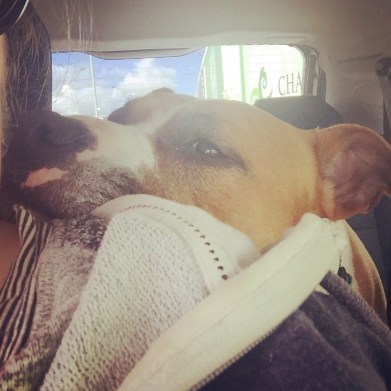



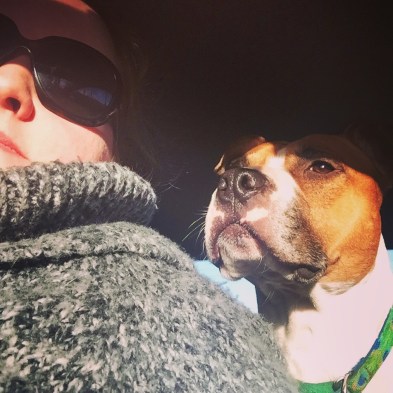
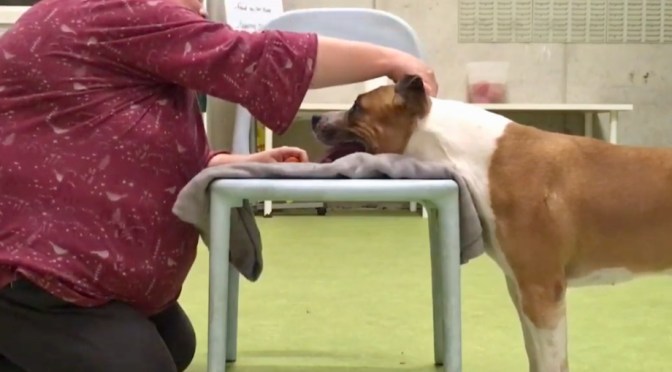

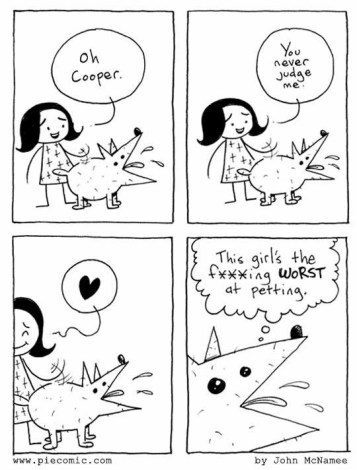
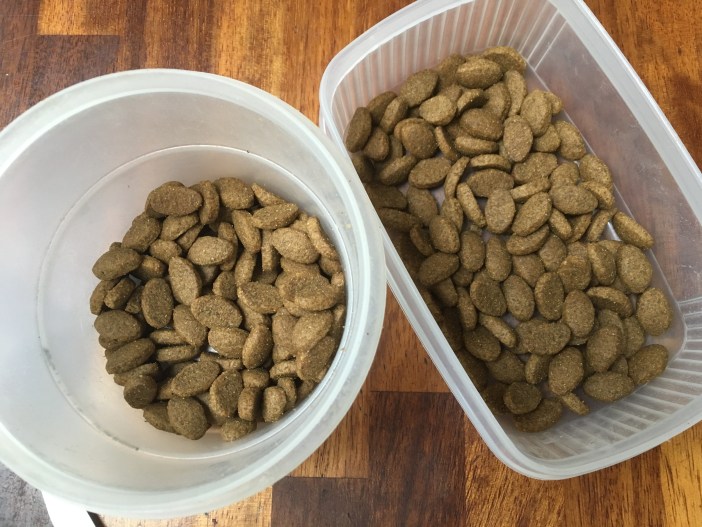

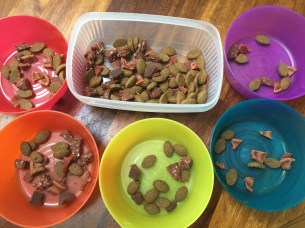


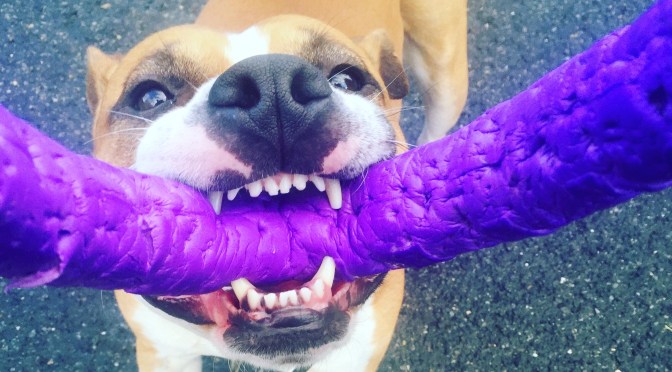
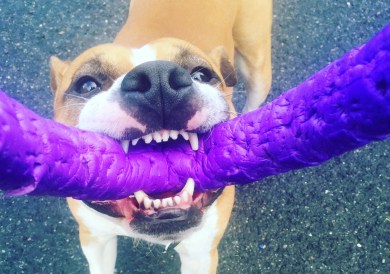

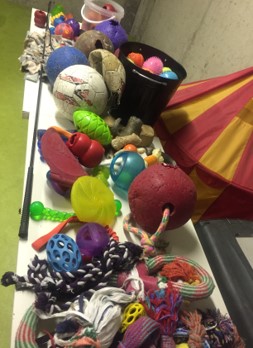


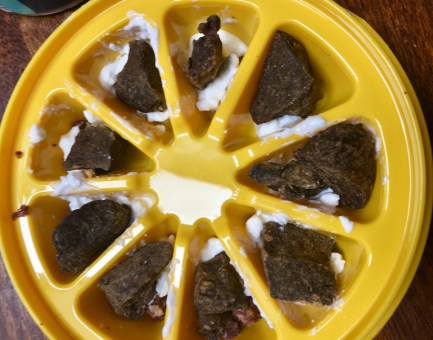

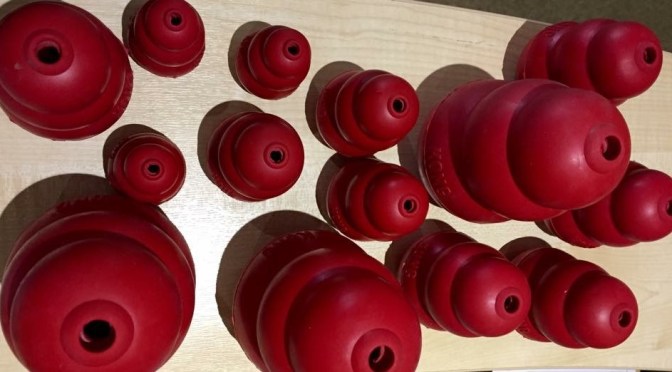
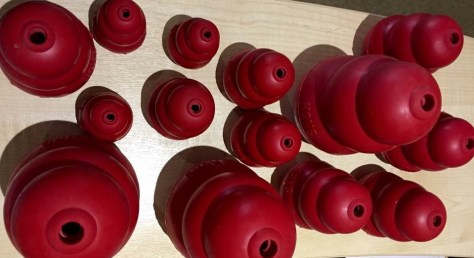
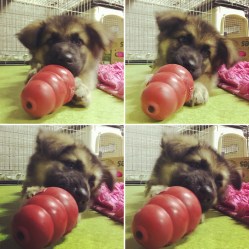


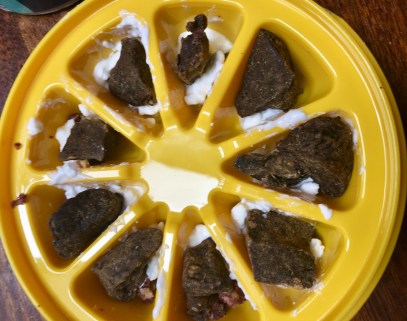
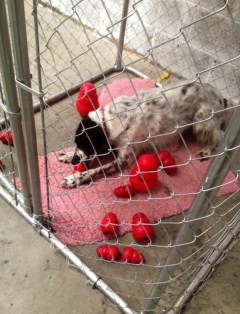


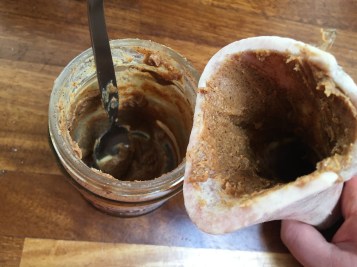


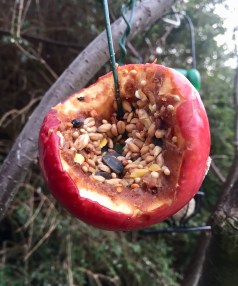

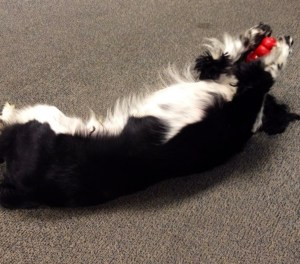


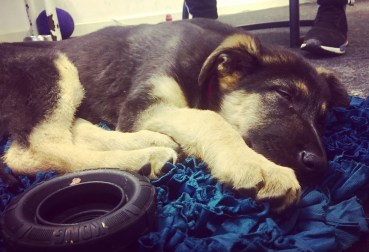
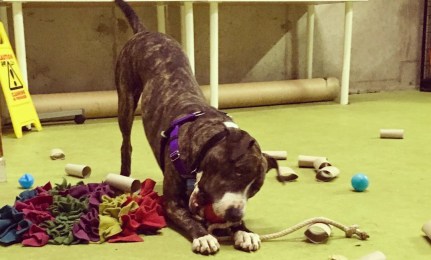

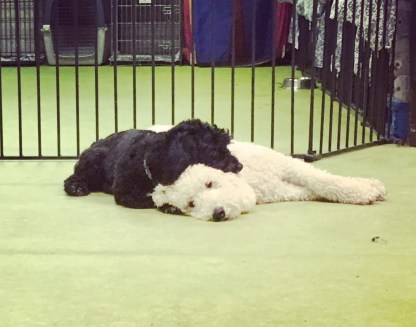
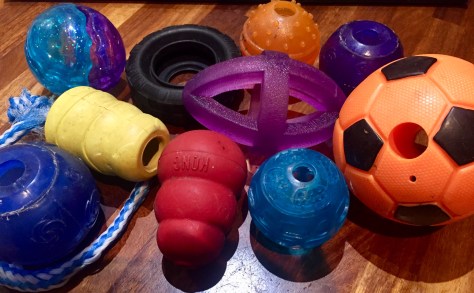
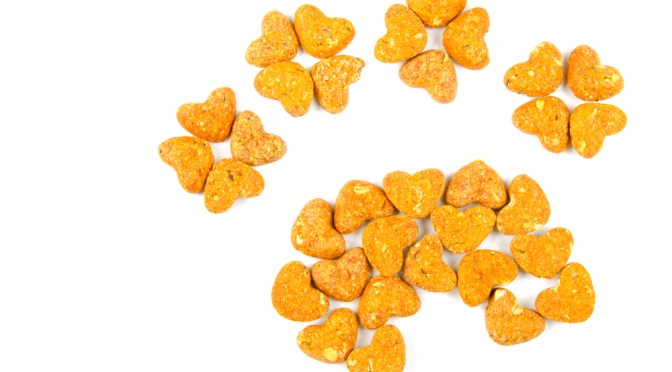


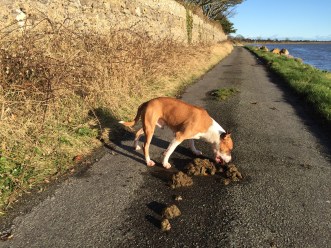

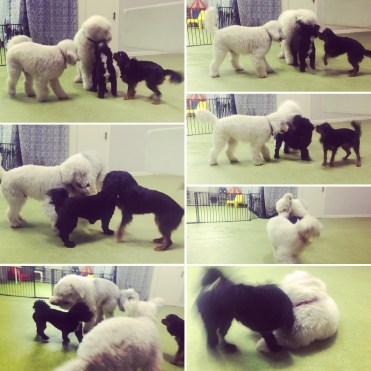
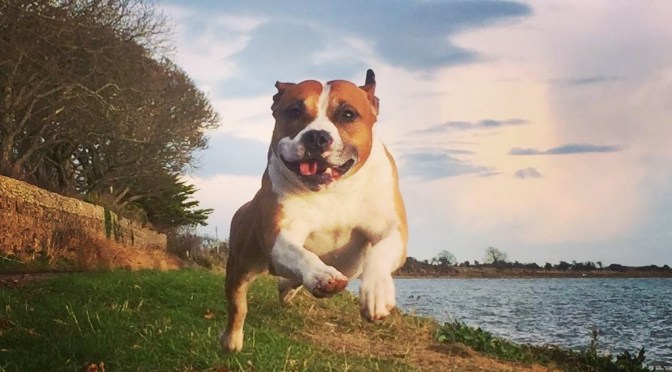

 What behaviours might your dog show now that you feel are troublesome, for you or your pet?
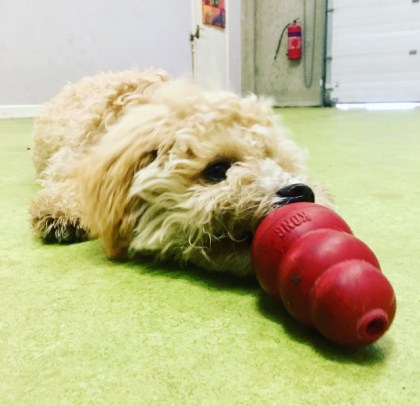
 AniEd Ireland