Category Archives: AniEd

‘Tis the Season

‘Tis the Season for Christmas Bites to help get you and your dog ready for the Howlidays 🎄

Calm & comfortable canine behaviour doesn’t happen by Christmas magic…it happens with sensible management, realistic expectations & meeting your dog’s needs.

We can all find the Season stressful & overwhelming, including our dogs. As part of planning for the celebrations, incorporate ways to manage your dog’s behavioural health.

The festivities bring lots of hazards including forbidden foods & other dangerous ingestibles, lots of changes, novelty, guests & activity, lots of comings & goings, on top of disrupted routines & distracted humans.

That means we need to step up management, provide more distance & relief, and meeting your dog’s needs.

All this stress & chaos leads to lowering of behavioural inhibitions so your dog is less well able to resist temptation. That means they be more likely to grab a tasty morsel, more likely to ingest and/or guard access to valuable stuff, and more care with supervision of dogs + kids and guests.

Realign your expectations with reality…the reality of the preparation you’ve provided, the stressors your dog is experiencing & the conditions on the day.

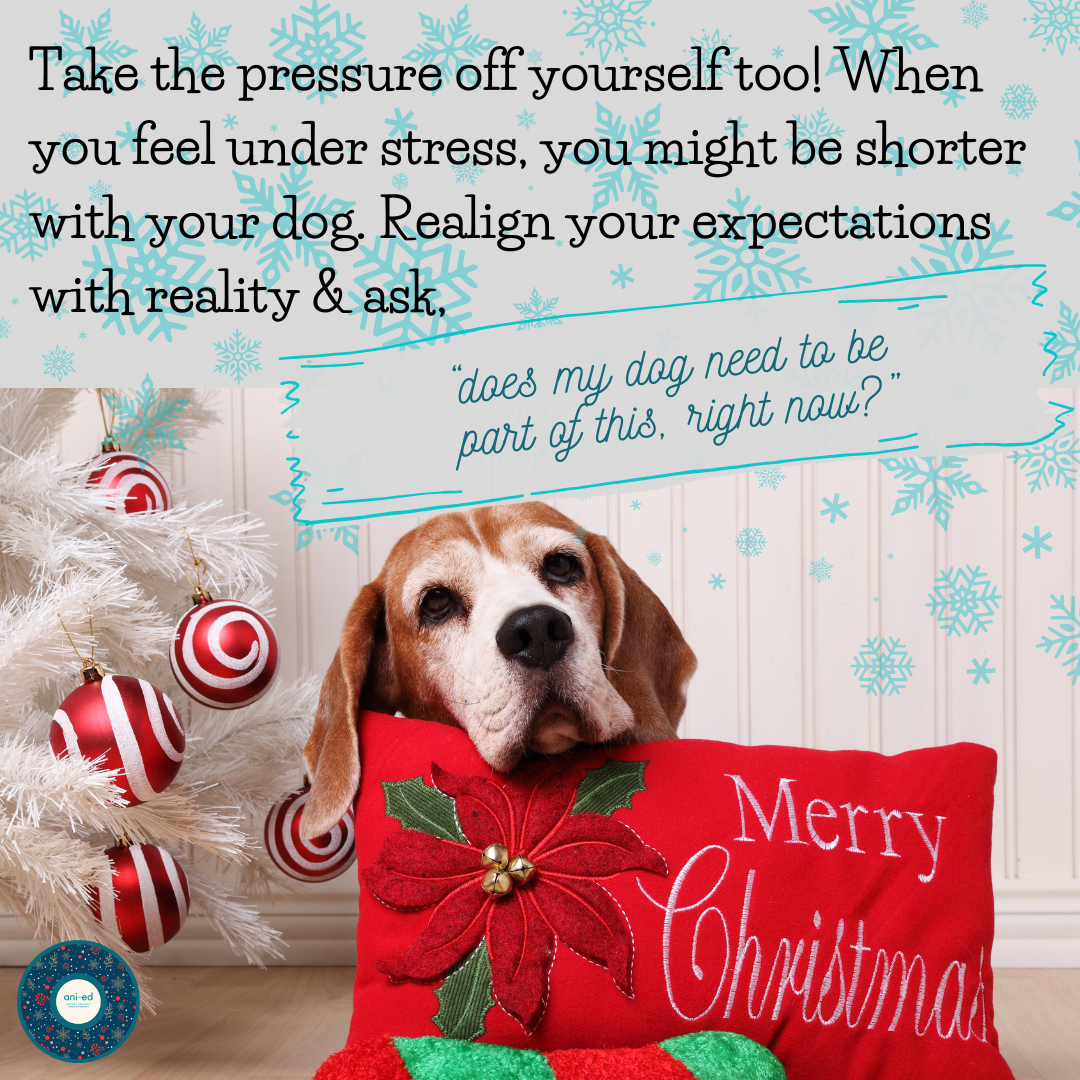
Take the pressure off yourself too! When you feel under stress, you might be shorter with your dog. Realign your expectations with reality & ask, “does my dog need to take part in this, right now?”.

Check out our Christmas Bites program to help bust the Seasonal stress, support you & your dog & keep everyone safe.

Safety First

Disrupted routines and distracted humans means that accidents can happen quite easily, particularly as there are so many harmful hazards all around during the festivities.

More about…

Festive Foods

Chocolate

More cases of chocolate toxicity are presented to veterinary hospitals during December, than any other time of year (Noble et al, 2017).

The Christmas Season is full of chocolate and dogs will be able to sniff out our hidden gifts and chew through containers. Dogs might hunt down chocolate in bars, boxes, Advent Calendars, decorations, toy components, and in parcels or wrapped gifts.
Chocolate often accompanies other dangerous foods such as raisins.

Chocolate contains the methylxanthines theobromine and caffeine, that can cause CNS stimulation when ingested by dogs. The greater the cocoa solids in the chocolate, the greater the risk of toxicity, with smaller amounts ingested (Bates 2015).

Even though theobromine toxicity is not a risk with white chocolate, VPIS, 2019, warn that with its high fat content ingesting white chocolate may lead to pancreatitis.

Check out this helpful Chocolate Toxicity Calculator from Vets Now.

In Noble, 2017, most dogs were presented at the veterinary clinic 1-6 hours after ingestion with vomiting, increased heart rate, agitation, and restlessness.
Spotting chocolate toxicity can be tricky. Many dogs will eat the evidence, chocolate and wrappers, so keen observation of your dog’s behaviour may contribute to getting timely help.

Beyond Chocolate

There are plenty of other festive foods that our pets might access accidentally or be fed unknowingly.

Cooked bones and fatty leftovers will be sought after by dogs and cats alike. But with our usual routines disrupted, left over foods may be discarded in unusual places, meaning easier and unsupervised access by pets of all species.

With an abundance of food, waste bins and compost bins may be overflowing, and many pets will seek out mouldy and spoiled foods which may leave them susceptible to Mycotoxins and similar.

Coffee, alcohols, and other psychoactive substances are readily associated with party-time and may become easily available to our pets via half-empty glasses left within reach, spills, in desserts and rising bread dough that may be left unattended or discarded.

Seasonal nuts, such as macadamias, and dried fruits such as grapes and dried grapes, e.g., raisins, currents, sultanas, are dangerous and may be in lots of foods like cakes, pudding, mince pies, stuffings & fillings.
Avocado, raw potatoes, fruit pits/seeds, fruit plant parts, and Allum species such as onions and garlic can be dangerous too.

Christmas brings many changes to family life and households including routine and physical disruptions, such as moving furniture and setting up spare rooms. These changes may increase risk of ingestion of human or pet medications; remember, dogs may chew through “child-proof” lids and containers with ease. Medications that people might believe are relatively benign, such as cold and ‘flu preparations, will feature in most homes at this time of year so take care!   

While we humans may choose to gorge on high fat, high salt, and high sugar snacks and treats, these are not safe for pets of all kinds.
And be aware that “sugar free” foods may contain xylitol, which is poisonous to dogs, and probably other pets too.

(Cortinovis & Caloni 2016)

Winter Hazards

Beyond foodstuffs, the same seasonal disruptions may contribute to increased risks relating to environmental hazards.

Christmas trees, decorations, wires, lights, candles, oils, ribbons and wrapping paper and packaging can be irresistible to pets who explore and even ingest these novelties.
Putting decorations and seasonal plants, like holly, mistletoe and poinsettia, out of reach may not reduce risks to cats particularly.

Winter hazards like rodenticides, anti-freeze and carbon monoxide poisoning may be more dangerous given the distractions of the celebrations and often inadequate supervision of pets.

(Bates 2022)

The extra excitement and background increased stress of the run-up to the celebrations lowers behaviour inhibitions, meaning your dog may do behaviours they wouldn’t normally. They may be more likely to ‘steal’, grab, ingest, guard, jump up, bark, and so on.

Disrupted routines, distracted humans, doors opening and closing, lots of activity and excitement, can leave pets unsupervised and unattended more than usual. It’s on us to step up our management game to keep our pets safe this Season!

Include your dog

While it’s important to prevent our dogs getting forbidden and dangerous festive foods, we can include our dogs in our celebrations with safe and suitable foods too.

Know your dog! Some dogs can tolerate certain extras better than others – if that’s not your dog, stick to their regular diet and make it interesting by incorporating food puzzles and fun food games instead.

Adding small amounts of fresh food extras can be a great way to boost palatability and nutrition. Our dogs should find pleasure in their food, just like we do.

Consider adding lean components so as not to upset their tummies with extra fat and to keep calorie content under control. Account for extras by carefully adjusting the amount of their regular diet, to maintain balance.

Feed the rainbow! Consider the addition of safe and suitably prepared fruits and vegetables in an array of colours to capture the benefits of a range of phytochemicals that act as pigments in plants.

You might even bake special Seasonal cookies or treats for your dog. There are lots of recipes online often incorporating banana, oat flours, peanut butter and other dog-safe ingredients.

Our human celebrations generally incorporate food; we share food with loved ones, and are sharing love in doing so. Of course we want to include our dogs, whom we love as part of our families. Of course, keep them safe and away from harmful foods, but make sure to look at ways to share the celebrations with them, and share the love!

Halloween Survival

I post about it pretty much every year and that’s because every year the same signs are there that the effects of seasonal fireworks, on the behaviour & health of dogs (and other animals), have become normalised.

Rather than posting videos of terribly distressed pets and commenting how awful fireworks are, we need to have a structured plan in place, with pretty diligent implication. And to really help these dogs we will most likely need to work with the dog’s vet-team and start our work in February. Yep, the February before Halloween.

I can understand some apathy…noise fears are challenging and it requires lots of time and planning to help improve dogs’ comfort. And the nature of pre-Halloween fireworks make it even more difficult for pets and their people.

Get all the info:

Quick survival guide:

Survive the night:

Download the guides from here or share on our socials @aniedireland (Facebook) (Instagram). Spread the word!

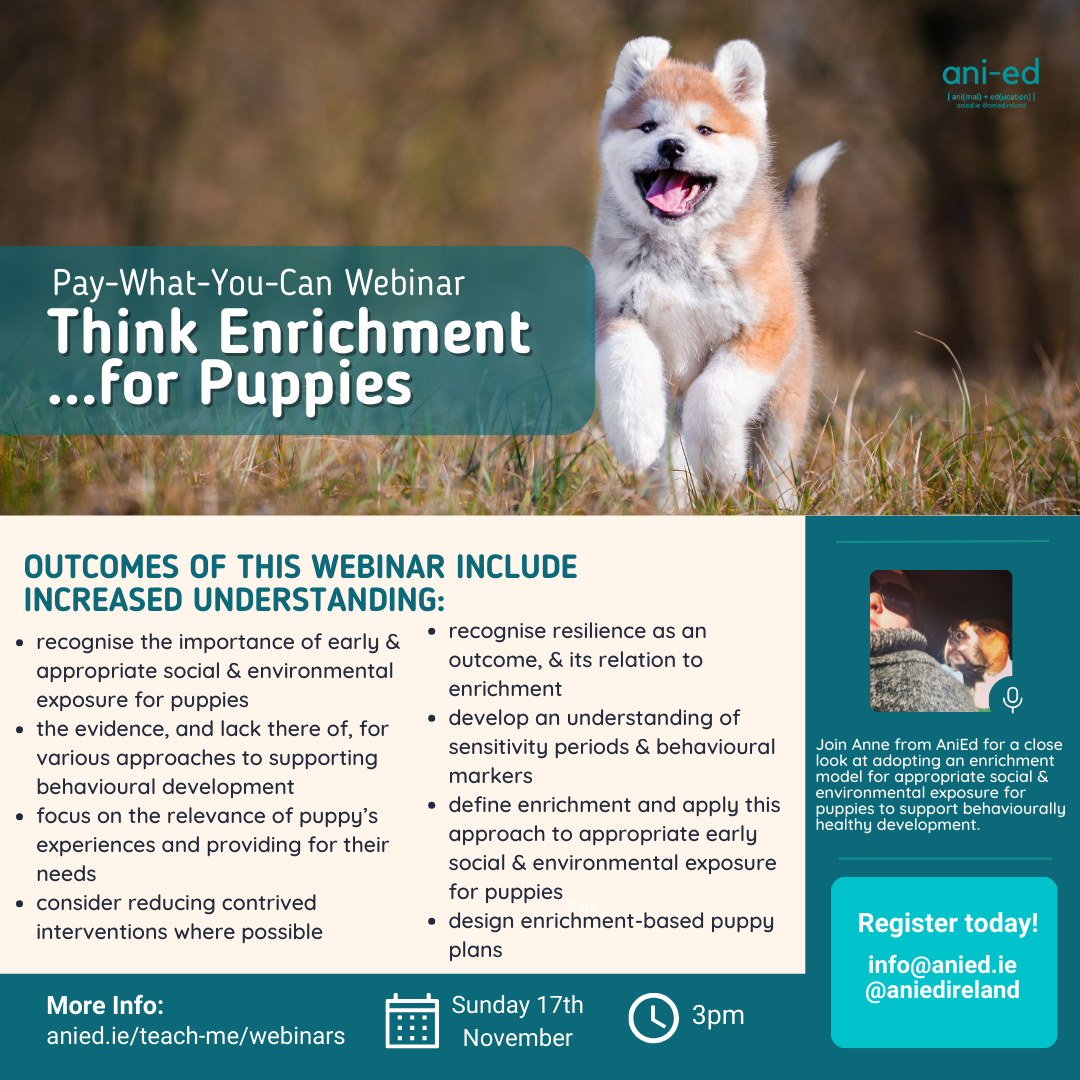
Think Enrichment…for Puppies! webinar

We’ve officially come to the end of this years enormously successful series of Pay-What-You-Can webinars so I’m definitely going to run another series in 2025.

Our Think Enrichment…for Puppies webinar was postponed as I developed laryngitis and lost my voice so there was no way I could present on that day.

So I’ve reschedule this one for Sunday 17th November at 3pm so we can really delve into puppy behavioural development and look at how we can apply an enrichment model to supporting appropriate social and environmental exposure.

It’s going to be another big one so come along and join us! Register here.

FREE LIFE webinar

Bringing you more goodies!

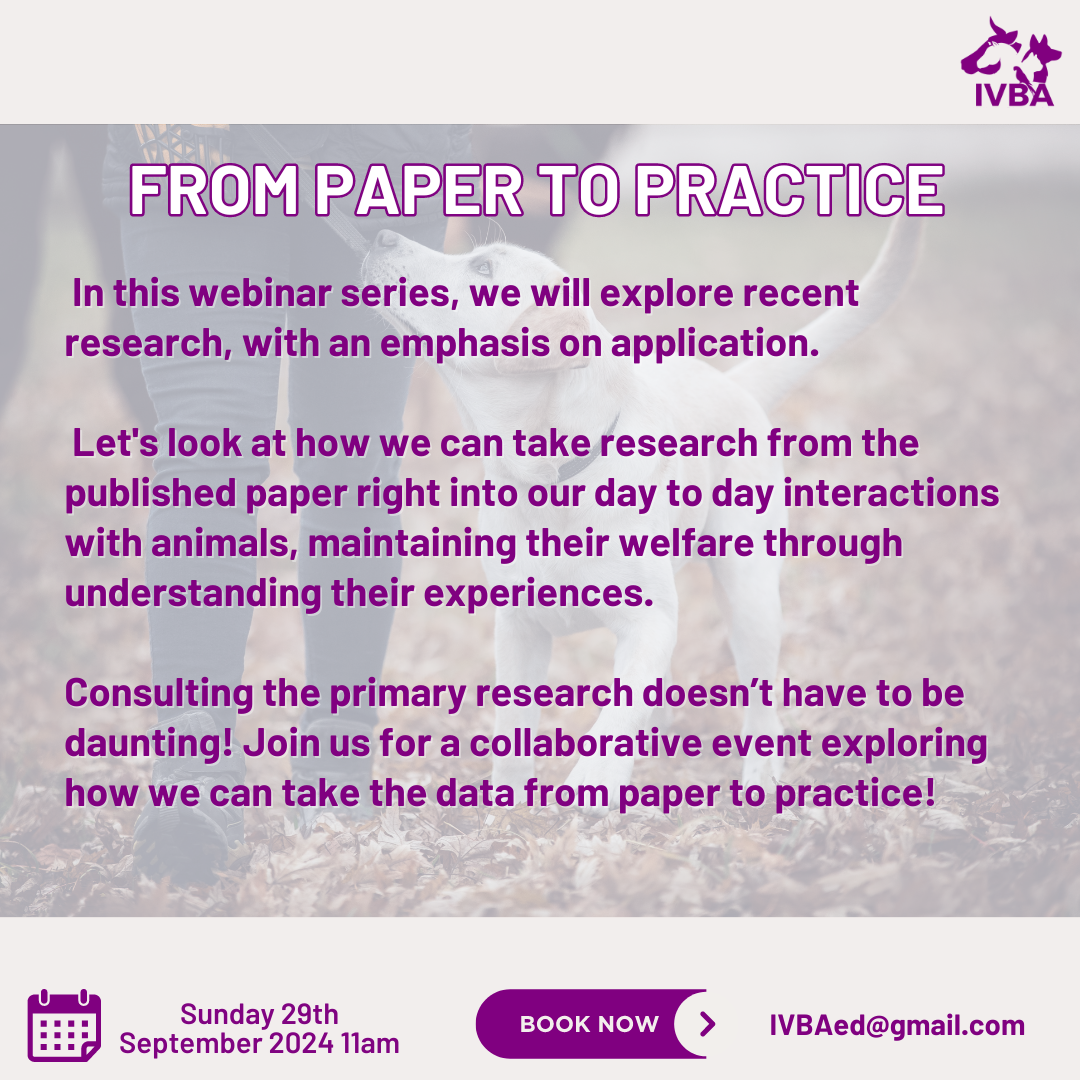
Join IVBA and Dr Eduardo Fernandez to discuss LIFE!

In our From Paper to Practice series, we take an informal but in-depth look at the literature and how best to apply it in our day-to-day interactions with animals.

This time we are looking at this paper: Fernandez, E. J. (2024). The least inhibitive, functionally effective model: A new framework for ethical animal training practices. Journal of Veterinary Behavior71, 63-68.

This FREE webinar is an important one to attend for our community and is on Sunday 29th September at 11am (Irish time). You can book your spot by emailing me IVBAed@gmail.com

Dogs In Society

Lucky for me I get to share a new project that’s very important to me, at the same time as I lament that such a project is needed.

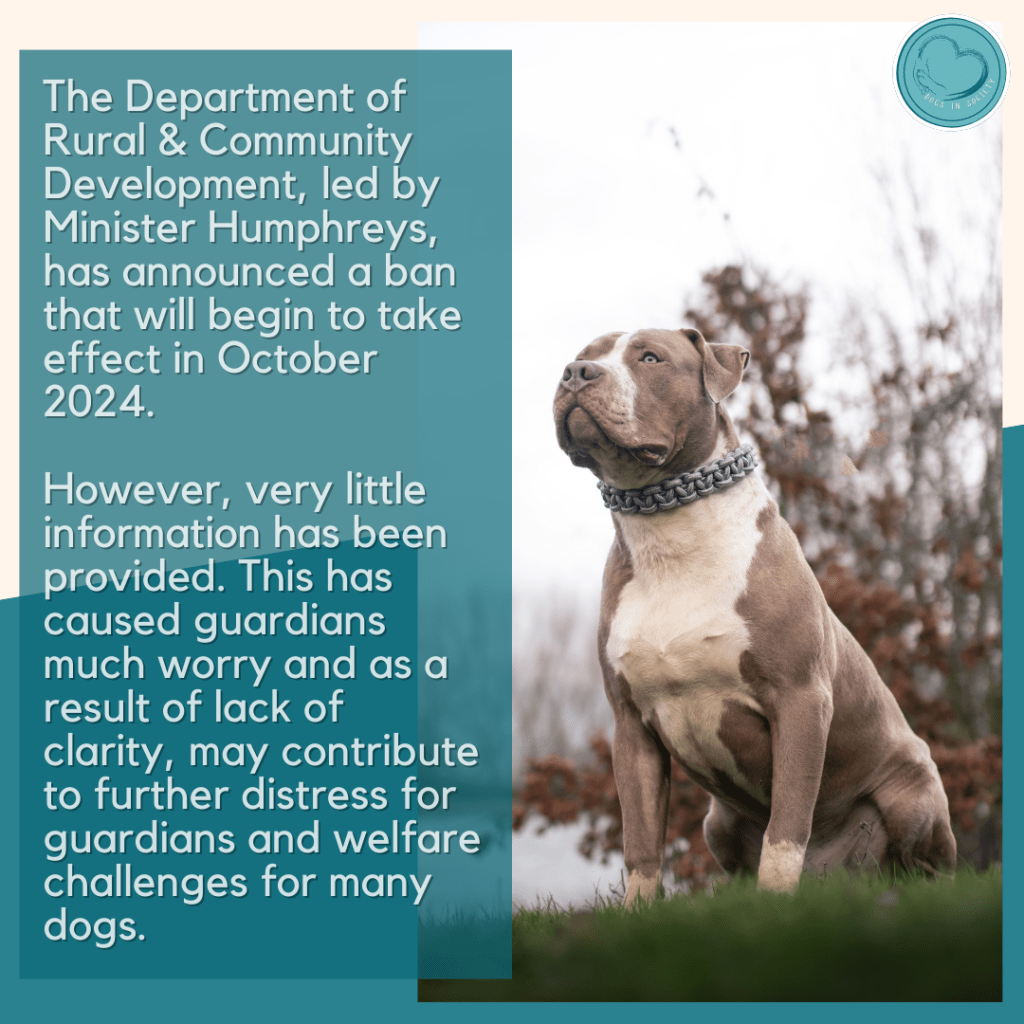
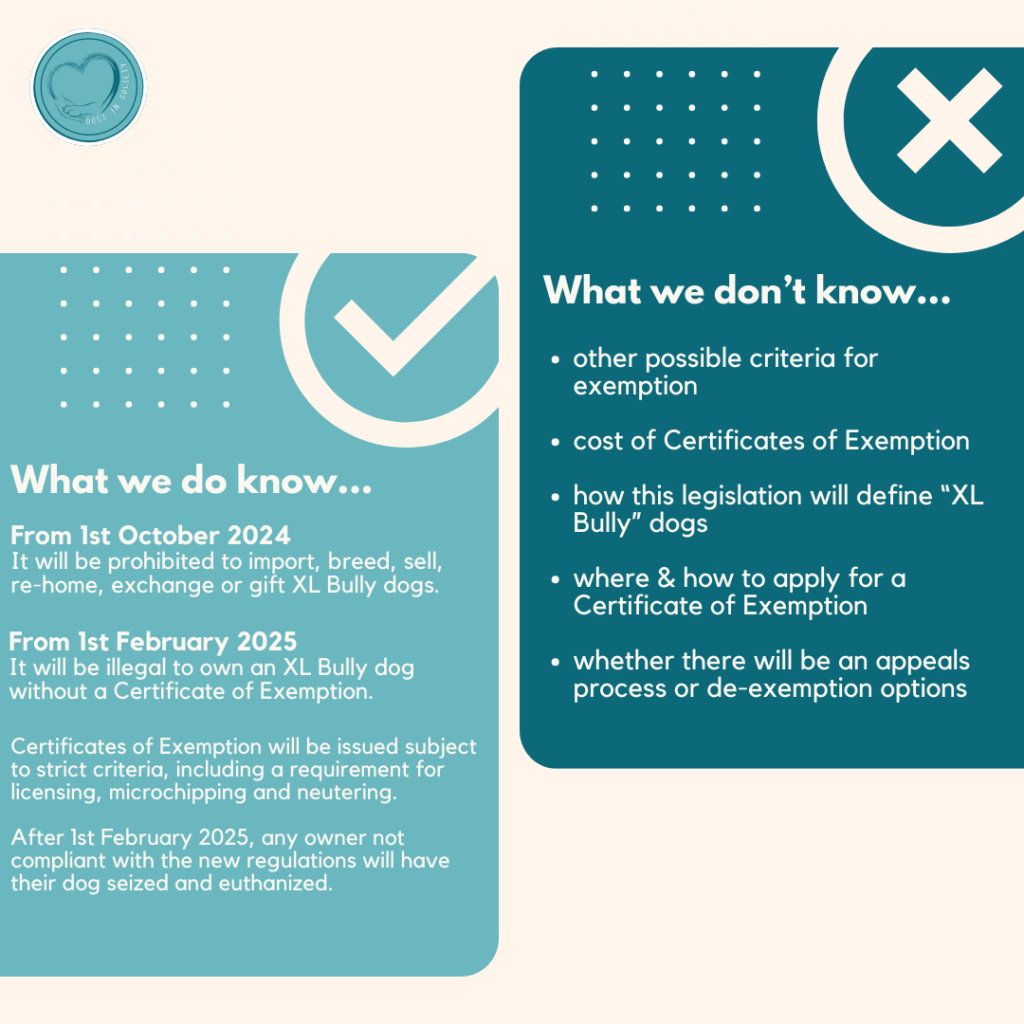
Dogs In Society is a new stakeholder group made up of experienced dog behaviour professionals and educators. I and some colleagues have been brought together on this because of the Irish government’s plans to enact breed-banning legislation…starting next month.

There is very little information available about how this legislation will be applied and we are troubled by the bringing forth of legislation based on flawed rationales. Our concerns include:

– Reactionary response and haste with which breed-banning legislation has been considered and written:

  • insufficient time to conduct due diligence
  • modelling legislation on a similar ban in the UK which has been shown to be ineffective, expensive, was enacted with disregard for considerable expert advice and is currently being challenged in the High Court
  • absence of discourse involving veterinarians and without consideration from Veterinary Ireland, whose members are largely opposed to BSL

-Lacking clarity in rationale for decision making, that is clearly ignoring the valid evidence:

  • lacking planning in enacting and training local authorities and stakeholders in enforcing this legislation

Questions about the integrity of the conclusions and guidance provided by the working group

  • no report has been made publicly available, but legislation has been written
  • BSL position statements published by several participating organisations oppose banning and expansions to BSL
  • representatives from at least two of the member organisations, of this working group, have made public statements in national media and on social media in which they have promoted erroneous information, sensationalised canine behaviour in favouring the targeting of a poorly defined type of dog and stating an agreement with the actions of the Minister in bringing this legislation forth.
    We have screen grabs, transcripts, and recordings as evidence of these public statements.
    These disparities highlight a lack of transparency on behalf of this working group, and apparently, a lack of understanding of the core issues. 
  • local authority vet made representations for Veterinary Ireland on RTE 6pm News (6pm News, 05/06/2024) with statements and recommendations in direct contravention to the position held by Veterinary Ireland, and who has been central in writing this legislation

In short, BSL is based on erroneous rationale, that behaviour and safety can be predicted via morphological characteristics, and, despite being enacted here since 1998, the rate of bite incidents continues to rise. It is a blunt instrument that provides an all but superficial pretence that action is being taken, while deflecting from the complexity and nuance of the issues at hand.

As such, breed specific legislation blinds stakeholders to meaningful alternatives that are evidence based, and suggests that only the behaviour of targeted dog-types warrants care. With effective legislation and community supports in place, alternatives to breed-focused mandates can facilitate ongoing data collection to enable appropriate adjustments in response to evolving societal trends.

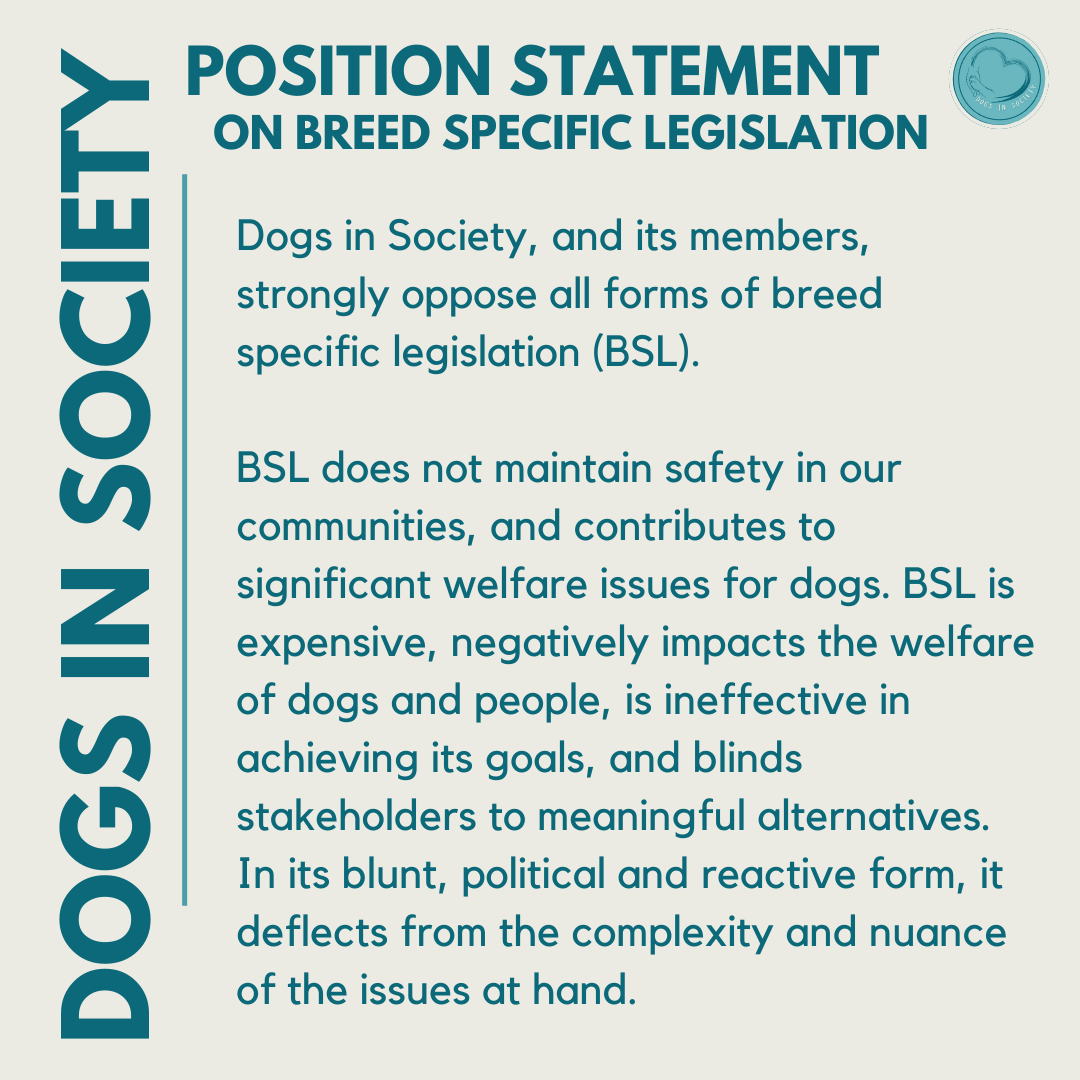
Download our fully referenced and evidence based Position on BSL (Breed Specific Legislation) and please share with others, including policy makers. Please share!!

While we have been working for months contacting politicians, councillors, professionals and rescues, we understand that this ban is happening. Our energy must be devoted to helping and supporting those affected by this short-sighted legislation.

Although no process has been made public, we do know that exempted dogs will need to be muzzled. This is already the current state of legislation for dogs who look like this but, just in case, we want to support guardians in preparing their dogs.

Muzzle training is an important skill for all dogs and can be a fun teaching project for you and your dog.

Download our Muzzle Love tutorial handout and please do share with others too!

Here’s a quick video demo tutorial (linked from the handout too, along with other resources):

How you can help us help more dogs:

  • follow @dogs_in_society on social media, engage with and share our posts
  • tell your friends!
  • share our resources
  • legislation, particularly BSL ain’t going to improve safety, education, guidance and support will…think education, guidance and support rather than blame or shame
  • send anyone with questions or concerns about BSL, about dog behaviour, about “these dogs”, to us and we will help them without judgement
  • we will have some more resources available soon including the DIS Pledge that will focus on messaging and community focused guardianship…look out for that coming soon!

But what kind of cow is she?

Let me just start this piece with a brief disclaimer. At no time here or anywhere else am I making light of or downplaying the trauma, the terror, the pain, the fear relating to dog bites or “attacks”. I work with people who have experienced just that, usually in interactions with their own dogs, every day. I am devastated and upset when I hear of any serious injuries or injuries leading to death caused by dogs.
I don’t wish injury on any person and hope that any person injured by a cow or a dog fully recovers.

Today marks 33 years since BSL (breed specific legislation) was enacted in the UK resulting in the banning of “pit bulls” and other breeds. That quickly led to BSL in Ireland and following this pattern, after the UK government, against expert advice, expanded DDA last year, Minister Humphreys, in her role with DRCD, has announced a similar expansion here too.

Proudly reported in 1991. Note the language used and that which is continued to be used to vilify dogs, making it easier for governments and authorities to penalise and discriminate against those who choose dogs who happen to look a certain way. People like me.

Killer Cows

Agriculture is associated with more occupational deaths than any other job-area. This is despite only a small proportion of the workforce being employed in the sector and despite ongoing education and campaigns, farm related deaths continue to rise.

About a fifth of those deaths relate to cattle. Sadly, during the ten years, 2011-2020, 39 people have been killed in cattle related incidents, with many more injured, often seriously.

More from HSA here.

Certainly anecdotally, docility is a cow-trait, presumably more widespread across populations via selection, with cattle who are harder to handle culled.

Cattle generally have limited contact with people, particularly with untrained or inexperienced people, and are handled in environments equipped with tools and set-ups to manage their behaviour.

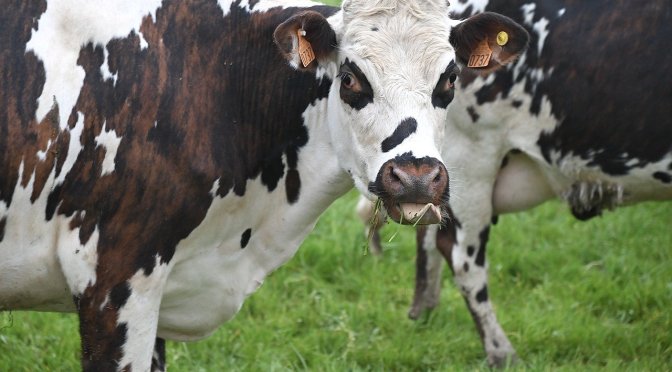
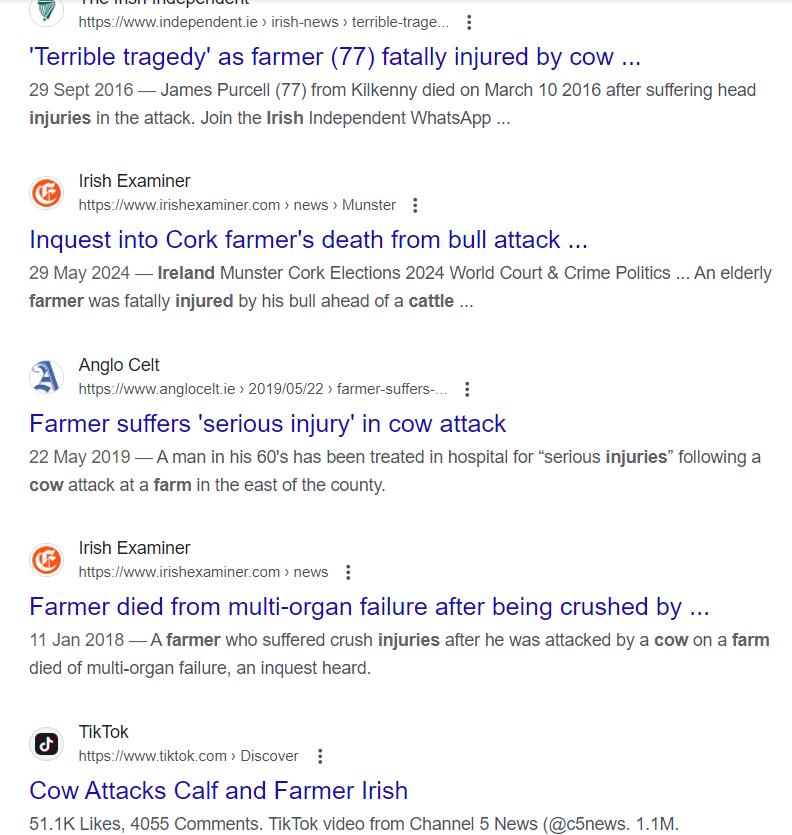
Despite regularly reported cattle related incidents on farms, I could not find one article asking about the breed of cow involved. Not one. I did find a couple who mentioned the type of cattle, dairy breeds, beef breeds etc.

But not one mention of speculation surrounding the breed of cow, her past (was she fighting other cows?, how was she raised?), or questions about what might have happened (what if this were a child?) and zero suggestion that these cows should be banned.

Indeed there is little mention of any sort of blame, shame or declarations that there are “no bad cows, only bad farmers” despite there being hundred of recent articles, across media, reporting on cow related incidents.

Banning Dogs

I am hard-pressed to find even one media article without speculation relating to ‘breed’ of dog, without mentions of presumed “breed-traits”, with out references to “dangerous”, without discussion of banning dogs in some context.

Four people, since records began, have been killed by a dog or dogs in Ireland.

Concerns about measures to reduce animal related injuries and fatalities are absolutely worthy of discussion. But, in understanding those concerns, we need to critically assess the reporting biases created in how these concerns are raised and the implications of these biases.

A decades long campaign to demonise dogs who look like “bull breeds” has resulted in culturally ingrained attitudes toward dogs and their humans. Because BSL has always been about discriminating against the people part of the equation…who would own “these dogs”? People like me.

I was in school when DDA was enacted in the UK and when the “Restricted Breeds” list was enacted here. I was a kid but was ‘in’ dogs even then and I wrote letters and articles, and interviewed people with targeted dogs, in an attempt, along with dog-sports colleagues, to turn the tide. 33 years later BSL is still a tool and continues to show how ineffective it is at preserving safety or welfare.

While thousands of dogs’ welfare is currently suffering and will continue to suffer, not one person on this island will be safer so long as breed-based approaches are relied upon.

Clip link

Breed based approaches are fundamentally flawed given the difficulties with ‘breed’ ID and the complexity with predicting safety/danger via morphological characteristics.

Improving safety & welfare

The solution is obviously not banning cows or certain types of cows. Instead, multi-layered approaches surrounding improved handling and awareness training, increased investment in resources and programs to improve farm safety, use of appropriate tools to improve safety and publicity that provides advice about environmental adjustments that make it easier to be safe.
This becomes particularly important as farming continues to intensify.

Breed-based approaches, in dogs, have been shown not to improve safety. And that’s likely because dog-safety requires multi-layered approaches at community and society levels.

But breed bans, as blunt political tools, present the illusion of action being taken, of something being done.

Dogs In Society

For these past 33 years, I’ve been continuing to work on improving dog safety and welfare. Depressingly, this isn’t getting better.

I’m so lucky to still be surrounded by awesome dog-peeps and we are continuing to work on this, continuing to develop community focused resources and supports.

Look out for our launching a whole new project next week.

Our focus at this time is BSL and the impending ban on XL Bully dogs in Ireland, from October. But we recognise that to improve dog welfare and human safety, everyone needs help in understanding how behaviour works.

With that level of education in place, BSL will be more widely recognised as the ineffective tool that it is, and dog safety and welfare has a chance to improve.

Dogs In Society is here to support communities in nurturing human-dog relationships to maintain safety, to maintain welfare, via education, supports, resources targeting societal reform. Not useless bans and more poorly enforced legislation.

Bucket List(less)

When faced with a loved one’s mortality, perhaps they are getting on in years or perhaps there’s been a particularly damming diagnosis, it’s pretty natural to think of all the things we might want to pack into the limited time we have left together.

Bucket lists for dogs have become a social media staple. Videos and photos of guardians, and their truly loved dogs, sharing their last moments together, bring me to tears.

Finding ways to cope with our dogs’ aging is certainly something that’s important for the support of senior-dogs’ humans. The changes relating to canine aging can put significant pressures on our relationships, as well as pressures on resources and finances.

Care-giver burden is very real for those caring for senior dogs, particularly where chronic conditions are confounding aging (Spitznagel et al, 2019). This care we devote to our aging dogs intensifies our attachment (Martens et al, 2016) and can blind us in making the best decisions for our dogs (Christiansen et al, 2016).

Who are bucket lists for?

When faced with a more imminent ticking clock, our minds naturally drift to all the things we didn’t get to do with our dogs, throughout their lives or perhaps during their more spritely years. Regret is normal and very much a part of anticipatory grief.

Constructing a bucket list seems to provide a solution. We can focus on maximising our time together, no matter how short, and I can see how posting about it might be an important part of processing this journey, of generating a support structure, and of basking in the loveliness of our experiences together.

It’s probably easy enough to devise a list of all the things you might not have had the chance to do together and things that you would like to do now that the chips are down. But are those the right considerations?

I’ve two other questions that I want you to ask…

  1. What does my dog LOVE?

Does your dog really want to go kayaking or to totally new or overwhelming places? Your older dog, whose health, condition and mentation might not be what it used to be…

All these weird and wonderful places and activities certainly sound amazing, but most dogs, particularly older dogs, just might not enjoy the changes, the new challenges and the pressures.

For sure, novelty and excitement make for great memories, but what might our dogs prefer to do? Your dog wants you, they want to know where you are, have you close to them, for you to be predictable and make all the good things happen.

2. Why wait?

I took Decker’s nose print and paw prints years ago when some offer on a kit came up. When I shared the prints, there was much panic about whether we might be preparing for the end.

So why do we wait until it’s almost too late, until our hands are forced by time, to do all the last minute things?

Dogs live life as if it’s a bucket list

Dogs are just about the best living representation of “live every moment to the fullest”, or some other similar motivational poster.

They appear to be lucky enough not to have the cognitive powers to worry about their mortality, to lay awake reflecting on what might have been.

But regardless, dogs are in it for NOW and TODAY. They are not considering what life might be like in two years time; dogs are their current life and experiences. As I always say, dogs are here for a good time, not for a long time.

I’ve been thinking about this a lot more lately because Decker has just recently got an all clear after a cancer scare.

F**K CANCER

Since the beginning of this year, Decker’s aging has become more pronounced. He’s 12.5 and that’s pretty ancient for an AmStaff.

During a routine exam, his vet incidentally found a concerning growth in his rectum. Growths of this type in this area in old dogs usually indicate adenosarcoma and all the unpleasantness that brings. With the prospect of maybe 3-6 months left, my anticipatory grief accelerated and my efforts to consciously make sure we didn’t dwell for a second intensified.

After three months of monitoring, biopsies, and finally, surgery, the lump is out and to everyone’s great relief it’s a leiomyoma. A benign growth that’s generally done after surgery. Phew!

But this has been weirdly conflicting. His tentative cancer diagnosis gave me some feelings of control over the timelines and predictability for what I might expect; how the end might look and when it might happen. I’m glad it’s not cancer but I’m left a little bereft.

Aging ain’t all it’s cracked up to be.

We are told to cherish and enjoy our aging dogs, their greying faces and slowing bodies. But I don’t find any of this magical and I’m not particularly enchanted by it.

Don’t get me wrong, I’m grateful for every second more we have together. In my mind, our time together has always been limited as he has lived his life at top speed with little concern for the ramifications.

I miss our super-charged, gung-ho lives together, as much eye-rolling and worry as that’s inspired. It’s still full on, just relatively less so. I feel we don’t and wont have enough time to bask in this slower pace. And I’m really grieving for something, not sure what, now that’s he pretty deaf.

From about March, his failing hearing appeared to deteriorate even more and although he can hear some sounds, that’s sure to go soon too. This has been the greatest smack in my face that we are heading toward the end.

I feel almost handicapped in communication and my views toward our relationship have changed. We have worked for years and years to have so many behaviours on verbal cues, under pretty solid stimulus control. He has had so much freedom throughout his life because we worked so hard and built a pretty rock solid reliable recall.
And just like that, it’s gone. It’s redefining every aspect of our lives together and I’m not sure I’m ok.

Let me just say that he has not been affected in any way and I’m working really hard to make sure there’s no outward signs of my internal turmoil.

Clip link

A small celebration. Just a couple of weeks we figured out that he can hear this Acme whistle. He clearly doesn’t recognise the conditioned sound previously learned over years, but he hears something. And that means I was able to condition it as a new recall cue. After three weeks of practice, and building a solid whistle recall (again), he was able to recall off water…which is pretty much our biggest challenge.

Every day is his bucket list

Decker has always been the best reminder that life is short, not because he’s now an old fart, but because, since the day he landed, he has put 110% into every action. If any of his days were to be his last, he would have zero regrets and he would have soaked up the joy from every single second.

We don’t need some end-of-life bucket list. He is living his fullest and best life every single day. He throws himself, full-force, into every thing even the mundane. He seeks and finds the fun in everything and thankfully, his attitude is somewhat contagious.

I can’t possibly live in the wallowing or introspection while he is by my side doing it all. Not reflecting or thinking about it; doing it, living it, feeling it, experiencing it. Every second.

So we are not doing a bucket list, we are doing what we’ve always done. Going to the beach for swimming, walking in the woods, sniffing all the sniffs, playing ball games and tug, having fun with food, chewing and destroying all sorts of things, hanging out and sharing space, sleeping deeply beside one another.

I might seem like just the facilitator, making sure he has all the resources to continue to enjoy all these activities for as long as possible; but I’m also a witness to it, basking in his continuing joy, and if I’m lucky, I’m also a sponge, soaking up his attitude, benefitting from his joie de vivre and hoping that just a little bit rubs off on me.

Interested in learning more about canine aging and supporting our senior dogs? We have a webinar for that! More here.

Pay-What-You-Can Webinars are back!

Because we had a massively popular response to our PWYC webinars last year, we are bringing them back with even more! 
We want to get the best education, that’s evidence based and focused in critical evaluation of the status-quo, to as many of you as possible. And the best bit? You can pay what you are able to pay. No questions asked.

  • each webinar is 2.5-3 hours long
  • be ready for lots of detail & content!
  • slides will be sent afterwards
  • live attendance and participation is encouraged & recommended

Find out more about this webinar program here and register for your chosen events here.

(AniEd is in Ireland and all times are in IST.)

We have six great webinars scheduled for this initial program, with more to come.

Each webinar is 2.5-3 hours long; they are mini-courses really! There will be plenty of time and facility for full participation, questions & discussion.

Slides will be available after each event. It’s recommended that you attend live for most benefit. That’s what these webinars are for!

We are taking deep dives on these topics & will be making careful analyses of the available evidence. This will sometimes challenge your & established practice and we are so thankful for you being open to joining us & confronting our biases.

All professionals, volunteers & dedicated dog lovers are welcome and will benefit from participation. We will explore the complexities of these fascinating topics so be prepared for in-depth coverings & lots of detail.

You can book one at a time or the whole lot! Find out more about this webinar program here and register for your chosen events here.

Beyond Food Toys

In not a lot of time, the lives of dogs have changed dramatically. As have our lives. Dogs’ and humans’ lives are intertwined so when we become more sedentary and less outdoorsy so too do our dogs.

Because we often choose dogs based on aesthetics (Weiss, et al., 2012), mythic notions of what breeds might be (Ozcan, et al., 2019) (Chyan 2018), or worse, on (social) media appeal (Redlaml, et al., 2013) (Herzog 2006) (Sandoe, et al., 2017), we are often not prepared to meet the behavioural needs to dogs, made for jobs, in our suburban or urban busy but sedentary lifestyles.


Never fear! The pet-product industry has us covered!

To make up those deficits, so-called “enrichment toys” of every weird and wonderful shape, colour and design have been marketed.

I’m being cynical, of course, but only just. I love food toys, I have so many (I have a serious dog toy buying problem) and I give them to my dog every day.

BUT! Food toys are not “enrichment”.

Food toys *might* form part of an ‘enrichment program’ for an individual dog, but that still doesn’t make them enrichment.

Enrichment must be enriching!

Enrichment isn’t a toy, it isn’t even an activity. Enrichment can be a process, but really, it’s an outcome.

While ‘enrichment’ is defined in different ways, it can be considered additions or modifications made to an animal’s environment that lead to measurable improvements in behavioural/physiological welfare (Fernandez 2022).

The important bit here is the measurable improvements bit. The animal’s behaviour will tell us whether we have enriched their life and world adequately.

Giving them a food toy and declaring them “enriched” doesn’t quite hit the mark!


Ask the dogs!

While research on enriching the lives and worlds of captive live animals in zoos and collections is relatively common, research in dogs is far more sparse.
Zoos are really where enrichment originally started, after all.
(See the wonderful works of Hal Markowitz.)

Most works looking at the addition of food toys have focused on lab dogs (Schipper, et al., 2008) and shelter dogs (Herron, et al., 2014) (Sampalo, et al., 2019) (Wells 2004). Dogs who, sadly, are living in pretty under-enriched environments and who might greatly benefit from the addition of the most basic elements to add some novelty to their days.

Many of these works report increased activity, increased rest, and improved kennel presentation (e.g., less barking, sitting or lying, less jumping etc.) (Perry, et al., 2020), with food-toys being the most commonly implemented intervention (Miller & Zawistowski 2012).


Hunt, et al., 2022, conducted a pilot study looking at enrichment for a small population of guide-dogs-in-training in an office environment. This might be somewhat comparable to companion dogs in homes…maybe?

They measured specific behavioural outcomes after the dogs had engaged in different enrichment activities and found that different enrichment activities had different effects on the individuals’ behaviour.

Food toys were found to be the least impactful on the dogs’ behaviour scores. Dogs were observed for 15 minutes before and after each enrichment intervention, with increases in relaxation behaviours and decreases in alert and stress behaviours noted.

However, the food toys were removed once the food was finished to prevent chewing the toy. Might this have limited the benefits of food toys?
The food toys were also the only intervention given in the dogs’ pens rather than in a specific room associated with all sorts of other fun.
There are also some methodological issues largely excused due to this being a pilot.

Gaines, et al., 2008, also found that the addition of food toys didn’t really impact the behaviours of military dogs in training.

Perhaps dogs who are already engaged in pretty exciting activities, who have ready contact with humans or other dogs and lots of exercise, don’t show extra benefits to the addition of food toys.


What about regular companion dogs?

Boonhoh, et al., 2024, developed a couple of food-toys to give to dogs and had participating guardians complete the Thai-version of C-BARQ before providing the toys and after a month’s use of the toys. While they report that there were improvements in the dogs’ behaviour, particularly in excitability-reduction, there are some problems with this study.

About a third of participants didn’t complete the work and this is level of drop-outs is associated with increased risk of bias (and possibly an indication of lack of effectiveness or poor applicability) and there were no control conditions explored. Guardians taking part in research to see how a toy might support behavioural improvements may have a bias toward seeing and recording improvements observed.

When the dogs were given the toys, guardians stayed with them, and that teamwork might enhance benefits associated with toy use providing social enrichment elements.

No one study is perfect, or confirmation of anything, but there are some interesting bits here. There is some analysis of the sorts of the behaviours the dogs engaged in with the toys and this is a great start in exploring the applications of different and combine interventions with companions.

The colour and scent of toys may also impact dogs’ preferences with some suggestions that blue or yellow toys are preferred (not clear between existing works) and vanilla scented over beef scented is a winner too.

Maybe food toys do provide enrichment for companion dogs, but perhaps lots of extra attention and interaction with their humans, during foraging activities, is the key to enriching their world.


What is enriching about enrichment?

Wells 2004, discusses the differences between animate and inanimate enrichment. Animate enrichment involves provision for social contact, while inanimate interventions involve environmental adjustments and additions, including food toys.

Social contact, communications and interactions likely provide the most benefits, enriching the lives and worlds of social animals like dogs. While dogs living in labs or shelters are probably lacking in access to social interactions with people, appropriate pair and group housing has been found to provide increased benefits, enriching the lives and worlds of many of these dogs (Hecker, et al., 2024) (Grigg, et al., 2017).

Animate enrichment provides immediate and ongoing social feedback for the dog. This facilitates dynamic changes, adaptations and adjustments for the animals involved and ticks many enrichment-category boxes all in one go, including cognitive, social and sensory outlets.

Fernandez 2022, argues that enrichment should be considered a contingency, an interaction between the dog’s response and some environmental stimulation. Creating dynamic contingencies might be the key to providing dogs with enriched worlds and lives.

Foraging is more than eating!

Fernandez, 2021, conducted a number of experiments with captive Polar Bears to find the best reinforcement schedule (how and when reinforcers are presented) to reduce pacing behaviour.

They found that providing smaller meals and food scents on response-independent schedules, encouraging more appetitive behaviours relative to consummatory behaviours, reduced pacing.

It’s difficult to provide foraging related outlets to captive animals within ethical and welfare frameworks. Providing live prey for Polar Bears to track and stalk is just not acceptable and not possible.

Reducing the predictable-routine delivery of meals reduces pacing (Wagman et al, 2018). This is important for pet dogs too. Don’t feed your dog according to the clock; predictability and routine are not the same!


What time is dinner?

Have you noticed your dog becoming more agitated as the clock ticks toward dinner time? Just like the Polar Bears, your dog might start to show increased locomotory, social, and even vocalising behaviours in anticipation of dinner time.

Think of the Polar Bears pacing in anticipation… Foraging behaviours are not just eating, they incorporate lots of moving about, searching for prey, tracking, stalking and the rest, for more time than they will be actually eating.
Having their meal served up, already caught, butchered and ready for eating means that several predatory behaviours in that sequence are not utilised.

And here’s a core concept of ‘enrichment’: animals still need to carry out those behaviours, even if the goals are provided. Polar Bears and dogs still need to carry out foraging behaviours even if we provide them food that’s already processed and ready for eating.

While dogs certainly show a range of foraging behaviours, often illustrated in a ‘predatory sequence’, they have evolved from scavengers and selective breeding has exaggerated and inhibited various foraging behaviours, particularly predatory behaviours. We have often selected against some consummatory behaviours, namely eating the quarry, because dogs were hunting for us!

Now consider the most commonly applied “enrichment” intervention for pet dogs…food toys! By focusing on food toys, and referring to them as “enrichment”, we might be missing out on providing our dogs with all sorts of very important outlets.

While food toys *might* form part of an appropriate enrichment program, they probably don’t need to be central.

Cora-Avila, et al., 2022, concludes that, “animals should experience sufficient amount of “wanting” before they experience “liking”.” Our enrichment programs should provide more opportunities for appetitive behaviours, e.g., searching, stalking, tracking, chasing behaviours, relative to consummatory behaviours, e.g. catching, killing, eating behaviours. Eating shouldn’t be the central focus, with dogs spending more time and effort on the fun parts that precede eating.

Enrichment must make sense…

What behaviours is your dog doing when engaging with food toys? (Indeed, the first question to ask is, is the dog engaging with food toys?!)

How does having outlets for those behaviours help your dog?

These toys are so often promoted for human convenience, to manage unwanted canine behaviours, and to entertain dogs for lengthy durations. And while that can certainly be useful, it’s not necessarily going to be enriching.


Behaviours function for food

Dogs do behaviours that get them food. No doubt.

There might even be some evidence that some animals, including dogs, may choose to do more behaviours to get food (“work” for food), when food is available for ‘free’. This is referred to as contrafreeloading. (Rothkoff, et al,. 2024)

But most dogs are pretty enthusiastic about doing things to get food. Lots of times, they’re doing things we don’t want them to do…but dogs will enrich their own lives and worlds if we don’t do it for them.

Clip link

There is so much individual variation when we talk enrichment and behaviour (Grigg, et al., 2017) that there is no prescribed recipe. Plus variation might just be the spice of enrichment too.

Your dog can get food, and anything else they enjoy, for “free”. That’s ok too. You can have fun with food, you can use food toys, you can just chuck their food all over the place to find. Mix it up and provide them with ways to fit plenty of appetitive behaviours in there too.

And make sure your dog is getting food they enjoy. That’s enriching too.


Part of providing an enriched world and life for them means we are doing lots of things that don’t involve food too, and aren’t necessarily food directed behaviours.

Dogs don’t need to be entertained all the time. An enriched life involves lots of ‘rest & digest’, lots of down time and, dare I say it, plenty of boredom.
Boredom is often aversive so animals will behave to resist its effectts (Burn 2017), but is likely to be part of the companion dog’s life. What are the behaviours we can teach dogs to help them to cope with boredom? Just being can be enriching too.
We can certainly facilitate this by providing physical exercise and even using food toys to promote settling, but it comes down to teaching. To setting up those contingencies.


Focus on Flourishing

We enrich our dogs’ lives and worlds by providing them with access to the conditions under which they can carry out reinforcing behaviours.

Dogs live in our world which is designed to enrich the lives of humans. And when dogs do behaviours, in our human worlds, to disrupt that, we get angry, we further restrict their lives, we reprimand and label.

But in our efforts to promote enrichment, we use popular euphemisms. Yes, enrichment is great, it’s required, but the term has lost meaning such is its popularity.
Related concepts like “choice”, and “meeting needs”, are so revered and shared that I’m not sure we have shared meanings any more.


Enrichment must make sense. And it must make sense to the individual:

  • must be important and salient to the individual
  • alternative behaviours must make sense
  • it’s not just novelty & varitey
  • it’s not just distraction & entertainment

Providing random choices may not be good enough, declaring their lives enriched because we’ve providing “choices” and food toys is not sufficient.

Choices must be meaningful, and the behaviour options available must be adaptive and accommodate species needs.


Enrichment increases predictability and controlability by teaching dogs the skills they need to live successfully in their/our worlds. By facilitating the development of behaviours that focus on flourishing.

What behaviours would the dog be doing if there were no barriers?
What behaviours would the dog be doing if they weren’t doing unsafe, unwanted, unacceptable?
What’s your dog seeking by doing unwanted behaviours? How do those behaviours function?

Your dog is already telling you how best to enrich their lives and worlds. Their behaviour is information.

Want help understanding how to enrich your dog’s life and world? Start with 100 Days of Enrichment – always free and available, plus there’s a new update coming soon!
Get in touch with AniEd at any time to discuss how best to really enrich your dog’s life and world: info@anied.ie