Welcome to Day 90 of #100daysofenrichment and thank you for joining us on this journey!
Although our challenges are directed mainly at dogs, we want all species to enjoy and benefit from #100daysofenrichment so, please join in, adjust and adapt to help your pet or companion live a more enriched life.
Saturdays during #100daysofenrichment are all about emphasising the dog in all our dogs; all about sniffing and doing dog things.
If you played last Saturday’s sniffing game, this takes the next step but if you missed last week, start with that or work through the options for today’s challenge!
Option 1 Warm Up
To get your dog started and motivated for finding treats out of sight, play this simple scent puzzle:
This simple game is excellent for rainy days and for calming excited dogs, and helps to teach your dog to indicate the location of hidden find.
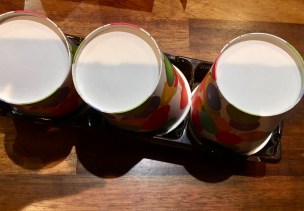
Introduce the Cup Game to your dog:
you will need some yummy treats and three similar, opaque cups or small tubs
start with just one cup – hide a treat under it and release your dog to find it
when they nudge the cup, you can let them reveal the treat themselves, or to teach an indication, toss some food rewards onto the floor and then reveal the hidden treat for them
with that perfected, add a second cup but hide only one treat – hide the treat when your dog is out of the room and switch around the cups a little, so even you are confused
repeat the game
now you’re ready to introduce the third cup and play a more challenging game
switch around the cups so that you don’t know which one is hiding the treats so that you can’t unintentionally prompt the dog and give the game away
You can play these games over and over…dogs never tire of them!
Sniffing on cue
We don’t need to teach our dogs to sniff; they got that down. But, we can teach them the meaning of a specific signal: see this set up…sniffing for food.
Cues (or antecedents) are the things that tell an animal to do a behaviour because it results in reinforcement (or tells them to avoid a behaviour that results in punishment). All behaviours are naturally cued by things that happen around the animal and teaching is about helping the animal learn the meaning of cues we introduce.
Cues can be sounds, words, hand signals, gestures or other environmental signals, like our sniffing course set-up; anything that the dog can perceive.
Different types of cues work better in different environments, for different dogs, and for different behaviours.
Today’s challenges will rely on environmental cues – your sniffing course set-up.
Sniffing for food
Ideally, we would like our dogs to be sniffing out their regular meals, as much as possible. But, some dogs will need a little help to get them going and we can have our dog sniffing for treats too!
Kibble is a pretty versatile food type for enrichment type feeding, and works well for this exercise.
You can add kibble in with other yummier treats and toss those. Or you can make a Training Mix so that kibble smells and tastes yummier, but without having to add extra calories or other foods, should the dog be sensitive or restricted.
You can improve the smell/taste of kibble by grilling it a little, so that it becomes crunchier and oilier. You might also soak it in stock or other flavouring.
Wet and fresh foods can be a little more challenging:
Fresh meats and meat mixes (e.g. raw and home prepared diets) – cut up into small pieces, boiled or baked, frozen in small ice cube trays or pyramid baking mats for small individual treats.
Alternatively, you could use dried or semi-moist meats and cut them into small pieces for tossing. (Note that you feed a smaller volume of dried or dehydrated foods as they are more concentrated.)
Wet feeds (e.g. canned foods) – frozen in small ice cube trays or pyramid baking mats for small, individual treats.
Don’t forget fruit and vegetables too, if you’re dog likes them. Frozen peas are one of Decker’s favourite for sniffing!
Your challenge
Now it’s your turn. Show us what you and your pets, of any species, can do with these challenges!
Post to your social media accounts, using the #100daysofenrichment so that we can find you and join our Facebook group to share your experiences, ideas and fun!
You can comment right here too 🙂
We look forward to hearing from you and your pets – have fun & brain games!
Welcome to Day 89 of #100daysofenrichment and thank you for joining us on this journey!
Although our challenges are directed mainly at dogs, we want all species to enjoy and benefit from #100daysofenrichment so, please join in, adjust and adapt to help your pet or companion live a more enriched life.
Now it’s your turn to get creative! Every Friday is Freestyle Friday. We’ll give you the ingredients for a puzzle or enrichment device and you build it.
Rules:
you must use all the ingredients
you can add anything else you like, or nothing at all
You can add food or toys or anything else appropriate, if you like. Or you can use this as it is.
We can’t wait to see what fun and brain games you and your pet get up to with this one!
Your challenge
Now it’s your turn. Show us what you and your pets, of any species, can do with these challenges!
Post to your social media accounts, using the #100daysofenrichment so that we can find you and join our Facebook group to share your experiences, ideas and fun!
You can comment right here too 🙂
We look forward to hearing from you and your pets – have fun & brain games!
Welcome to Day 88 of #100daysofenrichment and thank you for joining us on this journey!
Although our challenges are directed mainly at dogs, we want all species to enjoy and benefit from #100daysofenrichment so, please join in, adjust and adapt to help your pet or companion live a more enriched life.
puzzles that require the dog to move an item to reveal hidden food
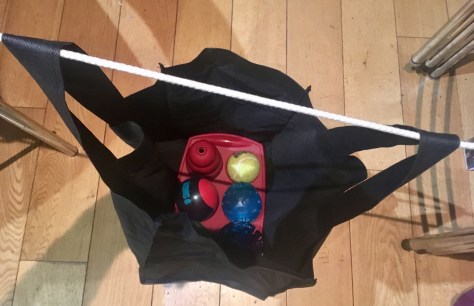
today, we are going to suspend them too to add an extra dimension, literally
food and cognitive based enrichment
adjusting the difficulty is easy so these are very adaptable puzzles
get the family involved in this one – kids love making puzzles for pets and these challenges offer lots of opportunities for children to use their imagination to come up with the best teasers for their pets.
Remember, supervise children in all enrichment activities and interactions with pets.
prepping teasers will take 5-10 minutes and you can use lots of the bits and pieces we use in other puzzles
What do you need?
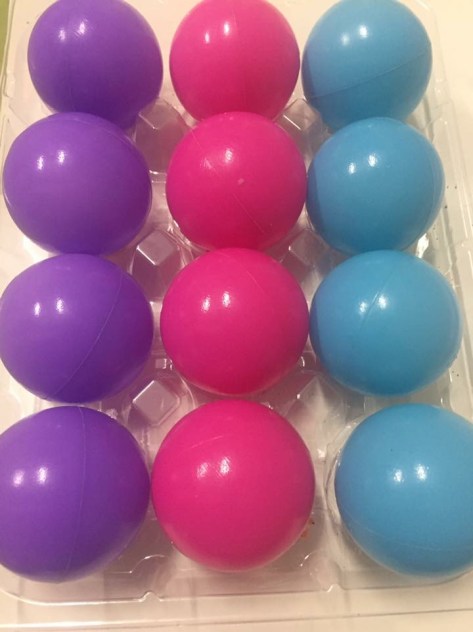
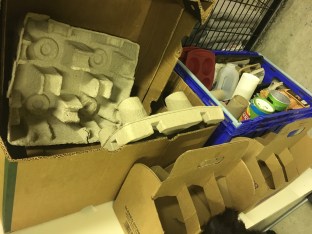
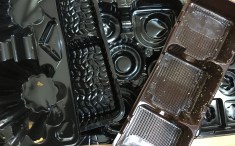
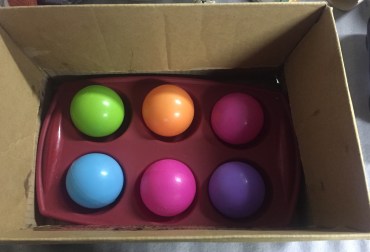
a base for each teaser puzzle is anything that has slots or hollows such as bowls, eggboxes, muffin pans, cup holders, plastic inserts from biscuits/chocolates
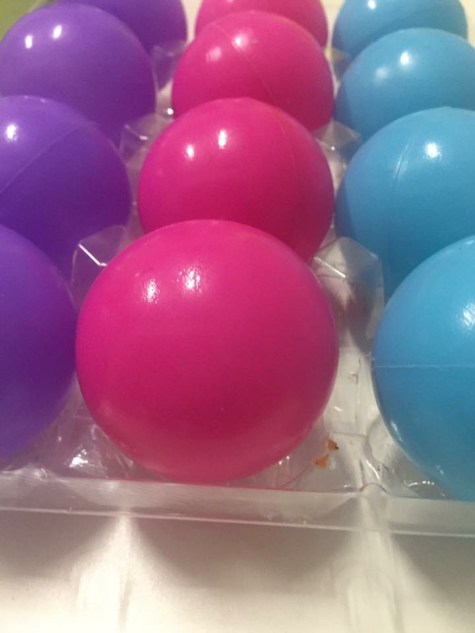
blockers are items to fill each gap such as paper cups, toilet roll tubes, paper, balls & toys
a range of food rewards
a fabric or paper shopping bag (no plastic!)
cord, dog lead or similar
Enrichment Goals:
to encourage a wide range of foraging and exploratory behaviours
to do more feeding related behaviour than eating
to encourage the development of strategies (behaviours) for getting the food out of the boxes
to help the dog develop skills in thinking through puzzles
While this challenge is certainly food based, they are also experiencing cognitive, sensory and environmental enrichment, with lots of crossover between categories.
Working out how to manipulate the teasers to get to the food and developing dexterous skills are examples of cognitive challenge.
Sniffing out, tasting and chewing food all offer sensory pay off, but so does finding their way through each food puzzle, determining its value, and engaging in the puzzle of getting to the good stuff.
Teasers encourage pets to interact with their environment – just the very interaction with the puzzle is encouraging the pet to manipulate their surroundings, to get the things they like.
By offering a variety of teasers, we can help the dog expand their range of puzzle-busting behaviours and facilitate your pet applying strategies from other puzzles to new ones; that’s a true cognitive gift and is growing your dog’s brain!
What goals can you add to this list for your pets?
How can we achieve these goals?
give your pet plenty of space for working on teasers and bear in mind there will be mess, so think about spaces that are easier for clean up
the more difficult you have made the challenge, the higher the value the reward must be so use HIGH value foods to motivate exploration and experimentation and make it VERY easy to get the food (no frustration!)
if your dog just dives in, in full on destruction mode that might also be an indicator that they need an easier challenge so they get to experiment with a broader range of behaviours
What adjustments will you make for your pets?
Applications of Suspended Teasers:
Teasers, just like many of our homemade ‘rubbish’ puzzles, can keep dogs occupied as they offer different possibilities for expanding the dog’s behavioural range, truly engaging them cognitively. They are truly adaptable and again you are only limited by your imagination!
Suspended puzzles are a great to expand your puzzling-arsenal and carefully increasing the challenge will really stretch the dog’s puzzling abilities.
Our job is to adjust the puzzle difficulty so that our dog uses a range of behaviour and gets to the goal pretty quickly.
This is the true way to improve the dog’s confidence in puzzling (and in life) and help them expand their behavioural repertoire.
Because of the home made nature and variable materials used in teasers, it’s best to supervise your pet carefully when they have access to this puzzle.
Many eggboxes and other cardboard bases like cup holders, are made of pulp, which makes for a crumbly cardboard. This likely feels quite novel to many dogs and they may investigate this texture with their mouths; it also makes it very easy to eat.
Know your dog! If you have an ingester, teasers may not work for you and at the very least, careful supervision will be required. Using a metal muffin pan might be a better option!
If you are concerned about your dog ingesting non-food items during puzzling, have a pocketful of HIGH value treats and be ready to toss a couple toward your dog, across their eyeline, if you think they are thinking about eating the puzzle.
Making sure the challenge is very doable and they can get to the hidden food rewards quickly is key to modifying their behaviour and expectations during puzzling.
Check all your equipment for this challenge carefully and make sure to remove tape, staples, other fasteners, small pieces and plastic pieces. Play safe!
Enrichment Options
The level of difficulty with Teasers is set in how well the blocker fits into the base. If the ball, cup or tube fits snugly, it will be more difficult for the dog to get to the food.
Building Teasers:
choose a base such as a box, basket, muffin pan, eggbox, plastic insert, cup holder, small bowls
scatter food rewards so that every gap is filled and there is a good covering over the base
add blockers on top, over the food
Beginners Teasers:
larger blockers
shallow bases
loosely fitting
Intermediate:
variety of blocker sizes
variety of base depth
more snugly fitting
Add paper treat parcels to each space, as a blocker, to add further challenge and manipulation.
Advanced:
smaller blockers
deeper bases
snugly fitting
Add toilet roll treat parcels to fill each gap to increase the challenge and manipulation required.
Suspend it!
Suspending puzzles increases challenge suddenly and drastically. It’s important to work incrementally to help your dog develop skills (behaviours) to solve these puzzles.
Increase or decrease difficulty by lowering and loosening the line, and by working against a wall or surface or have the puzzles freestanding.
To solve a suspended teaser puzzle, it will need to be suspended at a height that your dog can get their head into the bag to move the blockers and reveal the food.
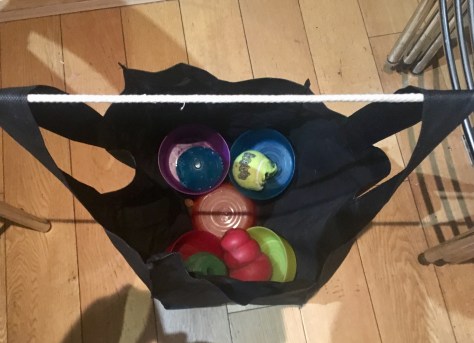
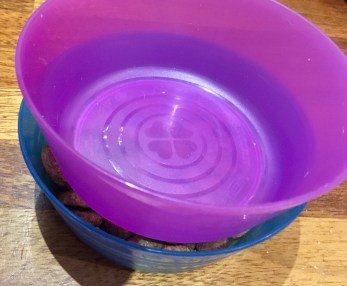
If you don’t have a muffin pan, eggbox or cupholder, you can use bowls with food and blockers:
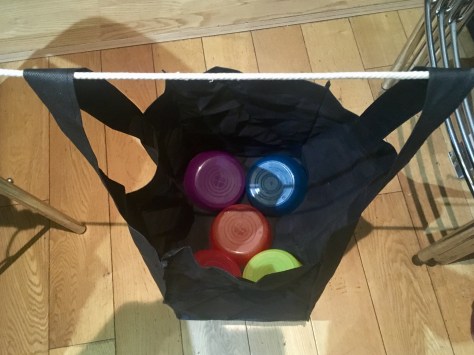
And for a real suspended challenge, place food rewards under each upturned bowl, suspended in a bag:
Your challenge
Now it’s your turn. Show us what you and your pets, of any species, can do with these challenges!
Post to your social media accounts, using the #100daysofenrichment so that we can find you and join our Facebook group to share your experiences, ideas and fun!
You can comment right here too 🙂
We look forward to hearing from you and your pets – have fun & brain games!
Welcome to Day 87 of #100daysofenrichment and thank you for joining us on this journey!
Although our challenges are directed mainly at dogs, we want all species to enjoy and benefit from #100daysofenrichment so, please join in, adjust and adapt to help your pet or companion live a more enriched life.
stacked bowls or cups, with food, stacked together for some cognitive challenge
food based and cognitive based enrichment
add food, add packing, stack in a box…just stack ’em
get the family involved in this one – kids love making puzzles for pets and these challenges offer lots of opportunities for children to use their imagination to come up with the best puzzles for their pets.
Remember, supervise children in all enrichment activities and interactions with pets.
Stacked puzzle prep will probably take you about five minutes and isn’t too hard on the clean-up either!
What do you need?
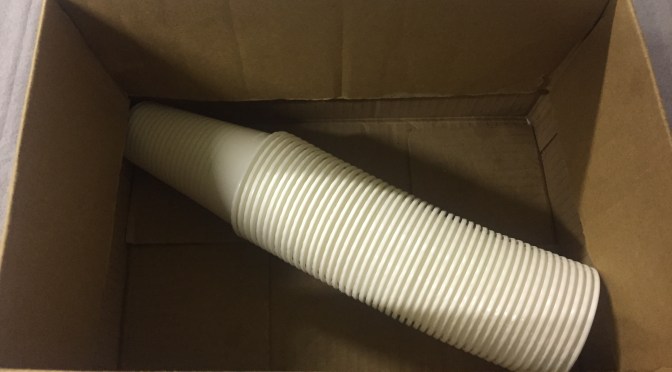
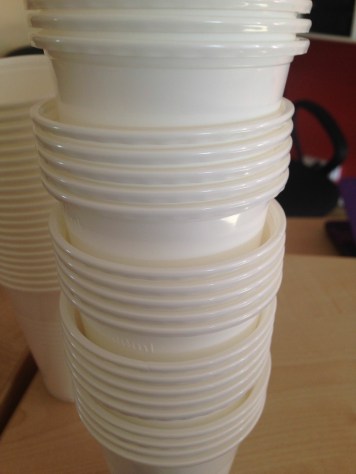
paper cups, dog bowls or plastic bowls or tubs that fit into one another
even plastic trays inserts from sweets or biscuits
paper e.g. packing paper, kitchen roll, newspaper
a smaller box or shallow tub
variety of food rewards
Enrichment Goals:
to encourage a wide range of foraging and exploratory behaviours
to do more feeding related behaviour than eating
to encourage the development of strategies (behaviours) for getting the food out of the puzzles
these puzzles can encourage lots of thinking so prevent your dog just destroying the puzzle outright by keeping the challenge doable
While this challenge is certainly food based, they are also experiencing cognitive, sensory and environmental enrichment, with lots of crossover between categories.
Working out how to get to the food and developing dexterous skills in manipulating the puzzle are examples of cognitive challenge.
Sniffing out, tasting and chewing food all offer sensory pay off, but so does finding their way through each food puzzle, determining its value, and engaging in the puzzle of getting to the good stuff.
Stacked puzzles encourage pets to interact with their environment – just the very interaction with the puzzles is encouraging the pet to manipulate their surroundings, to get the things they like.
What goals can you add to this list for your pets?
give your pet plenty of space for working on puzzles so that they can work on them themselves; not too much mess with this one, but there will always be a little mess when puzzling
the more difficult you have made the challenge, the higher the value the reward must be so use HIGH value foods to motivate exploration and experimentation and make it VERY easy to get the food (no frustration!)
if your dog just dives in, in full on destruction mode that might also be an indicator that they need an easier challenge so they get to experiment with a broader range of behaviours
What adjustments will you make for your pets?
Applications of Stacked Puzzles:
These are simple puzzles to put together and can offer dogs real cognitive outlets. I like to categorise these as thinking puzzles as, with the right support, the dog can be encouraged to think through the problem and learn to apply new and old strategies to solving them.
These puzzles can be easily adjusted so that all levels of puzzler can take part and benefit.
Keep ’em simple to get started with to help the dog develop an approach to solving and then you can add layers of difficulty from there.
While it’s great to go for challenge, it’s important that enrichment remain enriching. That means that the challenge must be made appropriate and doable for the individual puzzler.
Our job is to adjust the puzzle difficulty so that our dog uses a range of behaviour and gets to the goal pretty quickly.
This is the true way to improve the dog’s confidence in puzzling (and in life) and help them expand their behavioural repertoire.
Because of the home made nature and variable materials used in these puzzles, it’s best to supervise your pet carefully when they have access to this puzzle.
Know your dog! If you have an ingester, some of these puzzles may not work for you.
If you are concerned about your dog ingesting non-food items during puzzling, have a pocketful of HIGH value treats in your pocket and be ready to toss a couple toward your dog, across their eyeline, if you think they are thinking about eating the paper.
Making sure the challenge is very doable and they can get to the hidden food rewards quickly is key to modifying their behaviour and expectations during puzzling.
Check all your equipment for this challenge carefully and make sure to remove tape, staples, other fastners, small pieces and plastic pieces. Play safe!
Enrichment Options
Option 1: Stack ’em
Start with the beginners option and stick with that until your dog gets the game, and then move through the levels.
Now it’s your turn. Show us what you and your pets, of any species, can do with these challenges!
Post to your social media accounts, using the #100daysofenrichment so that we can find you and join our Facebook group to share your experiences, ideas and fun!
You can comment right here too 🙂
We look forward to hearing from you and your pets – have fun & brain games!
Welcome to Day 86 of #100daysofenrichment and thank you for joining us on this journey!
Although our challenges are directed mainly at dogs, we want all species to enjoy and benefit from #100daysofenrichment so, please join in, adjust and adapt to help your pet or companion live a more enriched life.
make the interaction about you and your dog having fun, rather than the toy
the interactions might be toyless/treatless, or the dog might carry the toy
develop your play-sense as we work toward no-toy play that is truly cooperative and joyful
play is the ultimate in relationship boosting, stress busting fun
social and cognitive based enrichment
play and engagement form the foundation of relationships and successful training
lots of these exercises can get pretty exciting, so it might be better that smaller children not take part but help in preparing training rewards where relevant.
Children can be great dog trainers but require lots of guidance and support.
Remember, supervise children in all enrichment activities and interactions with pets.
no formal training sessions today, no contrived enrichment scenarios – make it natural, make it delightful, make it fun
What do you need?
you and your pet!
a favourite toy is optional
We have talked about play a lot over our 100 days. Play can be any fun, goofy, cooperative exchange and can include food, toys, other items or just the two players.
We started on Day 2 looking at release cues so that toy-play stays fun and safe and can be applied in so many ways to our day to day lives with our pets.
On Day 32, we introduced some of my favourite games that encourage pets and people to play and on Day 73, we got goofy!
Enrichment Goals:
to make the fun about the engagement and interaction and not training exercises, food rewards or toys
to build engagement between dog and human
to build that bond between dog and human
to have a fun and rewarding experience in social situations, between dogs and humans
We are not working on training exercises today but I do want to make sure that we understand that all behaviour is reinforced or punished. Reinforcers increase behaviour, punishers decrease it.
So, if behaviour is happening something is reinforcing it, and if it’s not happening, something is punishing it.
Play is no different. Just like cueing behaviour and your dog responding is a dance of communication, play is too. Perhaps, even more so.
You do behaviour, your dog responds, you respond, your dog responds, you respond and so on and on.
This allows for a wonderfully complex level of communication between two species, forging a most health relationship between our two species.
This is a level of social and cognitive enrichment that’s tricky to replicate.
What goals can you add to this list for your pets?
How can we achieve these goals?
Today’s challenges don’t involve any particular training exercises, but instead are a bit of an experiment in what sort of interactions are truly reinforcing for your dog’s behaviour.
Let your dog have the toy and keep the toy – how can you two have fun when you don’t control the toy?
There doesn’t need to be any duration to these interactions, a couple of seconds or a couple of minutes is good.
Allowing the dog keep the toy, can help to maintain arousal at a more manageable level so you can play happier and safer for longer.
Keep it really simple today – get a good understanding of inter-species play, and how we humans often get it pretty wrong.
Applications of Play:
Play is a tricky thing that we think we recognise if we see it, but might not be able to adequately define it. And that’s the case in the literature too.
We think that animals play, but we’re not really sure why. The play research suggests we start by defining play so here’s a simple run down…
play for play’s sake, because you choose to play
play is fun, and that’s enough
play feels good and we want to engage in play (you don’t have to play)
play can sometimes look serious, but there are important differences; the serious parts happen out of order or in the absence of normal triggers relative to the serious stuff
play is creative, spontaneous and improvised
play happens when we feel safe – time should fly, you should feel less self-conscious
And although there might be some agreement on how we might define play, when it comes to deciphering the functions of play, there are lots of differences.
Play probably helps animals prepare for swings in emotion, gets them ready and honed for life and let’s not forget, play is fun! Having fun is a viable function of behaviour.
Dogs and humans play differently and dog-dog play differs from dog-human play (and differs from human-human play). But, like in so many areas, dogs and humans share tons of the basic rules of social interactions.
As is so often typical of us humans, we often approach play in the way we think the dog should play or in the way we think the dog should enjoy playing. And this so often turns the dog off play, changes the nature of games and ultimately causes break downs in communication and relationship.
We even have research that looks at how people play with their dogs and how our play behaviours overwhelm our play partner, yet we continue to push, presumably believing that this is fun and this is how it should be done.
I spend a lot of time working on improving relationships between pets and their people; that’s what this entire project is about too. I also spend a lot of that time helping people play with their dogs (certainly not the worst job in the world!).
I incorporate play in almost every training and behaviour program I design. My most common problem is that people don’t appear to know how to play with their dogs and sometimes don’t value play’s importance, whether that be toy based games, or just silly, playful interactions.
Our trainers will tell you that that is something that causes me great stress and concern – I take play very seriously, playfully serious!
I believe that play is life, and play is a way of dealing with life. Improving your play with your dog does so much more than just fun with food.
Just because you (think you) utilise reward based training, R+, “force-free” or whatever “positive” label, doesn’t mean it’s a happy, playful learning experience. Teaching playful behaviours like tricks isn’t the same as playing.
The beauty of establishing these foundations is that the more you play together, the more you will each shape one another’s behaviour. Your behaviour will evolve, adapt and adjust to your player.
The ultimate goal in play is to get really nice play-interactions, without treats or toys. The two players, dog and human, are participating for the pure joy.
Play starts with an invitation and consent, the players make eye contact and ask if they want to keep the game going; play is cooperative so we ask and answer. Play involves mirroring of behaviour and balanced participation.
Today, we continue on the road to wonderful, consent-full, choice-led, partnership based play between dog and human. What could be better than that?
Play Dos and Don’ts
Do
play in really short sessions
get their attention first
invite play
get consent
and keep asking if they would like to continue…
practice – play is like any other behaviour
Don’t
bring too much intensity
push the toy at the dog
make it too exciting when the dog is just starting to show interest
expect too much
rely on food too much
get stuck
play too long
Toy Play Options
Self-play
Maybe your dog gets his kicks out of playing with an item, without a human. There’s nothing wrong with this and indeed, I encourage it. Lots of our #100days challenges are about your dog interacting with their environment, sometimes entirely exclusive of their human’s interaction.
Make toy play not just about the toy! How many different games can you and your dog, together, come up with for just one toy, the one you are playing with?
Not just tug or fetch…what else? Try not to do the same moves in a row – mix it up!
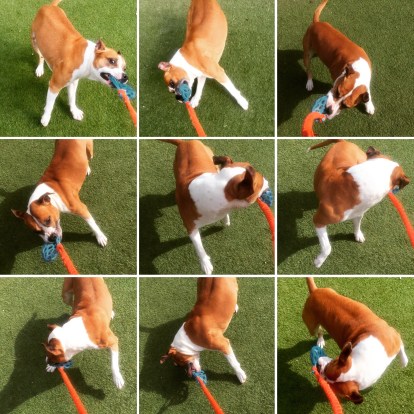
This unedited clip is just ten minutes representing our lives’ work together, in play. He wants to stick with me for the interaction and not just for the toy. The toy is part of our interaction but not always the central focus.
When working to build the joy in play, establish this variety from the start. This also helps you identify moves that are particularly reinforcing for the individual dog’s behaviour.
The toy is present, and the dog can have it, but the fun and games are in the interaction:
No-toy-play is about simple interactions that are fun for both players, are cooperative – true play. Toys or food can be present, but the joy is in the interaction. Each player learning about the other’s preferences, sharing a dance in communication.
Being silly together – as adults, we don’t get to be silly enough. Sometimes, it’s important to be more dog.
These two little play sessions are about Dexter and I learning about one another’s tolerances and preferences. What does my play partner like and enjoy?
These sessions are a couple of months apart with Dexter having been absent for holidays and so on. But as soon as he is back in that play context, he jumps in and is much more forthcoming about his preferences and finding out mine. A dance in communication.
Take it easy and don’t come on strong. Use minimal touching. It’s must easier to add play and interaction, than it is to come on too strong and then try to tone it down a bit.
Start with food play, add toy play, build in a ton of interaction.
Check out Day 36 too to help you work on choosing reinforcement.
Your challenge
Now it’s your turn. Show us what you and your pets, of any species, can do with these challenges!
Post to your social media accounts, using the #100daysofenrichment so that we can find you and join our Facebook group to share your experiences, ideas and fun!
You can comment right here too 🙂
We look forward to hearing from you and your pets – have fun & brain games!
My favourite playa, whose capacity for joy, fun and play apparently knows no bounds and has me in amazement and awe (and sometimes bewilderment) every day.
Welcome to Day 85 of #100daysofenrichment and thank you for joining us on this journey!
Although our challenges are directed mainly at dogs, we want all species to enjoy and benefit from #100daysofenrichment so, please join in, adjust and adapt to help your pet or companion live a more enriched life.
adjusting the difficulty is easy so these are very adaptable puzzles
get the family involved in this one – kids love making puzzles for pets and these challenges offer lots of opportunities for children to use their imagination to come up with the best teasers for their pets.
Remember, supervise children in all enrichment activities and interactions with pets.
prepping tubes puzzles will take 5-10 minutes and you can use lots of the bits and pieces we use in other puzzles
What do you need?
a range of food rewards
an open box or tub, egg boxes or cardboard cup holder
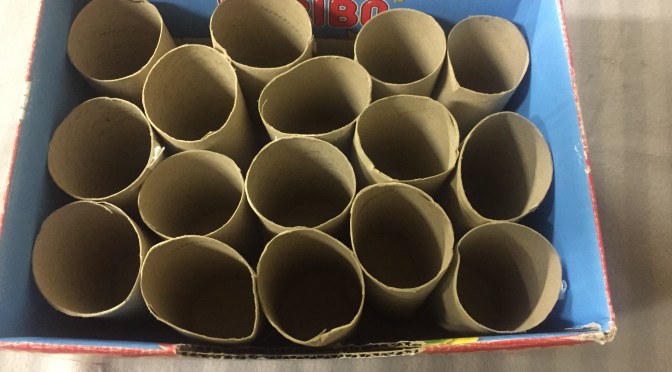
cardboard tubes such as toilet roll tubes, kitchen roll tubes, Pringles or similar tubes
paper for packing and wrapping
a dog lead, cord, shoe lace or similar
Enrichment Goals:
to encourage a wide range of foraging and exploratory behaviours
to do more feeding related behaviour than just eating
to encourage the development of strategies (behaviours) for getting the food out of the tubes
to help the dog develop skills in thinking through puzzles
While this challenge is certainly food based, they are also experiencing cognitive, sensory and environmental enrichment, with lots of crossover between categories.
Working out how to manipulate the tubes to get to the food and developing dexterous skills are examples of cognitive challenge.
Sniffing out, tasting and chewing food all offer sensory pay off, but so does finding their way through each food puzzle, determining its value, and engaging in the puzzle of getting to the good stuff.
Tubes puzzles encourage pets to interact with their environment – just the very interaction with the puzzle is encouraging the pet to manipulate their surroundings, to get the things they like.
By offering a variety of tubes puzzles, we can help the dog expand their range of puzzle-busting behaviours and facilitate your pet applying strategies from other puzzles to new ones; that’s a true cognitive gift and is growing your dog’s brain!
What goals can you add to this list for your pets?
How can we achieve these goals?
give your pet plenty of space for working on tubes puzzles and bear in mind there will be mess, so think about spaces that are easier for clean up
the more difficult you have made the challenge, the higher the value the reward must be so use HIGH value foods to motivate exploration and experimentation and make it VERY easy to get the food (no frustration!)
if your dog just dives in, in full on destruction mode that might also be an indicator that they need an easier challenge so they get to experiment with a broader range of behaviours
What adjustments will you make for your pets?
Applications of Tubes Puzzles:
Tubes puzzles, just like many of our homemade ‘rubbish’ puzzles, can keep dogs occupied as they offer different possibilities for expanding the dog’s behavioural range, truly engaging them cognitively. They are truly adaptable and again, you are only limited by your imagination!
I love to use Toilet Roll Tube Teasers for puppies, as these puzzles allow for great brain stretching. Puppies develop confidence in putting more pressure on the item to move it to reveal the food.
Puppies love to manipulate the tubes and the box, while building confidence and enthusiasm for snuffling between the tubes.
While it’s great to go for challenge, it’s important that enrichment remain enriching. That means that the challenge must be made appropriate and doable for the individual puzzler.
Our job is to adjust the puzzle difficulty so that our dog uses a range of behaviour and gets to the goal pretty quickly.
This is the true way to improve the dog’s confidence in puzzling (and in life) and help them expand their behavioural repertoire.
Because of the home made nature and variable materials used in tubes puzzles, it’s best to supervise your pet carefully when they have access to this puzzle.
Know your dog! If you have an ingester, some tubes puzzles may not work for you and at the very least, careful supervision will be required.
If you are concerned about your dog ingesting non-food items during puzzling, have a pocketful of HIGH value treats and be ready to toss a couple toward your dog, across their eyeline, if you think they are thinking about eating the puzzle.
Making sure the challenge is very doable and they can get to the hidden food rewards quickly is key to modifying their behaviour and expectations during puzzling.
Check all your equipment for this challenge carefully and make sure to remove tape, staples, other fasteners, small pieces and plastic pieces. Play safe!
Enrichment Options
Option 1 Toilet Roll Tube Teasers
Adjust the difficulty of teasers by using looser or more snugly fitting tubes.
choose a base such as a box, basket, muffin pan, eggbox, plastic insert, cup holder, small bowls
scatter food rewards so that every gap is filled and there is a good covering over the base
Using a lower sided, looser base to keep the teaser nice and simple. Use fewer tubes or add in some balls to the teaser to make it easier for the dog to get the idea and learn to move blockers in the teaser to reveal the food rewards.
Tube teasers can come in all shapes and sizes for lots of puzzling fun!
Option 2 Busy Tubes
Beginners:Tube Treat Parcels
Add some treats to a tube and push in the ends to make a neat little treat parcel. You can give them to the dog as-is, or add them to other puzzles such as Busy Boxes and Teasers.
You can wrap some treats in paper and stuff that in the tubes too!
Intermediate: Stuffed Busy Tubes
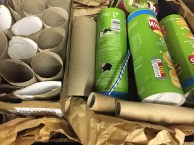
Fill bigger tubes with balls, paper, and food rewards for fun and brain games.
You might use larger cardboard tubes..:
…or Pringles tubes or similar:
The more you pack the tube, the more challenging it will be for the puzzler.
Stuff the Busy Tube and wrap in some paper to make a cracker!
Option 3 Suspended Tubes Puzzles
Suspending puzzles always changes the puzzling picture, requiring cognitive adjustment on the part of the dog.
It’s important to work incrementally to help your dog develop skills (behaviours) to solve these puzzles.
Increase or decrease difficulty by lowering and loosening the line, and by working against a wall or surface or have the puzzles freestanding.
Beginners:
puzzle is suspended at or lower than your pet’s chin height
the line is looser
puzzle is suspended against a wall or surface
Intermediate:
puzzle is suspended at or slightly above your pet’s chin height
the line is tighter
puzzle is suspended against a walk or surface
Advanced:
puzzle is suspended at or slightly above your pet’s chin height
the line is tighter
puzzle is freestanding
Beginners: Tubes Jumbler
This is a simple introduction to suspended puzzles and jumblers as the food flows fast, with the slightest manipulation. This brings early success and buy-in on the part of the puzzler, so that they will engage with the puzzle and develop strategies to solve suspended puzzles.
Simple puzzles, with quick wins, are the perfect introduction to Suspended Puzzles!
Using larger rolls such as those from packaging for posters or flooring can offer different challenges and are usually of great interest to dogs.
Chewing them and dissecting them will be attractive to lots of dogs, and helping them learn to manipulate the tube by rolling a favourite ball into the tube for them to find.
Decker plays with a big tube at the start of this clip:
If you can get your hands on a giant cardboard roll, from flooring, for example, they make great food dispensers and items of great interest to dogs:
Now it’s your turn. Show us what you and your pets, of any species, can do with these challenges!
Post to your social media accounts, using the #100daysofenrichment so that we can find you and join our Facebook group to share your experiences, ideas and fun!
You can comment right here too 🙂
We look forward to hearing from you and your pets – have fun & brain games!
Welcome to Day 84 of #100daysofenrichment and thank you for joining us on this journey!
Although our challenges are directed mainly at dogs, we want all species to enjoy and benefit from #100daysofenrichment so, please join in, adjust and adapt to help your pet or companion live a more enriched life.
Every Sunday during #100daysofenrichment is Sunday Funday! This means you and your pet repeat your favourite challenge or challenges from the week.
You can do it exactly as you did first time round, you can try a different option, build on your progress already established, reinvent and rejig it…what ever you want to do with the last week of challenges!
Now it’s your turn. Show us what you and your pets, of any species, can do with these challenges!
Post to your social media accounts, using the #100daysofenrichment so that we can find you and join our Facebook group to share your experiences, ideas and fun!
You can comment right here too 🙂
We look forward to hearing from you and your pets – have fun & brain games!
Welcome to Day 83 of #100daysofenrichment and thank you for joining us on this journey!
Although our challenges are directed mainly at dogs, we want all species to enjoy and benefit from #100daysofenrichment so, please join in, adjust and adapt to help your pet or companion live a more enriched life.
This simple game is excellent for rainy days and for calming excited dogs, and helps to teach your dog to indicate the location of hidden find.
Introduce the Cup Game to your dog:
you will need some yummy treats and three similar, opaque cups or small tubs
start with just one cup – hide a treat under it and release your dog to find it
when they nudge the cup, you can let them reveal the treat themselves, or to teach an indication, toss some food rewards onto the floor and then reveal the hidden treat for them
with that perfected, add a second cup but hide only one treat – hide the treat when your dog is out of the room and switch around the cups a little, so even you are confused
repeat the game
now you’re ready to introduce the third cup and play a more challenging game
switch around the cups so that you don’t know which one is hiding the treats so that you can’t unintentionally prompt the dog and give the game away
Play over and over – this is a dog-game that never gets old!
Sniffing for food
Ideally, we would like our dogs to be sniffing out their regular meals, as much as possible. But, some dogs will need a little help to get them going and we can have our dog sniffing for treats too!
Kibble is a pretty versatile food type for enrichment type feeding, and works well for this exercise.
You can add kibble in with other yummier treats and toss those. Or you can make a Training Mix so that kibble smells and tastes yummier, but without having to add extra calories or other foods, should the dog be sensitive or restricted.
You can improve the smell/taste of kibble by grilling it a little, so that it becomes crunchier and oilier. You might also soak it in stock or other flavouring.
Wet and fresh foods can be a little more challenging:
Fresh meats and meat mixes (e.g. raw and home prepared diets) – cut up into small pieces, boiled or baked, frozen in small ice cube trays or pyramid baking mats for small individual treats.
Alternatively, you could use dried or semi-moist meats and cut them into small pieces for tossing. (Note that you feed a smaller volume of dried or dehydrated foods as they are more concentrated.)
Wet feeds (e.g. canned foods) – frozen in small ice cube trays or pyramid baking mats for small, individual treats.
Don’t forget fruit and vegetables too, if you’re dog likes them. Frozen peas are one of Decker’s favourite for sniffing!
Your challenge
Now it’s your turn. Show us what you and your pets, of any species, can do with these challenges!
Post to your social media accounts, using the #100daysofenrichment so that we can find you and join our Facebook group to share your experiences, ideas and fun!
You can comment right here too 🙂
We look forward to hearing from you and your pets – have fun & brain games!
Welcome to Day 82 of #100daysofenrichment and thank you for joining us on this journey!
Although our challenges are directed mainly at dogs, we want all species to enjoy and benefit from #100daysofenrichment so, please join in, adjust and adapt to help your pet or companion live a more enriched life.
Now it’s your turn to get creative! Every Friday is Freestyle Friday. We’ll give you the ingredients for a puzzle or enrichment device and you build it.
Rules:
you must use all the ingredients
you can add anything else you like, or nothing at all
plastic bottles (make sure they are safe and remove all plastic parts, labeling etc.)
You can add food or toys or anything else appropriate, if you like. Or you can use this as it is.
We can’t wait to see what fun and brain games you and your pet get up to with this one!
Your challenge
Now it’s your turn. Show us what you and your pets, of any species, can do with these challenges!
Post to your social media accounts, using the #100daysofenrichment so that we can find you and join our Facebook group to share your experiences, ideas and fun!
You can comment right here too 🙂
We look forward to hearing from you and your pets – have fun & brain games!



















 AniEd Ireland