Welcome to Day 29 of #100daysofenrichment and thank you for joining us on this journey!
Although our challenges are directed mainly at dogs, we want all species to enjoy and benefit from #100daysofenrichment so, please join in, adjust and adapt to help your pet or companion live a more enriched life.
doesn’t need to be a blanket; you can use towels, sheets, duvets, dog beds, clothing
Best to use old blankets as there may be damage as your dog works through these puzzles.
get the family involved in this one – kids love making puzzles for pets and these challenges offer lots of opportunities for children to use their imagination to come up with the best blanket snuffle puzzles for their pets.
Remember, supervise children in all enrichment activities and interactions with pets.
Prepping these puzzles is really quick and then your dog does all the work!
What do you need?
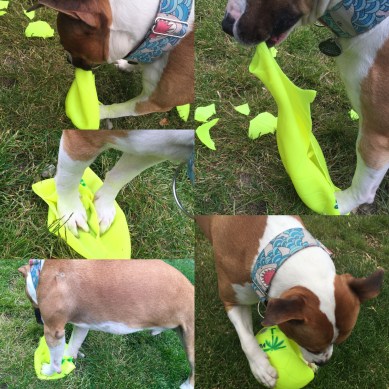
blankets, towels of different sizes and types, face cloths & tea towels, mats, sheets, dog beds, clothing…lots of options…in one of today’s clips you will see me use some of Decker’s bandannas!
to encourage a wide range of foraging and exploratory behaviours
to do more feeding related behaviour than eating; we can use toys in these ones too, but the foraging behaviour is still feeding related behaviour
to encourage the development of strategies (behaviours) for getting the food out of the blankests
by carefully varying the design and adjusting the difficulty, we will facilitate carrying out a range of different behaviours, broadening the dog’s repertoire
While this challenge is certainly food based, they are also experiencing cognitive, sensory and environmental enrichment, with lots of crossover between categories.
Working out how to get to the food and developing dexterous skills in manipulating the blankets are examples of cognitive challenge.
I set up these puzzles in front of the dog, where possible, so they can see me putting the rewards in and under the blanket. Cognition research has demonstrated that dogs are capable of object permanence, meaning that they understand that an item or individual continues to exist, even when it can’t be perceived.
So, hiding a ball out of sight, for your dog is not like playing peek-a-boo with a baby…your dog knows the ball is in there to be found where as the baby may not!
Sniffing out, tasting and chewing food all offer sensory pay off, but so does finding their way through each food puzzle, determining its value, and engaging in the puzzle of getting to the good stuff.
Blanket snuffle puzzles encourage pets to interact with their environment – just the very interaction with the blanket is encouraging the pet to manipulate their surroundings, to get the things they like.
By offering a variety of blanket snuffle puzzles, we can help the dog expand their range of puzzle-busting behaviours and facilitate your pet applying strategies from other puzzles to new ones; that’s a true cognitive gift and is growing your dog’s brain!
What goals can you add to this list for your pets?
How can we achieve these goals?
give your pet plenty of space for working on puzzles and bear in mind there will be mess, so think about spaces that are easier for clean up
the more difficult you have made the challenge, the higher the value the reward must be so use HIGH value foods or toys to motivate exploration and experimentation and make it VERY easy to get the reward (no frustration!)
if your dog just dives in, in full on destruction mode that might also be an indicator that they need an easier challenge so they get to experiment with a broader range of behaviours
What adjustments will you make for your pets?
Applications of Blankets Snuffle Puzzles:
Blanket snuffle puzzles are simple and straight forward, but no matter how much practice your pet gets with these puzzles, they are always challenging because the blanket will always fall in random ways, adding to the challenge for your pet.
These puzzles are truly adaptable – there really is no limit to how they can be adapted to suit different puzzling levels. But, they are also incredibly simple so can be used when very little equipment is available, and when space and time are tight.
I love to use these puzzles when waiting around with a dog, for example at seminars, classes and workshops. Keeps ’em busy and engaged, and prevents boredom and frustration.
Because of the home made nature and variable materials used in these, it’s best to supervise your pet carefully when they have access to this puzzle.
Know your dog!
Making sure the challenge is very doable and they can get to the hidden food rewards quickly is key to modifying their behaviour and expectations during puzzling.
If you are concerned about your dog ingesting non-food items during puzzling, have a pocketful of HIGH value treats in your pocket and be ready to toss a couple toward your dog, across their eyeline, if you think they are thinking about eating the something they shouldn’t.
Check all your equipment for this challenge carefully and make sure there’s nothing that your pet will be able to detach, swallow or get injured on. Play safe!
Enrichment Options
As usual, we are bringing you and your pet through different levels of challenge so that you can introduce them to the puzzle and so that they have time to develop the behaviours required to solve it while avoiding frustration.
Option 1: Things in Blankets
This is your starting point so as to allow your dog to find their feet (paws?) with these challenges; important to help build confidence in the process and reduce frustration and blind-destruction.
Beginners: Things Under a Blanket
place some food rewards on the floor
cover with the blanket, loosely
Let your dog find it and watch for the types of behaviour used to get to the reward.
Now it’s your turn. Show us what you and your pets, of any species, can do with these challenges!
Post to your social media accounts, using the #100daysofenrichment so that we can find you and join our Facebook group to share your experiences, ideas and fun!
You can comment right here too 🙂
We look forward to hearing from you and your pets – have fun & brain games!
Welcome to Day 28 of #100daysofenrichment and thank you for joining us on this journey!
Although our challenges are directed mainly at dogs, we want all species to enjoy and benefit from #100daysofenrichment so, please join in, adjust and adapt to help your pet or companion live a more enriched life.
Every Sunday during #100daysofenrichment is Sunday Funday! This means you and your pet repeat your favourite challenge or challenges from the week.
You can do it exactly as you did first time round, you can try a different option, build on your progress already established, reinvent and rejig it…what ever you want to do with the last week of challenges!
Now it’s your turn. Show us what you and your pets, of any species, can do with these challenges!
Post to your social media accounts, using the #100daysofenrichment so that we can find you and join our Facebook group to share your experiences, ideas and fun!
You can comment right here too 🙂
We look forward to hearing from you and your pets – have fun & brain games!
Welcome to Day 27 of #100daysofenrichment and thank you for joining us on this journey!
Although our challenges are directed mainly at dogs, we want all species to enjoy and benefit from #100daysofenrichment so, please join in, adjust and adapt to help your pet or companion live a more enriched life.
Saturdays during #100daysofenrichment are all about emphasising the dog in all our dogs; all about sniffing and doing dog things.
Adventure Time
We’ve talked lots about being a dog, and the sorts of things dogs must do to be dogs, to be healthy dogs, to be happy dogs.
Our pets live a life that is more human-centric, more and more as modern life encompasses all. You guys, on this project with us, are likely doing a wonderful job of making sure your pet has outlets for their normal, natural, necessary behaviour. All the #100daysofenrichment challenges have been designed to do just that, so, even if you only a do a few, here and there, you are adding lots of opportunities for outlets to your pets’ lives.
Today, we are going to talk about how we can design enrichment adventures for our pets. For most dogs, we can bring them out and about to ensure they experience the world, but that’s not always possible for all pets or people.
Using our experiences this far, over the last 25 days or so, we have lots of ideas that we can put in place to design a multi-sensory adventure that calls on all categories of enrichment.
Although it’s certainly easier if you can take your pet out to a new or even familiar location, I don’t want you to be limited if this isn’t the case.
We are all learning to apply the knowledge we are developing about enrichment in general, and how it effects our individual pets specifically. Let’s put that to the test today…
If you can’t get out on an adventure:
maybe walks are not possible right now
Instead, go for a drive. Bring your pet in your vehicle to places that allow them to experience some of the sensations of the outside world.
Let them watch the world go by.
Crack a window and allow them to air sniff.
Sit with them far enough from the action that they don’t become frustrated, but close enough that it’s interesting to watch.
With the pet safely restrained, sit in an open vehicle with them.
When you get home, make up for any sensory deficits using any challenges from the 100 days, so far.
If you have an unvaccinated puppy, for example, exposing them to the outside world carefully is an important tool in shaping their behavioural development.
Bring puppy in your arms or in the car. Sit with the door or window open, puppy in your arms, and allow them to air-sniff. Sit with them on a bench or a quiet spot.
When bringing puppy out in your arms, it’s best not to allow others to pet or approach your puppy. When they are restrained, they have little choice in how they interact and that can be overwhelming, especially for young puppies. Make it about air sniffing and observing instead.
maybe outings are not possible right now
Review our 100 days so far and pick three different challenges and present them altogether. Follow the Adventure Time rules to construct your Ultimate Puzzle, ensuring a multi-sensory experience.
Collect vegetation, grasses, sticks and branches and other natural smelly things from a local green area.
Gather small amounts of your collection in fabric shopping bags and hang at sniffing height, rather than on the ground.
This not only makes it easier to clean up but is convenient for the dog and may reduce disease spread, if that’s a concern.
Adventure Time Rules
Consider the categories of enrichment:
social
cognitive
physical world/habitat (environmental)
sensory
food based
The best way to make enrichment truly enriching is to provide it in a natural way (so not too contrived and set up), so that the animal gets to experience it as part of their natural exploration of their world, and to provide enrichment that ticks as many enrichment-category-boxes as possible in one.
An adventure should provide the dog exposure to a multi-sensory, multi-category enrichment experience.
Think about…
Location, location, location!
Where you go will dictate the adventure you have.
Places that offer different substrates, such as grass, gravel, earth, foliage and so on will allow for sensory and physical challenges.
Areas with different sort of coverage and skyline will offer very different visual and auditory qualities – a tree line changes the way sounds travel and the things that can be seen or not, flat grass land allows for visual information to travel fast.
Different terrain, gradient and natural or man-made occurring obstacles can allow for cognitive, sensory and physical challenges.
Of course, make sure your dog gets to sniff to their nose’s content. Sniffathon rules apply – don’t move the dog along, allow them to sniff.
When you go
different seasons, different weather conditions and different times of the day change the olfactory picture for your dog, and therefore present very different sensory and cognitive challenges.
The cooler and drier the air, the slower odour travels, and the more concentrated it becomes. As air warms and moistens, over the day, it moves more and is released more throughout the environment.
Going for an adventure on an early, frosty morning provides a very difference experience than going on a warm afternoon, even if you go to the same place.
How you go
Getting to an adventure can dictate how much the dog enjoys and immerses in the experience.
If it’s stressful to walk your dog to adventure-land, consider driving there.
If the route you take is filled with sequential stressors, consider a different route.
If your dog is worried passing through certain environments on the way, consider walking with a more confident pal, at quieter times with less traffic and fewer passersby.
When dogs are worried, fearful or experiencing distress, they don’t need any further challenge in their lives. As lovely as an adventure sounds, to us, to a less well settled dog, it may be too much challenge for them at this time. Life might be enriching enough without adding further challenge.
Worriers might prefer a smaller world and a regular, familiar and predictable route – developing their confidence and comfort with that is sufficient adventuring for them!
Who you’re with
Social, interactive enrichment is probably the most effective and important to companion animals.
Most pet owners love the idea of their dogs playing with other dogs, and it is the goal of many to provide “socialisation” outlets for their puppies, adolescents and adult dogs.
This 100 day project is not going to prioritise dog-dog social interaction. While I certainly like the idea of a dog, especially adolescent and adult dogs who like that sort of thing, having a buddy or two and meeting regularly for a fun playdate, dog-dog play interactions are not necessarily the central focus of our enrichment endeavours.
Make adventures about the time you, the human, spend with your dog. Make sure you are the most engaging social entity in their life.
What you do…
Choose places that allow the dog to wander safely and as freely as possible (always prioritise safety and security). This allows the dog to choose how they interact with their environment.
Let your dog decide on which direction to take, which path to follow.
Vary the activities you both engage in, with sniffing obviously being a big part of it (it IS Sniffing Saturday after all), and your contribution to that is to let it happen.
Think in Rollercoasters
We will talk about Rollercoaster Games later over this project, but for today, arrange activities that bring your dog up, in terms of excitement, and then bring them down, then up, then down and so on. Like a Rollercoaster.
Bring ’em up:
preparation for going out and getting out into the world, especially initially
perceiving stressors – things that get your dog wound up, happy or not
Get physical! Engage in physically exerting exercise, with your dog, but vary the activity constantly. Try to move away from exertion and repetition, even in play. And play. A LOT together.
Go between sniffing and physical exertion, back to sniffing, practice some training cues, up the exertion, back to sniffing.
Take a break to work on a stuffable. Take a break to be.
Your challenge
Now it’s your turn. Show us what you and your pets, of any species, can do with these challenges!
Post to your social media accounts, using the #100daysofenrichment so that we can find you and join our Facebook group to share your experiences, ideas and fun!
You can comment right here too 🙂
We look forward to hearing from you and your pets – have fun & brain games!
Welcome to Day 26 of #100daysofenrichment and thank you for joining us on this journey!
Although our challenges are directed mainly at dogs, we want all species to enjoy and benefit from #100daysofenrichment so, please join in, adjust and adapt to help your pet or companion live a more enriched life.
Now it’s your turn to get creative! Every Friday is Freestyle Friday. We’ll give you the ingredients for a puzzle or enrichment device and you build it.
Rules:
you must use all the ingredients
you can add anything else you like, or nothing at all
loose items like plastic bottles, balls, toilet roll tubes, Pringles tubes, stuffable toys like Kongs and so on
You can add food or toys or anything else appropriate, if you like. Or you can use this as it is.
We can’t wait to see what fun and brain games you and your pet get up to with this one!
Your challenge
Now it’s your turn. Show us what you and your pets, of any species, can do with these challenges!
Post to your social media accounts, using the #100daysofenrichment so that we can find you and join our Facebook group to share your experiences, ideas and fun!
You can comment right here too 🙂
We look forward to hearing from you and your pets – have fun & brain games!
If you have been following along with our #100daysofenrichment project (thanks so much, btw!) you will probably know that we are one quarter of the way through!
To celebrate, 25 days of enrichment, wonderful Irish business, Tough Enough for Charlie are offering 10% off EVERYTHING until tomorrow night (Friday 10pm).
Welcome to Day 25 of #100daysofenrichment and thank you for joining us on this journey!
Although our challenges are directed mainly at dogs, we want all species to enjoy and benefit from #100daysofenrichment so, please join in, adjust and adapt to help your pet or companion live a more enriched life.
Decker is all over today’s challenge…this is most certainly within his wheelhouse… (Link)
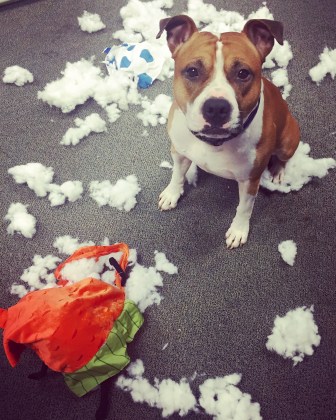
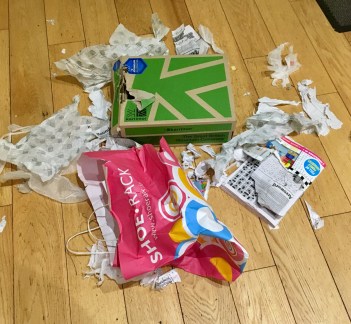
Dissection & Destruction
At a glance:
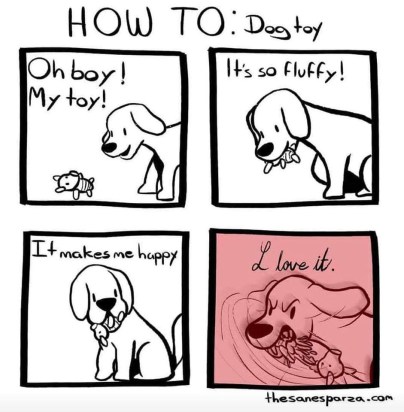
just like chewing, dissection (ripping things up) is an important and often forgotten part of the canid predatory sequence – this means it’s part of the in-built motor patterns in all dogs
dissection is normal, natural and necessary dog behaviour
food based (more feeding behaviour based) and sensory based enrichment
providing appropriate chewing and destruction outlets is vital for their health and welfare and to protect your destructibles
get the family involved in this one – for the most part, the dog will be doing all the destruction but children might like to help choosing and preparing
not all dogs are all about destruction but many dogs are and it can be an important part of enriching their lives
What do you need?
food rewards, toys your dog loves
boxes, paper bags
paper for wrapping
paper books
socks, fabric materials
Enrichment Goals:
provide outlets for dissection related behaviour
to encourage interaction with their environment and help in the development of behaviours/strategies for manipulating the item, acquiring edible parts or chewing and dissecting
to provide dogs with a choice of appropriate destruction outlets that satisfy different preferences and goals
to encourage dogs to choose and introduce choice into their day to day life
to help dogs calm themselves and settle themselves
What goals can you add to this list for your pets?
Many dogs like to destroy all sorts of things, tissues, paper, shoes, and fabric being favourites, while lots of dogs will love to rip up their own soft toys and stuffed beds too.
Just like chewing, dissection functions in dogs’ lives beyond the acquisition of food. And while providing food based enrichment is important for dogs, appropriate dissection outlets helps dogs experience new levels in their sensory world, with plenty of crossover between categories of enrichment.
Dissection is goal oriented behaviour so providing exposure to positive stress or eustress. All of the challenges through #100daysofenrichment are designed to provide dogs with lots of opportunities for eustress. The more the animal has experience with good stress, the more resilient they become.
Manipulating the destructible facilitates the development of dexterous skills, contributing to cognitive challenge.
Sniffing out, tasting and ripping it all offer sensory pay off, but so does finding each destructible, determining its value, and engaging in the puzzle of satisfying the chewing goal.
Offering different types of destruction opportunities that require different sorts of manipulation, provides feedback from different textures and materials, and facilitates different feeding related behaviours contributing to a well rounded sensory experience for dogs.
Dissection encourages pets to interact with their environment – just the very interaction with the item is encouraging the pet to manipulate their surroundings, to get the things they like.
How can we achieve these goals?
provide your dog with a safe, comfy space for dissection
make a range of appropriate opportunities for destruction available for your dog
always supervise your pet with things they might dissect – it’s easy for them to accidentally swallow small pieces that may be dangerous if ingested
Remove small pieces, plastic, metal, tape and so on before giving it to your dog. Paper, cardboard and tissue are probably the safest destructible, relatively speaking.
What adjustments will you make for your pets?
Applications of dissection:
Dissection is part of the canid predatory sequence meaning that all dogs come with a tendency to dissect, in-built. Dogs are built for chewing and destruction.
There are times during the dog’s life when destruction might be more intense for many individuals.
Chewing and dissection will generally increase in intensity from about four months of age, in puppies, as their adult teeth begin to move. For most dogs, their adult teeth will be down by 6 or 7 months of age.
At about 11-13 months of age, lots of dogs will go through what seems like a secondary teething period when their adult teeth bed in as their skull matures.
Chewing appears to provide relief to teething dogs and they may chew quite intensively to ease their discomfort and because their jaws are maturing and their adult teeth are stronger, they become much more effective chewers! But dissection seems to be an important part of chewing too and dogs will chew to dissect and dissect to chew.
In general, adolescent dogs will chew and dissect quite intensively as they continue to experience the world through their mouths and to aid in reducing stress, something that teenagers are quite sensitive to.
Intensive chewing and destruction will often be seen in dogs who might not have appropriate outlets for their energy and behaviour, and when they are experiencing high levels of distress. This ‘destructive’ behaviour often becomes a problem for people as the dogs seek out items that may not be meant for them.
Chewing and dissecting behaviour may provide dogs with a range of outlets including opportunities to exercise and hone their jaw muscles, improve manipulation and dissection skills and to get food to ingest.
Dissection behaviour functions to separate skin, feather or fur from flesh, and helps dogs open body cavities to reveal organs for devouring.
All of this is important to practice if you are to be a hunter/scavenger, which is what our dogs’ bodies tell them to prepare for.
As companion animals, dogs rarely get to eat diets that truly satisfy all their destruction needs. Even when bones and fresh foods are fed, other destruction outlets are likely required. And if dogs are fed a commercial diet, they probably don’t do much chewing or dissection at all to get their food.
That’s why stuffables and puzzles, that encourage chewing and destruction, are so important – dogs are made to chew and dissect to get to their food. The types of behaviours and behavioural goals we are satisfying, or attempting to satisfy, are important to consider in enrichment.
Making sure dogs’ behavioural needs are met is an important stress buster, but chewing and dissection in and of itself supports the dog’s psychological health. Chewing and dissection activate the gastrointestinal system, leading to the production of serotonin, a neurochemical associated with improved recovery from stress and self-calming. Chewing and dissection are literally stress-busters.
It’s no surprise that dogs who are alone, distressed or bored resort to destruction. It’s often labelled ‘destructive’ behaviour because it becomes a behaviour problem for us. But, it might indicate that the dog doesn’t have sufficient, appropriate outlets and that he is seeking comfort and relief from stress.
Stress can be good and bad and dogs will need help to recover from both types; to bring them back down a little and help their body recover. This is important even after good stress, excitement and happy activities, such as play.
Take a chewing or dissection break during and after physically or mentally exerting activities.
Allowing dogs to dissect paper and packing and so on often causes pet owners concern that their dog will become more and more interested in destruction, honing their skills and then practicing on things that we don’t want destroyed.
That’s a valid concern and I am not going to say that won’t or can’t happen. But, I will reassure you that your dog is already a destruction-expert. They don’t need a whole lot of practice to get pretty good at this; it’s an installed motor pattern, after all.
If your dog is destroying and dissecting things that you would rather he didn’t, we need better management rather than deprivation.
Because dissection and chewing are installed motor patterns, dogs are good at them, enjoy doing them, and must have outlets for these behaviours in order to be healthy and happy.
Here he is, just chewing on a plastic tub lid I gave him…lots of toys, but this is apparently special! (Link)
Decker is pretty much as destructive as a dog can be. He doesn’t really do it in a sufficiently intense way that there is a massive distress or relief component, but he certainly throws himself into any dissection task at hand (he’s ENTHUSIASTIC about everything in his life). But, Decker has never chewed, dissected, destroyed one thing not intended for him, not once in his seven years with me, not once.
We have yet to find any toy that is Decker-proof; he will eventually get through any and every “indestructible” toy! Link
That’s the case because I was diligent about managing his access to things he might destroy. He just never got access to these things without my input. I put things away, up high, I closed doors, I use baby gates and he is impeccably crate/confinement trained. For his first 18 months he only ever got acceptable chewables and destructables so that he became addicted to these, having never had the opportunity to destroy anything else.
And along with that, every day, he has been given access to appropriate outlets for chewing and dissection behaviour, along with other behavioural outlets.
He always has a variety of chew and dissection items available. Always.
When wound up, I direct him to those; well, he does it himself now, without my input. I rotate items so there’s always fresh things to explore and destroy.
add food to dissection items to change the picture
do dissection activities in a specific place, with a specific presentation
use specific materials for dissection
teach a reorientation cue to mean, come away from that thing and back to me
“But, he destroys EVERYTHING!”
Pet owners often lament that they can’t get anything for their dog, because he destroys toys and chews or dissects so quickly.
When we are looking to see what sorts of activities a dog finds rewarding, we first look to what the dog is currently doing. If the dog is destroying things, that might very well be what he needs to do. He’s simply getting his jollies.
Human rules and expectations are so often arbitrary to dogs – minding a toy or not destroying an expensive chew is beyond the cares or concerns of dogs. The point of his interactions with the toy were probably to dissect and destroy!
Dogs need a range of chewing and dissection outlets so I don’t just buy the toughest of the tough for Decker. He clearly needs to dissect and chew up, so I get toys that allow him to do that. And boy, does he do it; I have yet to find a toy that this dog can’t and won’t chew up.
Your challenge
Now it’s your turn. Show us what you and your pets, of any species, can do with these challenges!
Post to your social media accounts, using the #100daysofenrichment so that we can find you and join our Facebook group to share your experiences, ideas and fun!
You can comment right here too 🙂
We look forward to hearing from you and your pets – have fun & brain games!
access to different loose substrates such as potting soil, children’s sand, loose soil and foliage (in the real world)
loose items such as paper cups, paper, plastic bottles, balls, toilet roll tubes, Pringles tubes, stuffable toys like Kongs and so on (items with rounded or soft corners)
large, shallow tub or box
And for Freestyle Friday you will design your own enrichment device with the following ingredients:
cardboard tubes, toilet roll or kitchen roll tubes, Pringles tubes and similar
We have lots more fun and brain games for you for next week. Start getting ready…
Subscribe to this blog so that each day’s plan is delivered right into your inbox each morning.
Welcome to Day 24 of #100daysofenrichment and thank you for joining us on this journey!
Although our challenges are directed mainly at dogs, we want all species to enjoy and benefit from #100daysofenrichment so, please join in, adjust and adapt to help your pet or companion live a more enriched life.
Arlo is a little head shy so never really liked petting and cuddling. We develop a little choice ritual for these interactions, all on his terms within a beautiful dance of communication. I set a blanket up on his table and he would stand beside it, indicating he wanted up. I sat on the chair beside and he jumped up on my lap, then up on to the table on the blanket – no touching necessary. When I held out my hand, as above, he would rub his head or scratchy areas. Choice-led and consent-full!
Consent to Touch
At a glance:
giving dogs a say about what happens to them, in close-up contact with humans
social based enrichment
there are some areas where the great-species-divide is clear, and petting is certainly one that shines through in human-dog relationships
humans have a tendency to interpret others’ behaviour and intentions in ways that confirm our bias and attitude (the price of having a big, complex brain!) – we expect dogs to enjoy petting and touching…but do they…really?
this is one for the adults to establish, but those observations must be applied to child-dog interactions carefully
sit back, do some observation, do less touching; ask the dog
What do you need?
just you and your pet
Enrichment Goals:
to allow dogs a say in what happens to them in close contact with humans
to encourage dogs to choose and introduce choice into their day to day life
to improve awareness in human-dog communication
to help dogs opt in, or not, to touching, approaches, reaching, handling and petting from humans
to listen to the dog
to reduce conflicted and stress related behaviour (even mild) in human-dog interactions
to build that bond between dog and human
This falls into the social enrichment category but here lies many crossovers, including cognitive and sensory aspects.
During these activities, your observation skills and willingness to re-adjust your approach is what’s really being examined. Developing this awareness will enhance your relationship with your pet, boost trust and communication, and strengthen your understanding of one another’s preferences and individual comforts.
There’s no test at the end of this and you and your pet are not under any pressure. Learn to enjoy the time together, whether you achieve the goal behaviour or not. That’s what’s enriching here…the social and cognitive outlets such exercises provide (for both species).
Choice & Choosing
Throughout their day, dogs must make choices about which behaviours to demonstrate. For the most part, dogs would choose behaviours that we would probably not like so we ‘train’ in the hope that the dog will choose behaviours we prefer. This is why #100daysofenrichment is so important for dogs.
No matter what approach or attitude to teaching your dog you take, we are training the dog to choose our preference rather than theirs. We teach dogs to be less dog, so we can live with them. Getting to be more dog is the central tenet of #100daysofenrichment!
Reinforcing behaviours makes them happen more often so the dog is more likely to choose behaviours with a good reinforcement history. Punishing behaviours makes them happen less often so dogs learn to avoid choosing those behaviours.
Our dogs are learning to train their environment, including us humans. How easily trained are you?
Does your dog know how to get you to provide things he likes? Do you make it really easy for him to do that? He chooses behaviours that get you producing reinforcers.
Why we want to maximise reinforcement based approaches is so that our dog isn’t learning to avoid situations that produce punishers because them might include avoiding us.
I want dogs to enjoy choosing behaviours I like…it’s the least I can do, given they might actually prefer to do something else.
Life can’t offer free or even abundant choice; too much choice isn’t beneficial at all! But, where we can, I believe we owe it to dogs, who get so little choice about everything in their lives, to allow them to make some choices, learn that their behaviour makes a difference, and get to be more dog.
We have more Choice & Choosing challenges over the 100 days so this will be a theme we revisit.
Dogs and more so the choices they make is a central tenet of #100daysofenrichment – for enrichment to be enriching, the animal’s choices are prioritised and realised. Examples of how our challenges can be applied in choice provision, her: Forks in the road.
I have battled with and rambled on about choice in dog training before and continue to investigate the best ways to empower pets and other animals with whom we are in contact. Susan Friedman has been talking about choice in animal teaching forever; choice is a primary reinforcer, she teaches, and that means that animals will naturally seek out situations where choice is available. If it’s evolved as a primary reinforcer (nature selects for this tendency) it’s pretty vitally important to animals, just as food, water, shelter and sex are.
What goals can you add to this list for your pets?
How can we achieve these goals?
think about the sorts of decisions your dog has to make in living in the human world; what are they basing those decisions on (what’s reinforcing the chosen option, what’s punishing the rejected options?)
observe the decisions your pet makes about approaching, interacting, seeking contact, the type of contact, and whether they are truly choosing to opt in, or not
based on those observations, how can we provide them better options to choose from?
What adjustments will you make for your pets?
(Link) Filming for this day’s challenge with my demo-dog extraordinaire…and he would rather play this game. What a wonderful expression of choice from a dog whose life has been filled with choice. So we play his game – just because I am writing these resources, doesn’t mean he must perform; he didn’t choose this life.
Be more dog. Ask the dog.
Applications of choice in touching:
No training exercises today, or complex puzzles. Today, we observe the dog, ask the dog, listen to the dog.
Very much like Day 4, we are going to do a lot of being together today.
We humans are primates, and with our opposable thumbs we are set up for gripping, hugging, petting, patting, massaging, scritching & scratching.
Dogs, in their social lives, have not evolved such appendages and as such all that primate stuff doesn’t really feature as part of their social interactions.
Then they came to live with us…
There is some mythic version of dogs that is rife in our culture, having all sorts of effects on the welfare of companion animals. Today we are going to talk about our belief that dogs want to be petted and patted, massaged and hugged, scritched and scratched.
So much so, culturally, we don’t even question this. We just pet the dog, we reach for them, we hug them, we physically manipulate and restrain them. We just expect the dog to put up with our primate ways, and to like it!
Today, I ask you to examine your tendencies, your expectations, your approach to touching your dog.
Dogs who know their choices count, can use behaviour to ask for relief, then can ask for things they need.
They don’t need to badger and they don’t need to aggress. Choices allow dogs to navigate the human world with confidence because they can control what happens to them.
It might seem like we are starting small but these little moves toward offering more choice can have a big effect.
You will be giving your dog a voice, allowing them to choose plus providing a little bit more predictability and controlability. That’s what appropriate choice does – it busts stress and boosts confidence.
Enrichment Options
We often presume that our pets experience a good standard of welfare because they live a life similar to ours, in the human world. This is especially the case for pet dogs.
But, what would our dogs choose, if they had the choice?
Are they just tolerating our approaches and touching?
Are we blind to their requests for space and time in interactions?
Are we allowing them to choose to say no, to opt in/out to being touched, handled, manipulated?
All those primate social approaches are not really for dogs. Dogs as a species show affection and demonstrate social bonding in other ways, that are beautiful in their own rite.
While looking at species typical tendencies gives us some clues, we must also look at the individual’s preferences for answers. And to do that, we must ask the dog.
I have no doubt, if you are joining in on our project, you are doing a wonderful job at providing the best dog-life for your dog.
We can’t possibly offer our dogs all the choices, or indeed many options they would prefer, despite our best intentions. But we can certainly offer them better choices – two crappy options are no better than no choice at all.
So, today, our mission is to find our dogs better choices by asking them. Giving them the option to choose, and making sure their choices are meaningful. Their behaviour matters. Today, we ask the dog.
Greetings!
Despite dogs and humans not sharing identical approaches to expressing affection, we certainly share similar etiquette in social interactions. We just do it slightly differently.
When humans greet one another, we lean in, extend a hand, bare our teeth, make direct eye contact.
Pretty much the opposite to what dogs consider appropriate for greetings; dogs will avert their gaze, round out their body, approach aiming for cheek-to-cheek presentation, keep their body parts of themselves, sniff genitals.
If we were to greet other humans with any of that carry on…well…things would get awkward…
If, when we meet new people, we were to spend a lot of time touching them, moving our hands over their body…it would be inappropriate. Our lean in and handshake in greetings are very brief; any longer than a couple of seconds and it’s uncomfortable.
We don’t do that when greeting new people, and dogs don’t do it when greeting new dogs…why do we expect dogs to tolerate this from new humans?
That clip is from a workshop with some A Dog’s Life fosters and dogs
(Starring Romi and Patch, now in happy homes).
When greeting dogs, first ask, does the dog really want a full-on-body-contact-greeting. For the most part, dogs won’t want this.
Greetings among dogs are high-octane affairs. Dogs who are happy and friendly toward one another, will involve quite a bit of movement in greeting. They might circle, their might have a bendy body with a lowered back end, and their tail may be moving lower and fast. Loose and waggly usually indicates less tension.
But dogs don’t make interpretations easy. Frenetic movement, even low and waggly, may indicate some internal conflict and the first fidgety layer of stress related behaviour in dogs.
Decker is a good example of this. He is a compulsive greeter – must see the people…they’ve come here to see me, right?!
He will grab a toy or any other item, run enthusiastically toward them, very low rapid wag and back end, flat ears, small eyes but he is moving and moving and moving. He is all about the new person, delighted that they have visited, but he keeps moving.
Despite that he has no personal space bubble (zero), he doesn’t want to be touched by the new people.
And of course, what does every try to do? Touch him, hug him, pet him, massage him.
What does he do? Keep on movin’.
His behaviour is likely stress related (stress can be good and bad). It’s certainly arousal related. He grabs a toy or item to hold to have something in his mouth; this is probably calming for dogs. The toy and the game he will draw the visitor into, is a good way of controlling the interaction.
He’s moving, which may act as a release and provides him distance from touch.
He’s probably experiencing some internal – want to be with them and interact, doesn’t want the touching. Wants to meet n greet but also wants to calm from the excitement.
He doesn’t aggress, he doesn’t freeze, he doesn’t show any signs of escalated stress (so-called distance increasing signaling) but he’s pretty clear. So much so, it’s a bit of a test I use with our new students – we cover this in detail: “Does he really want to be petted?” They are learning to ask the dog.
Practice greetings:
Whether you are greeting your own pet or some other dog, first ask, do they want to be petted?
In all the excitement associated with greetings, it’s probably more that the dog wants to bask in your presence, dance in joy, or avoid close contact altogether. Give them time and space to get this excitement out of their system.
When that’s done, think about an appropriate greeting:
move away from the dog and see if they approach you
no luring, no calling, just give them the opportunity to choose
if they approach, keep your hands to yourself
all them choose how they will interact, position themselves, and move
don’t loom, lean back and only lower if it’s safe
touch gently, with one or two fingers, the part of their body closet to your hand – usually their side, shoulder or lower back, if moving
apply a little scritching motion for no more than a three-count
withdraw and ask them if they would like that to happen again
repeat and then leave it be
Talk to them, make soft and brief eye contact, be happy. Doesn’t require touching though.
Please note this is for dogs presenting friendly signalling. If the dog doesn’t approach in a soft, waggly manner, no greeting.
Let ’em choose
When you meet a dog for the first time, or even with a familiar dog, how do you know they want to be touched?
When you bend and reach out toward them, what do you expect them to feel about this interaction?
How would you know how they feel?
Practice 3-count interactions:
This one is for all interactions with all dogs, even dogs you know and love. We are asking them and giving them the opportunity to opt in and refuse.
as for greetings, allow the dog approach you
remember, just because they come over, doesn’t mean touching is what they’re in to
pet with a couple of fingers (one hand only at a time) on the body area closest to your hand
count to three and withdraw
wait for the dog to let you know if they would like a repeat
I particularly emphasise this with puppy-people. Everyone wants to greet adorable puppies and because puppies appear tolerant, it’s presumed that they want to be hugged and mauled by every passer by who has taken a shine.
Again, culturally, we assume puppy enjoys this. We expect that.
Puppies are picked up, physically manipulated, hugged and petted because we can. Then we complain about puppy biting and puppy teeth. Puppies come to expect that hands mean mauling and puppy says no!
Touch-free Zones
On Day 10, we talked about providing choice in resting places for our dogs. You can add some more choice to this, in combination with today’s challenge.
Make your dog’s bed a touch-free zone. Decker’s beds are touch-free, approach-free, disturbance-free zones. If he goes there, the deal is, I leave him to it.
We might play and he might take himself off to his bed with his toy. That’s fine. That’s the game he wants to play. He might lie down and chew it, maybe he just wants a break or a rest. Doesn’t matter. Hassle-free zone.
This is taught over time, with good management. I prevent ‘stealing’ and he learns that he has his stuff, and it’s awesome, so no need for other stuff. We don’t have problems with this because I have been diligent, particularly for his first 18 months.
But even if the dog does get something, regardless of where he goes, I don’t pursue. I go in the other direction and create an irresistible diversion there. Dog is redirected, I can reclaim the item. All is cool and calm.
Allowing him his own space doesn’t turn him into a demon. He’s safe and sound, he can make choices and he can communicate his needs clearly.
No touching?
When we start talking about this, people get really worried. Can’t I touch my pet? See? he enjoys it?!
Nobody is saying you can’t or shouldn’t touch your pet. For the most part, dogs learn to tolerate and some enjoy our primate ways. But, we can do better. We can ask the dog.
Today is about finding out what sort of touching your dog really likes. You might be able to make observations about their choices and likes, just by greeting appropriately and letting ’em choose.
ClipThis fantastic choice is easily communicated and easily understood. Invasive and personal handling can be easily turned on and off, by choice.
While allo-grooming is common in some species, especially primates and birds, dogs do things differently. Or it certainly appears different when viewed through our human lens.
Dog-dog interactions are not about NO touching, but they do involve very specific types of touching (just like human-human interactions). Dogs who are bonded and comfortable with one another, lie or rest with one another, and sometimes on one another. They often lie back to back, they often like to pile up or spoon.
This sort of contact may be heat related but it should never be underestimated in terms of social bonding. This is communication; it’s communicating a feeling of togetherness, support, safety. This is enough for dogs, indeed it can be everything for dogs.
Dog-dog interactions also involve a lot of choosing and allowing choice. Appropriate interactions, especially among unfamiliar dogs, will involve tons of breaks in contact, asking, opting in and out. That’s what most play bows and other meta-signals, are all about.
Be more dog. Ask the dog.
Find the touching that your dog craves:
Maybe your dog has a magic spot (a scratchy spot) that makes them go weak at the knees.
Many dogs find having their lower abdomen massaged gently pleasant. It’s generally thinner of hair and you have skin-skin contact.
This clip shows our choose-to-touch work. The session goes on as long as he chooses so it’s pretty long here.
Can you spot how I ask him? Can you spot how he answers? Can you spot how I listen?
He lines up, I massage, he licks my chin, I massage, he leans in, I massage. (Link)
For the most part, dogs don’t want hugging, looming, leaning from humans. But they might opt in to some close up contact, if they have been given the opportunity to opt out.
Regardless, we still ask. Touch for a three count and ask the dog.
Lost in Translation
Misinterpretation is often at the heart of these breakdowns in communication and there are lots of commonly misunderstood dog behaviours.
In close contact situations:
a wagging tail is often presumed to be a sign of a happy dog…well, tail wagging is not necessarily happiness and more so arousal, so things could go either way.
The way the tail is wagging and its combination with other body parts, along with context will give us more information.
licking – dogs lick for all sorts of reasons, and affection is probably closer to the bottom of the list than the top.
Jennifer Shryock, founder of Family Paws, coined the phrase Kiss to Dismiss to describe some licking; she explains in more detail here.
being “fine” – people use that word, generally, to describe when their dog is still, quiet, biddable, apparently calm in some situation that usually involves some sort of social interaction or pressure.
Dogs are easy to intimidate, even unintentionally, and they go still and biddable quickly when the social pressure is turned on.
Have happy, waggly, loose in your mind as your baseline – if your dog isn’t acting like their normal silly, lively selves, they are probably overwhelmed by the situation.
Staying still, freezing, shutting down indicates a pretty considerable level of stress.
Often followed by a shake off, movement, jumping, or displacement like scratching or sudden sniffing.
jumping up – this can happen for all sorts of reasons, outside of greetings. Greeting jumping usually involves front legs up.
Arousal jumping looks different; the dog might jump up, straight in the air, little contact with the person, or they may slam their chest into the human.
The dog is looking for relief, possibly from the environment, from the interaction
belly up – we tend to believe that a dog presenting his belly is looking for a belly-rub, and while many dogs do learn to do this because they enjoy this contact, in dog and in greetings, belly-up is a request for relief. It is often accompanied by peeing and this is further indicative of the high arousal and loss of inhibitory control the dog is experiencing.
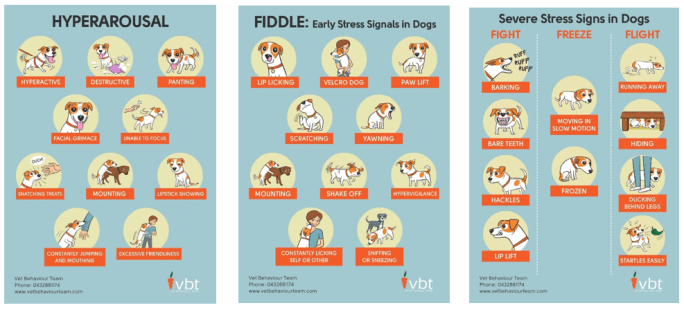
For more on canine signaling, I really like these two clips; they are clear, concise, simple but detailed, at the same time: here and here.
Petting as reinforcement
First, let’s be clear here. Something is only reinforcing if it strengthens behaviour. And the learner, in this case the dog, gets to decide when and if something is reinforcing.
What’s more, we can only tell if something is reinforcing if we review and see that there has been an overall increase in some behaviour.
There has been a little bit of research looking at the effectiveness of petting as reinforcement, versus other things like food rewards, and for the most part, dogs don’t find that type of contact as worth working for as food. There are lots of caveats to this, of course.
In my experience, to generate behaviour quickly in training situations, we need something more strongly reinforcing for the vast majority of dogs. I have worked with thousands of dogs over three decades and I have met maybe two dogs where petting, human contact and engagement were consistently reinforcing, across many behaviours being learned, in a variety of situations.
Everyone else works consistently for other things; things we term reinforcers (because they reinforce behaviour).
There is some reluctance to have dogs working for food rewards, over time, and many pet owners want their dog working to access their affection and approval. This is based in further misunderstanding, often, about how dogs and humans get along (and how behaviour works).
So, people will pet their dog when the dog performs and may give a food reward before or after the petting. What I see more often than not, is the reinforcement of behaviour, but that behaviour is usually ducking or avoidance. The dog doesn’t want the fussing, they want to get to repeat a behaviour to earn the real reinforcer…the thing that’s really reinforcing.
First find out what sort of petting and touching your dog chooses and then you can assess whether they want to work for it.
Check out our goofy engagement filled session – very little touching but a whole lotta joy! (Link)
Engagement is our goal and it’s attainable, but there’s lots of work to be done. We will talk about engagement and getting started over the 100 days. With engagement established, the presence of food isn’t the central focus…choosing interaction is.
Your challenge
Now it’s your turn. Show us what you and your pets, of any species, can do with these challenges!
Post to your social media accounts, using the #100daysofenrichment so that we can find you and join our Facebook group to share your experiences, ideas and fun!
You can comment right here too 🙂
We look forward to hearing from you and your pets – have fun & brain games!
Lying on you, leaning against you, resting beside you is a choice. Doesn’t mean they necessarily want primate-style touching though. We still must ask the dog.
Welcome to Day 23 of #100daysofenrichment and thank you for joining us on this journey!
Although our challenges are directed mainly at dogs, we want all species to enjoy and benefit from #100daysofenrichment so, please join in, adjust and adapt to help your pet or companion live a more enriched life.
thinking puzzles that really help to get your dog’s brain working
by helping your dog slow down and think through, we can expand their behavioural repertoire and build their puzzle busting abilities
food and cognitive based enrichment
lots of different approaches to these ones, allowing for the development of lots of different skills
get the family involved in this one – kids love making puzzles for pets and they can certainly help here, but it’s best that an adult supervise and guide the dog’s progress
Remember, supervise children in all enrichment activities and interactions with pets.
each puzzle prep will probably take you about a couple of minutes and each session should last only a few minutes – thinking is hard work!
to encourage a wide range of foraging and exploratory behaviours
to develop the ability to think through problems
to reduce frustration motivated behaviour, such as destruction
to do more feeding related behaviour than just eating
to encourage the development of strategies (behaviours) for getting the food
by working on different puzzles, we can facilitate carrying out a range of behaviours, broadening the dog’s repertoire, while also learning to apply and adapt solutions to a range of puzzles
These puzzles offer lots of cross over between categories of enrichment.
Working out how to get to the food and developing dexterous and cognitive skills in manipulating the puzzles are examples of cognitive challenge.
Sniffing out, tasting and chewing food all offer sensory pay off, but so does finding their way through each food puzzle, determining its value, and engaging in the puzzle of getting to the good stuff.
Pulleys puzzles encourage pets to interact with their environment – just the very interaction with the puzzle is encouraging the pet to manipulate their surroundings to get the things they like.
By carefully supervising and guiding our dogs through these puzzles, we can help the dog expand their range of puzzle-busting behaviours and facilitate your pet applying strategies from other puzzles to new ones; that’s a true cognitive gift and is growing your dog’s brain!
What goals can you add to this list for your pets?
How can we achieve these goals?
We’ve talked a lot over the #100daysofenrichment project about making the challenge doable for our pets and never is this more important than for these thinking puzzles.
If your pet is going at this in bulldozer-of-destruction-mode, then you need to help them. If your pet is giving up, then you need to help them.
If your pet is frustration and stressing, then you need to help them.
Your dog will need time to think this through. They don’t draw conclusions like we do and if they have found reinforcement in destructive approaches, in the past, that will be their go-to here as well.
So, this is really a big challenge for the humans, to make sure that you pitch the challenge carefully.
When your pet goes down the wrong path, immediately stop and take stock; how can you make it easier for them to get it right?
This is of course important for all challenges, but I want you to think about it carefully for today’s challenge so that it’s on your radar in all enrichment.
I use thinking puzzles, like pulleys, a lot with dogs who become easily over-aroused as a way to help them gain confidence in making decisions, to help them think rather than react and possibly most importantly, get them practicing good stress.
The more we challenge these thinking parts of the brain, the stronger they become and the more neurological connections are formed. This makes thinking easier and more powerful throughout the dog’s life.
This is also a great primer for pet owners in supporting their puzzler, guiding them and keeping them successful.
As with a lot of puzzles and enrichment exercises, well-meaning own go waaaaay over board, coming up with the most elaborate designs to really challenge their pet.
While it’s great to go for challenge, it’s important that enrichment remain enriching. That means that the challenge must be made appropriate and doable for the individual puzzler.
These puzzles are for supervised time only and they require you active participation too! Check all your equipment for this challenge carefully and make sure to remove tape, staples, other fastners, small pieces and plastic pieces. Play safe!
Enrichment Options
Even if you are both experienced puzzlers, start with the lower levels to see how wide a range of behaviours your dog offers, to solve the puzzle. Let your dog take time to think and give yourself time to think about ways to support and guide their progress.
Option 1: Treat-on-a-String
While this is your starting point today, it’s not necessarily going to be easy or straight forward for your pet.
Make it really easy at first so that they develop behavioural solutions and then you can add some challenge, but take your time and give them some time.
Beginners:
tie a string (dog lead, cord, shoe lace etc.) around a treat such as a piece of hotdog, chicken breast, tripe, commercial treat or a meat slice rolled up or similar
The treat needs to be long and slender enough to make tying easy and secure.
slide the treat, on the string, under a ledge such as under the sofa, under a door, through the bars of a crate or baby gate, under a book shelf, under an upturned chair or box
at this stage, just barely hide the treat out of reach
have some food rewards of equal or lower value to the tied treat – this is important so that they don’t just give up on the puzzle to earn the food rewards you are delivering
reward your dog for showing any behaviours that might lead them to solve this puzzle; for example, this might include: them lowering to look under the ledge, touching, sniffing, biting at, pawing the string, attempting to use their front feet to reach, digging with their front feet
when rewarding them, toss the rewards on to the floor just beside where they are working
make it really easy for them to get the treat on a string and keep your rate of reward high so they will keep trying
let them eat the treat on a string once they get it and supervise closely to make sure they don’t chew or bite the string
Don’t have a sofa or other suitable ledge? Don’t worry, use a Pringles tube (or similar) or under an upturned box.
Hold it under your foot to secure it in place.
Practice a few times and once your dog has a behavioural strategy for solving this thinker, move to the next level.
Intermediate:
Set up as you did for the Beginners option, but now begin to push the treat on a string further out of reach. Incrementally. Little by little.
Instead of a treat on a string, we are going to use a tug toy or rope to help your dog reveal the goal, which might be a food reward, toy or something else they will work for.
Start simple and provide lots of guidance so that your dog is successful, and not frustrated or confused.
Beginners:
Start simple with this one. Provide lots of help, where needed, and keep the box in your hands and possibly a little higher up so that your doesn’t go all out to destroy it.
Use your treat on a string and place the treat into a box.
loosely close over the lid of the box
encourage your dog to pull at the string with their teeth – you could cue them, wiggle the string
remember to reward them with tossed treats for any behaviour that might free the treat
Now it’s time to increase the challenge and get those brains working hard!
add some food to a tube, like a Pingles can, a paper cup or cardboard tube; you could even use a small and slender box or tub
slide a tug toy in there, so that some of the rope sticks out
pack a ball or toy in the entrance
pack some crumpled up paper in the tube or container
Your dog will need to pull the rope to move the obstruction. When they do, tip the container so that the food falls to the floor or give it to them to get the food.
Remember to reward them with tossed treats for any behaviour that might free the treat.
Use a tub or tube with a lid. Make a hole, in the lid, and draw the tug toy or rope through the hole and knot to secure it.
When making the hole, pierce the lid from the outside in, and draw the role through that way too. This ensures that any sharp sticky-up parts don’t hurt your pet.
Add some food to the bottom of the container and fit the lid securely. Encourage your dog to pull the rope to open the container and get the food.
We’ve already worked on closing the door (Day 15 Targeting) so it makes sense that we learn to open doors too!
Beginners:
If you and your pet are new to all this, start by teaching them to tug, pick things up and release. Day 2 covers all of these exercises, and more, in great detail!
Advanced:
Tie a tug toy to an appropriate door handle and teach your dog to open the door!
Be careful about your choice of door as very light doors or very heavy doors might cause injury.
This clip runs through the stages of teaching this behaviour:
Now it’s your turn. Show us what you and your pets, of any species, can do with these challenges!
Post to your social media accounts, using the #100daysofenrichment so that we can find you and join our Facebook group to share your experiences, ideas and fun!
You can comment right here too 🙂
We look forward to hearing from you and your pets – have fun & brain games!
Welcome to Day 22 of #100daysofenrichment and thank you for joining us on this journey!
Although our challenges are directed mainly at dogs, we want all species to enjoy and benefit from #100daysofenrichment so, please join in, adjust and adapt to help your pet or companion live a more enriched life.
taking cavaletti another step forward to provide a more involving and engaging activity
just as the name suggests, confidence courses should be designed to facilitate the development of confidence through choice, body awareness and environmental interaction
cognitive and sensory based enrichment
often used in training for sports dogs and for rehab after injury, trauma or surgery and particularly beneficial for puppies
Puppies need help developing their startle-recovery response. Exposure to mild, manageable startle primes their developing stress systems to engage and relax. This contributes to resilience.
get the family involved in this one – kids love setting up challenges like this for their pets. It’s probably better than an adult to help the dog move over the obstacles though as this requires a level of care and coordination, particularly at the beginning.
Remember, supervise children in all enrichment activities and interactions with pets.
practice in very short sessions of 2-5 minutes at a time – this can be very tiring, both mentally and physically, so it’s important that you work for very short sessions
What do you need?
cavaletti stuff – you can add cavaletti to this challenge if you like
That’s a great way to revise if you and your pet enjoyed it, and a great way to introduce new challenge with some familiarity for your pet.
cushions, dog beds
blankets, towels, sheets, Vet Bed
sheets of different materials, e.g. tin foil, flattened cardboard box, tarpaulin, plastic sheeting
tables, chairs, stools
shallow plastic tub or lid
hula hoops, pool noodles, cones
You might have some so-called canine conditioning equipment which often includes various inflatable tools, or wobble boards, for example. Don’t worry if you don’t have them, we can make & do!
food rewards – it’s better to use soft food rewards for this one so that they don’t roll on the floor too much, which is important for these challenges
Enrichment Goals:
to help dogs develop awareness of how their body moves, where their limbs are and how to adjust and shift their weight to compensate during physical challenge
to boost confidence through safe environmental interaction
to provide physical and mental challenge to pet dogs
to encourage dogs to interact with novel or weird things in their environment
to help dogs develop confidence through enhanced body awareness
to help dogs slow down and think about how they move and physically interact with their environment
to help prevent injury, improve fitness, lengthen stride, increase back and core strength
Confidence courses should aim to acheive some of the same goals as discussed with cavaletti such as improving propioception, strength, balance and so on.
But, they should also help to encourage dogs to investigate, approach and interact with weird or new environmental features.
While this challenge is certainly cognitive, the dogs are also experiencing sensory challenge and we are adding enrichment to their environment, with lots of crossover between categories.
Our main application of confidence courses is with puppies, whose brains are forming resulting in improving coordination as the relevant brain areas mature, and whose startle systems are maturing, so exposing them to manageable and minor stressors, that they can overcome, is important to help them develop resilience.
Shy and older dogs can be particularly helped; they are learning to interact with their environment, being exposed to novel stimuli and sensory experiences, and engaging their cognitive and sensory systems…the world can be challenging but you have skills to cope!
What goals can you add to this list for your pets?
How can we achieve these goals?
take your time with this one and listen carefully to your pet
set up your confidence course without your dog; allow them to enter and investigate first, before you do anything else – they get to decide how much they interact or participate
NO food and NO luring – just let them take their time and check it out.
if there is to be physical movement especially, set up in a non-slip area and use non-slip substrates onto which your pet must step
this is not a race – the goal here is to help the dog move slowly, gathering information, considering how they wish to proceed, how they place each foot and compensate for different challenges
work with your dog on lead if required to help them move a little slower but don’t use lead pressure, otherwise they will need to further compensate
What adjustments will you make for your pets?
No Luring!
Luring is applied when you hold a motivator, such as a treat or a toy, right at your dog’s nose to encourage them to move or position.
You are essentially luring when you toss a motivator in the direction or location in which you wish the animal to move, but it’s probably not as pressurised as there’s less social pressure, less looming, less coercion.
Luring is not evil, even though I often go on as if it is, and it has its place in animal training, but, there are times when luring really isn’t a good idea.
Luring diminishes the dog’s choice. They may want the food but not the interaction with a person, other animal or item.
Just because you’re using a food reward that the dog likes, doesn’t mean that what you are doing is without force. It’s just a different kind of coercion.
And just because the animal eats the food, doesn’t mean they are having a nice time, that you are positively reinforcing the behaviour you think you are, nor that you are establishing positive CERs.
When we are looking to encourage the dog to interact with something novel, scary, arousing, luring them is going to mean that they have less choice, that they might experience internal conflict (and related behaviour) and that they might be forming less than positive associations with the item, you and the training scenario.
I will pretty much avoid luring when working with fearful, cautious, unfamiliar dogs and really for me, it’s often one of my last go-tos for teaching behaviours in many circumstances.
So, when attempting to build a positive CER to something and when boosting confidence, luring might not be the place to go. We want the dog to take in the environmental information, take their time to make decisions, without the social pressure from their human and without the temptation of the food, masking all that learning and choosing.
Of course luring can be used in thoughtful and effective ways to get behaviour and the positive emotions behind it, but it’s not for this particular challenge.
We can still use food for our confidence course, but in a less pressurised manner so that choice in exploration is emphasised.
Try introducing food at an appropriate level for your dog. We don’t want food to mask their experience and exploration and we certainly don’t want to coerce (lure) them with food if they are cautious or reluctant to interact with obstacles.
Break down the challenge to help the individual dog; here’s a nice clip of a puppy, from class, called Toby, with a crate – the point is not to crate/confinement train, at this stage any way.
We are just working on stepping over a lip, stepping on to something slightly unstable, stepping into confinement…lots of big leaps for this cautious guy.
Can you spot the adjustments we make to help him grow in comfort and confidence?
Novice dogs who tend toward caution, shyness or reluctance:
set up your confidence course without your pet present – this encourages exploration of the novel setup and avoids spooking a sensitive pet with moving or presentation or weird things
stand back and allow your pet investigate – don’t do or say anything, just allow them to enter and take stock of the confidence course set-up. This takes as long as it takes. Give them time to decide how much they interact or not.
Toss food on or around each obstacle so that your dog can find it, by surprise, and interact with the obstacle naturally, rather than in some contrived sequence.
You might even consider a scatter feeding type addition to your course.
Just doing that much is great and repeating that a little will encourage lots of exploration and interaction, plus builds confidence.
Novice dogs who are pretty comfortable or quick to recover from caution:
After exploration, remove your pet and re-organise the course or add new obstacles.
Repeat the Beginners steps and work through again.
A more confident model along with being engaged in other activities, such as play with a buddy, can help a more cautious individual become more confident among the obstacles because they are experiencing it all in a more natural, less contrived way. This might also be an option for shier dogs, who have a more confident buddy for help and support.
Confidence courses allow for multi-sensory experiences, drawing physical, cognitive and sensory challenges, and when presented appropriately, encourages the practicing of lots and lots of good stress.
Just as with cavaletti, confidence courses help dogs who experience swings in arousal by helping them develop strategies (behaviours) for coping with the world. They learn that they can overcome challenge, that what they do matters, and that they have some control over what happens them.
We teach them that they can interact with weird or novel things in their own time and in their own way, that novelty and weirdness are challenges that can be met, and they can use their behaviour to deal with it.
Construct your confidence course so as to introduce different challenges so that it become a multi-sensory journey for your dog, of exploration and confidence boosting.
Choose one obstacle from each category and for more enrichment-bang-for-your-buck, choose obstacles that cover more than on category.
We want to encourage stepping on, over and under things, sniffing and manipulating and going on a bit of a sensory journey.
Catergory 1: Visual
big things
novel things – things that your dog hasn’t interacted with up-close
familiar things, presented in a new way for example, placed in a new location or position such as turning a chair on its side
open umbrella
reflective things like mirrors or tin foil sheets
illuminated things like toys that flash or sparkle (no laser lights or other things that cast shadows or reflections)
wobbly things: wobble boards, balance discs and pods, inflatable conditioning equipment such as FitPAWS or TotoFit
If you are using human balance discs and similar, make sure you get ones that don’t pop!
home-made wobbly things: lay a blanket over some cushions or pillows piled, lay a board over a cushion and top with a blanket, lay a plank over a length of PVC pipe for a makeshift see-saw
Have you watched Master Chef? Almost every episode will include some deconstructed staple; regular favourites including lasagna and cheesecake (yum!). Each component is separated out presumably providing the diner with new flavour, texture and sensory experiences, with every mouthful combination.
Let’s try with our dogs. Instead of mixing ingredients in home-prepared diets or treat mixes, lay out each component for your dog to sample individually and choose, or not.
If you feed a commercially prepared diet, take a look at some of the ingredients. Maybe there’s chicken, rice, egg and apple in the food, for example.
Try preparing some of each of the main components and present them in separate little piles in a bowl, dotted along the floor or on a tray or chopping board. Observe your dog’s responses to each component and allow them to choose which ingredients they like.
Construct confidence courses that incorporate as many different categories of challenge as available. Switch them around, add and subtract all to keep the experiences exciting and novel.
Confidence courses don’t just have to be set up indoors, in controlled environments and contrived by humans.
Adventure Walks are especially beneficial for puppies, who are just learning about the world, but all dogs will benefit from appropriate exposure to sensory and physical challenge. Here are some puppies on their Adventure walks: Biggie, Tenzing & Blue.
Let the dog explore and interact with their environment, without too much interference from the humans. Use food rewards sparingly and only once comfort has been established:
Think about places you can take your dog so that they can experience these categories of challenges as they naturally occur.
Wooded areas, parkland of different aspects and substrates, even urban and suburban areas offer lots of variety, from different sounds, smells and substrates, to physical and propioception challenges that require climbing, jumping, ducking and balancing.
Body awareness work is very tiring for dogs because it is such exerting physical and mental exercise. Just like a good Sniffathon, you might be surprised just how tiring your dog will find these exercises.
Practice in short sessions of just a few minutes at a time. As you notice your dog becoming more clumsy, that’s a good indication that they are tiring, mentally and physically. The dog might knock things, might attempt to jump or rush obstacles, or might show reluctance to engage with the items.
Listen to your dog and let them go at their own pace. Slow and steady wins the race!
Your challenge
Now it’s your turn. Show us what you and your pets, of any species, can do with these challenges!
Post to your social media accounts, using the #100daysofenrichment so that we can find you and join our Facebook group to share your experiences, ideas and fun!
You can comment right here too 🙂
We look forward to hearing from you and your pets – have fun & brain games!






































 AniEd Ireland