Have a think about this deceptively simple question…
What does your dog wish you knew more of about dog behaviour…about their behaviour and behavioural health?
Perhaps it’s knowledge you’ve developed and your dog’s wishes have come true…or perhaps there’s mysteries about canine behaviour that you’ve yet to unlock?
Whatever it is, we want to hear from you! There are no wrong or right answers and we’ll share what we would love all dog carers to know too soon!
The grown-up holds the ~five foot lead…the dog at its very end…two small humans kick a ball and grown-up pursues…dog is moved along, jerked from left to right…
Indulge me again, if you will…
Picture any weekend market pretty much anywhere and you will see it…dogs on lead, scanning & surveying, tight mouths panting… Humans moving them by their lead, pressing on their back ends to keep them sitting, restraining them from moving freely amongst so much mouth-watering food, allowing them directly approach others regardless of comfort, exerting enormous social pressure on them…
Surely, our dogs are enjoying just being there. Just being with us. Basking in our presence. Being our spare parts while we enjoy ourselves.
Dogs have fulfilled lots and lots of roles throughout their history alongside humans. As our communities evolve, so too do our relationships with our canine companions. For the most part, dogs are exceptionally adaptive but their abilities to cope with busy human-centric environments and lifestyles is only half the battle.
Dog (Un)friendly
Expansions of human-centric environments to incorporate dogs, while trendy and popular on social media, is big business. Allowing clientele bring their dog is all the rage and I can see the appeal. As society, in general, becomes less tolerant of dogs and guardians, we want to show ’em that our dogs are special, and loved family members.
But, are we stopping long enough to ask, what our dogs might want and need?
Ignorance is bliss
Being oblivious to the experiences of dogs is something I envy often, particularly when I’m out in public where there are dogs. I would love not be aware of dogs’ discomfort or of them being put in inappropriate situations. I would love not to have the gift of foresight for where this will land in three months, six months, two years time.
Becoming aware of our dogs’ experiences can be both enlightening and heart breaking all at once.
Humans Humans Humans
We tend to take an anthropocentric view of dogs, discussing our relationships with them in terms of how they benefit us. We get dogs for companionship, to get us out walking, to help us connect with our communities, to help us, us us us.
Getting a dog isn’t some convenience, getting a dog isn’t to complete your family, getting a dog is not for practicing parenting or teaching kids life-lessons.
Dogs are not auxiliaries to the brunch or the picnic or the cafe lifestyles. Dogs aren’t tools. They aren’t spare parts.
Our dogs have needs and individual requirements that can only be established by us because we control everything. That’s the human-centric part…the buck stops with us…
What about “working dogs”?
We have spent a long time and much effort developing types of dogs that fulfill pretty specific roles. These dogs come with innate tendencies, built-in and requiring refinement to do their job.
Looking at traditional working dog histories it can be easier to see where notions of “dogs wanting to please us” came from; dogs were tasked with doing behaviours innately reinforcing for them because we had selected for that. And even then, we make it all about us.
Modern jobs for dogs have taken existing types and have continued to attempt to develop their tendencies, often trying to squeeze square pegs into round holes. Rather than choosing traits, we attempt to select against and suppress unwanted characteristics.
The promotion of dogs in every heroic role, particularly via social media, leads to raised and unrealistic expectations for all dogs. Dogs are amazing but their awesomeness is independent of their service to us.
It’s not a quid pro quo, ya know?!
Dogs don’t owe us anything.
Our dogs don’t owe us “good” behaviour just because we took them home and feed them.
Our dogs are not beholden to us and our expectations of them.
Dogs as spare parts
If one wants dogs to fit in in this way, that’s fine; I don’t run anyone else’s life. But expectations will need to change. That’s the bottom line.
And while expectations might change…what about the welfare experience of dogs? That doesn’t change, regardless of our whims, intentions or wants.
Are we really “rescuing” dogs, when we warehouse them, sometimes, for years?
Are we really considering the actual welfare of assistance dogs, therapy dogs, dogs as tools to serve human well-being?
Are we really meeting dogs’ needs with agility, food toys & human-directed detection sports…or whatever the activity du jour?
Is the “pet-life” really a good life? Is it good enough?
To me, the biggest threats to canine welfare are not shock collars or “balanced trainers”, it’s our blindness to dogs’ experiences and our apparent unwillingness to recognise their needs as important and distinct from our own.
This all turned out to be far more ranty than initially intended but there are important thought-experiments to consider. There are actions we can take proactively and we should focus on moving forward with our concerns in mind.
Our society is grappling with supporting an aging population and as with most things, this parallels some of our grapples with our aging dogs too.
I’m a firm believer, and promoter, that senior dogs should have more, not less. But how that more looks will depend on each individual dog’s condition and needs.
Carers of senior dogs need education, but also need empathy.
Aging sucks…
But the alternative is suckier.
We are encouraged to celebrate our golden oldies, to relish those sugar-dusted faces and to bask in a slower pace of life together. And I do. But that doesn’t mean it’s a walk in the park, even a slowed-right-down walk for seniors.
The accommodations that are often required to maintain our seniors’ QoL can take a toll on care-givers. And for what? At the end, we are left with no dog…
Some of the realities of living with and loving an aging dog include…
Anticipatory Grief
While we are familiar with grief that affects us post-loss, anticipatory grief starts well before. We carers of senor pets are reminded of impending loss with every little slow-down, with every stumble and limp, with every vet visit and with every realisation that this is another new normal. (Cleary et al, 2021)
I’ve written about my process for coping with anticipatory grieving before: “Am I a Mourning Person?“
Anticipatory grief is very real and I’ve worked through it/I’m working through it. I set a timeline for myself; if I get him to 13 years (ancient for an AmStaff), after that, we’re just going to take each day. While it didn’t end there, it helped enormously along with other more general working through anxiety-stuff.
We’re at almost at thirteen and a half now and I know that each extra day is a bonus, that the time allotted us is out of my control, and the inevitable is still going to be devastating.
Caregiver Burnout
Looking after a loved one, full time or close-to full time, can be exhausting and lead to burnout. Caregiver burnout is well recognised in human health-care and the carers of older/chronically ill dogs (Spitznagel et al, 2019).
Along with worrying about those you care for, the actual acts of caring for them is all encompassing.
Decker is well but about once or twice a year, over the last four years, we’ve had some pretty serious medical emergencies generally related to his living life as large as possible. Last year, we had a close call with cancer after the incidental finding of a rectal growth. After an inconclusive biopsy and successful surgery, we got the all clear with a benign leiomyoma. Since then, he’s had some faecal incontinence, not regularly and certainly not every month but it’s unpredictable and there doesn’t seem to be some consistent and treatable reason behind it. Recently he had diarrhoea over night…and some incontinence following. Cleaning up animal-poop has been part of my life for a very long time but when it’s over-night, and I’m sleep deprived, and worried, and cleaning up diarrhoea…it can become too much fast.
But caregiver burnout happens over time because sometimes, caring for our seniors, it can seem like incidents that are worrying, effortful, disruptive, stressful and sometimes icky are happening one after another. One after another, one on top of another. All day, every day.
Caregiver burden doesn’t detract from the love we feel or even make us stop caring for our dogs. (Martens et al, 2016) But it affects carers’ quality of life and at the end, we have no dog. (Belshaw et al, 2020)
Finances
Keeping dogs is expensive, and expense increases as they age. As they age, they may require more specialised care and pet insurance often covers less of veterinary fees for pets over a certain age, e.g., 8 years old.
Decker has monthly veterinary treatments and supplements specifically relating to his aging and that costs about €300 a month. On top of all the regular care dogs need. This extra senior-care is maintaining his comfort meaning he can continue with an active life comfortably, safely and happily. That’s priceless.
But it’s another thing. On top of all the other things.
Not everyone can do that. And not everyone can keep up with the social-media-peer-pressure. That’s ok. Their situation doesn’t mean they love their dog any less.
Adjustments
Our dogs are intwined with our lives. And for me, dogs are my life; they’re my work and my hobbies/spare time. All dogs all the time.
At each lifestage and developmental change throughout their life, adjustments to accommodate their needs are required. (Belshaw et al, 2020) That’s a normal expectation when bringing a dog into our home and family.
Part of our anticipatory grief can be grieving for the life we won’t have after our dog is gone. But long before that happens, age-related changes can chip away at those experiences you’ve shared for so long, requiring updates and adjustments according to our new normal together.
Aging leads to deterioration over time so changes are ongoing. If you’re not clear already, Decker’s old. But this year, his aging appears to have accelerated, and the rate of slow-down has increased. By a lot. All of sudden, he appears much older and this is happening faster. That means life is changing again, and changes are on going.
If dogs, as the HAI literature tells us, benefit their humans through facilitating social interactions, getting out into Nature and increasing exercise, aging might impact these outlets for many people.
As humans and dogs age, our worlds get smaller. When I say senior dogs need more, not less, I’m emphasising an awareness of this shrinking life so often thrust upon seniors. We can continue to widen their world, according to their comfort, but with adjustments that accommodate for their changing needs.
Carers’ worlds may shrink too. We might not get to go to the places we once did with them or maybe we have to stay home with our dog more. More adjustments shrinking our world, affecting quality of life.
Emapthise
I was recently interviewed for Senior Paws, about nutrition for seniors (here) and for sure I want to empower caregivers with educational resources and things they can do support their aging dogs.
Education isn’t all that’s needed to empower carers. Empathy works too. Empathy for these senior-struggles that have impact but don’t stop us loving our dogs, that don’t stop us enjoying and truly reveling in whatever time we have left together, and don’t stop us caring.
We appreciate our senior dogs, and their being alive, while recognising ways to support them in continuing to have a good life with us, and together.
But it doesn’t have to be sweetness and light 24/7. It’s ok to acknowledge that aging brings with it a lot of negatives. And we are going to have feelings about that and that’s ok.
Toxic positivity is not some antidote to anticipatory grieving and these other realities. It’s supposed to be conflicting: the prospect of losing someone for whom we care deeply while also making sure to savour every moment we have together. I just wish our dogs lived longer.
Animal Law Ireland have been fighting to improve the outcomes for those affected by domestic abuse in relation to their companion animals.
There are long standing associations between animal abuse and human abuse at multiple levels (Monsalve et al, 2017). Companion animals often become a tool of coercive control and and a focus of domestic abuse. (e.g., The Links Group) Given that support services for those affected generally do not have appropriate outlets for companion animals, those affected are forced into impossible circumstances.
The welfare of affected animals requires ongoing monitoring. While I see recently that a structure has been developed by organisations to provide a place for these animals to go, there is likely far more required to ensure the ongoing welfare of these animals is supported.
Getting back on your feet and moving forward will require enormous and multi-dimensional supports. Dogs, particularly, will often also require ongoing supports and treatment to recover from these conditions; even just moving back and forth between homes can contribute to potential traumas.
If there is any person concerned about the experiences of their dog/s in respect to domestic abuse and related abuses, if you have escaped these conditions and have your dog, we will help you and your dog.
No charge, no judgement & absolutely confidential.
We are happy to lend our limited talents to this fight. To anyone experiencing this or who has experienced this. Part of your recovery may be helped by supporting your pet and we can help you with that.
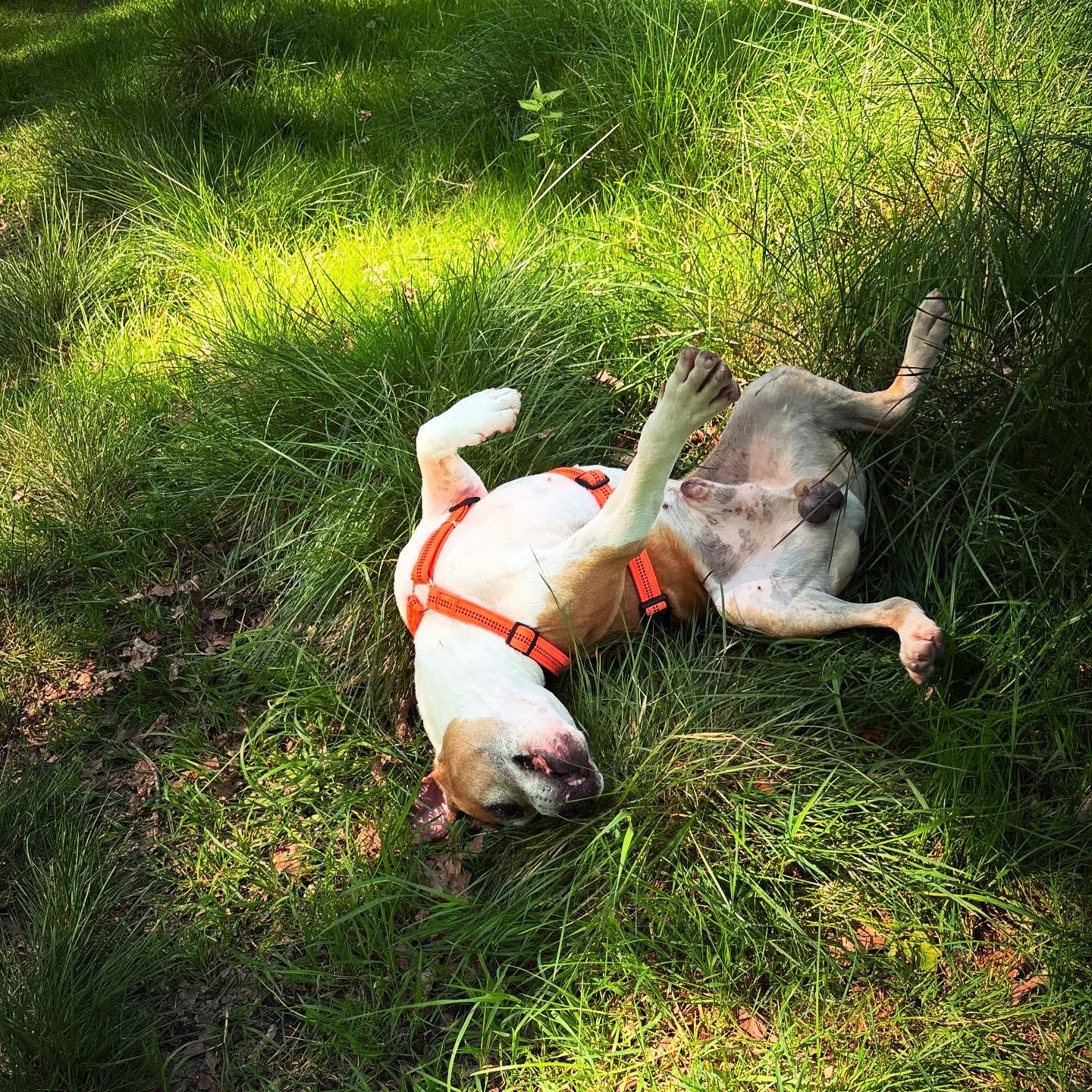
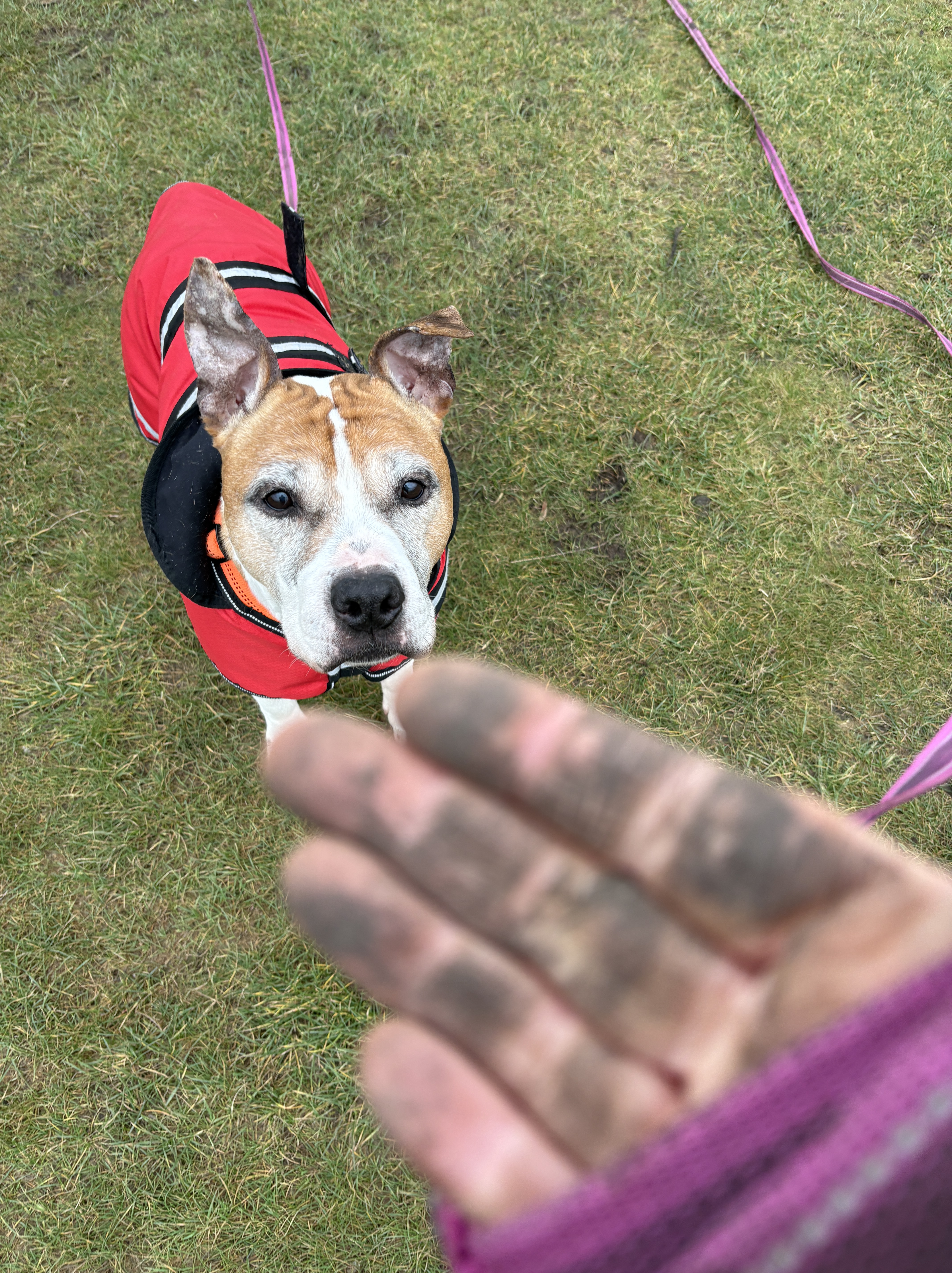
Not having been kind to his body one day throughout his long life has really started to catch up with Decker, this year in particular. He’s over 13 now, old for dog and pretty ancient for an AmStaff.
More for seniors, not less
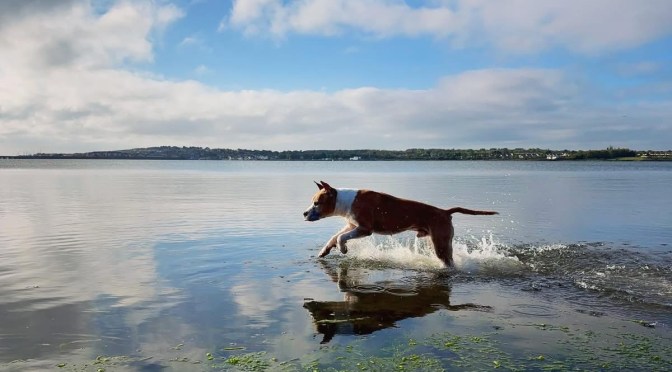
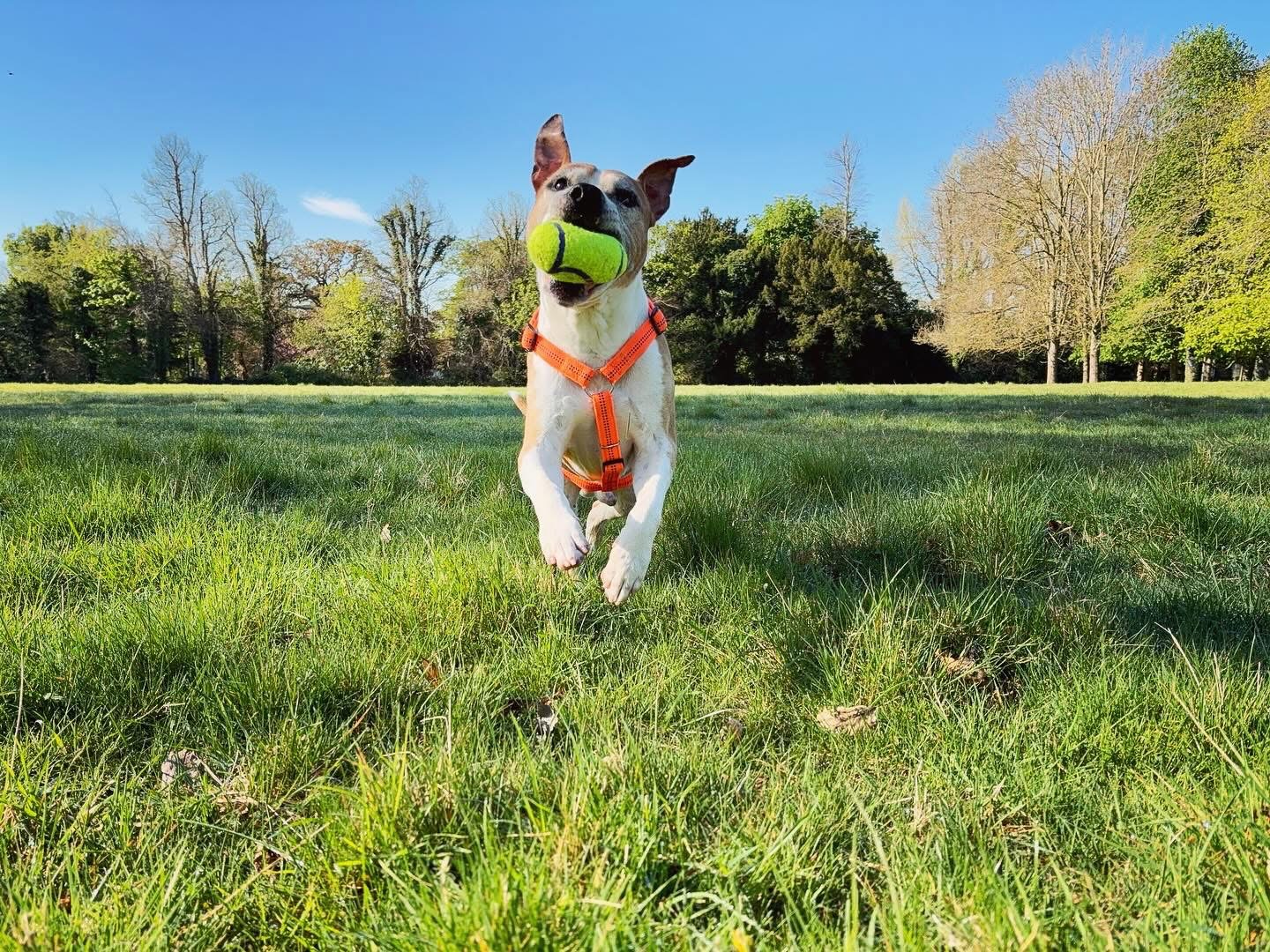
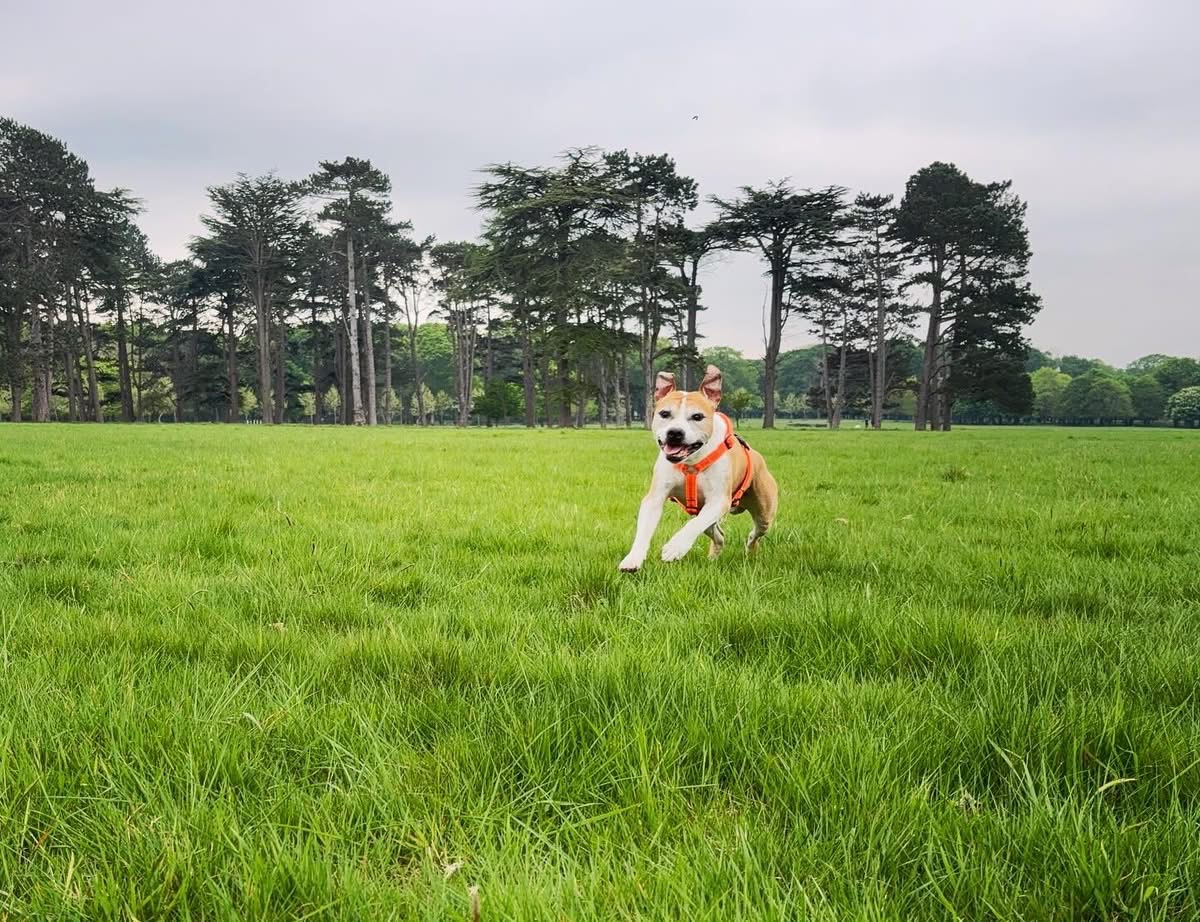
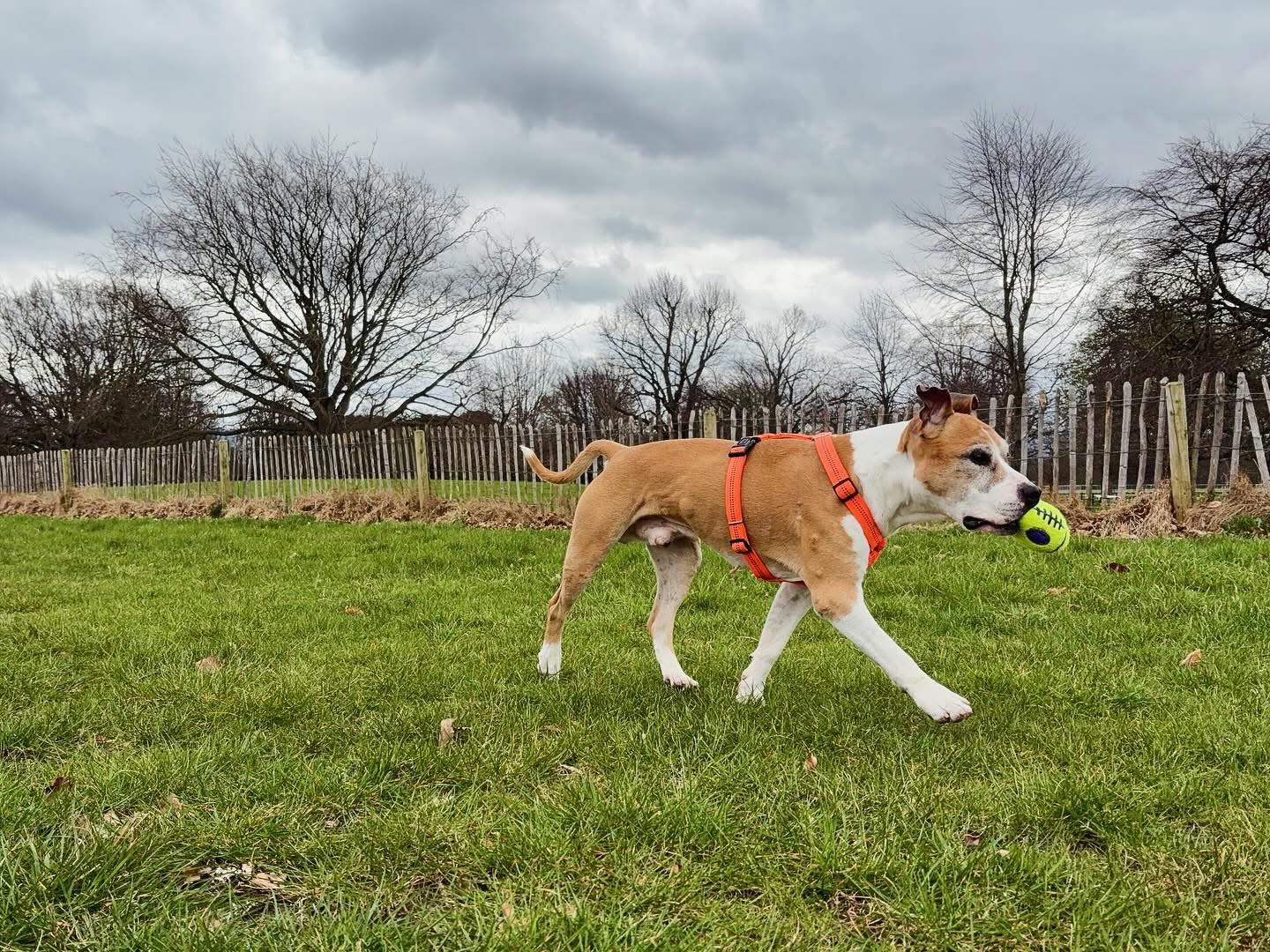
He’s still super active. He regularly swims for 30 minutes in the sea and most days will hike at least about 6-8km. We train regularly and still have lots of fun. He does puzzles and continues to invent games, training me with his exquisite teaching skills.
He’s totally deaf now and although always an epic sleeper, he sleeps so deeply now; he has lots of memory foam beds, blankets and favourite comfy spots in the sun.
All in all, seniors require just as enriched a life and world in their later years as they did throughout life.
But the older body needs more support and dogs aren’t always super clear about telling us they’re in pain, they’re tired, that they’re aging body needs a break. We’ve gotta look real close and observe carefully, learning not to dismiss what their body tells us as “just being old”.
When the spirit is willing but the flesh is weak
Of course, Decker doesn’t know he’s old and that his body is failing. He has mild arthritic change in his TTA knee (way less than would be expected) and some very very early neuromuscular changes mildly affecting the pelvic limbs.
His right elbow has been giving trouble for a while, wear and tear due to compensation for a long standing shoulder injury. And now his left elbow is showing some pain indicated by posture changes and occasionally, transient acute lameness. Ouch!
This means extra care is required, because he sure isn’t going to mind himself. We have some good pain relief on board and plenty of adjustments in place that are supporting him right now.
Behaviour happens in the environment
Our outings have to look a little different now with steady pottering and sniffing being much more beneficial, and safe for his body, than crazy carry-on and life-threatening antics.
Instead of seeking ways to calm the silly-boy or “training”, ask, under what conditions does steady pottering & sniffing happen? While also asking under what conditions the crazy stuff happens…
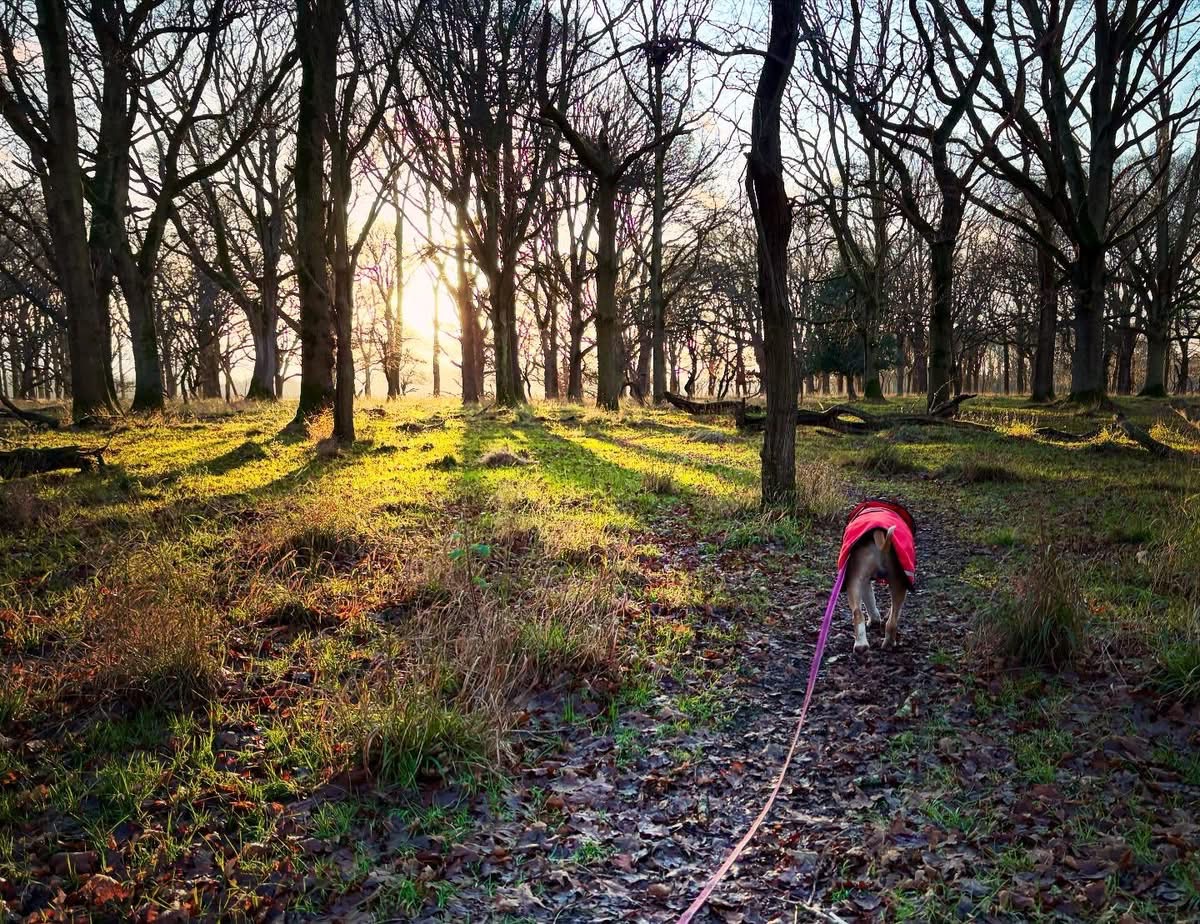
Decker likes a path with a verge. A verge of trees, a verge of undergrowth, a verge of lawn.
One of his many talents is pathfinding. Any density of scrub and undergrowth and he will find a path, leading me through. I just follow along.
When we walk along a verge, he sniffs and potters steadily, checking in, sniffing and pottering.
If we want to increase specific behaviours, we can recreate the conditions under which these behaviours happen. Visualise what it looks like when the dog is doing these behaviours…what’s the picture?
More open space, particularly grassland and long grass, or water…any water… and that picture starts to look a whole lot crazier and more active. He still gets to do that, these behaviours are important too and his behavioural health matters as well.
Understanding the conditions under which steady sniffing and pottering happens means we can do lots of that by going to those places, by being in those pictures. And we can intersperse that picture with the other too, for some relief, for release and just for fun.
Instead of thinking in terms of the behaviours you don’t like, think of the behaviours you want to see…and then learn about the conditions under which they happen. Go there, do that. Be in those pictures.
I wear many hats, and have always done so, in this industry. Over the years, for various reasons, I’ve really focused my energies where they will be most effective and ultimately, will contribute to improvements to welfare. Plus, at this stage of the game, I’m only interested in working with really cool people who share these same goals and achieving them through true collaboration.
That’s why I’m really only involved with one industry organisation now…and that’s IVBA, the Irish Veterinary Behaviour Association.
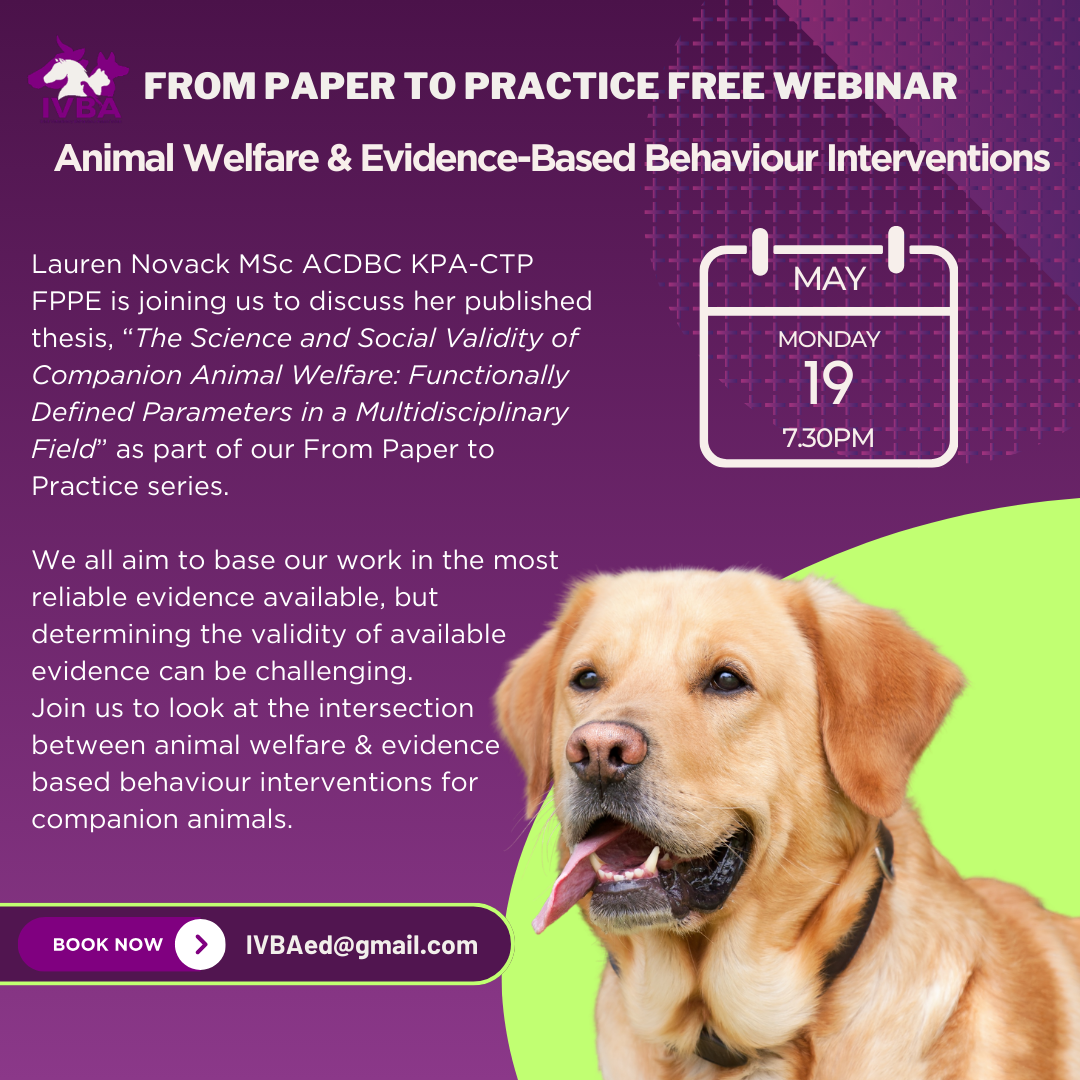
I’m lucky to be the vice-chair of IVBA and part of the organisation’s Education Committee. We get to put together an educational program of resources for our members and I particularly love our From Paper to Practice series.
I can’t wait for our next webinar on Monday 19th May at 7.30pm (Irish time)! T o book: IVBAed@gmail.com
We all aim to base our work in the most reliable evidence available, but determining the validity of available evidence can be challenging. Join us to look at the intersection between animal welfare & evidence based behaviour interventions for companion animals. Join us for free on 19th May!
This webinar is free for everyone and the recording will be available for members only. More about joining IVBA here.
Our wonderful speaker, Lauren Novack, has co-authored a book chapter with Dr Fernandez (who did a webinar for us last year on his LIFE model) and they’re sharing a pre-print. Download here.
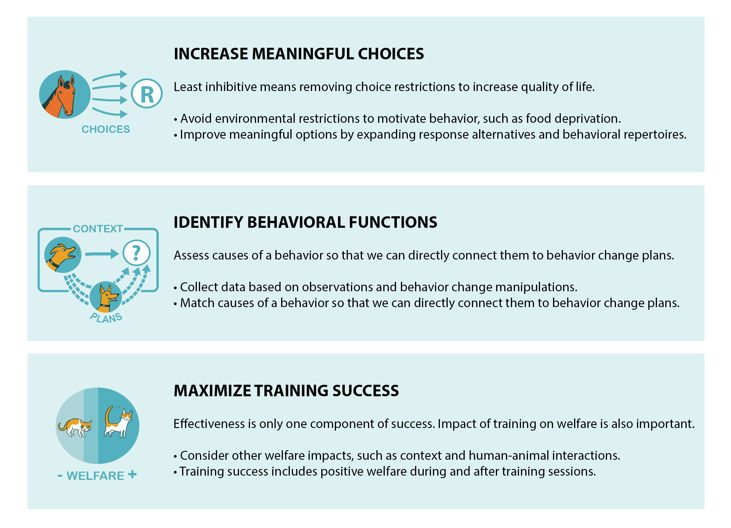
The chapter, which functions as an extension of Dr Fernandez’s former LIFE model, goes into greater detail about the history of both training ethics and welfare, as well as how the behavioral and welfare sciences connect to improve the lives of animals.
To talk more about this important topic, join us for our webinar on Monday!
Book: IVBAed@gmail.com
Oh! And tell your friends…the more the merrier! Plus it’s free!
As is its way, and why I avoid it as much as possible, dog-trainer social media continues to promote polarisations. That our field of behaviour, the epitome of nuance, relies on such media for the dissemination of information is boggling.
Yes/no, nevers/always, while staples of social media, don’t really work in discussions of behaviour. The fetch-is-a-force-for-good/evil debate has been resurrected of late with the sharing of recent posts discussing the evils, and polar opposite responses promoting the good…
This piece is just under 1500 words but there’s a second part to read too, with lots of ideas for refining fetch games here, and that’s just under 2000 words. Settle down and dive in!
If you can’t dazzle them with brilliance…
This most latest flurry is inspired by a post that starts with a definitive statement directed toward all dogs, with an ‘always’ stuck in for good measure.
When we see posts like this, it’s a good idea to search for criteria for pseudoscience, for writings that use lots of sciencey sounding terms, with a pinch of accuracy, but a whole lot of bamboozling.
Professing certainty and the committing of many logical fallacies abounds, with claims that this is the only source of truth on this topic to top it off.
A common theme of these sorts of arguments will include many references to neurotransmitters. Individual neurotransmitters are not “good” or “bad” and dogs don’t need -detox from <insert neurochemical here>. Neurochemicals interact and we can’t look at a dog’s behaviour and diagnose which singular neurotransmitter is in play…that’s not how this works. Neuroscience doesn’t come ‘dumbed-down’, and understanding the complexities of neurotransmitter actions extends far beyond textbook definitions of their functioning.
When arguments include references to fuzzy concepts like “drive”, it’s time for caution. And when terms are used without explanation or context, like “compulsive” or “obsessive”, it demonstrates a lack of understanding of meaning and application.
But those dogs sure look “obsessed“
We have selected for specific canine motor patterns in different dog populations to create breeds and types of dogs that do jobs for us. Our selection has increased different dog-types’ sensitivity to certain types of environmental stimulation, raising arousal in anticipation of the challenges associated with efficient switching into workmode.
We have shaped dogs’ arousal systems to become activated under various conditions to prepare and support their body during the challenges and exertions of working.
These motor patters are neurologically cheap and highly motivated behaviours. And when dogs are under high stress, or in conditions that allow them to anticipate raised arousal, dogs will show these behaviours that might include predatory sequence responses, certain social behaviours including some play and sexual related behaviours.
According to the Yerkes-Dodson model of arousal, simple behaviours are best suited to high arousal, while complex behaviours are better performed under lower arousal. With rehearsal and rehearsal, behaviours can become more efficiently demonstrated.
Repetitive fetch behaviours appear ritualised, repetitive patterns of behaviours – each round looks the same, and the behaviours are repeated over and over. The Limbic arousal required to hone that focus on the ball and to support the body’s exertion contributes to the apparent intensity and ritualised nature of these responses in many dogs.
But that doesn’t make it “obsessive” or “compulsive” and it certainly doesn’t mean this will become a “compulsive disorder”. Abnormally repetitive behaviours (ARB) fulfill specific criteria and include specific actions that affect quality of life.
The B-word
Balance has become a bit of a dirty word in some dog training sects, just like the F-word… So let’s balance the issues on fetch…
The benefits of regular, exerting exercise are well known and accepted.
Moderate exercise is associated with all sorts of biological effects contributing to elevated mood. Daily, free-choice exercise leads to sustained enhancement of serotonin metabolism, providing immunization to negative stress-effects. (Dey et al, 1992) (Dey, 1994) (Chaouloff, 1997)
Dogs need physical exercise and adolescents particularly need opportunities to move and hone their developing physicality. Dogs also need opportunities to move freely within their world, deciding, as much as is safe, how they interact with and explore their environment.
Reduced physical activity contributes to degenerations in physical and behavioural health in dogs.
(In Puurunen et al, 2020, lower activity levels are defined as less than two hours per day.)
Is excitement good? Is arousal bad?
Humans tend to interpret dogs’ excitement as happiness. And we attempt to ‘tire our dogs out’ with lots of exerting exercise. Most guardians believe that their tired dog is good, and prefer a quiet dog.
Exertion requires increases in arousal and increased cortical inhibition so the dog is responding with arousal-related behaviours more efficiently. This arousal feels good, and dogs will put themselves in these situations to get their fix.
But is that “bad”?
High-octane isn’t without risk…but then, what is?
Repetitive exerting exercise like fetch or high-octane dog-dog interactions may present risks in a couple of ways, for example:
reduces sensitivity to pain, discomfort, and social stimuli Dogs all wound up may not listen to their body and may not listen to communications from other dogs setting them up to rehearse inappropriate social behaviour.
increased arousal lowers inhibitions and abilities to respond to ‘trained’ behaviours and guardians may find it more difficult to build responsiveness, possibly resorting to aversive approaches of control
lots of running, chasing and biting may not really be play…
Is fetch play?
Play between humans and dogs is wonderfully enjoyable for both species and beneficial to relationship building and resilience (Rooney & Bradshaw, 2002).
While we often refer to fetch games as ‘play’, do they fit the bill? True play involves specific interactions, a dance of communication and conflict resolution. (Burghardt, G. M. (2005). The genesis of animal play: Testing the limits. MIT press.)
If your interactions with your dog can be replaced by a mechanical arm, I dare say we are not looking at true play.
For fetch games to be play, interaction and the ‘dance of play’ must be present.
Balance & the F-Word
It’s our job to support our dogs in developing behavioural repertoires that allow them to flourish and keep them safe and healthy.
We have selected dogs to show arousal related behaviours efficiently and have now decided that’s not acceptable anymore… because it doesn’t suit us. What a cruel trick we play on dogs!
Recognise that over half the pet dog population being over-ideal-weight is a significant threat to canine welfare (Suarez et al, 2022). High proportions of dogs are not provided with daily exercise and even fewer with intentional enriching additions to their life and world (PDSA Paw Report).
Rather than punishing guardians’ attempts at providing for their dogs, instead, we should shape their efforts by refining fetch and exerting exercise to more completely support their dogs’ behaviour health…ROLLERCOASTERS!
Arousal isn’t “bad”, it’s necessary, and is really an incomplete model. Find the balance.
Be a better human guide!
The renouncing of exercise as a primary approach to “behaviour modification” goes back in time in dog-training history. And there continues all sorts of movements to slow dogs down, to compare them to poorly validated ‘observations’ of free-living dogs (which is a false equivalence) and to maintain that sniffing provides just as much exertion as running around.
There is nuance to be found in all of these claims. But we are so resistant to allowing our dogs get excited and frightened of “overarousal”.
If the dog can manage themselves and we can balance their outlets, let them be. If not, get help.
If you’re concerned about a dog’s fetch-related behaviours, be a better teach and establish clearer stimulus control. This provide clarity, and improves predictability and controllability for our dogs.
Provide balance and design appropriate enrichment interventions based on valid evidence, and through listening to the individual dog. Their behaviour is information.
Now it’s time to check out lots of ideas for how you can refine ball-play, make it more like true-play, find the balance and inject some nuance: Fun with Find It! Not Just Fetch.
Dogs are the most gloriously uninhibited creatures. Don’t suppress or manage this out of them. Be a better human-guide & find the balance!
“I think we are drawn to dogs because they are the uninhibited creatures we might be if we weren’t certain we knew better…” ~George Bird Evans
I will preface this by clearly stating that I love longlines, I use them regularly, but like all tools, care is required in their use and application.
Longlines are, essentially, just very long leads usually made of similar materials and fashioned in similar ways. Whereas leads are generally 5 or 6 feet long, or shorter, longlines tend to be from about 5m and up.
I’ve handled longlines thousands of times, and, I’ve taught longline handling skills to hundreds of handlers because there are different and more challenging skills required, particularly the longer the line is.
And yet, when faced with more permanent longline use myself, I’m grappling…but probably not as much as my dog…
Grappling
For pretty much his entire life, Decker’s been off lead while out and about. We’ve work hard and he has always been exceptionally engaged and responsive; his is the best recall I’ve ever trained to any animal I’ve worked with.
Decker is 13 years old and completely deaf, but continues to be pretty active and gung ho. That means in dynamic environments, where we are most days, being off lead just isn’t safe anymore. We’ve found that a 15m longline works best and he is rarely at the end of a line this long. I follow him about as best I can so restriction isn’t too impactful.
Feeding the line and keeping it up and coiled can help to manage the length, avoiding tangles and getting caught. But I feel it adds further constraints to the dog’s free movement.
When the line gets caught on something, he pulls to free it. Maybe pressure just means pull harder…
But more importantly, how would the dog know the difference?
The more line we have, the more options there are. And this becomes especially important when the line is really the only effective way to cue the deaf dog’s behaviour.
With a shorter line or lead (in the clip above, it’s 5m long), it’s easier to be clearer. As the line grows so can confusion.
Maintain a consistent length of line under different conditions, e.g. in more open areas versus busier areas. Tie knots along the line to cue your responses. Practice directional cues and distributing pressure consistently to cue changes in direction or engagement.
Along with developing line-handling skills, we must also work to maintain clarity with line pressure and what that might be cueing for both ends. Clarity in teaching is a welfare issue so be clear and consistent!
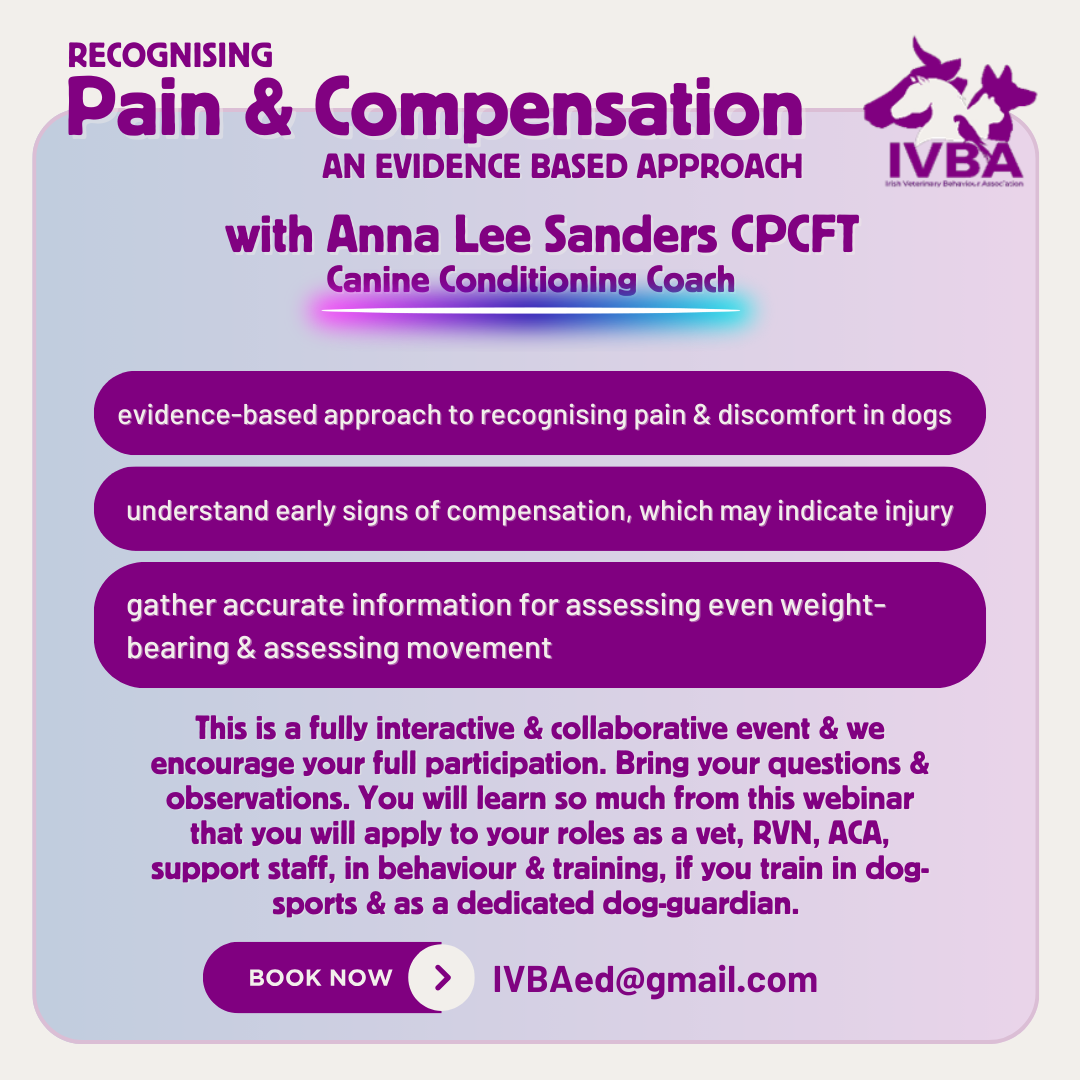
Join us for this free IVBA webinar on taking an evidence based approach to recognising pain and compensation.
Event details:
Monday 3rd March, 8pm (ROI time/GMT) via Zoom
Recognising Pain & Compensation: an evidence-based approach with Anna Lee Sanders CPCFT, Canine Conditioning Coach
It’s great that there is increased recognition for the effects of pain on canine welfare and behaviour. However, not all resources are evidence-based, and when it comes to pain and welfare, taking a truly evidence-based approach is a must.
This webinar will emphasise understanding how to apply an evidence-based approach to recognising pain, discomfort and signs of compensation in dogs. You will learn how to teach simple ‘conditioning exercises’ that allow accurate information gathering in the assessment of a dog’s load-bearing and movement.
This is a fully interactive and collaborative event, and we welcome your full participation. This webinar is perfect for all veterinary roles, those in training & behaviour roles, anyone training in dog-sports, and all dedicated dog-guardians.
You must book so please get your spot today to attend this event live and for free – email IVBAed@gmail.com and I will send you all the details.
This event is free for all to attend live and the webinar recording is available for IVBA members.
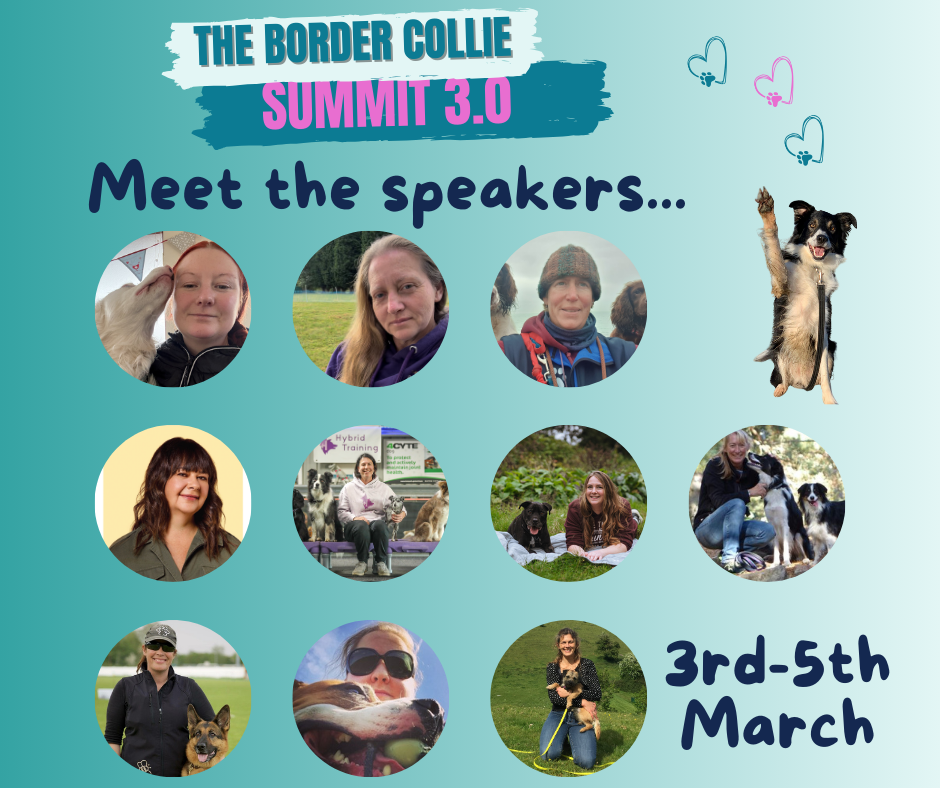
Border Collies and BC mixes are super common, and we see a lot in rescue here. This is such an opportunity, even if you don’t have a Border Collie, to learn more and better understand dogs.
I was invited to discuss one of may favourite topics: building muzzle LOVE…not just muzzle training but building real joy and comfort while wearing a muzzle. Muzzle training, and muzzle LOVE, is for all dogs and makes a great teaching exercise providing so much learning for you and your dog.
















 AniEd Ireland