I don’t really follow other trainers online so I’m often out of the loop when it comes to the latest and greatest in trainer-town.
As a result, I was recently called out on the use of the term “neutral” to describe dog-dog interactions, and in its use to describe ‘neutral dog walks’. I had no idea the term neutral could be so contentious…
Trainer Terminology
This illustrates a real challenge in our industry, that is, terminology.
Because professionals enter our industry from diverse backgrounds and we lack standardised & validated terminology, trainers can make up names for approaches to teaching dogs. That means terms may be poorly defined and applied less accurately.
I am clearly guilty of this too!
My neutrality faux pas
Upon being made aware of my possibly unsuitable use of the term, I did a little digging to reveal the errors of my ways.
Apparently “neutrality walks” or some version of that concept, have become quite a popular tool among UK trainers, and possibly elsewhere too. What I found does not represent how we do things at all and certainly doesn’t portray what I would consider neutral social responses from the dogs involved.
I don’t really like to discuss what others might do in the name of training, and instead, prefer to discuss what we do. But for clarity, these “neutrality walks” often appear to consist of groups of dogs, with their humans, being walked in close proximity to one another, on pretty tight leads, with many showing lowered heads, appearing check out, with tense movement.
That doesn’t seem like neutrality to me!?
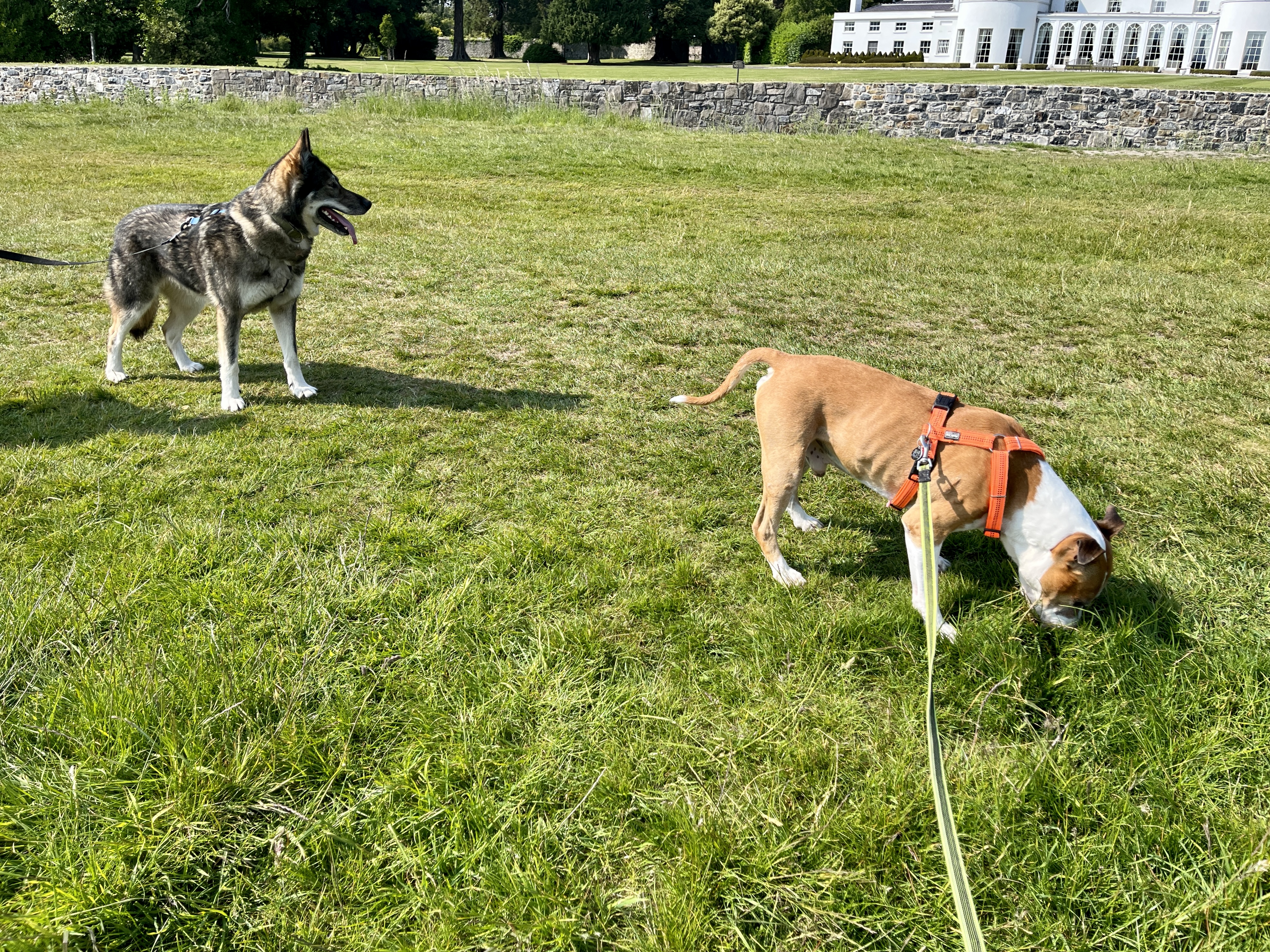
Our “Neutral Dog Walks” are entirely different!
Night & Day
In my defense, in using the term, I was describing something very different.
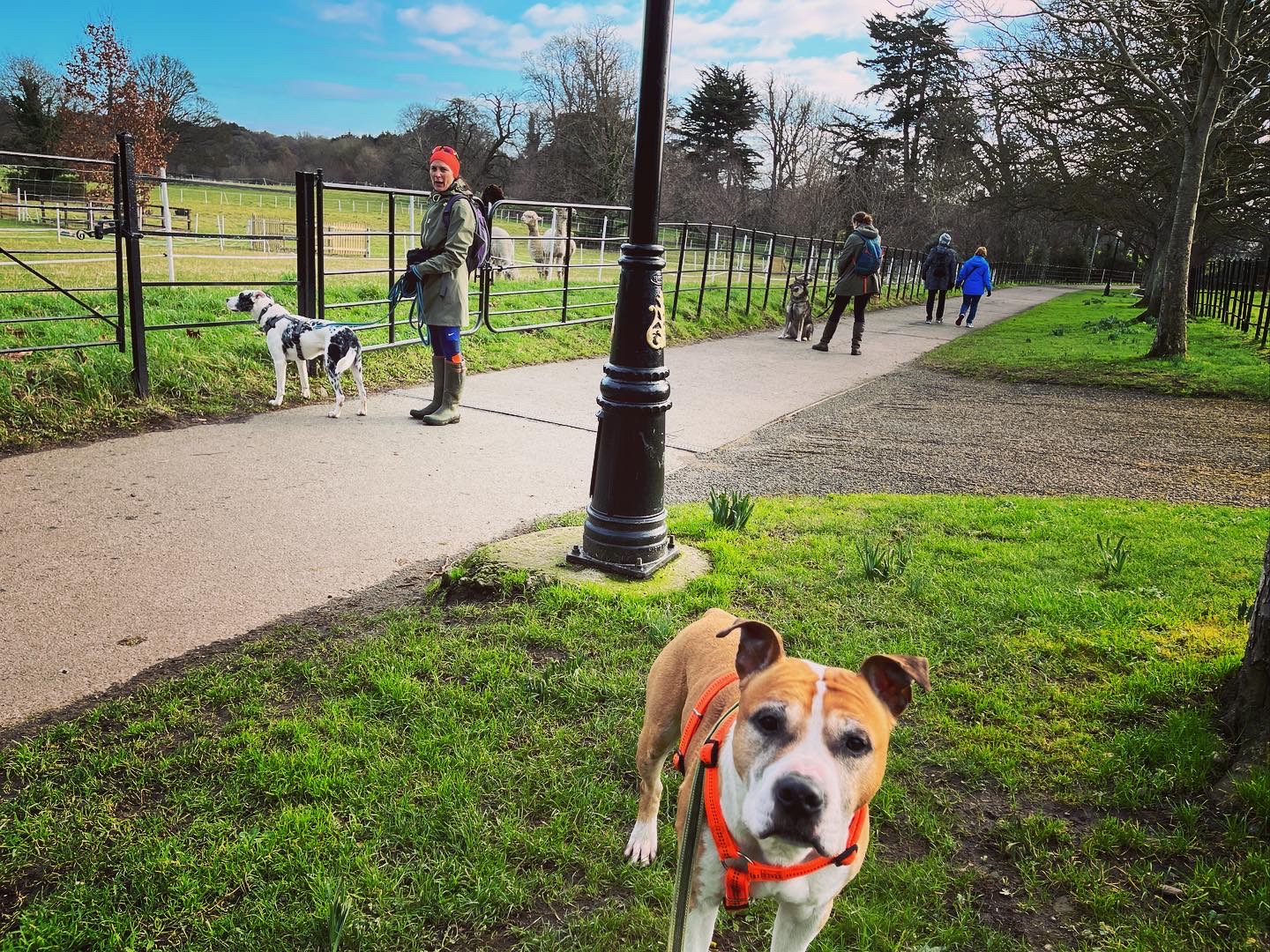
On our Neutral Dog Walks:
there are no more than three or four teams
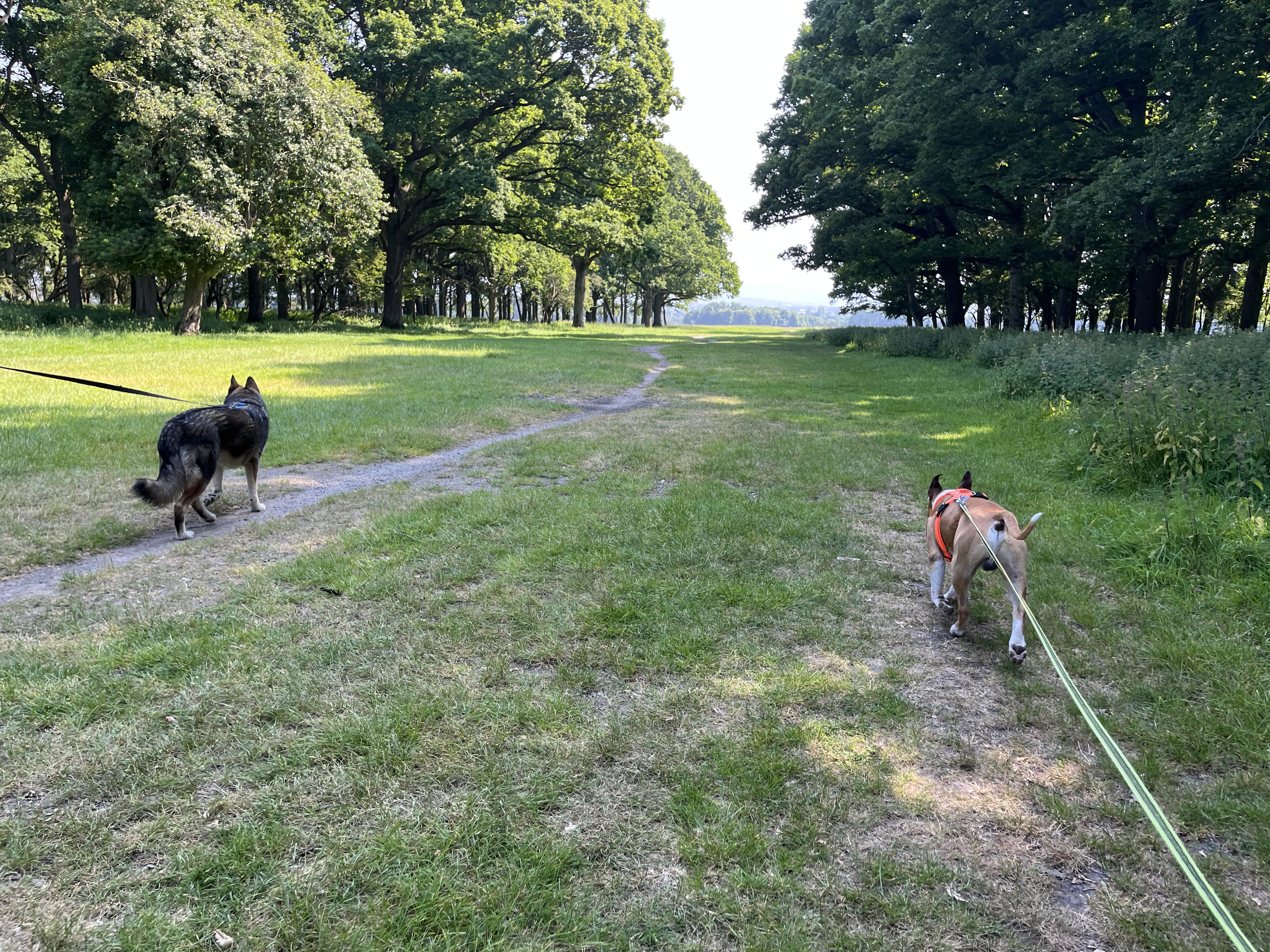
dogs are on long lines and are free to move about
we use distance and engagement to maintain everyone’s comfort
we pay close attention to each individual’s space bubble over time and across contexts
we are in enriching and interesting environments so the presence of other dogs and their humans is somewhat diluted
each dog’s preferences are considered – some dogs might want to meet or be closer to a compatible individual, but some might not and this is not prioritised
they get opportunities away from one another to engage in their interests with their human, without the pressures from other teams
What do we mean by ‘neutral’?
The difficulty with the term neutral is that it may be interpreted as the dog not reacting or responding. Maybe this conjures up images of robot-dogs, which can be very attractive to many pet owners, who, understandably just want a “good” dog, but is so often achieved through pretty heavy social pressure, intimidation and coercion.
Neutral is a label and like all labels, it’s only useful when it’s understood across users, through clear and agreed-upon definitions.
And of course, we are not labelling dogs as “neutral” but more so responses. Problems arise when we start with “the dog is —” as we should be describing behaviours and the conditions under which they happen; what the dog does, rather than what (we think) the dog is.
Neutral responses are “whatever!” or “so what!” responses. The dog perceives some interesting occurrence such as another dog, a cyclist, maybe even a squirrel, and they have enough time and space to make some choices about their next move.
It doesn’t mean that the dog has no response (if they’re alive, they’re responding!) but that they are able to respond and recover, without too much stress.
We take turns and wait to access sniffs and smelly rolling spots!
Goals
Our outings are goal oriented, but the outcomes for each dog will be individual and evolving.
The humans are developing skills in managing their dog’s exposure by adjusting distance, reinforcing engagement and participating in their dog’s exploration with them.
The dogs are learning to feel safe and are developing skills in these contexts that don’t require swings of excitement and escalations.
We try to have a model dog present too, a dog whose responses are well known, pretty predictable and generally low-key. Decker is very environmentally sound and doesn’t have any interest in interacting with other dogs. The way he navigates his world may be a helpful model for other dogs who might find things exciting or worrying. And to make sure he is able to do that, everyone understands his preferences, just as we make sure everyone else’s preferences are respected.
It’s only engagement if the dog can truly choose to engage.
Our outings are based in engagement. The dog learns to choose to engage without cueing, leash jerking or tightening or nagging. We adjust their world rather than attempt to mould or coerce them.
The dog’s behaviour is information. If they are having difficulty recovering from stress or their owners feel the need to use a tight lead or other coercion, then we need more distance and an updated plan.
Our ultimate goals are happy, loose dogs, confident humans and lots of team-work.
And now, it looks like we have to come with a new name…ideas welcome!
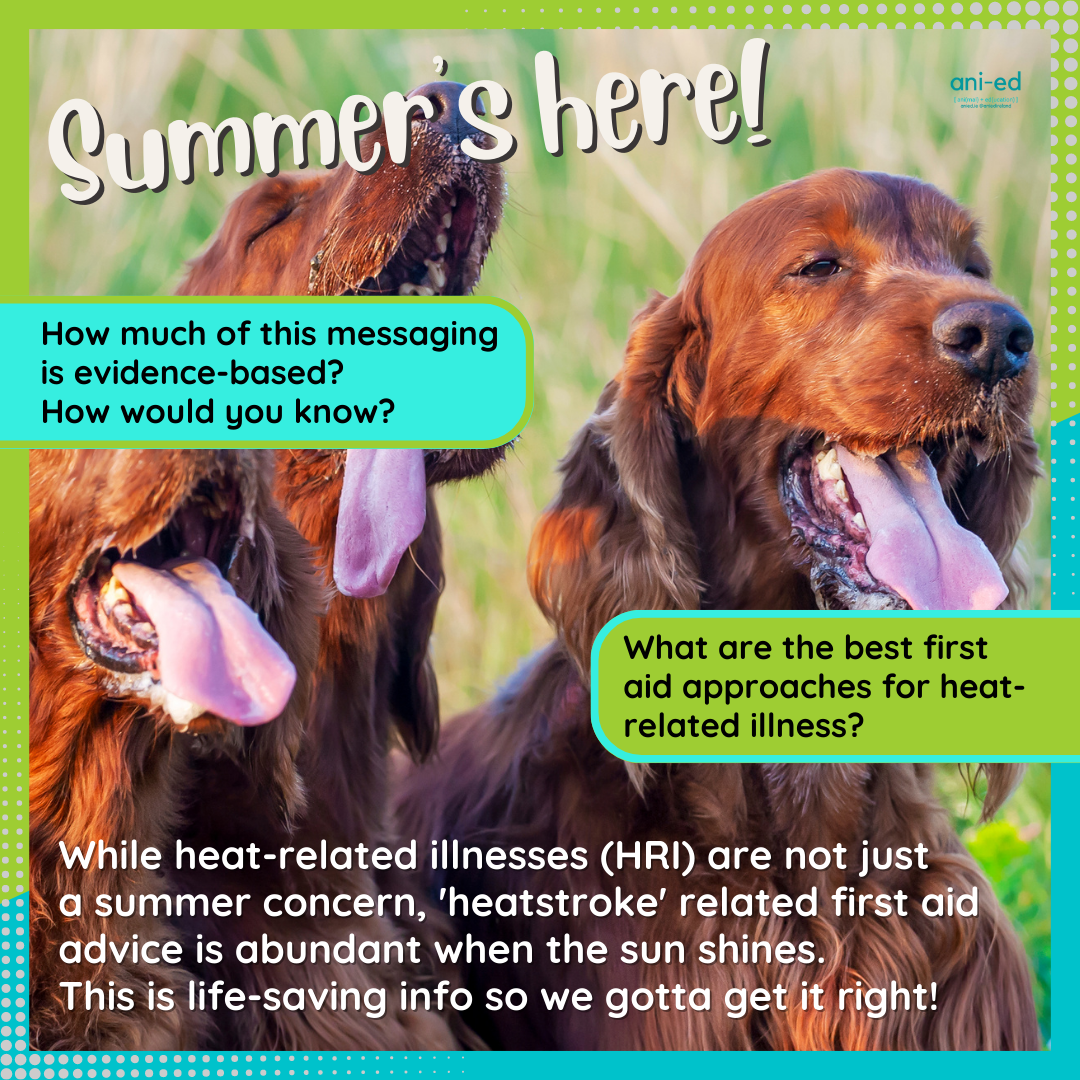
The sun’s out (yay!) and that means that you’ve probably been inundated by posts and images and information about “heat stroke”.
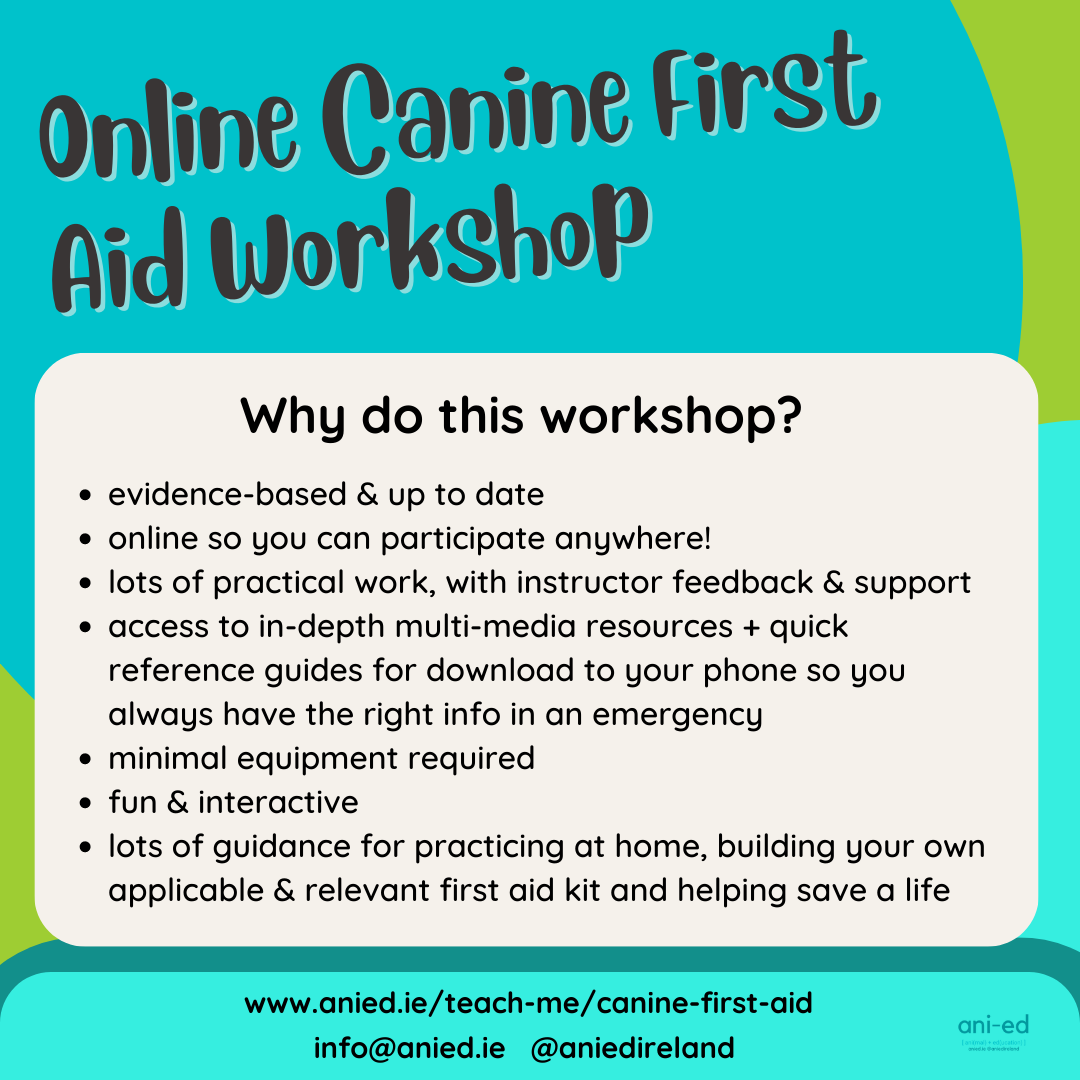
I deliberately schedule our Online Canine First Aid workshops around this time of year so we get to talk about evidence based approaches to detecting, preventing and administering the right first aid for HRI (Heat Related Illnesses). This is emphasised on this workshop because there is so much BS spread about dealing with HRI, some information is inaccurate but some is downright dangerous.
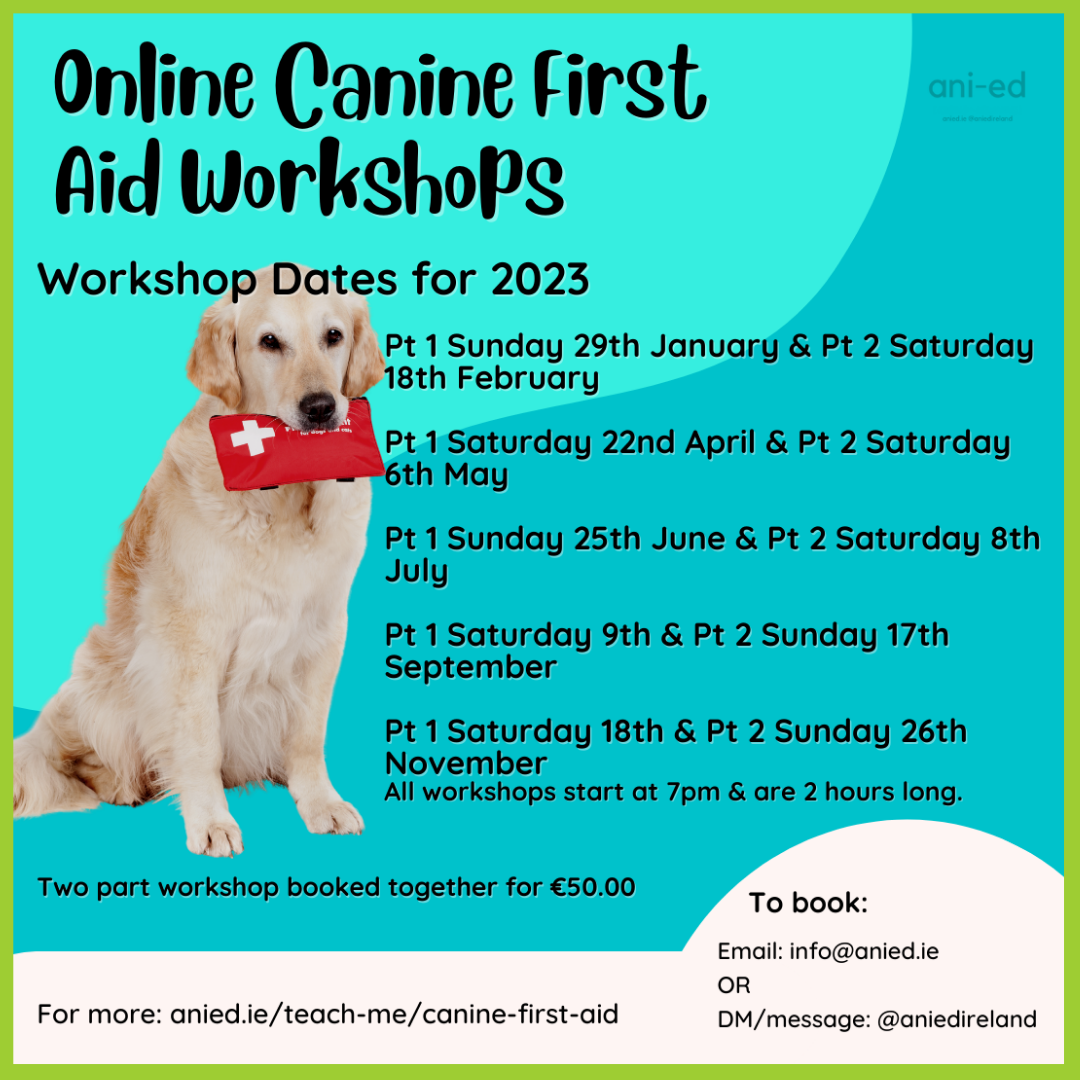
We talk about so much more but while HRI are on everyone’s mind, and timelines, at this time of year, join us for our next Online Canine First Aid workshop. You might just save a life some day!
This fun workshop with in-depth resources costs just €50.00 but if you volunteer with a recognised rescue organisation, you can join in for free!
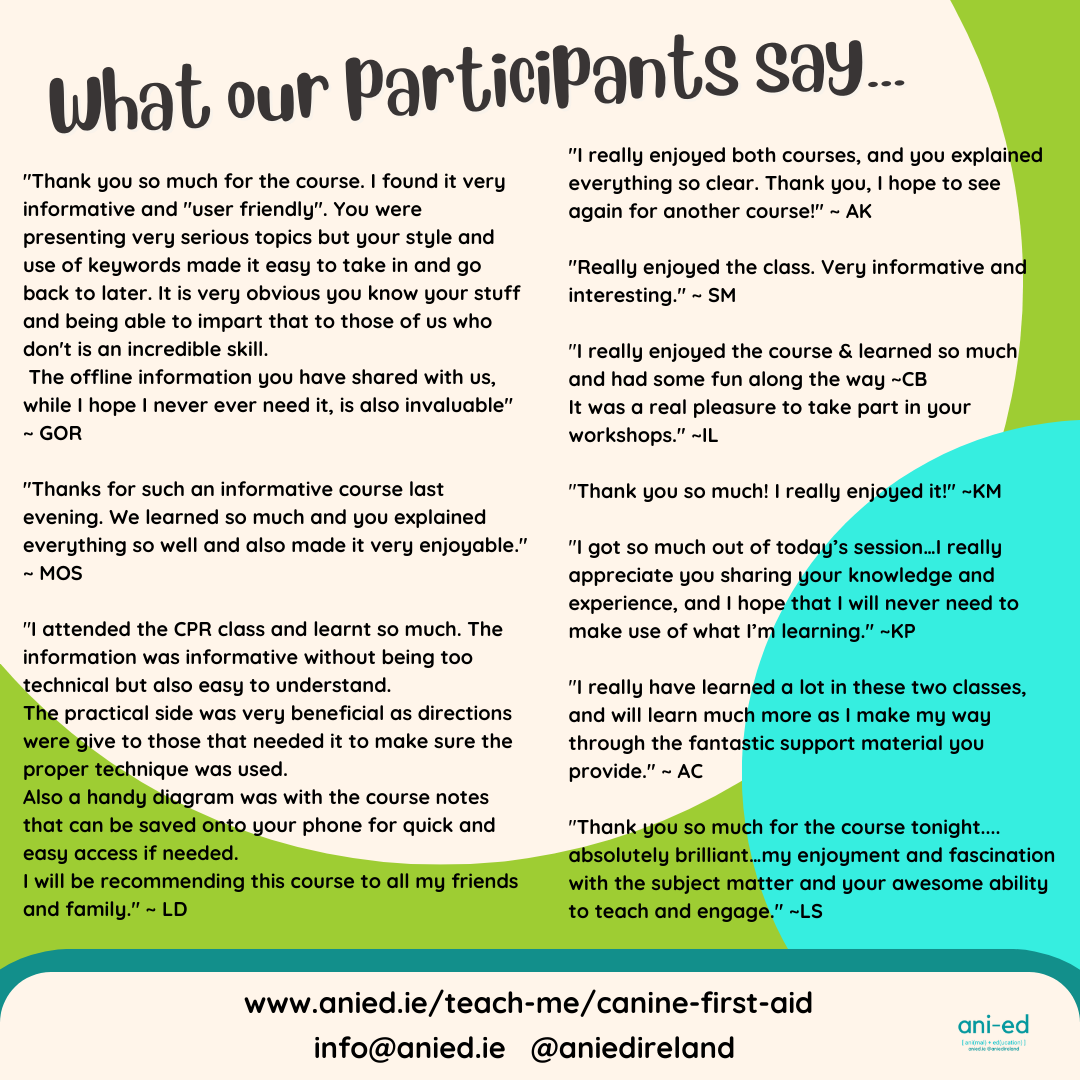
Doing an online workshop won’t detract from your experience or skill building at all. Check out what our participants say:
You can message, email (info@anied.ie) or apply via the website link. If the June/July dates don’t work for you, join us on another workshop. Book today!
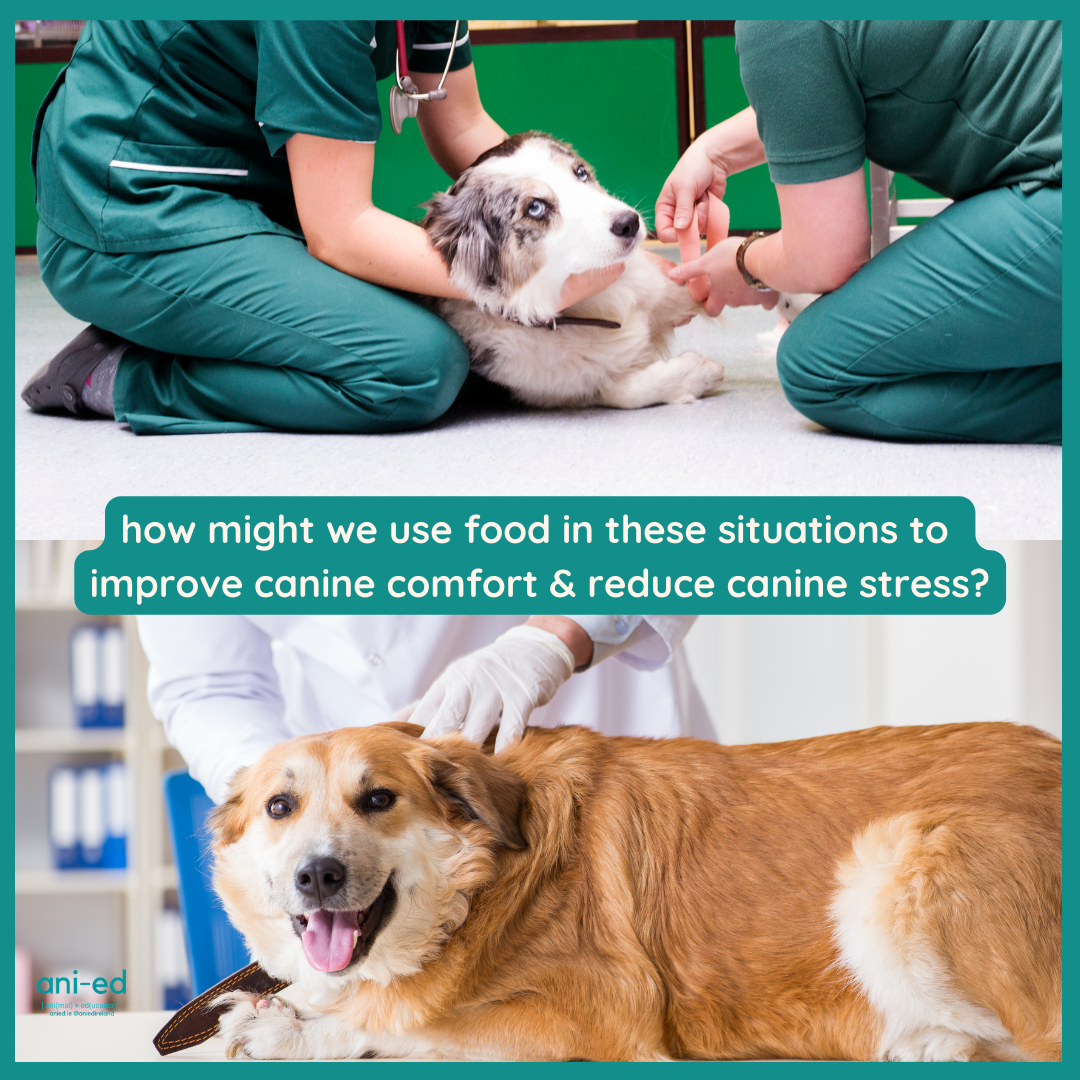
We were lucky enough to have Dr. Gary Landsberg speak about reducing stress for pets during vet visits.
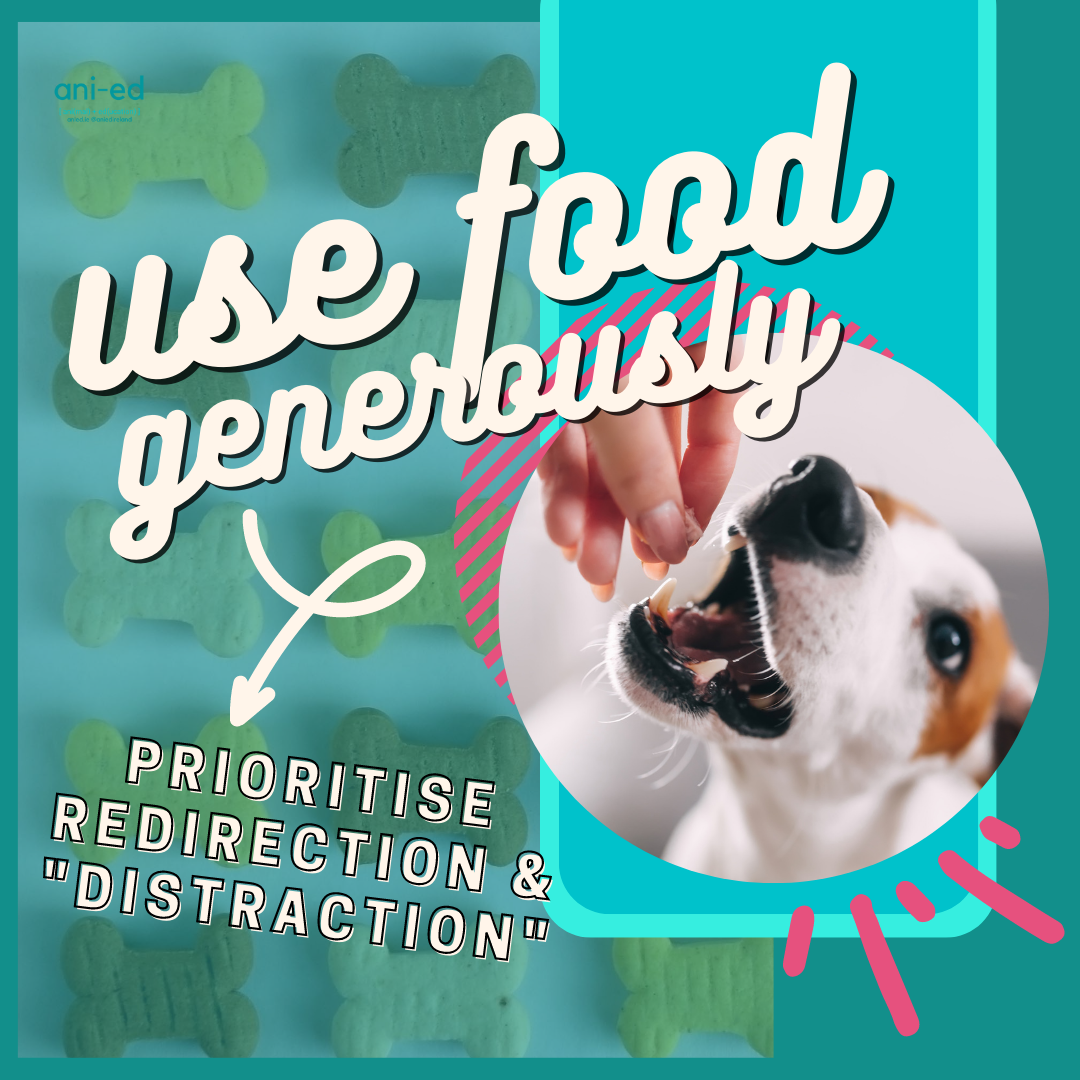
His promotion of the generous and extensive use of food during veterinary interactions struck me, and inspired.
Using food has always been controversial in dog training, with traditional beliefs dictating that dogs should do our stuff out of their love for us . I am a proud user of food, as reinforcers and otherwise, in a lot of my teaching and interactions with others. But sometimes, it can feel more effective to downplay food use, at least a little, in some contexts when attempting to get our message across.
Food is a tool, and like any other tool its use is sometimes very effective and necessary, and at other times may contribute to issues or be applied improperly.
Dr. Landsberg unashamedly recommended the use of food across every stage of the dog’s vet visit, and before and after.
While there might be some classical/respondent benefits, as in the dog associates the veterinary context with yummies, the real benefits, in the examples we discussed during his talk, came from redirecting the dog’s attention away from procedures.
Essentially, procedures, interactions, and their surroundings, pale into the background as the dog is “distracted” with yummy foods and absorbed in eating behaviours.
Here’s an example with a then foster dog, having her ears cleaned and treated:
In some situations, a dog can’t be given food due to preparations for anaesthesia, for example.
Dr. Landsberg argues that more recent evidence supports shorter fasting periods and that food, carefully introduced and used, may offset stress that could be even more damaging in terms of sedation and anaesthetic. The small risks may be outweighed by the careful use of food, particularly lappable foods which pass through the body more rapidly (Westlund 2015).
Stress can inhibit appetite:
For many dogs, the vet-experience is sufficiently stressful that they do not want to eat, even the tastiest treats.
Where a dog can’t eat due to stress or illness and nausea, employ other tools to prevent them experiencing any further stress associated with the veterinary context.
Food, glorious food
This might include anxiolytic medication, sedation, environmental or olfactory redirection, and time. Give them more time.
Simultaneous conditioning may lead to overshadowing, so while the dog isn’t learning new skills, we are prioritising maintaining their comfort. This may lead to improved comfort for subsequent visits and help facilitate more efficient learning of new skills (Riemer et al, 2021).
A sufficiently and significantly aversive experience can also impact other stimuli present. Including food. Feeling scared and the veterinary context may ‘poison’ the presence of food (Murrey 2007). Often when dogs are this distressed they may not eat but care should be taken in introducing food, that’s refused, and that food being associated with this stressful context.
Use high value foods, but not completely novel foods. Make food available rather than attempting to lure directly or encourage them to eat.
Fun with Food at every stage
Prepare for vet visits not just so you are ready to go, but also so that you have a plan in place. Run through each step of the entire process and prepare in advance for what you’ll need and your approaches, including your Plan A, Plan B, Plan C and so on.
Use food scatters & breadcrumb trails, taught targeting behaviours and even toys when moving into and through, including on and off the weighing scales.
By practicing clear communication, your dog learns they are being listened to. When your dog moves away from lapping or snuffling, stop. They learn that stopping with eating leads to a pause in the proceedings and they don’t need to struggle or aggress to take a break.
Have some play and fun at the end too. This allows for releasing some tension and helps form positive last memories of their time there.
There are lots of caveats to all of this because of the individual nature of behaviour, and these contexts. But using food appropriately should be at the top of our list of tools with the primary goal of redirecting the dog’s focus to make the veterinary experience just not such a big deal.
Instead of thinking that so-called distractions are enemies to training, we become participants in our dogs’ curiosity and exploration. Viewing their world through their lens and their experiences.
Learn about the things that interest your dog, that engage their nose, that they enthusiastically orient toward and approach. I know Decker will be interested in thicker, longer clumps of grass, for example, as that’s likely where other dogs have marked. Drawing his attention to these provides sniffs, social outlets, and over-marking opportunities.
When you spot things, draw your dog’s attention to them by excitedly cueing “What’s this?!” and indicating the area of interest.
Not only is this fun and relationship building for you both, but also a simple way to redirect your dog’s attention from goings-on that might be stressful. Turning them away and engaging in an enjoyable activity can help to manage their behaviour, and help prevent and recover from stressful interactions.
Lots of practice when there’s nothing going on, and just for fun, helps to change your mindset, in participating with your dog. And shows your dog that you won’t be nagging them to move on or ‘pay attention’, and instead that you’re their team-mate and partner in exploring your world together.
No one tool ‘works’ for every context, and sometimes it’s not possible or safe to use environmental redirection. But when it is, try the What’s This?! game, even if just for fun
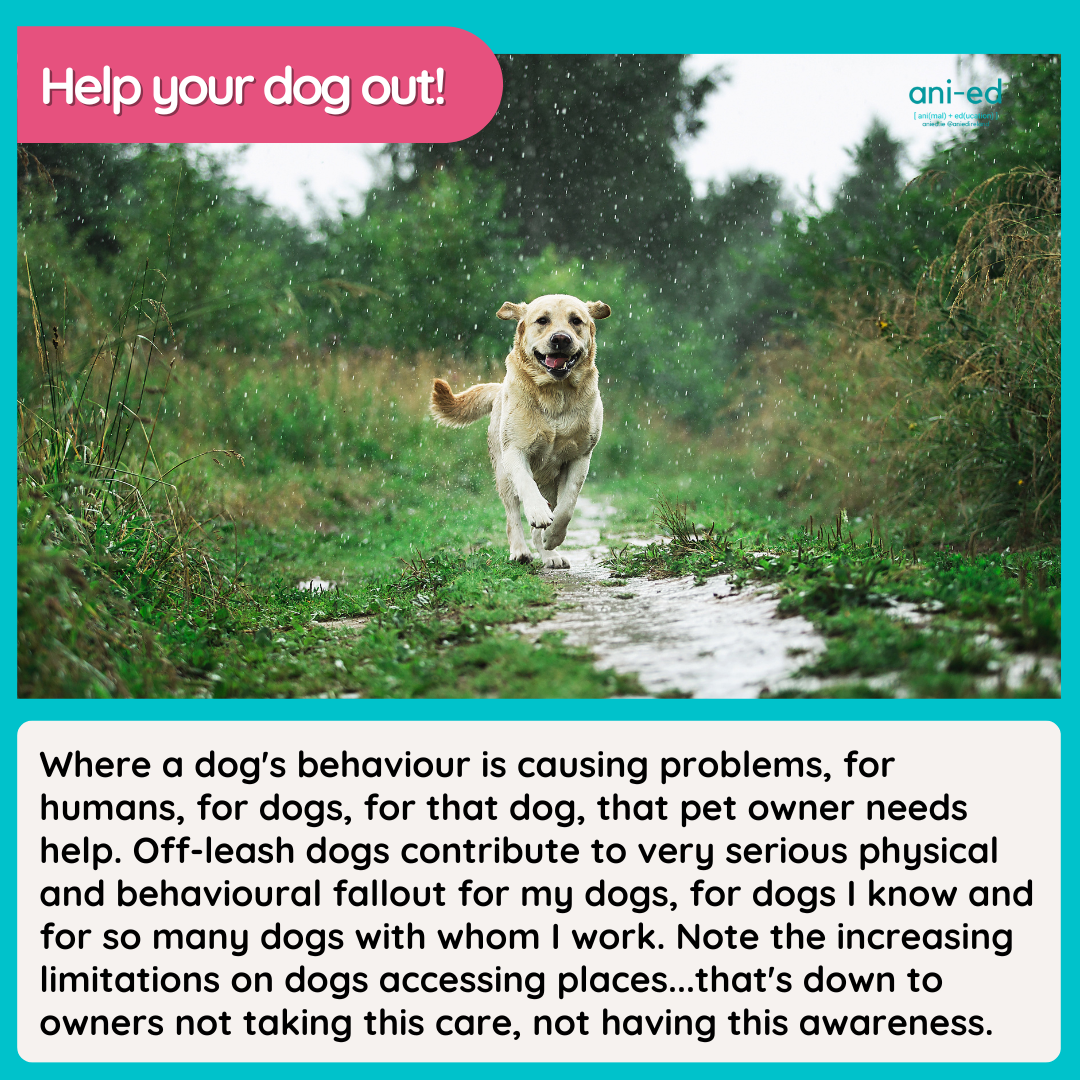
In response to our recent post about ways to help other dog owners out, the resounding difficulty people reported was the behaviour of off leash, out of control dogs. We agree, this cultural oddity is a scourge, for sure.
While you might think or like to think that your dog is being ‘friendly’, nobody else needs to interpret that behaviour that way. Indeed, that’s because it’s not “friendly”. Imagine unfamiliar people running up to you, unsolicited, trying to touch you or engage you in an interaction. Would that be considered friendly? Nope…and possibly unlawful.
It’s not even friendly dog-dog behaviour. But because it’s become normalised, the wider dog owning public might think it’s ok or acceptable, and not recognise the need to provide their dog with help, support & guidance.
Recently, Decker, who is 11, was jumped on, from behind and unexpectedly, by a large adolescent dog whose owner was several hundreds of metres away. This young dog landing on my older boy’s lower back has resulted in some stiffness and tightness, particularly to his TTA knee which is fully recovered and in great shape other than some minimal arthritic change, as to be expected. He’s been on pain relief and appropriate rest so it isn’t exacerbated. While there will be no behavioural fallout for Decker from this, if this had happened to the dog I was working with just after this incident, it would have sent us backward at least six months in our program.
Allowing this to happen, is not “socialisation”, it’s not benefitting your dog, and it’s most certainly damaging to other dogs and their humans. If your dog can’t manage the distance or situations at which you expose them to other dogs without lunging, pulling, staring, running up to, getting excited or anything other than some glances, some sniffing and information gathering and moving on, your dog needs help.
You might not be aware and that’s ok. But, you need to understand that there are physical and behaviour implications to your dog’s behaviour…and for your dog.
If your dog approaches another dog, and that dog snarks, that’s on you and that tells you that your dog’s approach was inappropriate. The other dog is allowed to say NO!.
Even if your dog is a ‘puppy’, even if the other dog is off-leash, even if you own a “friendly” breed (that’s not a thing!), if you are allowing your dog to approach other dogs when that other dog did not solicit that interaction, your dog’s behaviour is the problem. And may put them at risk too. It’s up to you to step up, and you can, of course, do this to help your dog.
Another dog just being present isn’t license for you to allow your dog to approach. If your dog can’t just go on with their lives in the presence of other dogs, it’s up to you to put measures in place to control your dog, prevent them being a nuisance, to keep them safe…at a minimum.
Here’s the bottom line. We have disrupted dog-dog relationship development to suit us which means we have to take on extra responsibility in ensuring they have appropriate social guidance. It’s part of your meeting their needs.
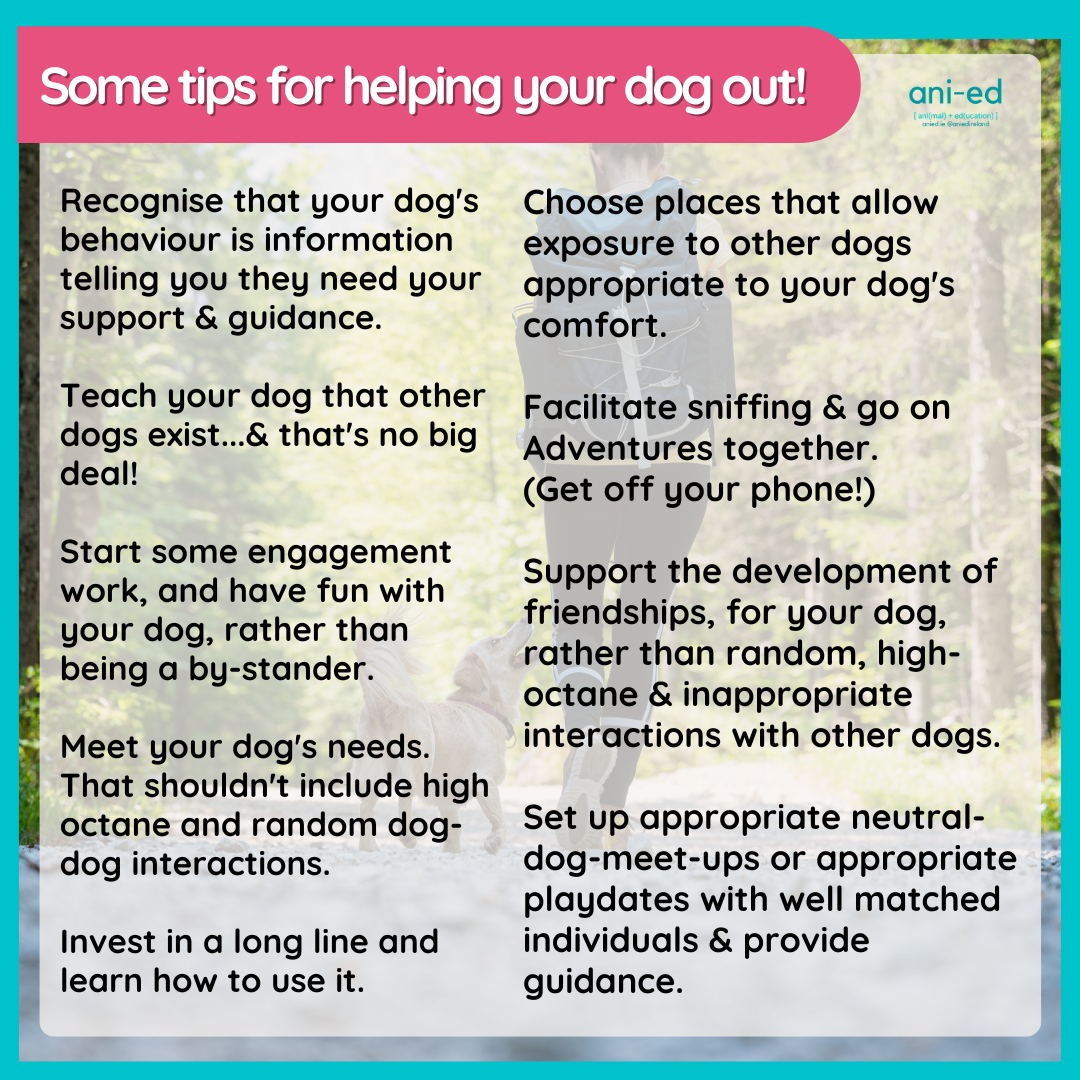
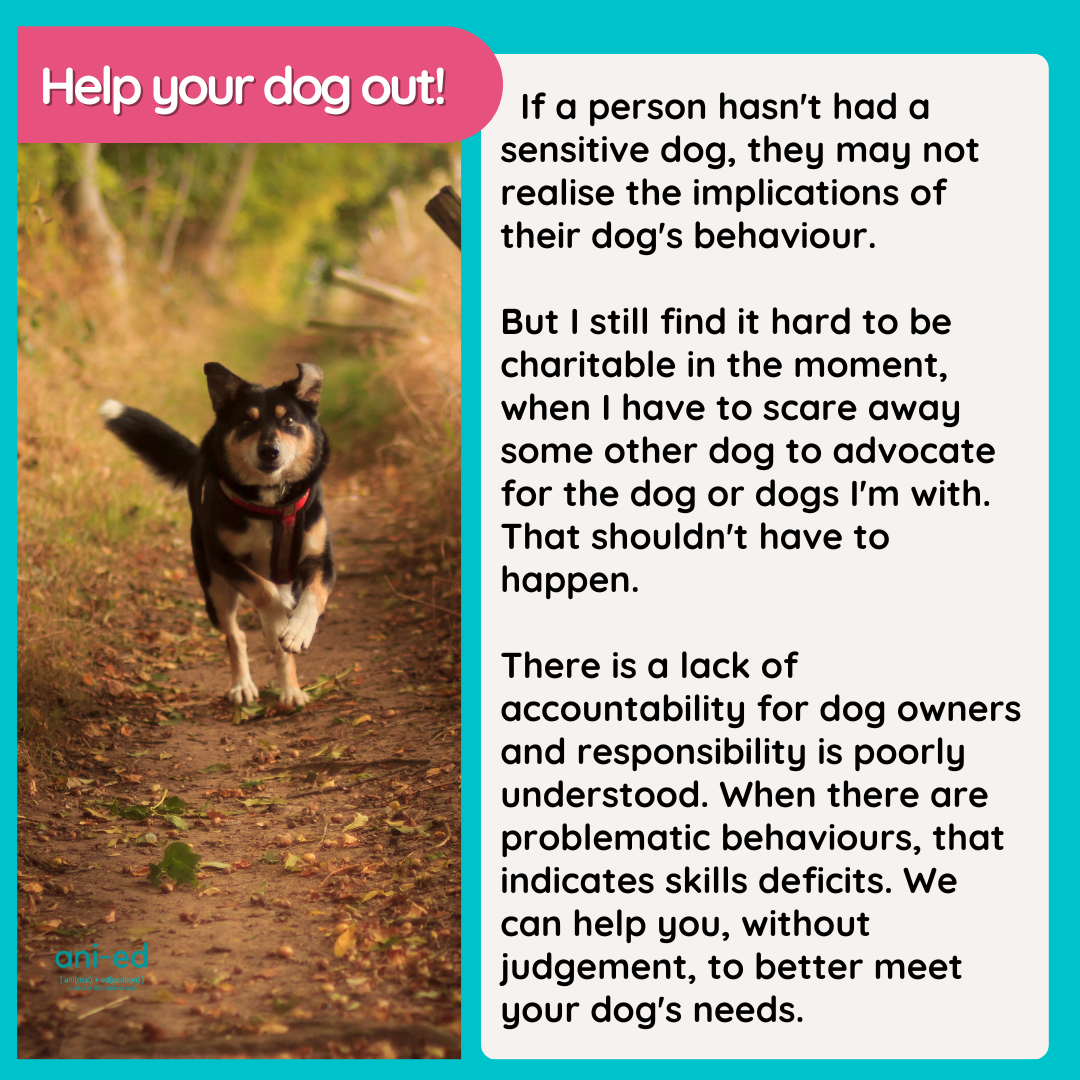
Help your dog out!
Recognise there’s an issue and that your dog’s behaviour is telling you they need extra support & guidance.
Learn to use a long line and think carefully about where you bring your dog to better meet their needs.
Meet your dog’s needs and that shouldn’t include high octane and random interactions.
Get engaged with your dog, get off your phone and have fun together. Be the fun, make the fun happen, nurture your relationship.
Teach your dog that other dogs exist…and that’s no big deal! For puppies, teach them that other dogs are “look, no touch” and teach adolescent & adult dogs that other dogs are none of their business.
Support your dog developing stable friendships with appropriate buddies, rather than random, high-octane and casual interactions.
Go Adventuring! Facilitate lots of sniffing and lots of dog-led fun.
Set up regular and appropriate neutral-dog-meet-ups and/or playdates with well-matched individuals. Provide guidance to nurture their developing social skills.
Get help!
We can help you help your dog in developing more appropriate social skills and in you meeting your dog’s needs, social and otherwise.
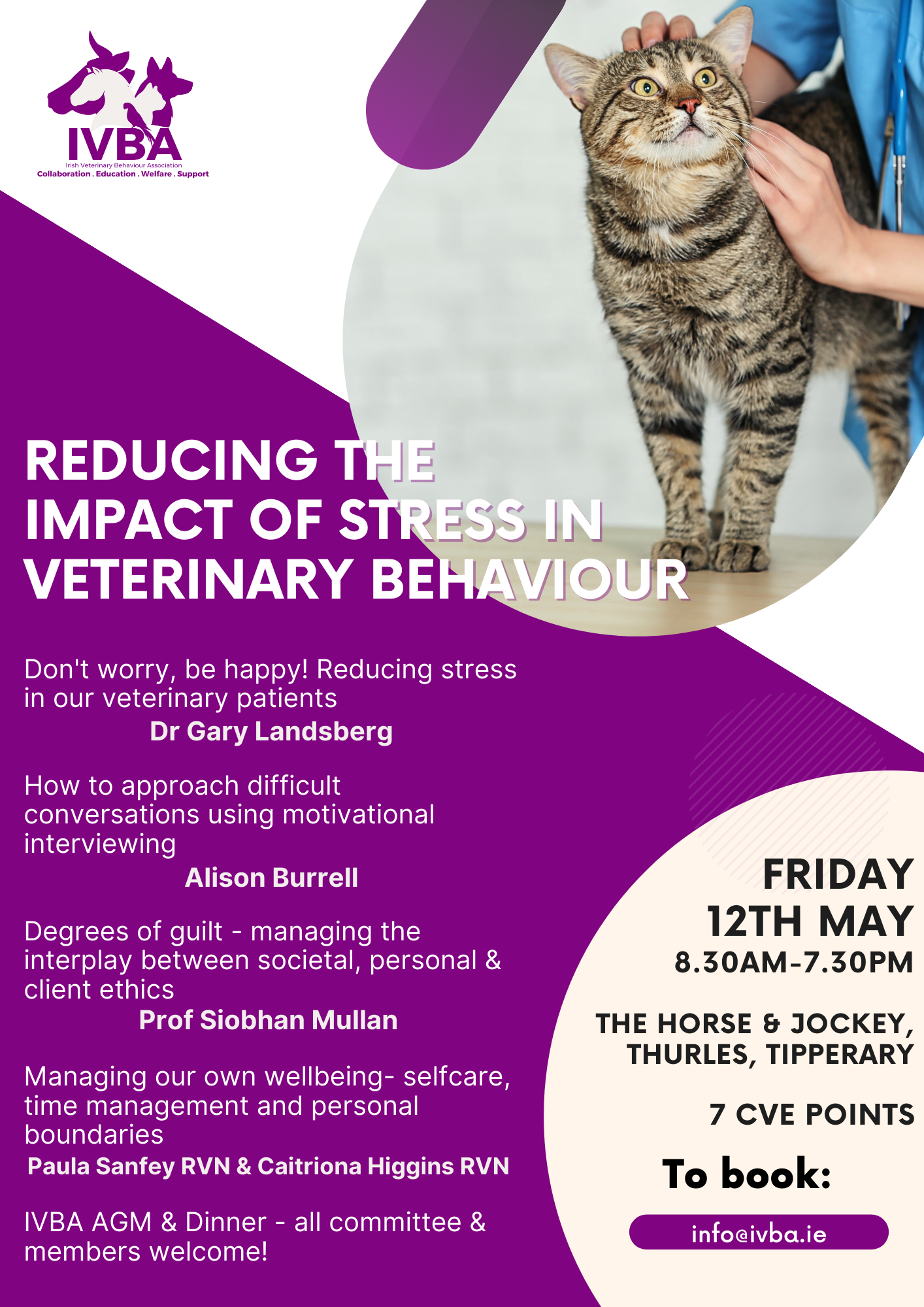
Anne from AniEd is the vice-chair of this exciting and young organisation. We can’t wait for this wonderful event, all about stress!
While we are always concerned about the stress experienced by the animals with whom we work, and we are covering that, but we are also looking at ways to improve our own management of stress in our work.
We have been tricked into thinking that “self-care” means jacuzzies and massage, and while those may certainly form part of your self-care provision, it’s really about your workplace.
Self-care starts with our workplaces; being paid properly, taking out breaks, establishing personal and professional boundaries, improved working conditions, skills and knowledge to cope with stressful situations. We’ve written about this before and really try to live it (here).
And that’s what our CPD day is for! We are exploring the management of stress in our animals, but also stress management skills for ourselves!
This is a great opportunity for all in veterinary and behaviour to come together, network and collaborate on gaining valuable skills relating to stress management.
Download the event brochure here, and share with all those who may be interested.
Promoting IVBA is important for the animals of Ireland and the veterinary and behaviour industries. Help us spread the word!
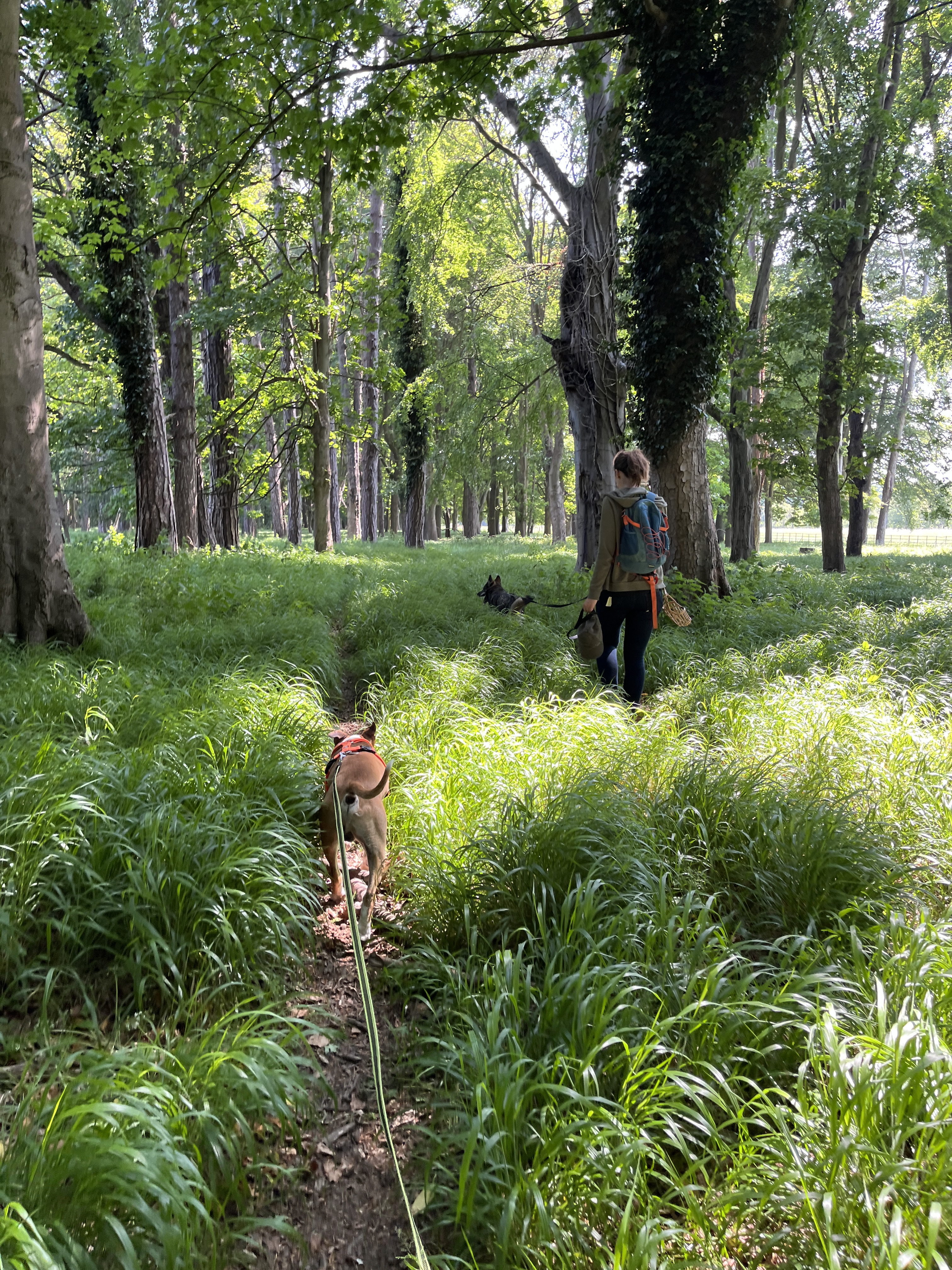
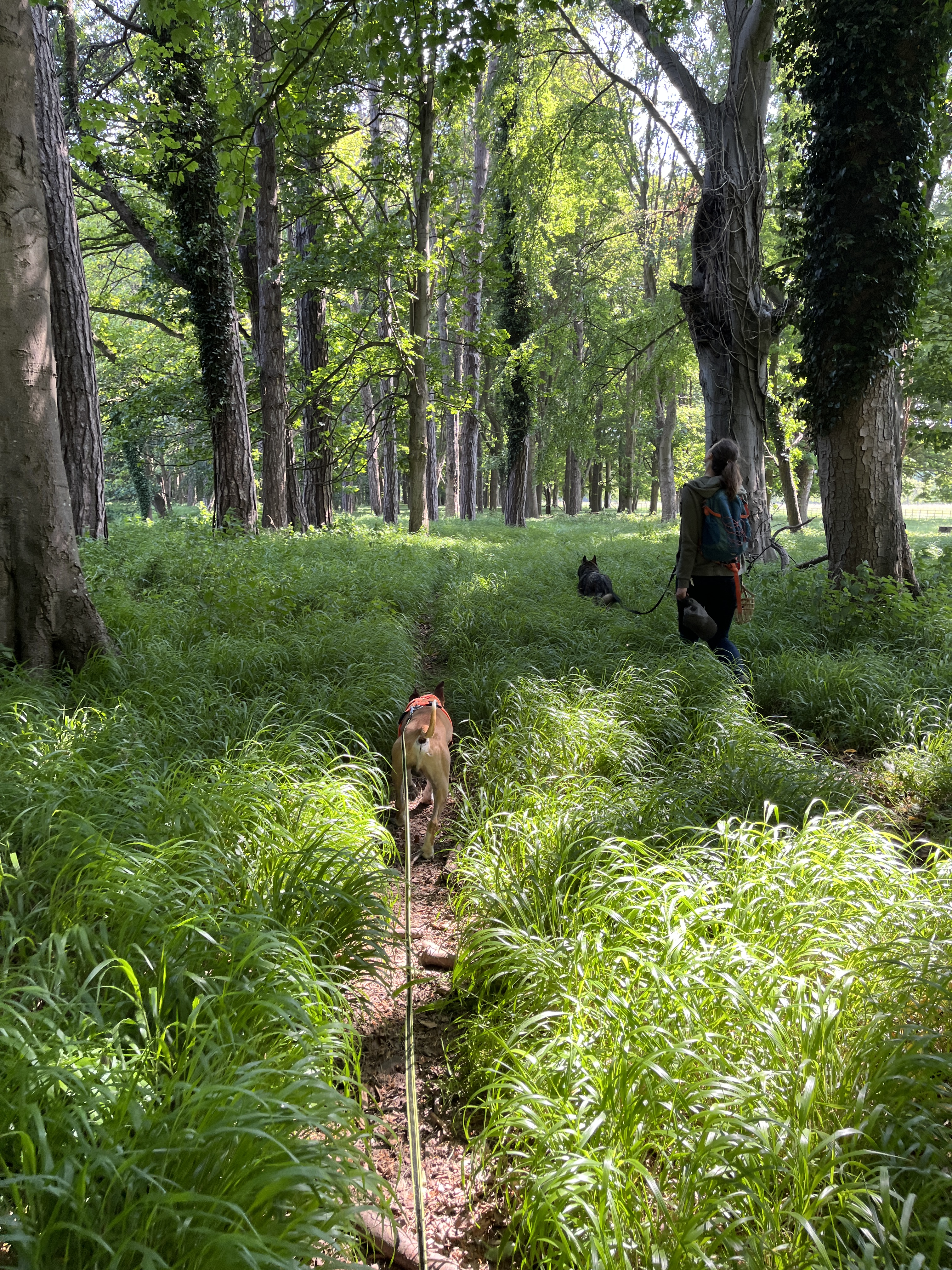
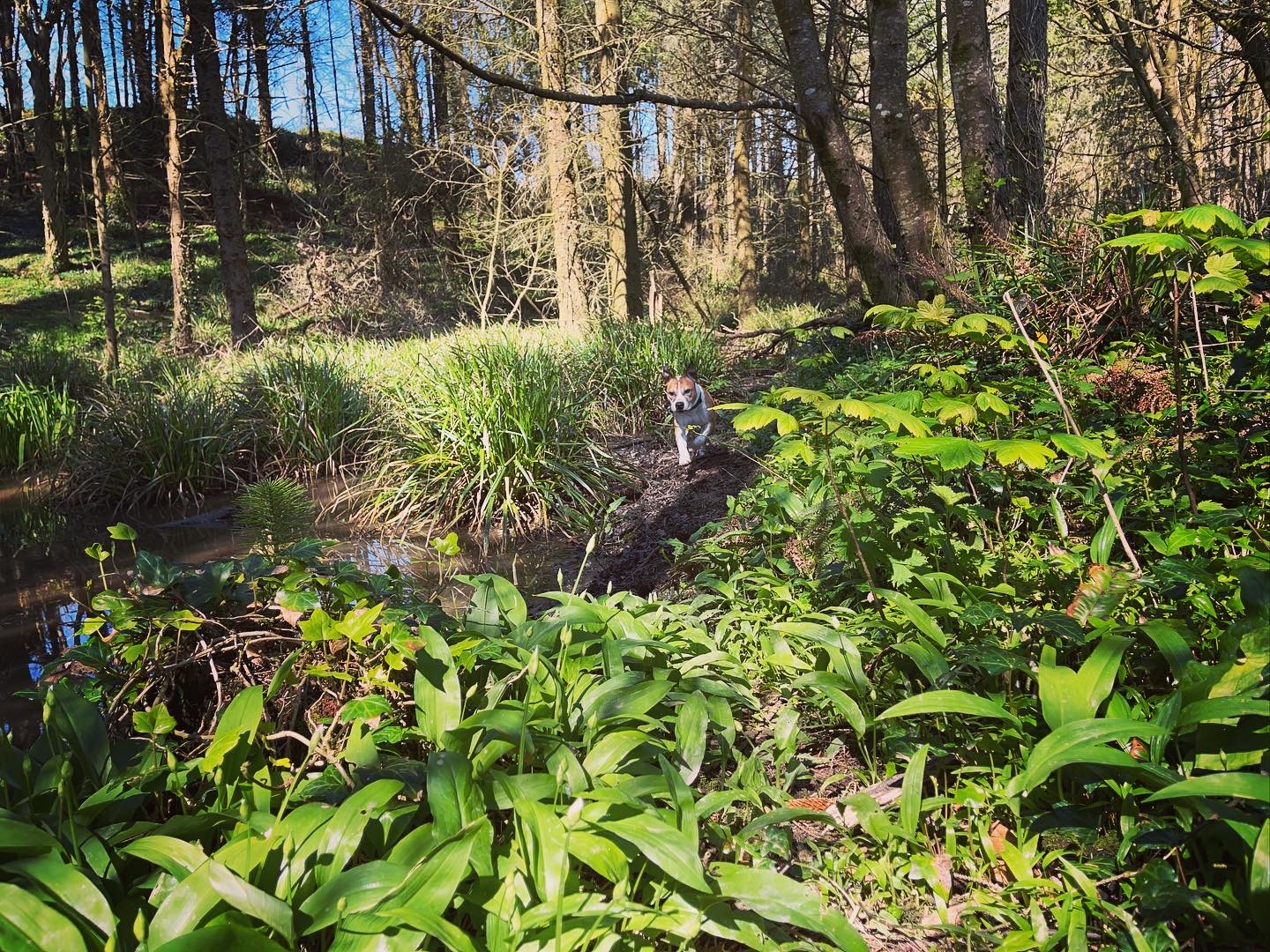
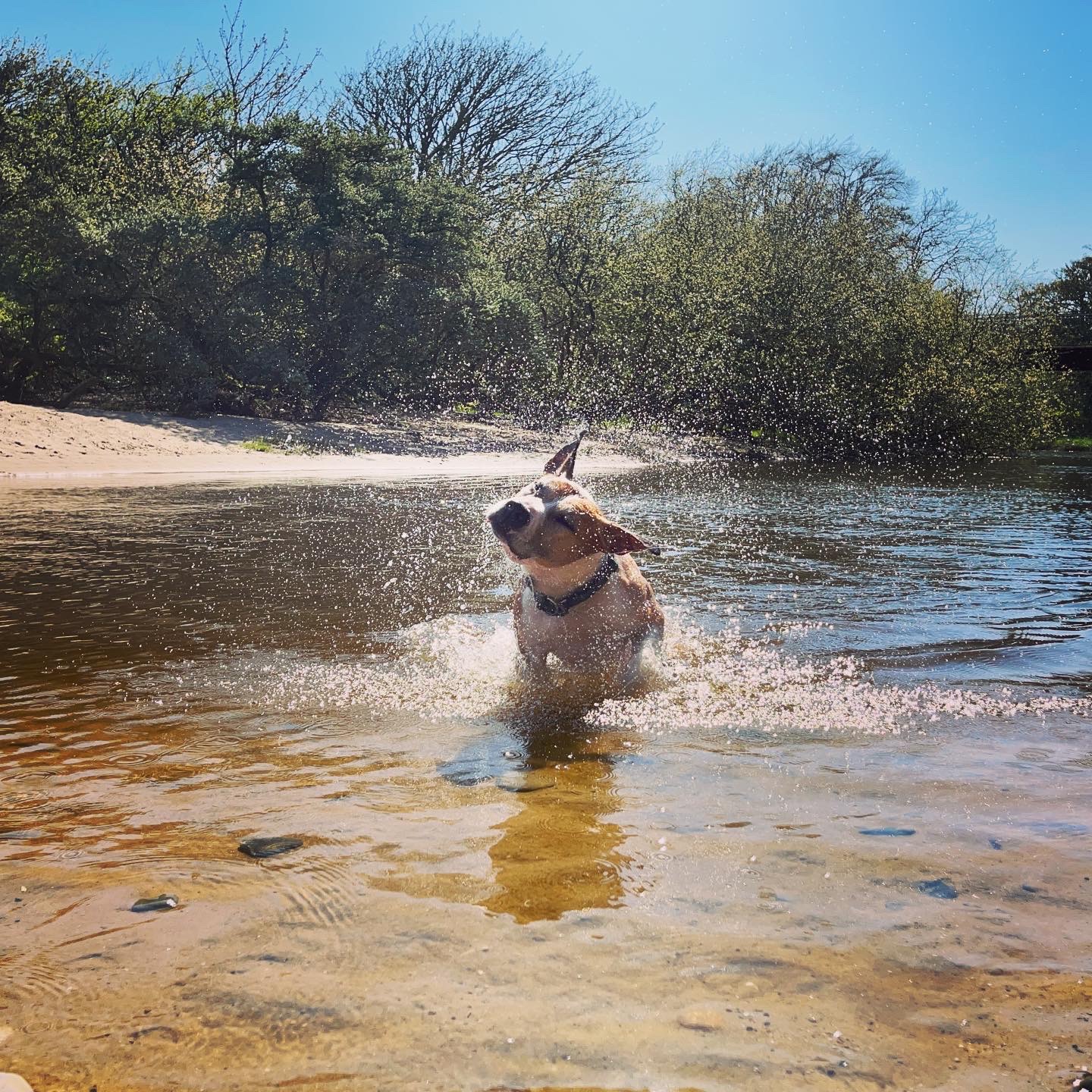
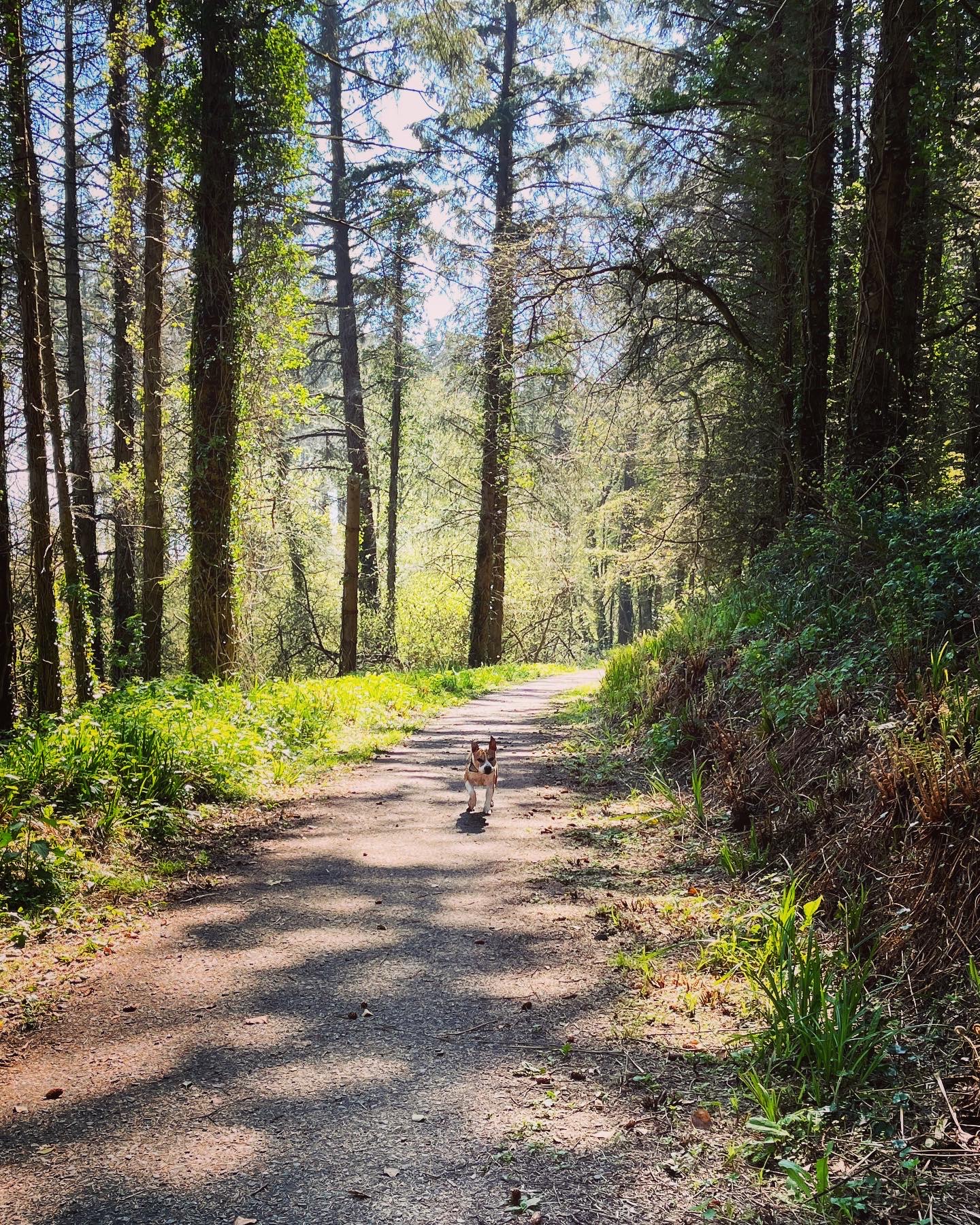
Recently, Deck & I took a detour for some adventuring in a new spot that we had never been to before. We found the beautiful Kiltennel Bay & forest walk, with a beach, lots of forest trails, streams and pond.
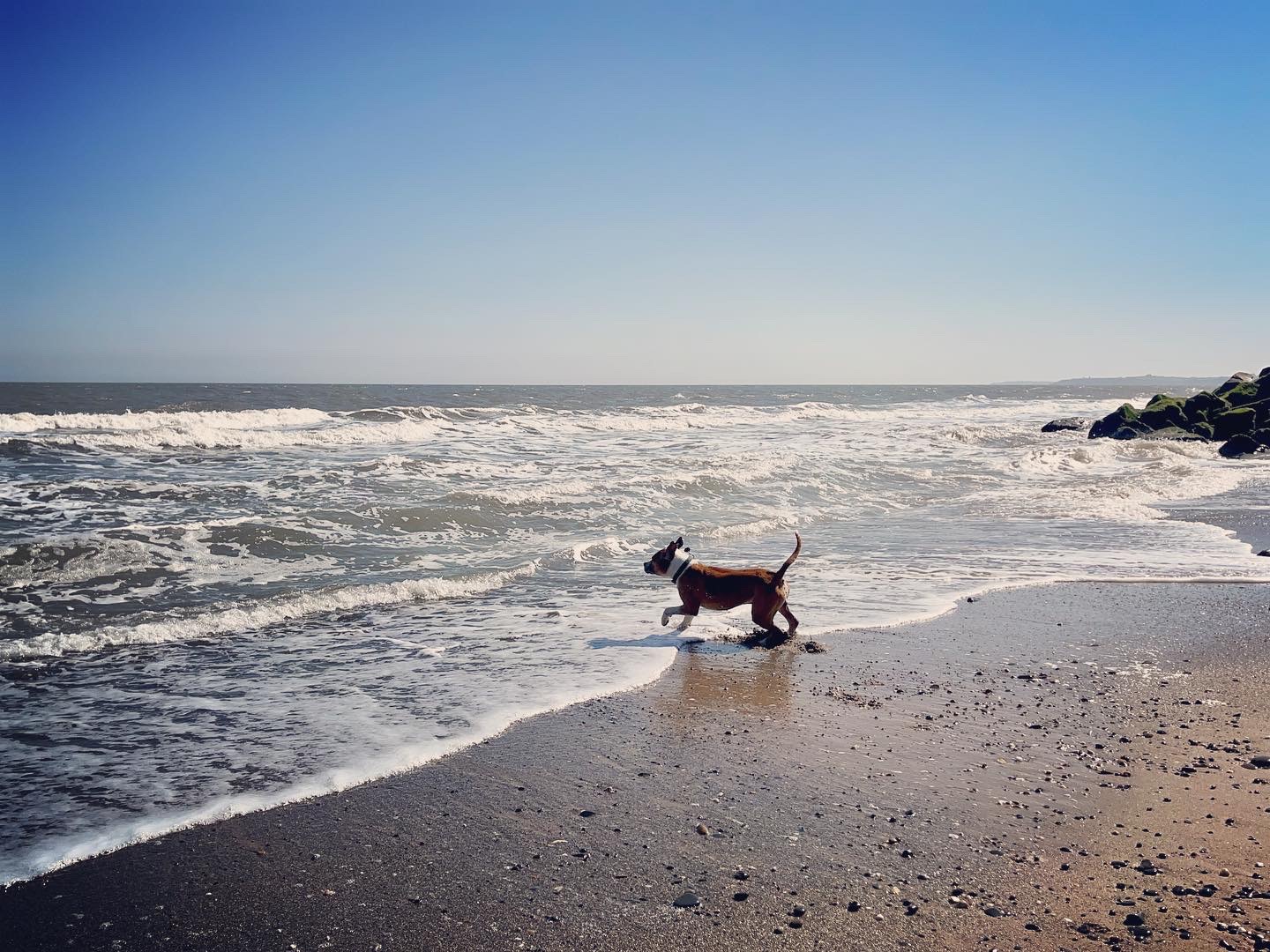
Decker sampling all the surf & turf!
When we go to an unfamiliar place, I take care with Decker’s access to water until we better understand his swimming comfort. And we also take care to get to know the dog walking and handling culture in a new area.
Decker is very environmentally sound and super-neutral with other people, dogs, animals and goings-on, so that’s not really my concern. But I want to advocate for his comfort so that we can maximise our enjoyment of this natural beauty spot. We don’t approach or harass anyone else, and don’t allow anyone else do that to us. We just want to fun in our world together!
As we wandered around for a couple of hours, we met lots of dogs out with their humans. And who could blame them?! Such a wonderful adventuring destination!
When another dog, person or anybody appears, that’s a cue for Decker to return and engage with me.
To help maintain the comfort of others, when another dog appears, he returns and we leash up. And then we politely move aside or make it as easy for the other dog to pass by in peace.
Some of the trails were just a couple of metres wide so making space wasn’t always possible.
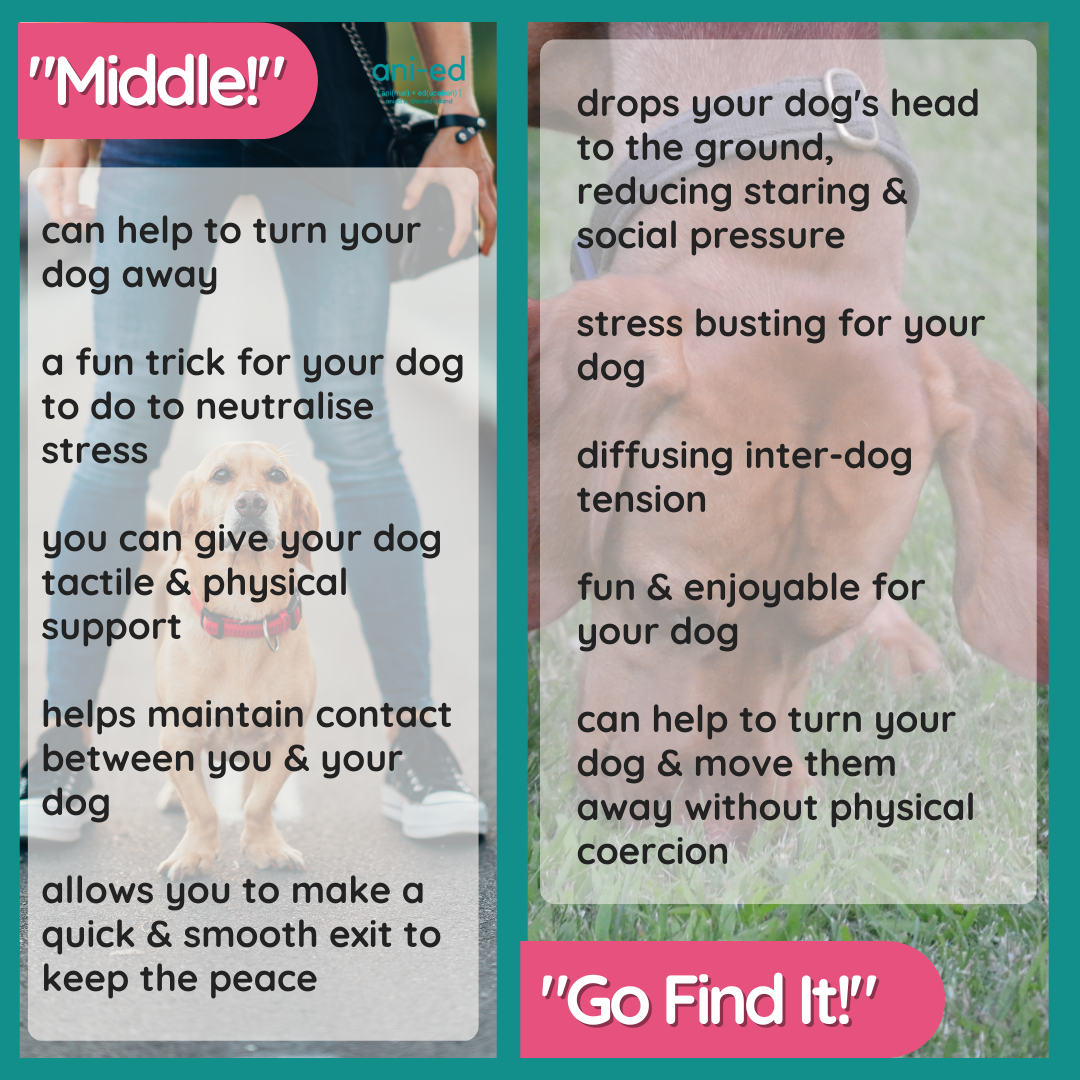
As a group of walkers approached with a little dog, Decker returned to me and they leashed their dog. I cued “Go Find It!” and tossed a couple of treats into the ditch, turning Decker’s back so the dog could pass.
The little dog’s owner commented, in surprise, that her little dog didn’t make a sound. The little dog quietly passed, glancing at Decker’s back end, and their human continued to marvel at her dog’s performance.
I cheered them on and wished them well, and was happy that our polite-dog-routine helped this little dog out.
And we can all help one another out!
By developing some awareness in how we can help one another out, without judgement, we can maintain everyone’s comfort.
Behaviour isn’t “good” or “bad”; behaviour is information from the dog telling us about their experience of the situations to which we expose them.
Judging other pet owners is a go-to in real life and online. But it doesn’t have to be that way. The notion that “there are no bad dogs, just bad owners” is inaccurate and damaging. Dogs, and their people, are responding to environmental conditions and other dog walkers and passersby are part of that too! By changing our own behaviour, and attitudes, toward other dog walkers, we can help everyone experience improved comfort while out and about.
There are lots of ways to help, be polite, and most of all, be kind.
Asking your dog to jump up on a higher surface, such as this ditch can create space for others to pass.
Teach your dog these behaviours when there are no distractions around, so that your dog learns the patterns when they’re most comfortable.
Practicing lots to establish “middle” and “Go Find It!“, and then cueing those games each time a distraction appears, will have your dog orienting to you cued by the appearance of another dog or distractions.
We can be polite even when out without our dogs. Our behaviour can have a big impact on other dogs’ comfort.
With a little compassion and less judgement, plus some behaviour change, we can support and encourage other dog owners. We’re all in this together and, we never know when we might need that same compassion, support & kindness.
As someone who owns a very special and much loved senior dog, the promotion of improved enrichment for seniors is near and dear to my heart.
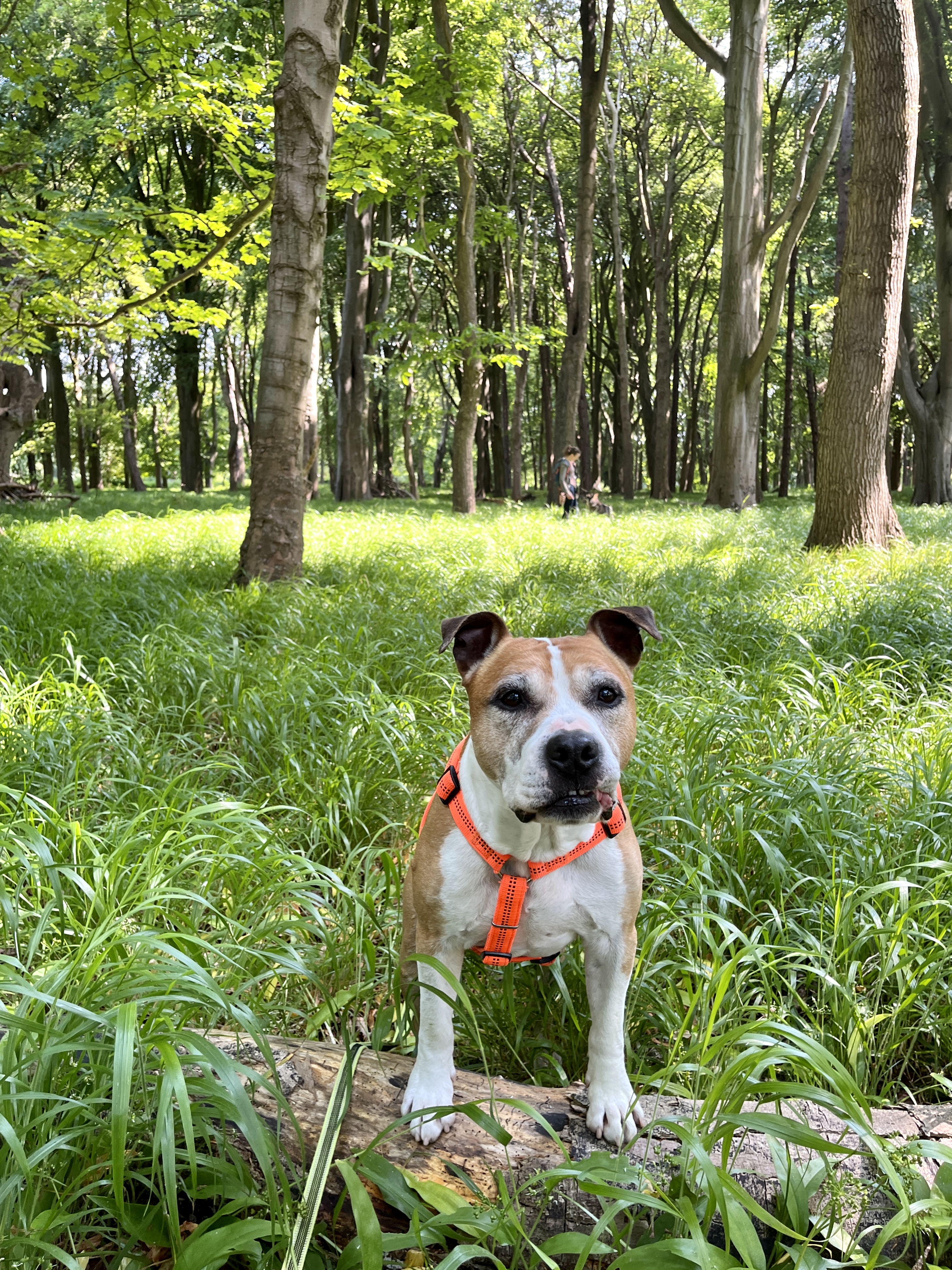
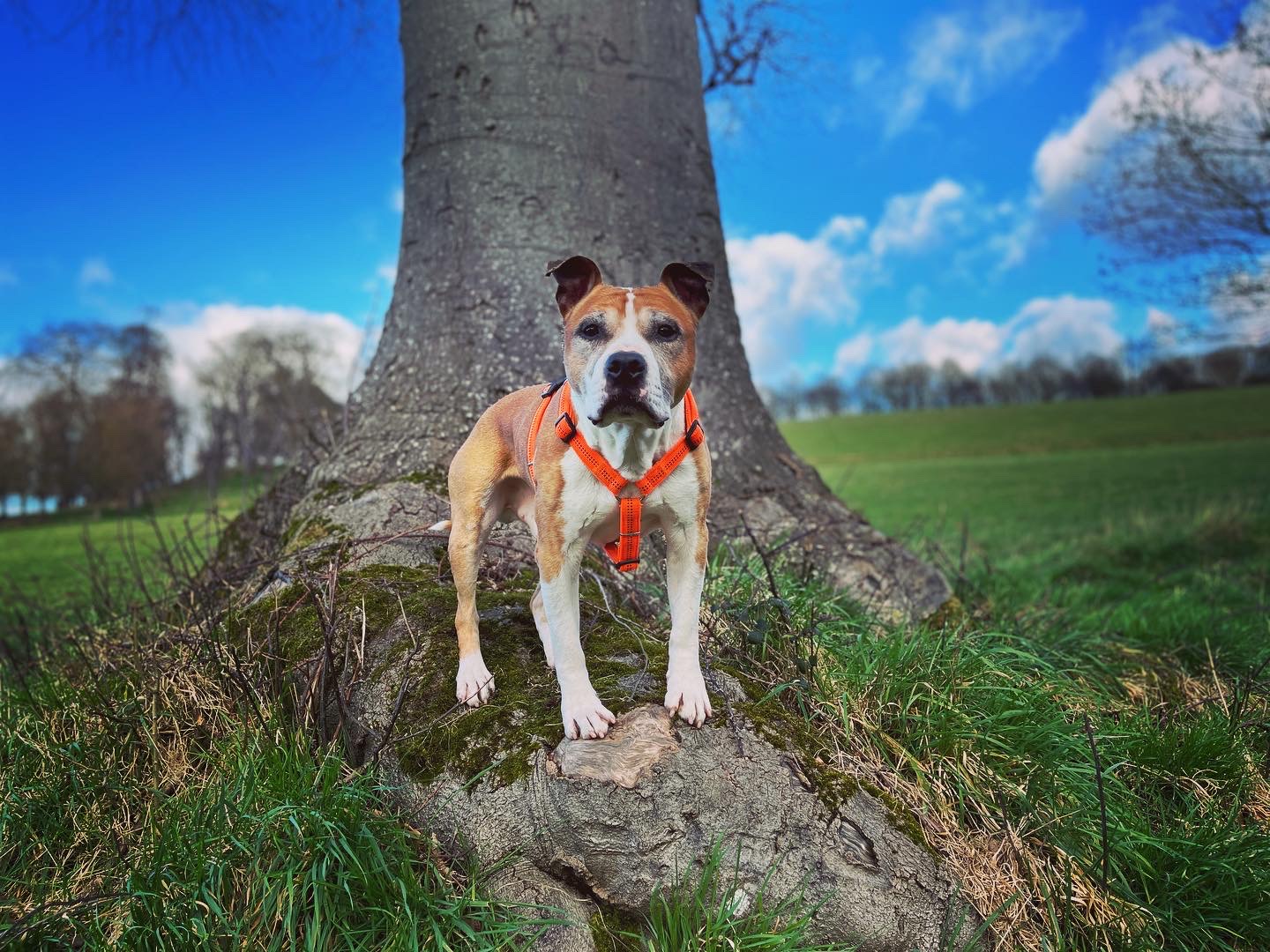
My silly senior. 11 years old, which is pretty old for his breed, but he continues to be nutty…long may that last!
I feel it’s important that we don’t pathologise aging or our aging dogs. While there is certainly discussion as to how far we treat aging as disease, I don’t want my default to helping them be the assumption that they are frail and failing.
The dog’s behaviour is information, including that of our aging dogs.
Aging is a multifactorial process, leading to decline right around the body, it is an individual process, requiring individual interventions.
Just like enrichment.
While dogs appear to be living longer lives, they are still here for a good time, not for a long time. Let’s make it a GOOD time!
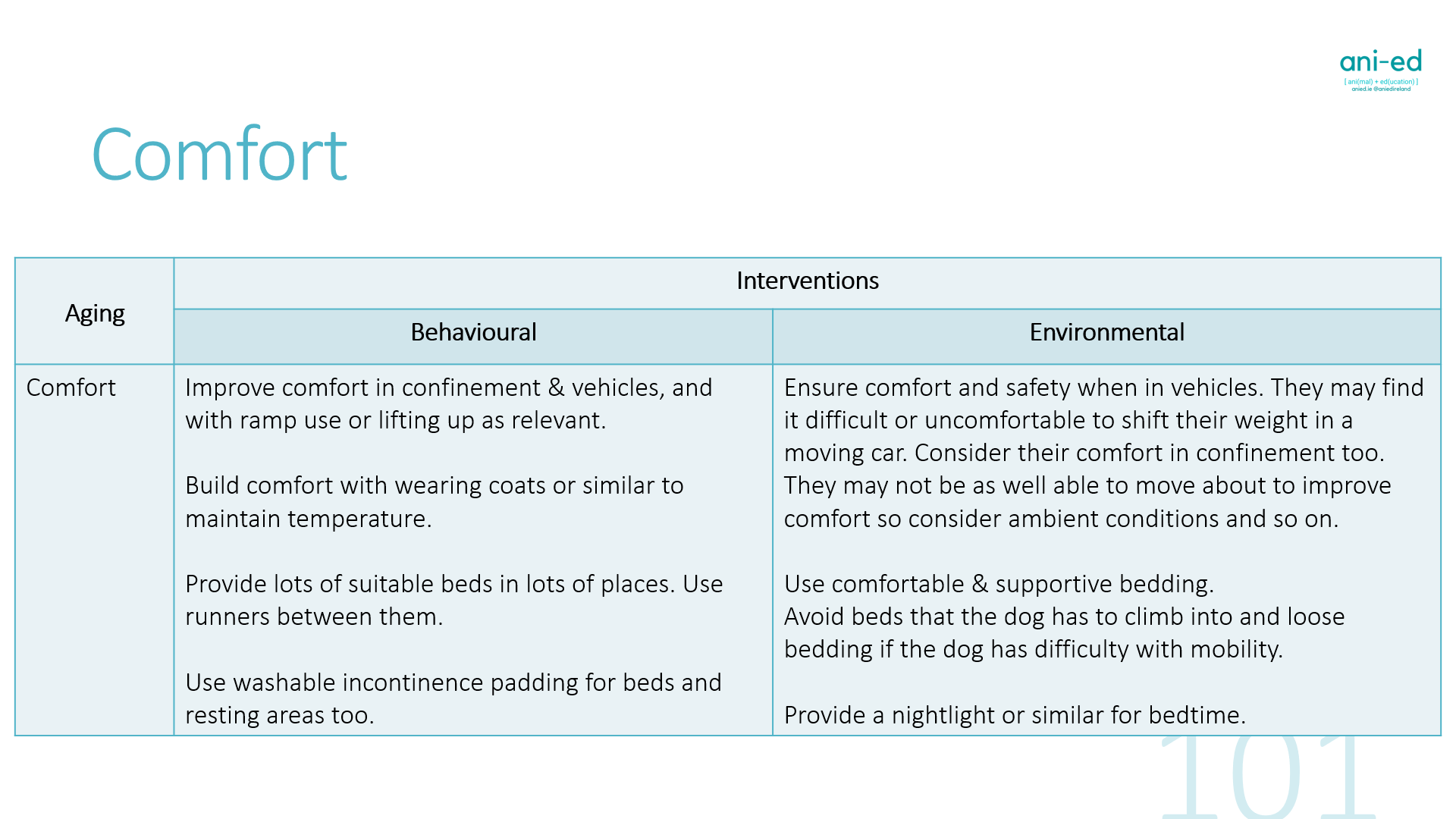
Effects of aging such as the dog slowing down, sleeping more, appearing stiffness, are often normalised. Just because the dog is aging, doesn’t mean they should be in pain or experience discomfort.
It goes without saying that older dogs should be comfortable, living an enriched life, without pain!
Senior Dog Behaviour Matters too!
The current canine lifestage guidelines define senior dogs as those in the last quarter of expected lifespan (Creevy et al, 2019).
Healthspan refers to the period of good health across life. Little is known about maximising canine healthspan.
Pet owners often recognise the common physical signs of aging, such as a greying muzzle, but subtle behaviour changes may be the first indicators of cognitive aging and be more challenging for us to spot (Landsberg et al, 2011).
In research, quantifiable measures of healthspan are not consistently established or applied. Often assessments of liver, brain, heart, muscle, kidney & endocrine organ health, and of cancers, are included.
Cognitive performance, behaviour & QoL must be considered too…right?
Future proofing
While future proofing is important, and often an automatic consideration, for puppies and young dogs, behaviour markers are still relevant to appropriately adjusting conditions to support older dogs.
We can prepare dogs for what’s to come, while also making sure that we don’t age them via our attitudes toward them.
Sensory and cognitive changes occur over life, and declines are particularly associated with aging. Early diagnosis, and appropriate action and treatments, are important to maintaining the QoL for older dogs experiencing cognitive decline.
Keep a diary or log of your senior dog’s daily habits, behaviour and abilities. It’s tricky to spot changes in your dog, with whom you interact and see everyday. Reviewing your log every week or two allows you to make more objective observations.
To help them, we might be implementing plenty of changes according to their current and future needs.
As they age, dogs become increasingly sensitive to change and day to day stressors (Fast et al, 2013).
Providing them with predictability and controllability, while creating change in tiny increments, will allow for better coping.
Develop predictable routines.
This doesn’t mean everything happens at the same time each day, but rather, that sequences of events have predictable outcomes for the dog and they can choose how they interact with that event.
When the dog does behaviour, there are predictable outcomes. Their behaviour matters and they have some control over what happens to them.
Feeling helpless and out of control may be experienced by aging humans, their behaviour becoming less meaningful often as result of good intentions on the parts of others (Minichiello et al, 2000) (Salarvand et al, 2007).
Along with changes we might be making, seniors dogs often experience changes that might impact daily routines.
For example, toileting routines. Older dogs may need more regular toileting opportunities. Make toileting more accessible and safe. Monitor them carefully so that you can get them out efficiently.
For example, change to eating patterns. Feed smaller and more frequent meals, warm food and choose food dispensers that allow for the dog to comfortably pick up food. Older dogs might require more palatable food so choosing softer feed might more yummier and more comfortable to eat.
Think “puppy proofing”, but for seniors.
Audit your car, home and garden, and consider places you take your dog, for accessibility and safety.
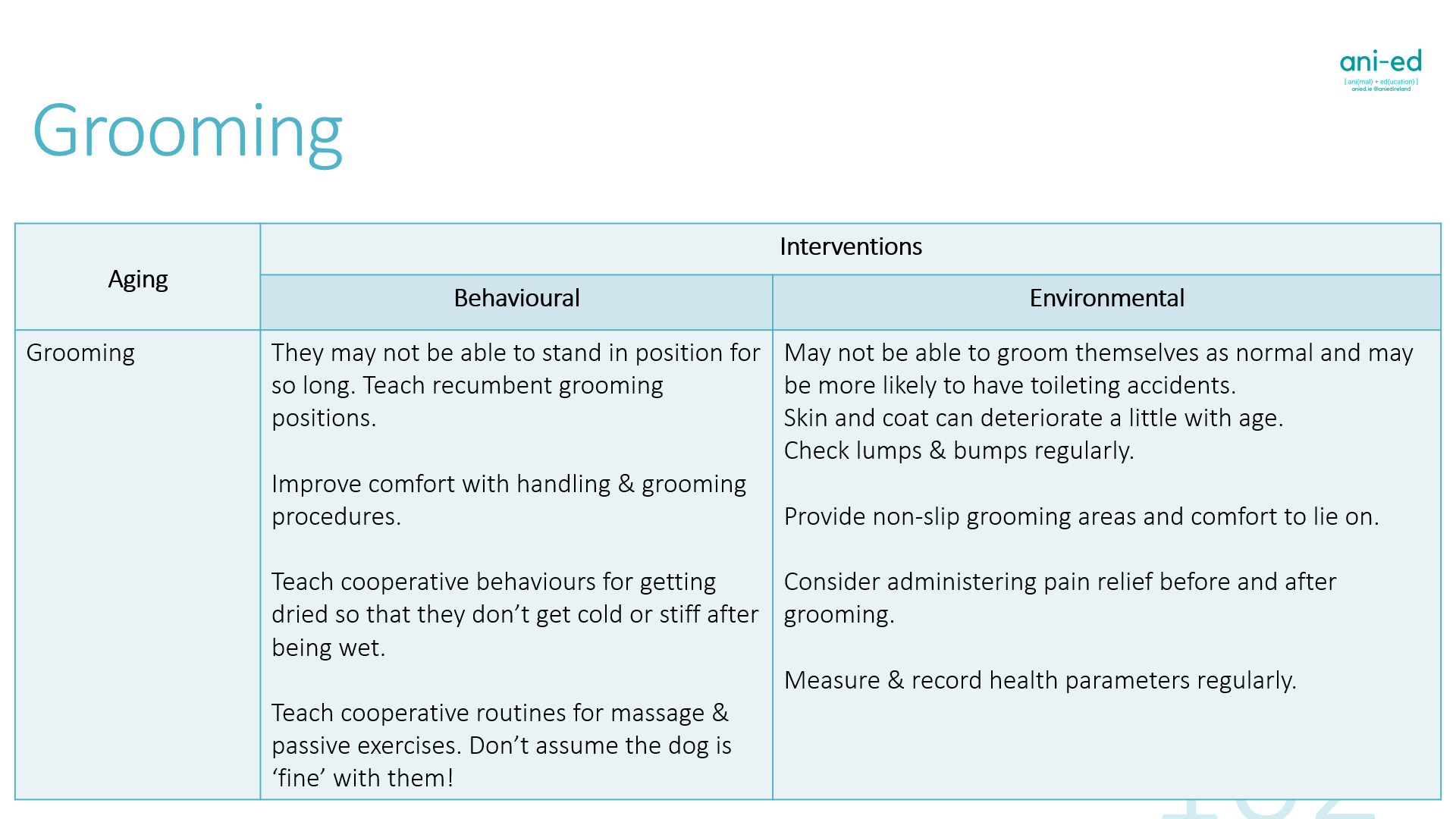
(These images are screengrabs from our webinar on senior dog support, for training/behaviour pros.)
Senior dogs need more, not less
Senior dogs are often presumed to not do so much, to be lower maintenance, and to not need a lot of walks.
Enrichment provision, for any and all dogs, must be so much more than mere walks, and indeed may not include walks at all. So even if walks need to be adjusted, that doesn’t mean we’re off the hook!
Because pet owners often report their senior dogs sleep more, they believe less exercise, interaction and enrichment is required. Not true!
Aging certainly leads to changes to sleep/wake cycles, with senior dogs sleeping more during the day. They tend to wake more over night and wake earlier in the morning (Takeuchi & Harada 2002).
Indeed none of this means they need less of anything…there now needs to be more consideration for making sure they have good sleep, and that all the components to good sleep are provided appropriately.
Senior dogs need more consideration for enriched sleeping & resting.
Consider more choices for resting and sleeping locations, for bedding, and for comfort. They benefit from clear bedtime routines.
Facilitating safe and comfortable resting spots close to their humans during day to day routines helps with relationship building and comfortable resting.
Many older dogs may seek distance and seclusion, so provide comfortable & enriched choices for them.
Make observations about your senior’s resting choices and then provide an array of suitable options.
Senior dogs require more emotional support and assurance.
Provide seniors with more social interaction according to their preferences. That doesn’t mean that we coerce dogs into interacting…it means we be with them as they like it.
Talk to them more, hang out close to them more, bring them more places, do more things with them and close to them. All according to their comfort.
Aging dogs must have more appropriate challenge & enrichment in their lives!
They need more to maintain and improve their physical and cognitive health.
100 Days of Enrichment is absolutely suitable for aging dogs…for all dogs! Adjustments are individual, not age related.
Think about some of the behavioural and cognitive changes we might expect as dogs age and adjust challenges according to each individual.
More sniffing for seniors!
Aging coincides with cognitive and sensory decline. Olfaction tends to be the least and last affected, so sniffing can facilitate cognitive work-outs and encourage exploration into old age.
Cognitive decline, more so than age, is associated with reductions in exploratory behaviour (Rosado et al, 2012).
That’s why sniffing is a lifeblood for seniors.
Teach them sniffing games and make sniffing happen every day, many times a day.
It doesn’t need to be elaborate or complex. Here I simply toss food rewards into long grass for Ollie (from A Dog’s Life) to snuffle.
Dogs are not too old to learn and be taught. But adjustments to how we teach them and what we teach them will be necessary…the dog’s behaviour is information (no matter their age!).
They might need more reps and finer splitting of criteria…ya know…better teaching from us….
Dogs may become less efficient at responding to cues that are delivered by sound or sight, and might find it hard to locate reinforcers on the ground, closer or further away.
This is no big deal, it just means we have to adapt and be better teachers.
Keep ’em lean!
Weight management is one of the most effective factors in mitigating age related changes and effects on health.
Obesity compounds aging in dogs, presenting as a form of accelerated aging (Tam et al, 2020). Being overweight shortens the life of dogs because it causes the production of many of the same metabolic abnormalities associated with age (Salt et al, 2018).
Caloric restriction, ideally through life, and maintaining healthy body condition extends lifespan and healthspan for dogs (Lawler et al, 2007) and other species too (Kaeberlein 2015). Maybe even giving us about two years more with our dogs (Kealy et al, 2002) (Lawler et al, 2008)…now that’s priceless!
Keep ’em moving!
Appropriate physical exercise slows body damage due to aging by influencing metabolic dysfunction (Gremeaux et al, 2012). It helps to maintain lean mass, strengthen and tone, and provide behavioural outlets.
Aging dogs require physical exercise (Pop et al, 2010) appropriate to their health.
As for all dogs, their responses and behaviour are information about what they need. Recognise the effects of physical exercise and adjust accordingly.
Consider adding supportive physical therapies to the aging dogs’ routine too. I recommend Canine Conditioning Coach, and she has an excellent senior program.
Pet Owners Need Support too!
Many challenges affecting the human-dog relationship are presented as humans and dogs age.
Culturally, we have funny attitudes to aging. The relative rapidity with which dogs age not only provides us with an understanding of aging, but reminds us of what lies ahead for ourselves!
Senior dogs show greying hair, loss of body condition, reductions in activity and changes in attitude to their world. They may show increases and changes to vocalising behaviour, toileting, appetite and may appear confused at times.
These changes, and the rest, can exert considerable pressure on the human-canine relationship, leading to significant requirements in terms of emotional and financial resources on the part of owners.
Monitor your senior pet’s health & behaviour. CAM provides a useful guide to monitor changes here; although relevant to OA, is also useful in monitoring other age related changes.
For a further understanding of the impacts of age on the human-canine relationship, McCune & Promislow, 2021, provide a lovely overview of mutual aging among our species’.
“Care-giver burden” has been identified in owners of dogs with chronic illnesses, using models designed for human patients and their carers, (Spitznagel et al, 2019) (Spitznagel et al, 2019) (Spitznagel et al, 2017) as the strain or load borne by carers of aged and/or chronically ill loved ones.
Maximising healthy aging in dogs is not just good for dogs, but also contributes to improved quality of life for their humans.
Why sniffing?
Sniffing ticks so many boxes for dogs and they already do it really really well. We don’t have to teach them to sniff, or teach them to life it. It’s kinda their thing!
We might need some adjustments to make sure it works for the individual, but we’re doing that for dogs of all ages anyway.
Here we have sniffing and snuffling on some soft, non-slip blankets for senior, Benny:
“We don’t stop playing because we grow old; we grow old because we stop playing.”
— George Bernard Shaw
Keep ’em young
Aging is inevitable. But how they age, doesn’t have to be. Keeping them active, lean, challenged and their world enriched helps to keep them young.
Don’t get caught in pathologising their age, or mourning for times gone by. Start increasing sniffing games and opportunities today. Add more not less for your senior.
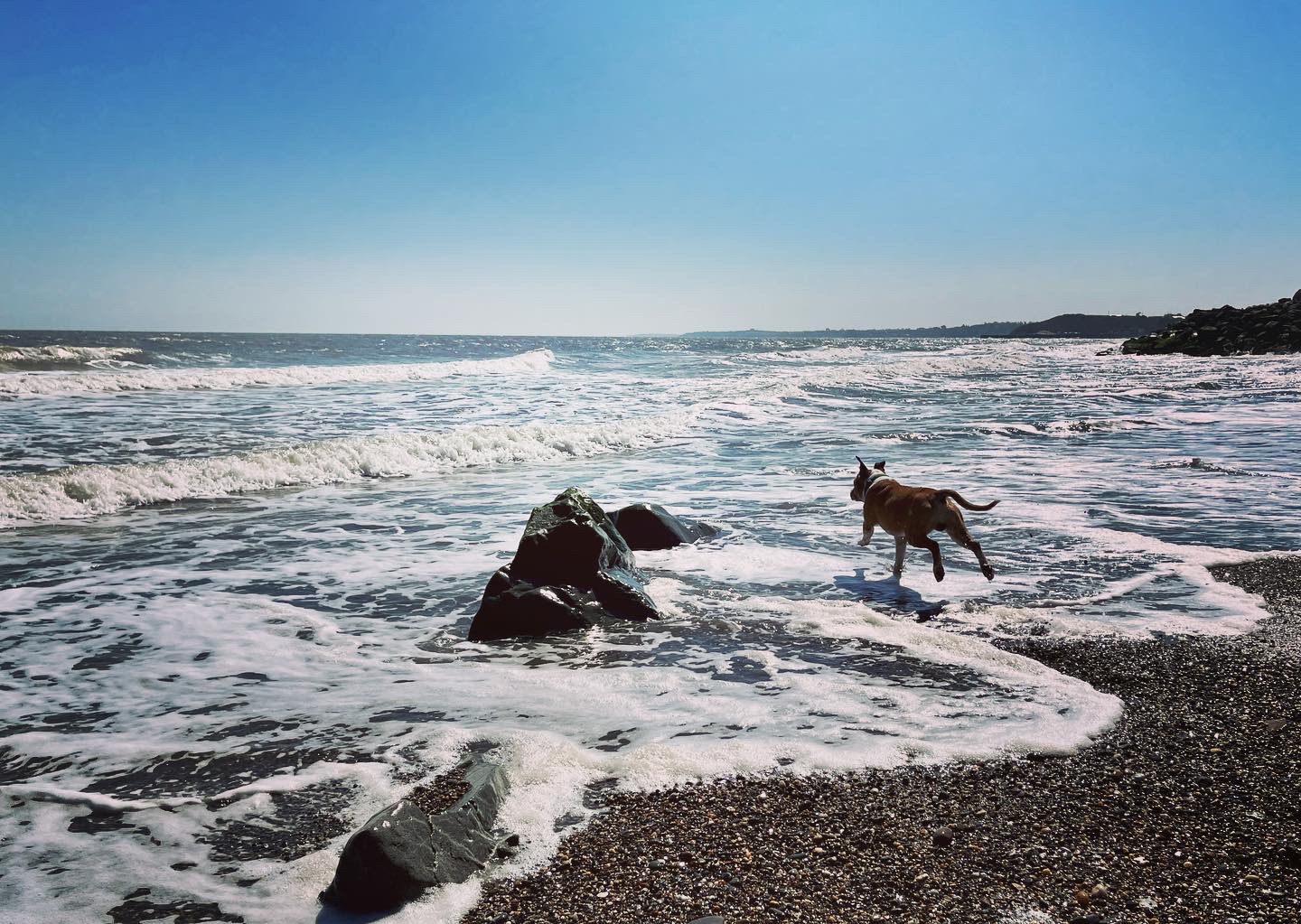
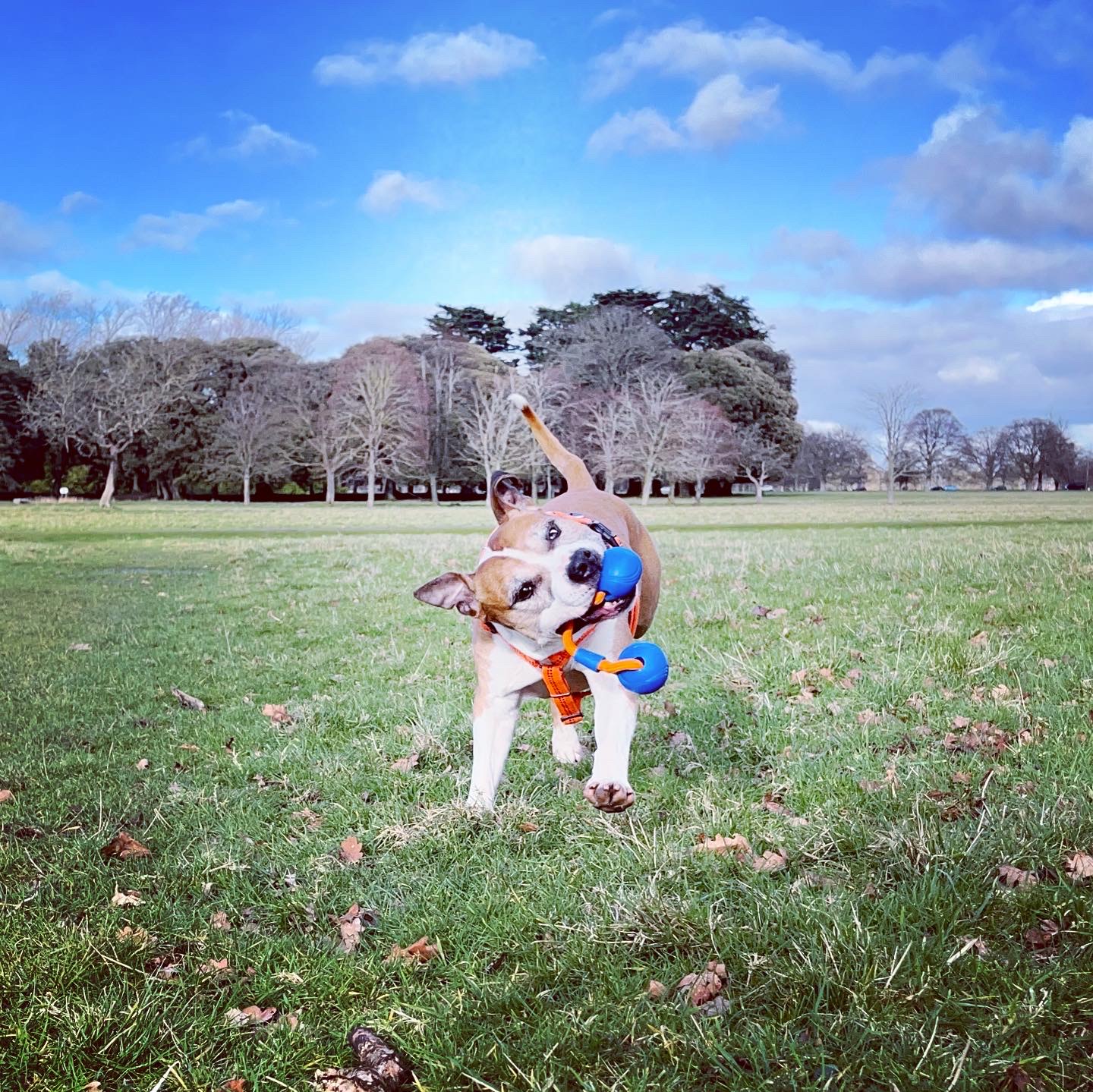
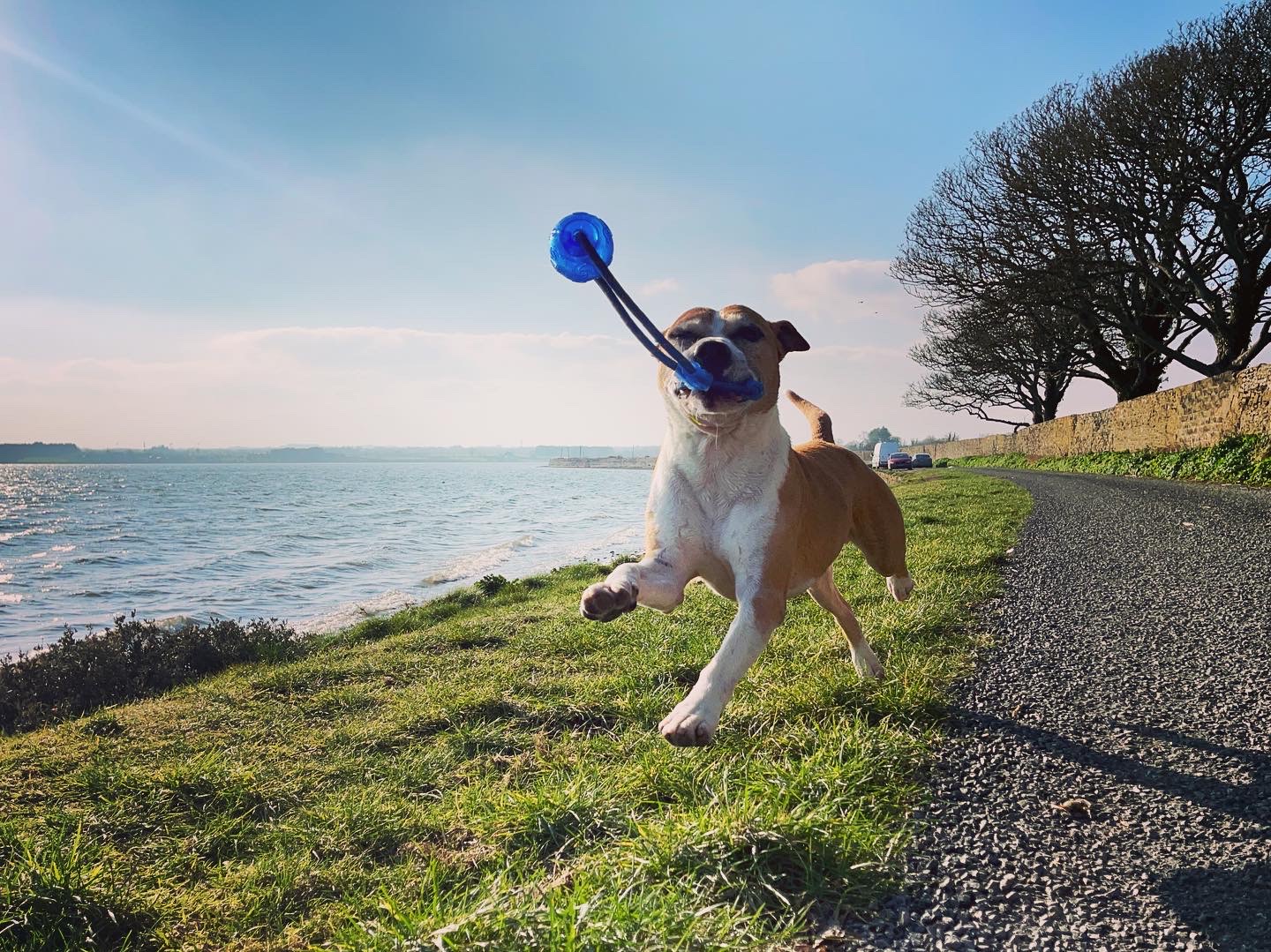
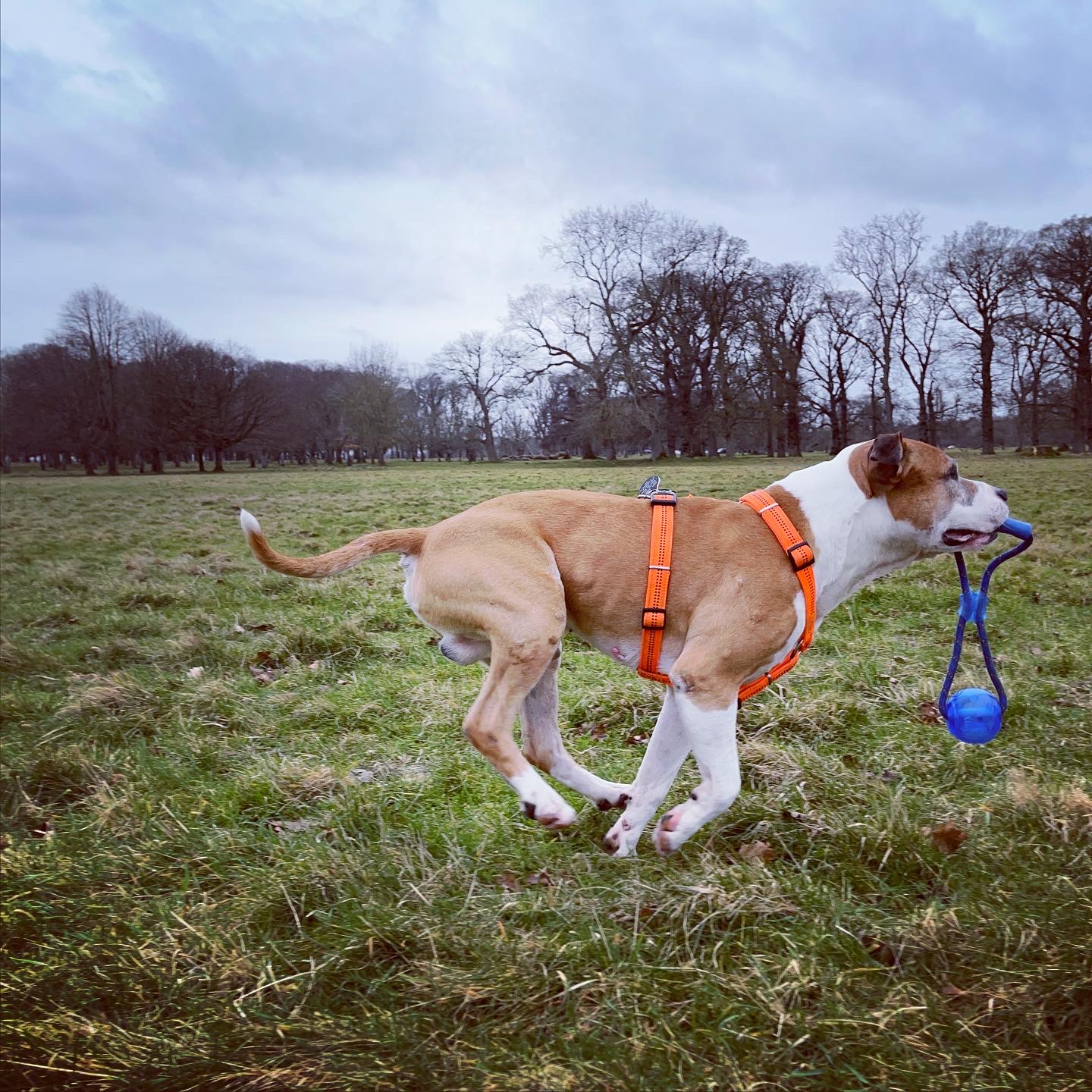
Almost all the photos in this post, of Decker, are since his 11th birthday and all the rest are since he was 10.5. Am Staffs are not long lived (average 10-12yo) so I’m conscious we are living on borrowed time. He remains very active; hiking off leash for 6-10km 3-5 times a week and swimming 30-60 mins in the ocean 3-5 times a week. He busted his cruciate in a traumatic injury when he was nine, then suffered intussusception & impaction soon after so has never recovered his original fitness or condition, likely due to age. So while he’s fit for his age, he probably would have been better without that drama. I am making sure he lives every day to the fullest so if today is his last day, it was such a good day, filled with all his absolute favourites and absolutely no regreats.

























 . I am a proud user of food, as reinforcers and otherwise, in a lot of my teaching and interactions with others. But sometimes, it can feel more effective to downplay food use, at least a little, in some contexts when attempting to get our message across.
























 AniEd Ireland