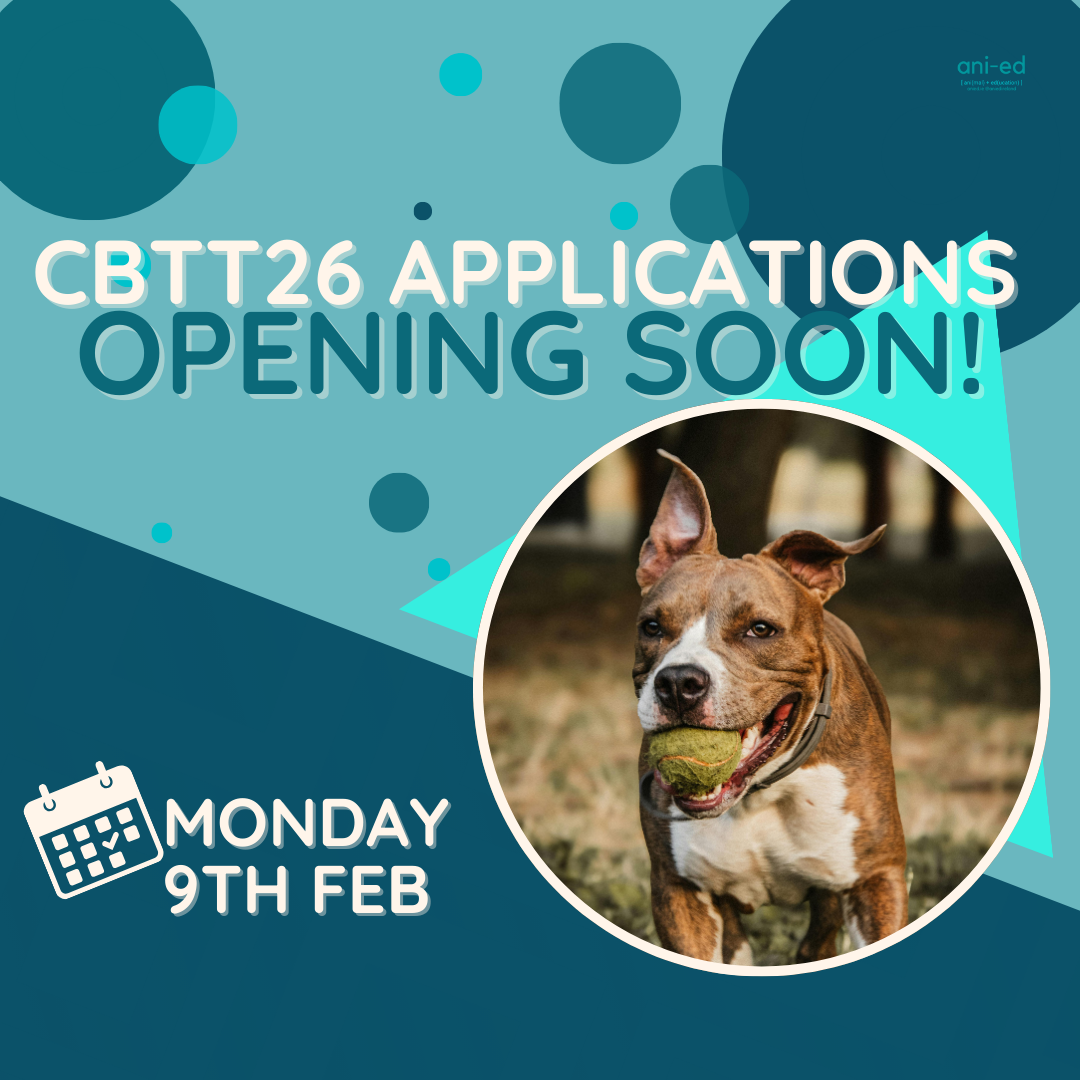
After several years, we finally opened up applications in early 2025 and we were overwhelmed with the response. There were well over 100 people on the interest-list and almost one hundred people applied. We have just 5-10 places available and at this time, have not planned for Y1 applications opening again until early 2028.
If you’re thinking about applying, now is the time to get started.
We see lots of puppies and we want to see more puppies, and we want to see them earlier.
Waiting for your puppy to be finished his or her vaccinations or waiting until the nipping and the accidents and the chewing are driving you bonkers is too late to start your puppy’s education.
Book a puppy-session NOW and make sure that everyone gets off on the right paw!
What happens during a puppy session?
We talk about all the things that you can start to put in place so that puppy raising is easier and your puppy becomes a great, easy to live with, companion dog.
1. Social Experience
Not only must puppies know how to be dogs, but they must also know how to fit into human society – and that’s tough!
We emphasise:
socialisation is not about your puppy learning to greet, play with and love everyone
socialisation is about your puppy learning that other people, dogs, animals and related goings-on are so normal that they’re not even worth getting worked up about
socialisation is about ensuring puppy has mostly positive experiences in social interactions
socialisation is about puppy learning how to behave appropriately in social situations
We will teach you how to teach your dog to greet politely, to manage their excitement and to teach others how to greet your puppy appropriately so your puppy doesn’t become over-whelmed, and learns that social greetings are positive, enjoyable and safe.
How to use your hand-link-a-Kong to teach all this:
Teach puppy that people approaching makes a treat appear so that puppy learns that approaching humans are safe and so that puppy learns to focus on their own people when someone else is approaching:
Off leash puppy activities must never be a free-for-all!
2. Exposure & Experience
The world is a new, exciting and often scary place for puppies. As their new guide to the human-world, in which they will live, we want to gently and carefully expose them to all the things we want them to be able to cope with later on.
Think of the dog you want in two years time…you are preparing for that NOW!
We emphasise:
bring your puppy everywhere you go – you can carry him, have him in the car
set up a couple of odd things everyday, in a new place in and around the house for puppy to explore
Remember, when you start walking your puppy out and about, increase the size of their world very gradually (from the house to the street on the first day is plenty, and around local streets is lots for the first week) and take your time, stop with puppy and allow them to explore in their on time.
3. Mental Exercise
Puppies are active and inquisitive so let’s channel that energy, so it doesn’t become a people-problem and so that puppy is an active learner and problem solver.
We emphasise:
no food bowls for puppies!
training puppy throughout the day, working for their regular food
All puppies do it, and most people are bothered by it.
Puppy nipping is important for puppies though so we put exercises in place to make sure puppies have an acceptable outlet for this behaviour, but preventing it from becoming to much trouble for people.
There are different schools of thought on this and lots of diverse advice.
We emphasise:
keeping interactions with puppy brief and low-key so puppy doesn’t become over-excited (they will often express that with mouthing and nipping)
making sure puppy has lots of down-time, settling and sleep (over tired puppies are like over tired toddlers…)
diverting puppy behaviour and using treats & toys so that we don’t need to restrain, physically manipulate or position puppy
redirecting teeth onto suitable toys
yelping and withdrawing for 5-10-count if we feel hard teeth
moving away from puppy 20-count timeout if they turn into a landshark
teaching puppies the rules of play with people
making sure puppies have lots of opportunities to play bitey-face games with other appropriate dogs
You already know all the behaviours that puppy is going to do that you are not going to like – squealing when left alone, chewing your belongings, toileting in the wrong places, and that’s just for starters.
So, if you know they’re going to bother you, why are you allowing them to happen?! Prevention is key.
Never allow puppy to practice unwanted behaviour so that they never learn to establish unwanted behaviours.
We emphasise:
night-time training so puppy never develops distress at separation (prevents sleepless nights too!)
This is lazy training, and really effective too! Puppy isn’t doing the wrong things all the time so catch him doing the right behaviour and reward that with food rewards, toys, play, attention or access to things he wants.
We emphasise:
rewarding puppy any time you notice he’s quiet, he has four paws on the floor, he’s keeping the leash loose and he’s showing calm focus
It’s normal, natural, necessary dog behaviour (humans do it too!) so let’s set up our puppies so that they never feel the need to make people go away from them, when they have stuff.
We emphasise:
making sure puppies have their own place where they can eat, chew, play and hangout undisturbed
puppies learn that when they have stuff and people come near, awesome things happen
Puppies and dogs will be handled, sometimes in invasive ways, throughout their lives. Remember, anything we want in our dog in two years time, we need to start working on right now!
Decker earns his meal by catching it, chasing it and sniffing it, and although this is certainly lots of fun, he’s also learning lots, such as, to choose his human over all the stuff in the park like dogs, other people, wildlife, smells and goings on, that his human is where the fun is, responsiveness is rewarding even when distracted and excited and boring kibble can be great!
Don’t waste these opportunities by feeding from a bowl – think of every mouthful of food for your dog as an opportunity to reward desirable behaviour. And if you do that, your dog will choose unwanted behaviour less.
Don’t worry if you don’t feed kibble, you can still inject fun/training/exercise/focus into meal times!
(Depending on which components you feed here are some ideas that I have used in such situations)
freezing raw e.g. minces into nuggets in an ice-cube tray and hiding those
using a high quality/grain free kibble
drying dietary components to make jerky – works especially well for offal components
the use of freeze dried treats with a high meat content may be counted toward diet
bone or whole organ components can be used in scent games
stuff Kongs or similar with minces or soften components and bring on walks or use as rewards in training, by offering a couple of licks for example
Fun, focus, exercise and training packed into just one meal!
For more on making ‘boring’ rewards more rewarding here.
This is not an exciting clip. This is just a couple of minutes of Decker on a walk, with minimal cues given so as to allow him dictate the activity as much as possible.
Link
Watch his behaviour. ALL of it is centered around olfaction (sniffing). He spends all his time air sniffing, trailing, tracking and moving to stay on top of smells.
Watch his pattern of movement. Back and forth, over and back, right and left.
This is a busy dog walking area. We are along a path that is bordered by grass where many other dogs have been, and other animals too.
When you want to know what things your dog likes doing, and needs to do, take a look at what he is already doing. This behaviour is important to dogs and is needed for them to remain healthy.
Make sure your dog has outlets for this everyday – even just a few minutes of sniffing without being told to move on and leave it.
Take your dog on a sniff, stand back and let them do what they were made for!
For more on spicing up your dog’s walks see here too!
Specific ingredients are often present in dog attacks to humans, the impact of many being preventable. This excellent piece looks at the building of a dangerous dog, in a pretty direct manner.
What would it look like if we treated other people we don’t know, like we do strange dogs? Would our expectations of dog behaviour change…?
We couldn’t blame these people for objecting to this harassment, yet may subject dogs to this and expect them not only to tolerate it, but to enjoy it. Not fair!
Reframing is key to many of life’s challenges, including some dog training challenges too: Training mindfully
Dogs have such an entwined relationship with humans that they have apparently evolved a heightened awareness for our emotional states:
Nail clipping is often dreaded by both people and pets, but just how important is cutting your dog’s nails, really?
Teach your dog to be more comfortable with nail clipping, rather than just managing their behaviour with help from this lovely clip:
More woofing to make up for the lack of Woofs last week!
The fantastic Jessie is still looking for her forever home!
Detail of an amazing piece of work, run by Morris Animal Foundation since last year, involving 3000 Golden Retrievers and their owners hoping to shed more and more light on genetic disease, particularly related to cancers in these dogs, all dogs and people too: San Jose dogs, owners join DNA studies to help find cures
Bloat or GDV, is a scary and often fatal condition particularly affecting large dogs (especially Great Danes) and one long surrounded in mystery. Works commissioned in the last few years is progressing to provide more information on the possible genetic basis of this and related conditions; a summary of this fascinating and not yet published work here.
Never heard of bloat or not sure what it looks like? Check out this piece on identifying the signs of bloat.
Dogs who are trained for the highly stressful and difficult job of being an assistance dog are very carefully selected, produced, reared and trained – this is not a job that any or every dog can do; read the ups and downs of such a journey here.
When we keep dogs as pets they are living in a foreign land; take some time to learn a little about their communication behaviour (I am sure that you have noticed that they can read humans pretty well!):
But training/learning is for all species, in pretty much the same basic way, so here are some lions with an awesome recall and stationing behaviour: Recall
Older dogs require a little extra TLC to make sure they have the best quality of life for as long as possible: 6 Tips for Caring for Older Dogs
Just as it’s important to take care toward the end of your dog’s life, it’s also vital that great care be taken at the start of your dog’s like: Puppy 101
We have talked about the importance of looking beyond daily-walkies as a way of entertaining your dog here; this piece looks at this too, with some nice ideas included: What’s in a walk?
This is the last week during which you can get you and your dog compliant with Ireland’s new microchipping laws; more here.
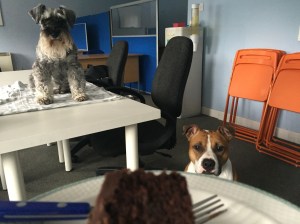
I’m afraid there’s no chocolate for you two beggars!
Biting is normal, natural, necessary dog behaviour but when it happens (and it is a when and not an if) it is very distressing at many levels. Understanding biting and related dog behaviour is a pretty good step toward preventing it: Why Dogs Bite, Part I and Part II.
A common cause of bites in pets, is pain and they are pretty good at hiding their pain and discomfort. Download a straight forward poster here and here.
Pain may mean a trip to the vet’s and unsurprisingly many dogs find this upsetting and distressing. Not only that many pet owners appear unable to assess their pets’ distress, given that many of the signs can be pretty subtle and easily misinterpreted: Canine Stress in the Vet’s Waiting Room.
This piece gives an in-depth run down of stress and things that can be done to help reduce your dog’s distress: Fixing their bones, but breaking their brains.
More and more veterinary practices are becoming aware of ways to reduce dogs’ distress before, during and after procedures; here are five tips for handling dogs and cats in a caring manner – it’s a poster that you can download and share 😉
We can work together to improve your dog’s comfort, not only with the vet team working to reduce stress, but at home preparing our dogs for handling with two simple of ways of helping your dog enjoy this type of contact in this clip.
With Easter only a few days away and the temptation of chocolate too much for some dogs, let’s avoid that vet visit by being aware and careful of poisons that you dog might ingest:
Even we though we might not have too much self control around all that chocolate, our dogs can: Clicker Training Doggie Zen exercises!
Doggie Zen exercises are some of our favourites, and even though this is an older resource it never really gets tired!
Congratulations to Purin the Beagle for her new Guinness World Record: fastest 10m on a ball by a dog!
Again, we are appealing to people to give chocolate bunnies rather than real ones. But if you are thinking about getting a rabbit pet, watch this clip before getting one…
Or maybe just watch this somewhat terrifying clip…
Off leash dogs storming your dog, who may not welcome the space-invasion, is a common complaint and a common contributor to your dog’s discomfort; here’s one strategy to try when you can’t get away.
And there is no more important application of an understanding of canine signaling, than when children and dogs interact. Here’s what to do: I Speak Doggie and here’s How not to greet a dog





 AniEd Ireland