Reward based training isn’t about pushing-cookies, it’s about applying what we know about how dogs learn to teach dogs in an effective and efficient manner (works for all learning species too!): The truth about positive reinforcement
Never presume that a change in your dog’s health or behaviour is ‘just age’ – have a chat with your vet, even if it is a normal part of aging, there may be excellent treatments available that can greatly improve your dog’s quality of life, including with arthritis: So your dog has arthritis
Although manners training (e.g. loose leash walking, recall, stay etc.) is a great start and very helpful, some dogs and some behaviours need more help, and generally regular training classes won’t be the way to help them: “Needs Training”
This is a thought provoking piece – neglecting to look after a dog’s behavioural, training, social and environmental needs can and does certainly impact its welfare: Poor Little Rich Dog
More on University of Lincoln’s work looking at our dogs’ pretty amazing capacity for appreciating human (and canine) emotion: Dogs can read human emotions
(Warning: tissues may be required) What we do for them at the end, says a lot about how we loved and lived with them: The Last Meal I Gave My Dog
We love the ScienceDog blog; here’s a great covering of some work on dog-dog social learning: Doggie See, Doggie Do?
Physical exercise is great, but don’t forget you need to match it with mental exercise too. Here are a couple of really puzzling challenges for your dog to get his brain working hard: Problem Solving Game and Fun with a shape sorter box!
Training is not just about teaching cute behaviours, like this amazing Irish dancing sequence, (even though that has lots of benefits too) but also preparing your dog for more difficult times – like maintaining open channels of communications – Choice & Control
A socialised person, like you, doesn’t need to approach, greet or touch other people while out and about; indeed to do so would be weird and a little creepy. Well, socialised dogs are the same – that’s what being socialised is, it means you can ignore stuff because it’s not a big deal. Most adult dogs are DINOS and the rest probably need to develop a little more self-control in learning about polite greetings, even if their people think they are just being friendly: “My dog is friendly!” A public service announcement and a funny spin on this here.
Unemployed dogs soon become self-employed so the easiest, quickest, most efficient and enjoyable way to get your dog working is by having him use some of those in-built skills to earn his food, everyday.
Food is Currency
To dogs, food is like currency, euros and dollars. So, if you are to employ a dog, you gotta get them working for their food.
Last time, we looked at the sorts of predatory and feeding related behaviours that dogs come with as part of the package.
We can safely offer our pet dogs outlets for behaviours like the following, using your dog’s dinner:
tracking
chewing
dissecting
And we can safely provide more appropriate outlets for some of this behaviour, through the use of games and play:
stalking & chasing
grabbing & biting
Don’t let “domestication” fool you!
Domestication has done lots of things to dogs that has made them better pets and companions, but this process has also done a couple of things that mean getting your dog working for their food is even more important.
This process continues to ensure that dogs live closer and closer to humans and the more time the dog spends in the human world, the less time it gets to spend on doggie pursuits.
Domestication has certainly seen a dilution of some more serious predatory traits, but has amplified these traits across various breeds.
Each component of the predatory sequence is exaggerated in some dogs, but played down in others, according to their job or breeding history.
A lot of breed history is mythic but if we look closely at the early roles for many dogs, we can get some clues as to the activities they may love most.
But saying that, teaching your dog to carry out any and all of these behaviours will provide them (and you) much joy regardless.
Choose chews for your dog carefully and know your dog’s chewing style. Your dog chewing anything may be potentially harmful in a particular situation so be aware of ways to reduce the risks.
It’s never a good idea to give your dog cooked bones or very hard bone (e.g. weight bearing bone, heavy antlers etc.) as these can cause damage either when ingested or during chewing to teeth.
Natural chews are generally best but always check and monitor their condition. Look for signs of splitting or splintering, and keep an eye on their size appropriate to your dog.
Chews such as gullets, ‘pizzles’ and scalp have become more widely available.
Cheaper rawhide type chews can be dangerous if swallowed so if choosing rawhide look for chews that are constructed from one piece of hide, that are not bleached or coloured and keep a close eye on your dog as he chews them.
If in doubt, ask your qualified veterinary healthcare team before allowing your pet to chew!
Give the Treat Launcher a go, especially for those dogs less inclined to chase a ball – they might chase this though!
Grabbing & Biting
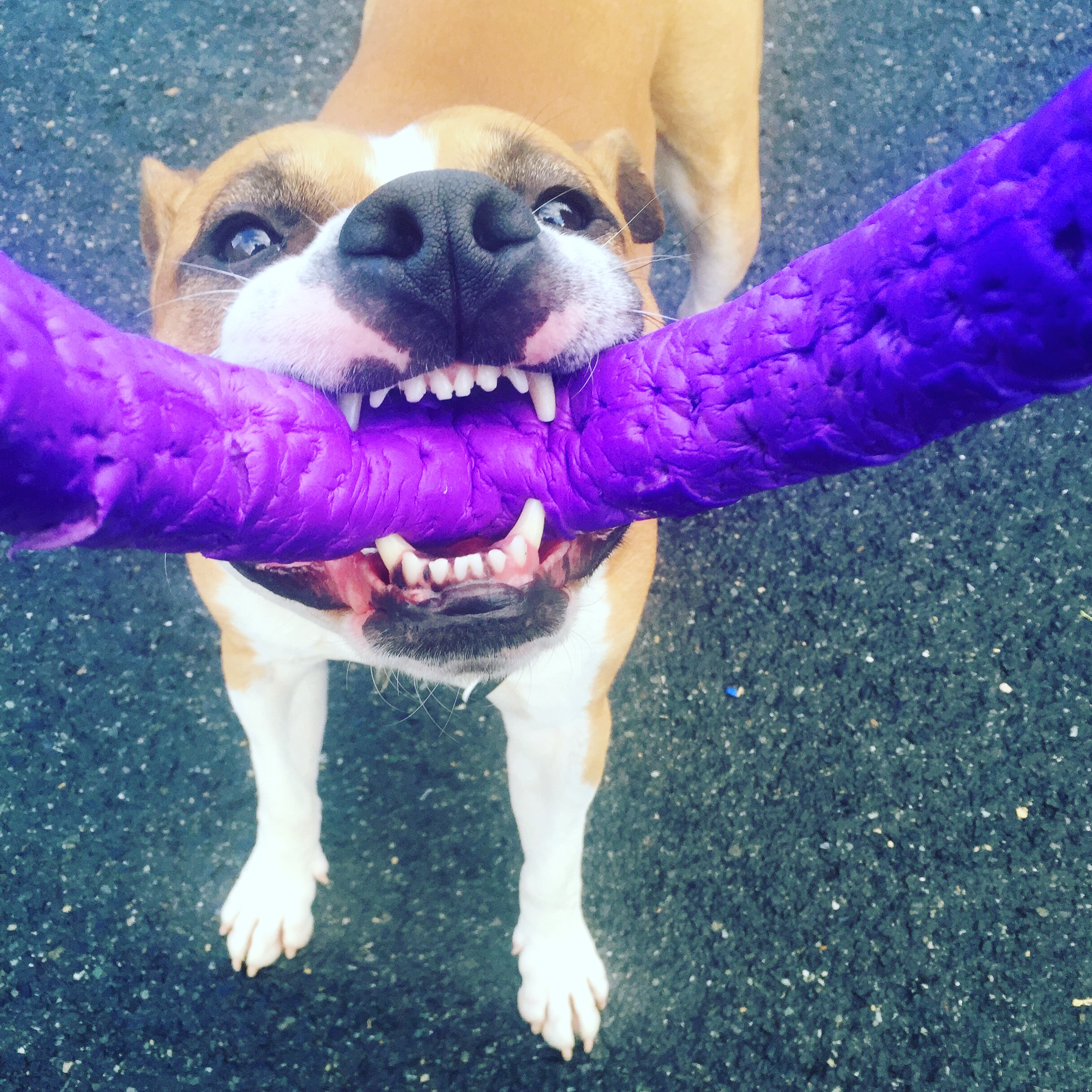
Tug is one of our favourite doggy games because if it’s played with appropriate rules we can teach dogs so much with this game, all dressed up in pure fun!
And for the DIY inclined why not consider building a springpole for your tug-addict: How to make a springpole
Enrichment comes in all shapes & sizes
We can give our dogs all sorts of jobs that challenge them in different ways. Giving them outlets for natural behaviour might include providing them with :
In this Woof, we have wolves howling and dogs barking, we have little dogs and big dogs, and we have lots more good stuff!
Just like in human language, we are finding that more and more animal communication shows evidence of having different dialects; wolves are the latest to be added to the list.
Turn the sound down when you open this link if you don’t want to be surprised by howling wolves – I am sure your dog will be interested in the dialects 🙂
Think you know your dog-breed-barks? Here’s a challenge for you: The Sound & the Furry (maybe best to do this one with headphones in case it drives your dog bonkers!)
Our dogs are not the only ones who require attention, training and lots of pleasant interactions; Guinea pig socialisation and Rabbit handling – small pets need compassion and love too!
Help your dog learn to LOVE bath-time and nail clipping: Spa Day
This piece from Patricia McConnell might be an old one, but that myth sure hasn’t gone away over that time: You can’t reinforce fear
Need help with a barky dog? Here’s a nice training plan for teaching an interruption cue so that you can divert your dog’s attention back to you, away from whatever he’s barking at: How to interrupt barking with a quiet cue
Helping to integrate a new dog can be difficult, and there may be many ups and downs but the important thing is to be observant and think of all the possibilities, and prevent them happening: The importance of being aware
But you are human, and they are dogs – mistakes will happen, so learn from them.
One of our favourite topics – lots of great ideas in here on different food dispensing toys for dog, go on, your dog will thank you: Enrichment games
Feeding time is an exciting and important part of your dog’s daily routine but just because it’s routine doesn’t mean it needs to be boring.
The key is enrichment; protocols that you can put in place, simply, to provide your dog more appropriate outlets for natural, doggie behaviour.
Why enrichment for pet dogs?
‘Natural’ behaviour
The “wild”, that idyllic place that’s considered the model we should mimic even though in actuality it is a dangerous, dog-eat-dog place, has nonetheless caused the evolution of a wide range of feeding behaviours that take up plenty of an animal’s energy and keep them busy.
Animals will naturally work for their food, with or without your help (or knowledge!):
Dogs also appear to experience that ‘eureka’ feeling when working on challenges – working on a puzzle is rewarding to dogs, even if they don’t solve the puzzle successfully (i.e. get the tangible reward such as a food treat).
Dogs are natural-born-puzzle-addicts!
Ian & Irene work on puzzles for the first time, in puppy class; they work harder relative to the value of the food reward – they are in it just for the fun:
When animals don’t get the opportunity to engage in enrichment and are lacking outlets of natural behaviour, they can develop all sorts of difficulties.
At the very least, those behaviours that dogs are compelled to carry out will become a problem for us – dogs need to chew, dogs need to chase, dogs need to sniff and track.
And you might not like the outlets they choose for those behaviours.
All the puppies learn to settle themselves in a busy class with the help of a food puzzle and lapping & chewing, which helps dogs to chill:
Think of all the things your pup can’t do if he is chilling out, working on a food toy?!
Dogs that are unemployed, become self-employed…
With all that free time on his paws, your dog may also engage in other behaviours that become a problem for you such as barking, digging, escaping, jumping up, being obnoxious.
It is not easy to live with a self-employed dog because the jobs they choose for themselves are usually not particularly preferred by humans…
First step, ditch the food bowls.
Why do we HATE food bowls?
food bowls do very little to encourage interaction between dog and owner
food bowls do little to teach the dog that good things come through their owner
feeding from a food bowl wastes hundreds of reward opportunities by presenting them for free all in one go
your dog would probably prefer to work for his food than get it for free
modern pet feeding practices encourage a sedentary way of life for our pets
there is a limited range of behaviours demonstrated so dogs will need to display them in other ways (which may cause problems for people)
chasing, chewing, tracking and using their brains are important for dogs and modern feeding practices often don’t encourage any or much of that
Food bowls are human convenience devices – toss food in bowl, leave on floor, dog eats….dog is fed and my job is done.
But feeding your pet can be soooo much more…
Dogs come with predatory behaviour, built-in
Dave Mech, the wolf guru, outlines canid predatory behaviour in a sequence of behaviours called, not-surprisingly, a predatory sequence. These are behaviours that are innate in all dogs and to greater or lesser extents in different types of dogs and individuals.
The dog predatory sequence might look something like this:
These are the behaviours that your predatory pet needs to do – provide acceptable outlets otherwise he will find his own, and you might not like that.
Watching dogs play with pals gives you an insight into just how relevant these behaviours are for even modern, pet dogs. A good proportion of normal play behaviour will be feeding related with games of stalking, chasing, take downs, neck biting, and of course enjoying being chased too!
You will see your dog practicing these behaviours in other non-real-life scenarios too – give your dog a tissue or soft toy and watch him chew and dissect it, throw a tennis ball or play tug and flip the switch, turning on those in-built behaviours.
But feeding behaviour isn’t just about feeding…
Dogs engage in all sorts of feeding related behaviour, and many activities revolve around feeding.
Dogs enjoy actively scavenging for food and, let’s face it, non-food items – they will devote plenty of time to this sort of activity and often learn to do it when their owners are not watching…!
Although dogs prefer their own space when eating (not big on sharing!) they have evolved plenty of behaviour for negotiating social contact around food.
For the most part, this can cause trouble for us living with modern dogs, but it can be easily managed, with the right guidance.
Competitive interactions, that may lead to resource guarding and even social facilitation have been shaped over millions of years and generations, and despite a few hundred years of pretty intense selective breeding modern dogs still show these behaviours strongly today.
Digging/burying and hoarding behaviour may be employed by many dogs, often much to their owner’s disgust (especially the green-fingered owners). Some dogs appear really bothered when they get something quite special, carrying it from place to place, vocalising, difficulty settling…
This may be frustration related at not having a safe place to work on their treat or indeed at not being able to stash it away for a rainy day.
Grass and plant eating can cause concern for many owners. But for the most part where this behaviour isn’t excessive or too intense, it’s probably nothing to worry about and a normal part of canine behaviour.
However, where dogs do this a lot, or try to, and/or where there has been any changes to this behaviour have a chat with your vet as soon as possible.
Intense eating of grass, plants or other non-food items (behaviour called pica) may be linked with gastrointestinal upset and stress.
And you thought feeding was just about putting- food-in-a-bowl…
In Part 2 we will be looking at things to get started enriching your dog’s life!
Our first WWW this week was overflowing so here’s more good stuff, we just couldn’t leave behind!
Each of us has that point at which we become overwhelmed, and our dogs are no different. Here’s a great piece looking at what’s happening your dog when they get to that point and things that you can do to help – Thresholds: when dogs reach their emotional edge
Today we hear the very sad news of a newborn baby killed by the family dogs, while the new mother fell asleep beside baby. Please check out and share this video-presentation: 5 types of supervision
Why not really pamper your dog and make him some homemade yummies?! Try some black pudding & potato bites or some low-cal snacks!
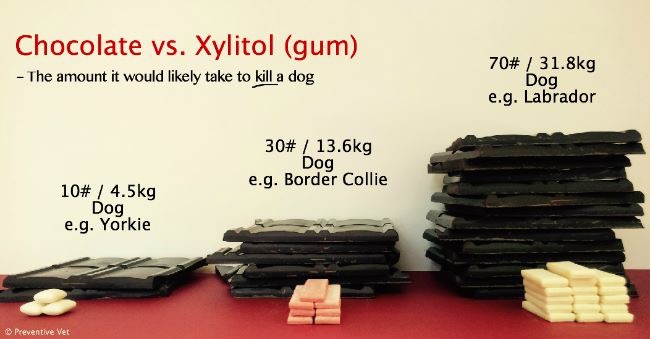
Please be careful any time your dog might be exposed to ‘human’ food and check for components that may be dangerous to them, such as xylitol.
Most people are aware of the dangers associated with your pet eating chocolate, but few are aware of much more serious and sinister dangers such as grapes/raisins and xylitol products.
Just as in humans, recent work has suggested that dogs also have ‘general intelligence’ that can be measured in a canine ‘IQ’ test: Mensa Mutts? and Canine IQ test developed. Why not try some ‘intelligence’ tests with your dog, just for fun: Dog IQ test.
And all this developing knowledge is great for helping dogs shed those extra pounds, that will improve both the quality and quantity of their lives: Pet Fit Club – check out some of those amazing transformations!
I can’t remember what I used to do when there was any sort of lull in the action before I had a smartphone.
Anything other than constant stimulation and I am reaching for my iPhone…
The movie Bolt struck a cord when I saw it a few years ago.
It’s about a canine star of a TV show, Bolt, who plays a dog with super-powers saving his person Penny from the Green Eyed Man, week in, week out.
Except, that nobody told Bolt it was just a work of fiction and that he isn’t really a super-dog.
When the cameras stop rolling Bolt is kept in a permanent state of readiness, to fend off attacks by his enemies.
What about pet dogs?
We certainly invest lots in teaching them to do lots of stuff, to increase their responsiveness, to build their love of learning and interaction.
And we put lots of energy into keeping them active, getting them moving, in the hope that a tired dog is a good dog (but is it?).
When do they get to just be?
‘Just being’ doesn’t necessarily come easily
Pretty much every type of dog was developed for some sort of job and in modern pet-dom most dogs are unemployed.
Our efforts in guiding dogs from wild to pet, whether intentional or not, selected for characteristics such as wariness, reactivity, inquisitiveness, attachment and activity.
Our pets’ lives, just like our’s, continue to become more and more sedentary with us substituting real-life pursuits for those that are easier to participate from a seated position – even sport is a less serious outlet for pretty serious behaviour.
Without outlets for our behaviour, it is channelled somewhere else – I have a Smartphone but what do our dogs have?
Would we know a dog ‘just being’ if we saw one?
It can be tricky to spot a calm, chilled out dog.
With great access to knowledge you might think we have a better handle on canine signalling, but unfortunately our awareness (or lack thereof) is affected by popular media’s interpretation of “calmness”.
Shutdown is not the same as calmness
A dog who is overwhelmed by a situation and can’t use behaviour to escape something they find unpleasant, will often show signs of ‘shutting down’.
This happens because the dog is unable to escape and his requests for relief have gone unheard/unanswered. This is typified by a very still dog – the absence of behaviour is not calmness.
Shut down dogs interact minimally with their environment, their body may be still and tense, if they are moving their posture may be low slung, they will often be frozen, you may see them yawn, lick their lips, and squint and blink (outside of normal contexts for these behaviours).
Eileen Anderson’s clip gives you a run down of some examples, mistaken for calmness:
Less behaviour is not necessarily better than more behaviour
If you want less behaviour, maybe the one in the middle ain’t for you…
What does a ‘just being’ dog look like?
A chilled dog is loose, breathing deeply, he may still be monitoring the environment but not really on his tip-toes, he may still be responsive but not in an overly enthusiastic way – but the biggest difference?
The chilled out, calm, ‘just being’ dog is choosing to chill, be calm and be.
Back to Eileen Anderson for her ying to the yang clip:
This dog needs help learning that they don’t need to be ‘on’ all the time – good things happen when you’re doing nothing too.
Both in training sessions, and in life, mark and reward doing nothing – even if it’s only a split second – the more you reinforce nothing, the less frantic behaviour you will see.
make sure to put behaviours on stimulus control – this means that the dog learns to offer behaviours when you cue them only, rather than as soon as he thinks there might be a reward or he thinks it might be time to work
When we might only have limited time with a dog, whether that be because we are visiting, working long hours or the dog is in a rescue/kennel environment, of course we want to make the most of our time together.
But, a dog who hasn’t been getting too much human attention will be pretty wound up and anticipatory waiting for it. Sometimes, it’s better just to hang out with them – this gives them the opportunity to calm down, bond and be.
To teach your dog best, keep him successful as possible. That means that if your dog can’t find your face in a particular situation, it’s just too distracting for him.
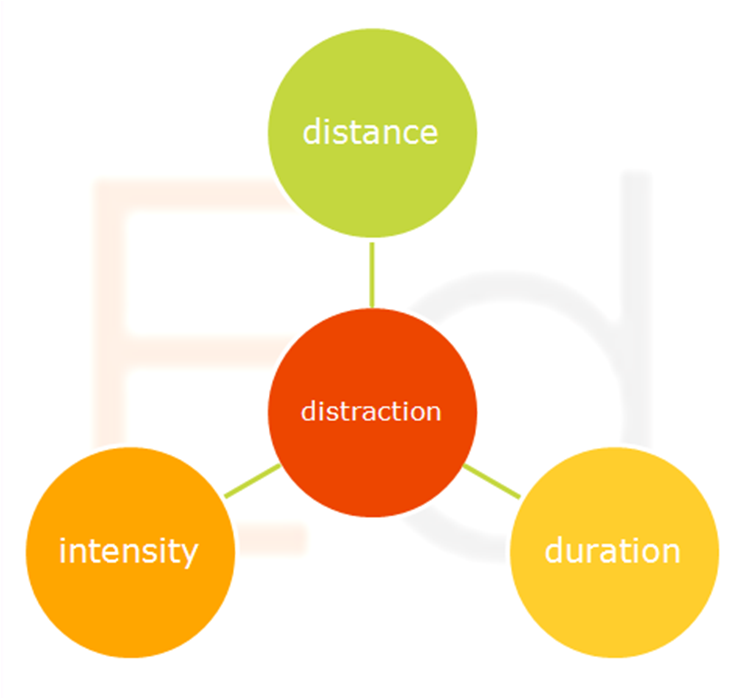
Distractions will affect your training efforts in three ways:
distance
duration
intensity
If your dog has trouble focusing it may be because:
you are too close to a distraction
you may be around the distraction for too long
the distraction may be too exciting, interesting, active, scary or conspicuous
For example, your dog may be distracted by another dog when:
you are too close to the other dog
your dog can watch the other dog for too long
the other dog is big, is bouncy, is barking, is making direct eye contact with your dog or maybe even approaching your dog
Keeping your dog successful means that you monitor his ability to focus and be comfortable around distractions.
Asking your dog to focus with distractions
Distance:
Start with distance from potentially distracting situations
How close can you be to a distraction, that your dog can find your face?
A good indication is that if your dog can do the Find my Face exercise, take their reward and then offer another focus, within a 5-count
If there is more of a delay or your dog has difficulty playing the
game at all, you’re too close.
Take a few steps away, and try again.
When your dog can offer 5 repetitions, with a 5-count or less between each one, take a couple of steps closer and build again.
When working on distance:
work for about 30 seconds to 1 minute
practice using distractions that are quiet, still, not facing your dog, not interacting with your dog in any way and are not too conspicuous
Duration:
When your dog is able to play focus games pretty close to distractions, start to build the length of each session.
Build by no more than 30 seconds at a time.
When working on duration:
practice at your starting working distance – decrease distance again gradually
practice using distractions that are quiet, still, not facing your dog, not interacting with your dog in any way and are not too conspicuous
Intensity
Now your dog is able to focus closer to distractions for a little longer – it’s time to increase the intensity of that distraction.
play Find my Face around more active distractions
When working on intensity:
practice at your starting working distance – increase distance again gradually
work for about 30 seconds to 1 minute
Combinations
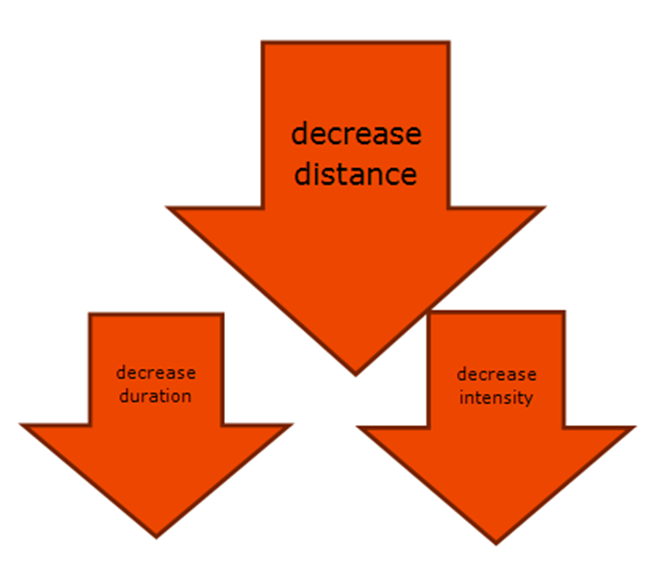
As your dog improves and is able to Find your Face in and around distractions start to decrease distance while at the same time increasing duration or build intensity while decreasing distance.
This will best help you to have your dog responsive and with you in all sorts of situations.
Setting your dog (and you) up for success:
Adjust the distance, duration and intensity of exposure to distractions when working on focus exercises according to your dog’s abilities.
Use rewards that can compete with the level of distraction you are working on.
Keep the lead loose.
If your dog vocalises, lunges, jumps up on you and is too easily distracted – give your dog a break.
If the situation is too much for your dog, get him outta there!
If you haven’t trained for it, you can’t expect it!
We can’t expect our dog to be focused all the time – it’s important that we also make sure our dog gets to be a dog and have fun too!
Rather than just ending a training session or a focus exercise and ignoring your dog, give them something else to do and encourage them to enjoy off-time too.
Today’s Games
Time Allowance:
Practice for 2-4 minute sessions and then take a break. Have a few sessions today.
Try fitting each short session into your routine; for example, while you wait for the kettle to boil, during the ad break of your TV show or while you wait for the computer to start up.
Family Participation:
Kids are often great dog trainers. Teach each child how to play this game safely.
If your dog is mouthy, jumpy or likely to get over-excited it might be best for you to get the behaviours established and then bring in the kids to help with practice.
Always supervise child-dog interactions and make sure children learn to leave the dog alone when eating his rewards.
Top Tip for Today’s Training Game:
Establish this exercise with your dog searching for food and then begin to transfer it to sniffing doggie areas.
This way you will always be able to give your dog some time-off to sniff, no matter where you are.
Puzzles are our favourite games for dogs – really getting their brain-power working and challenging them is important to keep dogs happy and healthy.
Use your Training Mix for these puzzles but you can also use higher value treats if you set a great challenge – better pay, for harder work!
Build the challenge slowly to avoid frustration and the dog losing interest.
Before using any home-made puzzles check out this clip for some of our favourite puzzle ideas plus please read the safety guidelines at the start:
I know, I know… but some important considerations to be aware of plus ideas for our favourite puzzles 🙂
Today’s Games
Time Allowance:
Each game will take you 2-10 minutes to set up – depending on the puzzles your choose.
Try a couple of these puzzles today.
Family Participation:
Fun for all the family – children will love constructing puzzles for dogs.
Always supervise child-dog interactions and make sure children learn to leave the dog alone while he works on his puzzle.
Top Tip for Today’s Games:
Give your dog a puzzle in a confined or smaller area. Things could get messy so it’s easier to clean up if the mess is restricted.
Remember, encourage your dog to move away from the puzzle before you start clean up!
Stuffed Puzzles
You will need:
cardboard tube from e.g. toilet roll
crumpled paper e.g. newspaper, kitchen paper
paper e.g. newspaper, old wrapping paper
Training Mix
Beginner Level ideas:
add a treat to a cardboard tube and squeeze the ends
set up as above and wrap loosely in old wrapping paper
Advanced Level ideas:
Add a treat to a cardboard tube, stuff the tube with crumpled kitchen roll or even newspaper. Wrap the tube in paper to make a Christmas Cracker.
Rolled Puzzles
You will need:
stiff cardboard, like a flap from a box
old tea towel
Training Mix
Beginner Level ideas:
remove the flap from a box and spread it out flat; sprinkle some food on it and then roll it up
Advanced Level ideas:
sprinkle a tea towel with food and roll it up
for an extra challenge, slightly dampen the towel, roll up with food and freeze
add some food to an eggbox and close over the lid, without fastening
add some food to a tub and place the lid on top, without pressing it down too hard
Advanced Level ideas:
add some food to an eggbox and close the lid – for an extra challenge wrap the eggbox in old wrapping paper
fill the tub with food and crumpled paper, close the lid tightly
Teasers
You will need:
muffin tin
cardboard tubes, tennis balls, disposable cups
tray, basket, box
Training Mix
Beginner Level ideas:
place a food reward in each gap of an eggbox or muffin tin; cover each treat with a tennis ball, toilet roll tube or disposable cup
Advanced Level ideas:
sprinkle food on the base of the tray/basket/box and then fill the entire container with cardboard tubes standing up – pack it tightly to really challenge your dog
toss some food in a bowl of very shallow water when your dog is watching – to increase the challenge remove the dog from the room before submerging the food