Welcome to Day 81 of #100daysofenrichment and thank you for joining us on this journey!
Although our challenges are directed mainly at dogs, we want all species to enjoy and benefit from #100daysofenrichment so, please join in, adjust and adapt to help your pet or companion live a more enriched life.
In preparation for today, I asked you to collect smells, cook them a little, and present to your pet today.
The beauty of this is that you collect smells from places that you don’t bring your dog so that the dog gets to experience a little of your dogless world, adding interest and novelty to their experience too.
This is really a Sniffing Saturday challenge, but I ran out of Saturdays on our #100day project, so we going to do it midweek instead!
Last Sniffing Saturday, Day 76, we had a Sniffari and today we are offering a version of that. If you haven’t cooked your cloths, try a Sniffari today with your dog instead.
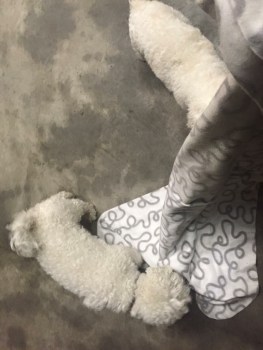
A blanket that a rescued cat lay on while we cared for him makes a wonderful olfactory adventure for these dogs, who don’t have contact with cats.
Step 1
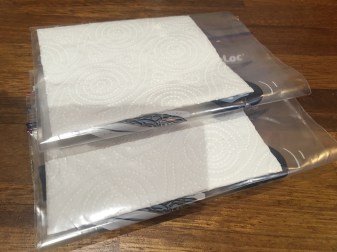
Bring a cloth with you to all the places you go without your dog, over a few days. You could use small pieces of face cloth, toweling, or even kitchen roll, although anything paper/disposable, may disintegrate if your dog does a lot of sniffing or licking of it.
While out, wipe the cloth onto an area that’s likely to have interesting olfactory transfer. These will be places that are not terribly hygienic (!) such as steps or stairs, door handles, car bumpers or tyres.
You might also use clothing, socks or shoes that you wore while out and about; you have probably already noticed that your dog gives you a once-over when you come back home!
If you wish, you can add some herbs, spices or safe essential oils (don’t confuse “natural” for safe) – if in doubt consult your vet.
But, these tend to be very strong smelling to dogs, overwhelming their olfactory organs. Use a teeny amount (no more than two drops), on a cloth and put that into a container, with a small hole in the lid. Your dog’s nose should not make contact with the substance.
Lavender oil or peppermint oil are good starters, with many dogs showing curiosity and sniffing them when presented safely.
Step 2
Once you have collected some scent, pop the cloth into a sealable bag, lunchbox or tin. Have each cloth/scent in an individual storage container.
Store your ‘cooking’ scents somewhere cool and out of nose range from your dog – so in a room that your dog doesn’t really enter, such as the bathroom.
Step 3
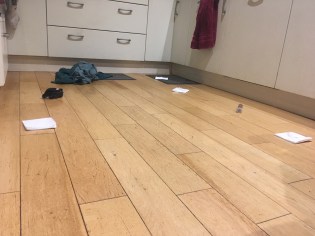
When you have a collection of 3-5 scents, set up a course for your dog. Lay each cloth or container on the floor, ideally indoors, with plenty of space between each cloth.
Set up the sniffing course while your dog is in another room.
This course includes some cloths I have collected smells from different neighbourhoods, a worn sock, a jacket I wore when handling some puppies and a little tube of lavender scents with a pin hole in the top.
Step 4
Release your dog and allow him to check out each cloth; they might dismiss some but be engaged with others.
If you are collecting data, you might note which scents really catch your dog’s nose.
As always, allow your dog to spend as long as he likes sniffing. If you are concerned about your dog ingesting a cloth, present cloths in containers with holds in the lid and/or work your dog on lead.
Have some HIGH value treats in your pocket and throw them toward your dog, across his eyeline, if you are worried he will eat something he shouldn’t.
When your dog is done, you can dispose of or wash your cloths and start all over again!
Your challenge
Now it’s your turn. Show us what you and your pets, of any species, can do with these challenges!
Post to your social media accounts, using the #100daysofenrichment so that we can find you and join our Facebook group to share your experiences, ideas and fun!
You can comment right here too 🙂
We look forward to hearing from you and your pets – have fun & brain games!
Welcome to Day 80 of #100daysofenrichment and thank you for joining us on this journey!
Although our challenges are directed mainly at dogs, we want all species to enjoy and benefit from #100daysofenrichment so, please join in, adjust and adapt to help your pet or companion live a more enriched life.
Not to be left behind in the digital entertainment explosion, there are all sorts of ways we can hang out with our dogs and assess their interest and enjoyment of different forms of entertainment.
On Day 4, we talked about just being; a challenge for both pets and their people. In our modern go-go-go world, spending some time appreciating the here and now can be difficult.
And on Day 3 and Day 24, we looked at the types of handling and touch our dogs might enjoy, or not.
On Day 38, we combined these experiences with some Massage & Mindfulness.
There are no big plans or training exercises today. We are going to dial it way back and be…with some entertainment…
Learning to just be is not necessarily a skill that comes to most pet dogs easily, and indeed to many people. Just being is a lost art; in the age of smart phones and on-demand entertainment, we don’t have to be very often or for very long.
But, this is such an important skill for companion animals, who, at the whim of their humans, must be able to be in environments that don’t always cater for their natural tendencies.
Entertainment for Dogs
Today we are going to try out some different forms of digital entertainment to add to our hanging out.
Many social hang outs we have with other humans revolve around entertainment such as going to the movies or a concert, hanging out listening to music or discussing our favourite books.
Hang out and be with your dog, and listen to some relaxing music or maybe even watch some dog TV.
Let’s try that a little today!
Auditory Enrichment for Dogs
You have probably heard about music that has been developed specifically for dogs, for example, Through A Dog’s Ear.
But we have a little evidence that certain classical music may have a calming effect for dogs in shelter accomodation. (Bowman et al, 2015)
Classical music is likely the most effective, not surprisingly, over heavy metal (Kogan et al, 2012).
Particularly interesting work published a couple of years ago, (Brayley & Montrose 2016 )
showed that playing audiobooks may contribute to reduced barking and stress related activity in a shelter environment. What a novel way to provide kenneled dogs with some ‘human’ interaction! Audible might be the place to start if you would like to share an audiobook with your pet.
Not only may music soothe stressed dogs, sound can be used to mask aversive sounds too. Playing White Noise type sounds may help drown out sounds that a dog finds unpleasant or arousing. For example, here.
While this might be relaxing, sounds can also be arousing. Hoffman et al, 2017 found that dogs are more attracted to the sounds of prey animals (cats) than visual representations.
You could try playing some prey related sounds for your dogs, such as bird sounds and cat sounds.
Have some relaxation music afterwards, with a yummy Stuffable, to bring everything back down again.
Here Decker responds to dog-sounds on clips I am picking out for a presentation:
With TVs being bigger and the image better quality, I tend to see a lot of dogs who bark and lunge at images of animals, even cartoons, on TV.
Take care with this one, and use a smaller screen such as your phone, tablet or laptop, rather than a big TV.
Decker, if on my lap, will be interested in the plus-sign cursor in Excel. I will move it back and forth to mimic a fly and he will gently mouth at it, as if it’s an insect.
This isn’t something he is too intense about and would need to be prompted, so I’m not too concerned about it. But, know your dog!
Here he watches a video of himself and a buddy during a presentation I am giving:
While spending time with your dog listening to relaxing music, practicing just being, sounds lovely, we must remember our enrichment goals.
The animal must be able to choose how, and whether they are exposed to enrichment. Let’s be careful how we introduce these enrichment protocols by allowing the dog to choose if they wish to be exposed or not.
You might, for example, play the music in one room and hang out in another adjoining room with the dog, or have your device on your lap and allow your dog tune into Dog TV or to move away.
A lot of these things are marketed as relaxing dogs or helping dogs with “separation anxiety” but be careful. If you only present the radio, music or even a Stuffable when you are leaving the dog, that presentation may become a trigger for the distress the dog experiences when left alone.
Be; really be
Where can both you and your dog be? Practice there.
When can both you and your dog be? Choose times when your dog is already calm and have had all their needs met. When the house is quiet and when you can be calm.
Don’t introduce toys, treats or other signals that might suggest that this is a training exercise. So, practice in a different location, wear different clothes, practice at times that are not associated with training sessions, activity or play.
Set up so you are comfy and so that your dog can relax in their favoured position – this helps to reduce shifting and fidgeting. You moving might cause your dog to be on alert, thinking that you are going to leave or going to engage your dog in some activity.
Put your phone away. Turn off the TV or radio. (Well, for these challenges make sure devices are on only for you and your dog to enjoy together!)
Settle close together. You don’t have to touch, if that’s not your dog’s thing.
Breathe slowly, calmly and steadily. Match your dog’s breaths.
Sigh. Sigh deeply.
Ask your dog. Do they consent to being touched?
Touch your dog in a favourite spot. If your dog moves away, moves any part of their body away, starts to lick at your face or hand, or if your dog gets active or goes very still, stop touching.
Touch for a three count and withdraw. Ask them. Listen to them.
Massage your dog gently. Trace their muscles and bones, gently. Move slowly enough so that you can feel what’s happening under their skin.
We have talked about using some touch based aspects of T-touch here.
Think about your dog’s breathing. Think about the feeling of the lay of their coat. Think about your dog and how they bring light to your life. Think about your relationship with your dog. Think about just being, with your dog.
Hang out
Dogs and other companion animals must learn how to be around people and people-goings-on. Dogs gain these skills by being around people, especially when they are young.
Spending time isolated from opportunities to be around people is detrimental to behavioural and social development. Dogs who are alone for large portions of the day, especially young dogs, may be at risk of suffering negative effects.
To help these dogs, we are tempted to spend the little available time with them go, go going. We think we are making up for lost time by providing the dog with activity, exertion and excitement. While all that stuff may be a good addition, consider just being as just as important a skill and a vital part of helping and supporting them, when you can spend time with them.
Now it’s your turn. Show us what you and your pets, of any species, can do with these challenges!
Post to your social media accounts, using the #100daysofenrichment so that we can find you and join our Facebook group to share your experiences, ideas and fun!
You can comment right here too 🙂
We look forward to hearing from you and your pets – just be!
Welcome to Day 79 of #100daysofenrichment and thank you for joining us on this journey!
Although our challenges are directed mainly at dogs, we want all species to enjoy and benefit from #100daysofenrichment so, please join in, adjust and adapt to help your pet or companion live a more enriched life.
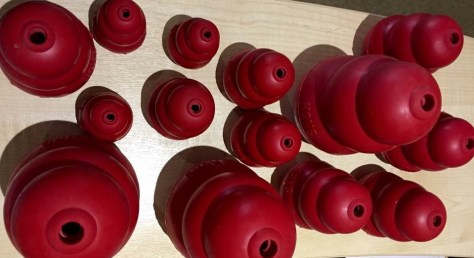
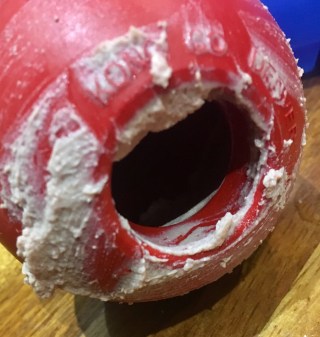
nothing too complicated here: get some stuffables and jam them in a box or tub
some are lined, some are filled, some are decoys
chuck some other non-food toys in there too or toss some food rewards in and around the stuffables in the box
add other puzzles too if you’re feeling adventurous!
food based enrichment
get the family involved in this one – kids love making puzzles for pets and these challenges offer lots of opportunities for children to use their imagination to come up with lots of puzzling fun for their pets
Remember, supervise children in all enrichment activities and interactions with pets.
Prep will probably take you about ten minutes and for extra challenge prepare some frozen stuffables in advance
What do you need?
open boxes or tubs big enough to hold a few stuffables or toys suitable for your pet
to encourage a range of foraging and exploratory behaviours
to do more feeding related behaviour than just eating
to encourage the development of strategies (behaviours) for getting the food out of the stuffables and the stuffables out of the box
adding different decoys and jamming the stuffables in different ways you can build variable, challenging puzzles that help your dog broaden their behavioural repertoire
While this challenge is certainly food based, they are also experiencing cognitive, sensory and environmental enrichment, with lots of crossover between categories.
Working out how to empty get to the food and developing dexterous skills in manipulating the stuffables and the boxes are examples of cognitive challenge.
Sniffing out, tasting and chewing food all offer sensory pay off, but so does finding their way through each food puzzle, determining its value, and engaging in the puzzle of getting to the good stuff.
Puzzles like these encourage pets to interact with their environment – just the very interaction with the box and its contents is encouraging the pet to manipulate their surroundings, to get the things they like.
By offering a variety of puzzles, we want to help the dog expand their range of puzzle-busting behaviours and facilitate your pet applying strategies from other puzzles to new ones; that’s a true cognitive gift and is growing your dog’s brain!
What goals can you add to this list for your pets?
How can we achieve these goals?
give your pet plenty of space for working on puzzles and bear in mind there will be mess, so think about spaces that are easier for clean up
the more difficult you have made the challenge, the higher the value the reward must be so use HIGH value foods to motivate exploration and experimentation and make it VERY easy to get the food (no frustration!)
if your dog just dives in, in full on destruction mode that might also be an indicator that they need an easier challenge so they get to experiment with a broader range of behaviours
What adjustments will you make for your pets?
Applications of Box o’ Stuffables:
These puzzles are another version of busy boxes and just adding a little extra with lots of puzzling fun within.
Changing the picture, for the dog, can provide them with further cognitive challenge, causing them to have to adapt to the new or different set up and adjust their approach to a puzzle they may have presumed was straight forward and familiar.
These puzzles are pretty adaptable – you can increase and decrease the challenge easily, making it fun and interesting for your puzzler.
Don’t go over-board, however. Keep the challenge appropriate and match your dog’s comfort and confidence level. This is especially important if your dog is worried or hesitant about sticking their head into the box – keep it easier with a wider opening, fewer obstacles to getting the yummy ones, and very rewarding stuffables.
Because of the home made nature and variable materials used in parts of this puzzle, it’s best to supervise your pet carefully when they have access to it.
Know your dog! If you have an ingester, boxes and similar puzzle equipment may not work or you might try using a plastic tub and supervise them closely. They will still eat plastic, it will just take them longer.
If you are concerned about your dog ingesting non-food items during puzzling, have a pocketful of HIGH value treats in your pocket and be ready to toss a couple toward your dog, across their eyeline, if you think they are thinking about eating the paper.
Making sure the challenge is very doable and they can get to the hidden food rewards quickly is key to modifying their behaviour and expectations during puzzling.
Check all your equipment for this challenge carefully and make sure to remove tape, staples, other fastners, small pieces and plastic pieces. Play safe!
Enrichment Options
This is a pretty simple and straight forward one for the humans, but lots of fun for the pets!
First place to start, is with Stuffables from Day 1! Check all that out for all the ins and outs of making the best stuffable toys and edibles.
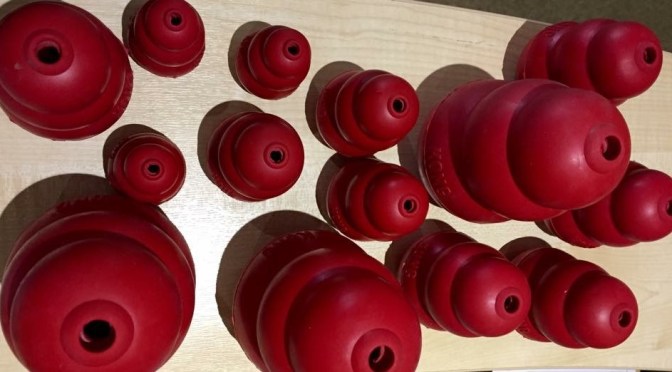
Try a combination of different stuffables today – maybe you have some Kongs, some K9 Connectibles, some edibles in there, along with decoys such as empty toys or other toys.
Add the yummies to the outside of the stuffable to help encourage the dog to engage if they are hesitant.
You could add some food rewards to the base of the box so that your dog needs to dig through the stuffables to get to the bottom.
Try adding some packing paper, some paper treat parcels or maybe every a towel to really get them working!
Your challenge
Now it’s your turn. Show us what you and your pets, of any species, can do with these challenges!
Post to your social media accounts, using the #100daysofenrichment so that we can find you and join our Facebook group to share your experiences, ideas and fun!
You can comment right here too 🙂
We look forward to hearing from you and your pets – have fun & brain games!
Welcome to Day 78 of #100daysofenrichment and thank you for joining us on this journey!
Although our challenges are directed mainly at dogs, we want all species to enjoy and benefit from #100daysofenrichment so, please join in, adjust and adapt to help your pet or companion live a more enriched life.
freeshaping is an approach to teaching that reduces the use of prompts (clues that the teacher gives the learner) and builds complex behaviour, increment by increment
it is learner-directed, from the start, with the teacher providing reinforcers to shape behaviour
the teacher sets up the learning environment so that it’s easier for the learner to choose desired responses
freeshaping can be applied to teaching almost any behaviour, but is most useful and efficient for teaching complex behaviours that the animal doesn’t offer naturally
but, freeshaping is most beneficial in helping teachers develop mechanical and teaching skills, while it’s enormously beneficial for learners in learning to learn, building confidence and expanding their repertoire; win-win!
This is very much the approach we will be taking today – we will be applying freeshaping to practice clear teaching mechanics in our teaching, and to help the learner to learn!
cognitive based enrichment
get the family involved in this one – children can be great dog trainers with lots of guidance, and lots of these behaviours are child-friendly, and make maintaining the peace with kids and K9s easier. Freeshaping should be hands-off so, with adult support and guidance, this can be a great exercise for children to help with.
Remember, supervise children in all enrichment activities and interactions with pets.
freeshaping sessions can be taxing on the dog, especially for novice dogs, so practice in short sessions of 30 seconds to one minute at a time; have as many sessions as you can!
What do you need?
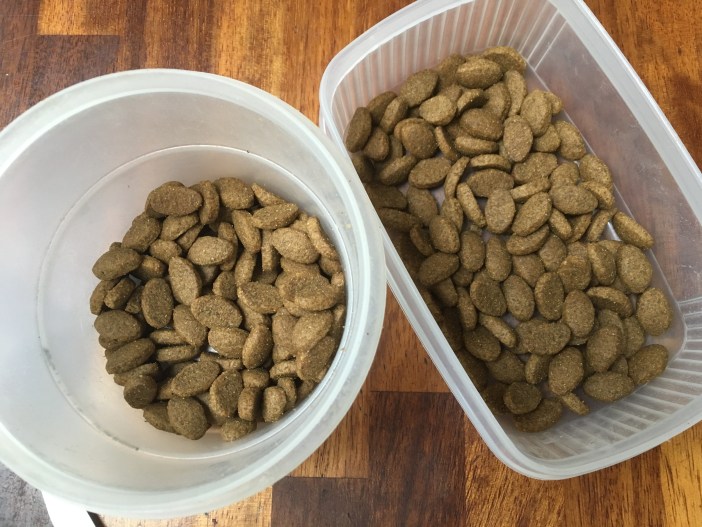
food rewards – you can use your dog’s regular food, a training mix, commercial treats, home prepared treats such as cut up meats, cheese, vegetables or homemade treats such as liver or tuna cake
when starting with freeshaping, we begin with simple interaction-with-an-object exercises so choose some items that are novel to your dog, but not scary or unsafe; you could also choose items, that the dog has interacted with before, but present them in a new way
You will need a selection so choose a few.
Freeshaping is a teaching technique and a type of shaping.
It’s something you have likely applied before, without even knowing about it, and one via which you have learned, again, without knowing it was happening.
Animals are learning and teaching via shaping all the time. Check out this clip of a cheetah mum gradually building the challenge for her cubs, teaching them to hunt. She breaks down the big, complex behaviour into small achievable stages:
Obviously there are hunting scenes in the above clip, so if you’re not into that, please scroll on and just take my word for it!
While you can of course use freeshaping to teach complex behaviours, here, on Day 78, we will be playing freeshaping games to enhance the learning experience for both ends of the leash.
Enrichment Goals:
to encourage the pet to engage and lead the learning experience
to teach the pet to offer behaviours
to teach the pet to interact with item
to teach the dog that their human will ask for behaviour and will make sure reinforcement is available – this reduces stress by improving predictability and controlability
improve day to day life, for dog and human, through targeting
to build that bond between dog and human
to have a fun and rewarding experience in social situations, between dogs and humans
to learn about learning – this is just another puzzle to your dog…”how do I train the human to make rewards available?!“…it’s all human training, for dogs!
While training exercises certainly fall into the cognitive enrichment category, they can provide so much more.
Providing dogs with cues allows for a complex level of communication between two species; you are merely requesting that the dog perform behaviour (he already knows how to do the behaviour…) and that request comes with a contract. Respond appropriately to this signal and rewards are coming your way. That’s the deal…that’s what being a good teacher is about – keeping your word and making it easy for your dog to train you.
This forges the most healthy of relationships between our two species. This is a level of social enrichment that’s tricky to replicate.
When we talk about enrichment being enriching, this is never more clear than when we start to teach behaviours intentionally. It’s the human’s job to set the dog up for success by making sure the behaviour is doable and that rewards are fast-flowing.
There’s no test at the end of this and you and your pet are not under any pressure. Learn to enjoy the time together, whether you achieve the goal behaviour or not. That’s what’s enriching here…the social and cognitive outlets such exercises provide (for both species).
What goals can you add to this list for your pets?
How can we achieve these goals?
although you can use any reward that your dog will work for, using small food rewards that are quick to eat are best for these exercises so we can have lots of fast repetitions
take your time and work in many short sessions
try for 30 seconds at a time, 5-10 rewards each session, and then take a break
have a good understanding of what you will be doing, before you practice with the animal
portion out your dog’s daily food and allot some for training exercises
make a training mix by adding in something yummier and leaving it all to ‘cook’ together in the fridge; the smells will mingle, harder foods will soften a little, and everything will become more valuable
remember to adjust your pet’s diet accordingly to accommodate the extra calories from treats added, where relevant
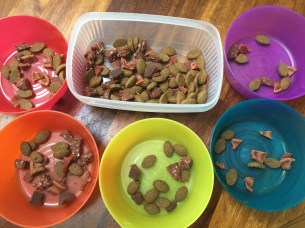
split your food rewards into little bowls with just the right number of rewards in each bowl so that you are ready to go; stick bowls of rewards in places where you may need to teach and reward behaviours so that you have rewards ready to go
If you are feeding wet or fresh foods, cut up small or mash to a paste and present on a wooden spoon or spatula. Alternatively you can freeze in small ice cube trays or a pyramid baking tray so that you can use small portions and individual treats.
What adjustments will you make for your pets?
Applications of freeshaping:
Freeshaping games help the teacher develop skills in the mechanics of teaching. In training, we talk about mechanics including timing, criteria and ROR (rate of reinforcement).
Timing – for the dog to form associations, good timing will be required so that the animal can link their behaviour with the reward.
Criteria – training criteria are the stages of learning. Every behaviour can be broken down into component stages, starting with easiest and increasing in complexity until they are able to offer the completed behaviour.
ROR – the rate of reinforcement measures how often the dog is rewarded. A good ROR means that your timing is good and that you have set training criteria appropriately.
Notice that all the emphasis is on the teacher’s skills, that’s because it’s our job to get this right so that the learner’s experience is clear and void of confusion. This is also a welfare issue. Even though you might be using food rewards or other positive reinforcers in training, if your skills are poor and the animal is stressed or confused, it’s probably not a terribly pleasant experience and may be extra stressful.
Your job is to make it really easy for the animal to offer behaviour that we want to see. That means we need to have a picture, in our heads, of the all the movements required for the animal to carry out the behaviour.
You apply this by offering rewards at the right time. That’s it. You observe your pet closely, and as soon as they offer a movement that’s close to the one you want to build the final behaviour, you reward.
Rewarded behaviour is repeated and then you observe for the next closest, and so on.
Ever play “hot & cold!” as a kid? This is pretty much that game.
Enrichment Options
Getting started with freeshaping games
Today we are going to take it easy so that you develop some skills and so that your learner isn’t overwhelmed, confused or frustrated.
Conditioned Reinforcers:
It’s most ideal, when working with freeshaping, that you have a conditioned reinforcer established. A conditioned reinforcer is a signal that tells the dog that that behaviour marked is the one that makes the reward happen.
Using a conditioned reinforcer, sometimes referred to as a marker, helps pin point the exact movement that made the treat happen, improving clarity for the learner.
A marker acts as a reward substitute and with careful conditioning will elicit a strong positive anticipatory response (YAY! the treat is coming!).
Markers might include a clicker, a whistle, a word like YES! or good, a thumbs up signal, a pen-light flash or any signal the animal can perceive.
Money, coins and notes, are conditioned reinforcers for humans!
This clips shows the mechanics of teaching a YES! marker:
This process is referred to as ‘charging’ the marker and that means that we are making the signal relevant to the dog. We are establishing that lovely anticipatory response – mark makes the treat happen!
Don’t worry if you can’t charge a marker signal today!
Setting up the learning environment
The important part of setting up the environment, for our games, will be the position of the trainer, the item and the reward.
We use this positioning to enhance and speed learning, reducing frustration or confusion.
Here’s a simple tutorial on reward positioning with Decker:
For our games, the item (we want the dog to interact with) should be between the human and the dog. That way, the dog returning to you for reinforcement, approaches or looks at the item and that’s our first criteria…that first, most simple interaction. This is what gets the ball rolling, so to speak.
Sometimes it’s better for the trainer to sit in a chair. This helps to discourage you moving to prompt the dog too much and also sets up a clear context for the dog, in which we play this game.
Set the learning environment up before you bring your learner in. Practice, without the dog, where you will send them for their food reward and when you will mark behaviour. What must the dog do to earn reinforcement?
Planning
We are not going into the depths of freeshaping today, rather just a simple introduction. But no matter, we still don’t want our learner to become confused or frustrated so we plan a little to make sure we are prepared.
To make this easier, our freeshaping games will be learner-led meaning that you are going to reward what ever movements the dog offers. Any interaction with the item, what ever they decide, we will reward.
This is how I get started with freeshaping with novice dogs. It opens up a new world for them, especially where they have been lured a lot or coerced a lot. Suddenly, they have the freedom to try something and lo and behold, it makes a reward happen.
This builds confidence and teaches them their behaviour matters. With each little offering, they are learning and growing.
Your job is to support that by being there, bang on time, to reward each little offering, no matter how small. Freeshaping will greatly hone your observations skills.
Let the learner lead
Set up your item, sit in the chair and let the dog decide what happens next. Mark and reward and and all interactions with the item; this might include looking at it, approaching it, passing it, sniffing it, and movement.
Here’s Decker’s first ever experiences with freeshaping when he was about 7 or 8 months of age:
At that stage, I had him just a couple of months and he was full-on into spooky adolescence plus settling into a new home, in a new country. This was important skill building for him, plus helping his confidence blossom.
Notice that what ever he offers we build on; touch with his nose and I will reward for more and more touches, strong pressure and moving the item, for example.
Try it out!
Choose your items and set up your learning environment. Get your treats ready, plan and practice. Now, bring the dog in and start freeshaping!
Carefully review this freeshaping tutorial with a completely novice dog, Busy:
Things to try when you’re not making progress. First thing to realise, it’s a trainer issue not a dog issue. Filming your practice is a great way for you to examine your mechanics so you can easily see what needs adjustment.
Don’t get frustrated – if your dog isn’t offering behaviour, stop. Take a break, end the session for now. Don’t get stuck in a stand-off.
Examine your set up and your timing – behaviour probably won’t happen if the ROR is too low.
Make it easier – reward for them doing less.
Don’t reward the same movement too often as they might just get stuck there and not be able to more on. Reward for any movement offered in any order.
Shaping isn’t linear so don’t worry if progress doesn’t seem to be going in some sort of order; you will move on two step, back three, on five and back two.
The more your practice, the better you both get.
Your challenge
Now it’s your turn. Show us what you and your pets, of any species, can do with these challenges!
Post to your social media accounts, using the #100daysofenrichment so that we can find you and join our Facebook group to share your experiences, ideas and fun!
You can comment right here too 🙂
We look forward to hearing from you and your pets – have fun & brain games!
Welcome to Day 77 of #100daysofenrichment and thank you for joining us on this journey!
Although our challenges are directed mainly at dogs, we want all species to enjoy and benefit from #100daysofenrichment so, please join in, adjust and adapt to help your pet or companion live a more enriched life.
Every Sunday during #100daysofenrichment is Sunday Funday! This means you and your pet repeat your favourite challenge or challenges from the week.
You can do it exactly as you did first time round, you can try a different option, build on your progress already established, reinvent and rejig it…what ever you want to do with the last week of challenges!
Now it’s your turn. Show us what you and your pets, of any species, can do with these challenges!
Post to your social media accounts, using the #100daysofenrichment so that we can find you and join our Facebook group to share your experiences, ideas and fun!
You can comment right here too 🙂
We look forward to hearing from you and your pets – have fun & brain games!
Welcome to Day 76 of #100daysofenrichment and thank you for joining us on this journey!
Although our challenges are directed mainly at dogs, we want all species to enjoy and benefit from #100daysofenrichment so, please join in, adjust and adapt to help your pet or companion live a more enriched life.
Saturdays during #100daysofenrichment are all about emphasising the dog in all our dogs; all about sniffing and doing dog things.
Last summer, in one of the workshops run for AniEd trainers, we discussed Scent & Sniffing. For this first time, I tried out something that I had been putting together in my head for quite a while…a sniffari!
I would love to say that I originated the term, but I think the credit goes to dog trainer Kristi Benson. And I would also love to claim that I came up with this idea, but I saw some similar version of this on an Australian company’s page: Dog Solutions.
Here’s their fantastic Mobile Snuffle Park:
AniEd’s version of this is possibly a little different and I am hoping to develop it more and more.
What is a SNIFFARI?
Sniffari is an olfactory adventure for your dog. It can be as elaborate or as basic, as large or small, and as complex or simple as you like. You are limited only by your imagination, and how far you want to take this.
We went all-out-elaborate for our workshop. Attendees from around the country brought lots of bits and pieces to build the Sniffari. AniEd is already filled with “rubbish” that we use for puzzling and enrichment, so we contributed lots too.
Our Sniffari is not just an olfactory journey, but a multi-sensory one. The dogs are drawn in and around many substrates, obstacles, sights AND smells. Many layers of cognition are engaged, meaning that so much brain power is involved.
A full enriching experience!
Setting up your SNIFFARI!
You can see the sorts of bits and pieces we have used, everything from fur to furniture!
You can set up your sniffari indoors or outdoors.
Outdoor sniffaris provide more space and extra challenge in the way air and the breeze moves through the obstacles.
When holding sniffaris outside, I tend not to include as much local vegetation etc. as it’s presumed the dog has olfactory information about this already. But when held indoors, I have tried to add vegetation of different types and from different locations as much as possible.
Adding plants, like this lavender, to snufflemats in a box, to contain the odour, proved a big hit on our Sniffaris.
It features a lot in this Sniffari with Ned and Dexter showing great interest in it:
In our Sniffaris we have used tents, chairs and tables to add different dimensions. We used a wooden frame, pool noodles, streamers, mats of different substrates, tubs of water, platforms and hula-hoops to add in physical and tactile challenge. We used seaweed, plants, old shoes, fur, feathers, toys, boxes, old food and cosmetic containers, vegetation, twigs and branches, sweeping brush, different containers, and lots of bits and pieces to add real olfactory interest.
We have also presented the interesting odours in different ways; up high, down low, under or behind other obstacles, hanging up, poking out, in tubs and boxes to contain and concentrate odour and most importantly, laid out with plenty of space in between each obstacle.
This space allows the dog to choose how they move in and around the course, and also to allow for lots of airflow to move.
Make sure the item/s aren’t dangerous and are safe to be sniffed, that they don’t contain or have never contained substances toxic to dogs, and make sure they’re appropriate for your dog. For example, it’s not a good idea to bring back vegetation that strange dogs may have peed on to unvaccinated puppies.
Really, there should be no food used in this Sniffari. It changes the dog’s approach to this challenge. By using novel and interesting things and presenting them in new ways, most dogs will be encouraged to explore if given time. As usual on Sniffing Saturdays, us humans are just hanging out letting our dogs do what they do best.
Group sniffaris aren’t always going to work. After this cooperative group had each had an individual chance to explore, under very close supervision they got to sniffari as a group:
Now it’s your turn. Show us what you and your pets, of any species, can do with these challenges!
Post to your social media accounts, using the #100daysofenrichment so that we can find you and join our Facebook group to share your experiences, ideas and fun!
You can comment right here too 🙂
We look forward to hearing from you and your pets – have fun & brain games!
Welcome to Day 75 of #100daysofenrichment and thank you for joining us on this journey!
Although our challenges are directed mainly at dogs, we want all species to enjoy and benefit from #100daysofenrichment so, please join in, adjust and adapt to help your pet or companion live a more enriched life.
Now it’s your turn to get creative! Every Friday is Freestyle Friday. We’ll give you the ingredients for a puzzle or enrichment device and you build it.
Rules:
you must use all the ingredients
you can add anything else you like, or nothing at all
You can add food or toys or anything else appropriate, if you like. Or you can use this as it is.
We can’t wait to see what fun and brain games you and your pet get up to with this one!
Your challenge
Now it’s your turn. Show us what you and your pets, of any species, can do with these challenges!
Post to your social media accounts, using the #100daysofenrichment so that we can find you and join our Facebook group to share your experiences, ideas and fun!
You can comment right here too 🙂
We look forward to hearing from you and your pets – have fun & brain games!
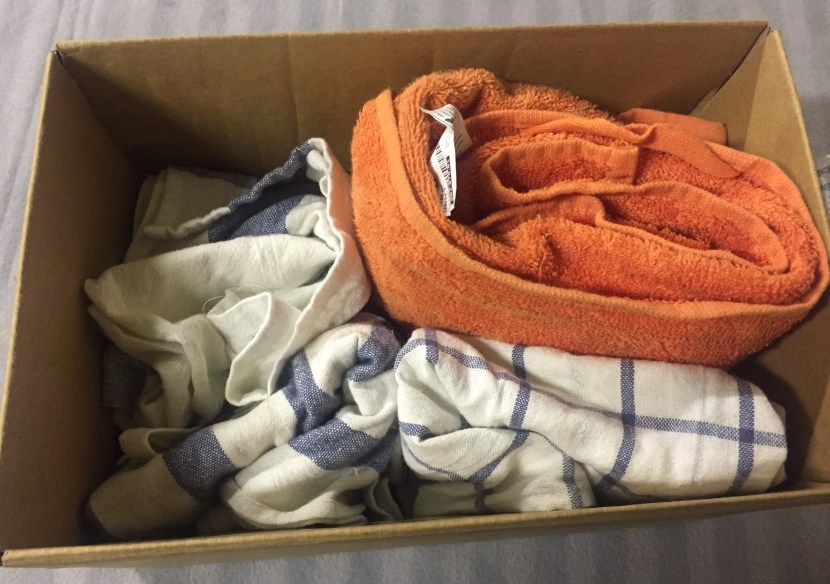
small cloths such as dusting cloths, face cloths, tea towels etc. and Ziploc or similar sealable plastic bags, small sealable lunchboxes or tins.
Cut each into small pieces about the size of your palm, or so.
Bring a cut up cloth to each place you go, without your dog this week, and wipe the cloth on some surface or in some area. Once it’s loaded with scent, pop it into a sealable container and store where your dog can’t access it, until you are ready for it on Day 81.
You are collecting olfactory information and bringing it back for your dog to investigate!
you might also like to use SAFE essential oils, herbs or spices for this BUT the dog cannot have contact with the cloths dosed in these. Instead, add the scent to the cloth and pop it into a container to cook for a few days, if possible. When presenting it to your dog, put some holes in the container so that odour can travel, but so the dog doesn’t have direct contact.
novel items that your dog could interact with, but hasn’t interacted with yet
shallow, open boxes, tubs or similar
portable device such as smart phones, tablets, laptops etc. with internet connection
paper or plastic cups or similar small tubs etc. (you need 3 or 4 that are the same or very similar to one another)
And for Freestyle Friday you will design your own enrichment device with the following ingredients:
plastic bottles (make sure they are safe and remove all plastic parts, labeling etc.)
We have lots more fun and brain games for you for next week. Start getting ready…
Subscribe to this blog so that each day’s plan is delivered right into your inbox each morning.
Welcome to Day 74 of #100daysofenrichment and thank you for joining us on this journey!
Although our challenges are directed mainly at dogs, we want all species to enjoy and benefit from #100daysofenrichment so, please join in, adjust and adapt to help your pet or companion live a more enriched life.
roll treats or toys up in blankets, cloths, towels, sheets, clothing to make snuffle puzzles
get the family involved in this one – kids love making puzzles for pets and these challenges offer lots of opportunities for children to use their imagination to come up with the best blanket snuffle puzzles for their pets.
Remember, supervise children in all enrichment activities and interactions with pets.
Prepping some of these puzzles is really quick, and some require more commitment! Then your dog does all the work!
What do you need?
blankets, towels of different sizes and types, face cloths & tea towels, mats, sheets, dog beds, clothing, socks
to encourage a wide range of foraging and exploratory behaviours
to do more feeding related behaviour than eating; we can use toys in these ones too, but the foraging behaviour is still feeding related behaviour
to encourage the development of strategies (behaviours) for getting the food out of the blankests
by carefully varying the design and adjusting the difficulty, we will facilitate carrying out a range of different behaviours, broadening the dog’s repertoire
While this challenge is certainly food based, they are also experiencing cognitive, sensory and environmental enrichment, with lots of crossover between categories.
Working out how to get to the food and developing dexterous skills in manipulating the roll-ups are examples of cognitive challenge.
I set up these puzzles in front of the dog, often times, so they can see me putting the rewards in and under the cloth or towel. Cognition research has demonstrated that dogs are capable of object permanence, meaning that they understand that an item or individual continues to exist, even when it can’t be perceived.
So, hiding a ball out of sight, for your dog is not like playing peek-a-boo with a baby…your dog knows the ball is in there to be found where as the baby may not!
(Miller et al, 2009) (Fiset & Plourde, 2013)
Sniffing out, tasting and chewing food all offer sensory pay off, but so does finding their way through each food puzzle, determining its value, and engaging in the puzzle of getting to the good stuff.
Snuffle roll-up puzzles encourage pets to interact with their environment – just the very interaction with the blanket is encouraging the pet to manipulate their surroundings, to get the things they like.
By offering a variety of snuffle roll-up puzzles, we can help the dog expand their range of puzzle-busting behaviours and facilitate your pet applying strategies from other puzzles to new ones; that’s a true cognitive gift and is growing your dog’s brain!
What goals can you add to this list for your pets?
How can we achieve these goals?
give your pet plenty of space for working on puzzles and bear in mind there will be mess, so think about spaces that are easier for clean up
the more difficult you have made the challenge, the higher the value the reward must be so use HIGH value foods or toys to motivate exploration and experimentation and make it VERY easy to get the reward (no frustration!)
if your dog just dives in, in full on destruction mode that might also be an indicator that they need an easier challenge so they get to experiment with a broader range of behaviours
What adjustments will you make for your pets?
Applications of Snuffle Roll-ups:
Snuuffle roll-ups are simple and straight forward, but no matter how much practice your pet gets with these puzzles, they are always challenging because the roll-up will always fall in random ways, adding to the challenge for your pet.
These puzzles are truly adaptable – there really is no limit to how they can be adapted to suit different puzzling levels. But, they are also incredibly simple so can be used when very little equipment is available, and when space and time are tight.
I love to use these puzzles when waiting around with a dog, for example at seminars, classes and workshops. Keeps ’em busy and engaged, and prevents boredom.
Because of the home made nature and variable materials used in these, it’s best to supervise your pet carefully when they have access to this puzzle.
Know your dog!
Making sure the challenge is very doable and they can get to the hidden food rewards quickly is key to modifying their behaviour and expectations during puzzling.
If you are concerned about your dog ingesting non-food items during puzzling, have a pocketful of HIGH value treats in your pocket and be ready to toss a couple toward your dog, across their eyeline, if you think they are thinking about eating the something they shouldn’t.
Check all your equipment for this challenge carefully and make sure there’s nothing that your pet will be able to detach, swallow or get injured on. Play safe!
Enrichment Options
As usual, we are bringing you and your pet through different levels of challenge so that you can introduce them to the puzzle and so that they have time to develop the behaviours required to solve it while avoiding frustration.
Option 1: Things in Blankets
This is your starting point so as to allow your dog to find their feet (paws?) with these challenges; important to help build confidence in the process and reduce frustration and blind-destruction. We did lots of Blankets puzzles on Day 29.
And it doesn’t need to be a blanket; you can use anything that works. In one of these challenges, I have even used some of Decker’s bandannas!
Beginners: Things Under a Blanket
place some food rewards on the floor
cover with the blanket, loosely
Let your dog find it and watch for the types of behaviour used to get to the reward.
Like making a Snuffle Mat, instead feed the cut lengths of fleece or towel through the gaps in a basket for 3D snuffling!
If using a particularly big basket, like this laundry basket, add a snuffle mat to the base too.
Advanced: Roll Ups Stuffed Shoe
Roll Ups stuffed into old shoes – exactly as it says on the tin!
Now it’s your turn. Show us what you and your pets, of any species, can do with these challenges!
Post to your social media accounts, using the #100daysofenrichment so that we can find you and join our Facebook group to share your experiences, ideas and fun!
You can comment right here too 🙂
We look forward to hearing from you and your pets – have fun & brain games!














 AniEd Ireland