Here at AniEd, our people are women, our clients are mainly women, those who have mentored our business are mainly women (like Susan Friendman, Anne McBride, Helen Zulch, and many more), our colleagues are largely women and those with whom we work in a voluntary capacity through A Dogs Life are mainly women.
You get the idea; AniEd is largely women-led.
Women in dog training are traditionally presumed to be a soft touch, to be mere cookie-pushers, and not equipped to deal with the tough dogs or tough cases. Sorry to disappoint but this couldn’t be further from the truth.
The movement toward a more science and evidence based, and overall more humane, approach to teaching has come to our field in no small part due to women entering and shaping this industry.
We, and many of our colleagues have played a role in this here, over the last thirty years.
On this International Women’s Day, here’s a shout-out to all the badass awesome women with whom we work on a daily basis, who are blazing trails in our applied science, who are fighting for animal and human welfare, and who are proving our detractors wrong at every turn.
All dogs must go to the vet at some point in their lives. And most people acknowledge that going to the vet is a distressing and scary experience for their dogs. Despite this, it seems that pet owners are largely unaware of the signals dogs use to communicate that discomfort. (Mariti et al, 2015)
Dr Marie Hopfensperger, DVM, DACVB, states that about 10% of puppies show signs of fear at their first visit, but when talking about adult dogs, that figure jumps to 60-80% of dogs showing signs of fear at the vet’s.
That dogs experience fear and distress in veterinary, grooming and husbandry contexts has been largely normalised, unfortunately.
In recent years, a great movement in cooperative care has really taken off in dog training, largely inspired by captive animal training. Husbandry training is a long and ongoing journey, and most pet owners will not be able or willing to participate to the fullest. Indeed, many vets or groomers don’t always have the resources to invest in these programs.
Regardless, there are lots and lots of things that pet owners can do, that require little effort, that can greatly improve their dog’s comfort, reduce stress, increase safety and make it all easier on everyone.
That’s what we will be talking about today; largely, effective management strategies.
Some dogs will require more specialised, in-depth and specific care and we can help you with that, but on a more one-2-one basis.
Prepare a Vet-Kit
Get ready for vet visits by building a Vet-Kit and having it ready in a specific bag:
a bag you can easily have on your shoulder or back so your hands are free (it should be washable and it’s a good idea to use a water proof bag for ease)
your dog’s mat or bed that is a nice place for them to be, associated with lots of rewards
your dog’s gear and muzzle, where relevant
stuffable toys and lappable toys or other dispensers, especially if delivering treats while the dog is muzzled
HIGH value and more-liquid treats that your dog loves
favourite toys
a notepad (or use your phone) with your notes of questions that you want to ask and discuss, prior to your visit, and notes that you can record during and after your visit – it’s tricky to remember everything, especially when you are doing your best to manage your dog’s comfort too
Wash everything when you come home after each visit!
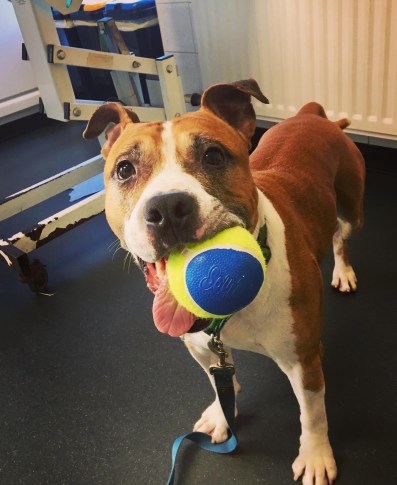
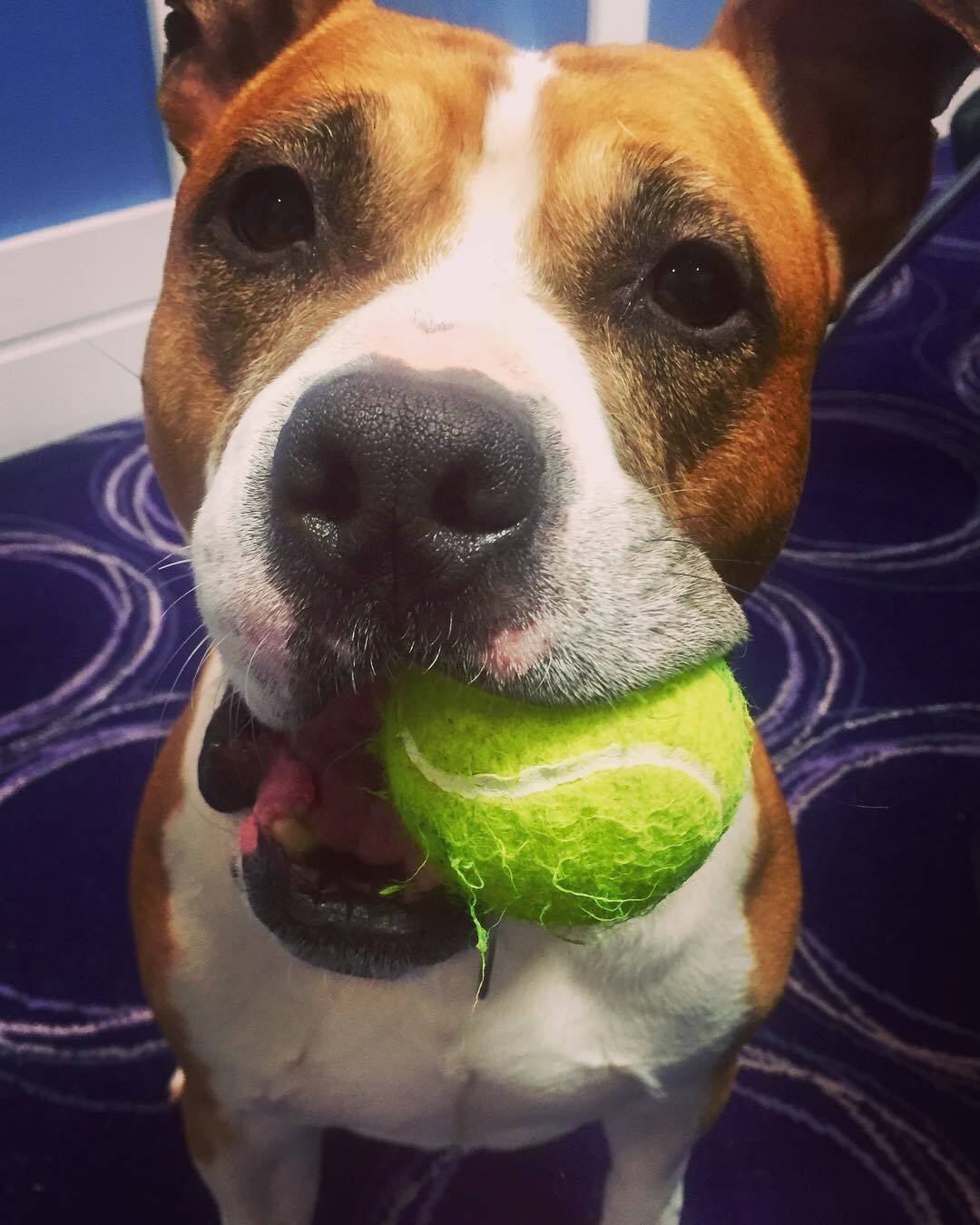
Soft treats and a ball make for happy vet visits for Decker!
Matwork
Bring your dog’s mat or a flat, non-slip bedding. This is helpful if you are waiting, so your dog can rest comfortably, and to have up on the table to increase your dog’s grip and comfort.
Medium or large dogs may be more comfortable being treated on the floor, so you can have them stand on their mat for traction.
Ahead of vet visits, you can make the mat a nice place to be by giving your dog chews and stuffables there and by rewarding the dog when he goes there.
Sit back, bring the mat close to you, and feed your dog’s entire dinner, one piece at a time, on their mat. Even your dog getting ten rewards, on their mat, most days will help them build a happy response to its presence and being there.
Anything you bring to the vet’s, including your dog’s bed or mat, should be washable and cleanable and you should wash it after each visit.
Gear
Obviously bring your dog’s collar, lead and so on. Even if your dog is walked on a harness, have them wear a collar too so that you can gently hook it should that be needed. Make sure to use your dog’s regular gear that’s used for other outings, and not just the vet’s.
Muzzle training and muzzle use is something that I can wholeheartedly recommend. Muzzling helps to keep veterinary staff safe, and feel more comfortable, allowing procedures to be completed efficiently and quickly.
But just like with matwork, we need to build a VERY positive response to the sight of the muzzle, and wearing the muzzle in lots of other places.
You can practice helping your dog become more comfortable sticking their nose into something by simply lining a paper cup or yoghurt pot (depending on your dog’s size) with something irresistible (like cream cheese, yoghurt, butter, pate or whatever floats their boat):
If muzzling is required, muzzle the dog before they become distressed so that might mean before you even enter the vet’s.
Fun stuff
We want to bring things that your dog likes and associates with feeling happy and comfortable. That means the best of the best food rewards and your dog’s favourite toys or games.
Stuffable toys that allow for lapping or lappables like Lickimat or Lickibowl type toys are wonderful additions. (Those links bring you to clips of Decker demonstrating their use; you can buy these products in most petshops and online.)
Use lappable treats so that should sedation be required, these can pass through the stomach faster. Although vets, RVNs and staff may argue that feeding the dog prior to sedation may increase the risk of aspiration, and while that is true, Westlund 2015 argues that the (small) risks are outweighed by the benefits.
These liquid cat treats are yummy, cheap and convenient:
Similar can be purchased online too, e.g. here.
Baby foods with dispensers are great also and tend to be very high value – they come in larger amounts so may be more suitable for bigger dogs.
A small snuffle mat may be a great addition if the dog can have more solid soft treats.
The treats above appear to be super high value are very soft and can be broken up easily!
When choosing treats:
smelly and soft
cut or broken up easily
small enough to be eaten quickly
high meat, fat and/or protein content
easy to deliver and toss
visible on the floor
don’t travel too much on the floor
If your dog loves a particular toy, bring that too. It’s not a good idea to have squeaky toys where other dogs are in close contact, such as in the waiting room, but talk to your vet about using them before, during and after in the consultation room.
Use the same treats and toys in lots of other non-vet contexts too.
Before you start
Exercise your dog well and make sure they have had plenty of opportunities to toilet, before your visit.
Don’t feed your dog a meal before going to the vet’s and do your best to stay calm too. The goal is to make sure that vet visits for your dog is as stress-reduced as possible, so be a good advocate for your dog.
Be prepared to stand up for your dog and discuss their needs with your vet team – you should be in this together!
Discuss your dog’s requirements with their vet team before each stage of your appointment and feel safe and confident with your planning and approach.
If your dog is experiencing distress, it’s ok to ask for a break and even discuss urgency of treatments: does this need to be done right now?
Sometimes, a vet or RVN will ask to take your dog to the back for some treatment. Certainly, many vets, nurses, groomers etc. report that the dog seems easier to handle when not with their owners. This is often erroneously blamed on owners ‘spoiling’ their dogs or some such, but this is unlikely. It’s much more likely that your dog is far less confidence and comfortable without you, so effectively shuts down a little and is easier to handle.
Whether this needs to happen or not, may be individual. I prefer not to allow this happen. But, for some dogs, getting the procedure done quickly is far less stressful than a drawn out process.
As much as I understand that the vet team is under time pressure, especially for routine consultations, giving your dog some time, particularly when you go into the consultation room, will help everyone settle and calm. Greetings can wait!
While you discuss your dog and their needs, allow your dog to sniff the room on a loose lead, giving them space from other people there. Be cool and neutral.
Seek medical help to support your dog and reduce their anxiety. Discuss the use of Sileo or Gabapentin, for example, with your vet prior to visits so that your dog has a little neurochemical help with coping.
Waiting Games
Waiting areas are one of the main areas in which not much improvement has been made in many veterinary practices and hospitals.
They are usually too small, with little room to make space between pets, doors often open right into them so dogs appear at a door on top of waiting pets, they have slick floors and are filled with sights, sounds and smells that dogs have come to associate with fear.
You don’t have to go in
As such, for the most part, I DON’T recommend that you wait, with your pet, in the waiting room.
leave your dog in the car or with someone outside, well away from the entrance or exit
go into reception and let them know that you have arrived and are waiting outside
when you go in, walk your dog briskly and directly into the consultation room
bring your dog straight out afterwards and have them wait outside
return to pay and discuss your dog’s care
Passing other dogs can be stressful for many dogs, but even dogs who might be comfortable in proximity with other dogs, might find passing stressed dogs in a stressful context when stressed themselves all too much.
Discuss this with your vet team before bringing your dog in; perhaps there is another entrance you can use, maybe your vet or RVN can check the waiting room and reception area so you can get the all clear before bringing your pet in or out.
You can ask your vet team and reception team about quieter times for appointments or times when it will be easier to get your dog in and out quickly and quietly.
If you do go in…
Give your dog as much space as you can and set up their mat and keep the treats flowing.
Construct a simple visual barrier by moving a chair or chairs and hanging your jacket or a blanket across the back to provide your dog with some privacy. This also helps other patients, with one less dog to be faced with as they move about.
If possible, leave your dog in the car and come into the waiting room to set up so that your dog can walk in and their familiar mat is immediately available, in their own little private nook.
It’s best not to let others approach or pet your dog. Mostly, people are well meaning but your dog needs time and space to process what’s going on.
Even if your dog seems excited and generally likes interactions with unfamiliar people, all that can be a little much in this context.
Hugging and constant fussing of the dog might not be appreciated from you either; that’s certainly something we think is comforting but may not be for dogs. Work hands-off instead with treats and toys!
Car trips
Make sure that going in the car doesn’t equal a trip to the vet; that’s a quick way to poison you dog’s attitude to car rides and comfort in the car.
With puppies, or dogs who have not had much experience in the car, do your best to get them out for short trips daily. When I say short, I mean one or two minute trips at the start; might just pull out of the drive, go around the block and back home.
This helps to establish the car as no big deal and no reason to get excited.
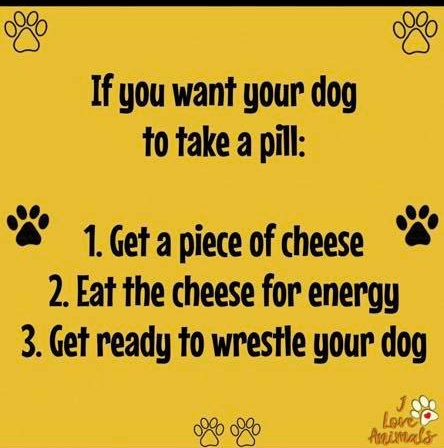
Follow our tips, do your practice, and no wrestling will be required!
Keep it fun and friendly
Going to the vet’s can mean lots of waiting around for your dog; waiting to get there, waiting to go in, waiting while the humans chat.
Along with the fear associated with going to the vet’s, waiting around can lead to increased anxiety in this context.
Have fun and play games!
While you wait and while the humans chat, play simple fun and training games with your dog to keep them moving, take their minds off the vet-stuff, and so that they can have some positivity.
What simple tricks does your dog do – practice them while waiting. Short and sweet behaviours that add a little movement and lots of rewards.
Like hand targets with movement:
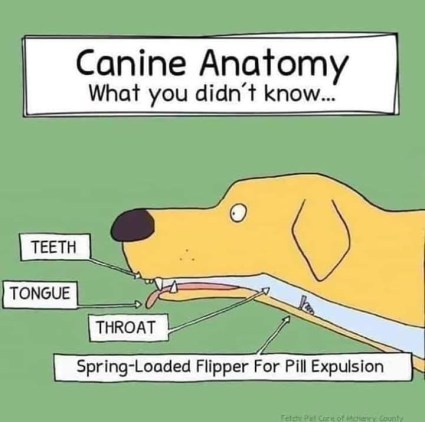
Only restrain your dog, with your vet team’s guidance, as much as is necessary. Full pinning and wrestling is rarely required and when it is, sedation may be a better option and a topic for discussion.
Hook your dog’s collar and stay within view so you can comfort and settle them. Talk to your dog calmly.
Make rewarding things happen! Offer a delicious stuffable toy, lappable toy, or other dispenser for muzzled dogs, as soon as the examining or treatment context begins.
As best as possible, allow your dog access these treats throughout. This can help redirect their focus and keep them still, meaning less restraint and less risk for all.
Planning and preparation is on you! We know your dog will need treatments and invasive handling, and we know they find that scary; do them a favour and prepare them.
Happy visits
Discuss opportunities to bring your dog for happy visits, where no treatments happen. Your dog goes to the vet’s, gets some treats and goes home again.
Maybe you practice bread-crumbing onto the scales for a weight check:
The key to success is a little practice at home, in calm scenarios, that are not associated with handling and treatments.
Follow our tips, do your practice, and no wrestling will be required!
Husbandry training
There are lots of excellent resources on husbandry training out there; I particularly like Deb Jones’ book Cooperative Care. and Laura Monaco Tortelli’s work.
Some Facebook groups:
While their full participation is certainly the goal, I recognise that this isn’t possible for all pet owners, or even most. Taking some tips from this post and applying those relevant to your dog’s needs and that of your vet team, will go along way to helping boost their comfort, allow them to feel safe, and reduce everyone’s stress.
And this is just a start, you might already have some great approaches to keeping it cool, so do please share.
Even though dog training and dog care, especially online, are full of ALWAYS’S and NEVERS, you don’t need to stop with fetch games cold turkey.
Our post Fun with Find It!, not just Fetch from last week, gives you lots of ideas so that you can break up repetitive fetch games, add some variety and improve the quality of play time in terms of behavioural health and enrichment for your dog.
All sorts of absolutes are shared online about stopping with fetch games and dumping the ball launcher. Fetch is a most popular game for pet owners and their dogs, and I really don’t want to throw the ball out with the fetch games.
The PDSA Paw Report, 2019, found that almost 40% of dogs only get out of the house for up to 30 minutes at a time, and that 13% of dogs not getting out daily at all.
And a 2019 survey of 1500 pet owners by dog food Forthglade found that less than half of dogs are walked daily.
In the case of some of these dogs, their owners may incorporate some structured enrichment program (beyond food dispensing toys and food puzzles), but for most, this is unlikely.
Given this worrying trend, I certainly do not want to start limiting owners’ efforts when it comes to providing adequate physical and mental outlets for their pets.
It may not surprise you that one of the first things I do with clients is help them improve and refine enrichment for their pets, helping them meet their pets’ needs before we can start with training interventions.
That’s what #100daysofenrichment is all about; encouraging pets and their people to have fun and brain games together with as much guidance and support as possible. And play most certainly forms part of that program.
Fun with Find It! and fetch and other stuff too
Here are some clips from today’s trek around the Phoenix Park. We start with just sniffing and roaming – I want him nice and warm before he does anything strenuous. For the most part, he is trotting and loping around, at will as much as is possible and safe.
Intermittently we might do recalls, Go Find It! games, or just silly stuff just as part of engagement and joy in hanging out together.
When he’s good and loose, we might play fetch; not every time, not in the same places. Sometimes I don’t even bring a ball.
But, we do our best to follow the rule of doing a different move each time to cut down on repetition, and making play time more than just fetch. So, we might have several rounds of this.
Then we might walk on; he gets to carry the ball: he’s the winner! We’ll have intermittent interactions around the ball – “I’m gonna getcha!” and a bit of tug, maybe.
Don’t just think about variation in toy games, but on your walks and outings in general. Engage your dog in lots of different activities and interactions, bring them to areas that allow for sniffing and running, different gradients, different footings, different levels of cover.
Rather than abolishing, we have responsibilities to help refine. And rather than going after pet owners, we have responsibilities to shape behaviour and apply differential reinforcement, rather than aversive approaches.
Add in Find It! games, along with sniffing, and lots of adventure time, rather than taking exercise and entertainment away from dogs. Concentrate on making it more dog.
Going out and about is pretty exciting for dogs; it stimulates all their senses while also providing lots of physical and mental stimulation. Your dog is going to be experiencing high levels of arousal, hopefully at a healthy and manageable level.
Doing all that, experiencing all that, and then bringing your dog home and expecting them to just chill, is pretty unrealistic.
Winding down is a skill. Think of your wind down at the end of your day. Just getting in from traffic and hustle can leave us buzzing and, even though we might be tired, good, restful, peaceful sleep isn’t necessarily immediate or easy to come by.
What works for you? Getting changed, having a shower, cooking a meal, discussing your day and debriefing, watching some TV, relaxing in your favourite spot, being idle, reading a book. Until lights out.
Our dogs are no different. And, indeed, because we have selectively bred many types of dogs to get more wound up quicker, we might have quite a winding-down-challenge on our hands.
This clip shows the last part of our outing; for about two hours Decker had been running about, sniffing, fetching, sniffing, playing flirtpole, practicing engagement and training exerccises. All that activity gets all his systems going.
Not only do we need a warm down for his body but also for his brain.
We end all that excitement with a slower meander through the goalposts. He gets to, at his own pace, check and respond to all the pee-mails, sniffing to his heart’s/nose’s content. You can see some prolonged and persistent sniffing in the clip toward the end of our tour.
This helps to cool him off, gradually lower his heart rate, respiratory rate and blood pressure and helps his brain begin to stand down, slowing in the production and circulation of neurochemicals associated with high arousal, bringing him back to base.
This is a gradual process. We don’t go from 100 back to zero just like that. Sniffing like this, less urgent movement, choice of interaction, brings him down a few notches and starts him on the descent toward baseline again.
Sniffing is the perfect start to warming down the brain and behavioural systems.
From there, add chewing and to bring us all they way down, finish with some lapping.
Crazy to sniffing to chewing to lapping to calm. Crazy back to calm is a multi-step process.
Maybe massages, stretching, or just resting together helps you and your dog – what else?
As with life and play, think in Rollercoasters. Activity and exposure to the world brings ’em up, so we need to help ’em come down again.
That will help your dog relax and really benefit from the activity as well as the well-earned rest afterwards.
After activity or excitement, do your equivalent to touring the goalposts – make sniffing, chewing and lapping happen, bring your dog down, think in Rollercoasters.
And it seems that our dogs’ ancestors may have a tendency toward inter-species play based in human social cueing, with even wolf pups showing a tendency toward fetching for an unfamiliar human. (Wheat & Temrin, 2020) This type of interaction is likely a long-standing part of our relationships with dogs.
Despite this, fetch is not really my favourite doggie game or means to exercise active dogs, particularly if a sole or main form. Now, before I have card-carrying members from Fetchaholics Anonymous after me, I am not saying your dog can’t play fetch games. But, if fetch is the predominant form of exercise your dog gets, this is very much for you.
Confession time. I have my own ball-addict who will and has chased and caught a ball repetitively many many times in his life. But, for Decker, this forms a tiny proportion of the exercise, play and entertainment he has access to, especially as he ages.
Fetch isn’t a dirty word, but…
I don’t want you to think that we can’t talk about fetch games but, it’s important that we take care. For lots of reasons, intense, and especially, repetitive fetch playing may be having impacts on your dog that is detrimental to their health.
Some problems with intense and repetitive fetch, especially when it forms a lot of the dog’s exercise, may include:
it’s just about the ball, and chasing the ball, and catching the ball, and biting the ball…rather than being real play between human and pet. And, when those plastic ball launchers are used, it’s even more detached, with even less contact.
it’s probably not really play at all. Real play is about the connection between players, and this intense fetching is just about the ball…the human could be replaced by a mechanical arm. Indeed there are automatic fetch machines that you can buy, so that no human is necessary (like the iFetch).
repetitive movement like running, catching, jumping over and over, and the rapid deceleration and direction changes, can be damaging to the body and may have long term effects. Because intense activity like this requires the body to rise to the challenge, they may not be as sensitive to pain or discomfort so may continue to exert themselves even when sore or uncomfortable.
intense physical, or mental exertion causes the body, via stress responses, to accommodate to rise to the challenge. This usually involves physiological, behavioural and neurochemical adjustments so that the body can cope. These responses narrow the dog’s focus, hones their fetch skills, at the expense of sensitivity to much else. This is what we call increasing arousal and exposing the dog to this on a regular basis without care and without facilitating the dog’s body recovering again, may lead to the dog’s baseline for arousal to be raised. This may mean that the dog is quicker to lose control, finds it harder to calm themselves, and may show signs of problem behaviour relating to over arousal.
Now we need to take care with social media fodder like this. This is far from validated or peer reviewed work, with little accountability or standardisation possible. Resources like this become popular and shared really fast in our industry, with little questioning or critique.
However, it can certainly be used to illustrate the different effects of these forms of exercise showing that fetch brings every thing up, while sniffing, especially structured and goal-oriented, brings it all down again.
However, we have no data to suggest that either one is better or worse for dogs. Is it bad that fetch gets them going going going…?
Too much of a good thing
Observe the dog that is engaged in or anticipating a repetitive fetch game: tense muscles, intense focus, dilated pupils, exertion breathing, tongue hanging out until the moment of the toss and then the mouth tightens, as he holds his breath, concentrating on the ball.
Chewy is desperately waiting for the ball to be kicked or tossed, letting him experience that high again.
This describes the behavioural and observable effects of increasing arousal. And the effects of this can feel pretty pleasant.
Just like human marathon runners or other daredevils, dogs can become adrenaline junkies thrill seekers too.
Fetch is a fix, for a lot of dogs.
kick it kick it kick it kick it kick it kick it
Play Find It! Instead
Turn fetch-time into a Find it! game by hiding the ball for your dog to hunt down, rather than just chasing. This provides for better enrichment by ticking so many more enrichment and predatory needs boxes for dogs, while also maintaining physiological responses at a more even keel.
Neither you or your dog need to go cold-turkey. Introduce Find it! games into your existing fetch-time. Throw the ball a couple of times, hide it and have a find it, then toss again and repeat.
To help with the hardened fetchaholic, take it slowly so as not to cause frustration:
introduce find it! games gradually by having just one or two searches per fetch game
use two different toys, one for throwing and another for finding
toss the ball into longer grass or more cover so that he still gets to chase, but finishes with searching
go back and forth between ball and food; toss the ball and hide food rewards for searching
throw the ball and move on, walking to a smelly sniffing spot to encourage sniffing for sniffing’s sake
You can mix in all these variations or just add them in gradually to help ease your dog off repetitive fetch.
Such a fetchaholic that he is, Decker will fetch anything!
Balls aren’t just for fetch!
Play other games with balls too, so that a ball or throwing toy doesn’t just mean the dog should anticipate feeling that high.
Rollercoaster games are structured to make sure that your dog hits that high, and then comes down again, over and over to really help prime their systems for recovery from arousal. Not just that, you can think of your dog’s day like a rollercoaster, making sure that you are helping him come down after every spike in excitement in day to day life.
These games are my go-to to help dogs cope with arousal better as they are just so effective, and it’s all through play which brings lots of its own benefits for pets and their people.
Play with a toy or ball on a rope for versatility.
We are prioritising taking the emphasis off repetition. A good rule to consider: don’t do the same move or activity more than two or three times in a row.
A tired dog is not necessarily a good dog so don’t make exhaustion your goal.
Fetching until your dog is exhausted, just raises those arousal baselines, while neglecting to provide a balance of mental and physical exercise. Your dog gets wound up and then has nowhere to go; even though their body might seem tired, the rest of them is buzzing.
Enrichment and appropriate challenge facilitating behaviour health are better for everyone and exhaustion shouldn’t play a part.
The toy is not the game
Don’t make play about a toy or item. These are merely conduits through which fun and connection happens between pet and person. Play for real.
If you can be substituted by a mechanical device, it’s probably not play and it’s certainly not connection.
This takes practice. Even a fetchaholics like Chewy and his awesome human can learn about playing for connection rather than for ball-throws. It’s going to take more input and effort from the owner and that’s why this can be a tricky sell. You are not just an automatic fetch machine. You should be much more than that to your dog.
Play is not about winning
For play with connection, make sure that the dog is in possession of the toy most of the time. While it’s important that we teach our dogs reliable toy releases (more here on teaching releases) for many reasons, getting the toy back or keeping the toy, “controlling” the game, or making sure the human wins, have nothing to do with it.
That’s not play. That’s competition. And where’s the fun in that?
Make the fun happen with you, while your dog just happens to have the toy. This is particularly important with puppies; we are laying the foundations of our relationship with them, and that’s best done through play. (Who doesn’t want to play with puppies?!)
Take the pressure off both you and your dog; not winning is not conceding anything. Leave the toy to the dog, and you just make it fun when there’s a human attached or involved.
When we need to get a little more responsiveness in there, we can use this same approach. By making sure that you make the toy fun, your dog will want to bring it you and have you involved because that’s what makes it great!
The joy in playing is that we play for play’s sake. A ball, food rewards or other extrinsic things may or may not be present, but the point is that the play, and all that brings, is what we’re in it for.
For Decker, him getting to hold and bite on a toy, even if it’s not the focus of the game, helps to give him a better outlet for his excitement and something else to bite, other than human bits. Playing without a toy takes even more practice, especially with a dog who likes to bite on things when wound up (that’s Decker!).
Play skills are some of my most favourite things to work on with pets and their people. And it is quite literally a game-changer for you both.
The high expectations of dogs, and their behaviour, are such that pet owners presume that their dogs will just play with them, and that human behaviour easily elicits play in dogs. Not so.
Play is just like any other behaviour (except that it’s truly magic) in that it requires practice and building. It’s the cornerstone to excellent pet-person relationships and it’s fun – this should be any easy sell!
Go play, ‘cos your dog is here for a good time, not for a long time!
#100daysofenrichment is the best way for you to provide your pet with the most enriched life. With lots and lots on play too:
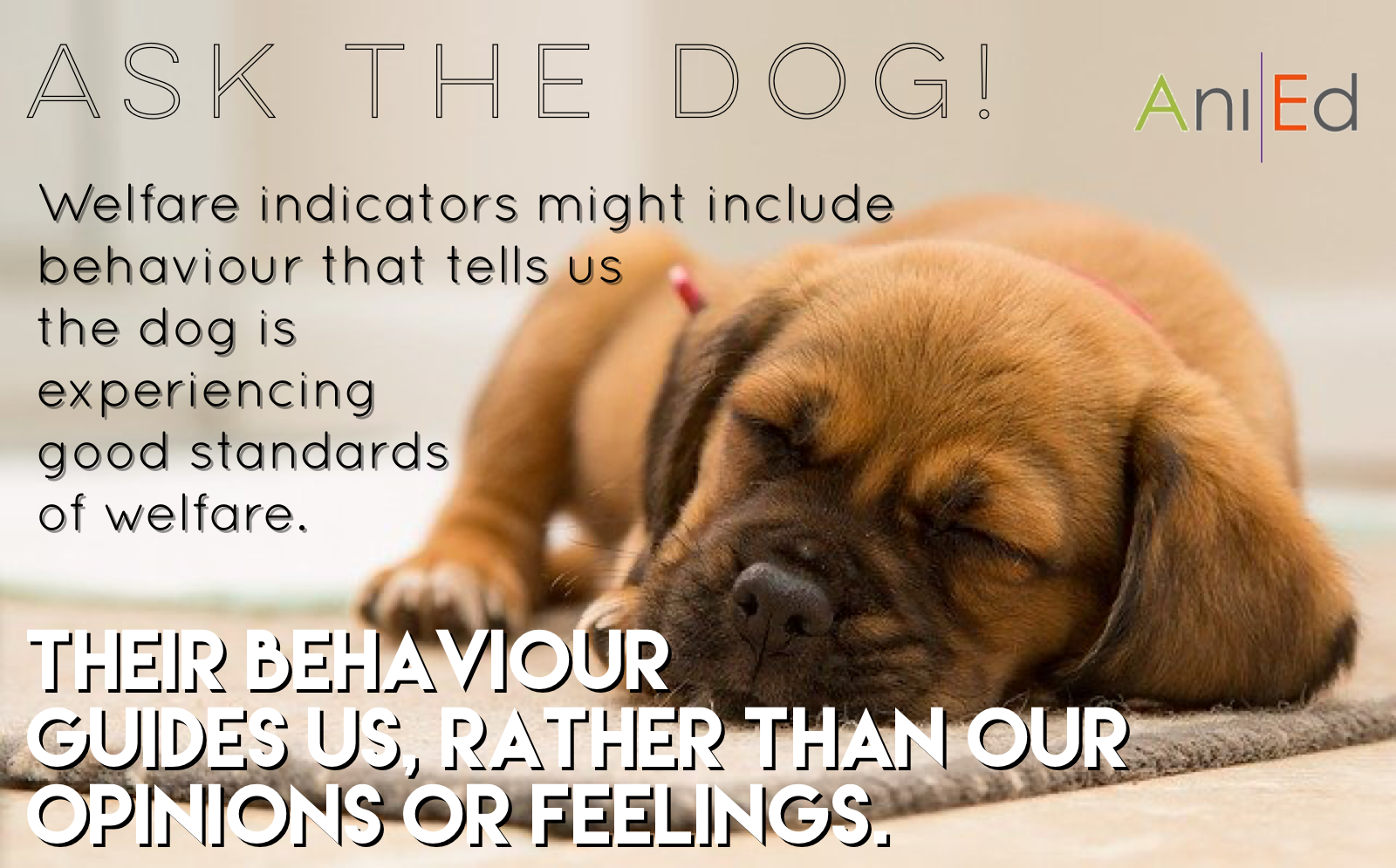
Regardless of our opinions or feelings, the welfare needs of the animal do not change.
That realisation, for me, has always been a game changer. And it’s why we are so invested in developing skills in understanding how to measure welfare in animals, particularly companion dogs.
Welfare is a measure of how well the animal is coping with its environment, and that’s generally the set-up we provide and expose them to.
How do we do that? We ask the animal!
Behavioural observations provide one of the least invasive means of measuring how the animal feels about what we do to them, from their point of view.
No matter the conditions in which the dog lives, and no matter our opinions and feelings about that, the welfare needs of that dog remain unchanged.
Last week we talked about dogs’ needs, the things dogs must have to have a good dog-life. How this manifests for an individual dog will depend on a range of factors, that might include:
genetic history: selection history and the behaviour of related individuals can help us predict the extent of this influence
early rearing conditions: for dogs to become family dogs, they must be reared in an enrichment environment, exposed to the human world and learning to just be around humans, especially during their first weeks of life
continued experience and exposure throughout adolescence: the teenage years will see a ton of behavioural development, brain change and body maturation making this period a most important stage in forming a healthy dog
resilience and recovery from stress, self-calming and arousal control abilities: this is what dictates how well a dog will do in the human world and modifying these abilities is tricky as dogs age, and even not possible in some cases
medical history: physical and behavioural health cannot really be separated
training history: even without a structured training program in place, every interaction between the dog and its environment, which includes humans, will have an affect on behaviour
These factors combine, impacting the welfare needs requirements for that dog.
My job is largely helping and supporting dog owners in the provision of their dog’s welfare needs.
Modern life presents many challenges for the companion dog, and its owners and meeting a companion dog’s needs is harder than ever before.
Being a pet dog isn’t all it’s cracked up to be; a pet life isn’t necessarily welfare centric, just by virtue of us loving dogs or welcoming them into our families.
A sedentary ‘sofa’ life may not be the best dog-life for an individual even though that has become somewhat of a standard wish often stated on behalf of dogs.
Our opinions or feelings about what makes a good dog-life don’t change what the dog actually needs.
The dog is telling us; their behaviour provides us with feedback so that we know how well they are coping with the things we expect of them (or not).
Asking the dog is the easy part, we just have to listen to what they are telling us, and then do what we can to give them a good dog-life.
#100daysofenrichment helps you to learn to observe your dog and ask them what they need – it meets dogs needs by helping pet owners with ideas, plans and supports. Join in, dip in, have fun!
There’s probably not one among us who thought, with a lightening flash, that “I want to work with people…I’m going to become a dog trainer..”
The term dog trainer is a misnomer; our most important role is that of people trainer. And for those humans, we are a teacher, mentor, coach and counselor. All because we wanted to become a dog trainer.
But, working with pets means that human behaviour is often a source of great stress and upset. We are drawn to this profession because of our love of animals (the non-human kind) and in our bubble, the culture is that humans are the ones doing harm, being non-compliant, not living up to our expectations and pet owners are easy targets for blame.
Wait a second. Isn’t that the blame we accuse pet owners of laying on their pets? Isn’t that the source of frustration and annoyance for us?
(Yes!)
Them & Us
While there are certainly high expectations thrust upon dogs, we professionals often have unrealistic expectations of our human clients too.
It’s not just that humans pay the bills. Our human clients are the ones that will make or break any program we implement. They are the key to ensuring their pet’s welfare.
When you are in the trenches, it’s hard to see humanity in humans, sometimes. Our judgement will be affected by negative bias and confirmation bias, making it even more difficult to see the good in the world and that most people are trying to do their best.
It’s easy to become cynical. It’s easy to succumb to bias. And it’s all too easy to get sucked into the outrage generated so efficiently via social media.
But, this is infectious and malignant. This attitude spreads and is so often cultural in our industry. What’s more, it’s exhausting. And damaging.
We talked about self-care for pet pros last week (Take Care of Yourself.) and if you have read that piece, I am sure you will note that a lot of what’s discussed is in relation to managing our own behaviour relative to human behaviour.
I understand how easy it is to develop a less than positive attitude to humans. To do what we need to do, we have to collaborate; that’s what motivates us to help, that’s what keeps us in the game, and that’s what prevents the damage taking over.
Humans have a tendency toward tribalism (the trainer wars are real!) and we certainly don’t want this to impact our work with clients. Humans, with whom we must collaborate.
Relationship builders
Our job exists to improve, repair, build and nurture the human-canine relationship. We build relationships with both ends of the leash – our job is unique in our position as multi-species teacher.
We spend a lot of time studying this odd pet-person relationship from early, mutualistic interactions to the modern-day complicated human-canine relationship.
It’s our job to understand how this relationship, this unique relationship before you, works for both species. That’s how we help. We tap into that and build and repair, improve and nurture.
Pet owners are going to have all sorts of expectations of hiring a dog trainer. Probably, most of which will be based on their experiences with TV trainers; these guys make their money by ridiculing pet owners, generating outrage regarding pet owner behaviour and doing it all for the camera.
Our prospective clients will be expecting that quick-TV-fix so it can be hard enough for us to sell our wares.
A new client is not necessarily anticipating a supportive learning experience; that’s on us. Our behaviour teaches them to expect that they will be judged and blamed, and that we will make things harder. Have you have uttered the line, “there are no bad dogs, just bad owners”; wonder why pet owners are slow to call in proper help?
We have lots of relationship repairing to do, before we even start and that’s just between the humans.
It’s just behaviour
Human behaviour, while a source of frustration for some, is just behaviour. We find the notion of blaming the dog abhorrent because we recognise that they are doing the best they can in the environmental conditions we have created for them.
That’s how human behaviour works too. I’m sure you will argue that humans are capable of more cognitive abilities, more complex process, have access to information, and ultimately hold personal responsibility. I don’t disagree with you.
But, if I want to modify their behaviour (to modify their pet’s behaviour), that doesn’t matter. It’s just behaviour and I am going to approach it that way.
This helps me compartmentalise, it helps me analyse and de-brief. It helps me recognise when I have done my best and when I could do better. And it helps me walk away without bitterness.
Preaching to the choir & stroking egos
The real inspiration for this piece is the proliferation of posts, blogs and memes shared among professionals, many of whom I admire greatly, that make fun of pet owners, take jabs at their expense, apportion blame and ultimately cause more separation than collaboration.
Who are these posts aimed at? Are we just preaching to the choir and generating cliques?
It’s easy to generate a band wagon, online, for all to jump on to. Maybe, we are stroking our own egos?
Our industry, for the most part, is barely professional, without professional standards and best practice. The way we speak about our clients hurts that even further.
I think a lot of this stuff is shared in joviality and with good spirits, and I bet lots of pet owners seeing them have a chuckle and move on.
I think many are shared without too much awareness; a professional probably wouldn’t dream of saying this to a client in real life, but there is some expectation of protection and feeling of anonymity online (and that can get us into all sorts of trouble).
But, it has an effect. It has an effect on pet owners, for sure, but most worryingly, it has an effect on pet pros. The words we speak (or type) inform our emotional responses which motivates our behaviour.
This thinking sucks us in, makes those biases even more effective, causes us to feel even more disheartened, and makes our job harder.
You need a safe place to vent and debrief. I would not deny that for anyone. And do it, but do it where it isn’t damaging and don’t live there.
Collaboration
I have all sorts of goals for the pet-person team when I work with them, but my ultimate role is to improve the welfare of that pet. I really like people too (and I especially love human-animal relationships), and I want them to experience good standards of welfare too. If their welfare is good, their pet’s is likely to improve also. It’s a real win-win.
I need that person onside. I need them to feel motivated and empowered. I need them to feel supported. And I need to create a safe learning environment. I need all this to achieve my ultimate goals.
Regardless of how I feel about that person, or how much they are to blame, or how unrealistic their expectations are of their pets, or how they should have known better.
I must be able to empathise with them, understand their position, recognise their limitations and realign their expectations with reality.
How can I get their behaviour from where they are now, to where we need them to be? Certainly not by ridiculing them or targeting them, even lightheartedly.
My relationships with clients are collaborations. We exchange information and with that, it’s my job to work out how best to advise, support and coach. It must be reinforcing, it must be do-able, it must be empowering and it must be motivating.
But, that’s not the whole story. We have to ask the dog too and that means we need to put things in place, run the dog through them, and use their behaviour as valuable feedback on how we adjust and refine our collaboration.
Our client isn’t ‘them’. They are a valuable and vital part of our collaboration. It’s all us; the pro, the pet owner, the pet. No one part is more important than the other, and we can’t lose any part of the three.
Williams & Blackwell, 2019, discusses the importance of empowering our human clients to boost efficacy, just as it’s become on-trend to discuss empowering dogs in all our talk about choice and control.
Compliance in our industry is notoriously low. This accounts for the biggest complaint that pros tend to have about clients so it’s easy to see why this will have such a negative outlook on the human end of the leash. (Ballintyne & Buller, 2015)
This is recognised in other industries too where the client is required to make lifestyle changes like in human medicine, for example. Lamb et al, 2018, also outlines factors that affect compliance and at the heart of it, is us, the professional.
The same responsibilities we expect our clients to have regarding their pets, we have to them. If we are pissed because they blame their dogs, well, us blaming them is just as damaging to our relationship, to our collaboration.
And when that collaboration breaks down, it’s the dog that suffers. They are always the vulnerable party.
Push aside our personal feelings, our presumptions about the client’s intentions, and suck it up. We are professionals and our job is to collaborate to help the dog. And that’s well worth it.
This is the focus of our Client Relations course, which is all online, is self-paced and allows you to develop knowledge and skills to best support your clients and improve compliance and efficacy. For more information, email info@anied.ie and I will help you.
Domestication has done wonderful things in producing an animal that likes to live with us and is pretty tolerant of us and our human ways.
Our dogs don’t have much choice in most of what happens to them – they don’t choose to be born, they don’t choose the human they go home with, they don’t choose to live a life of virtual social isolation while their humans work long hours or they are confined to kennel accommodation for chunks of time, they don’t choose to have such limited access to their world especially their olfactory world, they don’t choose a sedentary life; they don’t really get to choose too much of the things we expose them to in our human world.
Because of just how awesome dogs are, they appear pretty tolerant so we often assume they are living a good dog-life and that we are meeting their needs.
But, are we?
What is a good dog-life?
I often say that dogs are here for a good time, not for a long time. We can help them live every day to the fullest and have the best dog-life by prioritising their needs.
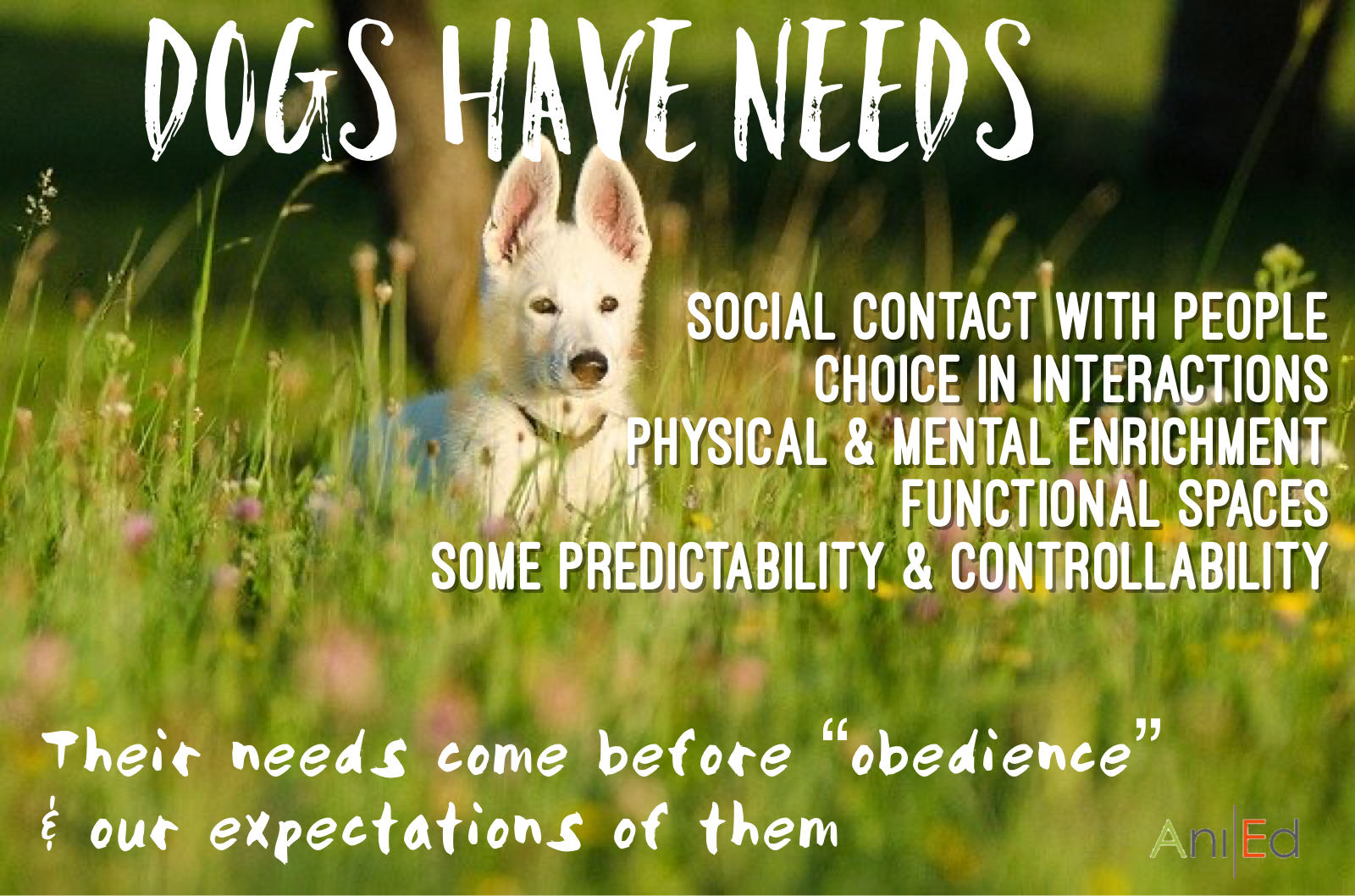
Before we can consider “obedience”, before we can achieve success working on behaviour ‘problems’ and before we can expect them to live up to our human ideals, we first consider the dog’s needs. No point going much further without this.
Dogs must have:
social contact and interaction with humans. We have spent many many thousands upon thousands of years making dogs like us more than other dogs.
The best company for a dog is human company and it’s especially important for young dogs to just be around human life. That’s how they develop appropriate social skills, which is pretty tricky if they are socially isolated for much of the day.
dogs need to be able to interact or not, having the time to choose, and have safe spaces for relief from interactions.
Humans often assume social interaction means contact and human-like contact such as hugs and petting. Dogs like to be close to their nearest and dearest and the ultimate in bonding is to lie in contact with you – no petting or hugging required!
appropriate challenge through mental and physical enrichment is always our central focus – if you get that right, the rest of it falls into place
functional spaces are important to dogs; they, like humans, prefer to have specific areas for feeding, sleeping, resting, hanging out, playing, toileting and so on.
They don’t need a “den”, because they aren’t denning animals but will appreciate their own space and choice to interact.
An enriched environment makes sure that the dog has access to and choice in functional space.
predictability and controllability are the ultimate in stress busters; “I know what’s about to happen to me” AND “I have behavioural solutions to deal with it”
One or the other isn’t enough, for a stress-less life, your dog needs both.
Welfare is assessed from the animal’s point of view. Dogs have needs that we must meet and might have to make specific efforts to meet because these needs might not be a normal part of our human life, with which we expect our dogs to cope. Think dog so you can give your dog the best dog-life.
#100daysofenrichment does just this – it meets dogs needs by helping pet owners with ideas, plans and supports. Join in, dip in, have fun!
Recently, I saw a meme saying something along the lines of, if you died, your job would replace you by the end of the week but your family will never replace you so spend your time wisely. Something like these:
These feel good memes make us feel warm and fuzzy for a split second as we scroll by. But rarely do they offer any actual usable and applicable advice or guidance.
This one got me thinking, though; I’m often thinking about time and how little I have and how poorly I prioritise and look after my time.
I know that, while my clients and students might miss me, they will be able to source suitable resources or another professional to help them achieve their goals. I am under no illusions!
I love my job and I really do aim for 100% commitment to bringing my clients and students the best support.
And in doing that, my nearest and dearest are definitely the ones I eek time from to give to my job. An unwilling compromise, perhaps.
I am sure many many self employed people will find this familiar and as so many in our industry tend to run their own businesses, this is likely something that is experienced by my colleagues, my students and other members of my community.
Professional Boundaries & Self-Care
There is a lot of talk about burnout and compassion fatigue in our industry, and, I am sure, many others. And rightly so; in animal care, we are notoriously bad at setting boundaries and prioritising our own care.
This in-depth piece from HBR shows that Burnout is about your workplace, not your people.
This piece reports on a Gallup survey of 7,500 employees, finding the top reasons for burnout are unfair treatment at work, an unmanageable workload, lack of role clarity, lack of communication and support from management, and unreasonable time pressure. These are organisational issues, rather than being under the control of the individual.
But this becomes more difficult when you are both your workplace and your people!
Boundaries.
What are your boundaries and how do you set them? Be clear about both personal and professional boundaries and commit to them.
Things will pop up causing you to feel like you must compromise. Knowing your boundaries is one thing but it’s quite another to have the where-with-all to stick to them. Write company policies that help support you in committing to the boundaries you have set.
In the modern office-anywhere-and-everywhere, it’s important that you clarify and communicate boundaries in relation to hours of business, availability and responsibilities.
Use features on phones and messaging apps, such as setting to “do not disturb”, using automatic replies and redirecting communication to a more convenient medium, for example, instead of calling, please email.
Setting boundaries can seem daunting; be clear in what you can realistically do. Decide what your priorities are for a time period – what are the no-go areas? This might mean your phone is turned off or put out of sight during family time, for example.
Have a plan for when you feel your boundaries are being pushed. Take a step back and consider your course of action, rather than just reacting. Maybe you need some time to consider how you will respond.
Last minute appointments are not vital. Don’t squeeze them in if it doesn’t work for you. Remember, commit to what you can realistically do.
Giving free advice can be risky. First, know your worth and know that free advice is often not valued. But, offering advice without appropriate information gathering may be dangerous and ultimately damaging at a number of levels. We have responsibilities in our profession and gathering information appropriately before advising is important for safety and efficacy.
Make sure to communicate boundaries with your behaviour, and not just words. If something is not possible, it’s not possible. If you’re not available, you’re not available.
No is a complete sentence.
You can say no. Be polite about it and don’t hurt someone’s feelings or cause them to feel bad for asking. Redirect their behaviour and their request.
At the same time, you don’t need to be overly apologetic. Reframe problems into solutions; this helps your approach and that of your clients.
You can take time to think about how you say no, or whether you want to say no. Consider scheduling and define priorities.
Let the person know that you are considering their request and that you will revert as soon as possible. Don’t leave ’em hanging!
Define your role and responsibilities.
What is your job description? Define your role.
List out your responsibilities to your clients. To their pets.
That’s what you can do and that’s all you can do.
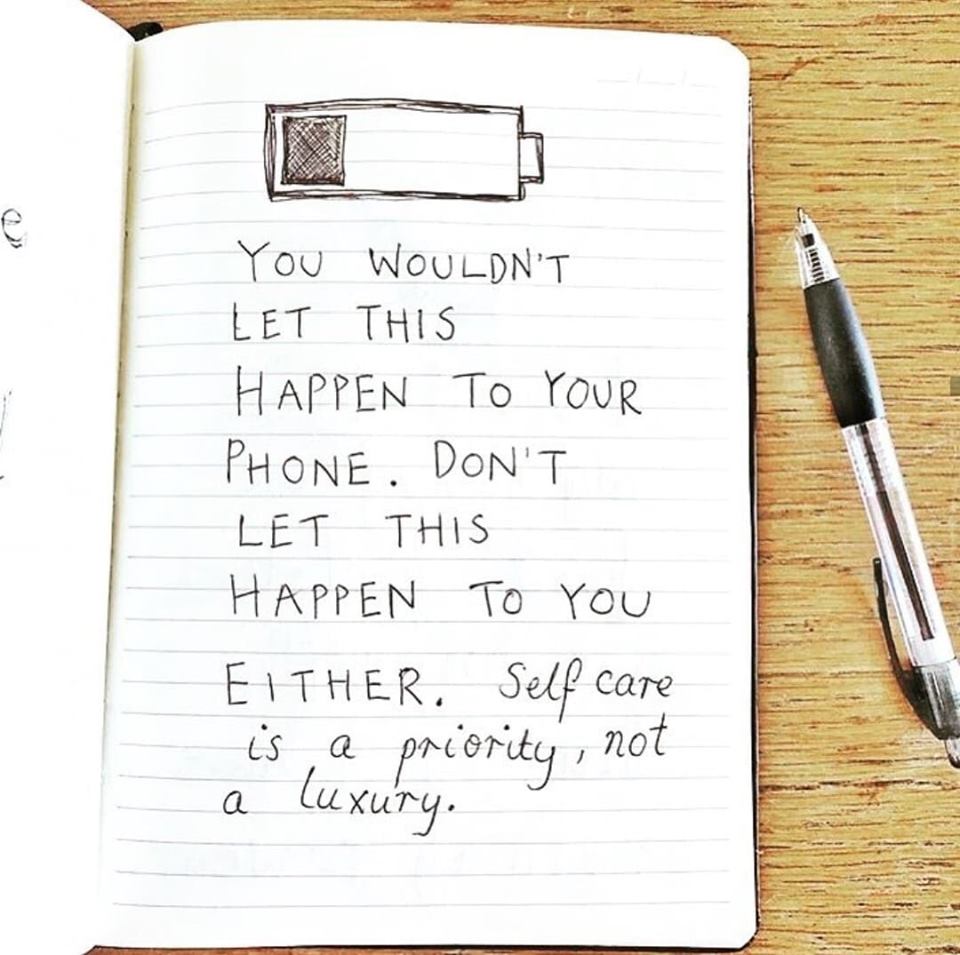
In our world, we are all about the animal and its safety and comfort. We can find it hard to compromise on this, but if we are not caring for ourselves, we won’t be much good in caring for others.
But, we must also be all about the humans, and the human-pet relationship. Sometimes, we find it difficult to put the same emphasis on applying our skills to the human end of the leash. It takes practice, for sure, and unfortunately many trainer education programs don’t emphasise this understanding, but we do. And we are. Here and right now.
You can’t control other people. You can only do your best and you must commit to that. Be honest about your skill set and knowledge. And be your best.
You can’t take personal responsibility for others’ behaviour. Your roles are based in supporting, teaching, educating, mentoring, coaching, counselling. Be your best at those; that’s where your energy needs to go.
Expectations.
How do you communicate the expectations that clients can realistically have of you?
They can’t understand your expectations unless you tell them!
What do they need to do to prepare for your session, how will you contact them, what are the sales T&Cs, what are your policies about cancelling, rescheduling, refunding?
What can they expect from you?
Be clear and communicate your expectations early on, before everything is booked and paid for. Before there will be confusion or disappointment. Before there is drama and distress.
Policies policies policies
A big part of business planning must be defining policies, and related procedures, for your business, your company and the day-to-day running.
Define boundary-breaking behaviours that stress you out, or could potentially stress you out. Have clear policies within your business for these to avoid them becoming a problem.
Update your policies based on feedback from your business performance. Record data and adjust and refine regularly.
The biggest challenge for new business owners, is that you are afraid to let anyone down or turn away business. I get it. But, before you even start, you need to erect those boundaries and have your business policies reflect them. And stick to them.
Stop celebrating exhaustion and over-work.
Compared to self-employed people, employees have a lot of provisions and protections in place to make sure they get appropriate breaks and have time off.
Do you know the legislated breaks and holidays for employees?
You are an employee in your business and it’s time you looked at making sure you have adequate breaks and holidays. Establish boundaries and policies and stick to your guns.
What do you need to do during down-time?
Sleeping, eating well, relaxing, taking time for other activities, hanging out with your nearest and dearest, having fun, resting. These are important for self-care so schedule time for them and don’t compromise.
Take time. At work.
We can harp on about self-care, but as we spend most of our time at work, that’s where we need to start. If you don’t take that time at work, doing lots of self-care at home just might not cut it.
Work will become a lot more enjoyable, doable and successful when you define, communicate and stick to your boundaries.
Having a breather between sessions will not only allow you to reflect on your last interactions and plans, but also put your best foot forward for your next session.
Taking breaks is not a reflection or your commitment and nor is working yourself to the bone.
Don’t be a hero; take your break.
Schedule smarter.
We can’t change the sleepless nights, the pressure, the buck always stopping with you, but we can schedule smarter.
Schedule time during which you do all the business essentials, including breaks and self-care.
Give these vital activities enough time and don’t just squeeze them in.
What are the barriers to taking breaks or time off?
Collect data to investigate when is the best time, business wise. This helps you to best enjoy that time without too much worrying about what you might be missing out on.
Have specific time set aside to do admin and especially remote communications like emails and social media. It’s very easy to allow remote online communication and activity to encroach on all parts of your day.
That phone we carry around all the time allows us instant access to work and instant availability; even though it’s just one email here and one message there, it soon adds up, eating in to time needed for other work or self-care activities. This puts you under pressure, adding to feeling overwhelmed.
Market smarter.
Market for the clients that you want and that your business needs. Charge appropriately to cover your costs and make sure pricing is reflective of the service you offer and expertise you provide.
Market for the clients that you can help best. Market your special skills and set yourself and prospective clients up for success.
Say yes to work that will enhance your skills, boost your confidence and provide a healthy level of challenge.
Take time to debrief.
Schedule time.
Reflect on the challenges of the case, the humans, the dogs. Your performance.
Review one challenging aspect of the day, of the session, of the interaction. Learn from it and let it go. Acknowledge the things that went right, that you can build on.
Audio-record while you drive to save time.
What three priorities are you emphasising for that client? What challenges are you experiencing or foreseeing?
Talk to colleagues who will understand the challenges you face and who may be able to see the wood for the trees, when you can’t. This can be a tough business as we spend so much time alone, with our thoughts.
Make time to chat with colleagues who share your experience and can support you. If you must, vent, but don’t live there. Get it out of your system and move on – learn from it if required, but leave it behind.
Take time to respond to things that wind you up. Don’t respond when you are upset. Let it sit for twelve, or even better, 24 hours.
Acknowledge when you feel overwhelmed before you approach the point of no return. Stop and consider why it’s happening, and how you can move forward.
Understand cognitive distortions
Recognise the potentially damaging tricks your mind might play on you. When you feel yourself engaged in all or nothing thinking, catastrophising, succumbing to negative bias and impostor syndrome, stop and reflect.
You need a break to consider why you are feeling this way. Seek support from a colleague to help you analyse how you feel and decide on the best way to proceed.
More on compassion fatigue, for animal trainers and behaviour consultants, from Dr Vanessa Rohlf here.
Although compassion fatigue is most certainly something that many in our field will experience, if you are feeling overwhelmed or down, there can be other things that might be happening.
This is important to address and this piece does a nice job of outlining alternatives: The Myth of Compassion Fatigue in Veterinary Medicine.
These emotional challenges facing us in our work are, thankfully, becoming more and more recognised, which is excellent. Check out excellent resources and support:
Although veterinary workplaces are discussed frequently, lots of other pros in other areas within animal care may experience burnout, feeling overwhelmed and exhaustion. These industries tend to have less structure and fewer professional programs in place.
As animal lovers and carers, we are drawn to professions that challenge our abilities to cope, making us more susceptible to taking on too much.
Build your skill, concentrate on foundations and be the best dog trainer you can be: What the world needs now…
The awesome thing for dog trainers is that we already have skills in modifying behaviour. Human behaviour is just that, it’s just behaviour. Don’t take it personally.
Call upon your skills: use management, redirection, differential reinforcement, make feedback available and meaningful, shape behaviour, and collaborate with the people you deal with. It’s just people training!
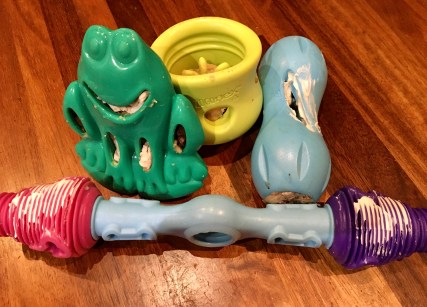
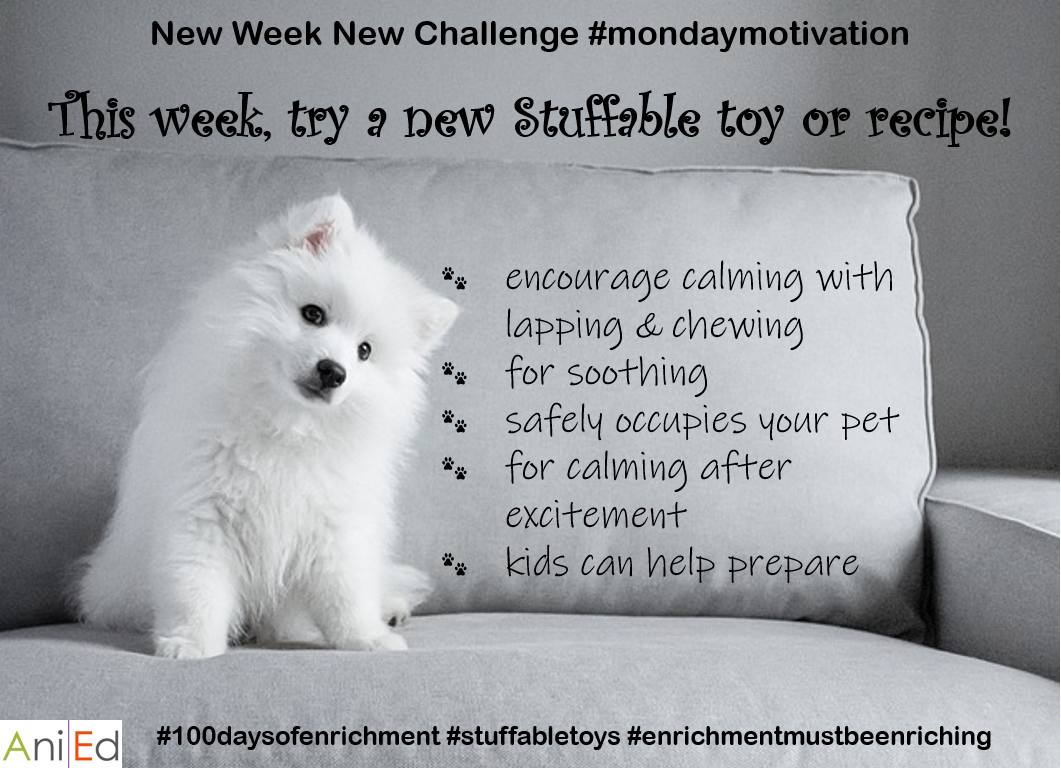
Put together a tempting Stuffable recipe for your dog this week. Lots of recipe and entertainment ideas here: Day 1 Stuffables
Our favourite Stuffable toys include KONG toys, West Paw Toppls, and K9 Connectables!
What’s your favourite?
And more importantly, what’s your pet’s favourite stuffing?






























 AniEd Ireland