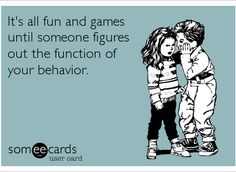
Behaviour functions for the behaver. This means that the animal is doing the behaviour to get things that they like or to avoid things they don’t like – dogs do behaviour that works for them!
Culturally, we are pretty obsessed with stopping behaviour we view as bad but to modify behaviour, stopping unwanted behaviour might be short sighted but often appeals to the quick-fix addicts.
Attempting to stop behaviour after the fact by, for example, administering punishers is so often too little too late. The dog has already got his jollies.
Instead we prevent the dog practicing behaviour we don’t like (practice makes perfect, after all!) so that we can clean the slate and establish new, alternative, more desired and ideally, incompatible behaviour.
To modify unwanted behaviour, we need to know the whens, whats and whys.
How does behaviour happen?
Dog training is generally thought to be about telling the dog to do something, using commands and making sure they’re followed through on.
While that satisfies a traditional attitude to our dogs, that’s not really what’s happening at all.
Dogs do behaviours that work. These behaviours work because things around the dog, in the environment, tell them to do a behaviour to access something or avoid something.
The things in the environment that tell the dog it’s the right time to do that behaviour are called antecedents (A) and the things they access as a result of doing the behaviour are called consequences (C).
When the A’s happen, the dog is getting prepared to do the behaviour and expecting a specific outcome. The A’s tell the dog to anticipate the availability of something the dog likes or to anticipate a way to avoid something they don’t like.
A little mention of management here, before we go on
The conditions in which behaviour happens, the A and the C, have nothing to do with the dog – they are in the environment. That’s why we say that behaviour is in the environment and not in the dog!
To stop behaviour, we must prevent the dog’s exposure to A’s and their access to C’s. That’s what management is – we stop the dog rehearsing behaviour by rearranging their environment.
Management clears the way for teaching and learning new and more desirable behaviour, providing a foundation upon which to build.
Consider the function of behaviour when teaching new behaviour
This is Ollie and one of his awesome humans. He’s a puppy and has been taught that tugging the mop is the BEST game ever. This commonly happens with puppy behaviours – they are cute and funny, providing endless entertainment for both species.
But the reality is that, in just a couple of short months, Ollie will be able to quickly destroy the mop as soon as it’s produced and that doesn’t make it so fun after all.
Over time, his mop-tugging behaviour has become very intense, more so than with toys.
Have a think about the A’s and C’s for this behaviour.
The C’s are pretty clear – there is a big pay off in getting to tug the mop; it moves and it’s soft and squishy, which are textures dogs often like to bite; this behaviour causes a surge in arousal with all the component neurochemicals causing him to feel good about it all.
Don’t forget the A’s! In dog training there is an inordinate amount of time devoted to discussion of C’s and not nearly enough about A’s and related factors.
As soon as Ollie’s human walks toward the mop, he is following and watching. You can see his excitement building with jumping up, trying to grab it, even vocalising.
He responds this way when in another room and can only hear the mop too! Ollie might just be a proper mop-addict!
He anticipates a whole lot of excitement when the mop comes out (you’re on your own there, Ollie!). This arousal means it’s really tricky to redirect his attention on to something else and to get him to let go of the mop.
As soon as the mop comes out, Ollie is geared up for some tugging – that behaviour functions for him, providing an outlet for his excitement. If we just take that away, in that context (ABC), where does that excitement go?
Our goal in modifying behaviour is to teach a suitable alternative behaviour – what would we prefer the dog to do?
But that behaviour needs to also plug the gap of the unwanted behaviour so that the dog still gets his jollies, just in a more appropriate manner. The new behaviour functions for the old, unwanted one.
Often times, in reward based training (or what ever label you care to use), we get hooked on throwing food rewards at new behaviour without considering that there was a real need there, on the part of our learner, and a real function being satisfied.
When we remove that outlet for that animal, we may be effectively suppressing behaviour but because we are reinforcing a more desired behaviour, often with food, we think that’s ok. And it might be.
But, our training plans must include consideration for the function of unwanted behaviour, ensuring that those functions are satisfied.
(Want to learn more about this? Check out this introduction to the A-B-Cs of Behaviour webinar for the tools to design training plans. )
For Ollie, we will tick lots of these boxes, with the help of his awesome family:
no mopping when Ollie is around – management
short one to two minute training sessions of ‘leave the mop’ exercise in the clip above – he learns that he gets his tugging jollies when he hears “leave it” and that the mop coming out makes his toy available for tugging…we are switching up those A’s and C’s
continued practice on play and tugging in other contexts too to really get some control and responsiveness built in
plenty of outlets for normal puppy behaviour in lots of different ways throughout the day (#100daysofenrichment is great for puppies too!)
As we move forward, we can start to build other alternative behaviours into this context; for example, the mop coming out means crate time or garden time with a yummy stuffable or sniffing game.
And we might use some strategies that have been successful with less intense mop chasers too.
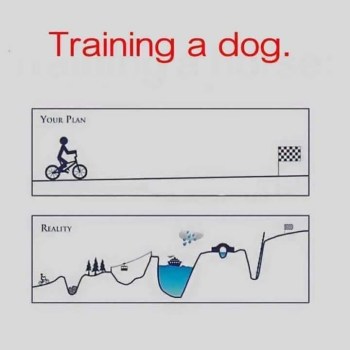
Ultimately, the presentation of the mop will mean chill out over there but first we gotta make sure he’s getting what he needs out of this mop business. Training is a journey, not a destination, and we’re in it for the long haul!
Last weekend we had a Scent & Sniffing workshop for our trainers. We hold workshops about every month to provide continuing education for our trainers, and where there is space, for other trainers and dog lovers too.
Certainly my favourite part of this is the application of scent and sniffing to improving the welfare of pet dogs. But, we covered lots on related sports and training, the biology of scent and learning about airflow and the ‘behaviour’ of odour.
It was a great day, with lots of engaged trainers and willing dogs – after all this is their thing!
By far the favourite part of the day, for humans and canines alike, was the Sniffari we set up, at the front of the training centre.
What’s a Sniffari?
I would love to say that I originated the term, but I think the credit goes to dog trainer Kristi Benson. And I would also love to claim that I came up with this idea, but I saw some similar version of this on a training company’s Facebook page and I can’t find it now – if anyone knows, please share so I can give credit.
(UPDATE: found it, tucked away in resources folder! This comes from the mobile Snuffle Park by Dog Solutions, an Australian company!)
AniEd’s version of this is possibly a little different and I am hoping to develop it more and more.
Sniffari is an olfactory adventure for your dog. It can be as elaborate or as basic, as large or small, and as complex or simple as you like. You are limited only by your imagination, and how far you want to take this.
We went all-out-elaborate for our workshop. Attendees from around the country brought lots of bits and pieces to build the Sniffari. AniEd is already filled with “rubbish” that we use for puzzling and enrichment, so we contributed lots too.
Our Sniffari is not just an olfactory journey, but a multi-sensory one. The dogs are drawn in and around many substrates, obstacles, sights AND smells. Many layers of cognition are engaged, meaning that so much brain power is involved.
That it was outside, to give us lots of space, also provided extra challenges in the way the breeze moved through the obstacles.
There were five dogs at the workshop and each had a different experience but all were enthralled. Afterwards they were tired, but chilled out rather than exhausted from exertion.
If you would prefer just to watch little snippets from each dog’s adventure see the next clip, but if you would like to watch an edited clip of each dog’s journey, that follows too (in alphabetical order!).
Cooper is an adolescent Cocker, a pretty high-arousal fella who is always moving and whirling. I particularly enjoyed watching him do this and felt that he may benefit the most from this sort of slower-paced activity. I don’t think I have seen him as calm, engaged, and moving as slowly and controlled as he did through the items of interest.
He systematically sniffs every item and methodically moves around the course, ensuring he doesn’t miss anything. What a wonderful experience for this guy; really taking time to think and sniff, take his time, relax and take in information without worry or arousal. Good job Cooper!
Decker on Sniffari
Decker is a mature entire male and although he is a serious sniffer, this was probably a little less enriching for him. Most of the items are from AniEd and he’s here almost every day, and many are from the beach he goes to most days too, so lots of these things are just not as interesting to him – he’s sniffed it all before!
Decker also believes that all people who come to AniEd are here to see him, so he feels obliged to greet everyone and make sure he shows his gratitude to his fanbase.
He spent lots of time on feathers and does a great double-take passing the duck feathers, going back to give them some intense attention. He’s a pretty methodical sniffer too, but this is how he is when sniffing in general and during specific trained sniffing related activities.
Eric on Sniffari
Eric is a mature neutered male and is a cautious fella. He finds new things, new environments and change a little concerning so would rather keep his distance. However, Eric was able to engage with this activity and was certainly keen to investigate and explore.
You can see Eric’s worry and apprehension but his senses took over and led him in and around obstacles he wouldn’t normally approach, helping him cope and allowing him to gather information about the world around him. Such an awesome experience for him.
He worked for a shorter period than the other dogs – they all got to decide when they had enough and wanted to move on but, he certainly immersed himself in Sniffari-ing. We left it up for the rest of the day, so each time the dogs went out for a break, they could choose to engage in the course at any stage.
Well done Eric – Sniffari’s are excellent for soft, sensitive dogs too!
Ivy on Sniffari
Ivy is a mature ex-racing Greyhound, spayed female, and is a slightly cautious and very dainty lady. She also sniffed methodically and seemed to be particularly interested in animal related items.
She shows a little apprehension when passing between items so a more sparsely populated Sniffari might be preferred by her.
She spends lots of time sniffing every inch of the snufflemat that one of our trainers had made for her pet rats. Ivy is pretty interested in small-furries and chasing, so this intense interest makes sense.
What a great way to provide her some outlets for her interests, without causing the high high high arousal associated with chasing and hunting.
Sniffaris work as an outlet for chasers – go Ivy!
It’s interesting to note that Ivy marked, with urine, twice; once after sniffing the rat snufflemat and a second time, after sniffing a mound of seaweed. Both times she showed marking behaviour with leg lifting.
It is to be expected that dogs will urinate after sniffing, especially lengthy sniffing sessions. Shafik, 1994, demonstrates a link between sniffing and urinating so the dogs were given lots of toilet breaks throughout the day between olfactory adventures.
It might also be interesting to note that the two girls marked in the Sniffari and the boys didn’t, even though two of them followed the girls’ rounds.
Lottie on Sniffari
Lottie is a mature Boerboel spayed female. She is a pretty social girl but did show a little concern at some of our attendees, who sat across the road to watch, and, also at some patrons from another business up the road a bit. Regardless, she methodically sniffs her way around, not missing a thing with her nose!
Upon reviewing her footage I note that she spends a lot of time sniffing and studying other dogs’ bedding and items. To dogs, this is social interaction, even though there’s no contact.
This may be an important outlet for dogs who prefer not to hang out with other dogs, for dogs who are worried by other dogs, and for dogs who are not going to be able to be exposed to other dogs due to their age, health and so on.
Gathering that information may also be important in developing comfort with other dogs, assessing the potential level of threat or determining that the dog hasn’t been in the area for a while (as in, it’s an old or weak smell).
Sniffaris might be a great way of giving dogs who don’t hang out with other dogs access to social interaction. Way to go Lottie!
Along with Ivy the other bitch, Lottie also marked, at the side of the tent. This may have been overmarking as it’s possible that another dog had marked there previously (but not for a while as this was the first time this tent had been used in a long time).
Puppy1 on Sniffari
We are continuing to develop our Sniffaris so we added some to Puppy1 class this week. Puppy class includes different cognitive, physical and environmental challenges each week, and this week’s was puzzle feeding. We combined this with some Sniffari ideas.
There are lots of differences in the puppies’ experience and that of the workshop dogs. First you will notice the level of activity is higher and their ability to sniff and explore methodologically is lower.
Although the fact that they’re puppies has a little to do with this, it’s also affected by the group dynamics and the presence of food in some of the puzzles.
This increases activity relating to competition between the dogs and it increases the intensity of their searching.
Also, it’s Galaxy’s (Pug) first class so he’s likely pretty overwhelmed by the entire sensory explosion that evening. It’s also likely that these puppies haven’t had a ton of experience with other dogs, outside of class, and that the world is relatively new to all of them. Puppies, of course, approach most interactions with exuberance and enthusiasm, and that’s certainly evident here.
Sniffari’s, providing multi-sensory experience and multi-level challenges are good for puppies, helping to grow puppy brains!
Take Your Dog On Sniffari!
We will be continuing to develop this idea as we feel it, like many of the sniffing applications we use regularly, has the potential to provide many benefits to lots of dogs.
Dogs live in the human world and as such must inhibit a lot of their most dogginess. Providing sniffing outlets is essential for making sure pet dogs are healthy in both body and mind.
Sniffaris may be ideal for:
young dogs
kenneled dogs
dogs living in less enriched environments
dogs on rest or exercise restriction
dogs who will benefit from some confidence building
dogs who are excitable and easily aroused
dogs who find the outside world a little overwhelming
dogs who might be very interested in hunting
dogs who might not want to be around other dogs a whole lot, or don’t get the opportunity to meet other dogs a lot
dogs new to the home – everything is a Sniffari to them as they settle into their new world
older dogs who may not be able to get about as well as they once did
But really, all dogs will benefit and enjoy the opportunity to get lost in their olfactory world.
In our Sniffari we had a tent, chairs and tables to add different dimensions. We used a wooden frame, pool noodles, streamers, mats of different substrates, tubs of water, platforms and hula-hoops to add in physical and tactile challenge. We used seaweed, plants, old shoes, fur, feathers, toys, boxes, old food and cosmetic containers, vegetation, twigs and branches, sweeping brush, different containers, and lots of bits and pieces to add real olfactory interest.
Make sure the item/s aren’t dangerous and safe to be sniffed, that they don’t contain or have never contained substances toxic to dogs, and make sure they’re appropriate for your dog. For example, it’s not a good idea to bring back vegetation that strange dogs may have peed on to unvaccinated puppies.
Display the items in as wide a space as possible so that odour can circulate and leave space for your dog to move between items.
Start today by promising to take your dog on Sniffari as often as possible. When you go somewhere, without your dog, bring back at least one item and allow your dog to sniff, sniff, sniff. This might simply be allowing them to go to town on your shoes, tracing your steps in olfaction.
Crazy dogs are often misjudged, much maligned and blamed for their crazy ways but that very crazy behaviour is more than likely associated with high arousal (emotional excitement), difficulty to cope with frustration and poor stress-control skills.
How might you identify a crazy dog?
The crazy dog comes in many forms, but in general these dogs have trouble with bringing themselves down after getting wound up; they might :
show reactive behaviour on lead or in confinement – barking, lunging, growling toward triggers such as other dogs, cyclists, other people
show attention seeking behaviour and/or bark excessively
have difficulty settling
have difficulty focusing
jump up
pull on lead
be excitable
be destructive
show frustration related behaviour such as pulling on lead, grabbing, vocalising when they want something
dislike confinement or being left alone
The crazy behaviour itself isn’t really the full issue, it’s more that the dog has trouble bringing themselves down from this high and often this manifests in over the top behaviour.
These are my favourite dogs to work with (and live with…ahem…Decker…) because they offer lots of behaviour (lots of crazy behaviour) and are just begging to be shown which ones are more appropriate.
Crazy to Calm Training Class
This training course is perfect for those crazy dogs, and their humans but also for dogs:
who are expected to cope with pretty exciting environments such as dogs who attend shows and competitions, dogs who assist their humans or dogs who attend work with their humans
who have spent time in a kennel environment such as a shelter
who are working through a training or behaviour modification program to help with reactive or stress-related behaviour
Crazy to Calm class will help you to:
prevent crazy behaviour by giving the humans a better understanding of their dog’s behaviour
manage crazy behaviour by helping your dog develop better focus skills and improved on-leash behaviour
tackle the underlying causes of crazy behaviour by working on self-calming skills
We will do this through lots of games, using a high rate of reward with food rewards, interaction with their human, toys & play.
We will not be suppressing crazy behaviour, as is so often the approach, but instead building more appropriate behaviour, while helping your dog learn to cope with excitement better – giving you both tools to harness that crazy into focus, fun and engagement.
Details:
10 class course starting soon, Thursday evenings 7-8.30pm
4 dog/handler teams
each class is 90 minutes
costs €250
You will have access to course online area where videos and homework exercises, along with comprehensive course manual, will be available so that you and your dog can practice at home and where you really need these developing skills.
You will need:
your dog!
your dog’s flat collar and regular lead
a range of food rewards of different values to your dog
tug toys – a longer one and a shorter hand-held one
specific mat or blanket (just for classwork)
a jacket or top with pockets to hold rewards (rather than a treat pouch)
optional: flirt pole
optional: a crate, at home
Course content includes:
human training
tools for managing your dog in class and crazy situations
settling & self-calming
mindfulness
focus & engagement
release cues
patience & frustration control
targeting and applications
handling comfort & restraint
on-leash responsiveness & behaviour
focus points
body awareness
confinement training & Crate Games
escape & emergency cues
play & rollercoaster games
appropriate application of enrichment
counterconditioning & trigger work
Register for class here, or email info@anied.ie, comment here or on our Facebook page!
When?: Course seminar on 9th and 10th June, 2018. Four months to complete optional assessment work from there – ends 31st October 2018
Where?: at the AniEd centre, Glasnevin, Dublin 11 (M50, J5)
How much?: Course fees: €120 includes weekend seminar, comprehensive course materials and supplementary resources
Assessment fee: €20 payable at submission
Who should do it?: anyone working with dogs, for example, trainers, kennel and petshop staff, groomers, rescue staff and volunteers, and pet owners with a keen interest in canine health
Booking: register here and we will respond to you as quickly as possible.
We will ask you how you would like to pay, and raise an invoice for you by which you can pay.
Upon receipt of payment we will send you your Learner Handbook and ask that you sign and return the declaration at the back.
A couple of days before your course starts, we will send you details, directions and so on, for your seminar and then you’ll be good to go!
Why do this course?
This course will provide you with an excellent overview and understanding of canine health, from a biological point of view. You will not find this tricky, even if you have never done science before, or even if you find science too difficult.
This approach, allows you to understand how diseases and disorders affect dogs, and, how treatment is devised and implemented.
This can be applied to building knowledge in terms of first aid, preventative care and humane husbandry care for dogs.
What will you learn?
This course comprises three parts:
Part 1: Canine Physiology & Disease
Part 2: Monitoring & Maintaining Canine Health
Part 3: Responsible Dog Ownership
Each course part covers a wide range of topics.
Part 1 Canine Physiology & Disease:
cell anatomy & physiology -> zooming in, we start by looking at health and disorder at microscopic level to provide you with an understanding of the workings and treatment of serious disorder such as deydration and shock, tumours and cancer.
skeletal & muscular systems -> a common source of concerns such as lameness, bone, joint & muscle disorders, cancer, the effects of skull shape on health, and vertebral health & disease
blood vascular system -> covering blood and related disease, heart functioning and disorder, the lymph system and cancer, plus first aid and the control of bleeding
immune system -> the effects, disease and treatment relating to pathogenic organisms such as bacteria, viruses and fungi, and vaccination
respiratory system -> how these organs work, and disease and treatment of disorder
digestive system -> how these organs work, and disease and treatment of disorder
urinary system -> how these organs work, and disease and treatment of disorder
reproductive system -> how these organs work, and disease and treatment of disorder
integumentary system -> the skin and related systems are exposed to the external and internal environment so may be associated with a wide range of disorder and disease
endocrine system -> how these organs work, and disease and treatment of disorder
neurological system -> how these organs work, and disease and treatment of disorder
sensory organs -> anatomy, physiology and disease affecting the eyes, ears, and nose
Part 2 Monitoring & Maintaining Canine Health
how to assess and evaluate canine health
care required when in contact with animals, particularly in relation to zoonotic conditions
providing healthy nutrition
providing healthy environmental condtions
carrying out health care procedures
preventative health care & parasites
cooperative husbandry care for dogs
Part 3 Responsible Dog Ownership
canine related legislation in Ireland
responsible ownership guidelines & choosing a dog responsibly
canine reproductive control & the effects of neutering
Assessment
All assessment work is optional, unless you are completing a Specialisation.
But don’t worry, there are no tests or exams! All assessment will be conducted over a number of months, and as part of your course materials, you are provided with a study planner to help you organise your studies.
Even if you don’t plan to submit, you are encouraged to complete assessment work.
For this course, there are four separate assessment pieces:
using course material, develop a healthcare checklist of signs for urgent, less urgent and non-urgent care
carry out practical work with your dog (or any suitable dog to which you have access) demonstrating non-invasive health evaluation procedures
design a suitable environmental enrichment program for a specific dog you know
design a responsible ownership handout for pet owners
You have four months of complete this assessment work.
Regardless of whether getting a puppy or new dog around Christmas is actually a bad thing (for that puppy or new dog), is up for debate; arguing the point is not relevant now.
If new puppies are in new homes, which they undoubtedly are, we want to keep them there by supporting new puppy owners, giving them the best advice and helping them avail of the best resources on puppy care.
We have a FREE trouble-shooting seminar for all puppy owners in January to help, and make sure everyone gets off on the right paw.
When – Saturday 6th January, 2018
What time – 2pm-4pm
Where – at the AniEd centre in Glasnevin, Dublin 11; just off J5 M50
What will we cover?
It will be two hours of puppy-people’s questions. All those niggling, puppy problems and behaviour mysteries will be discussed, so that puppies and their families can stay together in peace and harmony.
We will cover topics such as:
what puppies need to know
social experience – puppy and people
social experience – puppy and other dogs
social experience – puppy and other animals
environmental experience – growing puppy brains and building confident, resilient puppies
puppy’s first walks
travelling in the car
importance of mental exercise
care with physical exercise
puppy nipping, biting and bite inhibition
puppies & children
management – prevent unwanted puppy behaviour
crate and confinement training – benefits and pitfalls
alone training
night-time training
passive training – catch your puppy doing the right thing!
Park your Pup – teach your puppy to relax and settle, and be ignored
preventing resource guarding
handling and grooming comfort
toilet training
playing with your puppy
We have lots to cover, and no doubt there will be more to discuss.
Who should attend?
This is vital for new puppy owners, if even if they have had puppies before. There’s nothing like going from an adult dog to a new, young puppy!!
We will be discussing puppy training & behaviour relating to puppies five months and younger.
This will also be great for those thinking of getting a puppy so that they can be prepared.
Pet professionals and veterinary personnel are welcome to come along too, as they will often be in positions to advise puppy owners.
Please book!
This is a people-only event, and requires booking so we know how many to expect.
You can book by emailing info@anied.ie, messaging our Facebook page, or calling and leaving your details (01 8308380 or 086 044 9275).
We are closed for Christmas and New Year’s but will make sure to respond to all bookings for this event as soon as possible. Rest assured, that if you have contacted us and left your details, you have a spot on this seminar!
Please share, far & wide so we can get the best support to new puppy people, and prevent an onslaught of unwanted, difficult puppies in 2018.
This will not be news to you, at all, that dogs love sniffing. Sniffing isn’t just a fun past-time for dogs, it’s essential behaviour that they MUST do for behavioural health.
Not only that, sniffing can be a great training tool.
Sniffing for training
Dogs pull on lead for lots of reasons:
they’re excited to be out and about
the world is an exciting place
they have twice the number of legs we do
they want to get sniffing and sniffing and sniffing
they want to get to things
they want to get away from things
we have trained them to pull
Pet owners spend lots of money on all sorts of, often times, scary equipment and lots of time on training exercises, to improve their dogs’ loose leash walking skills.
Changing the dog’s motivation for behaviour, and reducing his expectation (that crazy behaviour is required) will help to prevent pulling behaviour, making walks more enjoyable for all.
SNIFFING STATIONS
Is there a time or area in which your dog really, really pulls?
Do you find it difficult to get your dog from point A to point B, on lead?
Are there particular distractions that you find difficult to manage?
Establishing Sniffing Stations will help:
to get your dog out the door, without too much craziness
to get your dog from the house to the car, or from the car to the park or from one spot to a very exciting place
your dog get passed, toward or through particularly distracting situations
your dog get to another person or dog in a calmer fashion
to get a dog from a kennel to an exercise area
to get a dog to an exit (or entrance)
the dog to associate good things with potentially distracting or worrying triggers
Start with your dog on lead, and use really yummy food rewards.
say “Go Sniff!”
drop a couple of treats to the ground, across your dog’s eyeline if possible but just point them out if he misses them
let your dog eat the treats
repeat approx. every two metres
We start out with Sniffing Stations close to one another, and can move them further apart as the dog improves, or closer together for really tricky distractions.
If you know that you need to move the dog over the same short route, make more permanent Sniffing Stations.
Use double-sided tape to secure little bowls or even lids to each spot. Pre-load with treats for each trip.
For more temporary but pre-loaded Sniffing Stations, use little pieces of double-sided tape at each station and place treats on each one. This will also take the dog a little longer to eat, so is great to get dog past tricky distractions.
(Securely stick tape so that the dog doesn’t take that too!)
Set the scene…you are walking your dog, interacting or playing, your dog might even be on lead, or at the very least is engaged with you and not looking to meet and greet…in the distance a loose dog approaches, directly, attempting to interact with your dog, who is not really in to it…
Regardless of how this interaction goes, it’s not appropriate behaviour.
You are, I am sure, a ‘socialised’ person. This means that you can pass other people without having to approach them, attempt to interact or touch them. Strangers running up to strangers, attempting contact, especially if one person is clearly not looking to interact, would be weird and concerning human behaviour.
Same goes for dogs. A socialised dog doesn’t need to greet every dog, doesn’t get excited by the presence of other dogs, and can read another dog’s signalling without having to get right up in their face.
This negatively impacts a dog’s comfort levels and behaviour, and is probably not great for either dog involved.
Dealing with Uninvited Approaches
Safety first
Not only does this behaviour present risks for your dog’s safety, but also yours. Lots of your first reactions may be borne out of panic, and that may not be helpful.
Picking up your dog, trying to move them with the lead, or even putting your body between them and the interloper, may increase the tension or arousal in the situation leading to an escalation in their behaviour.
When your dog is at risk, you might be tempted to put yourself in harm’s way, to attempt to prevent your dog being injured or scared.
I get that. As much as I might advise you don’t do that, to be honest, I am going to do whatever I need to do to protect my dog from inappropriate contact with another dog who may potentially cause injury or stress.
picking up your dog may cause the other dog’s arousal to increase, pursuing your dog up into your arms. This may lead to a more persistent ‘attack’, with the dog frustrated and trying to reach your dog, and may lead to injury to you as the other dog attempts to get to your dog, or re-directs onto you.
In a panicked state and being lifted and losing control, it’s also possible that your own dog will re-direct on you or catch you with his teeth or claws.
If you must pick your dog up, try to tuck him inside your jacket and turn your back on the other dog immediately.
It might be possible to put your own dog up on to something high such as a log, a rock or even on a vehicle.
Regardless, keep your balance, and possibly implement some of our other recommendations to reduce the impact on you, and your dog.
restraining your dog on lead may offer some protection in that your dog doesn’t have the opportunity to go after another dog, but dogs on lead are more likely to react and aggress when they feel under pressure.
But when another dog comes close, we can feel the temptation to tighten the lead, and even use it to move our dog out of harm’s way.
Doing so may cause your dog’s reaction to escalate faster and increase in intensity.
If your dog is in an interaction with the other dog, them being moved suddenly and stiffly may cause the interaction to go south fast.
Moving them by the lead, may even cause greater damage and injury should there be a bite.
Your dog being on lead may very well contribute to an interaction becoming more tense, more serious, leading to more harm.
Dropping the lead and allowing your dog to move and escape may well offer greater protection as your dog can move faster without you, but may put your dog at greater risk in other ways. Your dog running may even increase another dog’s interest, leading to intense chasing behaviour.
As counterintuitive as it sounds, loosening the lead, may be your best bet, especially if the other dog’s intentions are social, albeit obnoxious.
Keep the lead loose, stay at your dog’s shoulder, and move with your dog as he moves or circles may help. Stay calm, hum or sing softly to yourself (“Happy Birthday” is a great one to sing as it’s hard to be tense during that one!), and be ready to move.
you moving between your dog and the approaching dog is often a go-to move…indeed I have done it myself. Sometimes this can be enough to deter an overly-exuberant greeter, but sometimes it may just draw the other dog’s attention to you, making you the focus.
Where an interaction has begun or where there is tension, you moving may certainly cause fireworks.
Although we are tempted to try and intimidate the other dog so that they move away, this doesn’t always work as intended, instead leading to an increase in arousal and a lowering of already impaired inhibitions, possibly in both dogs.
We can teach a dog to move behind us on cue which might help to diffuse tension, and paired with some of our other recommendations, may help to cool the situation.
Diffuse
Being proactive, and looking to keep interactions low key is probably going to be safest and most comfortable for everyone, but this requires time and space, which you might not always have.
assess the situation – how is your dog feeling, how is the other dog responding – how direct, tense and intense are they, how much control does the other owner have, how responsive is your dog, how well will you be able to escape?
scan your environment for signs that loose dogs may be present, such as people who look like dog walkers and other dogs in the distance, listen for dog tags and paws on concrete.
walk in places that require dogs to be on lead, that offer you good vantage points with lots of places that you and your dog can escape to that provide visual barriers
remain alert close to blind corners or concealed entrances, which might reveal loose dogs suddenly
keep your dog’s attention on you with trained cues for simple behaviours such as hand targeting, and high value motivators such as food rewards and toys.
It’s best to avoid stationary behaviours such as stay, sit or down, as this can cause your dog to feel less well able to control the goings-on.
Remember, the introduction or availability of high value motivators may cause your dog’s discomfort to increase as he attempts to keep the other dog away from his prized possessions. It may also make you more attractive to rude dogs looking to score a treat from a stranger, or take another dog’s ball (someone else’s is always better, right?!).
get your dog sniffing – head down and sniffing can communicate a desire for a calmer, slower interaction among dogs which may be heeded. Your dog staring and making eye contact with another dog, may encourage it to approach.
walking away calmly and/or taking sudden direction change can help to keep your dog focused on you and less likely to interact with another dog, and may cause the other dog to give up in its pursuit
this is the opportunity for you to have your dog behind you, and you between your dog and the other dog, before tensions rise and direct approach is imminent. It may also give you time to call to the other dog owner, asking them to get their dog.
The other owner
While some of you will scoff at this, sometimes another owner may not be aware of the distress their dog potentially causes.
Culturally, among dog owners, it’s presumed that their dog running directly up to another dog or person is just an expression of their dog’s friendliness and joie do vivre. This interaction may be a teaching moment, if there’s enough time and everyone is open to discussion.
call to the other dog owner and ask them to get their dog, to leash their dog, to remove their dog
There’s no point asking them to call their dog as doing so doesn’t necessarily mean that their dog will return to them.
as frustrating as it is when they say their dog is “just being friendly”, (we, of course know different), it’s best to stay as calm as possible so as not to increase the tension, or possibly get their back up, making them less cooperative
if your requests are not successful, tell them that your dog is not friendly, is sick or old, or is “contagious”
muzzle training your own dog, and having them wear a muzzle is a sure-fire way to get other dog owners to avoid you…
taking out your phone and really or mock filming them will often cause them to remove their dog and move away quickly
informing them that you will do what you need to do to protect your own dog, should they be unable to remove their dog immediately, is a last resort but threats may be necessary
React
Sometimes you won’t have time for any of the above, and are left with no choice but to react and to hope that you can minimise emotional and physical damage to all involved.
Repellents & Shields
Some you might be able to carry with you, but you may also be able to use things you find around you.
Repellents might include:
compressed air (Pet Corrector)
small aerosol can, citronella spray
water gun or spray
a Dog Stop alarm (very loud!)
The problem with these is that they will only be effective when the other dog is quite close. Outdoors the wind may blow a spray back into your or your dog’s face.
If something is designed to scare away another dog, it may also have that effect on your dog possibly leading to a greater level of distress in association with that context.
Shields might include:
an umbrella with a button pop
a length of cardboard, like a flattened box
a clipboard, sheet of Styrofoam, chopping board
your bag
Shields might act to intimidate a dog sufficiently that they move away, or may give you a few seconds to redirect and escape.
Again, anything intended to startle an oncoming dog might also distress your own dog.
Carrying a small back pack is a good idea, not only to carry things safely and out of reach, but also to use as a shield or as something to redirect a persistent interloper.
Other deterrents
Carrying a walking stick, or even an umbrella folded up may be enough to deter other dogs. Swinging it or cracking it on the ground can help to move them away.
Swinging a lead or line, or even the heavy handled end of a retractable leash may also help. Cracking the line in the air or on the ground may also cause sufficient startle to halt an approaching dog.
Try:
turn your attention to your dog immediately and keep them engaged
move away briskly, keeping your dog moving away, rather than directly
keep yourself between your dog and the other dog as you move
toss treats or something (such as pebbles) into the dog’s path (not at them), across their eyeline
Tossing something bigger like a stick, or even your bag or jacket.
using a shield or repellent, and then using the couple of seconds it buys and get out of there
stepping forward and shouting “NO!”, “STAY!”, “SIT!”, “GO HOME!” or growling – might just buy you a couple of seconds of redirection so you can get out of there
get something between you and the other dog
Although the temptation is to ‘go big’, try calm and cool first and attempt to diffuse. Up the ante as needed.
Don’t:
grab collars
put your hands in the middle, or near mouths
pick up a dog
hit, kick, or punch
put your body or body parts in the middle
No magic wand
There is no one solution that is going to work every time. One of these may work in one context, but may be ineffective in another. The key is to have plenty of tools at the ready, and to practice when there’s no panic, so that you are ready when the shi1t hits the fan.
Sadly, loose dogs, under poor control, are an every day occurrence for the majority of my clients (and my friends, and me!), many having dogs who have been injured and are seriously distressed by other irresponsible owners’ actions (or lack thereof). Not only that, but a number of friends and clients have been hurt, frightened and injured by these dogs themselves, as they try to do their best to deal with the onslaught.
Understand that it’s not appropriate for dogs to behave like this (just as it wouldn’t be OK for people to behave this way), and that your dog is allowed to say they don’t want another dog in their face by ignoring them or even snarking. In that context, that’s appropriate behaviour. Do your dog a favour, and get them out of there quickly and calmly.
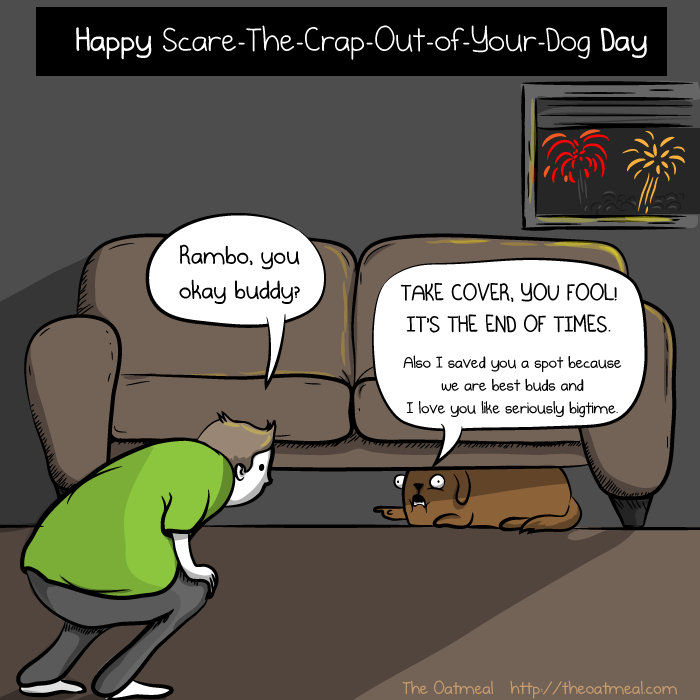
Halloween is almost upon us, and with that, the accompanying terror experienced by so many dogs.
Because so many pet owners report that their dogs show fear to fireworks (and other sounds like thunder), it’s become somewhat normalised. That reduces proactivity , meaning that so many pets, and their people, suffer through fireworks season.
Fear is a significant stressor that affects dogs’ welfare, and may even cause the development of anxiety, panic and phobic type responses having long lasting effects. Where anxiety and phobia develops, the dog is exposed to intense, chronic stress which is damaging, physically and emotionally.
Although helping dogs who show fearful responses to sounds, whose fear generalises, who develop anxiety, and/or who develop phobic responses, is by no means easy or straight forward, we have lots of tools that we can put in place to increase their comfort and improve their welfare.
It’s too close to Halloween, and even New Year’s Eve now, for us to help your dog learn a more relaxed response to fireworks and other loud noises, but there are lots of effective strategies that we can put in place to help them, reduce their distress, and avoid this escalating further. (That’s why we are not discussing counterconditioning and the use of recorded sounds etc. – the best time to start that is in the summer!)
How does a fearful dog respond?
Dogs experiencing distress may show responses such as:
alerting to the sound, especially where the dog remains alert and on edge, even when all is quiet again
barking at the sound
wide eyes, panting, trembling, pacing
sitting close to you, attempting to snuggle in to you
looking to hide, or move away from the action in the house
checking doors, windows, boundaries
lying or sitting very still and quiet
…each of these may progress as the dog’s distress worsens due to not being able to escape the terror
Just as we are concerned for a dog who is showing less activity than normal, due to their normal responding being suppressed by fear, stress can also cause increases in activity.
This is often in the form of displacement behaviour including play and play related behaviour that’s often quite intense, so you might see bows, bouncing and jumping. We might also see greeting behaviour, jumping up, humping, mouthing, overly affectionate behaviour and persistently seeking attention and interaction.
Which dogs are likely to be affected?
It’s pretty normal for a dog to be aware and possibly frightened of loud, booming noises and light flashes, just as a person may be. But, where this normal response is seen, the dog will recover pretty quickly and be capable of going about their usual activities again.
Some types of dogs are most associated with developing noise sensitivities, so there may be some heritable component. (Sheppard & Mills, 2002) Many types of dogs were developed to be extra sensitive to their environment, and to be proactive if even the slightest threat is detected. We may have been selecting for the underlying components associated with various types of reactive behaviour when breeding dogs for particular functions.
Puppies who, in their first few months of life, didn’t receive proactive and well-rounded habituation and socialisation, especially in relation to the presentation of novelty (Fuller 1967)
Adolescent dogs go through fear periods during which they are more sensitive to scary situations and more likely to form long standing fear responses to these scary situations. (Dehasse 1994) (Thompson et al, 2010)
New dogs who might not be fully settled in their new home, so everything might be a bit overwhelming. And in general, dogs who are experiencing chronic stress or stressors, not necessarily related to sounds, are more likely to show signs of sound sensitivities (Daginno-Subiabre et al, 2005) (Iimura, 2007)
Dogs who have had a traumatic experience in relation to sounds like fireworks (Iimura, 2007)
Sound sensitivity and separation related behaviour may be linked, so dogs who demonstrate behaviour associated with distress at separation may be more likely to show sound sensitivity. (Sherman & Mills, 2008)
Dogs who show fearful responses to other sounds such as the smoke alarm (particularly the beeping when the batteries are going), thunder and storm sounds, booming or low frequency sounds, household and machinery sounds such as blenders, lawn mowers etc. (Overall et al 2001) And dogs who show behaviour associated with separation anxiety and other distress or panic related behaviours. (Overall et al 2001)
Which paw your dog prefers may even be related to the development of sound sensitivities! (Branson & Rogers, 2006)
Dogs who show signs of sound sensitivities should also be assessed for pain, particularly musculoskeletal pain (Lopes Fagundes et al, 2018) – another reason I emphasise talking to your vet!
there might even be connections between sound sensitivities and early neutering (Spain et al, 2004)
Trigger stacking is also worth noting here. A dog, who has been exposed to one loud noise in isolation, may have time to recover from it, but fireworks are generally repetitive and unpredictable. The dog will not have had time to recover from one, before another goes off. Because they are unpredictable, the dog can’t prepare himself so may be on edge in anticipation.
What can we do?
It’s not hopeless. Don’t just watch your pet suffer through Fright Night – we have some time to get planning and prepared so that you and your dog are more comfortable.
Planning
We know this is going to happen, indeed, in lots of areas it’s already happening. Let’s get a plan in place to reduce canine stress surrounding Halloween activities.
make sure your dog has a tag on his collar, and that his microchip details are up to date
stock up on HIGH value food rewards that your dog LOVES like hotdog, chicken, cheese, pate, peanut butter, roast beef, liver or whatever really gets your dog going
stock up on some of your dog’s favourite toys that he loves like squeakies, tugs and toys for dissection
check out #100daysofenrichment for tons and tons of ideas for puzzles and activities to keep your dog’s brain busy and distracted.
start to plan toilet breaks – how often does your dog need to go outside? what time will it be dark? is there a quieter area that you can bring them to?
plan how you will exercise your dog at home or in quiet areas so that they are a little more settled
where will you and your dog be set-up on the night? This might require a bit of planning, especially if you have family or party plans. Set up in a room that is well insulated from sound (surrounded by other rooms, for example) and has at least one door between the dog and the entrance/exit to the house.
exercise your dog on lead at and around Halloween, and make sure their collar or harness is adjusted to fit them snuggly and securely
Your dog will very likely be comforted by your presence so being with him or her is important.
Start to play the TV or music louder than usual now so that you can use it to drown out sound on the night, and your dog has some time to get used to it.
Set-up a safe bunker for your dog now! If you only use it when he’s likely to be scared, he will associate this change with feeling frightened.
Make a comfortable, cosy refuge by laying some blankets over a bed, chair, table that your dog can go under, or a crate. There may already be a spot that your dog likes to take cover in – use that, if it’s safe!
Set up a bunker in places your dog chooses to hide, if safe
have your dog’s bed in there and his favourite toys there
Start to feed your dog a yummy stuffed toy in their bunker every day in the run up to Halloween so that you are establishing this as a nice place for them to go.
Needless to say, it is not recommended that you bring your dog to bonfire or fireworks events, or to costume parties or trick-or-treating, or even greeting trick-or-treaters at the door.
Most dogs are not comfortable wearing costumes, even though it can be super cute!
Preparation & Safety
Halloween isn’t just spooky for us!
Children and people in costumes, funny decorations, candles and reduced light, lots of forbidden and even dangerous food, excitement and doorbell activity will cause any dog to become stressed out – throw in fireworks on top of that…
If a dog is stressed out, his normal ability to cope with stress is reduced, so even though he may tolerate excitement and activity at other times, Halloween might be too much.
Special consideration needs to be given to child-dog safety at this time of year:
Other safety concerns include:
dangerous and inappropriate foods
routines out of whack so it can be difficult to keep track of everyone
candles
decorations
door opening and closing
children in costume, excited and possibly worrying to the dog
Halloween is a bit of a minefield when it comes to dog care!
The Set-Up
Fearful and spooked dogs can panic and attempt to flee, even injuring themselves in the process.
make sure your dog wears a collar with ID, and is chipped (make sure the chip is registered and the details are up to date)
check fencing, gates, boundaries etc. and it’s best to exercise and toilet your dog on lead, even in your own garden. A panicked or spooked dog will go through an “invisible” fence, over or through a boundary that they normally wouldn’t.
keep your dog on lead when walking, just in case he is spooked while out and about
have at least one closed door between your dog and the front or back doors
spend time with your dog in a quieter area of the house; it’s better to have children and other pets spend time elsewhere especially if they are active or noisy
close the windows and curtains in the house
play music or the TV louder to drown out some external sound. You can run the washing machine or dryer, or use a white noise machine or app too.
while inside and supervised with you, have your dog drag his lead so that he can be easily restrained if needed by stepping on the lead or grabbing it, rather than the dog
Your behaviour
You may act as a safe base for your dog, whom he uses as a reference point. This means that your presence and your behaviour may help your dog cope with distress.
be calm
don’t scold your dog – this will cause him to feel even more uncomfortable and distressed
talk to your dog, use a jolly voice
sing happy songs or listen to upbeat music – this will help you and your dog be calmer!
stay close to your dog – try not to come in and out too much
listen to your dog: if they seek contact, pet them; if they just want to stay close to you, be there; if they want to hide, let them and make sure they have a safe space
YOU CAN COMFORT YOUR DOG!
it may be better that an adult is responsible for the dog, rather than children, for safety and so that kids are free to enjoy the festivities
Massage and touch may help your dog, and it can be relaxing for you too. But, remember, listen to your dog and it’s best to do this between booms and bangs, rather than when he’s stressed. We have more on this here.
There really isn’t a whole lot of reliable evidence that a fearful dog will cause other dogs present to respond fearfully (Iimura, 2007), although some dogs may be more impressionable than others, especially when with another dog they view as a social model. There really isn’t evidence that a human who is behaving nervously will increase a dog’s fear either. (Dreschel & Granger 2005) But, the research on noise sensitivities is lacking, at best, so we have much still to discover.
Keep ’em busy
With all this planning and preparation in place, you will be doing an excellent job of managing your dog’s response to scary sounds.
If we can successfully reduce the impact of the noise, we might be able to further take the edge off, by providing your dog with lots of distraction, to keep their minds busy.
if they can eat, practice fun training exercises using high value rewards
if your dog can play, play fun and active fetch, sniffing and tug games
have lots of stuffable toys ready with the yummiest stuff – encourage lots of chewing and lapping behaviour, which can be calming
Start practicing now! Introduce sniffing and chewing activities now, at times when it’s quiet and your dog is calm. Establish these activities as safety signals.
Intersperse fun and active games, with a calming break for some chewing, and then bring the energy up again by engaging them in a game again. Using noisy toys like squeakies might also help to drown out fireworks nose too.
Calmatives
Calmatives are generally over the counter remedies, that may or may not have a beneficial effect. I have some concerns about recommending these.
The first concern being that reliable evidence for their efficacy is lacking, and reported or anecdotal effects may be due to placebo and bias effects.
Because there is heightened awareness among professionals and pet owners, lots of these products have flooded the market, and are made very attractive to concerned dog lovers. Using these products may cause a person to believe that they are doing all that’s required, and possibly believing that their pet is benefiting, when that might not be the case.
Such products that might be helpful, in combination with other measures might include Adaptil, Zylkene, Yucalm and lots more.
There are countless others, for which I have not seen effective and beneficial results, despite seeing their use with a range of dogs.
If you are going to implement any of these, start using them now. Don’t wait until the fireworks have started or your dog’s fear has intensified; otherwise they become predictors of distress. They, like other context cues, might be helpful if used consistently when all is calm and quiet so that they can help to set your dog up to feel calmer.
Medication
This should not be considered a last resort, or something that must be resorted to at all, really. Consider it a first line of treatment.
Sound sensitivities cause dogs real distress and suffering, and impacts their welfare. If fireworks caused physical pain, I’m sure people and professionals would not hesitate to medicate, treat for pain and inflammation, ensuring the dog’s comfort. Sound sensitivities cause serious emotional and behavioural damage, which has a neurological basis. We can treat the brain, and help the dog.
What sounds cause the fearful response? Where is your dog when this happens?
What does your dog do? How does your dog respond?
How long does it take for your dog to recover, and go back to normal?
Further treatment may be indicated in different situations:
Dog A: alerts and barks at fireworks, and maybe shows some displacement behaviours (increases in activity etc.) is probably going to be OK by implementing the measures described here
Dog B: hides, and startles but can still interact, play and eat may also be OK just by implementing the advice in this blog
Dog C: pants, paces, trembles, and may take a while to recover from this distress, is likely to need more support
Dogs B & C (and maybe Dog A) may benefit from a situational medication like Sileo, which has been developed for dogs with sound sensitivities. It offers lots of benefits in that it can be administered at home, even once the dog is experiencing distress. Sileo helps to reduce anxiety and distress, without sedation.
Dog D: panics and looks to escape is likely to need more support
Dog E: has a disproportionately strong response to sounds is going to need more support, especially where this response has generalised to other sounds
Dog F: is on edge, even at quiet times, and startles and shows distress to a growing array of sounds will need more support
While Sileo may be an appropriate option for all these dogs, and given that we don’t have very long before Halloween, there are other medical interventions that may also help over the longer term and on a more generalised basis.
Dogs C, D, E & F may benefit from anxiolytic medication such as Benzodiazepines, which help to reduce anxiety and panic, but may also be sedative. These may include alprazolam and diazapam. The former is likely a better option, as it is less sedative. (Horowitz, D., & Neilson, J. (2007). Canine and Feline Behaviour.) (Plumb 2008) These can be given as situational medications so are ideal for Halloween night when there are likely to be fireworks consistently sounding. In terms of situational medications, you might also discuss trazodone or clonidine with your vet for more on suitability for your individual dog.
Dogs D, E & F may benefit from general maintenance medication too, so as to help reduce anxiety in their day to day lives, and help limit the generalisation of their sound sensitivities. For example, clomipramine, amitriptyline. (Crowell-Davis et al, 2003) (Papich, M. G. (2007). Saunders handbook of veterinary drugs (pp. 236-238). St Louis: Saunders Elsevier.) These anxiolytic medications will provide background relief, and then situational medication can be given when we expect the extra distress of fireworks, where indicated or appropriate. (We don’t have sufficient time to start this medical program at this stage, as it’s likely to take several weeks to establish.)
Please discuss this with your vet, I can’t stress that enough. This is general advice only, based on medication protocols sometimes applied to dogs with sound sensitivities. Medications don’t work the same for every dog, so your vet will know the best approach and support for you and your pet as you try to find the most helpful protocol.
Some anxiolytic medications can cause paradoxical effects so talk to your vet today. This will give you some time to try the medication out, before you really need it, so that you can evaluate your pet’s response – this is especially important with certain types of medication, e.g. Benzodiazepines.
A note about ACP
ACP or Ace or Acepromazine is still commonly prescribed for sound sensitivities. This is not an appropriate medication for use for dogs with sound sensitivities.
This pre-med doesn’t have anxiolytic effects, but rather sedative effects. Indeed, it may even heighten the dog’s sensitivity to sound…so not a good choice at all.
Dr Karen Overall, again, discusses its use in this clip.
Don’t worry if your dog has been given ACP before – this medication does have its place in lots of contexts but may not be the best approach given in isolation in relation to sound sensitivities.
Medication alone is not enough
While some medical interventions and the routines described here may get your through scare-season, for there to be real and effective behaviour change, and the associated benefits to your pet’s health, you must be working through a behaviour modification program too. This can reduce the need for medication, especially over the longer term, and start to give the dog coping skills for dealing with distress, improving welfare.
This fireworks season, get planning and preparing now because our dogs don’t have to suffer just because that’s the way it’s always been. Get proactive and start today!
Of course, please get in touch should you need any further advice.



















 AniEd Ireland