We have two courses available to apply and book right now!
Our new Safe Dog Handling & Interactions online course plus our very popular Online Canine First Aid course is back for another run, starting later this month.
We have lots of other courses that you can start any time too! More here.
Safe Dog Handling & Interactions online course
We are excited to get started with this new format and now applications are open!
This is one of our most popular programs ever and it’s back for another run, starting at the end of April.
You might wonder how this works in an online format, and truth be told, we were worried about that too. But, there was no need to worry at all as it has been overwhelmingly successful with wonderful and full participation and feedback from our participants.
This two part online workshop is packed full of vital information, discussion & questions, and lots of practical demonstration and practice. Yep, we practice skills even though we’re not in the same room!
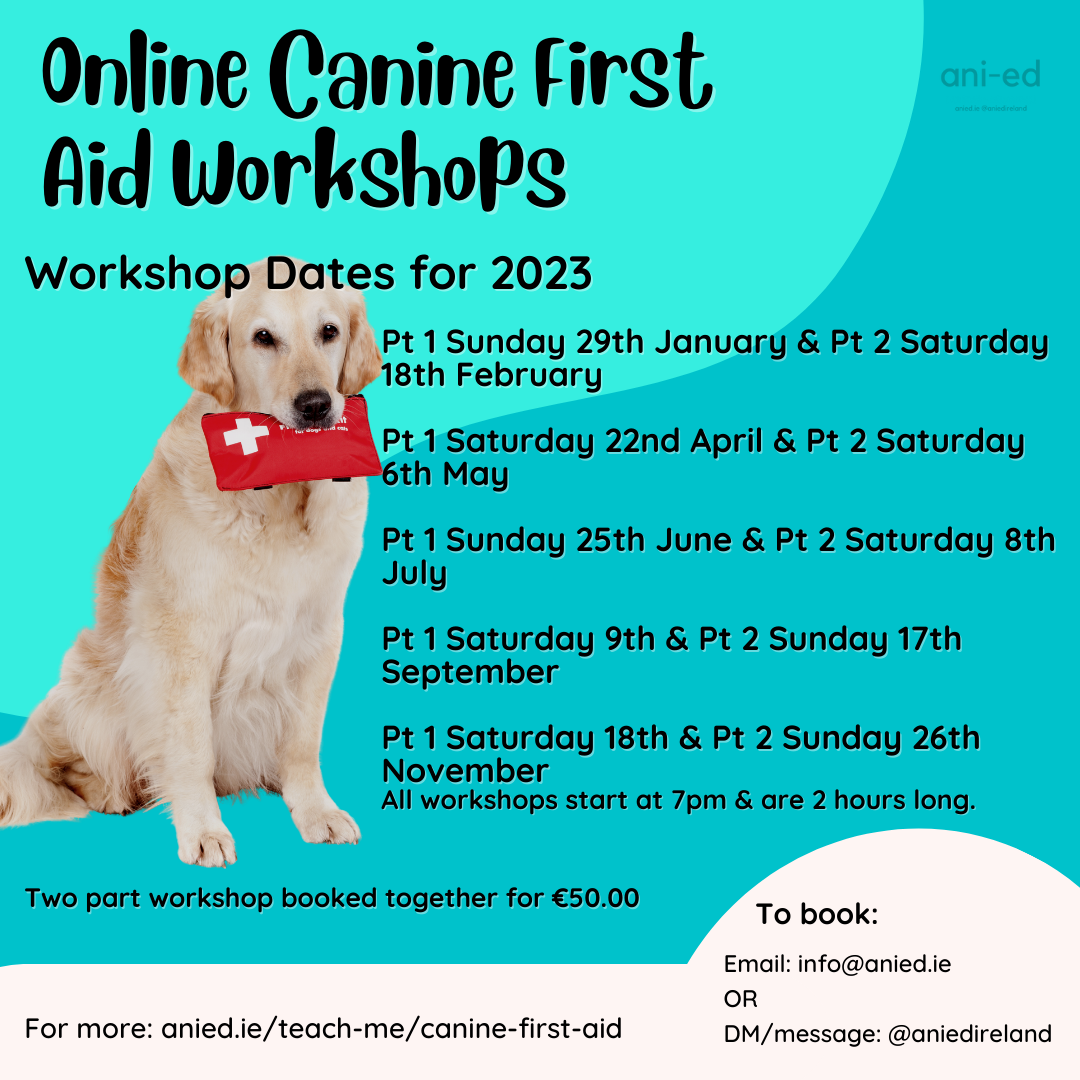
Our next start date is Saturday 22nd April for Part 1, followed by Part 2 on 6th May.
Please do get in touch should you have any questions about our courses. We would love for you to join us and certainly, every pet owner and pro needs to do our Online Canine First Aid workshop!
Human holidays often present extra risks for dogs simply because humans are distracted and busy, routines are out of whack and management often slips through the cracks.
All completely normal but can lead to pretty serious issues for dogs, and other pets too.
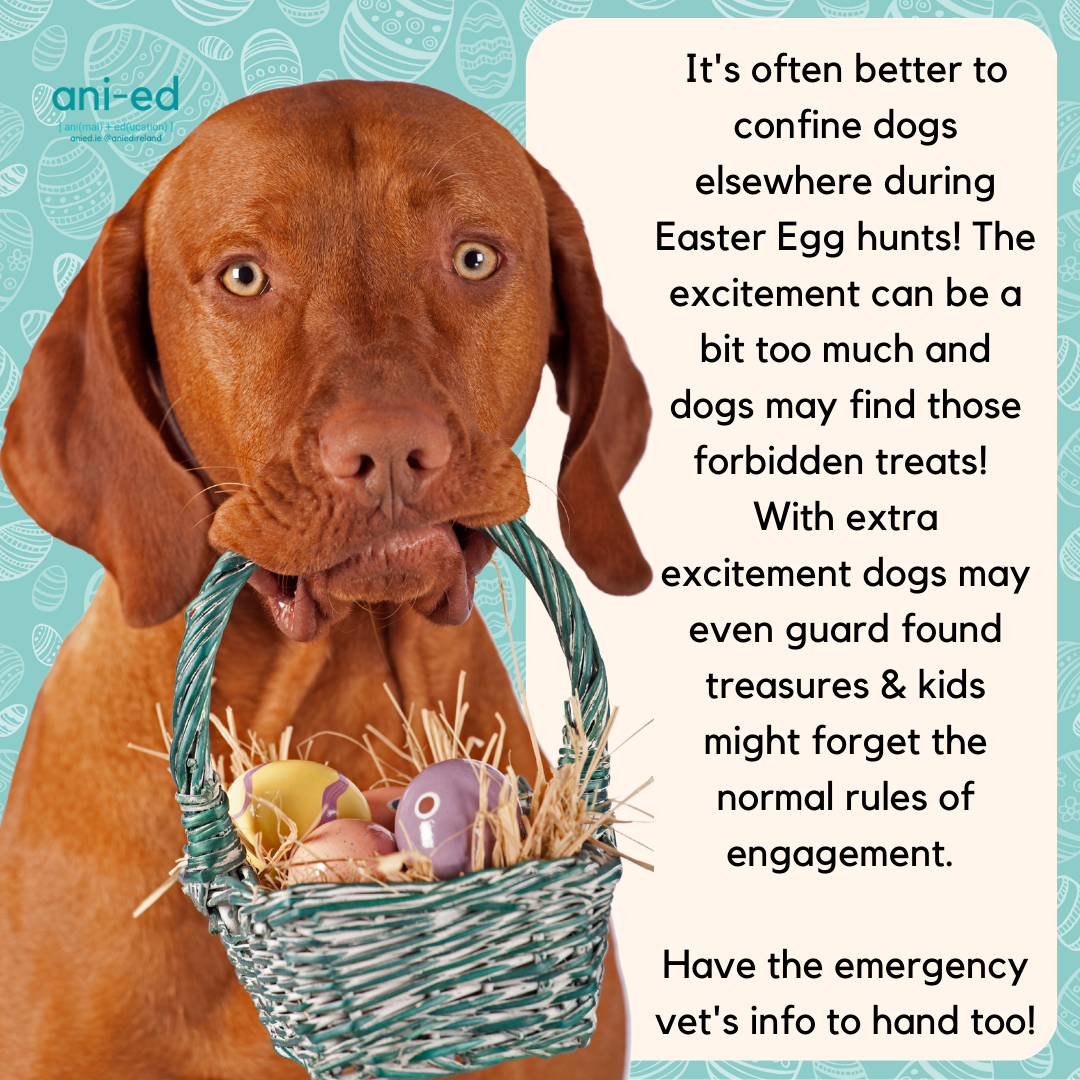
Veterinary personnel continue to be over-run with emergency chocolate ingestions all weekend, with so much emesis induction and a lot of chocolatey messes to clean up! Despite this being such a well known hazard, the extra excitement of the Season, and our entire approach to hiding chocolate eggs before the day, and on the day, leads to lots of accidental exposure.
Of course, we can’t really expect to be able to hide anything as yummy as chocolate from our dogs’ noses so much extra care is required when we think we are putting them away from prying eyes. Think about those prying noses too!
While chocolate is certainly star of the show, raisins/sultanas in hotcross buns, lilies (all part of the plant) and Easter treats and decorations can be dangerous if ingested. Have your emergency vet’s details to hand this week!
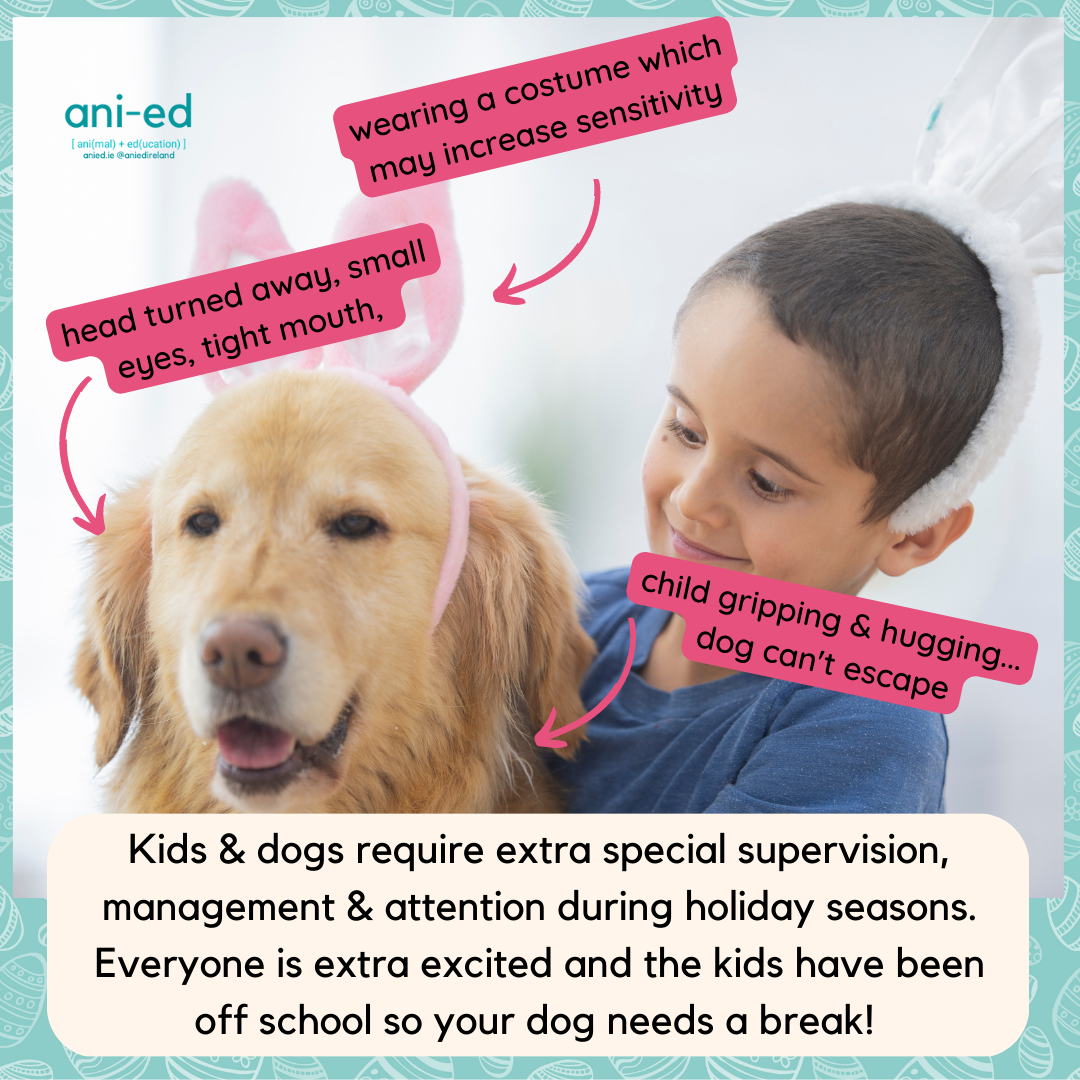
Extra excitement, and a general raised background level of stress that so often comes with human celebrations (particularly ones involving so much chocolate!), requires extra attention to child-dog supervision and management.
More separation before there’s tension is best for Easter!
Dogs don’t need to participate in Easter Egg Hunts, given that excitement and the ‘hiding’ of possibly dangerous chocolate treats.
Costumes and pressure to pose can ramp up the pressure even more, increasing dogs’ sensitivity and discomfort.
Think about using emojis and filters instead to create those perfect snaps!
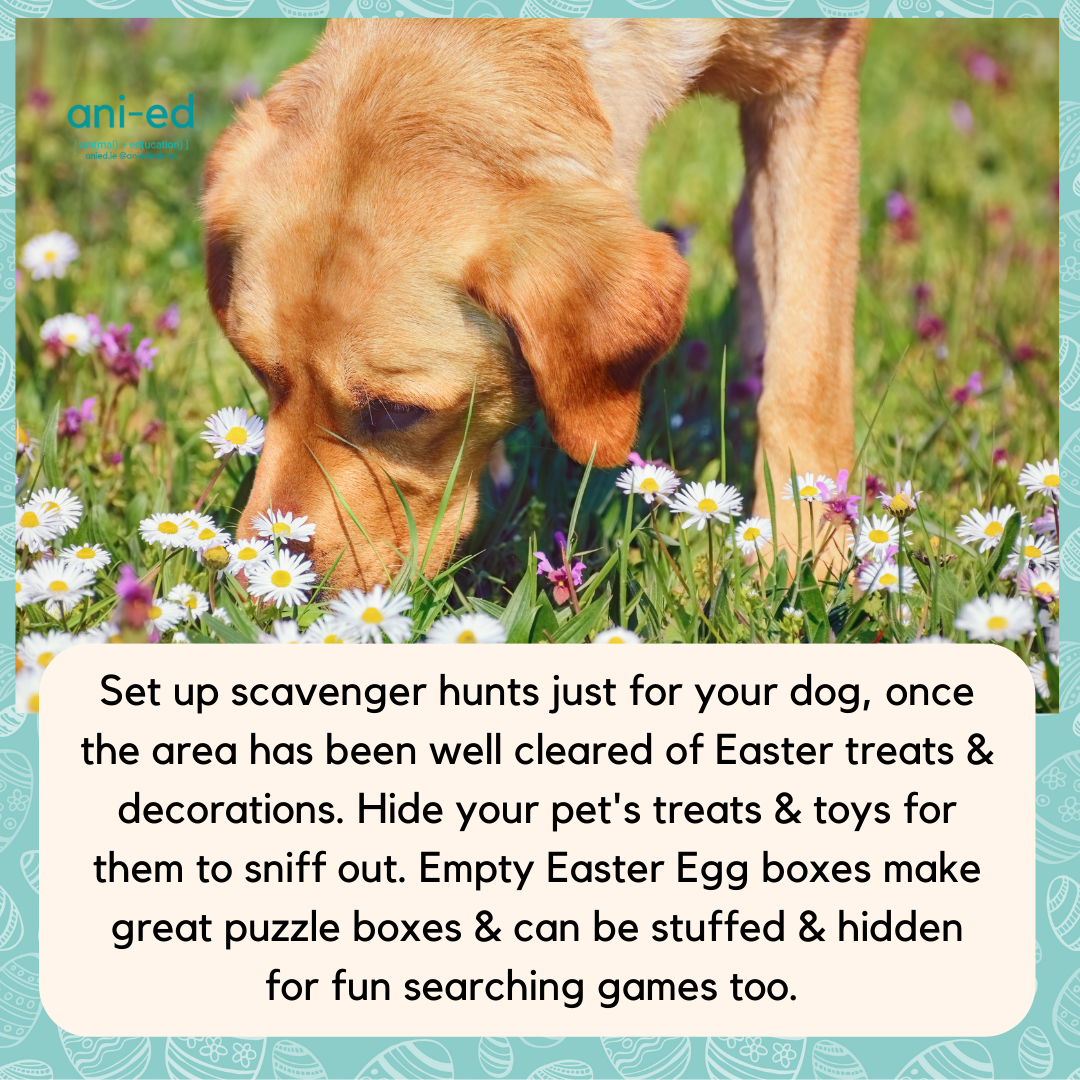
You can have doggie fun for Easter too! Scavenger hunts are great fun, even without chocolate eggs! Hide their favourite treats and toys.
Don’t forget Easter Egg boxes; they are great for puzzles!
As much as we love dogs, we must recognise that they can inflict serious injury, especially where our goals and theirs are in conflict. Developing an awareness for how we interact with and handle dogs, particularly unfamiliar dogs, is vital for our safety, and also the welfare of dogs for whom we care. Dogs who display behaviour we may feel is unsafe, or behaviour that presents risks to human safety, are most often experiencing strong responses relating to stress or fear, for example. And those behaviours are usually in response to ours.
Register here or email info@anied.ie and we will add your name to the list.
Our new online Safe Dog Handling & Interactions course emphasise developing a good understanding of canine stress related behaviours, which are commonly misinterpreted, so as to reduce their stress, improve welfare and maintain safety.
We have offered this in-person workshop to County Councils, dog wardens, pound staff and park wardens, as well as lots of dog-pros, around the country for many years, and continue to do so. And now, we have an online course too to make it more accessible and convenient!
Right now, we are taking registrations and places are limited. We prefer to keep our groups very small so everyone gets all the support and guidance needed, that are an integral part of our courses.
Register here or email info@anied.ie and we will add your name to the list. Once applications open, in the next week or so, we will send out application information to all those registered.
Goals of this course:
develop knowledge, skill & awareness to devise policies and procedures relating to safe handling and interactions with dogs
understand the relationship between canine stress behaviours and human safety
recognise environmental contributors to changes in canine behaviour
build on awareness of the dangers associated with handling and interacting with dogs
emphasise awareness of our own behaviour in maintaining safety & comfort
use tools and strategies to prevent causing canine aggressive responding and in diffusing aggression
maintain safety and avoid serious injury
build safe behaviours and procedures in interactions with dogs
maintain canine comfort to avoid escalations in stress responses through environmental modifications, awareness of your own behaviour and the application of appropriate tools & techniques
become empowered with skills and understanding that contributes not just to personnel safety, but also health
prioritise maintaining canine welfare and human safety
You get:
24/7 access to the course online area, from anywhere, for six months
multi-media learning resources for viewing and downloading
all content presented as mini-lectures (written presentations for reading) covering a wide array of related topics presented in small-ish bites so that you can take time to process and analyse
video demos so that you can view and practice practical skills regularly
comment facility at the online course area for participation, enquiries, interactions
access to a private Facebook group for real-time feedback and guidance
regular live online meetings
ongoing online interaction with fellow-students and your tutor as we take this journey of discovery together
tons of tutor feedback, guidance and support
Register here or email info@anied.ie and we will add your name to the list. Once applications open, in the next week or so, we will send out application information to all those registered.
Course Details:
When?
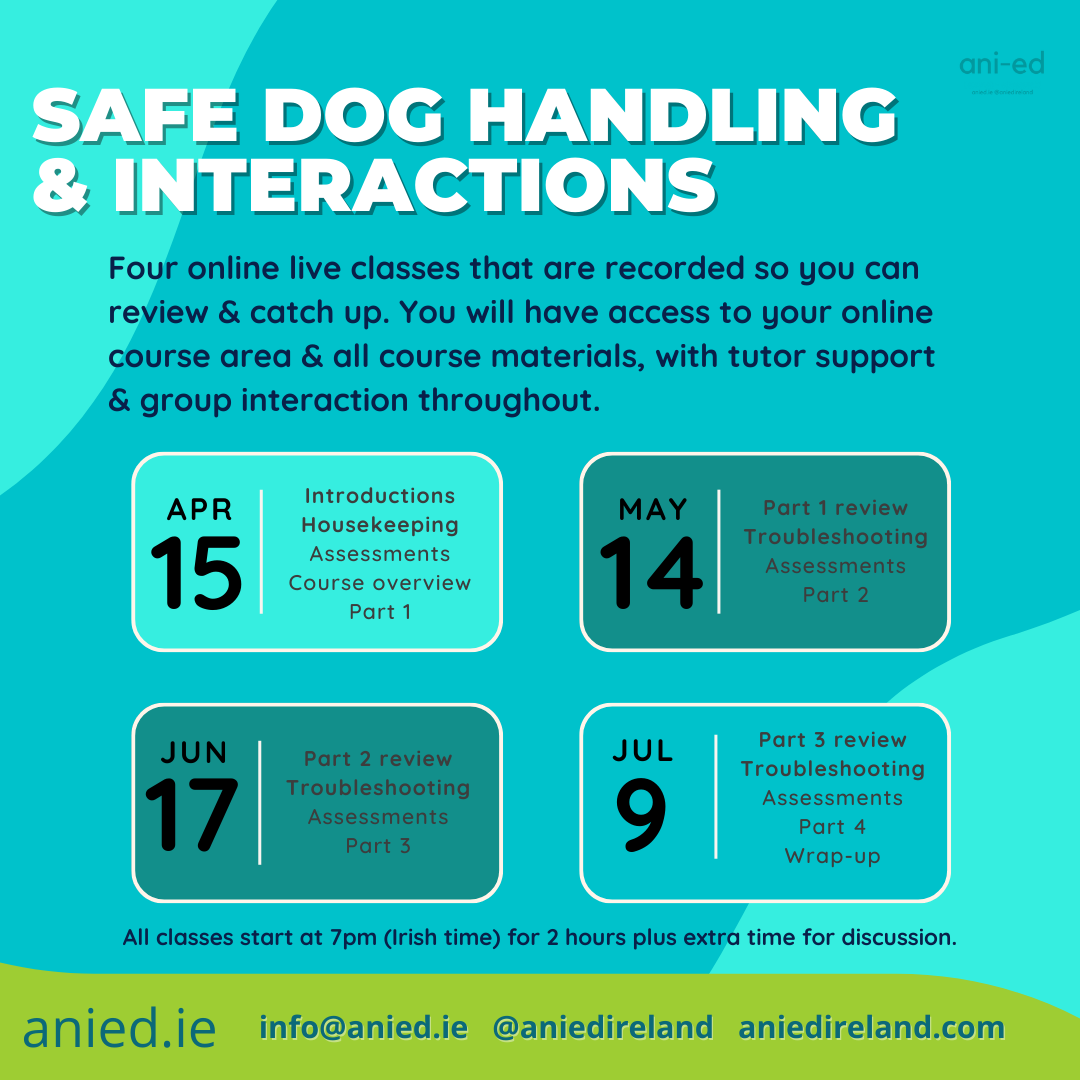
Our new Safe Dog Handling & Interactions online course starts on Saturday 15th April, at 7pm. There are four online meetings on this course, and each meeting is recorded for review. You are encouraged to attend live, particularly to the first meeting to get the best value from course content. Dates for the four class meetings:
Saturday 15th April, 7pm
Sunday 14th May, 7pm
Saturday 17th June, 7pm
Sunday 9th July, 7pm
Each class is two hours long but will run longer with questions and discussion. All times are ROI (Republic of Ireland) times.
Where?
All classes are online so you can participate from anywhere!
Who?
This really is vital information for ALL dog pros including trainers, behaviour pros, groomers, walkers, sitters, boarders, day-carers, kennel carers, rescue folks, petshop peeps…everyone who works with or hangs out with dogs! Pet owners and dog-hobbyists will also benefit, developing a thorough understanding of canine comfort and of our behaviour in maintaining their welfare. It’s accessible for all, it’s sustainable and most of all, you can participate from the comfort of your own home, with your pets by your side.
How long?
Each online class is two hours long and will run longer with discussion and questions. Assessment work will be discussed and started after each live class, and then reviewed during our next meeting. This gives you about a month to work on starting relevant assessment and then troubleshoot when we meet. After our online meetings have ended, you will have until 2nd September to complete your assessment portfolio and submit. While deadlines are important to provide guidance, we appreciate that individuals may find that daunting. Please don’t worry about these timelines as we will work with each learner flexibly to support you in gaining the most from course work (and for some, that might not mean the completion of formal assessment work!).
How much?
The full course costs €180.00 which must be paid in full before the first meeting. Payment plans are available and you are encouraged to discuss your needs with us.
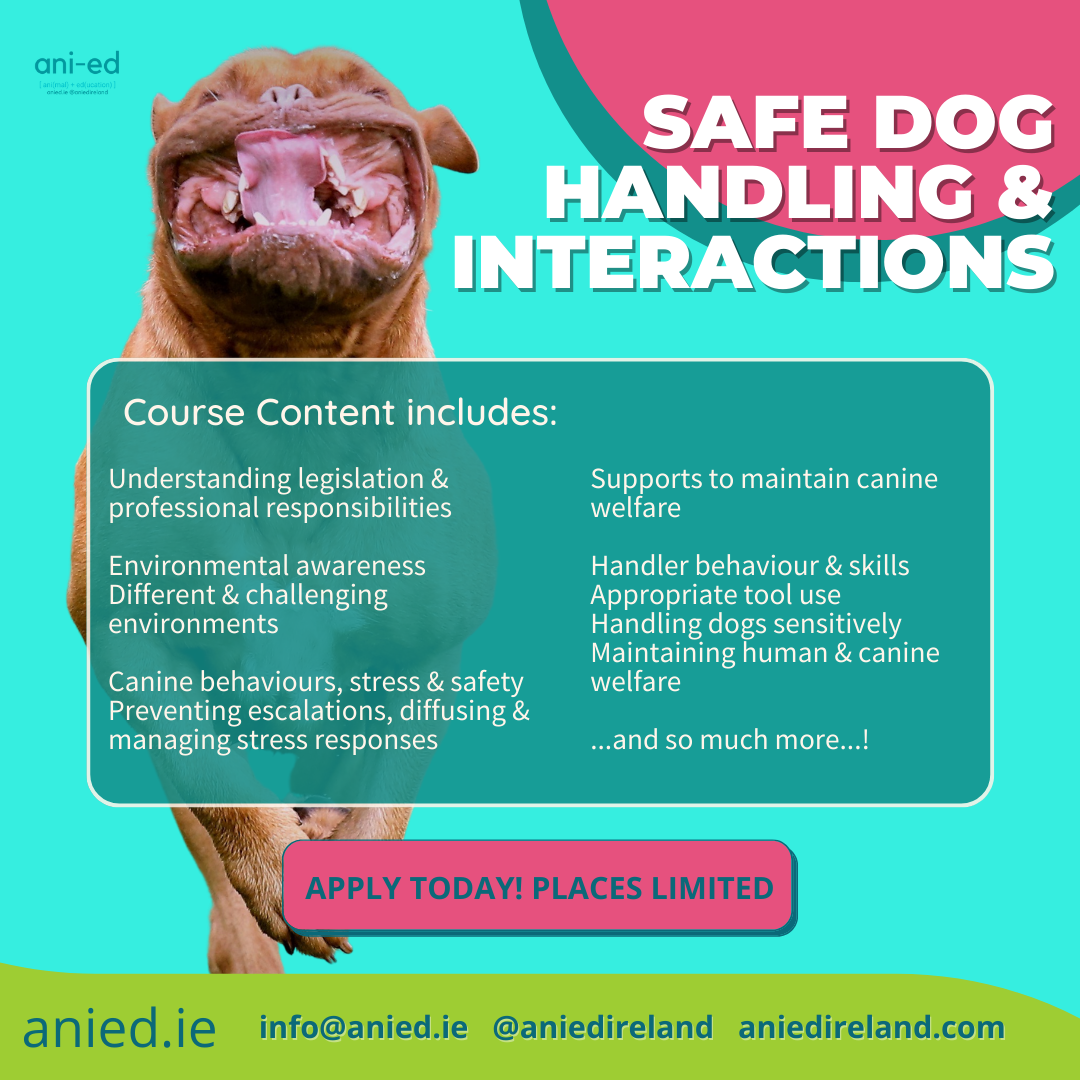
What will I learn about?
relevant legislation & professional responsibilities
policy & procedure development
environmental assessments
professional & challenging environments
home environments
public settings
recognising & understanding canine stress & its effects on behaviour, welfare & safety
understanding the conditions under which stress-related behaviours occur
environmental supports to maintain & improve the welfare of dogs in your care
handler behaviour & skills
interacting with dogs safely & sensitively
maintaining human and canine welfare
considerations for human mental health
practical handling skills & tool use
Assessment work is compiled as a portfolio of works that are directly applicable to interactions with dogs. You will include works in your portfolio relevant to your areas of interest.
Please see more about studying with AniEd here. You will be asked to agree to terms & conditions at application, and before you pay. Please get in touch should you have any questions about this course.
Register here or email info@anied.ie and we will add your name to the list. Once applications open, in the next week or so, we will send out application information to all those registered.
Puppies are not supposed to be “obedient”, focused, patient or calm…that’s a houseplant you’re thinking of…
Different areas of the brain, so different abilities, develop along different timelines in young puppies. Puppy’s behaviour can provide us with insight about how development is proceeding. For the brain to develop normally, it must be challenged, experiencing appropriate feedback from puppy’s world. (Stolzlechner et al, 2022)
But here’s the problem. These processes are time dependent. The brain must be exposed to certain types of challenge, providing feedback from their world, at particular developmental stages. (Hubel & Wiesel 1970)
The puppy’s behaviour informs of where they are in terms of development, and we must respond accordingly with appropriate challenge to support and enhance that development.
While teaching and learning are certainly important for young puppies, concentrating on our human constructs and expectations, such as ‘obedience’, is not a good use of our time. We have limited time to make sure we support puppy in developing complex skills and tendencies through appropriate exposure. (Cutler et al, 2017)
There are many contributors to these processes, including puppy’s genetic background, and related effects, early exposure, particularly that in puppy’s first five weeks, and clues from the behavioural tendencies of related individuals.
This early work we implement in puppy’s first weeks and months are among the foundations upon which your dog’s adult behaviour is built. We get the payoff months and years later. (Puurunen et al, 2020)
We take an enrichment approach to behavioural development, which is often different from “socialisation” lists, puppy classes and play groups.
Just like children, puppies need time early on (their first weeks) to develop skills that will support them throughout life (McEvoy et al, 2022). Prioritising ‘academics’ at this time misses the mark.
If you were hoping to have a patient, obedient, focused, non-biting, appropriate toileting and chewing, calm wee-beastie, a puppy may not be for you …and if you wish for those things in an adult dog, prioritising behavioural development with appropriate challenge, social & environmental exposure in their first weeks is where you start.
I regularly have discussions with dog owners about their dog’s behaviour being demanding, or attention seeking, as opposed to their behaviour expressing some physical need, such as needing to go out to toilet.
And so called ‘attention seeking’ behaviours, whatever that means, are commonly listed as behaviour problems by pet owners, potentially affecting their relationship with their dogs (Hoffman et al, 2013).
Behavioural needs are just as important as physical and should not be viewed as some luxury dogs only get upon our whims.
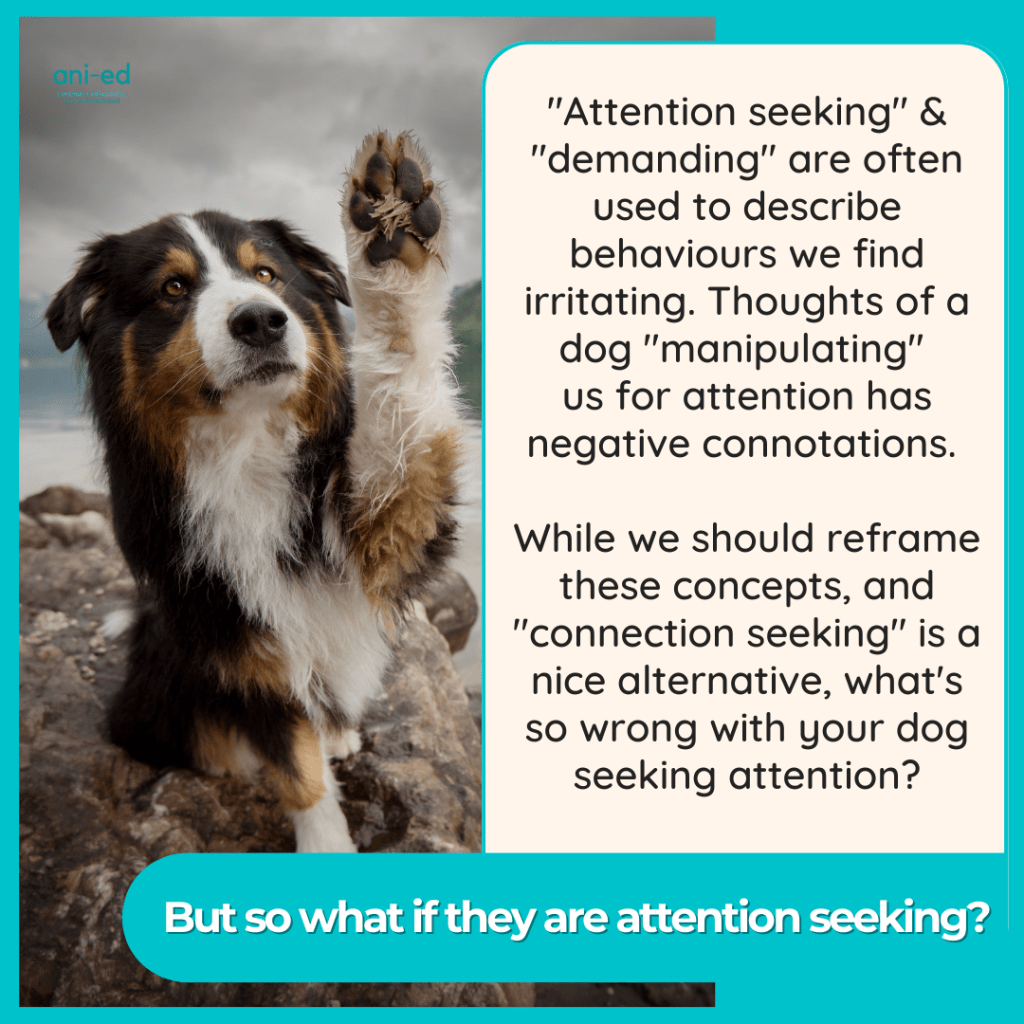
Framing behaviour as “attention seeking” or “demanding” is a human hang-up! Behaviour functions, as in, dogs, like other animals, do behaviours that work. If you reinforce behaviour, such as sitting, by feeding your dog, does that make sitting “demanding” or “begging”? It’s just behaviour, whether you like it or not!
Indeed, we have selected for attention seeking behaviours, communicating with us (Persson et al, 2015).
Behaviour works!
A lot of the behaviours that work for dogs are directed at us. They are communicating with us, communicating their needs. They are not “manipulating” us to get what they want; there’s no need for negative connotations or sensitivity.
Dogs have no ways of providing for their own needs. WE control everything.
Be trainable.
I LOVE when a dog becomes an even better human-trainer and indeed that’s what I strive for…to become really easy for my dog to teach.
We learn together, we develop a dance of communication, we build a relationship.
What’s so wrong with your dog seeking attention? (Nothing!)
While I do quite like a reframing of these concepts as “connection seeking”, for example, what’s so wrong with your dog seeking attention?
Connection, contact, interaction, acceptance and yes, attention, are all fundamental needs of social creatures. We live for it!
There’s nothing ”wrong” with seeking attention. Of course, there’s no “bad” behaviour at all but WE are the demanding ones…seeking to command & control.
Your dog’s behaviour is information. Your dog only has you. You are their world.
Their attempts at communicating should not be ignored or dismissed. They have limited means to inform us of their needs and meet them for themselves.
Give Attention. Freely.
You might not always be able to attend to your dog. That’s ok. I am not coming down on you because you have other things to do, or simply don’t want to engage right at that moment. You’re human.
And sometimes, if you dog isn’t able to settle themselves, isn’t able to be ok without your attention, they might need some extra support.
You can always get in touch should you be concerned.
Try:
What do the pictures involving ‘attention seeking’ behaviours look like? Identify those pictures.
give so much attention, freely, in every other picture Your dog doesn’t have to earn your attention, interaction, connection or affection.
Learn to recognise their requests. Do they need your time, attention, contact, food, your help? Are they asking to go out, come in, be comforted, for play & fun…? All are legitimate needs that must be met.
In which pictures do these behaviours occur? Predict & prevent!
Provide your dog with alternative outlets for their needs before this picture/context starts. Help them work through these contexts so that they can engage in more independent behaviour.
It’s OK to not be able to provide all the attention all the time. Make lots of fun, attention & interaction available at other times.
Actively teach your dog to JUST BE Your dog doesn’t need to be doing things all the time. They need time and space to be bored, to muse, to stare into space.
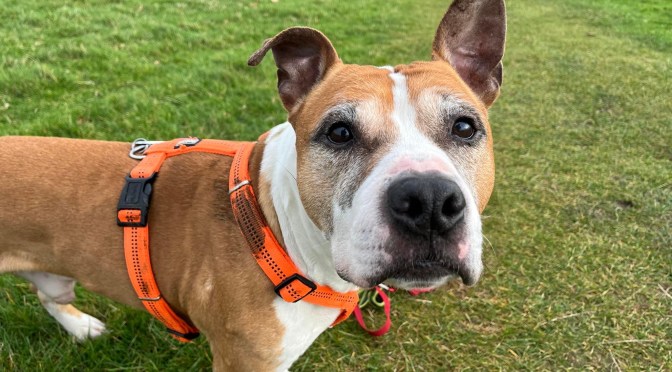
Decker is a poop-connoisseur He very much likes to adorn his body with the smelliest and enjoys a poop nibble from select samples.
This is, of course, gross to us but pretty normal canine behaviour, and I am not pushed about redirecting this behaviour
I figure that dogs must inhibit their very dogginess in a lot of life with humans so if there are gross-but-normal dog things, that can be done safely, I’m not going to get too worried about it.
Another pet owner may differ…I can imagine that if he had long hair that was tricky to maintain, I might not be so casual about poop rolling
However, there are probably lots of behaviours that seem strange, unnecessary and even disgusting to us, that are perfectly normal and enjoyable for our dogs, for which we can make concessions.
When we ask our dogs to be in our world and behave according to those expectations, it’s vital that we provide so many outlets for DOG stuff (once safe) …even if it seems totally abhorrent to us!
It’s time, again, to be a little less human and a little more dog
Do you and your dog do #100DaysOfEnrichment? You know you can do it, any time, for free, right?
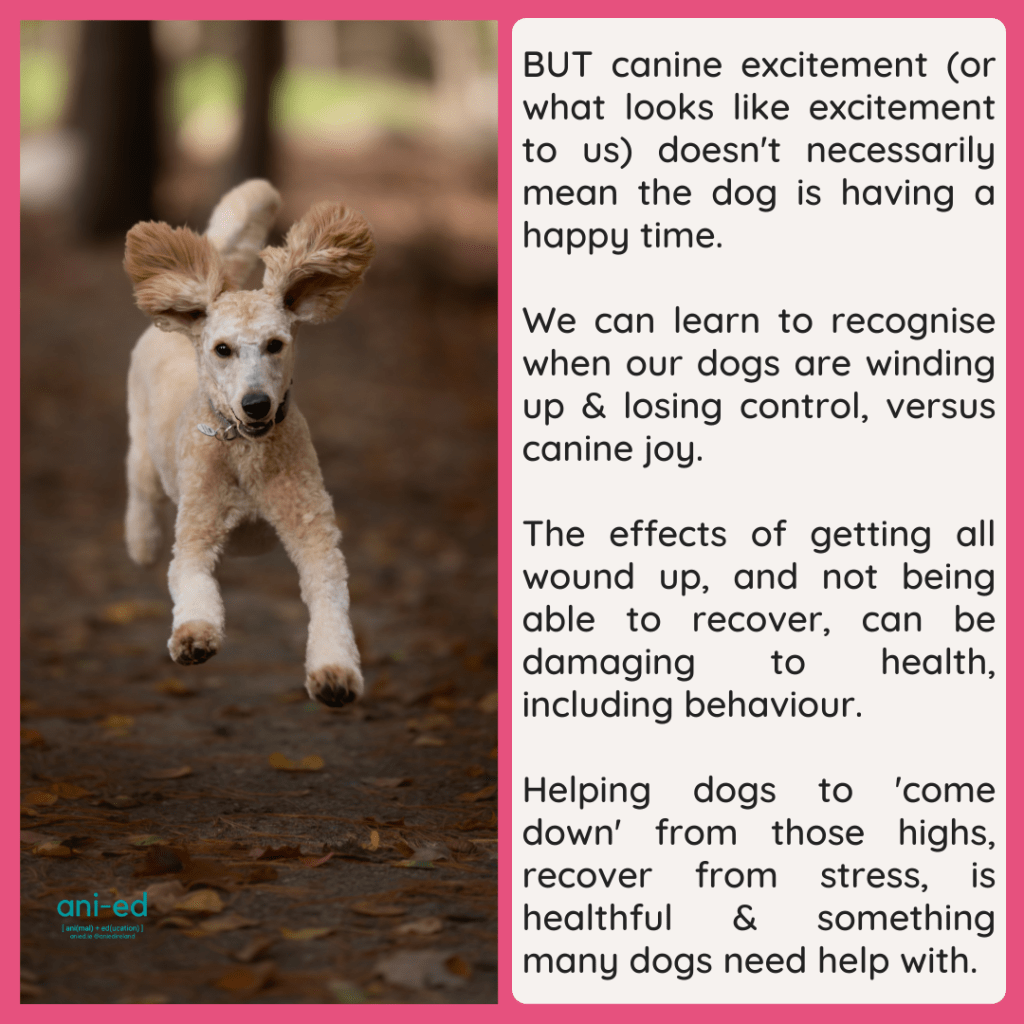
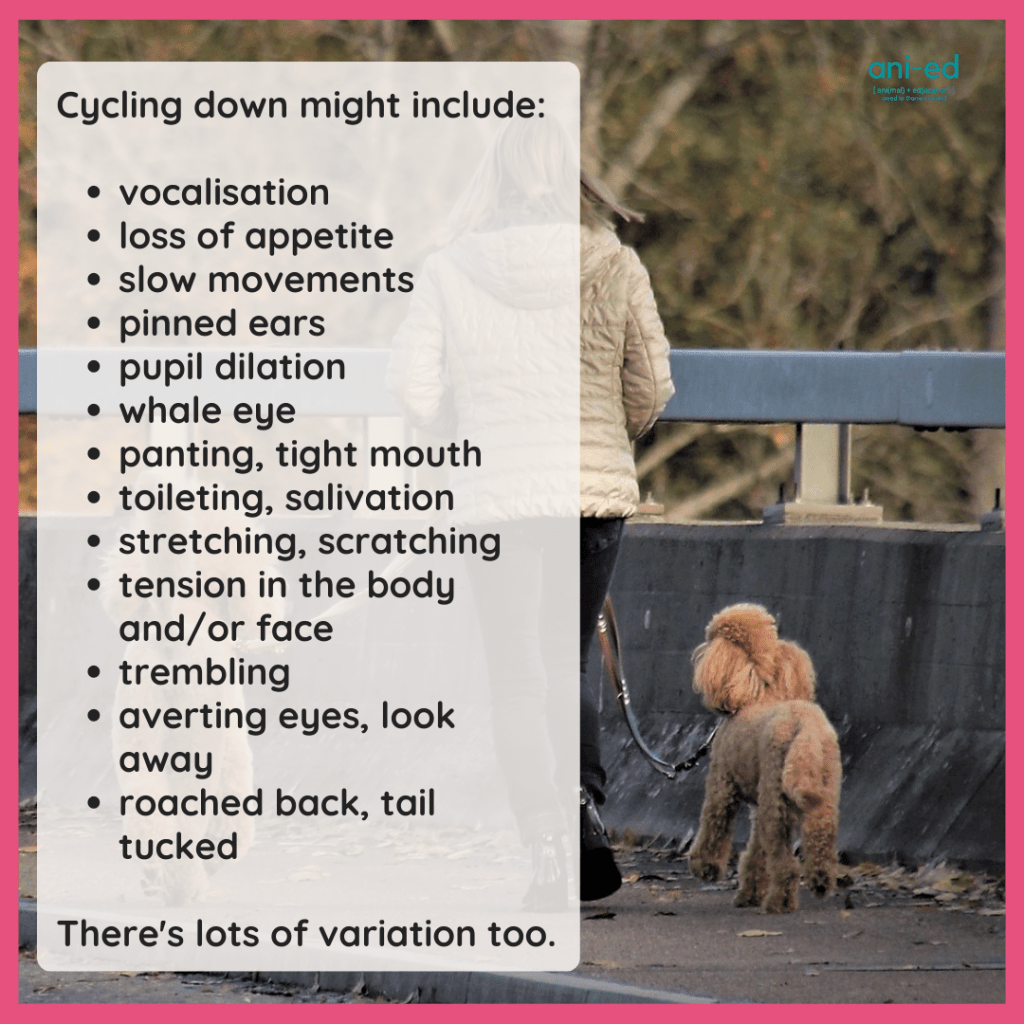
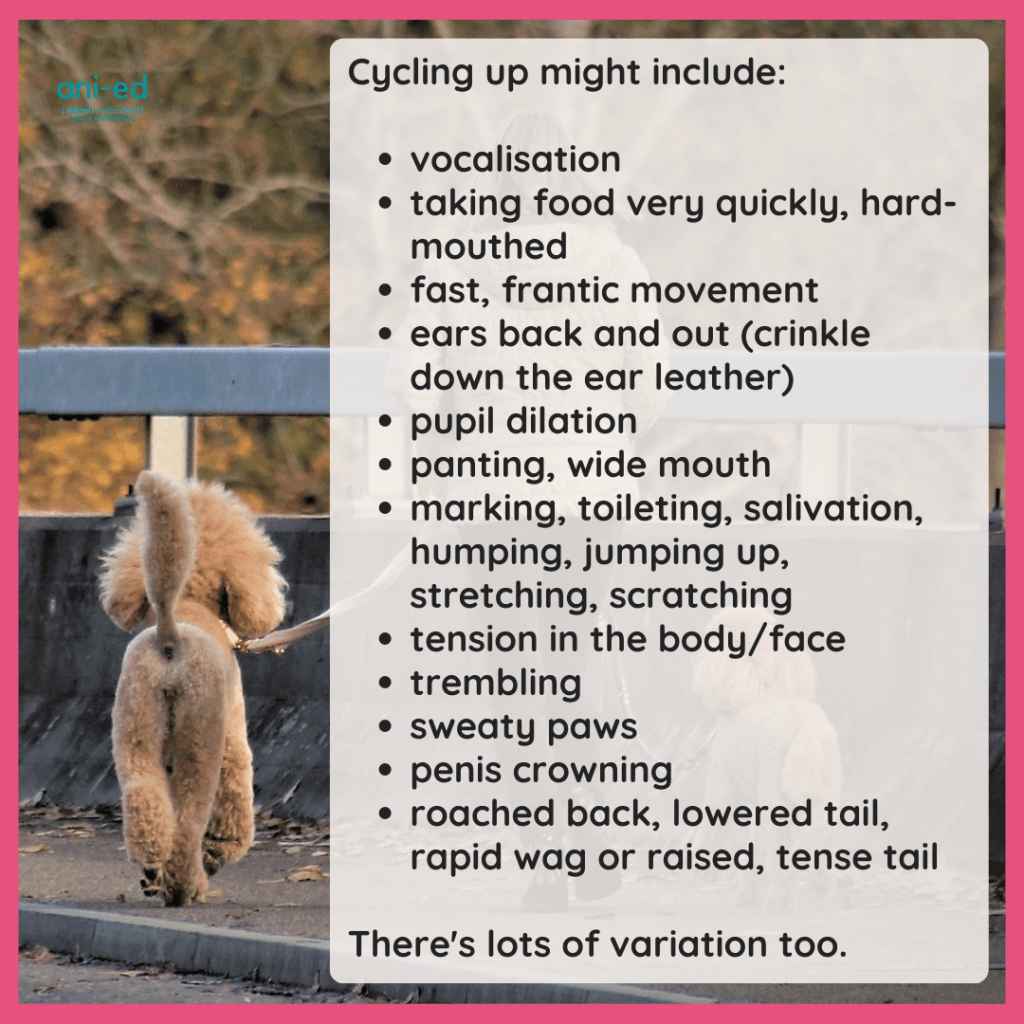
Think about the swings in excitement, up and down, presented just by normal daily comings and goings. This might include the excitement of seeing their family, getting a meal, noises outside or at the door, other dogs in the area barking or seen out on walks, people coming and going, car travel or trips out & about, joggers or other moving things, lots of sniffs and squirrels, not having enough time or space for eating or resting, and being tired, bored, cold or hot.
All of these goings on, that are completely normal and not necessarily negative, cause swings up and down in their body’s responses and emotional reactions. Stress responses, can be good or bad, and prepare the body to deal with challenge; physical, emotional, behavioural and so on challenges.
There might not be time between these challenges to allow for your dog to recover and relax again, so when piled on top of one another, the dog’s stress response may be bigger.
Life in Rollercoasters
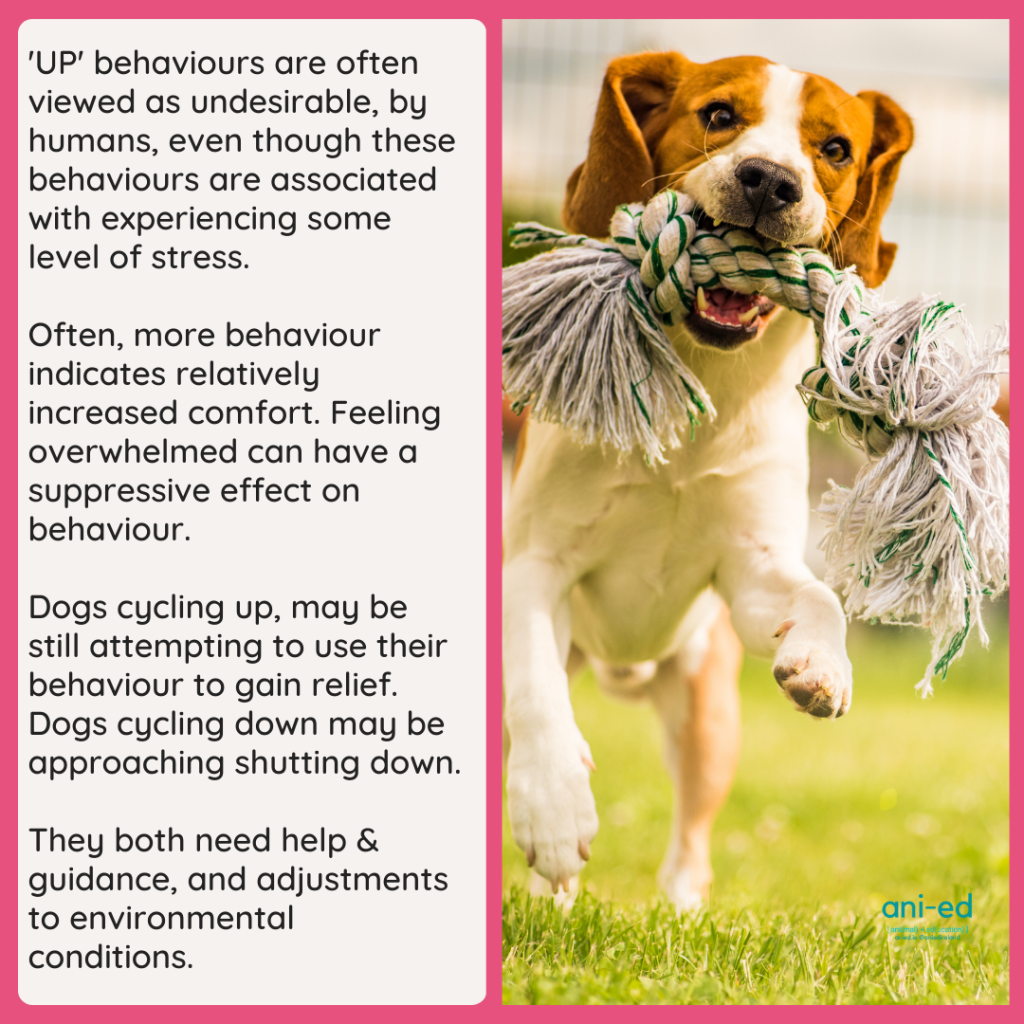
While stress isn’t all or always bad, being wound up or stressed over longer periods isn’t pleasant and may be damaging for the brain and body. Remaining in a stressed, excitable or wound up state can most certainly have negative impacts on behaviour and behavioural health.
When we engage the dog in an exciting or exerting activity or expose them to such situations, their body produces conditions that prepare them for the impending challenges. Some of these conditions in the body are essentially addictive…you’ve heard of “adrenaline junkies”, right?!
Canine adrenaline junkies, just like their human counterparts, may put themselves in situations where they can get their fix, even situations that wind them up due to distress, such as barking or lunging at scary things. And they need a bigger, harder hit every time.
This means these dogs are up and up and up and up, and may find it more difficult to come back down, to inhibit their behaviour, to respond to cues, and may be living in an ongoing stress bubble.
The more the dog engages in such activities the more their baseline for calm is raised and they can find it more difficult to settle or calm themselves, they might be on edge, they might lose it quickly and easily, they might be over-active.
Key points:
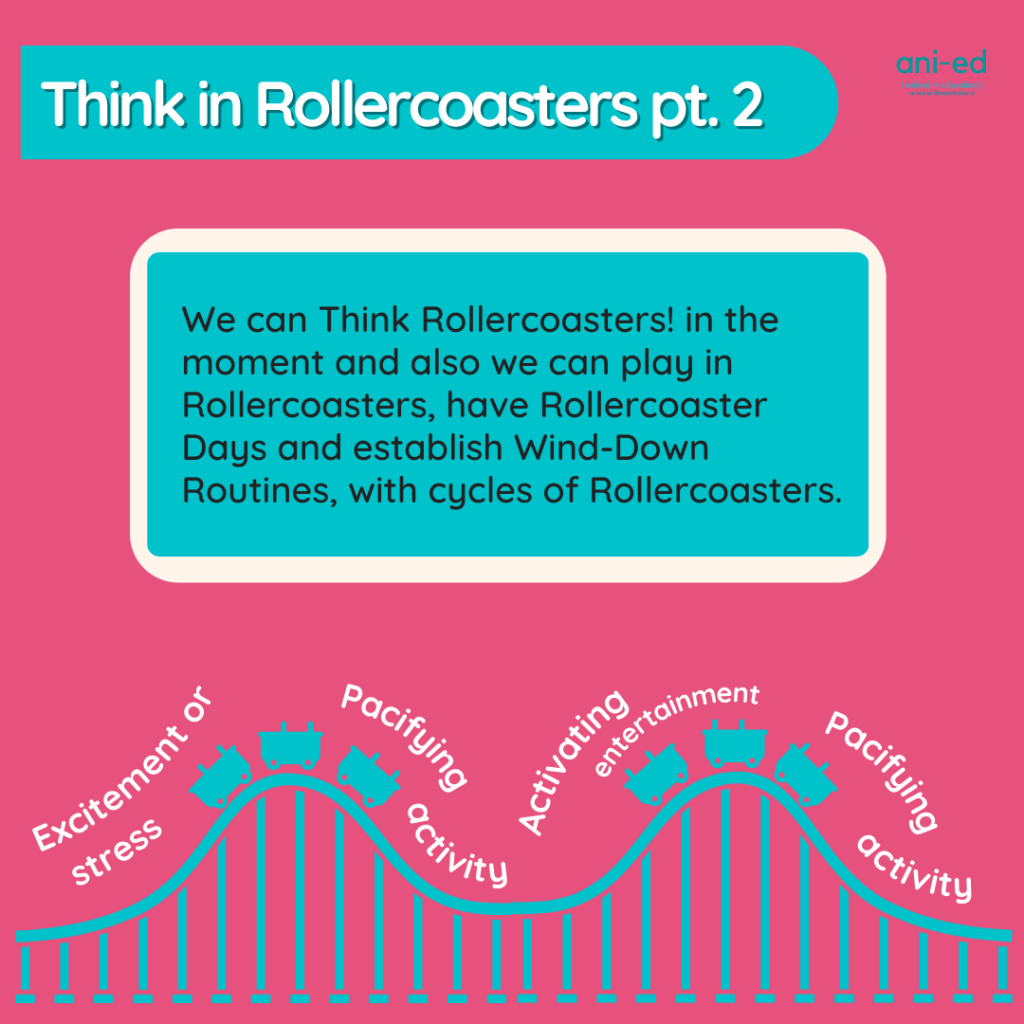
We don’t want to stop activity or prevent excitement…’cos where’s the fun in that?! Instead we will think in rollercoasters to help prime the dog’s stress systems to engage and relax, engage and relax. This will help the dog develop skills that allow them to calm themselves more efficiently after getting wound up.
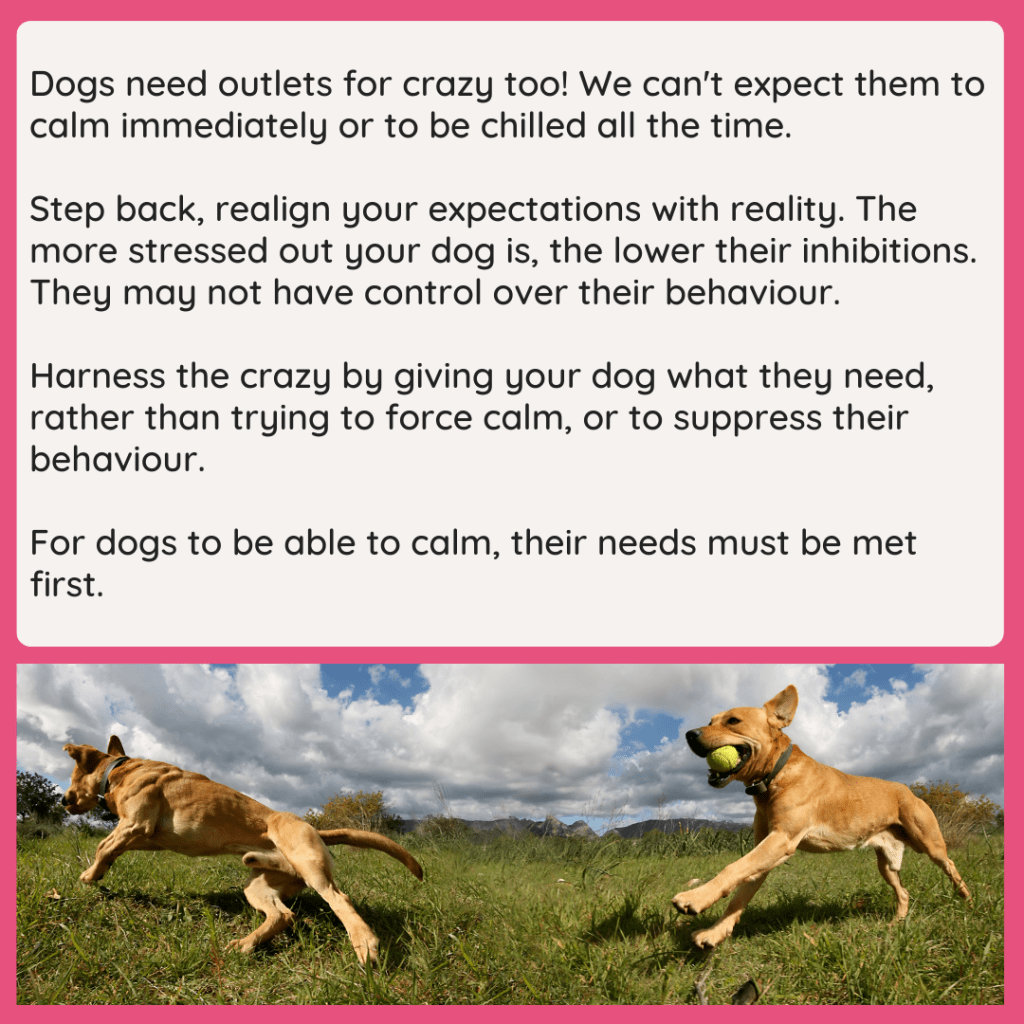
But as much as we might like our dogs to be calm, they do need opportunities for crazy! And establishing a way to support them in this can help them cope better with the effects of daily life, and all the challenge that brings.
Key points:
Make each day a Rollercoaster Day!
Consider ways to insert Rollercoasters and your established Wind-Down Routine across your dog’s day to help them deal with all the challenges that life in the human world presents.
Have Rollercoaster Outings too!
Think about how you might integrate Rollercoasters into your dog’s outings. Use elements of your wind-down routine to help them come down a little, before bringing them up again as you both adventure together.
Include mixes of activating and pacifying activities as you go; it’s very easy to encourage sniffing after more intense activity and then dialing it up again and bringing it down with more sniffing. This makes outings far more beneficial, enriching and tiring…but in a healthy way!
Play in Rollercoasters!
True play provides lots of opportunities to rehearse stress busting sequences, just like Rollercoasters.
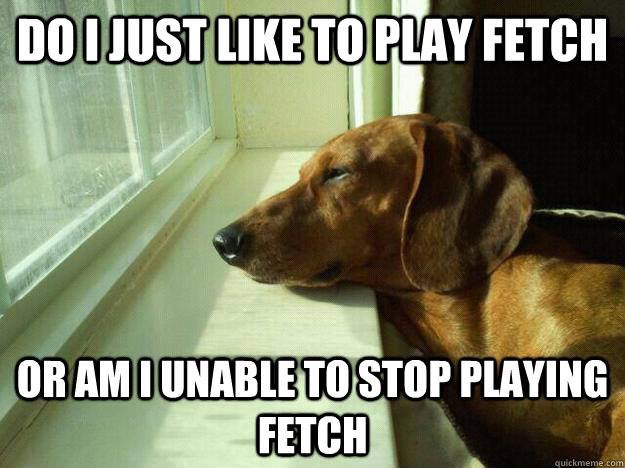
Play can be tricky to define and while we certainly think we know it when we see it, our play with dogs is often misguided. We have ideas of what human-dog play should look like…things like fetch games…and when dogs don’t play this way we think they’re not that into play or toys.
As is so often typical of us humans, we often approach play in the way we think the dog should play or in the way we think the dog should enjoy playing. And this so often turns the dog off play, changes the nature of games and ultimately causes break downs in communication and relationship.
Improving toy play from intense fetch, to real interactive dog-led play takes some effort; you’re not just a ball launcher any more. You are an active participant in the dance of play with your dog. Check out this clip:
When we do play with our dogs, we are careful to play in rollercoasters. This helps to prevent mis-communications between humans and dogs that can happen when things get exciting because humans and dogs often play differently.
Tug games, and variations of this play, are better toy based games for humans and dogs to play then a lot of fetch type games. No matter, we play in rollercoasters!
In this clip, Tayto learns to release the toy and sniff to help bring him down as tugging heats up, bringing him up again:
We can also apply some established behaviours to help bring the dog down again and respond to cues, in between play that brings them up, like in this clip:
Rollercoaster Games work brilliantly without toys too:
Play toy-searches when playing tugging or fetching games but most importantly, mix it up. We don’t do the same play moves more than twice in a row. For example, toss the toy for fetch, ask for a cued behaviour on return, tug and release, then hide the toy for a search. Mix it up!
Regardless of how you and your dog play Rollercoaster Games, the general procedure is some version of the following:
start the game when the dog is offering calmer behaviour, for example, all four feet are on the floor, they are quiet
if using a toy, introduce the toy low down so as not to encourage jumping up or grabbing – move the toy in an enticing manner back and forth
tug, play, interact for a 3-count
say your release cue (then toss food if necessary for sniffing)
have a break sniffing, lying down, doing other cued behaviours for at least twice as long as the play portion (e.g. 6-count)
when the dog has come down a notch, start again by initiating play
Check out Day 57 of #100DaysOfEnrichment for some Rollercoaster step-by-steps.
Applying Rollercoasters
Rollercoasters are great, in the moment, to help your dog do better with feeling stressed or overwhelmed.
When they’re ‘up’, provide them outlets for the crazy that come from you. This provides a release for them and may allow you to harness their responses, so you can more effectively guide them toward healthier behaviours.
By playing in Rollercoasters, and Rollercoaster Games, you are also practicing for these situations. Your dog is learning to respond and redirect, channeling their feelings, when overwhelmed or excited. All though fun and games, bringing many other benefits to your communications and relationship together.
Forget about obedience and traditional “training”; instead, think Rollercoasters!
Bear with us as we slowly climb out from under our Holiday blankets & get back to the business of 2023! Thanks so much for getting in touch with us over these past couple of weeks; we are getting through all your correspondence and will get everyone sorted very soon. We appreciate your patience!
Indeed, your support & patience has been greatly appreciated all last year as we have been finding our feet again. We wish you & yours a wonderful New Year…I’m sure we will all be dating things with the correct year again very soon…!
Despite the pressures of this time of year, reject resolutions of deprivation & denial.
Instead, set goals for ADDING more dog to your & your dog’s life.










 …and if you wish for those things in an adult dog, prioritising behavioural development with appropriate challenge, social & environmental exposure in their first weeks is where you start.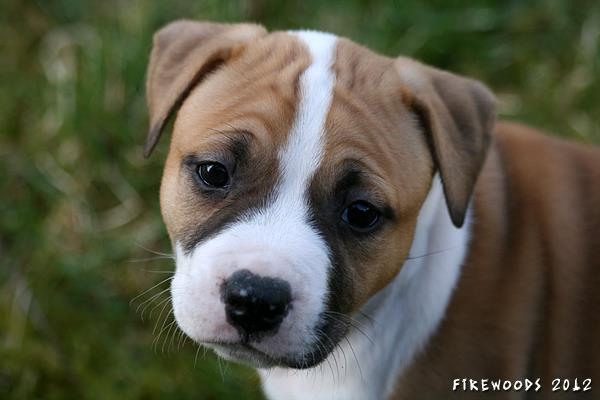


 He very much likes to adorn his body with the smelliest and enjoys a poop nibble from select samples.
 but pretty normal canine behaviour, and I am not pushed about redirecting this behaviour











 AniEd Ireland