On the verge

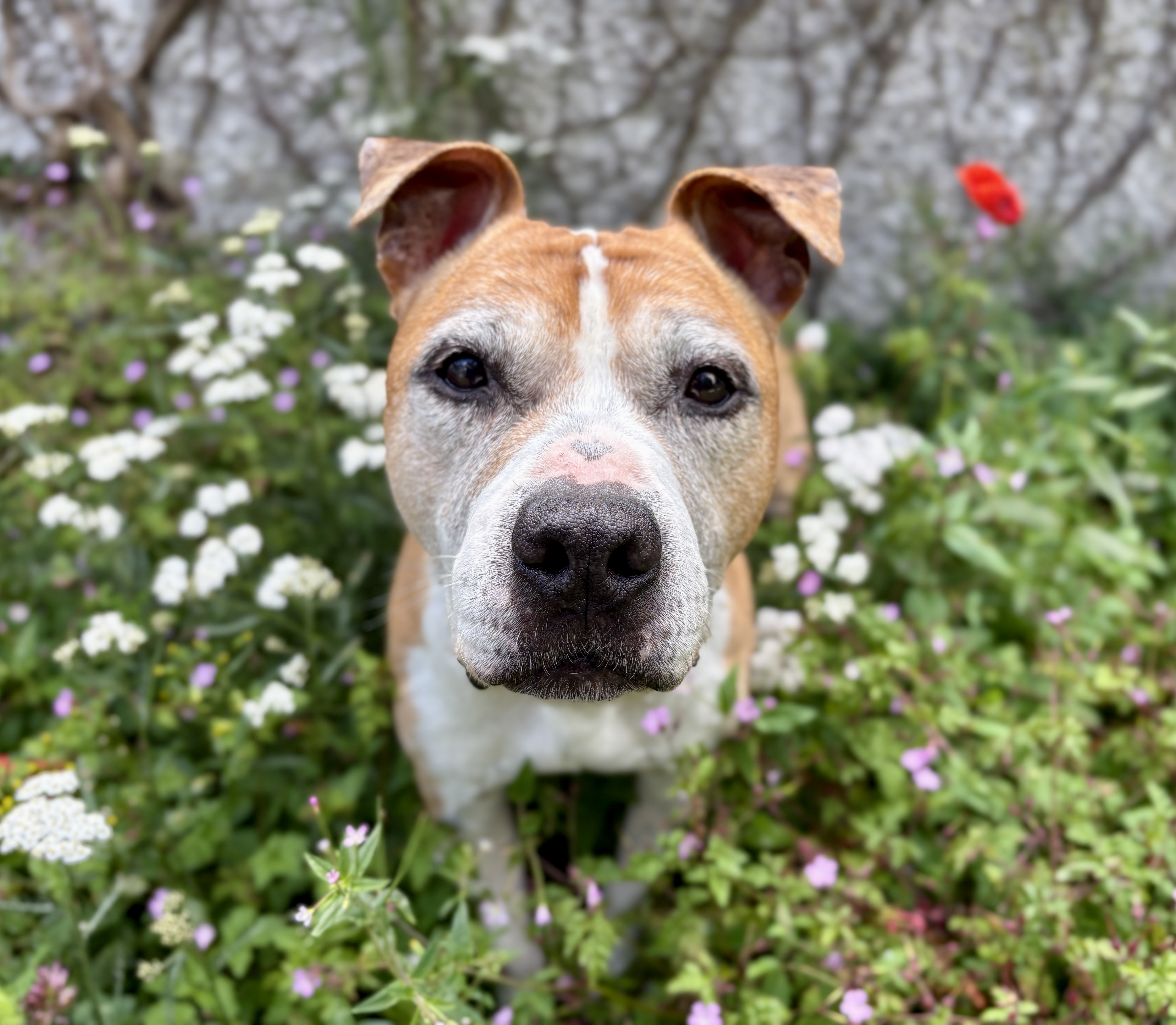
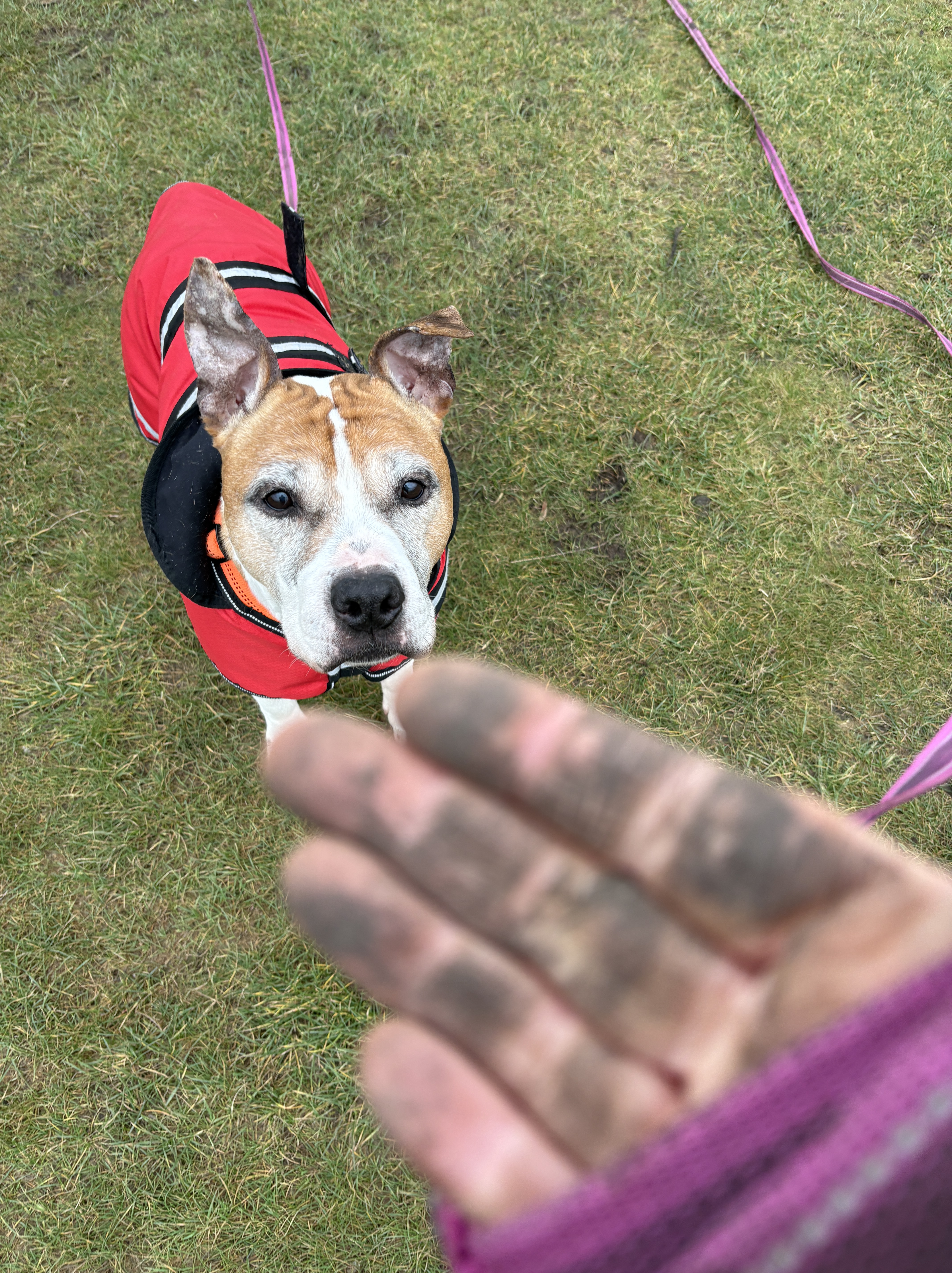
Not having been kind to his body one day throughout his long life has really started to catch up with Decker, this year in particular. He’s over 13 now, old for dog and pretty ancient for an AmStaff.

More for seniors, not less

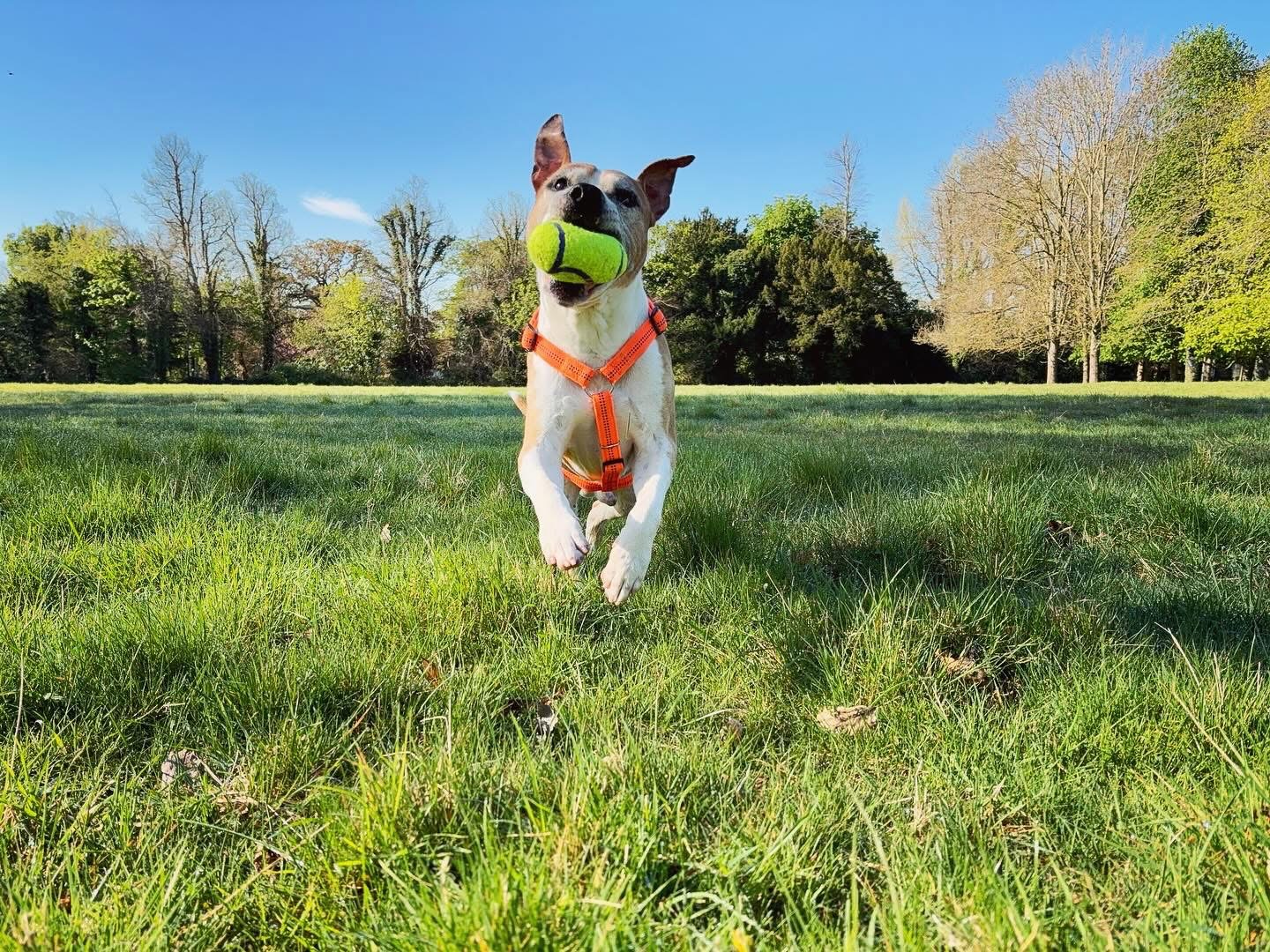
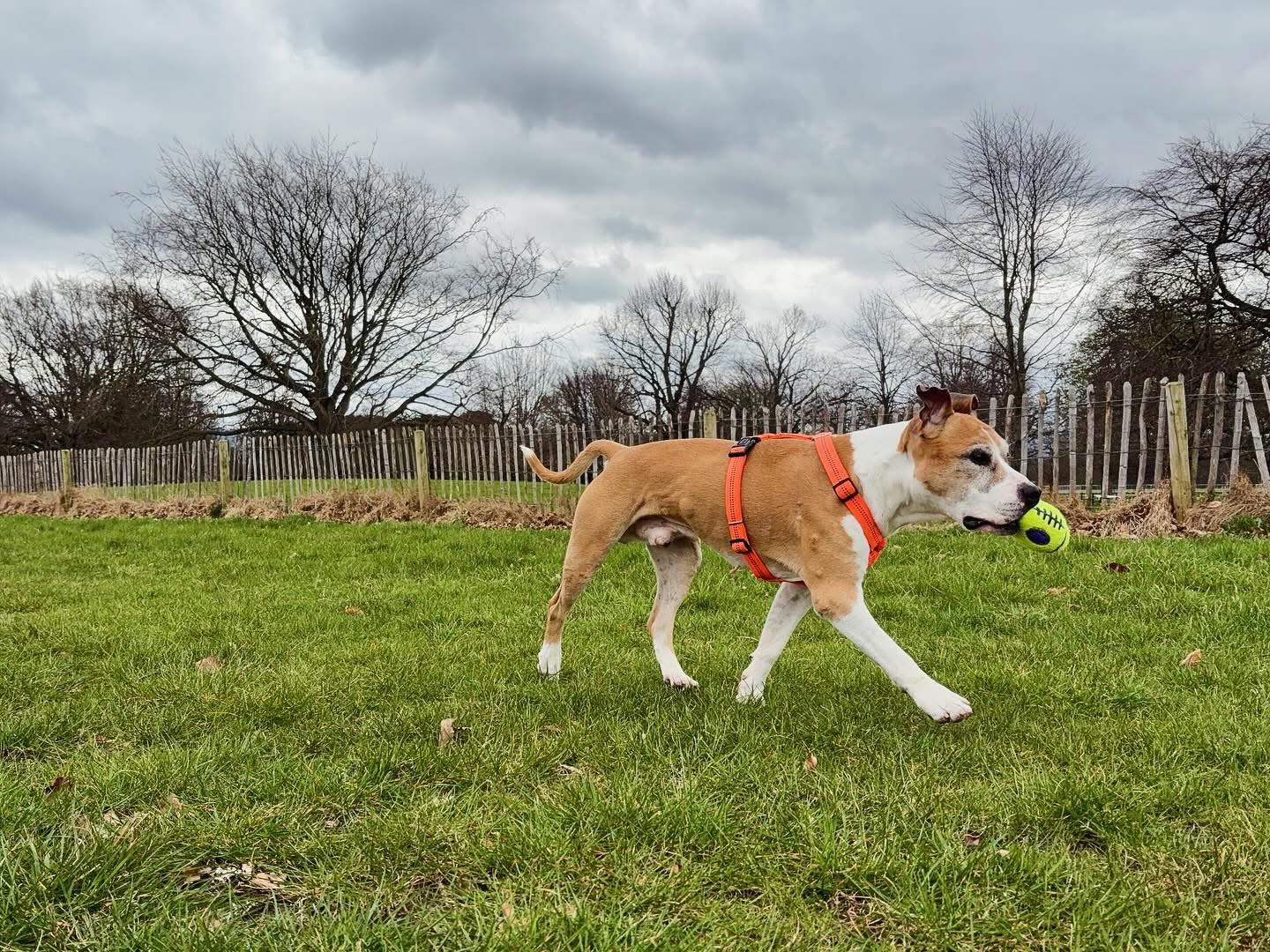
He’s still super active. He regularly swims for 30 minutes in the sea and most days will hike at least about 6-8km. We train regularly and still have lots of fun. He does puzzles and continues to invent games, training me with his exquisite teaching skills.

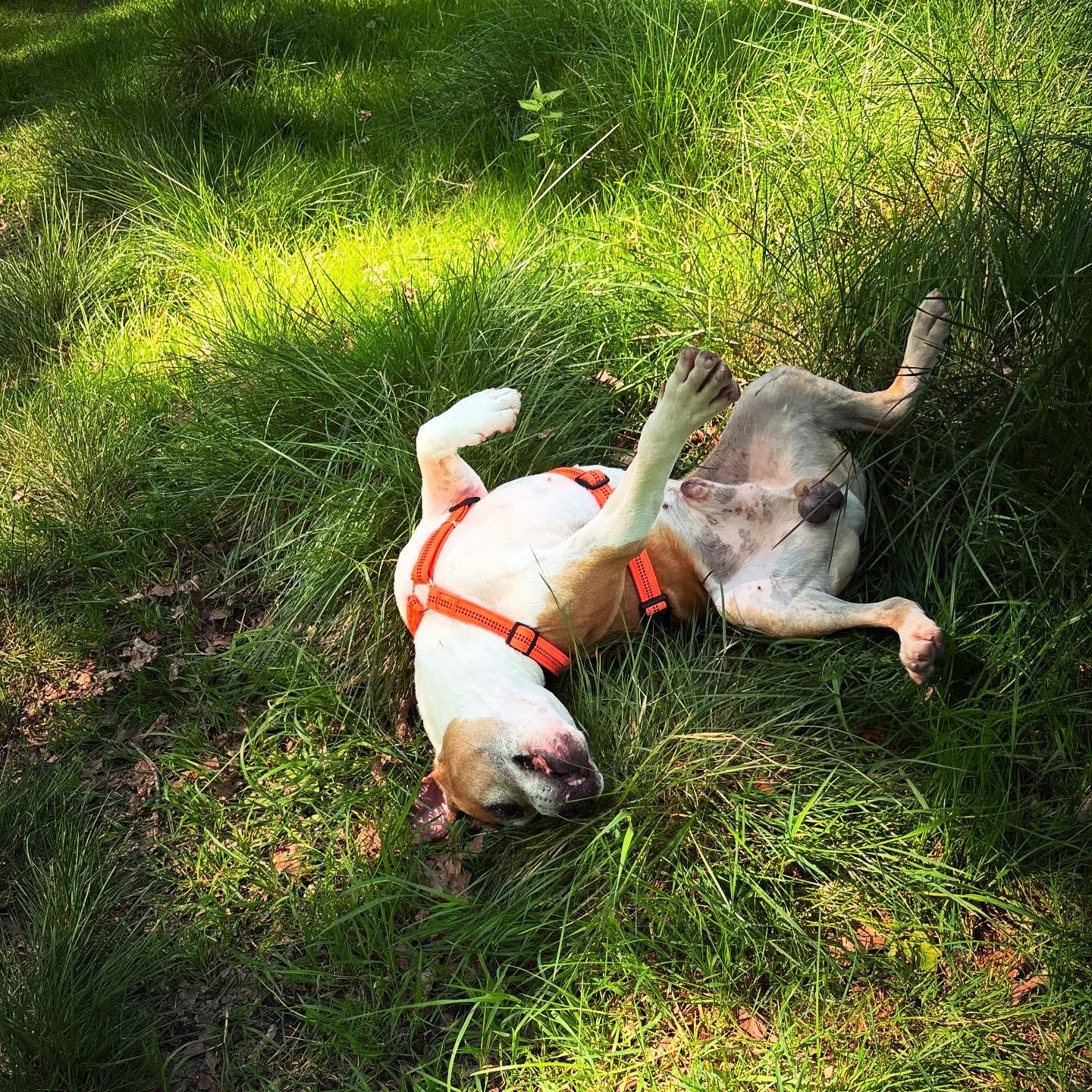
He’s totally deaf now and although always an epic sleeper, he sleeps so deeply now; he has lots of memory foam beds, blankets and favourite comfy spots in the sun.

All in all, seniors require just as enriched a life and world in their later years as they did throughout life.

But the older body needs more support and dogs aren’t always super clear about telling us they’re in pain, they’re tired, that they’re aging body needs a break. We’ve gotta look real close and observe carefully, learning not to dismiss what their body tells us as “just being old”.

When the spirit is willing but the flesh is weak

Of course, Decker doesn’t know he’s old and that his body is failing. He has mild arthritic change in his TTA knee (way less than would be expected) and some very very early neuromuscular changes mildly affecting the pelvic limbs.

His right elbow has been giving trouble for a while, wear and tear due to compensation for a long standing shoulder injury. And now his left elbow is showing some pain indicated by posture changes and occasionally, transient acute lameness. Ouch!

This means extra care is required, because he sure isn’t going to mind himself. We have some good pain relief on board and plenty of adjustments in place that are supporting him right now.

Behaviour happens in the environment

Our outings have to look a little different now with steady pottering and sniffing being much more beneficial, and safe for his body, than crazy carry-on and life-threatening antics.

Instead of seeking ways to calm the silly-boy or “training”, ask, under what conditions does steady pottering & sniffing happen?
While also asking under what conditions the crazy stuff happens…

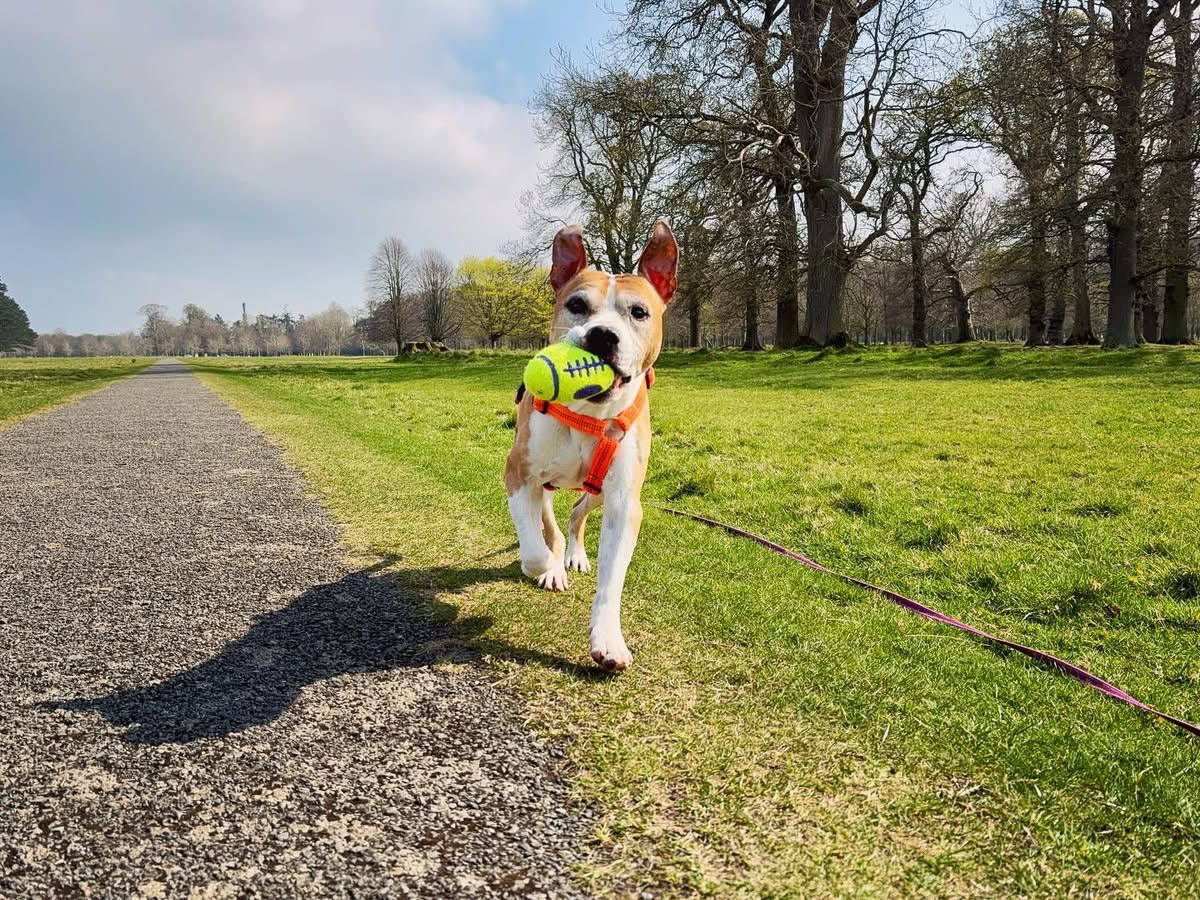
Decker likes a path with a verge. A verge of trees, a verge of undergrowth, a verge of lawn.

One of his many talents is pathfinding. Any density of scrub and undergrowth and he will find a path, leading me through. I just follow along.

When we walk along a verge, he sniffs and potters steadily, checking in, sniffing and pottering.

If we want to increase specific behaviours, we can recreate the conditions under which these behaviours happen. Visualise what it looks like when the dog is doing these behaviours…what’s the picture?

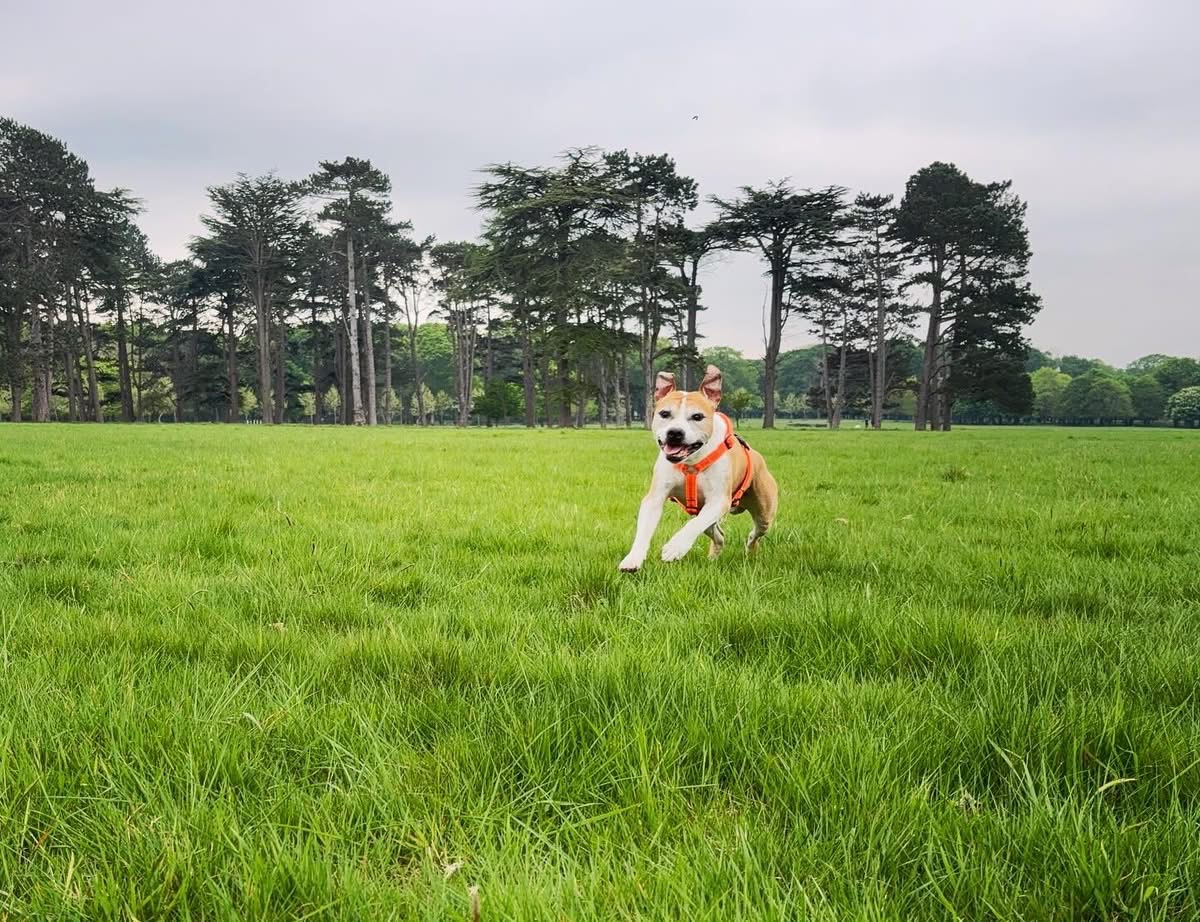
More open space, particularly grassland and long grass, or water…any water… and that picture starts to look a whole lot crazier and more active. He still gets to do that, these behaviours are important too and his behavioural health matters as well.

Understanding the conditions under which steady sniffing and pottering happens means we can do lots of that by going to those places, by being in those pictures.
And we can intersperse that picture with the other too, for some relief, for release and just for fun.

Instead of thinking in terms of the behaviours you don’t like, think of the behaviours you want to see…and then learn about the conditions under which they happen. Go there, do that. Be in those pictures.

FREE IVBA Webinar

To Book: IVBAed@gmail.com

I wear many hats, and have always done so, in this industry. Over the years, for various reasons, I’ve really focused my energies where they will be most effective and ultimately, will contribute to improvements to welfare. Plus, at this stage of the game, I’m only interested in working with really cool people who share these same goals and achieving them through true collaboration.

That’s why I’m really only involved with one industry organisation now…and that’s IVBA, the Irish Veterinary Behaviour Association.

I’m lucky to be the vice-chair of IVBA and part of the organisation’s Education Committee. We get to put together an educational program of resources for our members and I particularly love our From Paper to Practice series.

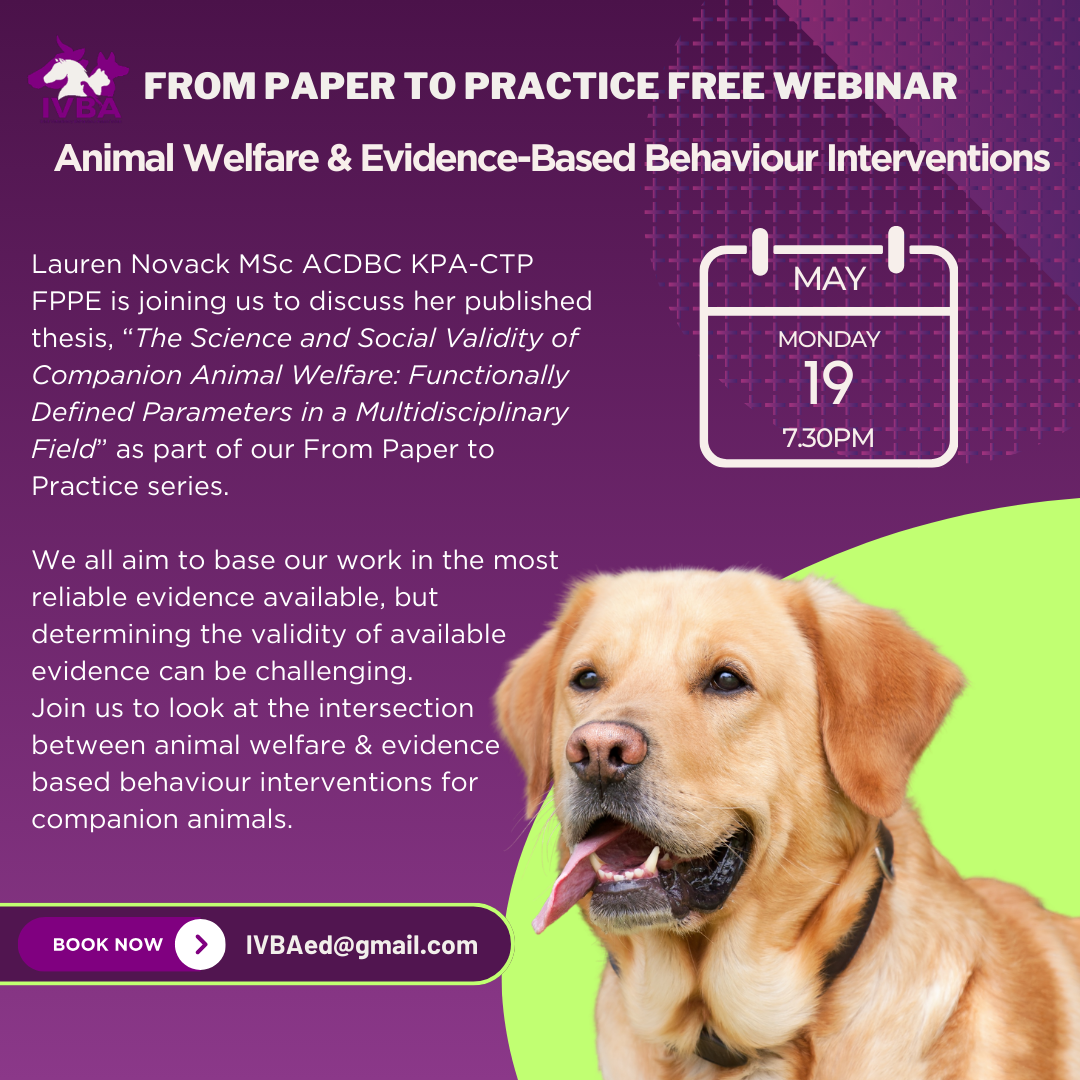
I can’t wait for our next webinar on Monday 19th May at 7.30pm (Irish time)! T o book: IVBAed@gmail.com

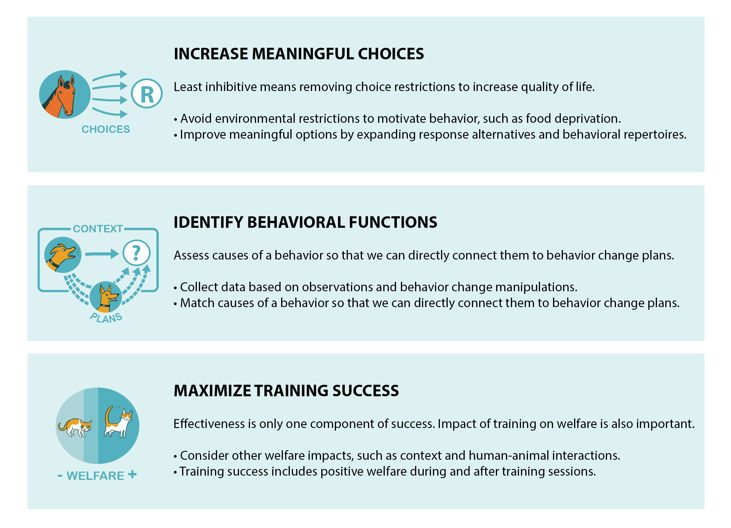
Lauren Novack MSc ACDBC KPA-CTP FPPE is joining us to discuss her published thesis, “The Science and Social Validity of Companion Animal Welfare: Functionally Defined Parameters in a Multidisciplinary Field” as part of our From Paper to Practice series.

We all aim to base our work in the most reliable evidence available, but determining the validity of available evidence can be challenging. Join us to look at the intersection between animal welfare & evidence based behaviour interventions for companion animals. Join us for free on 19th May!

This webinar is free for everyone and the recording will be available for members only. More about joining IVBA here.

Our wonderful speaker, Lauren Novack, has co-authored a book chapter with Dr Fernandez (who did a webinar for us last year on his LIFE model) and they’re sharing a pre-print. Download here.

The chapter, which functions as an extension of Dr Fernandez’s former LIFE model, goes into greater detail about the history of both training ethics and welfare, as well as how the behavioral and welfare sciences connect to improve the lives of animals.

To talk more about this important topic, join us for our webinar on Monday!

Book: IVBAed@gmail.com

Oh! And tell your friends…the more the merrier! Plus it’s free!

Throwing the dog out with the ball

As is its way, and why I avoid it as much as possible, dog-trainer social media continues to promote polarisations. That our field of behaviour, the epitome of nuance, relies on such media for the dissemination of information is boggling.

Yes/no, nevers/always, while staples of social media, don’t really work in discussions of behaviour. The fetch-is-a-force-for-good/evil debate has been resurrected of late with the sharing of recent posts discussing the evils, and polar opposite responses promoting the good…

(I’ve even written about it before: Find It! & Fetch Can Live Together.)

This piece is just under 1500 words but there’s a second part to read too, with lots of ideas for refining fetch games here, and that’s just under 2000 words.
Settle down and dive in!

If you can’t dazzle them with brilliance…

This most latest flurry is inspired by a post that starts with a definitive statement directed toward all dogs, with an ‘always’ stuck in for good measure.

When we see posts like this, it’s a good idea to search for criteria for pseudoscience, for writings that use lots of sciencey sounding terms, with a pinch of accuracy, but a whole lot of bamboozling.

Professing certainty and the committing of many logical fallacies abounds, with claims that this is the only source of truth on this topic to top it off.

A common theme of these sorts of arguments will include many references to neurotransmitters. Individual neurotransmitters are not “good” or “bad” and dogs don’t need -detox from <insert neurochemical here>.
Neurochemicals interact and we can’t look at a dog’s behaviour and diagnose which singular neurotransmitter is in play…that’s not how this works. Neuroscience doesn’t come ‘dumbed-down’, and understanding the complexities of neurotransmitter actions extends far beyond textbook definitions of their functioning.

When arguments include references to fuzzy concepts like “drive”, it’s time for caution. And when terms are used without explanation or context, like “compulsive” or “obsessive”, it demonstrates a lack of understanding of meaning and application.

But those dogs sure look “obsessed

We have selected for specific canine motor patterns in different dog populations to create breeds and types of dogs that do jobs for us.
Our selection has increased different dog-types’ sensitivity to certain types of environmental stimulation, raising arousal in anticipation of the challenges associated with efficient switching into workmode.

We have shaped dogs’ arousal systems to become activated under various conditions to prepare and support their body during the challenges and exertions of working.

These motor patters are neurologically cheap and highly motivated behaviours. And when dogs are under high stress, or in conditions that allow them to anticipate raised arousal, dogs will show these behaviours that might include predatory sequence responses, certain social behaviours including some play and sexual related behaviours.

According to the Yerkes-Dodson model of arousal, simple behaviours are best suited to high arousal, while complex behaviours are better performed under lower arousal. With rehearsal and rehearsal, behaviours can become more efficiently demonstrated.

Repetitive fetch behaviours appear ritualised, repetitive patterns of behaviours – each round looks the same, and the behaviours are repeated over and over. The Limbic arousal required to hone that focus on the ball and to support the body’s exertion contributes to the apparent intensity and ritualised nature of these responses in many dogs.

But that doesn’t make it “obsessive” or “compulsive” and it certainly doesn’t mean this will become a “compulsive disorder”. Abnormally repetitive behaviours (ARB) fulfill specific criteria and include specific actions that affect quality of life.

The B-word

Balance has become a bit of a dirty word in some dog training sects, just like the F-word…
So let’s balance the issues on fetch

Dogs need to move

The benefits of regular, exerting exercise are well known and accepted.

Moderate exercise is associated with all sorts of biological effects contributing to elevated mood. Daily, free-choice exercise leads to sustained enhancement of serotonin metabolism, providing immunization to negative stress-effects.
(Dey et al, 1992) (Dey, 1994) (Chaouloff, 1997)

Dogs need physical exercise and adolescents particularly need opportunities to move and hone their developing physicality.
Dogs also need opportunities to move freely within their world, deciding, as much as is safe, how they interact with and explore their environment.

Reduced physical activity contributes to degenerations in physical and behavioural health in dogs.

Lower levels of activity are associated with the development of social fears (Puurunen et al, 2020) (Tiira & lohi, 2015), and non-social fears, such as fears of startling stimuli or loud noises in Dogos in Tami et al, 2008, and aggressive & anxious responding (Lofgren et al, 2014).

(In Puurunen et al, 2020, lower activity levels are defined as less than two hours per day.)

Is excitement good? Is arousal bad?

Humans tend to interpret dogs’ excitement as happiness. And we attempt to ‘tire our dogs out’ with lots of exerting exercise. Most guardians believe that their tired dog is good, and prefer a quiet dog.

Exertion requires increases in arousal and increased cortical inhibition so the dog is responding with arousal-related behaviours more efficiently. This arousal feels good, and dogs will put themselves in these situations to get their fix.

But is that “bad”?

High-octane isn’t without risk…but then, what is?

Repetitive exerting exercise like fetch or high-octane dog-dog interactions may present risks in a couple of ways, for example:

  • reduces sensitivity to pain, discomfort, and social stimuli
    Dogs all wound up may not listen to their body and may not listen to communications from other dogs setting them up to rehearse inappropriate social behaviour.
  • rapid deceleration and sudden turns may be damaging to the musculoskeletal system, particularly in growing dogs (Newton et al, 1997) (Qi & Changlin 2006) (Vasan 1982)
  • increased arousal lowers inhibitions and abilities to respond to ‘trained’ behaviours and guardians may find it more difficult to build responsiveness, possibly resorting to aversive approaches of control
  • lots of running, chasing and biting may not really be play…

Is fetch play?

Play between humans and dogs is wonderfully enjoyable for both species and beneficial to relationship building and resilience (Rooney & Bradshaw, 2002).

While we often refer to fetch games as ‘play’, do they fit the bill? True play involves specific interactions, a dance of communication and conflict resolution. (Burghardt, G. M. (2005). The genesis of animal play: Testing the limits. MIT press.)

If your interactions with your dog can be replaced by a mechanical arm, I dare say we are not looking at true play.

For fetch games to be play, interaction and the ‘dance of play’ must be present. 

Balance & the F-Word

It’s our job to support our dogs in developing behavioural repertoires that allow them to flourish and keep them safe and healthy.

We have selected dogs to show arousal related behaviours efficiently and have now decided that’s not acceptable anymore… because it doesn’t suit us.
What a cruel trick we play on dogs!

Recognise that over half the pet dog population being over-ideal-weight is a significant threat to canine welfare (Suarez et al, 2022). High proportions of dogs are not provided with daily exercise and even fewer with intentional enriching additions to their life and world (PDSA Paw Report).

Rather than punishing guardians’ attempts at providing for their dogs, instead, we should shape their efforts by refining fetch and exerting exercise to more completely support their dogs’ behaviour health…ROLLERCOASTERS!  

Arousal isn’t “bad”, it’s necessary, and is really an incomplete model. Find the balance.

Be a better human guide!

The renouncing of exercise as a primary approach to “behaviour modification” goes back in time in dog-training history. And there continues all sorts of movements to slow dogs down, to compare them to poorly validated ‘observations’ of free-living dogs (which is a false equivalence) and to maintain that sniffing provides just as much exertion as running around.

There is nuance to be found in all of these claims. But we are so resistant to allowing our dogs get excited and frightened of “overarousal”.

If the dog can manage themselves and we can balance their outlets, let them be. If not, get help.

If you’re concerned about a dog’s fetch-related behaviours, be a better teach and establish clearer stimulus control. This provide clarity, and improves predictability and controllability for our dogs.

Provide balance and design appropriate enrichment interventions based on valid evidence, and through listening to the individual dog. Their behaviour is information.

Now it’s time to check out lots of ideas for how you can refine ball-play, make it more like true-play, find the balance and inject some nuance: Fun with Find It! Not Just Fetch.

Dogs are the most gloriously uninhibited creatures.
Don’t suppress or manage this out of them. Be a better human-guide & find the balance!

 “I think we are drawn to dogs because they are the uninhibited creatures we might be if we weren’t certain we knew better…
~George Bird Evans

Life On Line

I will preface this by clearly stating that I love longlines, I use them regularly, but like all tools, care is required in their use and application.

Longlines are, essentially, just very long leads usually made of similar materials and fashioned in similar ways. Whereas leads are generally 5 or 6 feet long, or shorter, longlines tend to be from about 5m and up.

Clip link

Clip link

I’ve handled longlines thousands of times, and, I’ve taught longline handling skills to hundreds of handlers because there are different and more challenging skills required, particularly the longer the line is.

And yet, when faced with more permanent longline use myself, I’m grappling…but probably not as much as my dog…

Grappling

For pretty much his entire life, Decker’s been off lead while out and about. We’ve work hard and he has always been exceptionally engaged and responsive; his is the best recall I’ve ever trained to any animal I’ve worked with.

Decker is 13 years old and completely deaf, but continues to be pretty active and gung ho. That means in dynamic environments, where we are most days, being off lead just isn’t safe anymore. We’ve found that a 15m longline works best and he is rarely at the end of a line this long. I follow him about as best I can so restriction isn’t too impactful.

Clip link

Clip link

There are plenty of complexities to grapple with when using long lines, with active dogs in dynamic environments.

Clip link

Feeding the line and keeping it up and coiled can help to manage the length, avoiding tangles and getting caught. But I feel it adds further constraints to the dog’s free movement.

Clip link

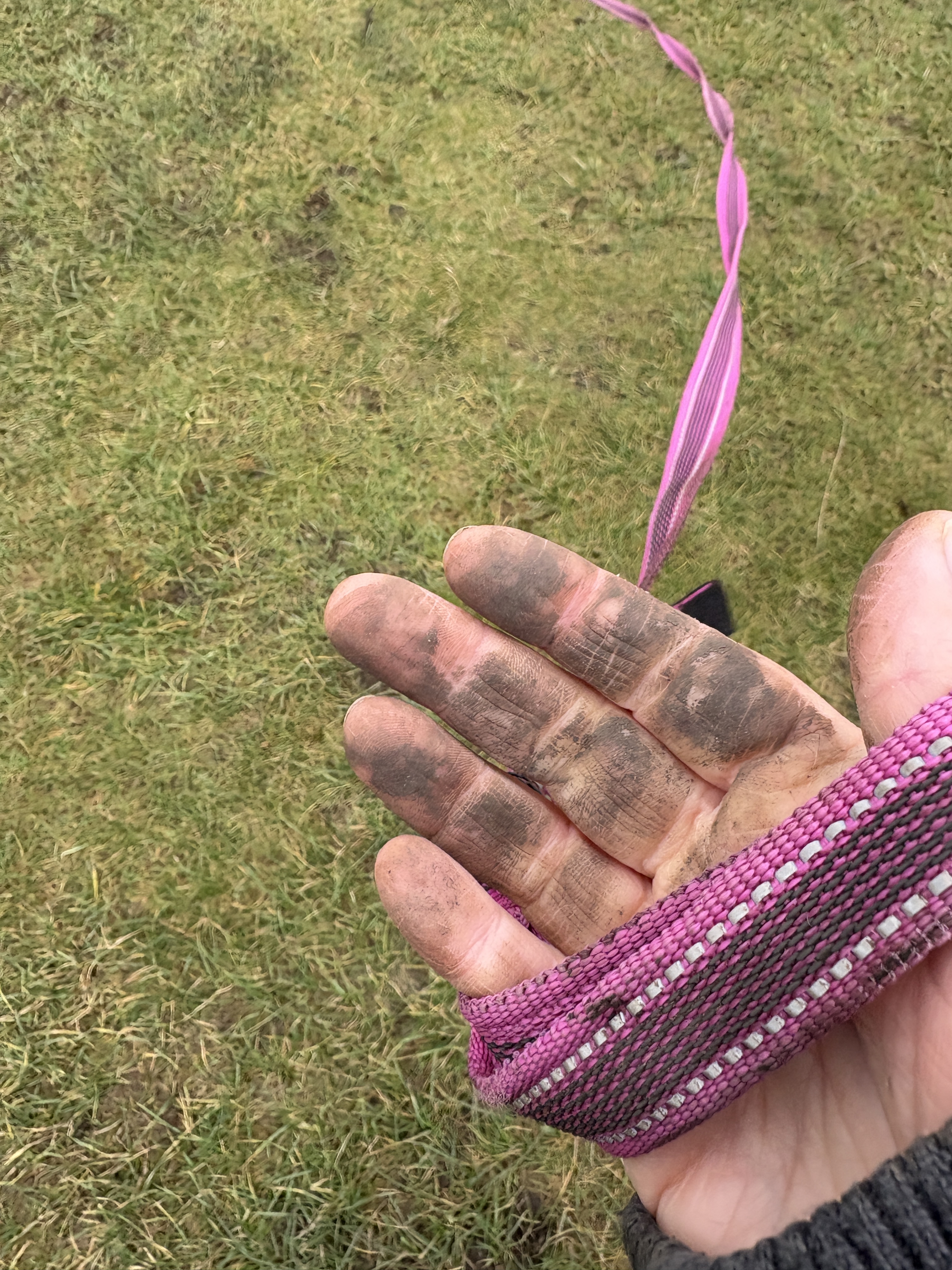
Not to mention my constantly muddy hands…

Clarity or lack thereof

The real challenge with longline use, however, is it functioning as part of communication.

What does pressure on the line cue?
What does it cue your dog to do?
What does it cue you to do?

Clip link

Does pressure mean to stop or slow down?

Clip link

Does pressure mean to change direction or re-engage?

Clip link

When the line gets caught on something, he pulls to free it. Maybe pressure just means pull harder…

But more importantly, how would the dog know the difference?

The more line we have, the more options there are. And this becomes especially important when the line is really the only effective way to cue the deaf dog’s behaviour.

Clip link

With a shorter line or lead (in the clip above, it’s 5m long), it’s easier to be clearer. As the line grows so can confusion.

Maintain a consistent length of line under different conditions, e.g. in more open areas versus busier areas. Tie knots along the line to cue your responses.
Practice directional cues and distributing pressure consistently to cue changes in direction or engagement.

Along with developing line-handling skills, we must also work to maintain clarity with line pressure and what that might be cueing for both ends.
Clarity in teaching is a welfare issue so be clear and consistent!

Recognising Pain & Compensation

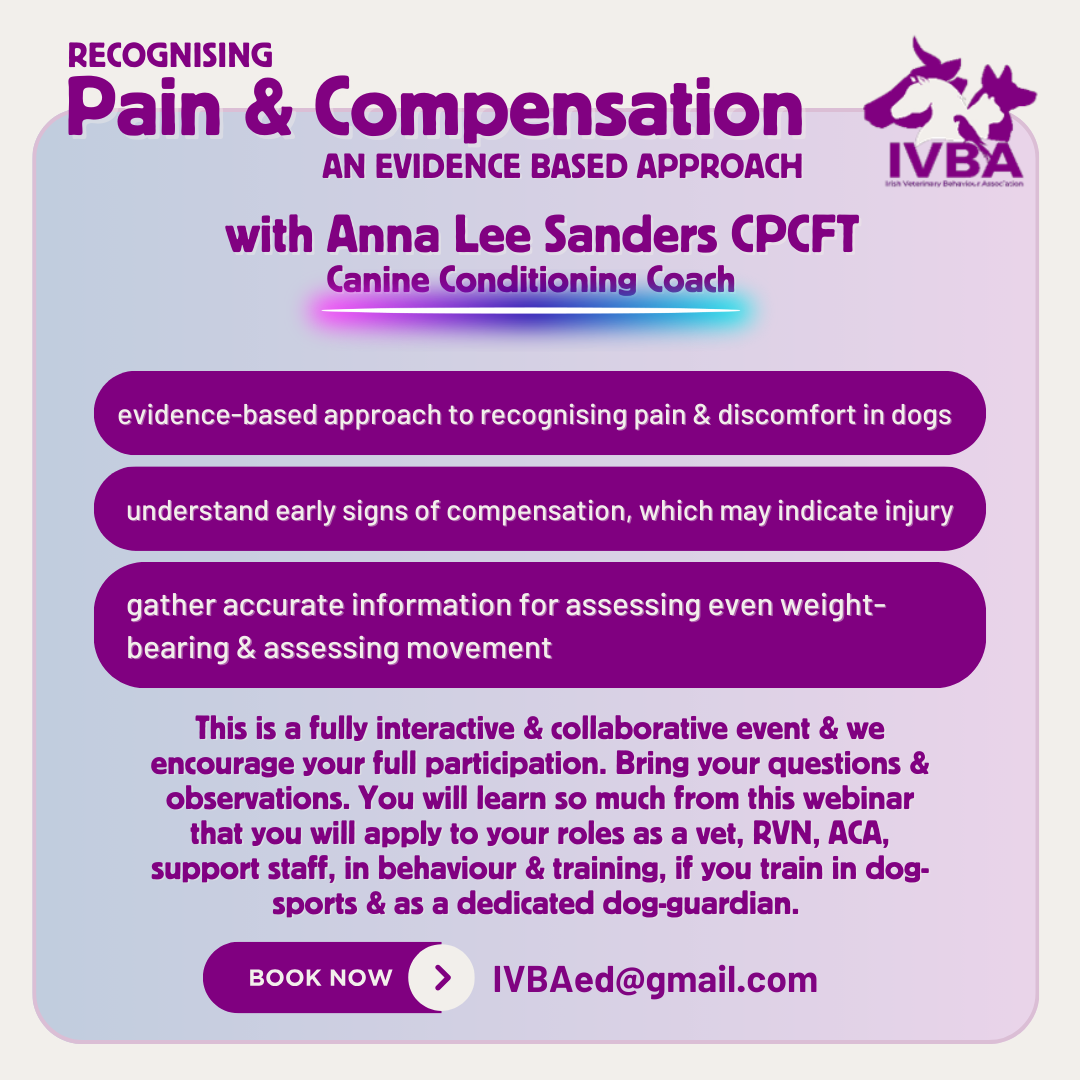
Join us for this free IVBA webinar on taking an evidence based approach to recognising pain and compensation.

Event details:

Monday 3rd March, 8pm (ROI time/GMT) via Zoom

Recognising Pain & Compensation: an evidence-based approach with Anna Lee Sanders CPCFT, Canine Conditioning Coach

It’s great that there is increased recognition for the effects of pain on canine welfare and behaviour. However, not all resources are evidence-based, and when it comes to pain and welfare, taking a truly evidence-based approach is a must.

This webinar will emphasise understanding how to apply an evidence-based approach to recognising pain, discomfort and signs of compensation in dogs. You will learn how to teach simple ‘conditioning exercises’ that allow accurate information gathering in the assessment of a dog’s load-bearing and movement.

This is a fully interactive and collaborative event, and we welcome your full participation. This webinar is perfect for all veterinary roles, those in training & behaviour roles, anyone training in dog-sports, and all dedicated dog-guardians.

You must book so please get your spot today to attend this event live and for free – email IVBAed@gmail.com and I will send you all the details.

This event is free for all to attend live and the webinar recording is available for IVBA members.

Free Summit!

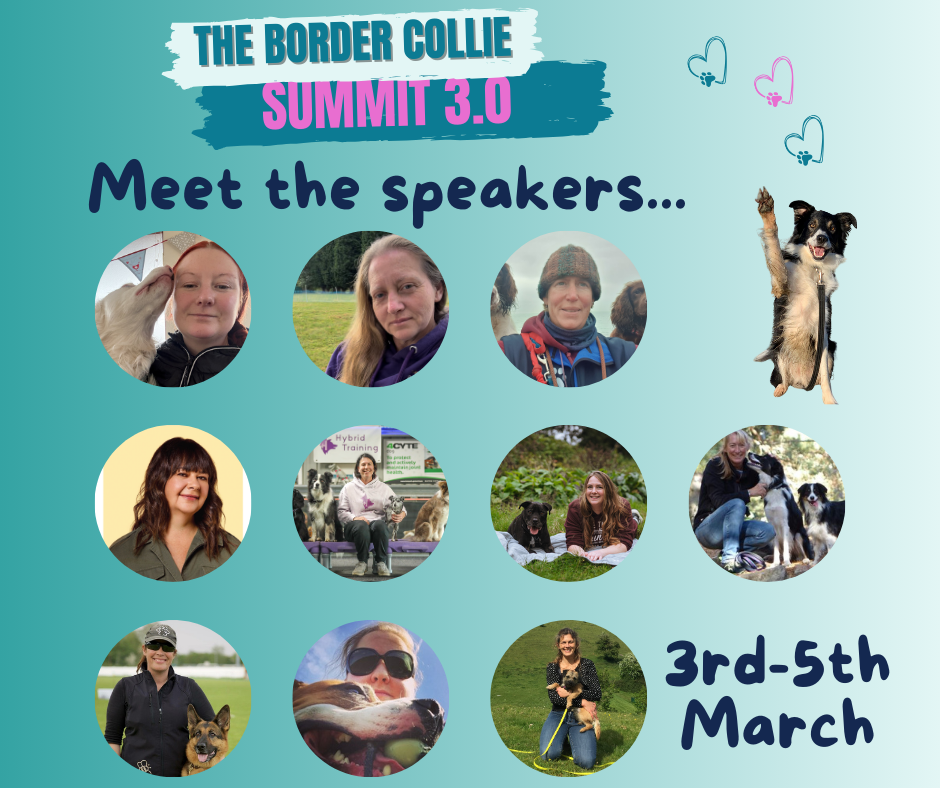
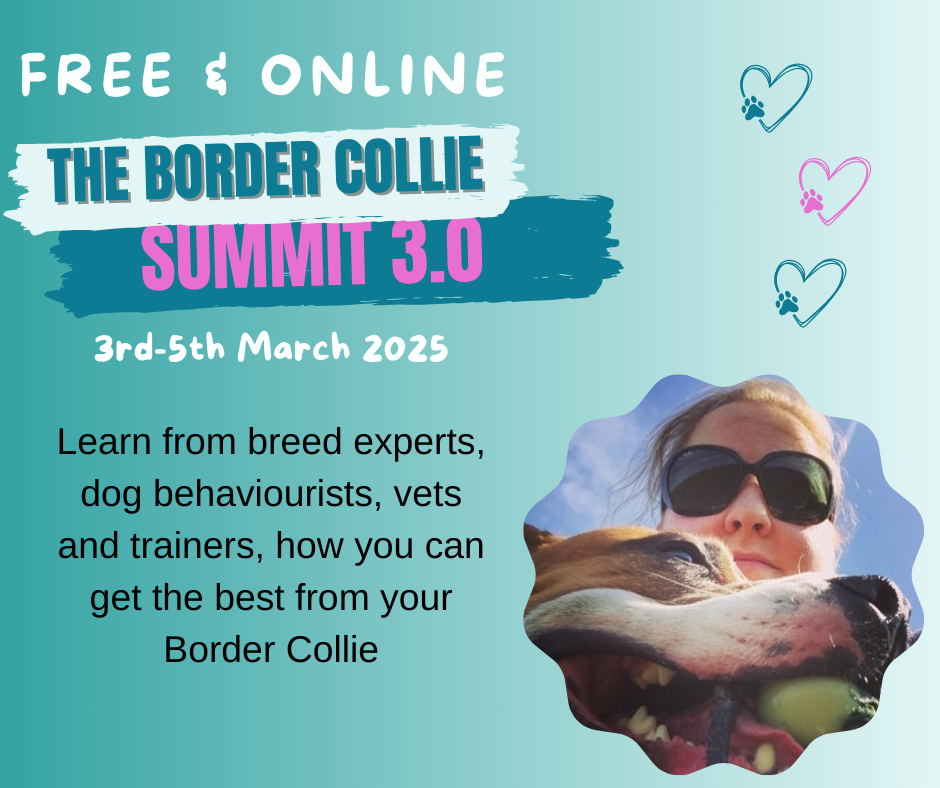
Join Anne from AniEd and lots of Border Collie experts for The Border Collie Summit 3.0 from Dingbatt Dog Training. And the best bit, it’s free to sign up!

Border Collies and BC mixes are super common, and we see a lot in rescue here. This is such an opportunity, even if you don’t have a Border Collie, to learn more and better understand dogs.

I was invited to discuss one of may favourite topics: building muzzle LOVE…not just muzzle training but building real joy and comfort while wearing a muzzle. Muzzle training, and muzzle LOVE, is for all dogs and makes a great teaching exercise providing so much learning for you and your dog.

Sign up today here!

AniEd won’t

Over the last week or so there has been much online and mainstream chat about cherry tomatoes taking over Bin’s Bridge in Drumcondra, Dublin. This appears to have started on TikTok when somebody noticed some cherry tomatoes that had been left on the wall. And for unknown reasons, it took off from there.

From the relative niche-ness of TikTok, its popularity soon saw this story picked up by mainstream media:

Just a simply bizarre and glorious story about humans and our weird and wondrous ways.
Of course, this was shared and shared and even became claimed as a tourist attraction likely owing to the international reach of social media within relevant demographics.

While this is all quite silly, and doesn’t really matter in the grand scheme of things, this, to me anyway, is exactly what social media is supposed to do. It can bring us together, promote connection, linking us together through inconsequential but ultimately meaningful commonalities. Things that matter, but don’t really matter at all.

TV in the noughties

Way back in the late 90s, trainer-social-media was really taking off in the form of listservs and Yahoo groups. Spurred on by moves to advance our field, and via contributions from the recently departed Karen Pryor, teaching animals was being approached from a much more scientific manner. And as we moved into the noughties, these groups of trainers were further united in our objections to the meteoric rise of TV training styles, spear headed by Cesar Millan.

Millan’s dog whispering didn’t bring any thing new, we had seen it all before, but it was his TV stardom and massive reach that really was set to push our advances back by decades.

Rising social media communities diverged because this is actually what social media is really good at: polarisation.

Trainer-Wars

While humans have always been tribal and willing to identify differences between groups, and then fight about it, trainer-social-media has certainly amplified our differences, bringing us further and further from understanding and growth.

Fast forward to today, 2025, and social media has continued to expand, and so too has trainer-social-media.

Use it wisely

The reach of social media across our industry has become so extensive that it appears to be a primary tool of communication, of connection, and most concerningly, of dissemination, in our young industry.

By its very nature, sharing is what social media is about but to be used wisely, safely and effectively, there needs to be a heavy dose of critical thinking applied to…everything.

With all this information available and everywhere, I’m expecting to see more knowledgeable and skilled professionals, and more knowledgeable guardians. I am seeing neither.

What I do see are many, particularly, newer trainers (those who have come of age within this social media world) latching onto online gurus, perpetuating the newest and shiniest idea, and the rehashing of established terms and concepts in many inaccurate ways.

Back in those early trainer-social-media days, we talked about TV not being a great medium for our type of dog training. There would be so much too-boring-for-TV left on the cutting room floor, that we couldn’t really show the extent of our work in 45 minutes framed around adverts.

Today, consuming content is an even more concise affair. Fast cuts, reels and shorts, still lend themselves to teaching that relies heavily on suppression, a quick fix.

Social media deals in absolutes, always’ & nevers, and that’s what builds polarisation so beautifully. But this has led to a loss of a lot of the nuance of behaviour…and behaviour is all about nuance.

When we get sucked into social media as a source of information and education, we think we are making choices, that we are calling the shots. But we are not. As we scroll and tap, we put more money into the pockets of billionaires, and facilitate selling of agendas, the latest and greatest, and of course, every new and shiny idea and product.

For all sorts of reasons, and a global pandemic being a big one, short form education has become the norm and go-to. I am not impressed by lists of all the webinars and one or two day events trainers have attended – this so often correlates with a professional jumping on every Instagram band-wagon, tagging and being tagged in the ever looping echo chambers, and lacking the nuance in application of solid and evidence backed concepts that are seemingly inaccurately understood.
We need joined up thinking, we need nuance, and we need to understand what evidence-based actually means, and how to apply it.

Step away

At AniEd, we are trying to set pretty clear boundaries regarding our use of social media and our manipulation of those trends, particularly those targeting newbie trainers.
The tools that so-called influencers use to sell are regularly adopted by social media trainers, desperate to promote their wares. AniEd won’t be producing all those egocentric and disingenuous “talking head” clips, we won’t be tagging all our supporters ad nauseum, we won’t be adding to the echo chamber confirming our own biases.

It is possible to be a successful and effective dog trainer without social media; I have many colleagues doing just that.
And it’s also possible to use social media carefully and judiciously, while also succeeding and remaining healthy, while building an industry that requires so much ethical input.

Go outside. Read a book.

I’m not suggesting that trainers abandon social media. It’s an important marketing tool and particularly useful for building community.
But I think it’s important that we recognise its flaws and failings, and avoid getting sucked in, which is of course, how it’s designed to do.

There is an entire world of biology, behaviour sciences and canine sciences that have not been bastardised by trainer-social-media.

For our learners, I strongly encourage getting away from social media, reading original research and not just the stuff that accrues the most shares or confirms our strong trainer biases. Read books from way back before trainer-social-media took hold.
I encourage developing critical thinking skills and understanding what evidence-based really means…because I don’t see a lot of that throughout trainer-social-media.

Have social media as your background, it’s not the real world. We can advance our industry by making real connections, by critiquing sensibly, by building training communities based in evidence and ethics, and actual welfare. By being free of algorithms, scrolling, notifications, echo-chambers and so much talking to camera.
Go outside, breathe the air, stand up straight, and train all the dogs, not for likes and follows but for the joy intrinsically found in connecting with dogs and learning as much from them.

2024 Reflections

This is another wordy one, without funny memes or joyous dog pictures. Doesn’t feel right.
If you can get through the next 1500-ish words, thank you!

With 2024 done and dusted, it’s time to review the year’s data, looking at what happened, what worked, what didn’t work. As always, keeping, collating and analysing data is revelatory even if it’s not always pleasant.

As I reflected on 2023, at the beginning of last year, the effects of the Pandemic continued to loom, and has impacted 2024 too.

There are similarities between 2023 and 2024, but little in the way of improvements. Sadly.

Please read my reflections on 2023 here for context; this piece will be a continuation it seems.

Outcomes

In 2024, 36% cases through our Behaviour Matters program ended in behavioural euthanasia.
One dog was returned to rescue and another dog was rehomed privately, relating to their behaviour. That’s a lot of heartache for so many of my clients, and their dogs.

(Again, my sample may be somewhat skewed as some of these cases were referred to me to specifically address and counsel these decisions.)

While these cases are disheartening, upsetting, depressing and frustrating, I do believe that the right decisions were made. Nobody goes into this wishing for these sorts of outcomes but maintaining these dogs’ welfare under their current living conditions had become impossible. And they were suffering.

Of these dogs who were euthanised in relation to their behaviour, 79% of them had been adopted from rescue organisations. The majority of these dogs had been in their adopted homes for less than two years, with a few home just a couple of months.

Where do dogs come from?

Across my cases, 56% of dogs came from rescue and 33% had been purchased from a breeder, DBE etc. A small number of dogs had been rehomed privately from another guardian or vet’s.

43% of dogs had been home up to two years and 45% had been home 2-4 years. But almost all had been exhibiting behaviours of concern for at least a year before coming to us.

30% of dogs were under the age of 3 when we started, and 66% were between the ages of three and six years at the beginning of their Behaviour Matters journey.

Of those dogs purchased from some sort of breeder, 77% had been reared, during their first 12 weeks of life, outside a family home type environment, so in sheds, barns, kennels and so on.

Of dogs adopted from rescue, 62% had spent more than two months in kennels but most of them had lived in kennel environments for more than a year.

The dogs.

All of my cases in 2024 were neutered, with just one neutered with careful timing and their individual behaviour and health in mind, after they had started our program. 70% of dogs were neutered males.

Timing of neutering may be impactful on behaviour, and behavioural health was not primarily considered in neutering any of the other dogs.

38% of dogs were overweight and 30% were prescribed anxiolytic medications, most of whom started as part of our program in collaboration with their vet teams.

52% of cases included medical involvement, mostly gastrointestinal issues and musculoskeletal pain, with some neurological issues too.

13% of Teams had worked with another trainer/behaviour professional previously on the specific behaviours of concern, not including those cases referred to me by other professionals.
But just 4.5% of Teams had had any training, proactively implemented, before issues arose.

Behaviours of Concern

While all cases include primary concern/s, almost all also brought secondary concerns too, often revealed as we started to delve into history taking and data collection.

Primary behaviours of concern included the following.

41% of cases involved injurious bites to humans, with 10% of cases involving serious bite injuries to children and a further 10% involving serious injuries inflicted to other dogs, including a couple of dogs who had killed at least one other dog.

36% of cases involved behaviours including barking & lunging at other dogs, joggers, vehicles, and so on

Separation related behaviours made up 11% of cases and 8% involved fear responses and avoidance behaviours.

Most help is sought when dogs exhibit behaviours that cause concern to humans. So behaviours of concern not as demonstrative are often missed without help.

Numbers

These are just numbers, stats. While they paint a pretty grim picture, they don’t tell us about the enormous devotion my clients have for their dogs’ well-being. They don’t illustrate their dogs’ trust and love for their humans, who are doing their best. And they don’t portray the great sadness and pain felt when living with and loving a dog doesn’t turn out as expected.

I’m sad and disappointed for all these Teams, and not just those with the worst outcomes. We must do better.

What can we do better?

Every dog is surrounded by humans who can make a difference in that dog’s life. In my ideal-world, every dog would have a dedicated and collaborative Care-Team from the very beginning providing guidance and support. But this is just a dream, and the dogs with whom I work have often not had humans capable of making sure that individual dog’s behavioural health will be prioritised as a matter of welfare, from the very beginning and throughout.

Training & Behaviour Professionals

Be better. Be professional.
Get off social media and stop chasing likes and follows. There’s a whole world of canine science not bastardised in reels and shorts.

We have such a unique opportunity to shape our young, evolving industry and make our services really relevant to our stakeholders. But we need to be better.

Do you want help to do this? Just ask us…we are on the same journey to be better, and we will help you. But it won’t be via social media and those echo chambers, it will be through real, substantial, and actually evidence based education.

Veterinary Professionals

Behavioural health is health, and behaviours can be considered clinical signs. All but one of the cases that involved meaningful and impactful medical issues were not addressed until the dog started our program.

Indeed, among those cases from 2024, chasing and pushing for proactive and effective medical treatments has been a significant barrier slowing our progress.

Do you want help to do this? Just ask us.
We offer free help and consultation to all veterinary staff to help with behaviour related queries.
We will come and talk to your team about behaviour, about what we do, how we help, and what can be done in day to day practice to promote behavioural health.

Producers of dogs

Making the decision to breed two specific dogs, and the experiences of each puppy from conception through their first few weeks of life are the most important elements in ensuring behavioural health for those dogs. For life.

The buck stops with you if you are responsible for these elements. There really is no understatement here – this is that important and impactful.

Do you want help to do this? Just ask us.
We will discuss ways to evaluate matches from behavioural health angles, will provide resources and will help you to structure programs to support puppies in their first weeks of life.

Rescues

Euthanasia is often outsourced to rescue; guardians surrender dogs exhibiting serious behaviours of concern to pounds, who pass the dogs onto rescue, who rehome those dogs.
Rescues should not be expected to pick up these pieces with inadequate resources, overwhelmed by the sheer volume of help being sought.

Dogs that are being homed now are different. They are coming from a different population that appears, for the most part, not to be as well prepared for the complexities of the human world, they are spending longer and longer in under-enriched environments and outside of family life. That means they need more support to keep them in homes and even more careful placements.

Post-adoption support right from the start is a key to success and safety. Just that support in place keeps adopters on board during their first months together; this can help to keep dogs home and successful, preventing behaviours of concern causing disruption.

Do you want help to do this? Just ask us.
Keeping dogs in homes starts before they go home and continues for their first months home, to survive the many bumps in the road and build a long-lasting relationship.

Rather than waiting for problems to arise, which they inevitably will, let us get help in place before that dog goes home.

Guardians

You need more and better support, without shame and blame. But you need to meet us halfway – get help before you get your dog, before there are concerns, before you are considering making final decisions.

Last year we lamented, if only. If only guardians got in touch with us at the earliest possible intervention. If only.

‘Tis the Season

‘Tis the Season for Christmas Bites to help get you and your dog ready for the Howlidays 🎄

Calm & comfortable canine behaviour doesn’t happen by Christmas magic…it happens with sensible management, realistic expectations & meeting your dog’s needs.

We can all find the Season stressful & overwhelming, including our dogs. As part of planning for the celebrations, incorporate ways to manage your dog’s behavioural health.

The festivities bring lots of hazards including forbidden foods & other dangerous ingestibles, lots of changes, novelty, guests & activity, lots of comings & goings, on top of disrupted routines & distracted humans.

That means we need to step up management, provide more distance & relief, and meeting your dog’s needs.

All this stress & chaos leads to lowering of behavioural inhibitions so your dog is less well able to resist temptation. That means they be more likely to grab a tasty morsel, more likely to ingest and/or guard access to valuable stuff, and more care with supervision of dogs + kids and guests.

Realign your expectations with reality…the reality of the preparation you’ve provided, the stressors your dog is experiencing & the conditions on the day.

Take the pressure off yourself too! When you feel under stress, you might be shorter with your dog. Realign your expectations with reality & ask, “does my dog need to take part in this, right now?”.

Check out our Christmas Bites program to help bust the Seasonal stress, support you & your dog & keep everyone safe.

Safety First

Disrupted routines and distracted humans means that accidents can happen quite easily, particularly as there are so many harmful hazards all around during the festivities.

More about…

Festive Foods

Chocolate

More cases of chocolate toxicity are presented to veterinary hospitals during December, than any other time of year (Noble et al, 2017).

The Christmas Season is full of chocolate and dogs will be able to sniff out our hidden gifts and chew through containers. Dogs might hunt down chocolate in bars, boxes, Advent Calendars, decorations, toy components, and in parcels or wrapped gifts.
Chocolate often accompanies other dangerous foods such as raisins.

Chocolate contains the methylxanthines theobromine and caffeine, that can cause CNS stimulation when ingested by dogs. The greater the cocoa solids in the chocolate, the greater the risk of toxicity, with smaller amounts ingested (Bates 2015).

Even though theobromine toxicity is not a risk with white chocolate, VPIS, 2019, warn that with its high fat content ingesting white chocolate may lead to pancreatitis.

Check out this helpful Chocolate Toxicity Calculator from Vets Now.

In Noble, 2017, most dogs were presented at the veterinary clinic 1-6 hours after ingestion with vomiting, increased heart rate, agitation, and restlessness.
Spotting chocolate toxicity can be tricky. Many dogs will eat the evidence, chocolate and wrappers, so keen observation of your dog’s behaviour may contribute to getting timely help.

Beyond Chocolate

There are plenty of other festive foods that our pets might access accidentally or be fed unknowingly.

Cooked bones and fatty leftovers will be sought after by dogs and cats alike. But with our usual routines disrupted, left over foods may be discarded in unusual places, meaning easier and unsupervised access by pets of all species.

With an abundance of food, waste bins and compost bins may be overflowing, and many pets will seek out mouldy and spoiled foods which may leave them susceptible to Mycotoxins and similar.

Coffee, alcohols, and other psychoactive substances are readily associated with party-time and may become easily available to our pets via half-empty glasses left within reach, spills, in desserts and rising bread dough that may be left unattended or discarded.

Seasonal nuts, such as macadamias, and dried fruits such as grapes and dried grapes, e.g., raisins, currents, sultanas, are dangerous and may be in lots of foods like cakes, pudding, mince pies, stuffings & fillings.
Avocado, raw potatoes, fruit pits/seeds, fruit plant parts, and Allum species such as onions and garlic can be dangerous too.

Christmas brings many changes to family life and households including routine and physical disruptions, such as moving furniture and setting up spare rooms. These changes may increase risk of ingestion of human or pet medications; remember, dogs may chew through “child-proof” lids and containers with ease. Medications that people might believe are relatively benign, such as cold and ‘flu preparations, will feature in most homes at this time of year so take care!   

While we humans may choose to gorge on high fat, high salt, and high sugar snacks and treats, these are not safe for pets of all kinds.
And be aware that “sugar free” foods may contain xylitol, which is poisonous to dogs, and probably other pets too.

(Cortinovis & Caloni 2016)

Winter Hazards

Beyond foodstuffs, the same seasonal disruptions may contribute to increased risks relating to environmental hazards.

Christmas trees, decorations, wires, lights, candles, oils, ribbons and wrapping paper and packaging can be irresistible to pets who explore and even ingest these novelties.
Putting decorations and seasonal plants, like holly, mistletoe and poinsettia, out of reach may not reduce risks to cats particularly.

Winter hazards like rodenticides, anti-freeze and carbon monoxide poisoning may be more dangerous given the distractions of the celebrations and often inadequate supervision of pets.

(Bates 2022)

The extra excitement and background increased stress of the run-up to the celebrations lowers behaviour inhibitions, meaning your dog may do behaviours they wouldn’t normally. They may be more likely to ‘steal’, grab, ingest, guard, jump up, bark, and so on.

Disrupted routines, distracted humans, doors opening and closing, lots of activity and excitement, can leave pets unsupervised and unattended more than usual. It’s on us to step up our management game to keep our pets safe this Season!

Include your dog

While it’s important to prevent our dogs getting forbidden and dangerous festive foods, we can include our dogs in our celebrations with safe and suitable foods too.

Know your dog! Some dogs can tolerate certain extras better than others – if that’s not your dog, stick to their regular diet and make it interesting by incorporating food puzzles and fun food games instead.

Adding small amounts of fresh food extras can be a great way to boost palatability and nutrition. Our dogs should find pleasure in their food, just like we do.

Consider adding lean components so as not to upset their tummies with extra fat and to keep calorie content under control. Account for extras by carefully adjusting the amount of their regular diet, to maintain balance.

Feed the rainbow! Consider the addition of safe and suitably prepared fruits and vegetables in an array of colours to capture the benefits of a range of phytochemicals that act as pigments in plants.

You might even bake special Seasonal cookies or treats for your dog. There are lots of recipes online often incorporating banana, oat flours, peanut butter and other dog-safe ingredients.

Our human celebrations generally incorporate food; we share food with loved ones, and are sharing love in doing so. Of course we want to include our dogs, whom we love as part of our families. Of course, keep them safe and away from harmful foods, but make sure to look at ways to share the celebrations with them, and share the love!

Animal Education: providing compassionate & evidence-based support, guidance & education