2020 has been a tough year all round, and small Irish businesses have been particularly hard-hit.
AniEd is a small business and most of our graduates run their own small businesses too. Plus we are all Irish, through and through. We don’t outsource any part of our products or services outside of Ireland – all home grown talent!
With Brexit ahead of us, Irish pet care businesses may be particularly hit next year and in general 2021 is still lining up to present challenges.
We have lots of favourite Irish pet businesses along with ourselves and our awesome graduates.
Check ‘em out and support them in any way you can.
Christmas and this season is all about giving! Here’s some of our favourite dog-products that Santa Paws might bring!
These are tried-and-true and things we use and recommend every day.
The Boring Necessities
To your dog, these are probably pretty run-of-the-mill, but they can be essentials!
In general, when it comes to products in almost all categories, manufacturers will add some gimmick, marketing trick, or notion in an attempt to stand out with their own USP. But, that doesn’t make it better for you and your pet 😉
We like to understand that mechanisms behind the workings and how that applies to your pet’s behaviour, and to your wallet.
Harnesses
While it’s great that there is such a range of harnesses available in every petshop and stockist, that can make choosing one that is safe and comfortable all the more difficult.
Look for harnesses that don’t restrict your pet’s movement, especially the front assembly (straps that cross the shoulder), when fitted properly. Make sure that straps behind the elbow don’t ride up into the arm pit too.
Harnesses, that have become very popular, with large panels that sit on the dog’s shoulders and back, make it more comfortable for the dog to pull, and most worryingly, are very easy for dogs to learn to escape from. I know they’re popular, but we don’t like them, and many dogs find them unpleasant to fit.
We recommend a simple H or Y-front harness that’s properly fitted; like this one from Zooplus.
These harnesses tend to be the best tolerated in terms of fitting them.
Here’s a simple fitting routine for these simple harnesses:
This clip shows you how to fit one using a stuffable toy so that, from the first time, the dog associates having their harness fitted with yummies:
If you feel you need more control in preventing pulling, you attach your lead, or add a second lead, to the ring at the front. Show here in this clip:
My favourite of the modern harnesses is the Blue9 Balance Harness for its versatility and fit, but recognise that they are expensive and difficult to get here.
Collars
Hands up, I have a total collar addiction and my dog has so many collars from all sorts of places that serve all sorts of functions, but really, most just look pretty!
Dogs in Ireland must be microchipped and wear a collar, with their owner’s details, in public.
My absolute favourite ID tags are the plastic tags from Identi-tag – you can fit lots of info on there, they come in teeny sizes and big, they are super hard-wearing (most of Decker’s are almost 8 years old and are as good as new) and very reasonably priced. Love them!
Collars that dogs wear for ID and that they wear most of the time should not be tightening, and just with regular buckles. When dogs are unsupervised, playing in groups, or confined, it’s best to use safety break-away collars or no collars at all.
Take care when using collars with snap buckles if you are attaching a lead and check how secure the buckle on your collar is regularly.
Some collars come with safety adjustments, like this in this clip here, with instructions for use and fit:
Martingale or limited slip collars are best for dogs with lots of coat, with narrow heads and with wide necks to prevent slipping. This is one of Decker’s martingales:
Or using a collar, like a Sighthound collar, with a wider side, which also helps to prevent slipping or the collar coming over the dog’s head. This is one of Decker’s:
In general, the wider the collar band, the more comfortable it will be, so choose the widest band you can find.
Lots of collars, to suit your dog and specifications, can be found in stores and online. Measure your dog’s neck with a string at the point you want them to wear their collar, and then measure that.
Go for the simplest lead you can find – generally, you don’t need all the bells and whistles. I like a plain five or six foot nylon or leather lead, with a safe trigger hook. Nothing more, nothing less.
I don’t like poo-bag carriers attached to the lead because they weigh them down and fall/hit the dog. But, choose biodegradable bags and always dispose of them appropriately; do not leave them on the street, hanging on a tree, in a ditch or anywhere livestock or wildlife might access them.
Swaggles do matching leads too!
Long Lines
I am a big fan of long lines but careful, safe use is required. More in this clip:
Long lines are just really long leads and most people do well with a 5m or 10m line – longer than that, becomes harder to manage.
You can get long lines in lots of places including online, e.g. Zooplus and in stores; I particularly like the Maxi Zoo range of long lines.
I much prefer long lines over extendable leads, but recognise that people love their Flexis! Here’s more on how to use them appropriately and safely:
Before we go any further with this one, it’s important to note that LOTS of dogs don’t like to wear coats, clothing and for some, even harnesses.
Clips that are often shared online, showing dogs freezing, having difficulty walking, refusing to walk or struggling to get away when a coat or clothing is being fitted or worn, actually depict a dog experiencing high distress levels.
Unless your dog needs a coat or clothing, it might be better to skip it, unless you can be sure they are comfortable with fitting and wearing.
Clothing that opens so that the dog doesn’t need to put their head through it might be tolerated better; these coats from Petstop open at the front so can be placed on the dog, rather than them having to pass through an opening, are reasonably priced and really good quality.
Confinement
For safety and for training, some form of safe confinement will likely be required at some point in a dog’s life. The best way to prepare them for that, and help with other training exercises, is to confinement train. This means to make being behind a barrier a pleasant experience for a dog and to use confinement, particularly in crates, appropriately.
Wire crates are often most convenient as they can fold away flat and are sturdy. To reduce the noise, wrap the tray in a towel or blanket and then add the dog’s bedding. Savic crates are great, long-lasting and sturdy; you can get them and a more budget friendly line from Jeb Tools.
Plastic travel crates are required for airline travel and can be handy, if you have the space. Zooplus offer a variety but if you are travelling, check the requirements before you purchase.
Soft-sided crates are great because they fold flat, are lightweight and quiet, but a dog who chews or is looking to escape will not be safe with this crate.
Crates are not for every owner or dog so where confinement, management and safety are required, gates and pens are a great addition.
Regardless, when confinement is expected, the dog will need help to learn to settle comfortably behind a barrier so spend some time on that too.
Beds
Before you splash out on a new bed for your dog, do some research and ask your dog about their sleeping and resting preferences. See Day 10 of #100daysofenrichment for more!
There is a lot of variety in beds available for dogs, with lots of choices. I really like the Beddies range in Equipet and we have several, but there are lots and lots of awesome beds to suit every budget and every pet.
Don’t invest in expensive soft bedding if you have a chewer or a young dog but getting some VetBed will tie you over until you can splash out.
For fun and brain games
Now we get to have some fun!
We talk a lot about Kong toys and the Kong range, so of course Kong toys will feature here too! They are available from all sorts of outlets and have toys that offer all sorts of different challenges. The full Kong range can be viewed here.
There are lots of stuffable options out there, and not just Kongs! Try K9 Connectables to offer different challenges and enrichment outlets with these versatile toys.
One of my current favourites is the Toppl; it’s pretty durable and is a straight forward solve for dogs who experience frustration or are new to puzzle feeding.
It can be transformed into a more challenging feeder by combining a small and a large size, but it’s still a great stuffable toy on its own.
My other favourite is the Qwizl – as a straight forward puzzle toy it’s great for kibble or wet foods, can be lined or frozen. I use it with dogs who have a tendency to gulp and swallow the last bits of long chews, like pizzles, so that it’s safer and easier to grip.
There is a wonderful variety of chews, both edible and non-edible, available and we have a whole LONG list here for Day 11 Chewing of #100daysofenrichment.
Stuffables can be some of the most versatile toys so investing in a couple of different types.
While I love to use my dog’s regular foods in stuffable toys, treat foods feature too. I prefer to use real meats as treats like chicken, turkey or cheese. But, you gotta have some special treats too and I love these dried meats from RiRaw:
When it comes to choosing toys, think what your dog might get out of it; what sort of behaviours will these toys provide outlets for? Toys are enriching for dogs when they allow them to practice natural dog behaviours like chasing, biting, catching, chewing, dissection, tracking; play allows for practicing these behaviours.
Having a range of toys for your dog will allow them to try out different behaviours – your dog can’t be wrong, what behaviours they decide to use in toy or item manipulation is what they find enriching.
Tug toys from Tug-E-Nuff offer a wide range to tempt most dogs, providing lots of opportunities for tracking, chasing, tugging and even dissecting. Decker LOVES an oversized ball to chase and bite like Jolly Balls:
For literally hundreds of ideas and a ton of inspiration for choosing entertainment and fun for your dog, check out #100daysofenrichment and pick from challenges that you think you and your pet will enjoy.
All your dog wants for Christmas is YOU!
Certainly buy your pet gifts and items that make their life more comfortable and enjoyable, but, don’t forget that YOU are the most important part of your dog’s life.
Take time, lots of time, to just be and hang out with your dog, especially over the holidays when the chaos is swirling all around.
If you are taking some time off from work and your normal routine this holiday season, maintain your dog’s comfort by trying to keep some features of normality in their day to day. It’s especially important to keep a little separation and alone time throughout the holidays so that when everything goes back to normal and you leave again, the bottom of their world doesn’t fall out.
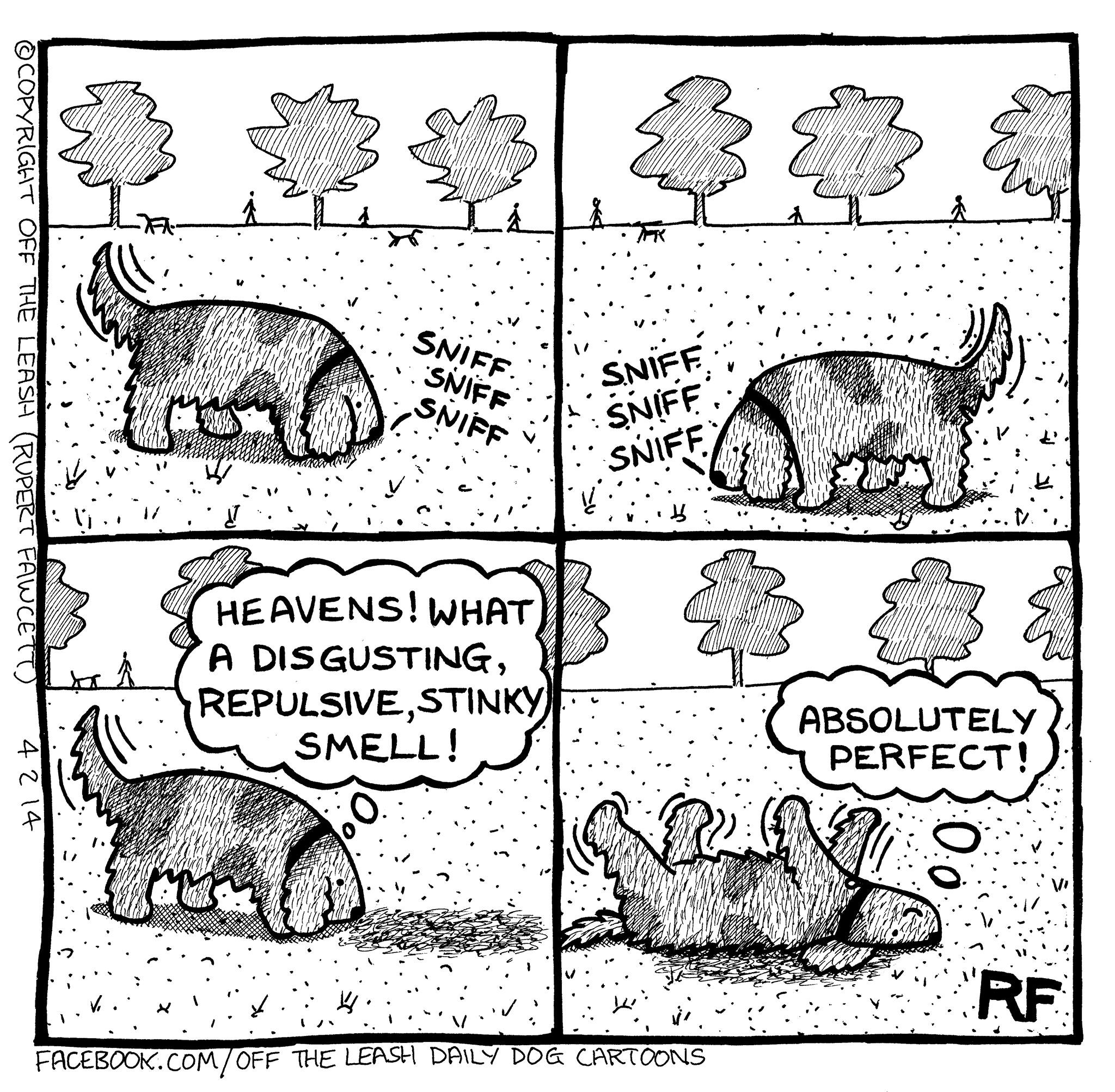
Prioritise time to just be with your dog and make sure to go for lots of SNIFFS! rather than walks – making sniffing possible is the biggest gift you can give your dog.
Run through the Sniffing Saturdays from #100daysofenrichment and try to include a little sniffing everyday for your dog.
With so many tempting but out of bounds bits and pieces hanging around during the holidays, it’s easy to understand how challenging this might be for most dogs.
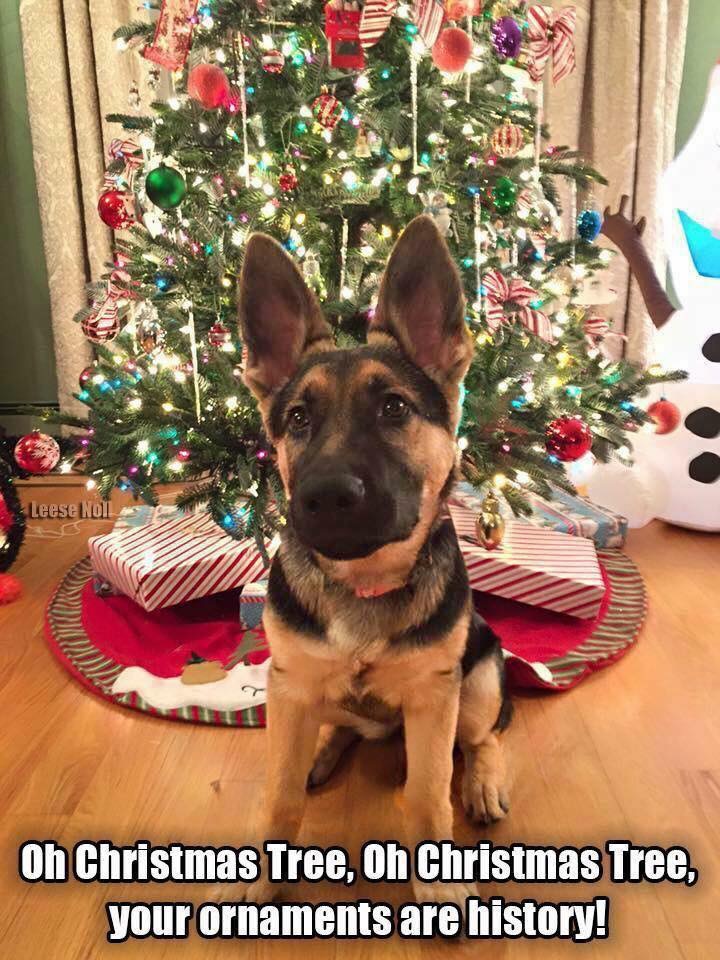
While some dogs can be concerned by new and elaborate decorations cropping up all over, most dogs will be interested in investigating novel items. This usually means that they will approach them, sniff them, taste and chew them – that’s how dogs explore their world!
Make it easy to get it right!
Management is very much the name of the game, particularly if you have a puppy or a dog who is interested and interactive. Make it really easy for them to stay successful thinking carefully about how and where you arrange decorations, presents, party-food and other temptations.
keep things out of reach, remembering that dogs can jump and climb
take care with storing and disposing of foods and presents
use management, like baby gates and leashes, to prevent your dog accessing forbidden items
confine your dog safely when temptations are in play
consider decorating only limited areas elaborately
Check out this gorgeous scene, carefully managing puppy Tucker’s access to that tempting tree!
This fantastic management example is from Linda Adams Brennan of Canine Coach, starring the adorable Tucker!
More on holiday hazards here and more on management during the holidays here.
Uh-Oh! Management Fail!
Sometimes management can fail; the door was left open, the baby gate removed, the dog wasn’t being watched. It’s easy. You are human and your dog is canine – mistakes happen.
Now the dog has got something we would prefer he didn’t have. What now?
First, consider the situation: is the item harmful to your dog, will they damage it? If, the answers are, no, let it go and don’t worry about it. Next time, step up your management to do a better prevention job.
If you need to reclaim the item, do so carefully…
STOP! Don’t pursue the dog. Going after them serves to convince them that what they took must be wonderful (because everyone wants it!), which may lead them to ingest it quickly (so nobody else can have it) or guard it (use distance increasing signaling to keep every else away).
Some dogs might even take stuff to get that attention and chase, as it works every time!
Instead, move away from your dog. Sounds counterintuitive, but moving away will attract the dog to you.
Move away and pretend to engage with something really interesting, with lots of oohs and aaahs for effect. For example, scurry toward the kitchen counters and tap it, move things, wiggle things. Keep oooh-ing and aaah-ing until your dog approaches to check out what you are up to.
Even if you must get the item back more urgently, don’t pursue the dog. Instead move away and create a diversion by, for example, opening the fridge and rustling packaging, getting the dog’s lead and pretending to prepare for a walk, or tossing food rewards away from your dog.
We don’t want to rely on this strategy too much, it’s for emergencies only. Otherwise, we might have the dog taking things to get you to play this game!
This is the important part:
Continue with your diversion tactics until your dog moves away from the item. Don’t make this interaction about the item or about getting it back.
When the dog discards the item, continue to redirect them. For example, encourage them to follow you into another room by moving and talking to them excitedly, jollying them along with you. You might even toss a toy or food rewards into another room to help your dog move away.
Close the door behind them – they don’t need to be present when you recover the item. Remember, we are not making it about the item!
Step up your management to prevent repeats of this!
There is absolutely no point in attempting to punish scavening behaviour – scolding and reprimanding won’t help you here. Once the dog has taken the item, they have had their fun and the behaviour is reinforced to happen the next time.
Step up management and start teaching them the behaviours you would rather they do when temptation is available.
The Floor is Magic
Food on counters, tables, and on low coffee-tables, during the celebrations can be difficult for dogs to resist.
Scavenging behaviour is normal, natural, necessary dog behaviour; behaviour that we humans go out of our way to suppress.
Making sure to practice settling and working on some canine entertainment in set-ups where food will be available tantalisingly close to your dog will go along way to helping prevent your dog taking food that’s out of bounds.
Plan ahead!
Where will food be most tempting during your gathering? At the dinner table, on the kitchen counters, in the living room low-down?
Introduce the Floor is Magic game in those places and start practicing now.
Work with some pretty yummy food rewards and let your dog see you place one treat on the counter or table. Immediately toss a couple of treats on the floor.
LOOK!, as a reorientation exercise and cue, is a valuable skill to have in your arsenal for all sorts of situations.
LOOK! means that your dog orients toward you, away from a distraction for reward. They never get access to the thing they have been cued away from. You can use any word that you like, such as “Leave It!”.
Check out these puppies learning to leave tissue, a puppy-destruction-favourite:
The key here, as always, is to make sure that you set your dog up for success. We need to use leads and barriers, along with space and distance from the distraction to effectively teach the dog to respond to you when close to temptation.
You can use anything as your distraction such as food, decorations, gifts or the Christmas tree. In the following tutorials, food in a bowl on the floor, is used as the distraction:
Each time your dog looks toward the distraction, cue “LOOK!” (or whatever cue word you like) and wait for your dog to reorient to you. Reward well and repeat.
Very soon, your dog will focus on you because the distraction tells them that focus is the most rewarding thing to do!
Holiday celebrations can have everyone somewhat wound up and it can take a food coma to help with relaxation. For the most part, we will want our pets to chill out too, especially when the family are hanging out or eating, and this is of course made even more difficult given the activity and festivities.
You know what I am going to say….start practicing now!
All is calm
So that they feel comfortable on the day, start practicing chilling out today. This can be easily supported by using some pacifying activities entertainment ideas.
Establish your dog’s safe zone – a comfortable place they can go, spend time, without anyone approaching or interacting. Easy to do by giving your dog a yummy stuffable or an irresistible chew there every day, and leaving the dog to it. (For more see here.)
This helps to reduce your dog’s intensity about all the yummy stuff all the humans have!
Most dogs will benefit from some comfortable confinement during the celebrations, and all dogs will enjoy a break away from the action, even occasionally. (More on preparing for there here.)
To make sure that confinement is a viable option during your party or gathering, and that your dog will be comfortable there, start practicing now! Every day, prepare the most wonderful puzzle, stuffable or chew for your dog – with your dog’s absolute favourites. Give him his treat in confinement and let him out before he becomes upset.
A little bit of alone time, away from the action and social pressure, will benefit most dogs (and people!), while making it easier to maintain safety and reduce unwanted behaviour.
The key to this is practice, every day, so that when you need confinement, your pet will cope better, be more comfortable and you will be at ease.
Calm Context
Dogs learn what emotional response to expect, and therefore, which behaviours will be required in a given context. That might include the room they’re in, the people or other animals present, the time of day, what’s just happened, what comes next, the activities that go on there, whether good things, scary things or neutral things happen or can be expected.
During our celebrations, we might expect our dog to be calm and chilled, so we need to set up contexts that allow that to happen. Of course, seasonal festivities are anything but calm so, you’ve guessed it, we need to start practicing now!
Plan ahead
Think where you will like your dog to be calm and chilled out during the celebrations. That’s where we start practicing by setting up a Calm Context there.
practice at times that your dog might normally be calmer
the house is quiet, no comings and goings, nobody expected to come home or call in
all their needs are met – they have toileted, they have eaten, they have been exercised, they have had lots of attention, interaction and company
you can practice with them on lead, if you like, to help reduce their moving around and getting themselves excited again
make less exciting chew toys, chews or toys available to minimise excitement but to give him something to do should he need that
It’s important that you start setting up this calm idea for your dog – no more active or raucous play in that location from now on. Make this place about being chilled out.
And it’s best that your dog has access to this room, only when it’s easy for him to be calm and chilled out.
While I don’t really like to use lots of treats for this particular exercise, that can be helpful to get you started and begin to build value in settling behaviour, for your dog:
Parking is a valuable exercise to practice, for both ends of the lead. This can help your dog learn to chill out in the house and when out and about, meaning you can take your dog lots of places.
Parking is a particularly great for when you are eating or relaxing, and you want to help your dog relax, but also not have to pay them too much attention. This can help to prevent or reduce so-called begging behaviour at the dinner table too.
Park your Pup with their lead on and with a delicious stuffable toy, chew or treat to work on. Hold the toy or chew under one foot, while you are sitting down, and the dog’s lead under your other foot. Give your dog just enough lead that they can comfortably lie down or turn, but not so much that they can jump up or get into mischief.
Start practicing some Parking today! It’s great to practice this exercise as you might use it on the day. For example, Park your Pup while you are eating a meal or relaxing in front of the TV.
Every time you practice calmness and settling in your calm contexts, the easier it will be for your dog to do this, in these contexts, during the celebrations.
Make time for crazy too!
All this settling and being calm is fine, but is tricky for dogs, particularly at exciting times. Always thinking in rollercoasters, regularly interrupt your dog’s settling and calm-time with some fidget and crazy breaks.
Help your dog to become familiar with this routine, by practicing settling and then crazy, settling and then crazy, ending with a little more settling. Not only will this prepare your dog for calmer, more settled behaviour in those Calm Contexts, but also help your dog develop better self-calming skills which will help him calm himself more efficiently after excitement.
Doorbells ringing and people coming and going, amid the excitement, can cause dogs a lot of distress. Not to mention the distress their dog’s behaviour can cause pet owners, who are trying to welcome guests while wrangling canine greeters.
There’s no time like Christmas and holiday celebrations to really test any control you thought you had over door and greetings goings-on!
Safety First!
While most people believe that their dog’s behaviour at the door is motivated by excitement, that’s not always the case. And it’s more than likely that most dogs experience a range of emotions and expectations when they hear the door.
Dogs can’t be expected to differentiate between intruders and welcome guests, but yet we want them to welcome visitors with calm and friendly behaviour, while scaring away gurriers up to no good.
For the most part, door action will cause arousal for dogs. This makes them more likely to become excitable, to bark, and even to aggress or have other strong emotional responses.
Dogs who approach the door with a wiggly body, they may or may not be barking, and generally calm and quieten once the guests enter are probably ok. The exercises described here will help.
But if a dog barks and continues to bark at the person coming in, jumps repeatedly, lunges or moves forward directly toward the guest or slinks away and attempts to avoid interaction, get some help before putting advice into play.
Management that includes confinement away from doors and incoming guests may be best, at the very least.
Dogs barking at boundaries, when people are approaching or passing, is related to distance increasing behaviour and the inner conflict they experience. Of course, most of the time, people pass on or leave shortly after arriving, and your dog’s behaviour functions for them in achieving distance.
Dogs do behaviour that works, so they bark each time.
You can imagine then, that when a stranger doesn’t leave, the dog may feel they have no choice but to try harder to scare them away. So, for some dogs, it’s safer for them to be confined away from the action altogether.
Even if you think your dog is excited to greet guests coming into the house, it’s important that we keep greetings low key. There’s a lot going on, with lots of excitement, so your dog’s normal tolerances may be stretched thinly.
Enthusiastic greetings, with lots of touching, petting and hugging, is not going to help you or your dog remain even a little calm as people enter or move about. Helping your dog learning to like being out of the way a little during the festivities is probably going to be better in the long run.
confine and secure your dog in another room, with a tempting treat, chew or toy to work on before guests arrive (More on preparing your dog for confinement here.)
Have your guests call or text, rather than ringing the doorbell or knocking.
let your guests come in the door and settle before introducing your dog
bring your dog in on lead to prevent jumping
Guests will probably be wearing nice clothes, specially for the occasion, so even a friendly dog jumping up or getting too close may be uncomfortable.
you (don’t have guests feed your dog) have high value food rewards for the dog and drop them every couple of seconds, or scatter a handful – this HIGH rate of reinforcement will help your dog to focus on this game, rather than losing control in excitement
Guests don’t need to pet or greet your dog too emphatically – let things settle before you think about letting your dog choose to interact, or not.
some dogs like to hold something in their mouth when excited; have a favourite toy type available at various spots around the door and areas where guests will be welcomed. Give this to your dog to carry before they greet guests.
don’t yell at your dog for barking – scatter treats, ask him for behaviours or tricks, hold a stuffable toy for them to lap, or remove them from the room
If your dog is more cautious meeting guests, try a new guest greeting routine to see if that helps them settle. Practice NOW with familiar people so your dog learns the pattern, without all the excitement of greetings at Christmas.
Many dogs are more comfortable greeting new people outside in more open spaces:
have your guests call or text when they arrive
they wait outside on the street, away from the house
bring your dog, on lead, out and walk in a wide loop around your waiting guests
your guests move into the house and ahead of you and settle
keep your dog back far enough that they are not reacting, barking, staring or straining on the lead to get them
once your guests are settled, enter with the dog on lead and feed him really high value food rewards really regularly
remove the dog after a couple of minutes and confine in a safe room with plenty of things to keep him entertained
A dog this uncomfortable with guests may not settle enough to be truly comfortable and may be better off confined away safely, with regular visits and outings on lead, or may do better with a pet sitter or with familiar people having quieter celebrations.
If a dog is unable to settle and can’t largely ignore guests after a few minutes, remove the dog and give them a break in another room.
Please be aware that sometimes, a dog appears to have settled because he has stopped barking and is ignoring the guests. The absence of barking or growling does not indicate comfort or happiness.
If your guests move, laugh or talk loudly, get up or come back into the room, your dog will start to bark or become unsettled again. This is a good indication that your dog has not been comfortable, and can’t cope with the extra stimulation and change to the guest.
Remove your dog and settle them in a safe confinement spot.
Sniffing & Snuffling for better door management
One of the most effective ways to control your dog’s arousal related behaviour is to redirect them to an equally absorbing task, but something that gives them more appropriate outlets for their excitement.
Sniffing and snuffling are the perfect alternative behaviours because they really encourage the dog to focus on the task at hand (finding food rewards), while helping them calm and preventing them practicing unwanted behaviour.
Start practicing today so that doors and greetings don’t cause drama at all this holiday season!
Calm entries
Practice this simple exercise each time you come into the house on the run up to Christmas.
Establish a Sniffing Station inside the door, or other appropriate greeting spot, at which you greet your dog. Use a snufflemat or similar snuffling puzzle, or just scatter treats onto the floor as soon as you enter.
Have treats in a tub in the car or your pocket so you are prepared as soon as you walk in, or just inside the door. Enter the house and excitedly bound to the Sniffing Station; scatter treats liberally for your dog to snuffle.
This helps to change your dog’s expectations. Instead of anticipating this spike of arousal and great excitement when someone comes to the door, they will think sniffing is best instead.
If others practice this too, and you put this into place with guests entering, you will have a calmer door situation, with lots of snuffling and sniffing!
Doorbell = Snuffle Party
Teach your dog that the doorbell signals a snuffle party! Instead of your dog running to the door, they run to you and their Sniffing Station to snuffle for treats; then you can bring your guests in calmly and quietly.
Establish a Sniffing Station with a snufflemat, a snuffle puzzle, or simply scattering treats on the floor, on a blanket or towel, or in their bed.
Practice in short sessions of just a minute or so at a time.
Begin working close to the door so your dog can quickly check that there’s nobody actually there. But as their comfort increases, you can move your Sniffing Station to the spot you want your dog to go to when the door bell sounds, such as another room, a confinement area, a crate or their bed.
Be exciting as you bound to their Sniffing Station – it’s a snuffle party after all!
Use a recording of your door bell or a similar sounding bell. The one I use can be found here.
You gotta practice door management games before you really need them but they are simple to work into your daily routine and require only 30-60 seconds practice per day.
Entertaining Canines: keep ’em busy and out of trouble
Entertainment and enrichment for pets is kind of our thing. If you want a FULL program of enrichment, training, fun and entertainment, check out our #100daysofenrichment project.
Festive Entertainment
In general, during social gatherings, parties and meals, you likely need your dog to be pretty low key and out of the way.
The easiest way to manage their behaviour is to provide them with appropriate behaviours to keep them busy and entertained. Instead of thinking how to stop them doing things you don’t like, think what you would prefer them to do instead!
Get your dog hooked on entertainment!
Start practicing now with simple activities that your dog can work on themselves, without too much input required from you.
Pacifying Activities:
This category is great for confinement, for calming and when you want your dog to take themselves away and stay busy.
Get practicing now so you can find the best approach for your pet – it’s too late to discover they don’t like a certain thing or can’t work a toy on the day, when you really need it.
Activating Entertainment:
Before it all kicks off, provide your dog with plenty of appropriate mental and physical exercise so that they are relaxed and satisfied before the celebrations begin.
Always think in Rollercoasters: if you bring your dog up, they need help coming down again. This is why, it’s not necessarily a great idea to provide exerting exercise right before your guests arrive; your dog will still be wound up and now, with the extra excitement, will find it even harder to come down again.
Introduce some of these activities, and always follow with some down time and something from the pacifying category above.
Put these in place on the morning of your party, and even in the days leading up to celebration.
Puzzles!
Puzzles can be a great way of providing vital mental exercise and putting them together can be a great to get kids involved. When creating puzzles, think safety first!
With little time between now and the big day, and a busy time in general, elaborate training just isn’t going to be done or successful. When you can’t train, manage. Management means to prevent the dog practicing behaviour we don’t like, because the more they do it, the better at it they become!
Don’t worry too much about teaching new behaviours, and instead, make it easy on you and your pet, and plan to manage.
Does my pet really need to participate in this?
Parties and celebrations can be a bit much for pets and they will often benefit from a break.
This may be just as beneficial for you too, as the festivities might stress you too causing you to feel frustrated with your pet’s behaviour.
Set up a safe space!
Set up a safe space for your pet to retreat to, that’s out of the way, and easy for them to access. It might be their bed, a mat, their crate, or a corner of a room.
Think about where will be best given the plans you have for the celebrations; where your pet can be away from the action safely.
Start practicing now!
set up your pet’s safe space now
make sure everyone is aware of the rules – nobody approaches or interacts with your pet while they are there
every day, give them at least one tantalising stuffable or similar there
Make confinement a winner!
Having a safe space is great, but you might need to confine your dog to provide relief for all and to safely manage their behaviour.
Having your dog behind a closed door, baby gate or in a crate can help ease your mind from worrying about your dog getting into mischief.
Start practicing today!
pick your safe confinement area
every day, and I do mean every day, even if only for a few minutes, confine your dog with absolutely the best, most tempting, tantalising stuffable, chew or treat
release your dog before they become distressed and go back to normal
Consider letting your dog retreat or putting them away regularly during the festivities to give them a break, before they become over-excited or stressed.
It’s also a good idea to confine your dog just before gusts arrive so you can get everyone in calmly and safely, and then bring your dog out to greet.
Keep away!
Presents, toys, decorations, Christmas trees, forbidden foods and tasty, tantalising treats everywhere makes it tough for dogs to resist.
Think prevention first!
Confine your dog from areas where decorations are within reach.
If you have a puppy or a particularly interested dog, decorating elaborately in just one room makes it easier to keep an eye on all the bits and pieces.
Keep foods up and out of reach, so that your dog doesn’t get to practice even considering trying to counter-surf.
Confine your dog during particularly active times, when children are on the floor, when toys are ramping up the excitement, when food is flowing.
Start practicing today!
think of the situations in which your dog gets into mischief…
give your dog an alternative activity before these situations start
for example, before starting to cook or prepare food, or before sitting down to eat, give your dog a puzzle, a stuffable, a chew or something tempting to keep him busy in his safe zone
for practice, you can time confinement and safe zone work with these situations so that you are getting more bang for your buck!
Some excellent ideas from around the web (please let me know if you own one of these pictures or know who does for credit) and in this clip here:
Baby-gates and leashes solve problems
Management is simple with just three tools: stuffables or similar, your dog’s lead, and a baby gate here and there.
Baby-gates:
prevent access to the tree and decorations
prevent access to the kitchen and food prep areas
prevent access to rooms where foods and toys are within reach
stops dogs getting up stairs, where they might knock someone over
keeps dogs safe in a confinement area
prevents dogs getting to the hallway or doors to stop escapes or over-the-top greetings
Leashes:
tether your dog in their safe zone so that they are safely confined but not shut away from the action
bring your dog to greet guests on leash to prevent jumping up
sit with your dog’s leash under your foot so you can eat or relax in peace
allow your dog to drag their leash so that you can easily and safely restrain them should things get tense, when the door is opening, and when things get exciting
Start practicing today!
erect baby gates now so that your dog has time to get used to them before they are really needed
practice confining your dog, behind a baby gate, with a yummy stuffable to work on while you cook, prep, eat and relax
Park your Pup every day, while you relax or eat a meal:
With excitement ramping up, the mix of children and dogs will take extra care. Neither dogs nor children are doing anything wrong – seasonal excitement might just cause everyone to lose a little control, be a little less tolerant and decrease attentiveness.
more active and direct supervision is needed
more separation will be required
dogs don’t need to be involved when things get exciting so that they don’t associate such excitement with children and also to prevent jumping up, mouthing, knocking over or the development of discomfort in association with children
give children dog-care activities to keep them busy, rather than allowing them to hug, lean on, or lift pets
don’t allow children to take stuff from dogs and make sure to provide guidance about leaving the dog alone while he is in his safe zone or when he has possessions
Take care taking seasonal photos. Have an adult sitting between dogs and children and give children something to hold so they are not tempted to grab at or hug dogs, things that most dogs will find uncomfortable.
We often exert a lot of social pressure on dogs when taking photos – encouraging, luring and telling them to “stay!” and this can really cause dogs discomfort. Ease up, have an adult hold a chew or toy for the dog to work on during the photo shoot so that they stay put, without too much pressure.
Here’s an excellent webinar from Family Paws founder, Jennifer Shryock and it’s free! Check it out:
Start practicing and establishing management practices that you might come to rely on during the celebrations.
Everything is in flux around your pet in the run-up to the holidays so putting this in place now, will help to set up some stability for them.
This practice helps you develop confidence in these routines too, making it easier for you to implement them sensibly when everything is exciting and feels a little out of control.
Quick Fix Training Help for Christmas and the Holidays
The beginning of December means only one thing…Christmas is coming!
A time of celebration, gifts and food; all the things that can cause chaos with the canines in the house.
I dare not have posted about Christmas before the first of December so, at this stage, we don’t really have time for elaborate training plans, but there are certainly lots of things we can do to prepare and even some quick, simple exercises that you can start practicing NOW for some improvement by the time the celebrations begin.
Plan ahead
Well, if you’re here, that’s likely what you are considering. We know that celebrations and festivities can be a bit hectic; add in some over-excited pets and it’s chaos-to-the-max!
Getting ahead of it and making it a normal part of your Christmas planning and preparation will help things run more smoothly on the day.
We have some Christmas Bites planned to help you get ahead and prepare for fun and festivities:
Lack of routine and lots of potentially harmful food available can lead to ingestion of toxic and harmful substances, sometimes requiring urgent veterinary care.
chocolate, ‘sugar free’ treats, sweets and wrappers/packaging
grapes, raisins, Christmas puddings, mince pies
alcohol, caffeine, pain killers and medications (even those for pets)
cooked bones, high fat foods
decorations, Christmas trees, poinsettia, holly, mistletoe…yes, pets often eat these…
garlic, onions (and similar), some nuts like macadamia nuts
bins, rubbish and recycling – there’s lots of it about so make sure it’s out of pets’ reach
lots of dog treats and toys, and many other general products, come with little silicon or silica packets in the packaging, bag or box; if eaten by pets, they can cause serious problems and these packets in dog treats will smell of food making them more tempting – dispose of them before you give your pet their present and make sure that you put them well out of your pet’s reach, for example, in the wheelie bin outside or other inaccessible area
doors opening, comings and goings – make sure your pet is secured, one person is responsible for the, they are wearing a collar and ID, microchip is up to date
candles and extra electricals may lead to burns, singing of coat, chewing of electrical wires, hazards associated with oils and similar for burning
it’s best not to put wrapped foods under the tree or in reach – the dog’s nose knows and they may break through wrapping paper and packaging to access tasty treats, some of which may be harmful to them
Have your pet’s emergency OOH vet details ready, just in case!
Holiday Stress
I am sure most humans will agree that holiday celebrations bring about all sorts of stress. Your dog is no different. But the things that bring your joy, might be the very things that cause your pet stress.
changes to the house, garden and world around them
With decorations becoming more and more elaborate each year, pets may become overwhelmed by the transformations in their own house and garden, as well as in their neighbourhood.
Extra cleaning and re-configuring furniture, including things relevant to the dog such as his bed, feeding areas and so on, may cause them confusion and concern.
Some decorations, particularly outdoor ornaments, can really spook dogs such as life-size figures, moving or noisy displays, and hanging things, especially as they seem to suddenly appear. If you notice this, bring your dog away calmly and choose another walking route.
Some dogs show extra interest in projected lights (often projected onto the exterior of houses) and reflections caused by twinkling lights. Bring your dog away, try to reduce their exposure by removing the dog or removing the decorations and contact us or another suitably qualified behaviour pro.
routine changes and lack of routine
Dogs find holidays hard – they don’t know what day of the week it is, after all. With the hustle and bustle during holiday periods, dogs may get less exercise, entertainment and attention, putting them out of sorts.
These changes can lead to disruption to toileting behaviour, sleeping and nighttime behaviour, eating behaviour, and may see the resurgence of destructive behaviour, over-excited behaviour, barking, jumping up and other unwanted behaviours.
If you’re off work and home for a period of time, it’s important to attempt some level of routine in terms of alone-time for your dog throughout. This helps prevent the dog becoming upset when you go back to work and leave them alone again.
lots of comings and goings
Social gatherings, energetic children, shopping outings, deliveries and guests leads to more doorbells and knocking, which most dogs, at the very least, will find arousing.
This can lead to susceptible dogs becoming sensitised to door-activity, making their behaviour more difficult to manage and possibly even dangerous.
Know your dog!
A dog who barks at the doorbell and then recovers once visitors enter, is probably doing ok. But, dogs who continue to bark when guests come in, dogs who move forward in a direct manner, or dogs who move away and attempt to avoid interaction, will require closer management and care.
resource guarding
With the availability of lots of high value food, new possessions and toys, items left lying around, most dogs will be very tempted. So-called ‘stealing’ behaviour may increase, leading to inappropriate interactions between pets and their people.
This can lead to resource guarding related behaviour where dogs will take items, cache them, show aggressive responding (e.g. whale eye, freezing, growling, snarling, snapping and even biting) and may attempt to ingest items to prevent anyone else getting them.
children, vulnerable guests and general increases in activity within the house
Celebration means everything is go-go-go, children are hyped, new gifts and toys must be explored and tried out, elderly guests may be present, and everything is up a notch on normality.
Children, and their activity, may be particularly worrisome for dogs, and with holidays from school, dogs may not get their usual relief from this sort of activity.
Kids will often have costumes, new noisy and moving toys, and will be excited – this can increase the risk of dog bites, so extra supervision and separation will be required.
Elderly or vulnerable individuals may be bowled over by an exuberant dog, be jumped on or knocked on the stairs.
It’s a great idea to assign one sensible adult responsibility for the dog throughout the gathering so there is someone consistently monitoring the dog, supporting them and keeping them safe.
Get the entire family on board with planning and preparation so everyone is on the same page.
great expectations
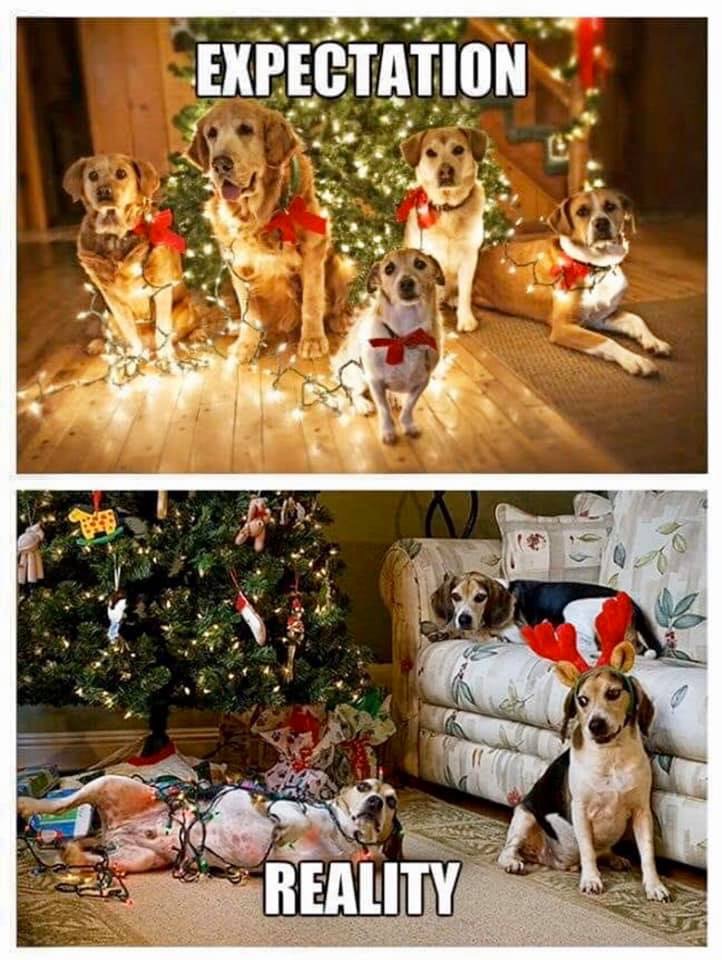
We expect our dogs to deal with whatever we present, regardless of how well, or not, we have prepared them. Dogs need support during holidays and it’s up to you to help them. Planning and preparation goes a long way, but a sensible approach to managing your pet during celebrations is really the key.
Start by lowering your expectations and re-aligning them with reality, understand that all this will be overwhelming for your pet and that they will respond accordingly.
Feeling under pressure about our pet’s behaviour may lead us to exert more pressure on them, resort to scolding and reprimanding, and letting your frustration get the better of you. If you feel that frustration bubbling, remove your pet to another room with an irresistible stuffable or chew to work on in peace – everyone can get a minute to take a breath and gather themselves.
Ask, “does my pet need to be part of this?”. Their behaviour is information telling you how well they are coping, or not, so removing them from the action may be best for everyone.
During holiday seasons, dressing our pets up and posing them for photos can add to the pressure they feel.
Dogs who show reluctance to have costumes fitted or freeze when wearing silly jumpers or props are experiencing a high degree of distress.
You don’t need to put yourself or your pet through it – there are countless apps that allow you to add emojis and animations to photos and videos, without your pet every knowing about it.
‘over-arousal’ and stress related behaviour
‘Crazy’ behaviour is often interpreted as happiness, but more often than not, it’s the first tier of stress-related behaviours indicating that the dog is losing control and not coping well.
This means your dog can’t listen or respond normally, is more likely to have a more demonstrative response, and his behaviour may appear less predictable.
All this excitement may be associated with trigger stacking. Just this list of stressors, one on top of another, will cause your pet’s behaviour to intensify, even though one or a small number of stressors may normally cause your pet no concern at all.
Join us for Christmas Bites to help you prepare your pet for festive fun!
Get ready for the Holiday Season with our Christmas Bites that will be coming your way all week.
Start to put some plans in place now so that you pet is prepared and the pressure is off.
This year, the Season’s festivities are bound to be a little different and a lot more stressful for pets, who have been living in a very small world these past months.
A sudden dose of reality along with excitement and activity may well lead to unwanted and even dangerous behaviour. Keep every one safe and happy by planning and prepping now. As always, we are here to help.
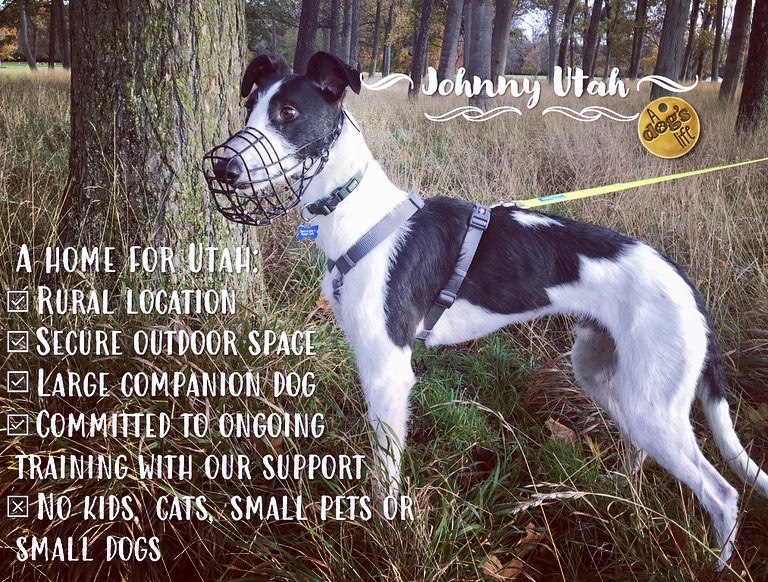
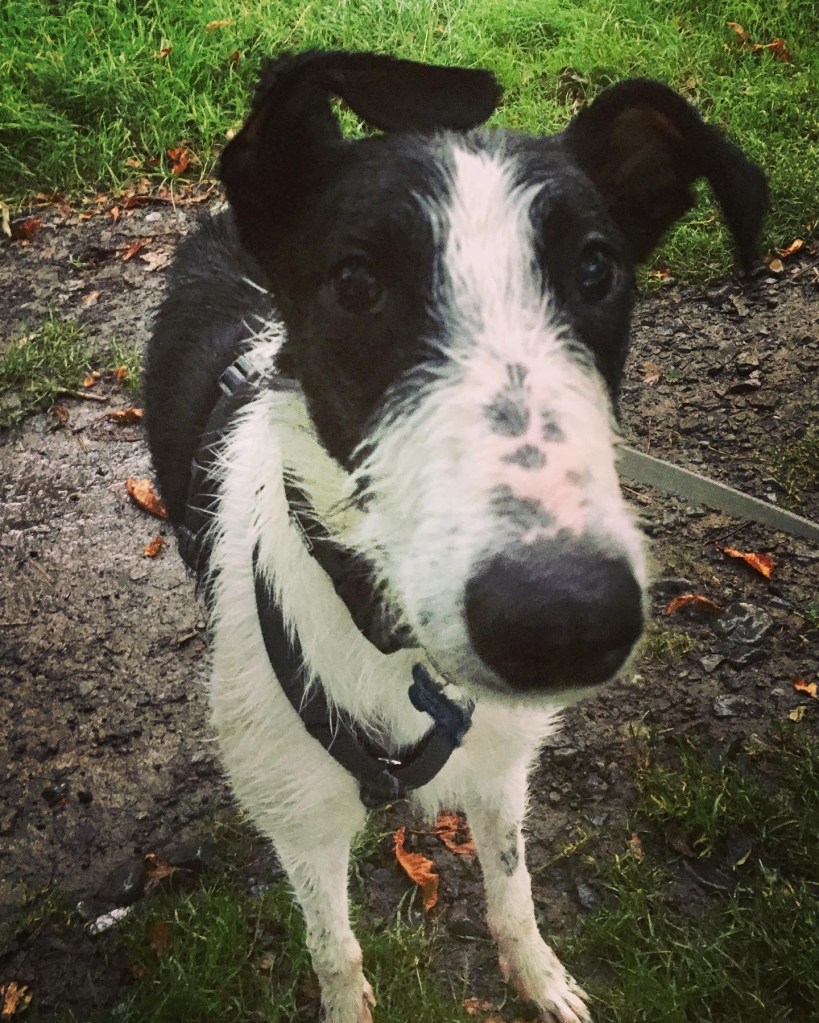
This handsome hound is Utah (full name, Johnny Utah…!) and he’s in foster care. AniEd provides all the training and behaviour support for A Dog’s Life dogs, of which Utah is one. Utah, under our instruction and guidance, wears a muzzle in specific contexts.
Advertising this dog for rehoming has brought some hate because he has been shown wearing his muzzle. Utah is comfortable wearing a muzzle and at no time has he been caused any discomfort or pain by its presence. Yet, we are getting social media flack from people saying that they hate the muzzle, that it should be removed, that it’s cruel.
Muzzles are surrounded by stigma. And stigma comes from unwarranted shame and not just projected onto the owner. Dogs are shamed (and killed) when they act like real dogs. Dogs have mouths and it is normal for them to use their mouths in all sorts of ways that often don’t agree with human expectations.
To hate appropriate muzzle use or to opine that it’s cruel, is coming from a place of lack of knowledge and understanding in normal dog behaviour, in tool use, in behavioural management, in aggressive behaviour, in dogs and what they do. And most of all, knocking the work of an ethical rescue organisation and their appropriate use of a muzzle, on a comfortable dog, is not aligned with an understanding of canine welfare, sadly something lacking on social media and in the world.
Why do dogs wear muzzles?
Muzzle use keeps dogs safe. Bottom line. Muzzles are a safety tool.
They don’t ‘fix’ dog behaviour but they might help in a number of ways:
some muzzle designs help to prevent dogs eating dangerous items
some muzzle designs can help to prevent a dog damaging a surgical site or wound
muzzles can prevent a fearful or aroused dog biting, and particularly puncturing, another person, dog or animal
muzzles can help keep people and their dogs away from a dog who needs more space
muzzle wearing might be required due to legislation (e.g. BSL)
muzzle use is helpful during veterinary and first aid treatments, especially where the dog is experiencing acute pain or distress
Muzzling is for good dogs!
Muzzle use requires care, there is certainly no doubt about that, and if they are used improperly, then muzzle use can most certainly negatively impact a dog’s welfare.
But, proper use, makes life better for the dog. Appropriate muzzle use allows that dog to go places and participate in activities that improve its welfare, it allows that owner or handler feel a little more confident and comfortable which improves the dog’s welfare (and the human’s!) and, because of the stigma associated with canine behaviour, aggressive responding and muzzling, muzzled dogs tend to get more space from people and dog walkers that is most often beneficial to their welfare too.
Don’t let the muzzle fool ya!
Utah is a pretty friendly dog. He loves people, greets excitedly but calms quickly and is just happy to have you around.
When we are out and about, Utah can get pretty excited; he is certainly finding suburban living difficult. Like many dogs, and even more dogs of his type, when wound up, he may use his mouth. This hasn’t happened and we want to prevent it happening. So, while we work on helping him develop new skills and better approaches to being wound up, he is muzzled so no accidents happen.
This is particularly likely if he is moving at speed. That’s what he was made for and we don’t get to suddenly decide that that’s not on anymore. Unfortunately, with the current trend of adopting Greyhounds and Lurchers to companion homes, lots of misinterpretations of their behaviour and needs have become rampant and that negatively impacts their welfare.
We have decided on specific criteria for Utah’s adoptive home so that muzzling and management don’t have to be a huge part of his daily life and more importantly, so that he doesn’t have to deal with stressors like being on lead and exposed to lots of suburban activity.
But, until that home is found, his needs must be met, and we owe it to him to keep him safe. That’s what welfare is. It doesn’t matter what we want or feel; welfare is from the dog’s position. Utah needs to get to run about, to chase, to explore – that’s essential for his behavioural health. He doesn’t want to live on a “forever sofa”. He wants to be a dog, be a Lurcher. We just have to meet those needs, and safely.
Appropriate Muzzling
For muzzles to be used, the dog must LOVE their muzzle. This is not even up for debate and we are not talking about the dog having luke-warm feelings about their muzzle; they must LOVE LOVE LOVE their muzzle.
This can take weeks to establish and that’s what we need to do. Never rushing the dog, letting their behaviour guide our progress. The muzzle appearing must mean PARTY for the dog.
Really, all dogs should be muzzle trained to some degree of comfort. This helps ensure that in an emergency, such as acute pain, the addition of a muzzle for safety, won’t add to the dog’s distress. Teaching your puppy or young dog that sticking their nose into a muzzle, a cone or even a paper cup makes the magic happen can go a long way to building their comfort and confidence, and keeping them safe.
For Utah, we use a muzzle that is light, as he is fine boned, and open so that he can easily eat, snuffle, drink and pant through it. We also keep a close eye on it to make sure it’s not rubbing anywhere with continued use.
Utah wears his muzzle for about 20-40 minutes at a time. He has invented his own muzzle-puzzle, snuffling for food rewards on the ground and using the muzzle to nudge leaves out of the way! Utah is an expert puzzler, making short work of Kongs, K9 Connectables and other puzzle toys so this has just become an extension of this. I call his muzzle his ‘face puzzle’!
Different muzzle types will be suitable for different uses. We like Baskervilles, Bumas and Trust Your Dog muzzles, but there are lots that are appropriate for different situations.
Muzzles must never be left on dogs when unsupervised. And just because the dog is wearing a muzzle, does not mean we can put that dog in situations with which they are uncomfortable. Muzzling, like all management approaches, are back ups; should Plan A or B fail (cos sometimes life happens), we have a back up.
If Utah were to get off lead accidentally and chase something or if a person or another dog should come too close, moving at speed, while Utah is running (he jogs with his foster carer) we have a back up. We do our best to give him space, to teach him alternatives, but sometimes life happens and we owe it to him to keep him safe.
It’s about his welfare, not our feelings.
Normalise the use of muzzles, reduce the stigma, provide for dogs’ welfare and if you fit the bill, apply to adopt Utah, share his profile and let’s get this boy home.
For lots of resources relating to muzzling, and reducing the stigma surrounding muzzling, check out the Muzzle-Up! Project.



































 AniEd Ireland