Follow #ChristmasBites on Facebook and Instagram, and follow along here too!
Christmas Bite No. 3
Doors, Greetings & All That Drama!
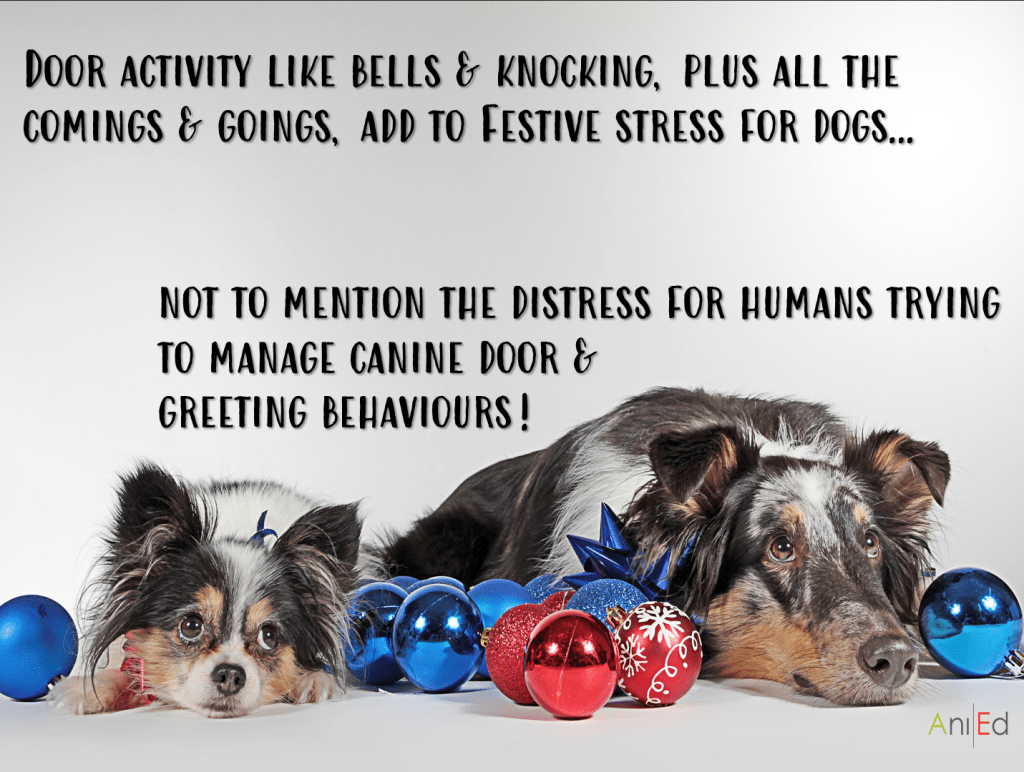
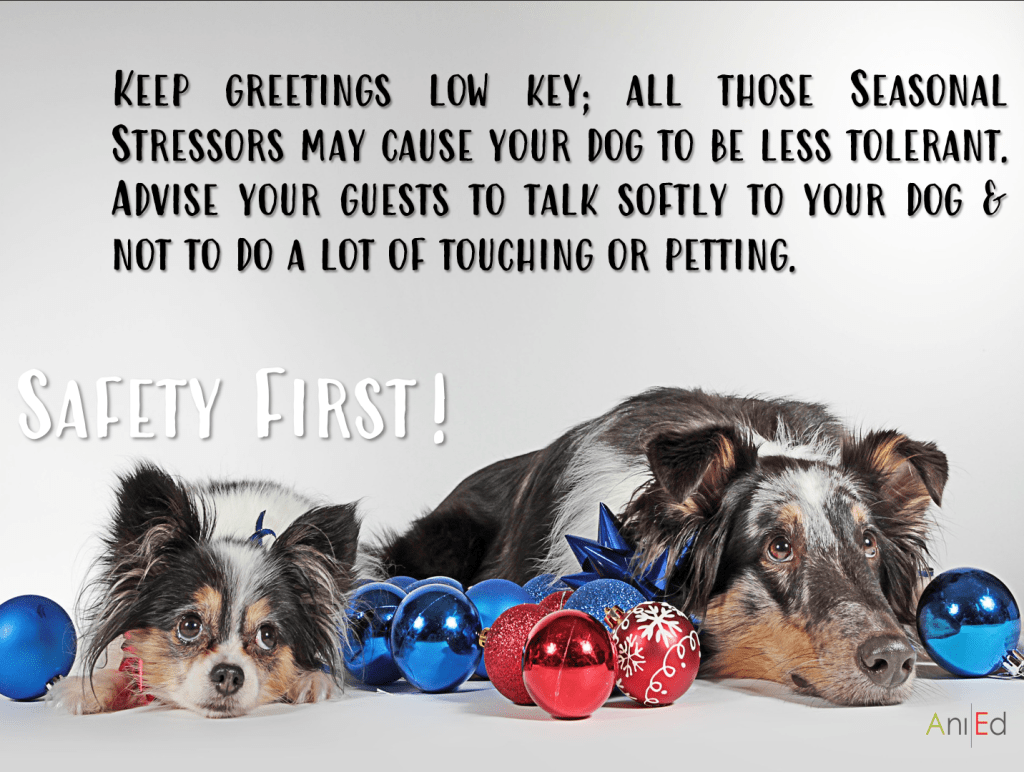
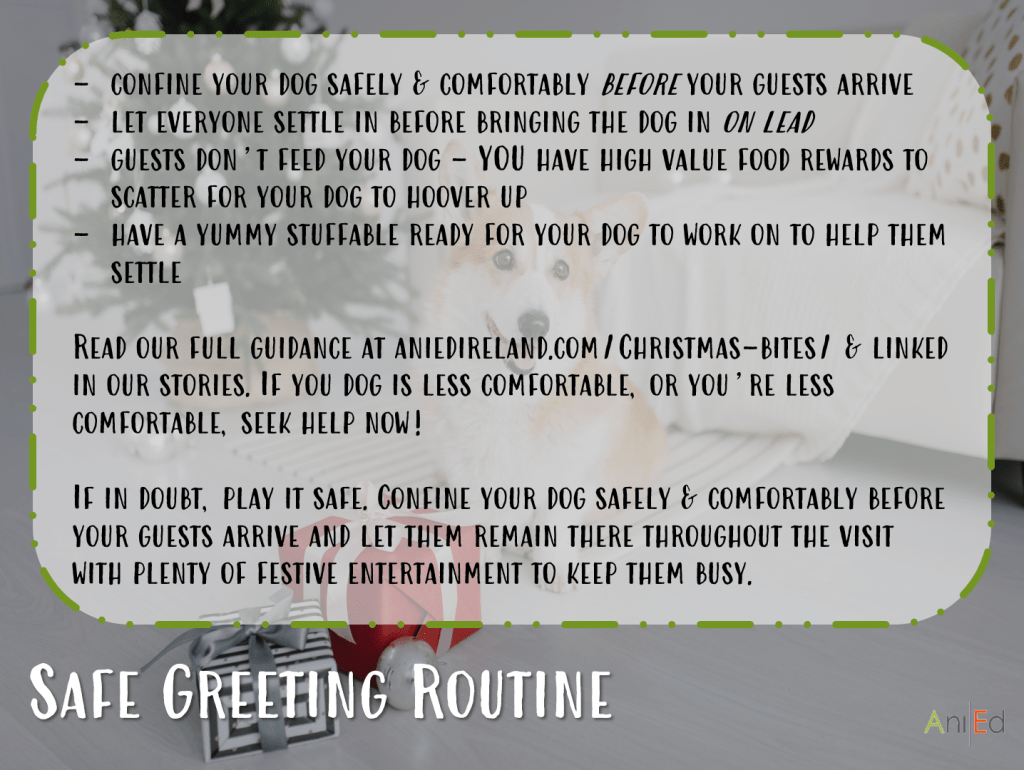
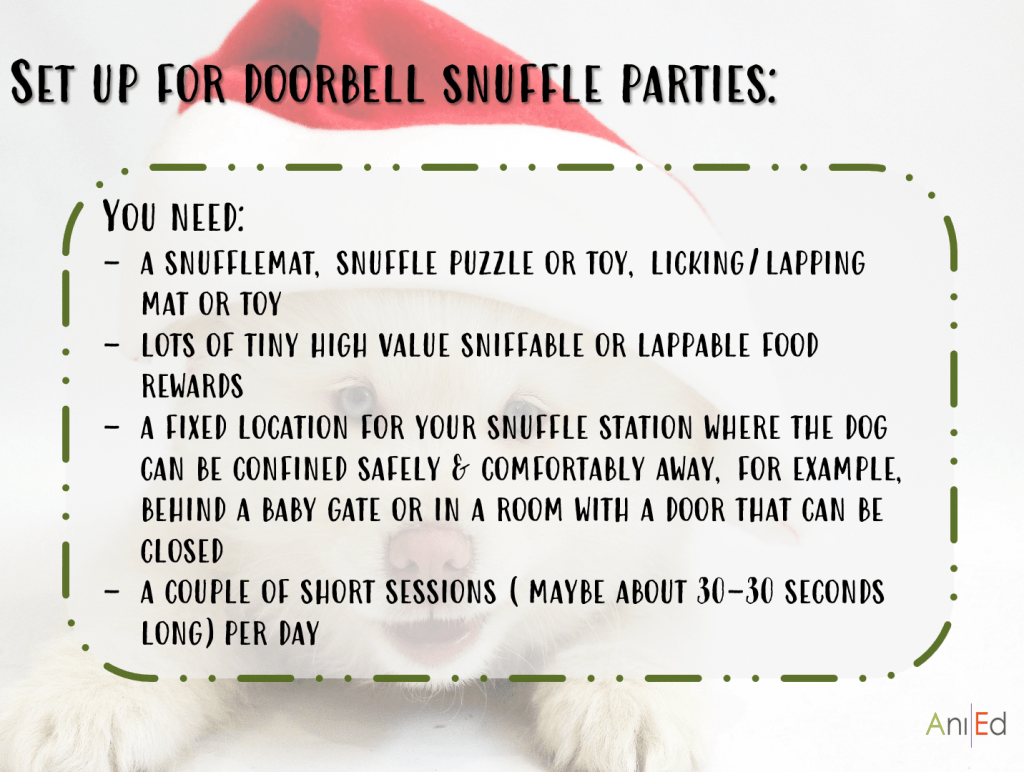
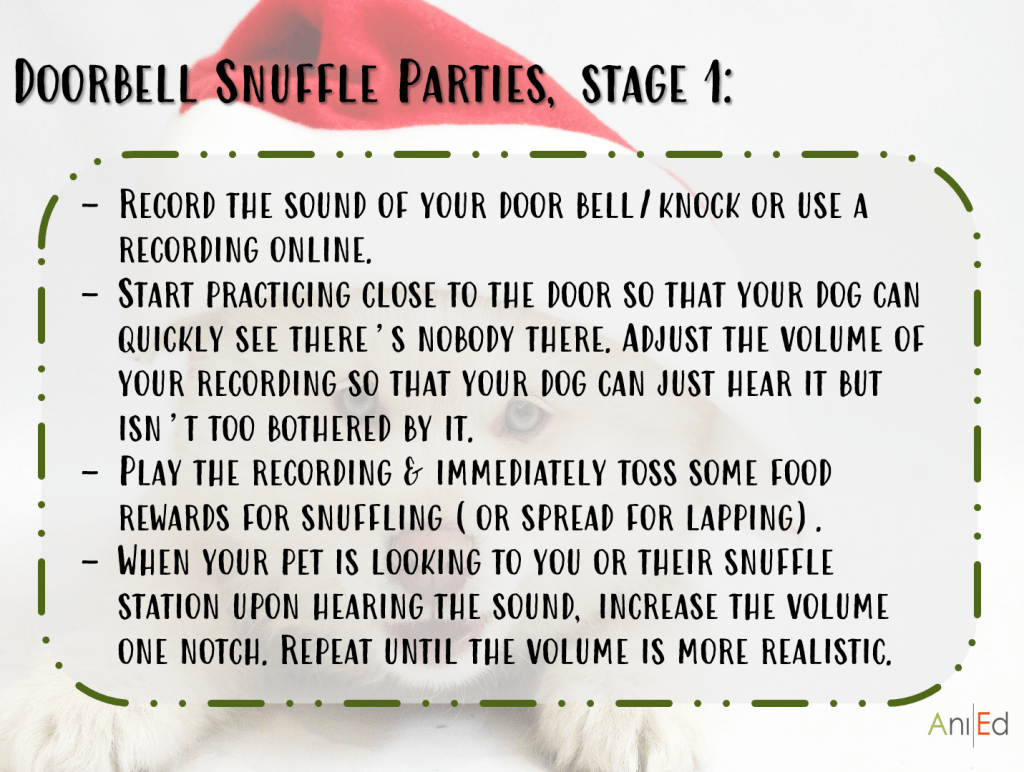
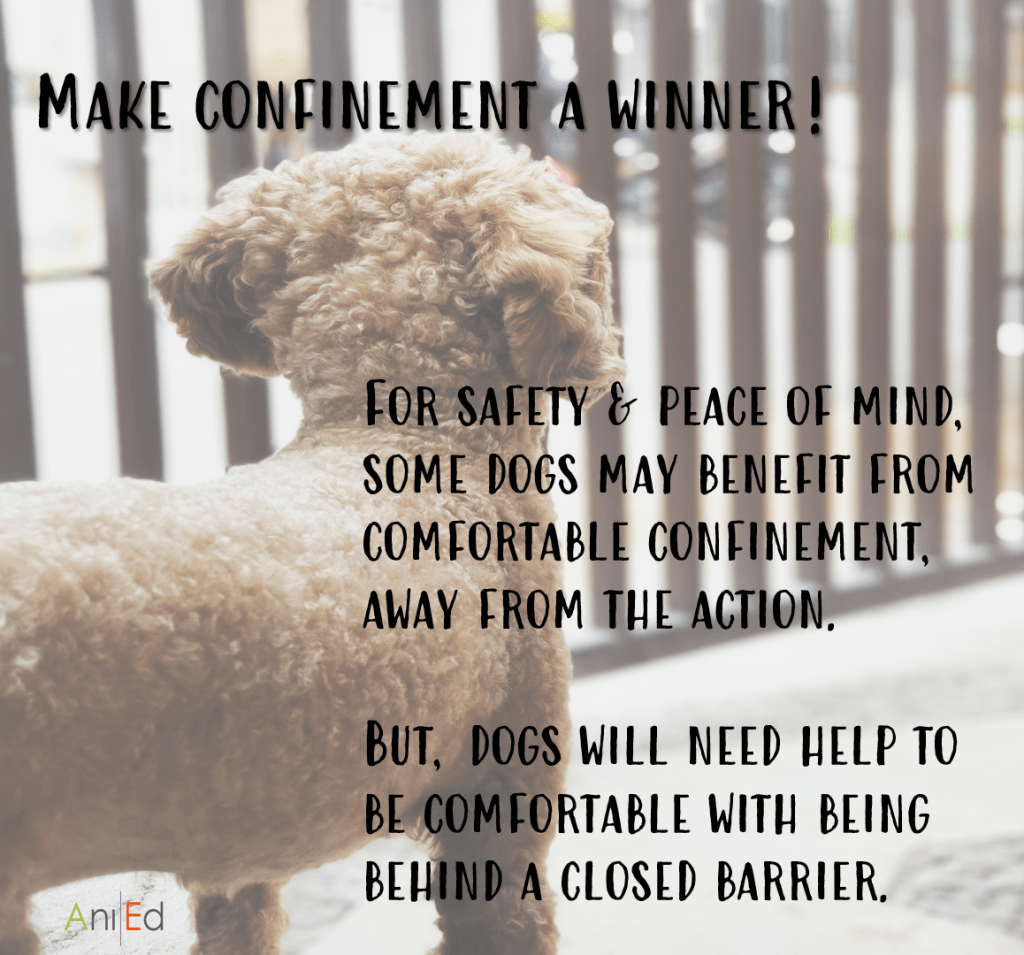
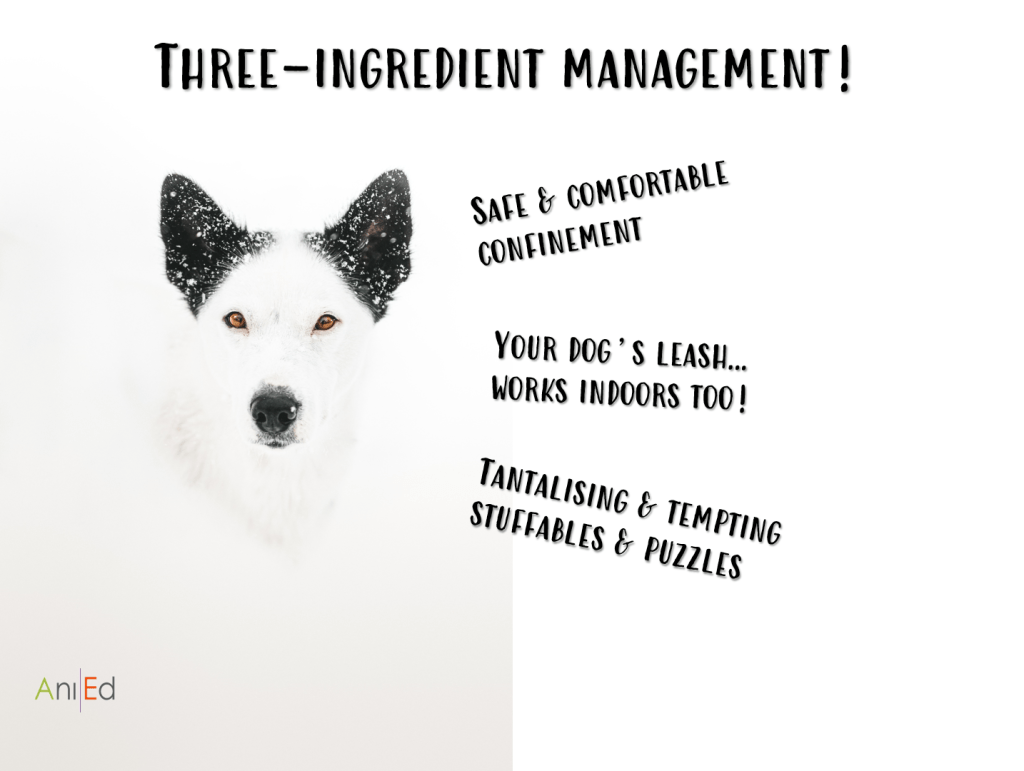
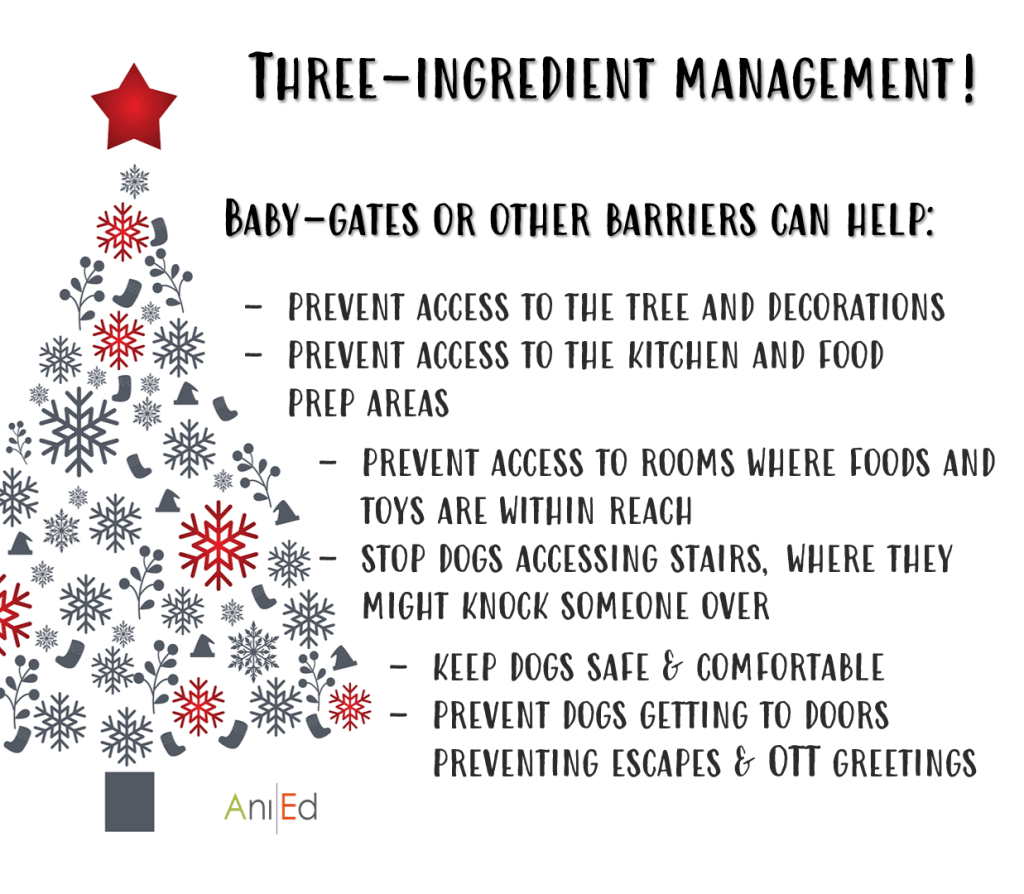
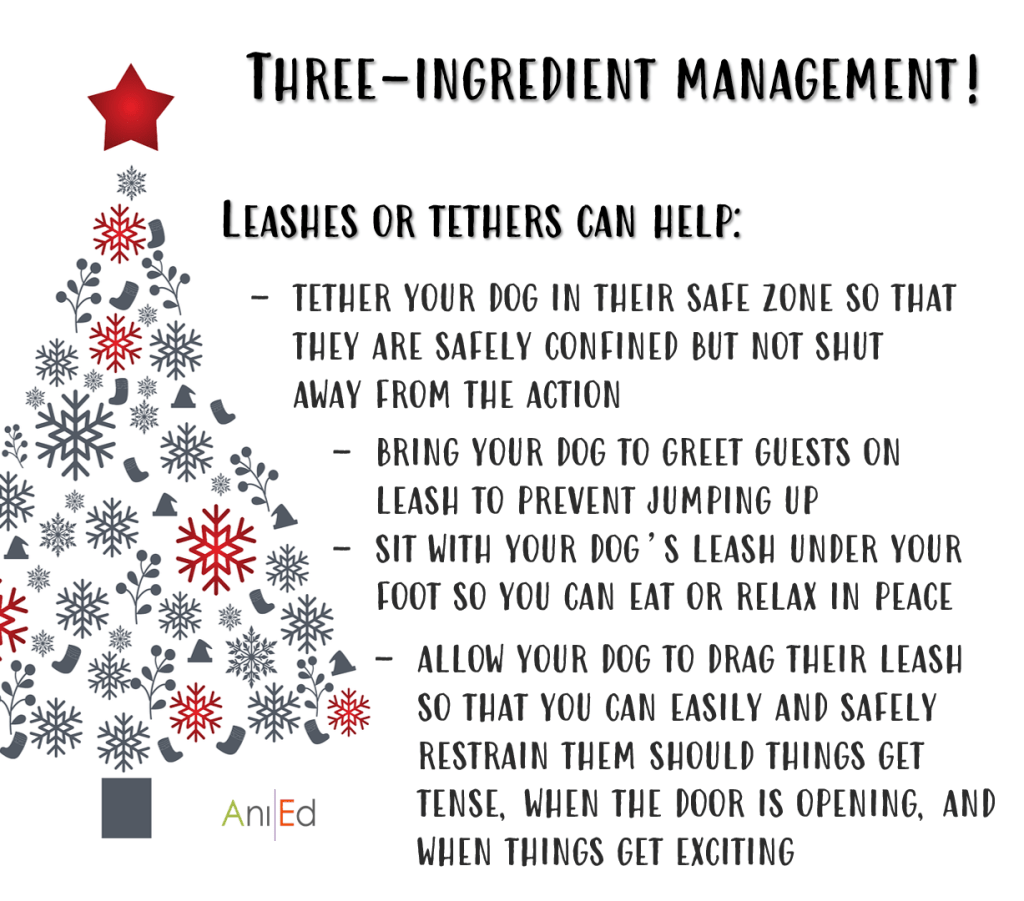
Doorbells ringing and people coming and going, amid the excitement, can cause dogs a lot of distress. Not to mention the distress their dog’s behaviour can cause pet owners, who are trying to welcome guests while wrangling canine greeters.
See Christmas Bites Doors, Greetings & All That Drama here.
While media and marketing certainly looks to convince us that dogs are consistently beneficial for humans, the data doesn’t necessarily bear that out and we know that, for many pet owners, it doesn’t always feel that way.
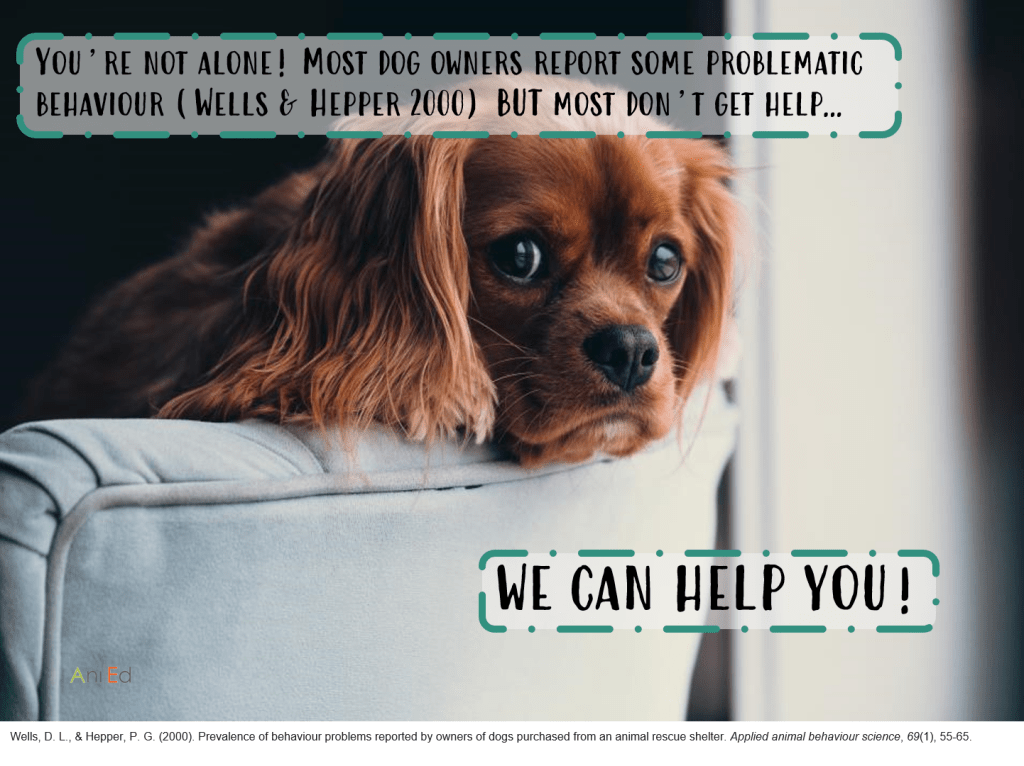
If you have a dog who shows behaviour/s of concern, you already understand the challenges involved in living with and loving them. Care-giver burden is associated with carers of human patients, of pets with chronic and serious disease and with owners of dogs demonstrating behaviours of concern.
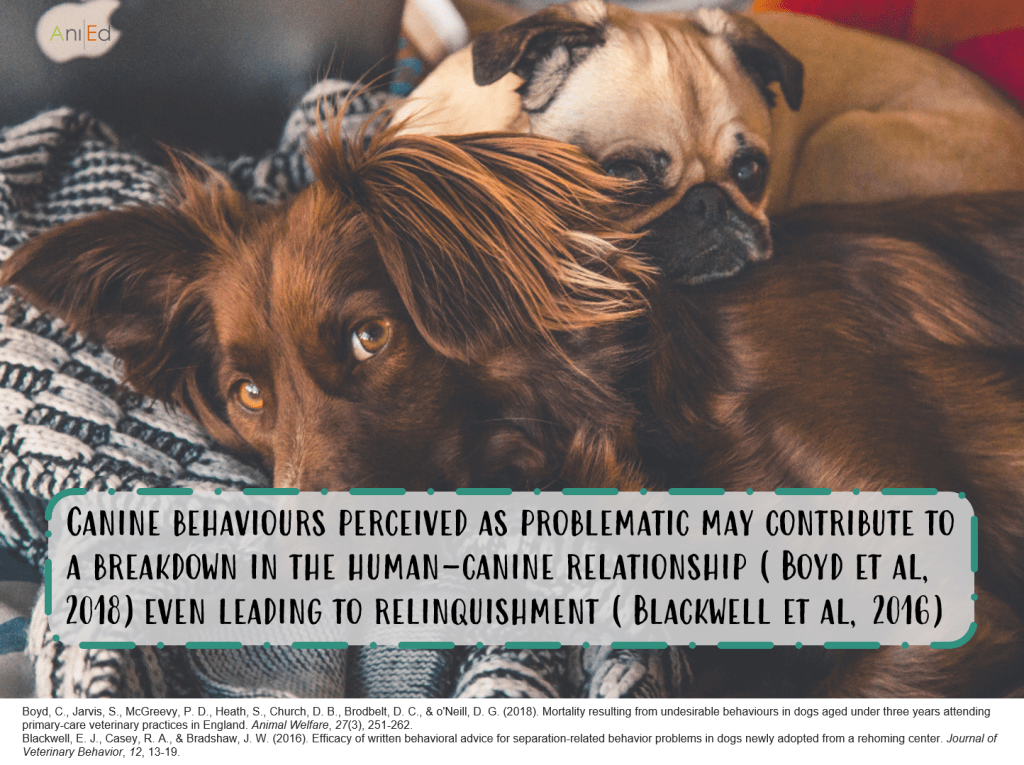
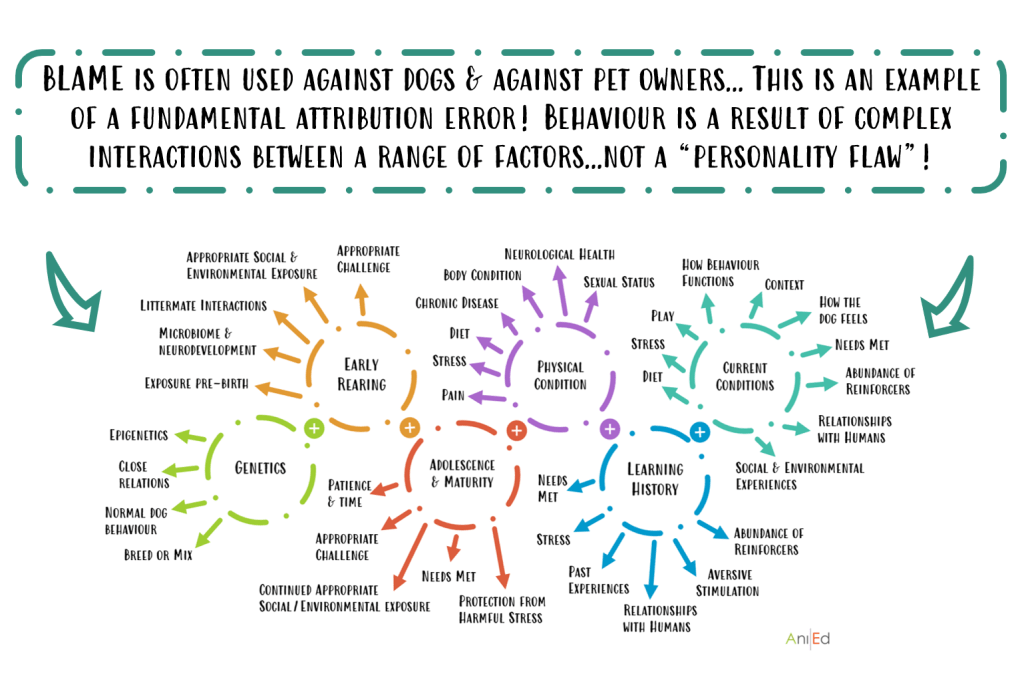
Pet owners of dogs demonstrating behaviours of concern can be subject to real life and online blame and scrutiny; your life with your dog may not be living up to your expectations and may even be detrimental to your mental health. Blame is unhelpful, damaging and really misplaced.
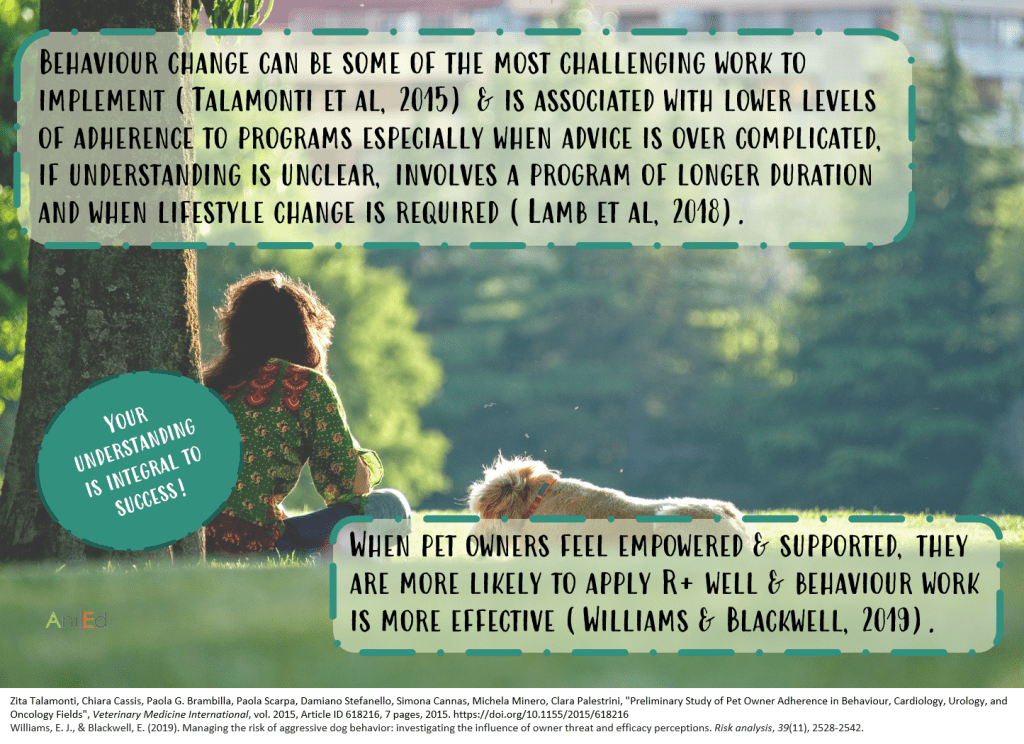
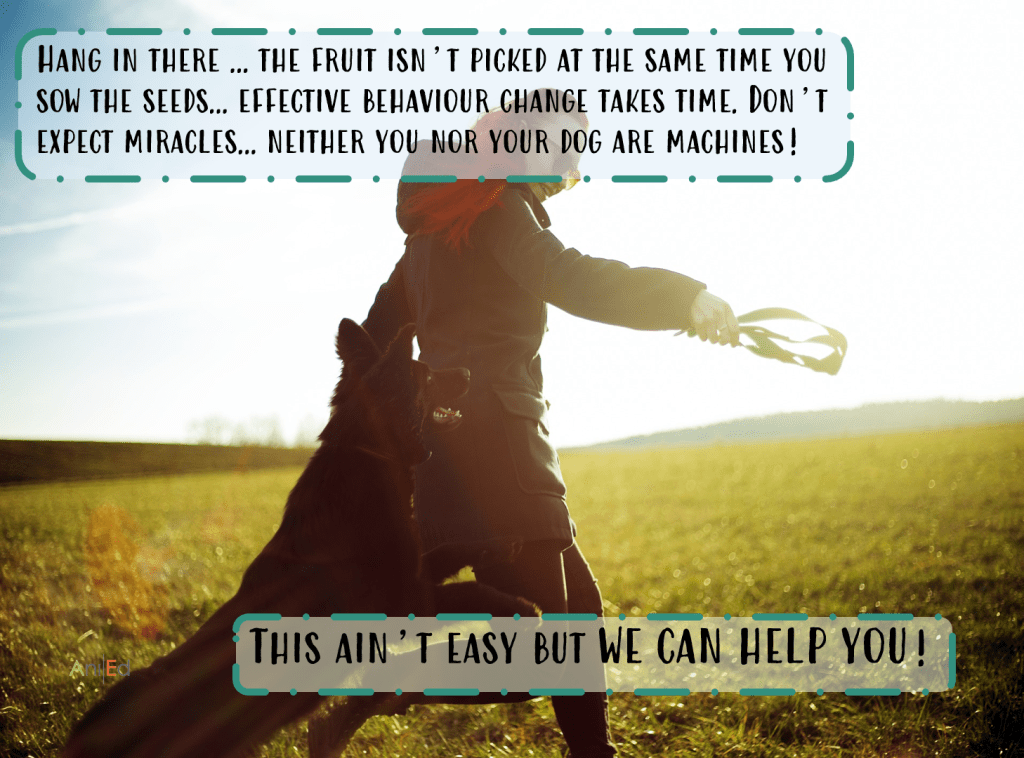
We recognise your role in helping your dog, and just how much you love them and want to do your best for them. And even though it may all seem overwhelming and confusing at times, a well-designed behaviour program can most certainly help to get things on track. For success, such programs take time and require commitment to lifestyle change on the part of the dog’s humans. Understandably, long duration and lifestyle change are associated with poor adherence in all sorts of settings, including in dog training.
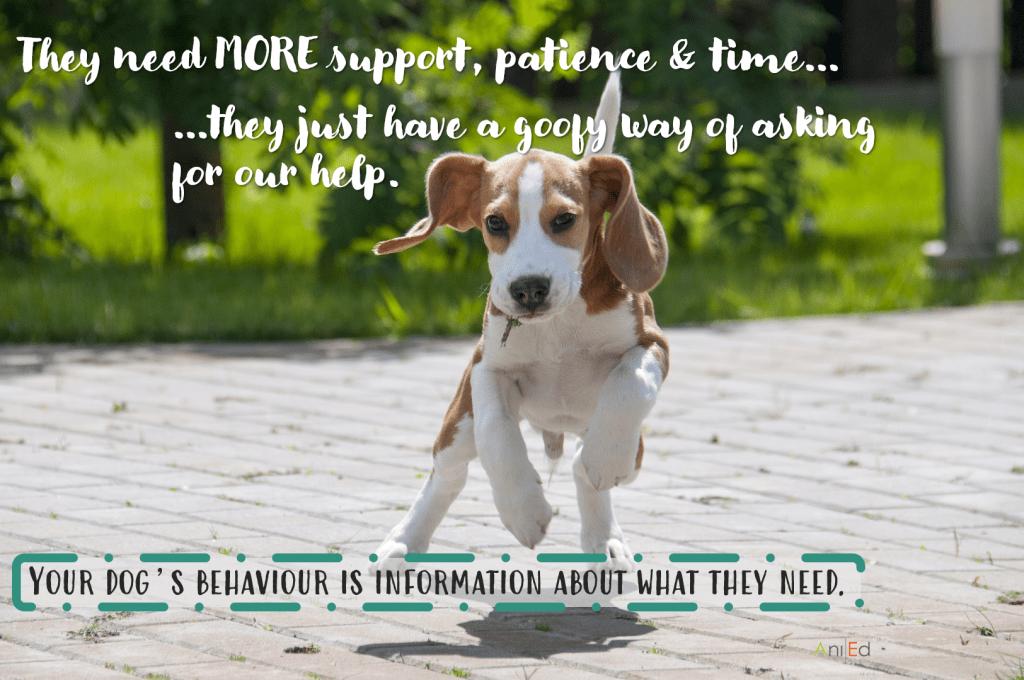
Just like your dog’s behaviour, pet owner behaviour is information too. And these difficulties with adherence tell us that pet owners need more support, more guidance, more help to be able to consistently help their dogs.
We are coming back to life after a long lockdown pause with some available behaviour work sessions. Our new Behaviour Matters course is a dog behaviour well-being and pet owner support program for pet owner/dog teams experiencing behaviours of concern.
You will join up and have access to a course all about dog behaviour along with private remote and in-person sessions to help you and your dog, and guidance in successfully applying all that you are learning. You developing more knowledge and skill about canine behaviour and teaching dogs will empower you to work with your dog both with and beyond our guidance.
Behaviour Matters teams also have ongoing remote support and we will use technology and messaging to our best advantage so you stay on the right path. (Don’t worry, there are no exams!)
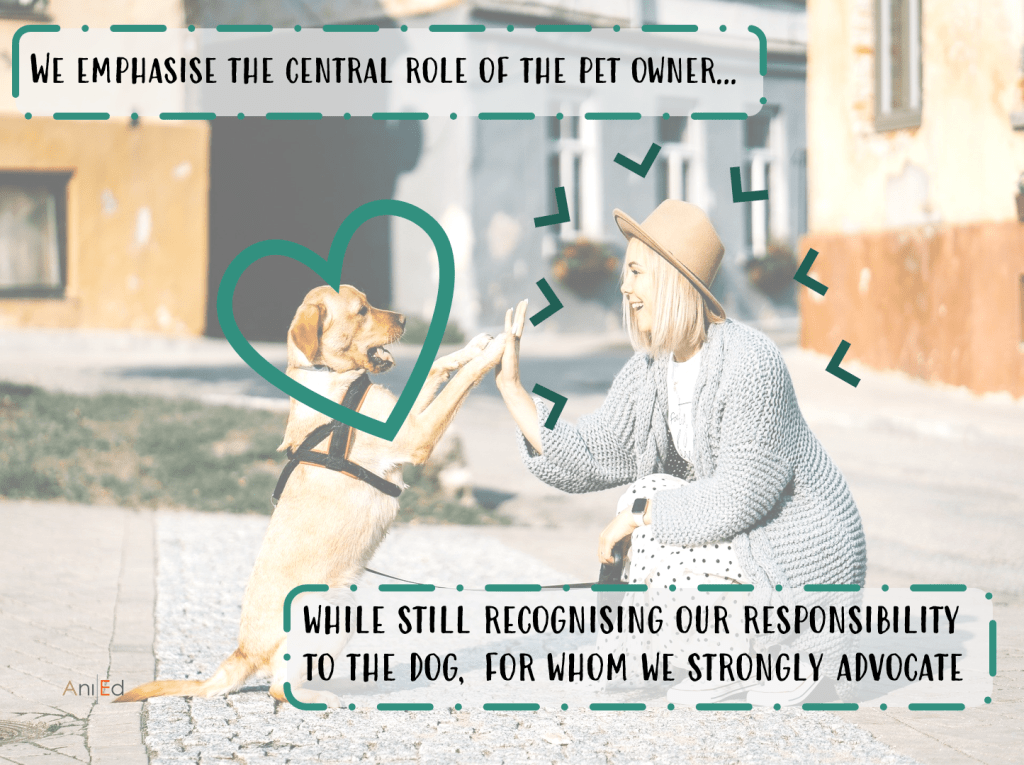
We emphasise the central role of the pet owner, while still recognising our responsibility to the dog, for whom we strongly advocate. Working through serious behaviours of concern is truly a collaboration and we are in it together.
We will be able to get you started with your first remote session and possibly your first in-person session before the Christmas break, and then pick back up in the New Year to work through your program.
Private & Personalised. Professional & Compassionate.
Teenage dogs are much maligned, indeed they are most at danger of becoming unwanted.
Although the adolescent period of development in humans and non-human animals is relatively poorly studied, recent work has shown similarities between some of the struggles of both human and canine teenagers, and for their care-givers.
The teenager-care-giver relationship can certainly be quite delicate around this time (you might remember your own teenage years…) often with increased conflicts. Asher et al, 2020, found that, just like human children, canine adolescents show changes in responsiveness and the quality of teenager-care-giver relationship impacts this sensitive time.
That tells us that the dog/human relationship must be prioritised before adolescence and throughout so as to maintain understanding and support, and to keep dogs in their homes.
Pet owners of canine teenagers need support and to know that they will survive this period…it might not be pretty, but you will get through it. Help must be non-judgmental and without dwelling on blame.
Canine adolescence starts from about 5.5 months until about 2.5 years and brings about all sorts of challenges for both the teenager and their owner.
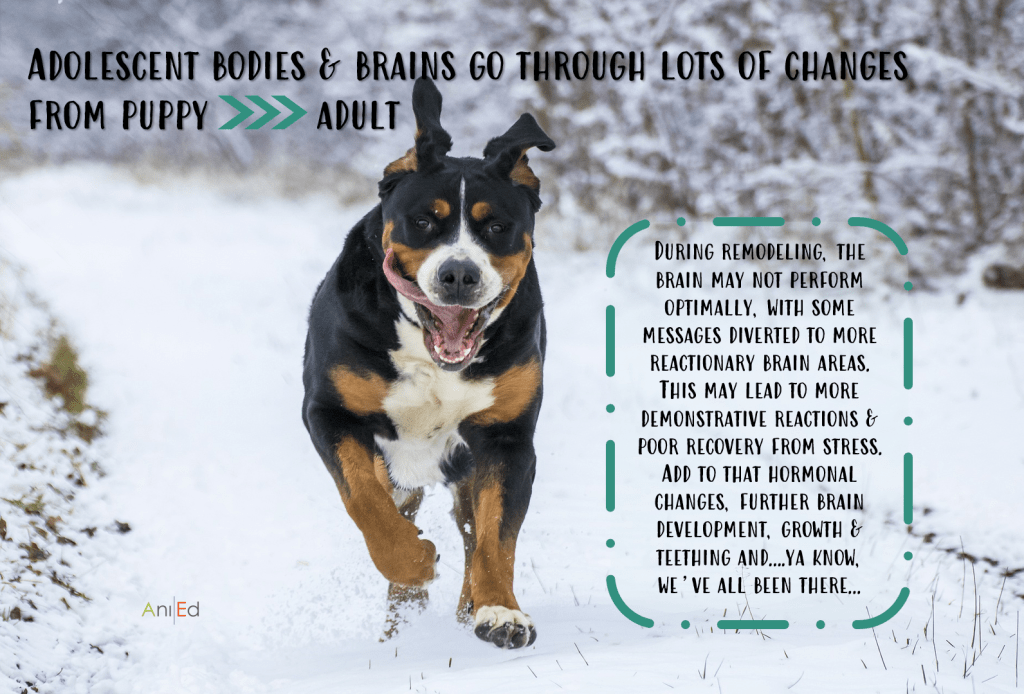
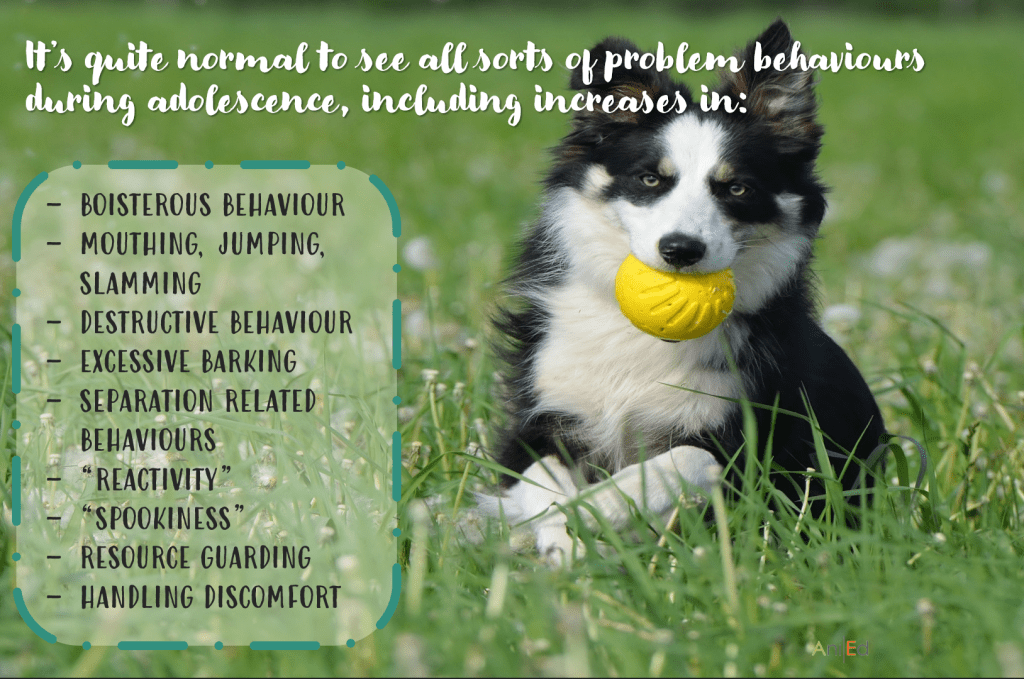
Given the sort of brain, endocrine and body changes the teenager experiences, it’s to be expected that they might display problematic behaviour.
The dog’s behaviour is information so while teenage behaviour might be a problem for us, it’s generally a good sign that the adolescent dog is asking for help…in a not very helpful way!
But all is not lost…there are lots of things we can introduce and adjust so that the teenager is better able for their world and you’re better able for your canine teenager!
Teenage dogs don’t require fixing, they’re not broken, but they do need more understanding, a ton of patience and some proactive programs to support and guide them.
And pet owners need support and help to reframe the canine teenager dilemma, allowing them to push labels aside and see what their adolescent dog really needs.
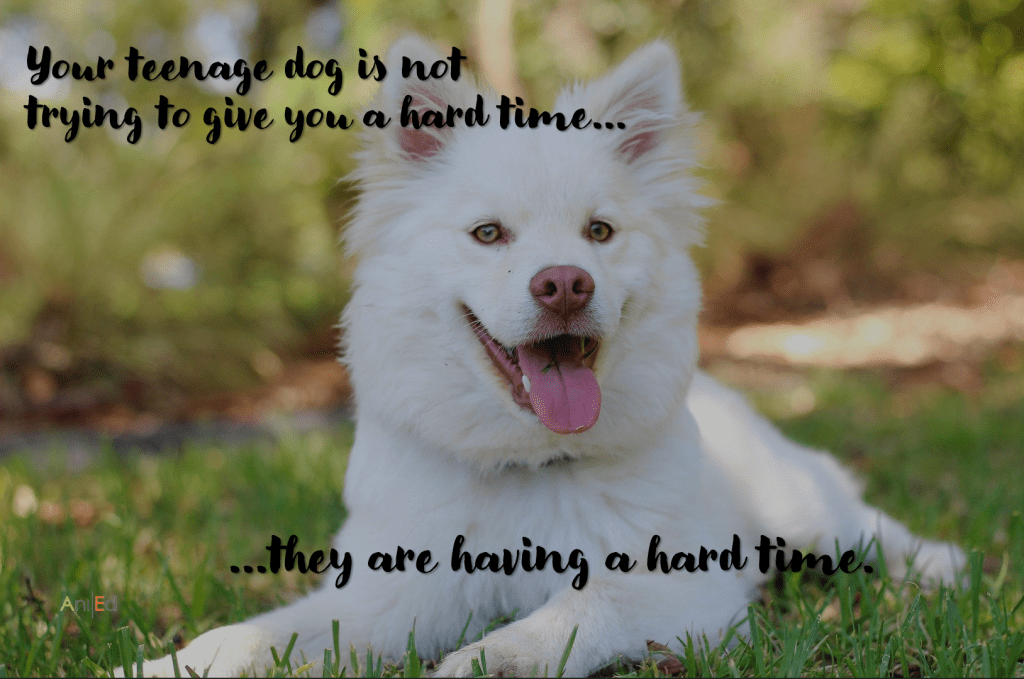
Remember, your teenage dog isn’t trying to give you a hard time, they are having a hard time…seriously….I promise…!
Pet Behaviour Well-Being & Pet Owner Support Program
Private & Personalised. Professional & Compassionate.
Loving and living with a dog that presents behaviour challenges takes a ton of effort, adaptation and time. Love, unfortunately, isn’t enough.
We recognise that you do love your dog and want to do your absolute best for them but may not know where to start or may be overwhelmed by the sheer amount of conflicting information about canine behaviour out there. Everyone has an opinion online and in real life!
Behaviour Matters Course, our behaviour work program, is in the form of a blended-learning course that you will take along with your dog, participating remotely and in-person. You developing more knowledge and skill about canine behaviour and teaching dogs will empower you to work with your dog both with and beyond our guidance.
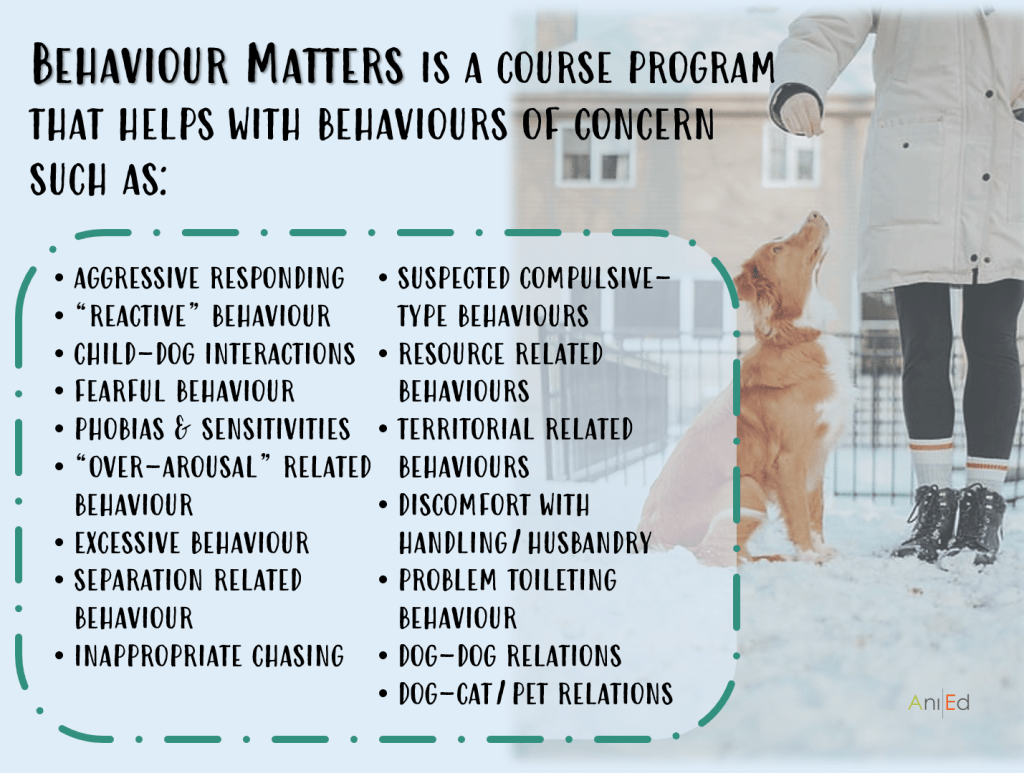
Behaviours of concern that this course may help, include:
biting, threat & warning behaviour, such as growling or snapping
aggressive responding
“reactive” behaviour such as puling, lunging, vocalising, usually while on lead, directed toward other dogs, people, traffic, for example
“over-arousal” related behaviour such as over-excitability, difficulty settling, hyper-vigilance
fearful behaviour
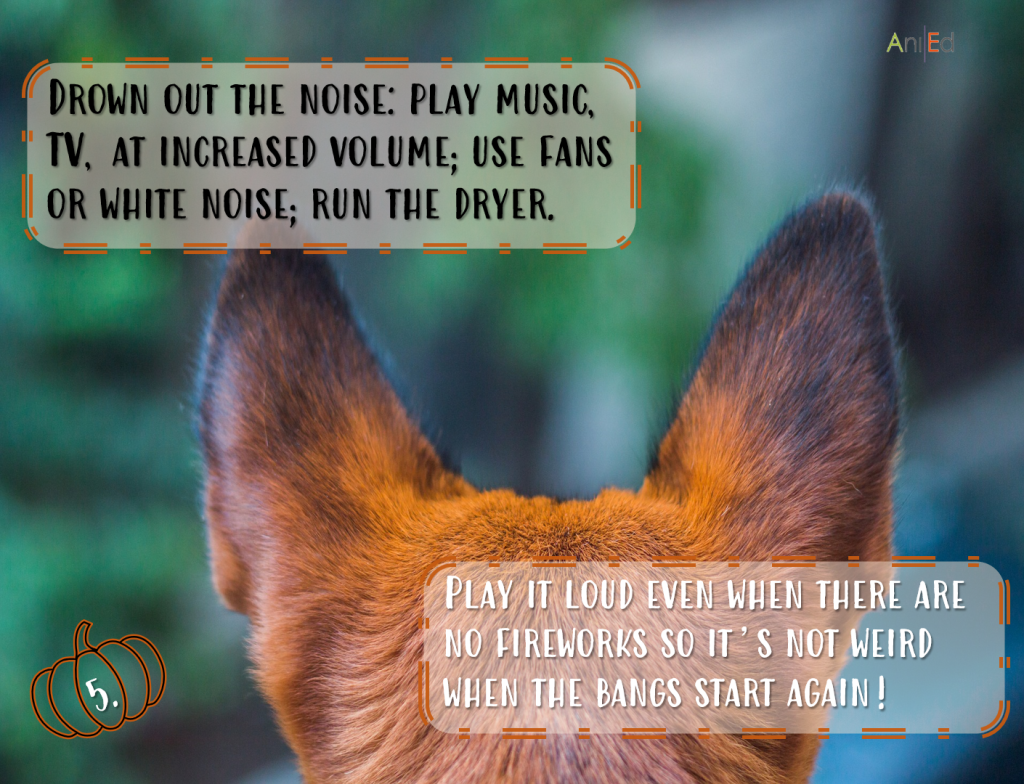
phobias and sensitivities, such as sound sensitivities to, for example, fireworks, storms & thunder
excessive behaviour such as barking, destructive behaviour
inappropriate chasing such as cars, livestock, cyclists and so on
separation related behaviour
suspected compulsive-type behaviours such as reflection/shadow chasing, tail chasing and spinning, excessive self-grooming, flank sucking
countersurfing
territoriality and resource related behaviour such as growling, snapping or biting when items are removed from the dog, or when the dog is approached on a bed or sofa
sensitivity and discomfort with handling, grooming, veterinary and husbandry procedures
toileting behaviour
dog-dog relations, dogs in the same home, relationships with other pets in the home
Our Approach
We take an evidence-based, needs-based approach to behaviour change. We apply sciences of behaviour change including, canine ethology & cognition, applied behaviour analysis and animal welfare, along with teaching, support and guidance therapies for humans.
Our approach incorporates the most up to date understanding of canine behaviour and learning, derived and extrapolated from valid science and evidence, and best practice.
Surprisingly, our approach doesn’t really emphasise “obedience” and it won’t feature in our programs. For more see, Not The Be All & End All and to understand how we work, see This Is How We Do It.
Our approach is relationship-centered and, rather than a dog-training-recipe, our interventions become a way of life, individualised for you and your dog; a life shared with your dog.
Your commitment
Meaningful behaviour change, for you and your dog, will require time and lifestyle changes. These requirements are associated with difficulty adhering to behaviour change programs over time.
Pet owner expectations are often misled by the popular presentation of dog training on TV and online, with trainers applying aversives and suppression causing inhibition of dog behaviour, making it look like there has been some miraculous and quick fix.
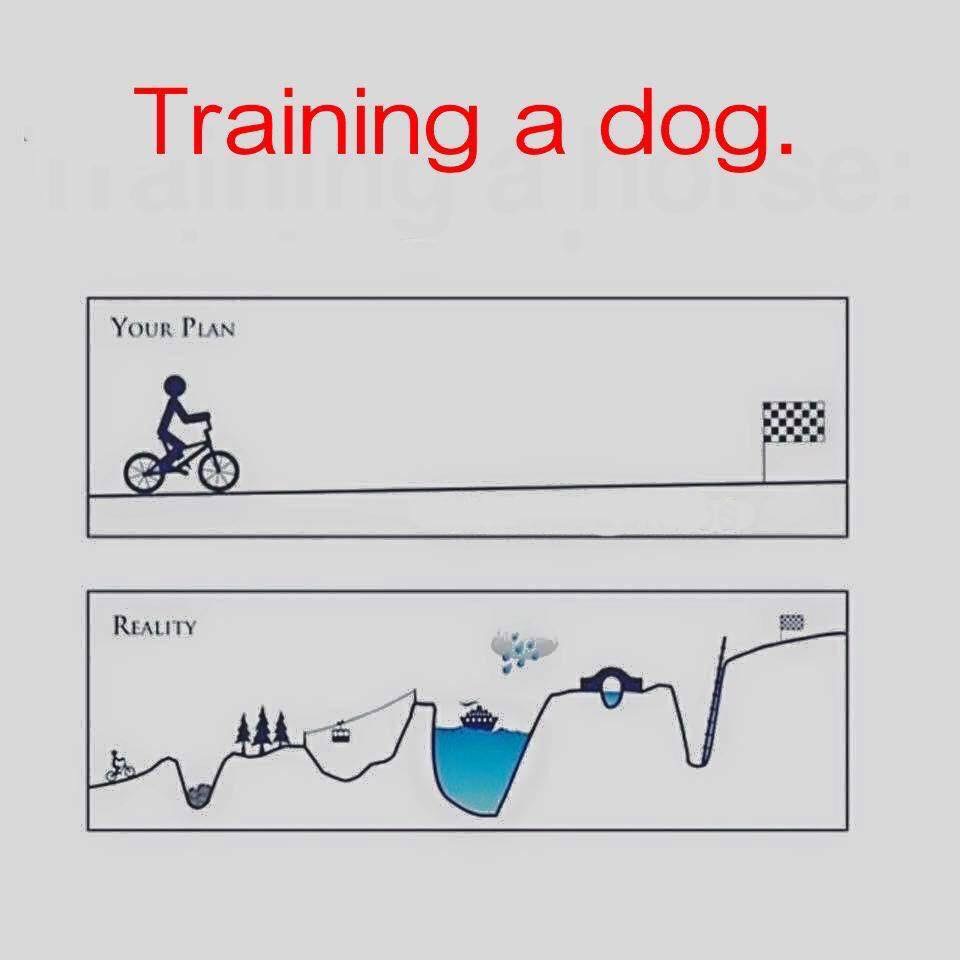
No quick fixes here! Think carefully before signing up – we are in this with you, for the long haul. Meaningful change while maintaining your dog’s behavioural wellness, takes time. You will look back in a year’s time and find it hard to believe how far you’ve both come but the road can be bumpy, and progress is non-linear. Our support is there with you every step of the way.
Behaviour Matters course includes:
blended learning – a mix of remote and in-person sessions
4-5 hours of one-to-one consultancy, guidance, feedback and counselling
24/7 access to the Behaviour Matters course website
individualised course e-manual covering the management and behaviour intervention program that we develop and build together, in collaboration, laid out step-by-step with video examples
ongoing & regular remote support & feedback via email, Whatsapp messenger (or social media messenger) – you are encouraged to check in and send video, progress reports and troubleshooting enquiries as often as you need to while we work through our program
an effective, evidence-based and humane program devised by the trainers of dog trainers, experts in their field, with your and your pet’s well-being at the heart of all we do
More information on our policies, particularly COVID19 procedures for in-person sessions, see here and more on this course, see here.
Full Course Program: €450.00 (paid electronically and due before first session)
or
Payment plan:
payment 1 before remote session: €200
payment 2 before first in-person session: €150.00
payment 3 before second in-person session: €100.00
“Dog training” really is a misnomer. You, the human, are the central focus. That’s why we are concentrating on providing education and support for the human end of the leash and prioritising encouraging your empowerment through education. You will become an awesome teacher, supporting your dog in their learning and development.
It really is a team effort; true collaboration.
No judgement, just support and guidance. That’s how we teach both ends of the leash, through the ups and downs of behaviour change.
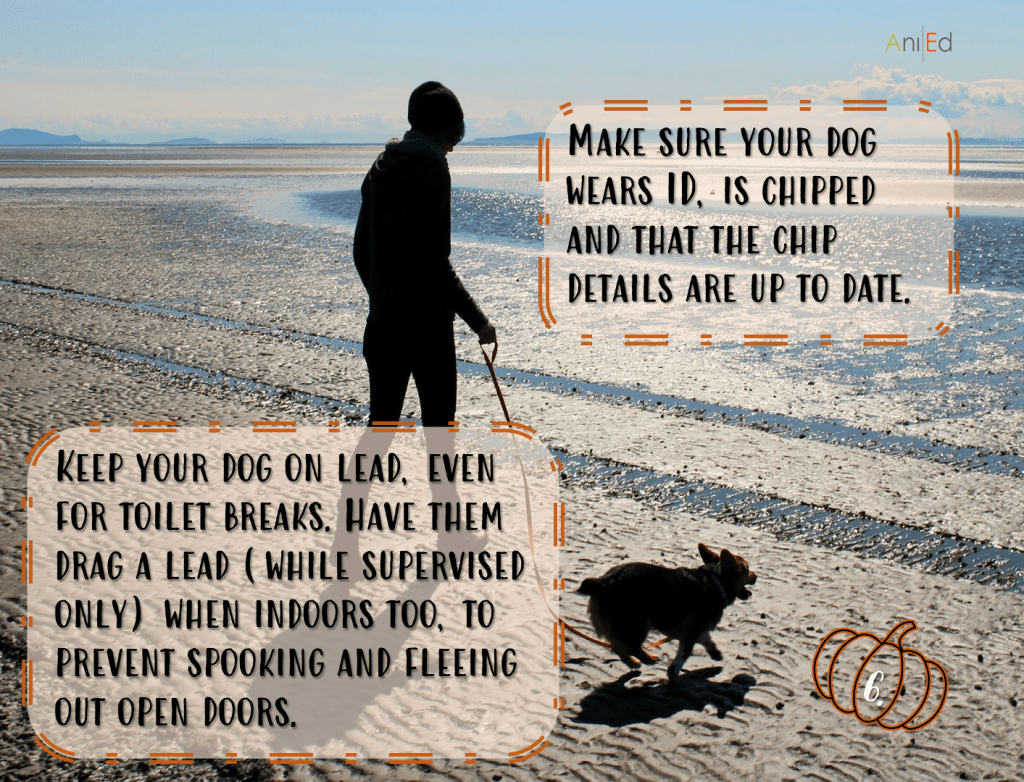
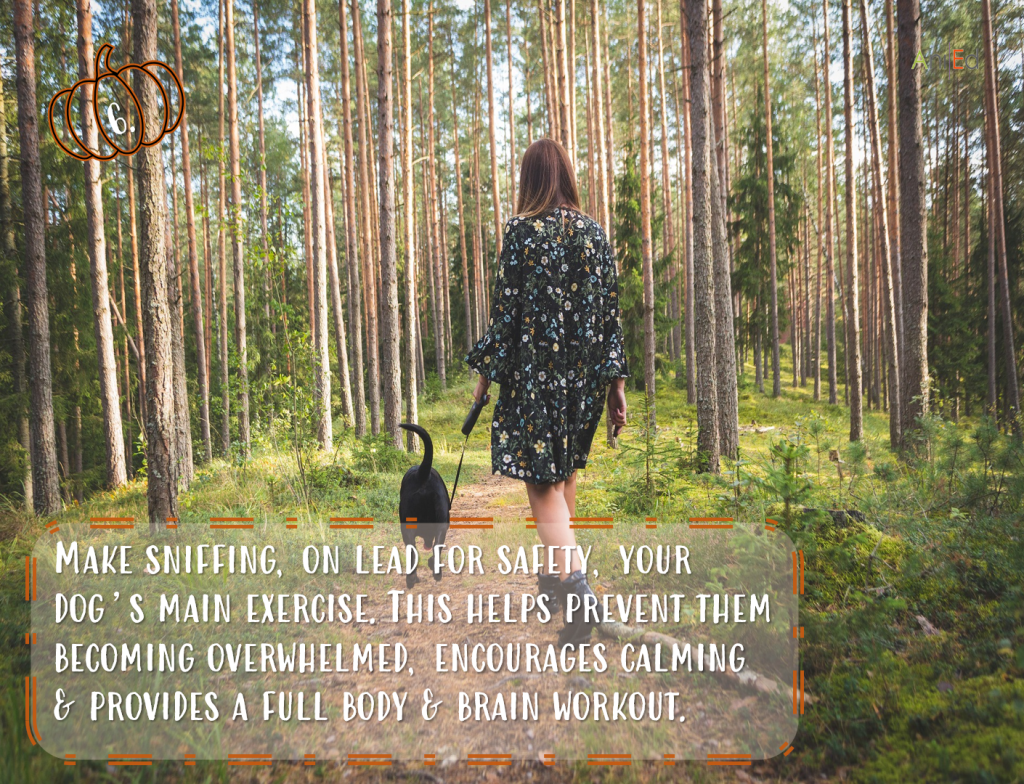
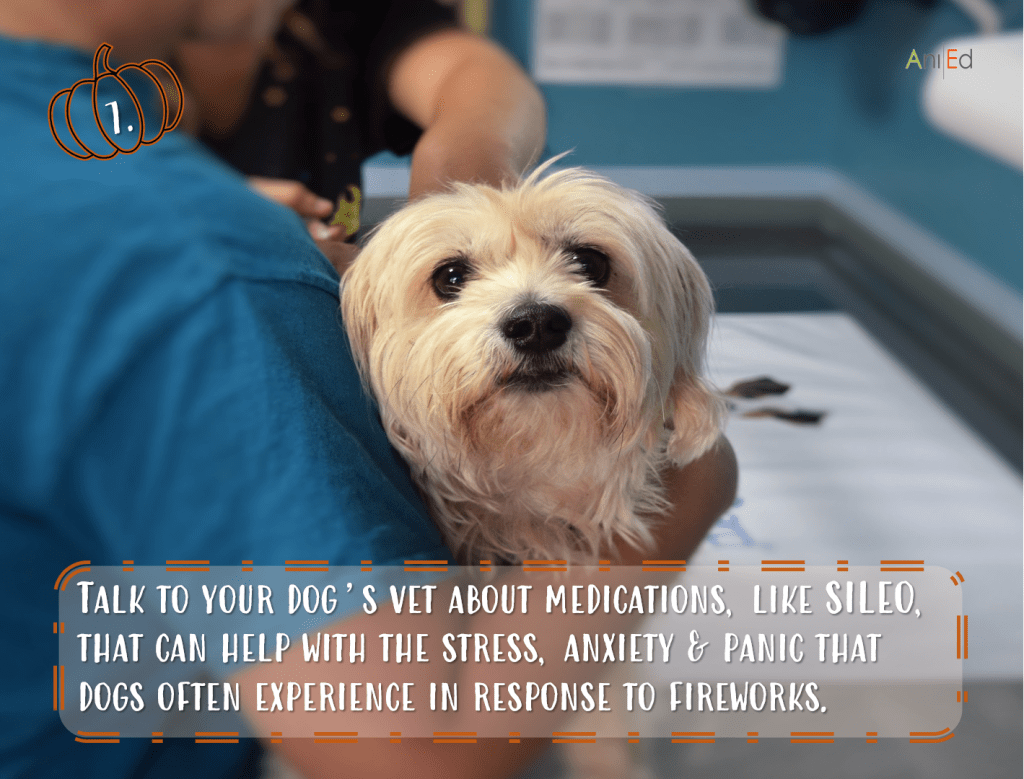
It’s that time of year again. Everyone laments the awfulness of fireworks and their impacts on dogs (and lots of other animals too), posts illustrating the panic and suffering of so many dogs are shared and shared, yet, all this has become normalised.
Dogs need our proactive intervention. Bottom line.
They don’t need more over-the-counter, herbal, “natural” remedies, more alternative approaches to modification such as wraps or vests, and crappy advice to ignore suffering dogs or apply other aversives to these scenarios.
We are waaaay too late to do a whole lot of effective desensitisation or counterconditioning; for these programs to have beneficial effects, when done properly, we would need to start in the summer when we can find the longest duration during the year without fireworks. However, ad hoc, in-the-moment and well-timed reward-parties can be helpful for some dogs, like Decker:
This area is difficult to discuss and study, particularly online, with conversation often deteriorating. There is a lot of myth and woo surrounding canine nutrition, and just as many online gurus…
On this course, we look at the evidence and apply valid information to feed individual dogs.
Image reads: A home-prepared diet may be less beneficial than even the cheapest commercial feed if it’s not balanced and prepared appropriately…
Image reads: Ingredients lists don’t tell us a whole lot about the quality of feed and there are all sorts of labelling and marketing tricks used…that includes all commercial feeds, no matter the diet type. Buyer beware!
Image reads: Fresh meats are often at the top of ingredients lists...does that mean your dog eats the benefits?
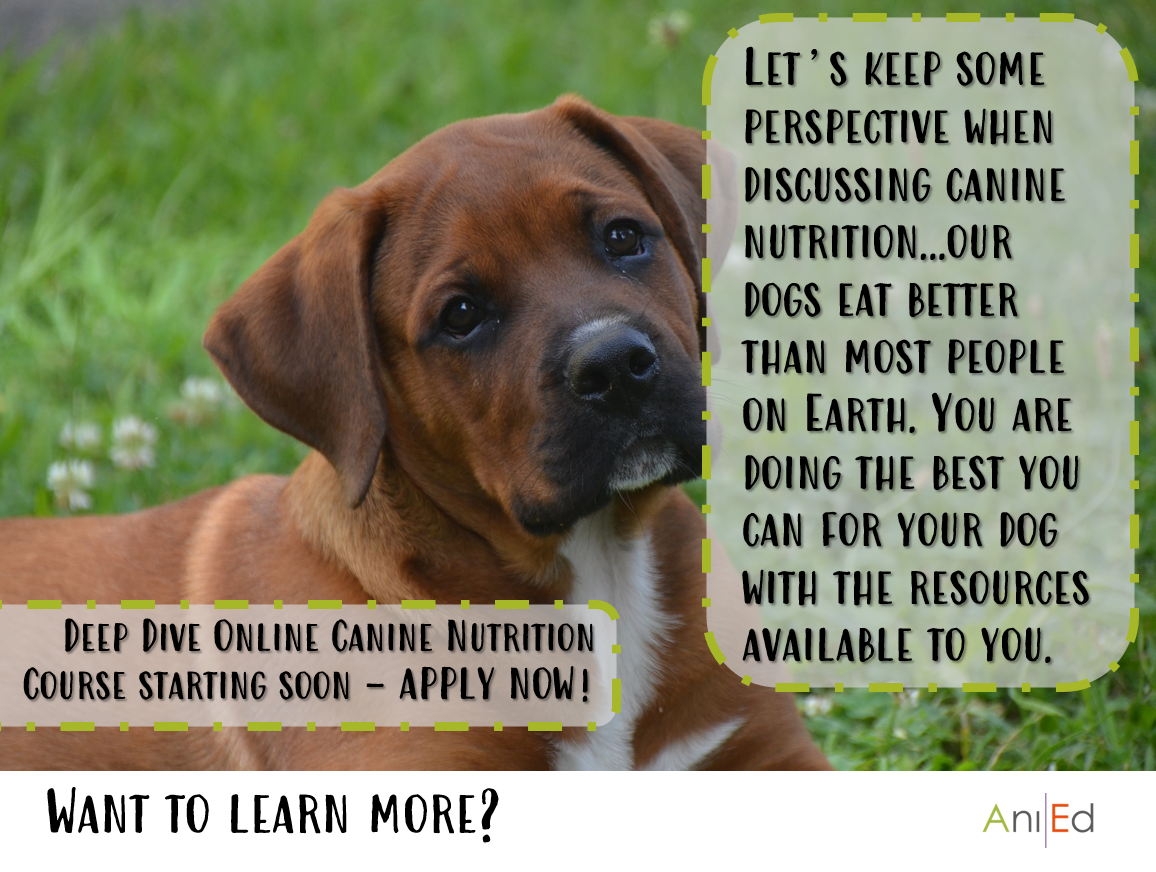
Image reads: Let’s keep some perspective when discussing canine nutrition…our dogs eat better than most people on Earth. You are doing the best you can for your dog with the resources available to you.
Kind, open and evidence-based discussion is how we all learn & grow!
This area is difficult to discuss and study, particularly online, with conversation often deteriorating. There is a lot of myth and woo surrounding canine nutrition, and just as many online gurus…
On this course, we look at the evidence and apply valid information to feed individual dogs.
Image reads: Dog feed manufacturers don’t have to tell us about quality and digestibility of feeds…how do we make evidence-based choices about our dogs’ diets?
Image reads: Are “grain-free” or “gluten-free” diets really necessary or beneficial for (most) dogs or is this an elaborate (and effective) marketing too?
Image reads: Let’s model kind and evidence-based discussions of canine nutrition. Dogs are pretty adaptable and individual. Our impression of what works might be affected by biases and may not apply to other dogs or populations. We need more independent and valid research…not more anecdotes. Our experience still holds value but only if we keep our discussion kind and objective.
That’s the entire ethos of our course, right there!
This area is difficult to discuss and study, particularly online, with conversation often deteriorating. There is a lot of myth and woo surrounding canine nutrition, and just as many online gurus…
On this course, we look at the evidence and apply valid information to feed individual dogs.
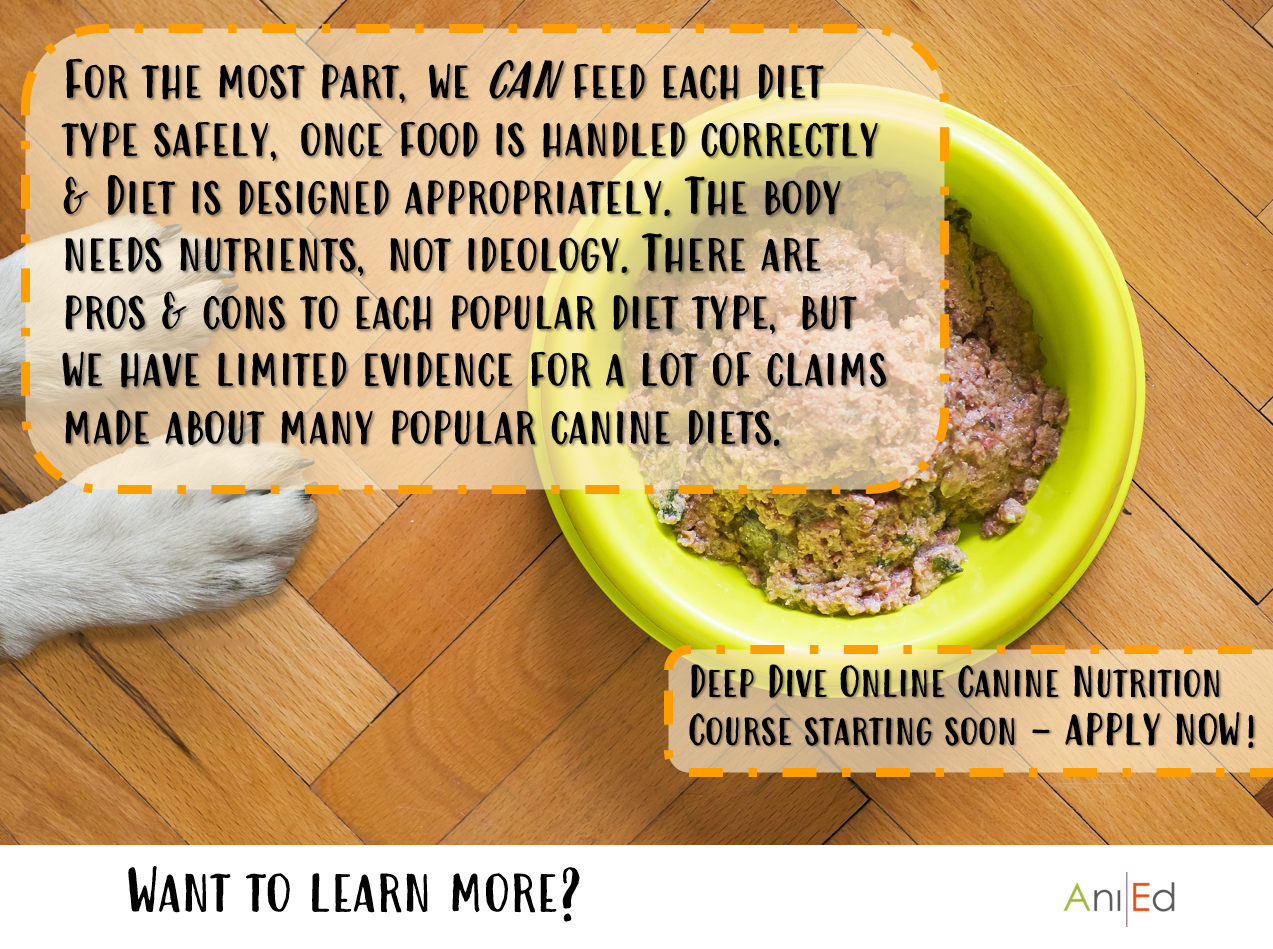
Image reads: For the most part, we can feed each diet type safely, once food is handled correctly and diet is designed appropriately. They body needs nutrients, not ideology. There are pros and cons to each popular diet type but we have limited evidence for a lot of claims made about many popular canine diets.
Image reads: As we come to understand more about the Gut Microbiome and its effects, taking care of puppy’s gut health may be just as important for their brain and behavioural development as for physical well-being. Feeding for health means feeding for body and brain.
Image reads: Cheap feeds are always made with cheap ingredients…but does that mean expensive feeds are always of better quality?
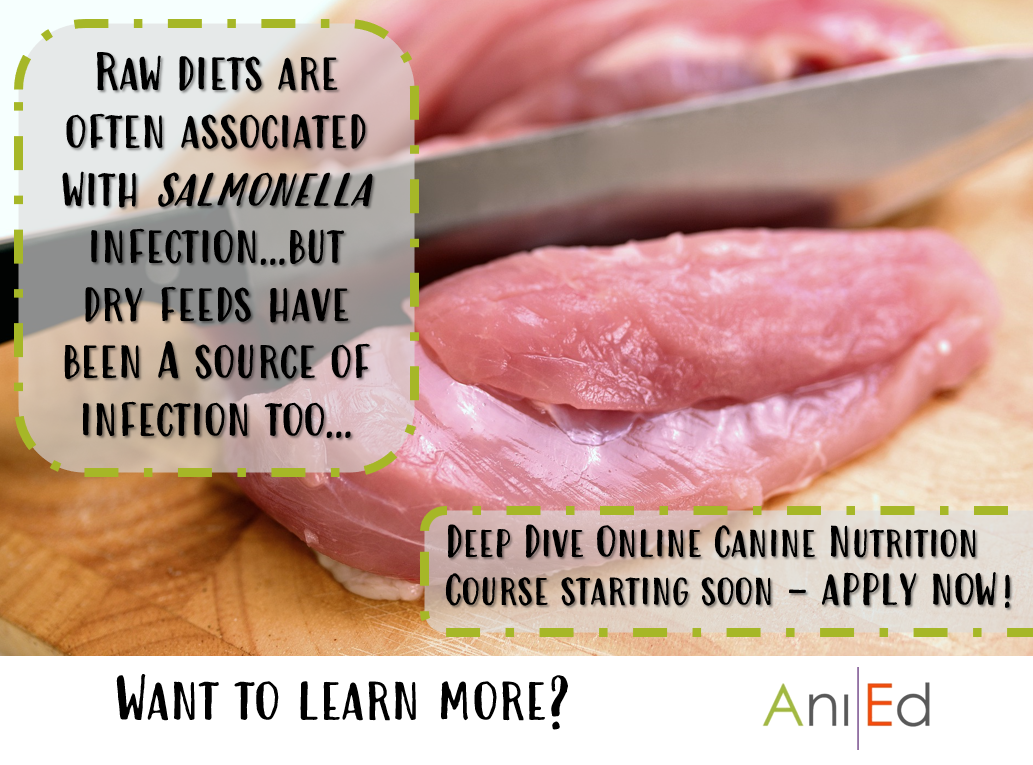
Image reads: Raw diets are often associated with Salmonella infection…but dry feeds have been a source of infection too…