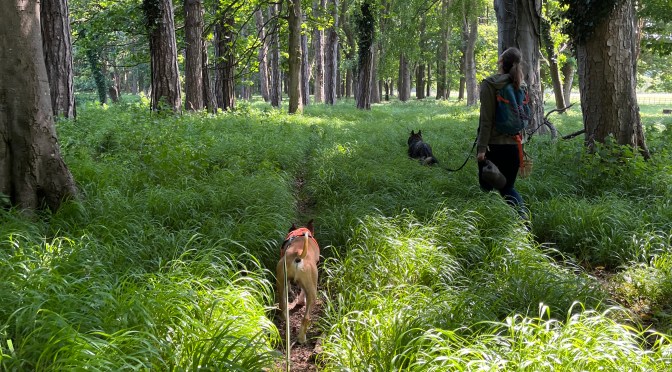
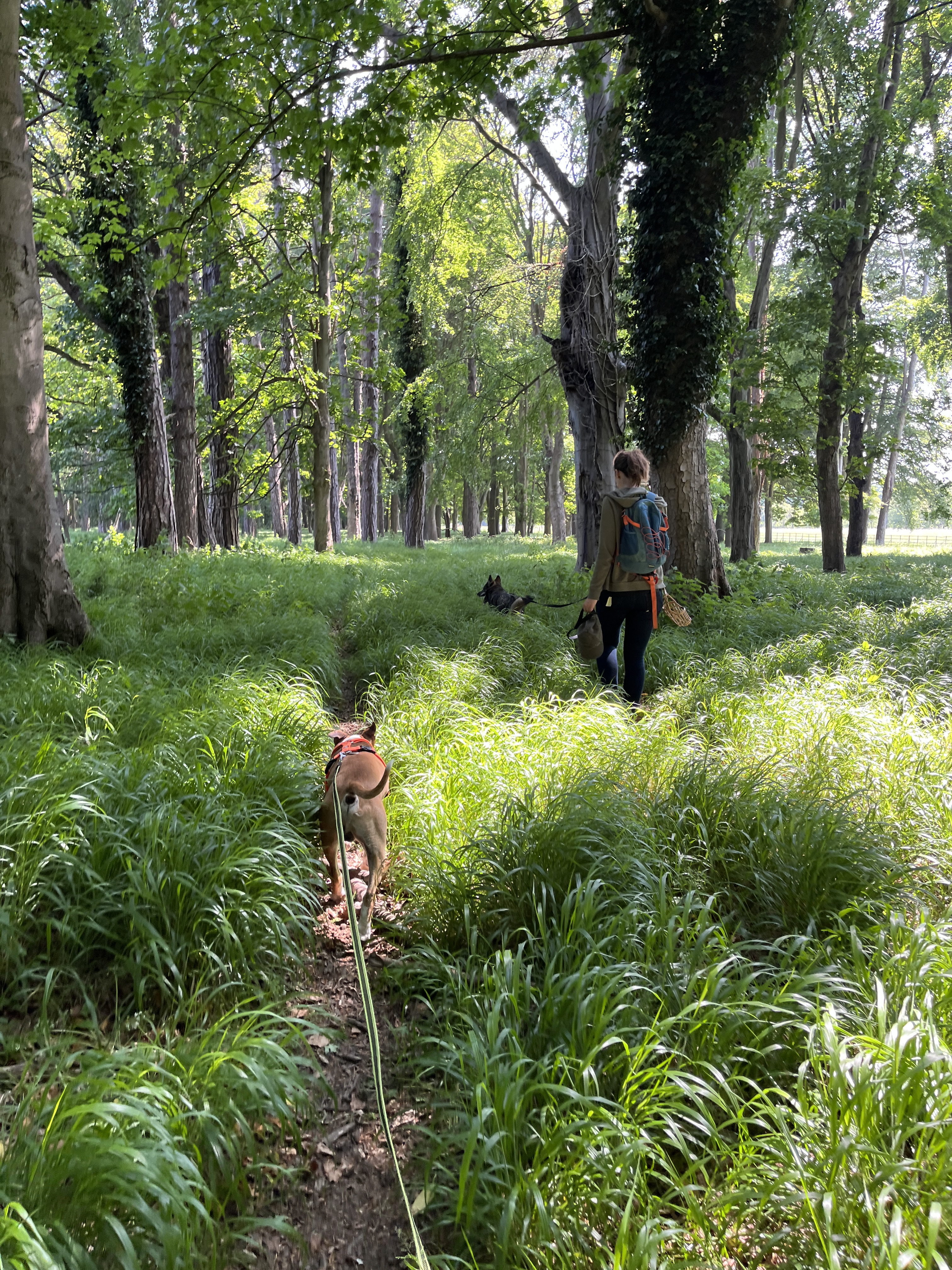
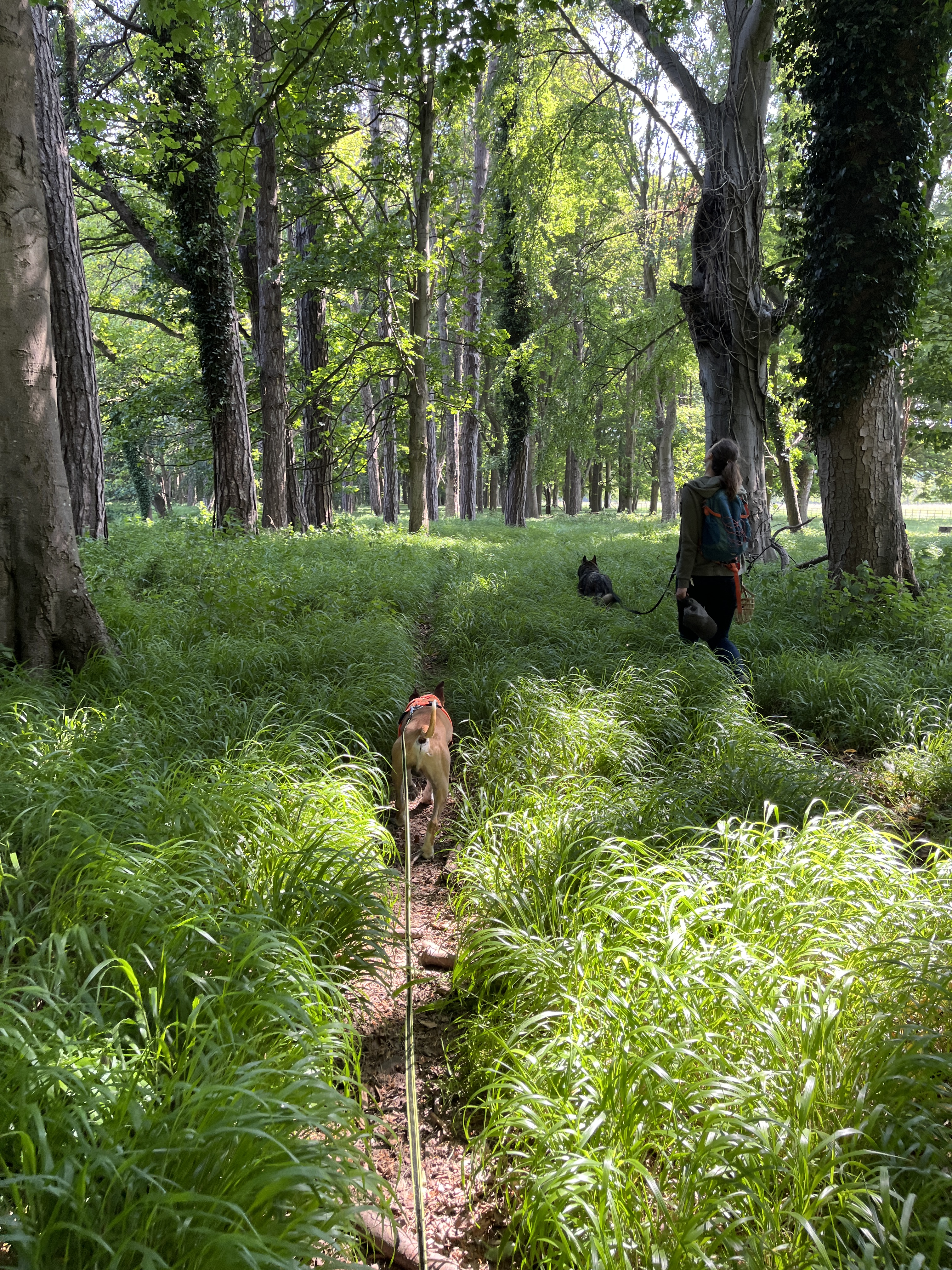
On our #100DaysOfEnrichment program Sniffaris are olfactory, and often, multi-sensory, adventures. And although they are often contrived, they can be an excellet way to broaden your dog’s olfactory world, without using food.
I have found them to be so beneficial for so many dogs, in different ways, that they feature on 100Days twice!
Quite simply, I did some beach combing and was able to bring those experiences in to make some sniffari boxes. Once thoroughly investigated, the addition of water creates a rock pool expanding the sensory experience even more.
Collecting smelly things and bringing them back to your dog, once safe, can be an awesome way of helping dogs who are restricted for whatever reason still experience the world through their nose and provide calm exploration.
We have lots of new and shiny things coming your way this summer and autumn.
While we’re not quite ready for bookings just yet, if you want in and at the top of the line, email (info@anied.ie) or message us (@aniedireland) and I will get you on the list straight away. This may also help you budget for courses you plan to take.
Get ready to mark your calendars!
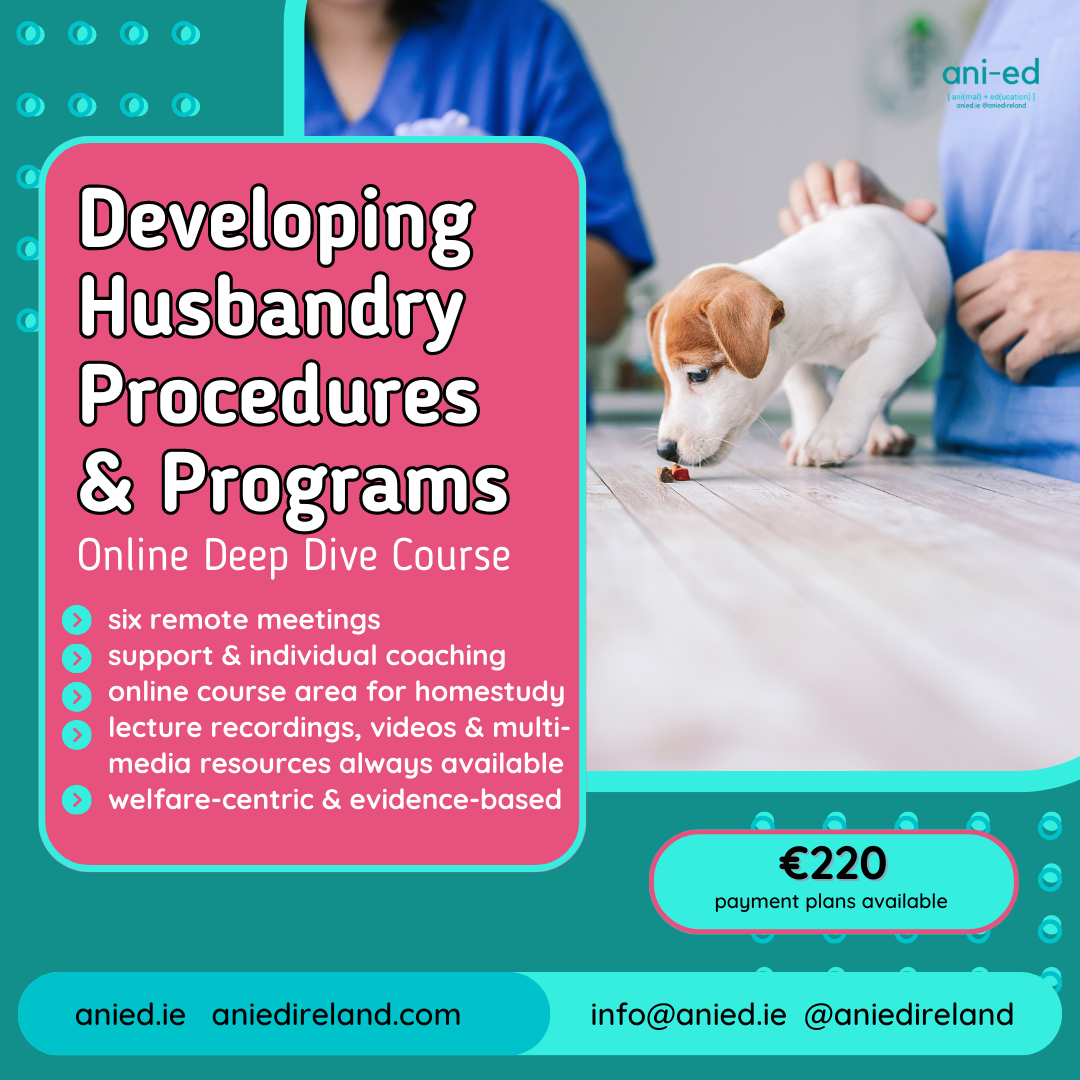
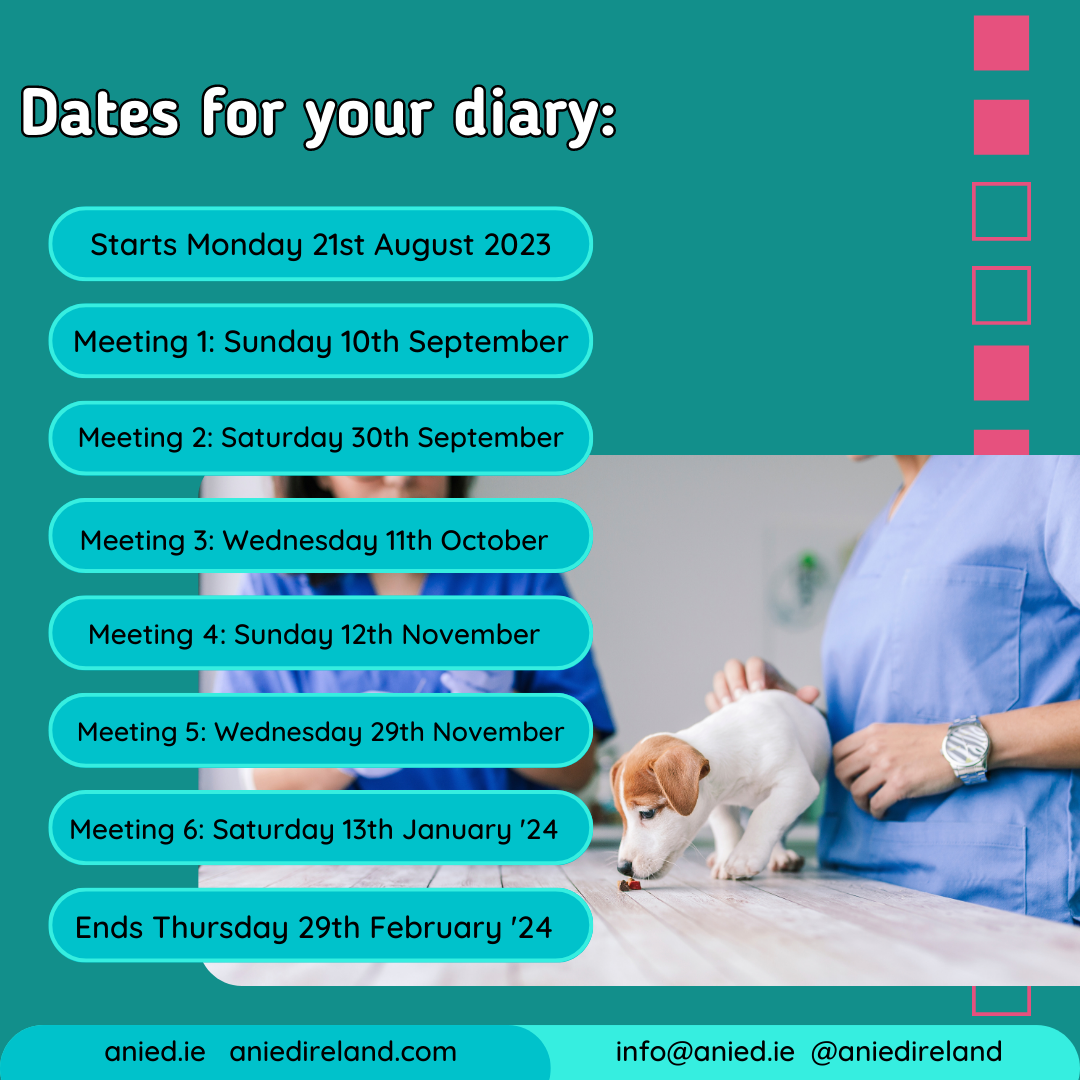
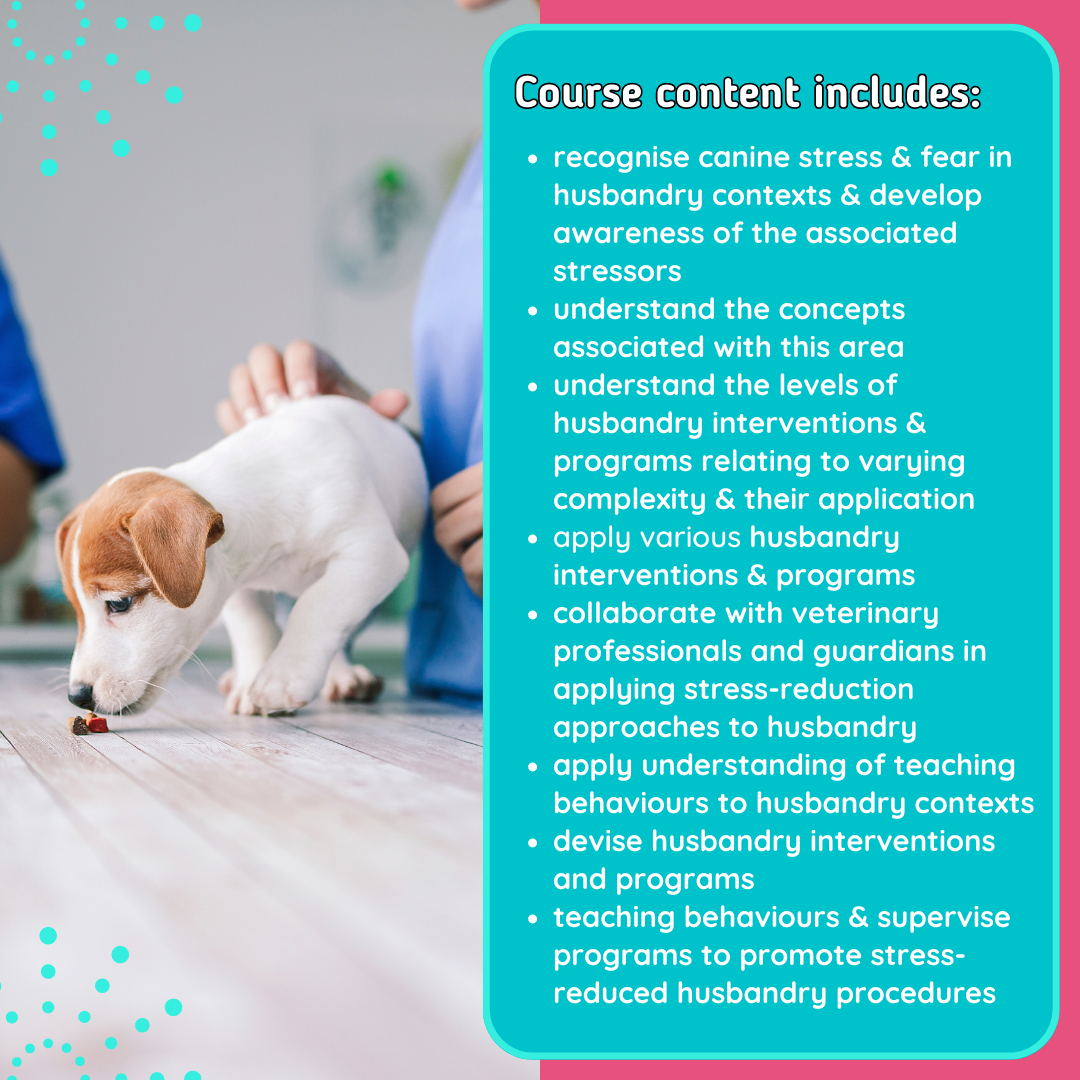
Developing Husbandry Procedures & Programs
Take a deep deep dive in to the development and implementation of husbandry programs.
While husbandry training has become greatly popular in dog training circles, which is a good thing, an examination of the basic principles is needed.
Can these procedures really be “cooperative”? Do dogs have “choice” in these interactions? What more accurate and quantitative models can we apply?
This and so much more should be investigated and our best efforts applied to making sure we can really make husbandry as welfare friendly as possible. And that means understanding the dog’s experience from their point of view.
Full details coming soon!
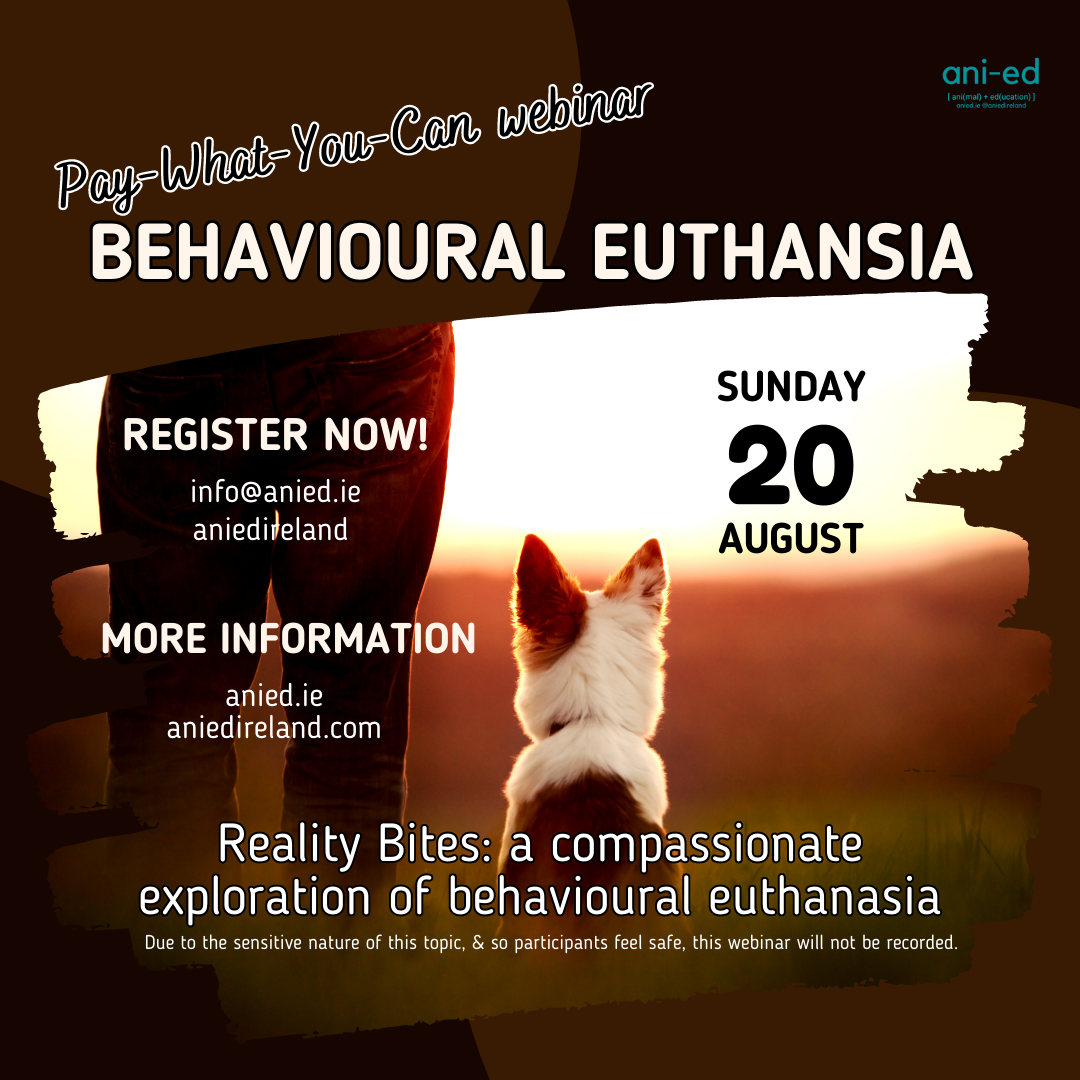
Pay-What-You-Can webinars
We have a couple of afternoon webinars coming up that allow us to take a deeper dive into some fascinating topics.
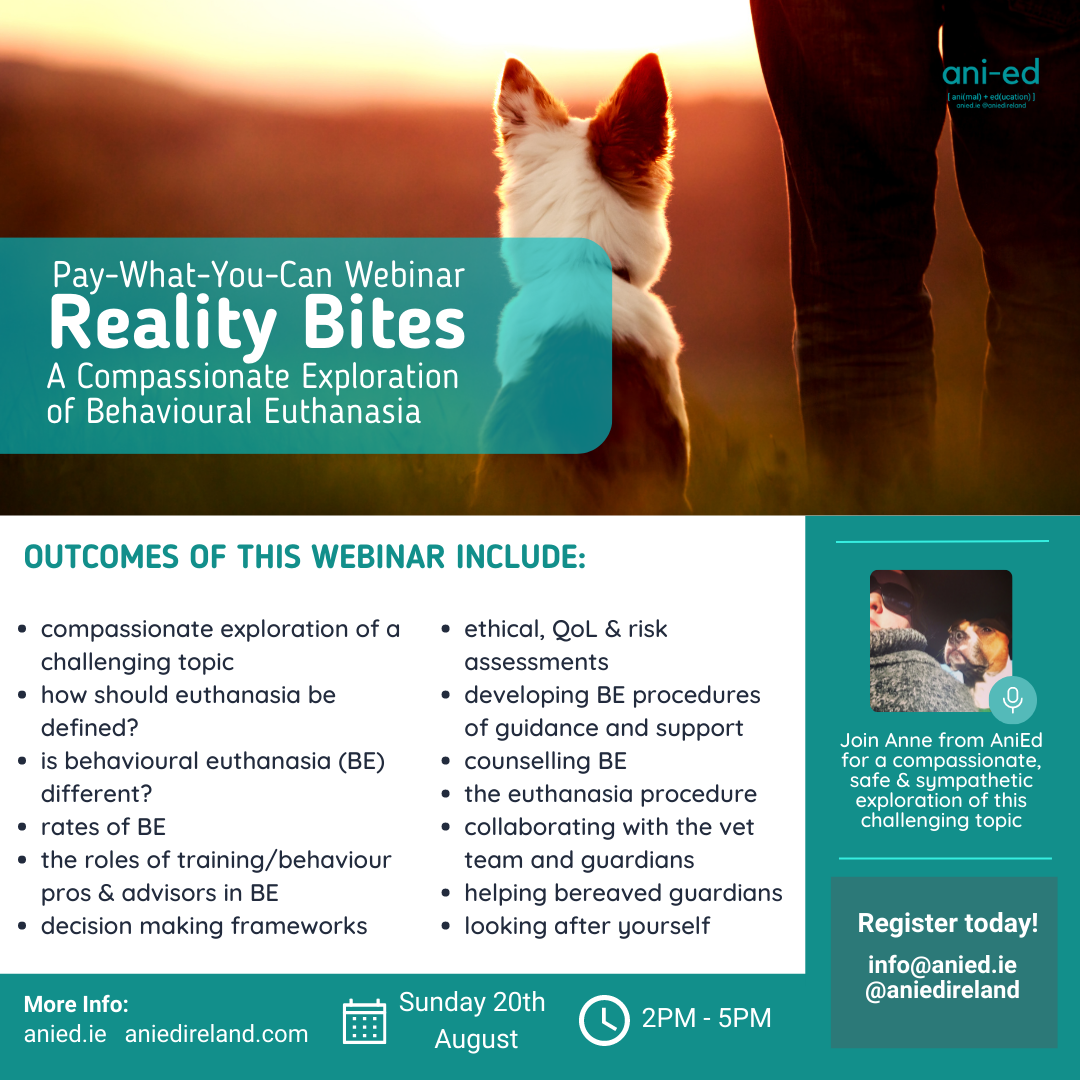
We will be starting the challenging topic of behavioural euthanasia, examining our roles in supporting pet guardians facing these unenviable and heart wrenching decisions.
This will be a compassionate exploration where we are all safe to bring our questions about this topic that so often leads to polarised discussion.
Details:
And then we will look at just how applicable, versatile and important the foundation principles of teaching are. I will illustrate each of these principles with examples from real cases, tons of video footage and a look at how we can apply these seemingly simple ideas to even complex cases.
Details:
We are asking for €5 – €30 or whatever you can.
Booking will be available soon and if you want to get ahead of the pack, get in touch!
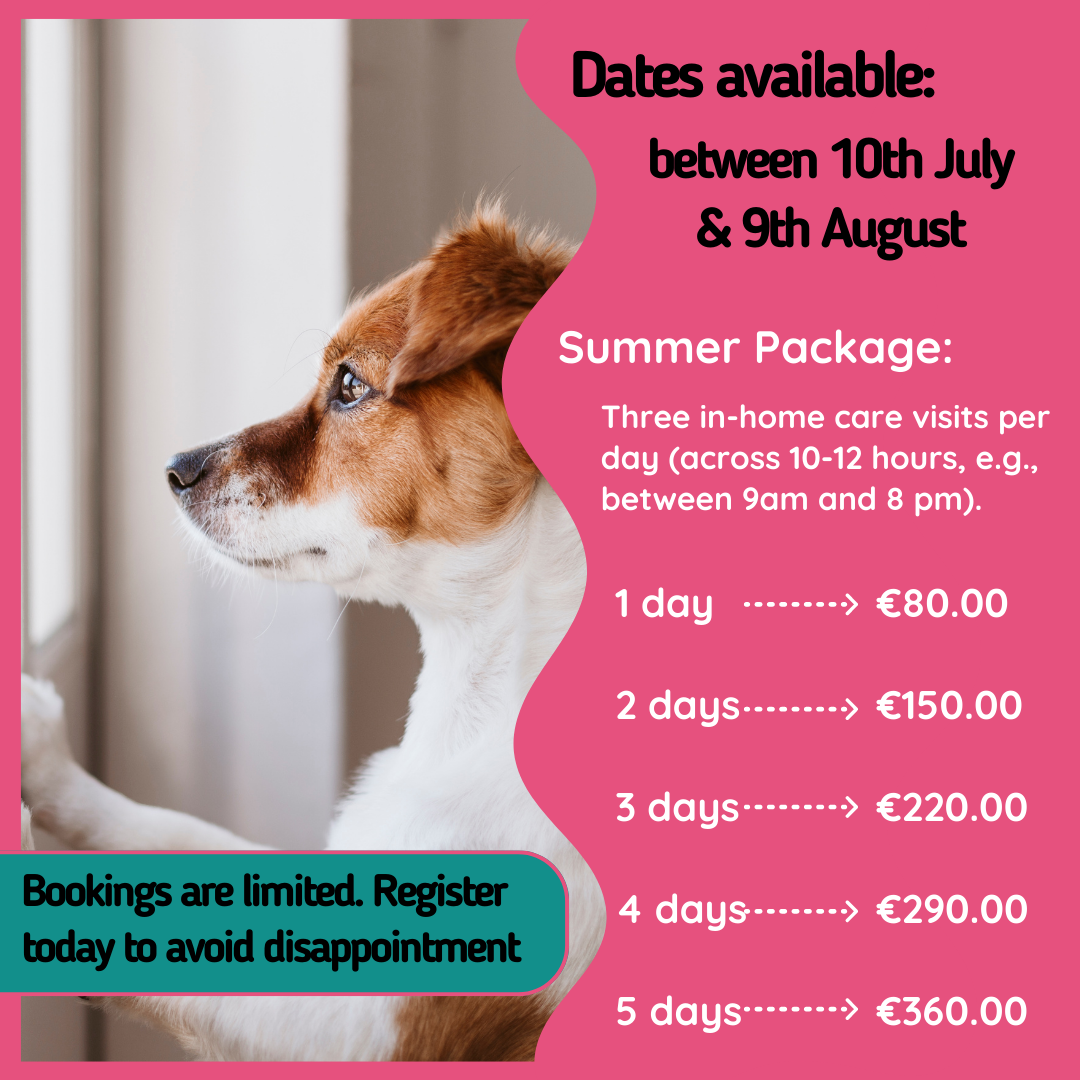
Summer’s here and we have a new and shiny service we are trialing for just a month.
I am desperate to get back to spending time with dogs. I get to do so little of that now, with so much work remote and with students. I still love all that, but I need my fix only available in hanging out with cool dogs.
This is a private and fully individualised service and of course, I will be caring for your dog as I do my own. I will be able to bring my expertise, which is behaviour, to keeping your dog as comfortable as possible, and enriching their alone time.
To help maintain your dog’s comfort, I will establish a somewhat predictable routine for your dog with me. Your dog will always be handled, and interacted with, compassionately, according to their preferences and at their pace.
When dogs are alone and a person visits, they can get quite excited. That’s normal and to be expected. By supporting your dog in working through their excitement, I will be able to help them to settle better. We do this with Rollercoasters; combinations of activating and pacifying activities and interactions.
It is expected that your dog’s behaviour may be different while you are away and there’s a different person caring for them. We keep a visit log and will share that with you at handover when you return home. It will take some time for your dog to settle back into your routine after you return home and we will discuss their behaviour at handover.
Although there will be individual adjustments, and I will always do my best to accommodate your individual dog, the following provides a general overview:
Morning visit:
this is usually the longer visit of the day to get your dog set up and ready
we will go on a longer outing during this visit, if that’s appropriate to your dog, as it’s generally cooler in the mornings
I will make sure that your dog has plenty of opportunities to toilet
we will include lots of activities that exercise your dog physically and mentally so that they can relax until our next visit
your dog will be fed most of their meal during the morning visit, or in a toy, when I leave, if that’s appropriate
Day-time visit:
this is usually the shorter visit of the day to provide your dog with a break and ample opportunities to toilet
we may go on short outings, but this may be limited by the heat of the day
this visit will be about lots of sniffing games and training games and lots of fun!
I will make sure your dog is comfortable and settled for the evening ahead
the bulk of their food will be fed during the first two visits of the day so that they are not too full overnight
Night-time visit:
for their last visit, we will go for a short outing as appropriate for your dog
I will make sure that your dog has plenty of opportunities to toilet
we will concentrate on winding down during this visit
I will hang out with your dog to help them settle and relax for bedtime
Check out our free program, 100 Days of Enrichment, for a glimpse of all the fun your dog and I will have!
I am so looking forward to helping dogs feel comfortable while their humans are away, and I can’t wait to get to know new dogs. If you or someone you know might enjoy this service, please do let me know.
I don’t really follow other trainers online so I’m often out of the loop when it comes to the latest and greatest in trainer-town.
As a result, I was recently called out on the use of the term “neutral” to describe dog-dog interactions, and in its use to describe ‘neutral dog walks’. I had no idea the term neutral could be so contentious…
Trainer Terminology
This illustrates a real challenge in our industry, that is, terminology.
Because professionals enter our industry from diverse backgrounds and we lack standardised & validated terminology, trainers can make up names for approaches to teaching dogs. That means terms may be poorly defined and applied less accurately.
I am clearly guilty of this too!
My neutrality faux pas
Upon being made aware of my possibly unsuitable use of the term, I did a little digging to reveal the errors of my ways.
Apparently “neutrality walks” or some version of that concept, have become quite a popular tool among UK trainers, and possibly elsewhere too. What I found does not represent how we do things at all and certainly doesn’t portray what I would consider neutral social responses from the dogs involved.
I don’t really like to discuss what others might do in the name of training, and instead, prefer to discuss what we do. But for clarity, these “neutrality walks” often appear to consist of groups of dogs, with their humans, being walked in close proximity to one another, on pretty tight leads, with many showing lowered heads, appearing check out, with tense movement.
That doesn’t seem like neutrality to me!?
Our “Neutral Dog Walks” are entirely different!
Night & Day
In my defense, in using the term, I was describing something very different.
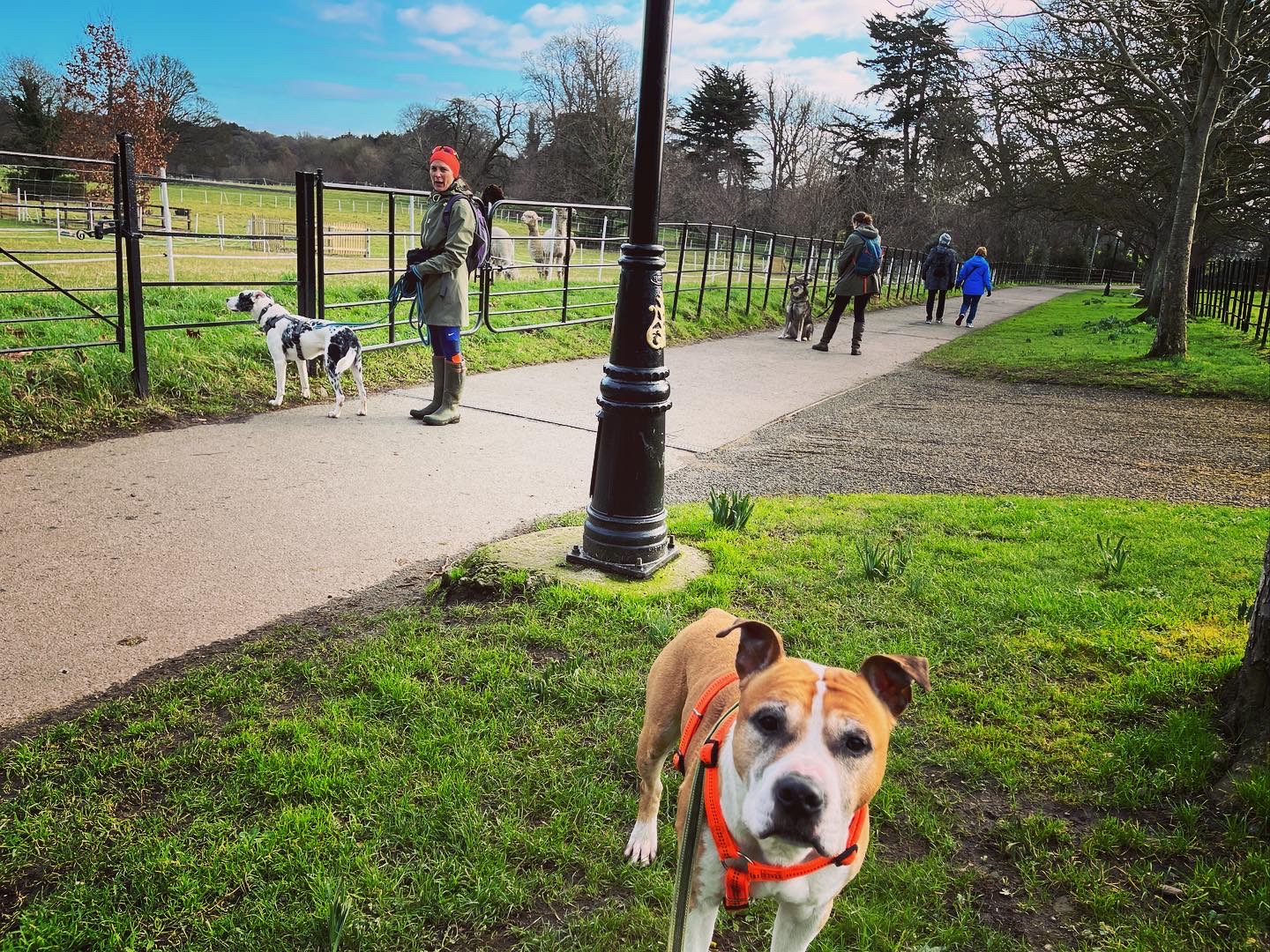
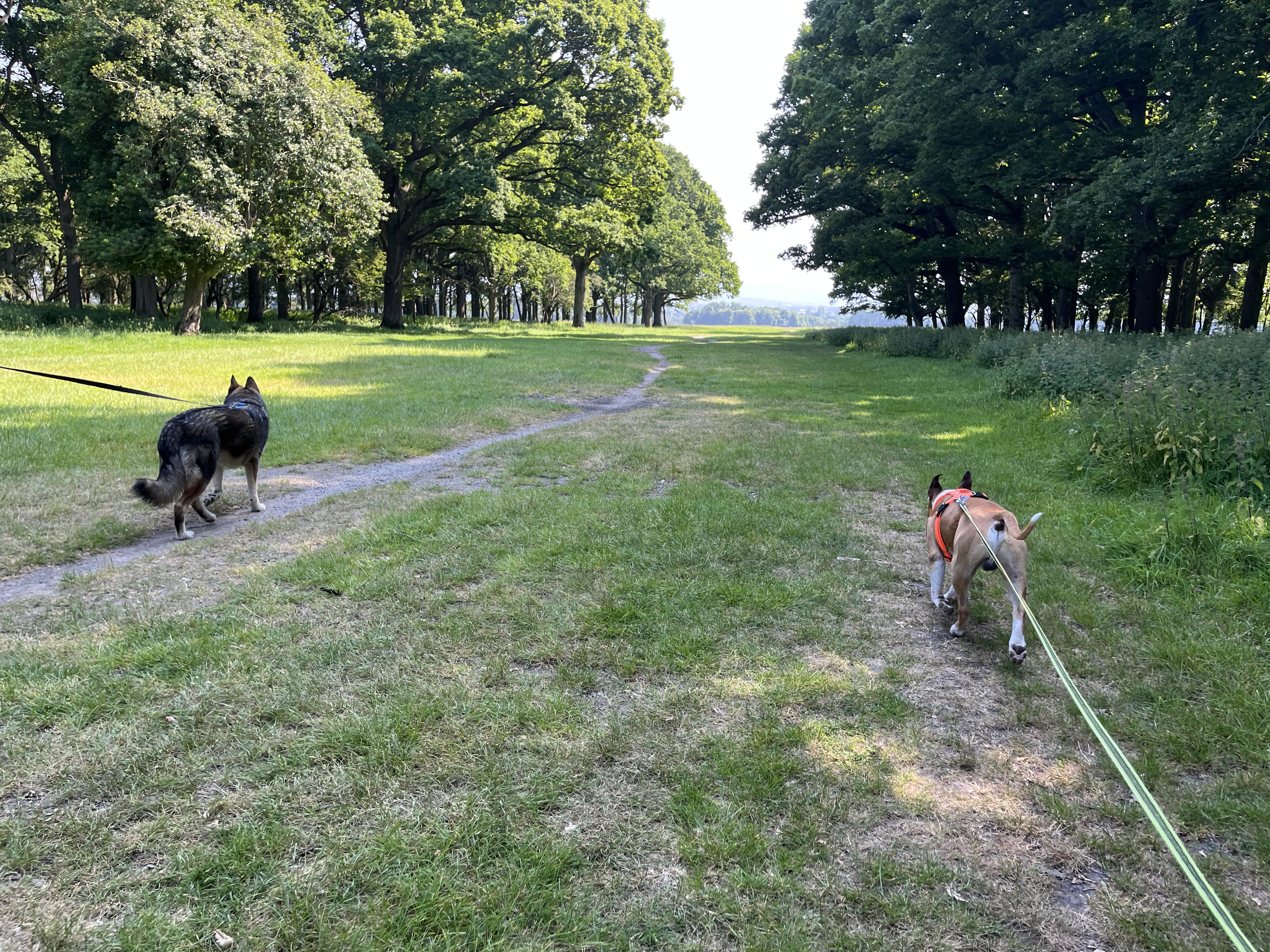
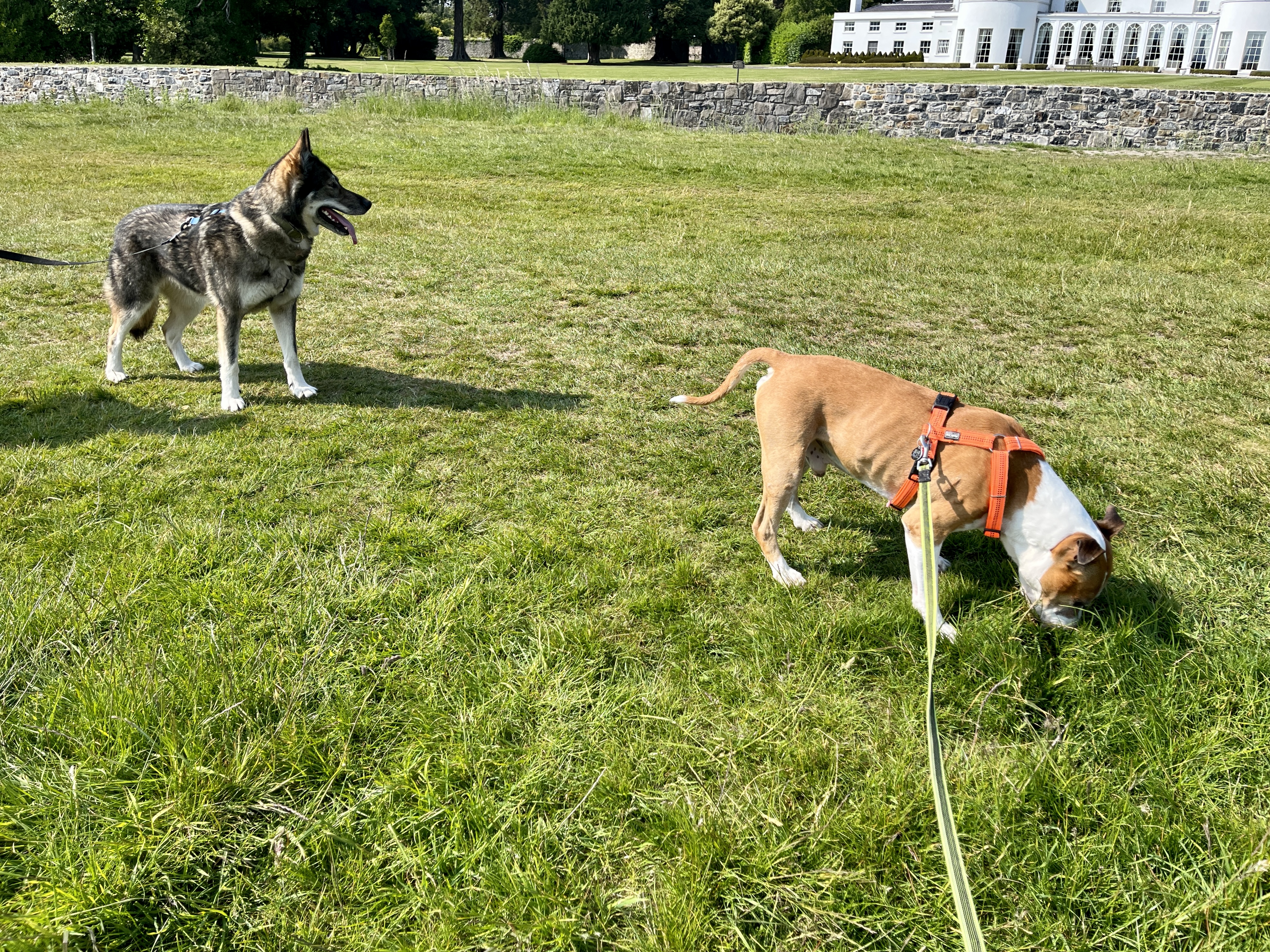
On our Neutral Dog Walks:
there are no more than three or four teams
dogs are on long lines and are free to move about
we use distance and engagement to maintain everyone’s comfort
we pay close attention to each individual’s space bubble over time and across contexts
we are in enriching and interesting environments so the presence of other dogs and their humans is somewhat diluted
each dog’s preferences are considered – some dogs might want to meet or be closer to a compatible individual, but some might not and this is not prioritised
they get opportunities away from one another to engage in their interests with their human, without the pressures from other teams
What do we mean by ‘neutral’?
The difficulty with the term neutral is that it may be interpreted as the dog not reacting or responding. Maybe this conjures up images of robot-dogs, which can be very attractive to many pet owners, who, understandably just want a “good” dog, but is so often achieved through pretty heavy social pressure, intimidation and coercion.
Neutral is a label and like all labels, it’s only useful when it’s understood across users, through clear and agreed-upon definitions.
And of course, we are not labelling dogs as “neutral” but more so responses. Problems arise when we start with “the dog is —” as we should be describing behaviours and the conditions under which they happen; what the dog does, rather than what (we think) the dog is.
Neutral responses are “whatever!” or “so what!” responses. The dog perceives some interesting occurrence such as another dog, a cyclist, maybe even a squirrel, and they have enough time and space to make some choices about their next move.
It doesn’t mean that the dog has no response (if they’re alive, they’re responding!) but that they are able to respond and recover, without too much stress.
We take turns and wait to access sniffs and smelly rolling spots!
Goals
Our outings are goal oriented, but the outcomes for each dog will be individual and evolving.
The humans are developing skills in managing their dog’s exposure by adjusting distance, reinforcing engagement and participating in their dog’s exploration with them.
The dogs are learning to feel safe and are developing skills in these contexts that don’t require swings of excitement and escalations.
We try to have a model dog present too, a dog whose responses are well known, pretty predictable and generally low-key. Decker is very environmentally sound and doesn’t have any interest in interacting with other dogs. The way he navigates his world may be a helpful model for other dogs who might find things exciting or worrying. And to make sure he is able to do that, everyone understands his preferences, just as we make sure everyone else’s preferences are respected.
It’s only engagement if the dog can truly choose to engage.
Our outings are based in engagement. The dog learns to choose to engage without cueing, leash jerking or tightening or nagging. We adjust their world rather than attempt to mould or coerce them.
The dog’s behaviour is information. If they are having difficulty recovering from stress or their owners feel the need to use a tight lead or other coercion, then we need more distance and an updated plan.
Our ultimate goals are happy, loose dogs, confident humans and lots of team-work.
And now, it looks like we have to come with a new name…ideas welcome!
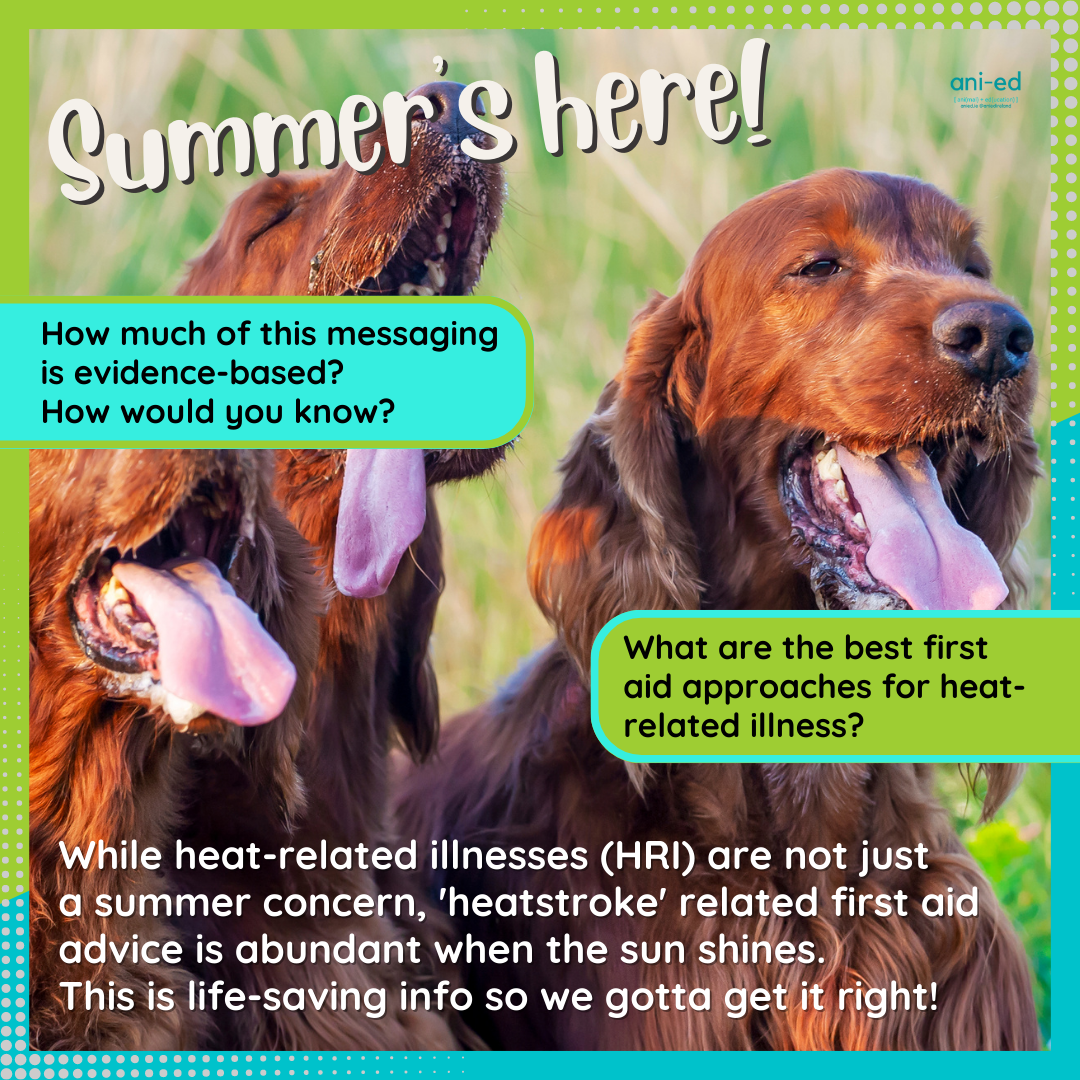
The sun’s out (yay!) and that means that you’ve probably been inundated by posts and images and information about “heat stroke”.
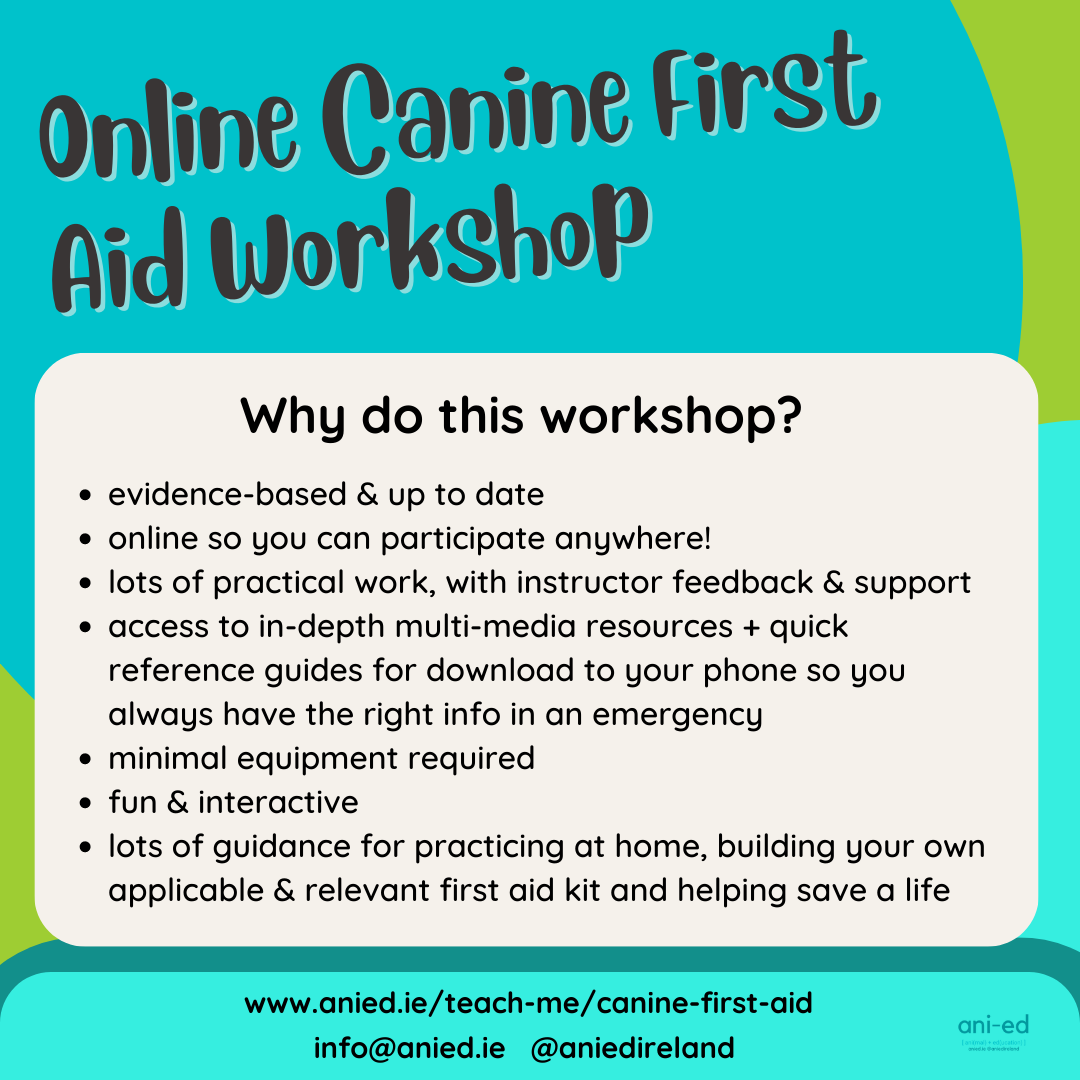
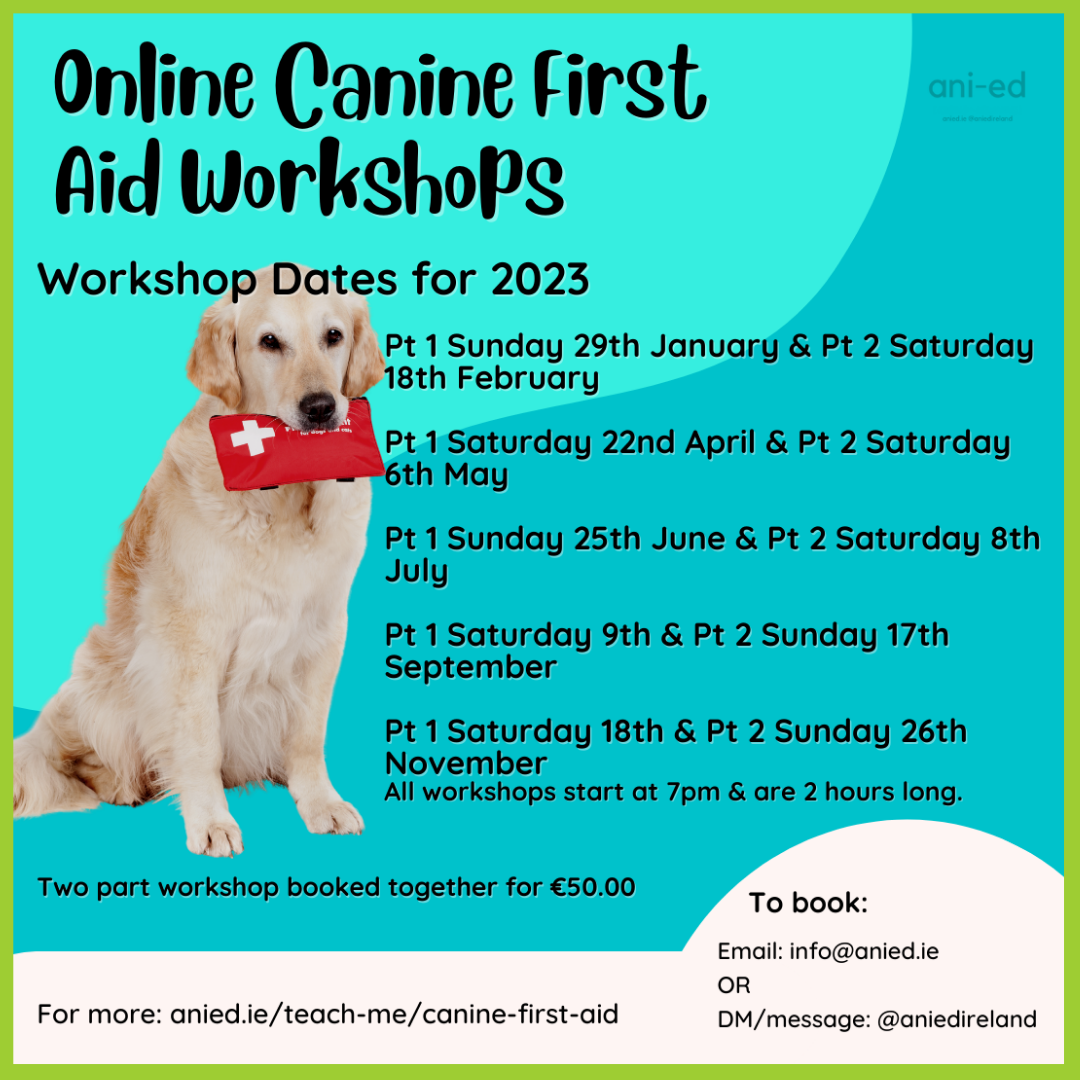
I deliberately schedule our Online Canine First Aid workshops around this time of year so we get to talk about evidence based approaches to detecting, preventing and administering the right first aid for HRI (Heat Related Illnesses). This is emphasised on this workshop because there is so much BS spread about dealing with HRI, some information is inaccurate but some is downright dangerous.
We talk about so much more but while HRI are on everyone’s mind, and timelines, at this time of year, join us for our next Online Canine First Aid workshop. You might just save a life some day!
This fun workshop with in-depth resources costs just €50.00 but if you volunteer with a recognised rescue organisation, you can join in for free!
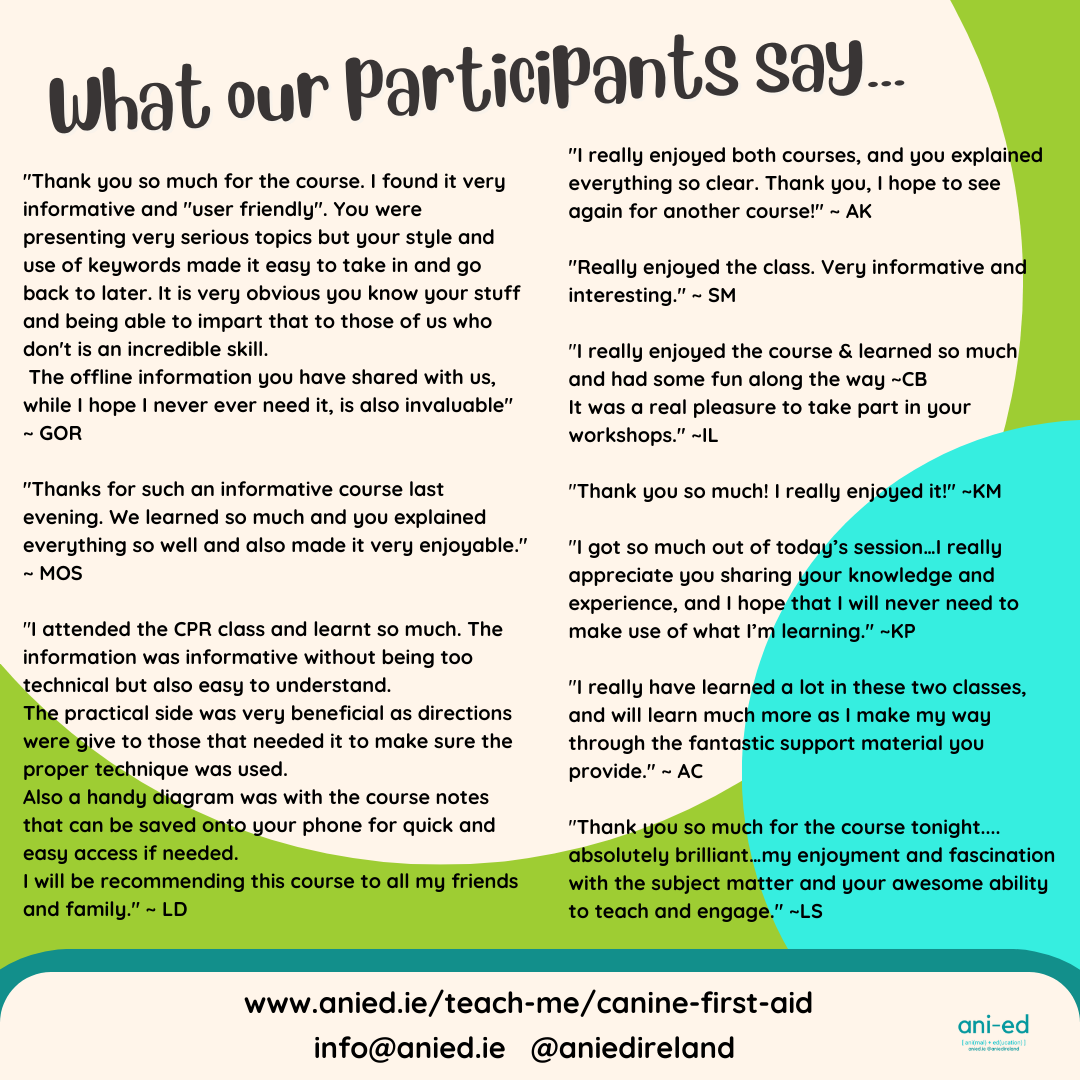
Doing an online workshop won’t detract from your experience or skill building at all. Check out what our participants say:
You can message, email (info@anied.ie) or apply via the website link. If the June/July dates don’t work for you, join us on another workshop. Book today!
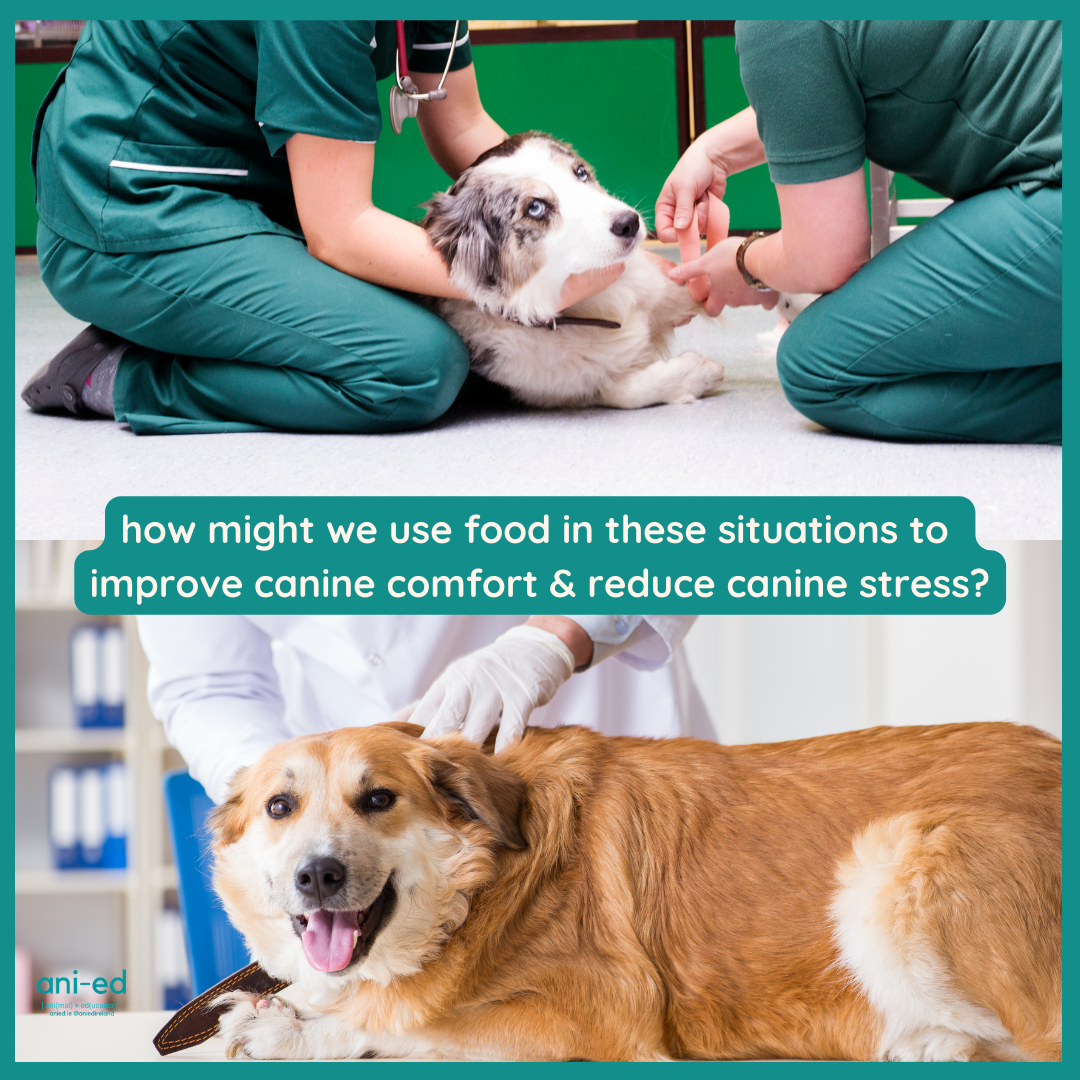
We were lucky enough to have Dr. Gary Landsberg speak about reducing stress for pets during vet visits.
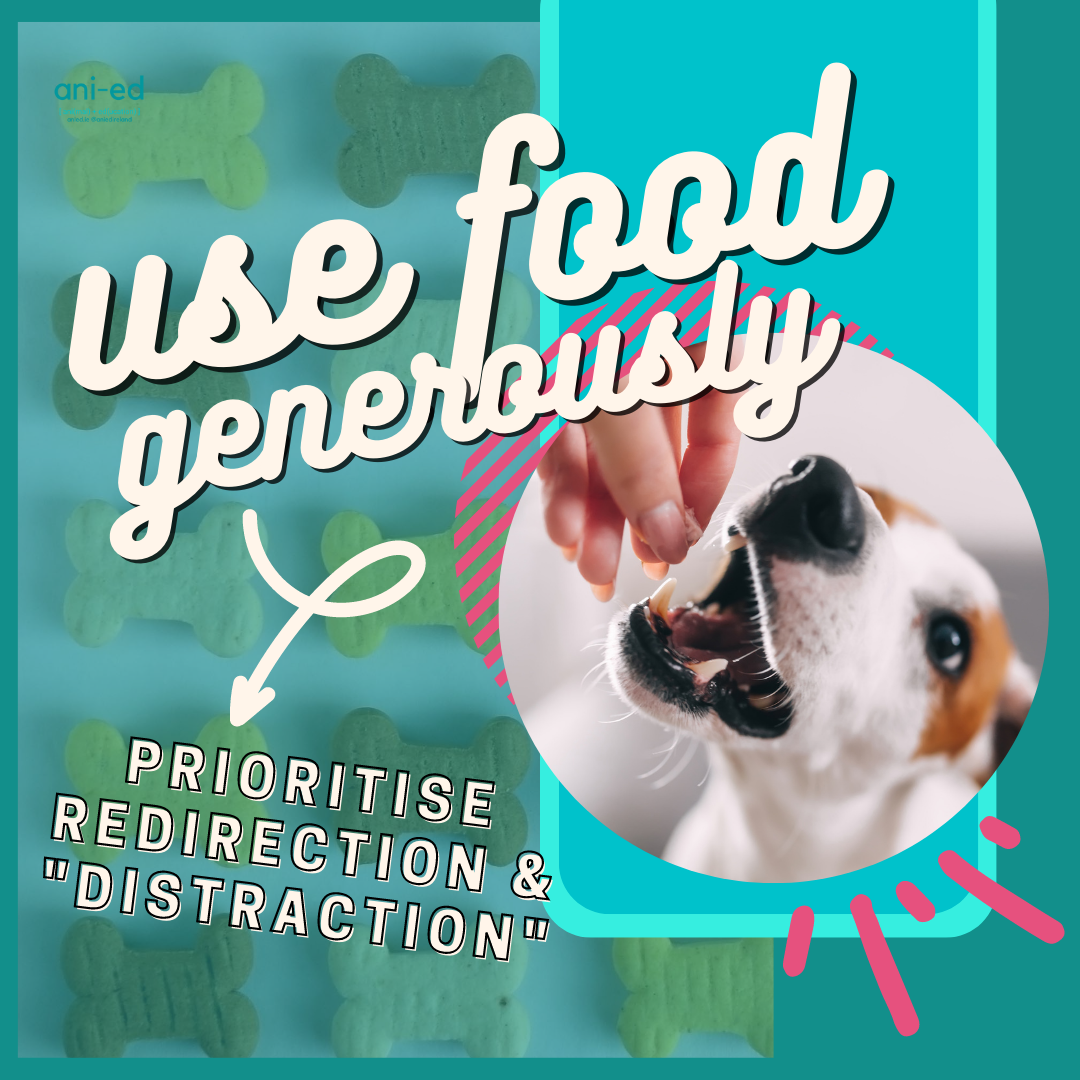
His promotion of the generous and extensive use of food during veterinary interactions struck me, and inspired.
Using food has always been controversial in dog training, with traditional beliefs dictating that dogs should do our stuff out of their love for us . I am a proud user of food, as reinforcers and otherwise, in a lot of my teaching and interactions with others. But sometimes, it can feel more effective to downplay food use, at least a little, in some contexts when attempting to get our message across.
Food is a tool, and like any other tool its use is sometimes very effective and necessary, and at other times may contribute to issues or be applied improperly.
Dr. Landsberg unashamedly recommended the use of food across every stage of the dog’s vet visit, and before and after.
While there might be some classical/respondent benefits, as in the dog associates the veterinary context with yummies, the real benefits, in the examples we discussed during his talk, came from redirecting the dog’s attention away from procedures.
Essentially, procedures, interactions, and their surroundings, pale into the background as the dog is “distracted” with yummy foods and absorbed in eating behaviours.
Here’s an example with a then foster dog, having her ears cleaned and treated:
In some situations, a dog can’t be given food due to preparations for anaesthesia, for example.
Dr. Landsberg argues that more recent evidence supports shorter fasting periods and that food, carefully introduced and used, may offset stress that could be even more damaging in terms of sedation and anaesthetic. The small risks may be outweighed by the careful use of food, particularly lappable foods which pass through the body more rapidly (Westlund 2015).
Stress can inhibit appetite:
For many dogs, the vet-experience is sufficiently stressful that they do not want to eat, even the tastiest treats.
Where a dog can’t eat due to stress or illness and nausea, employ other tools to prevent them experiencing any further stress associated with the veterinary context.
Food, glorious food
This might include anxiolytic medication, sedation, environmental or olfactory redirection, and time. Give them more time.
Simultaneous conditioning may lead to overshadowing, so while the dog isn’t learning new skills, we are prioritising maintaining their comfort. This may lead to improved comfort for subsequent visits and help facilitate more efficient learning of new skills (Riemer et al, 2021).
A sufficiently and significantly aversive experience can also impact other stimuli present. Including food. Feeling scared and the veterinary context may ‘poison’ the presence of food (Murrey 2007). Often when dogs are this distressed they may not eat but care should be taken in introducing food, that’s refused, and that food being associated with this stressful context.
Use high value foods, but not completely novel foods. Make food available rather than attempting to lure directly or encourage them to eat.
Fun with Food at every stage
Prepare for vet visits not just so you are ready to go, but also so that you have a plan in place. Run through each step of the entire process and prepare in advance for what you’ll need and your approaches, including your Plan A, Plan B, Plan C and so on.
Use food scatters & breadcrumb trails, taught targeting behaviours and even toys when moving into and through, including on and off the weighing scales.
By practicing clear communication, your dog learns they are being listened to. When your dog moves away from lapping or snuffling, stop. They learn that stopping with eating leads to a pause in the proceedings and they don’t need to struggle or aggress to take a break.
Have some play and fun at the end too. This allows for releasing some tension and helps form positive last memories of their time there.
There are lots of caveats to all of this because of the individual nature of behaviour, and these contexts. But using food appropriately should be at the top of our list of tools with the primary goal of redirecting the dog’s focus to make the veterinary experience just not such a big deal.
Instead of thinking that so-called distractions are enemies to training, we become participants in our dogs’ curiosity and exploration. Viewing their world through their lens and their experiences.
Learn about the things that interest your dog, that engage their nose, that they enthusiastically orient toward and approach. I know Decker will be interested in thicker, longer clumps of grass, for example, as that’s likely where other dogs have marked. Drawing his attention to these provides sniffs, social outlets, and over-marking opportunities.
When you spot things, draw your dog’s attention to them by excitedly cueing “What’s this?!” and indicating the area of interest.
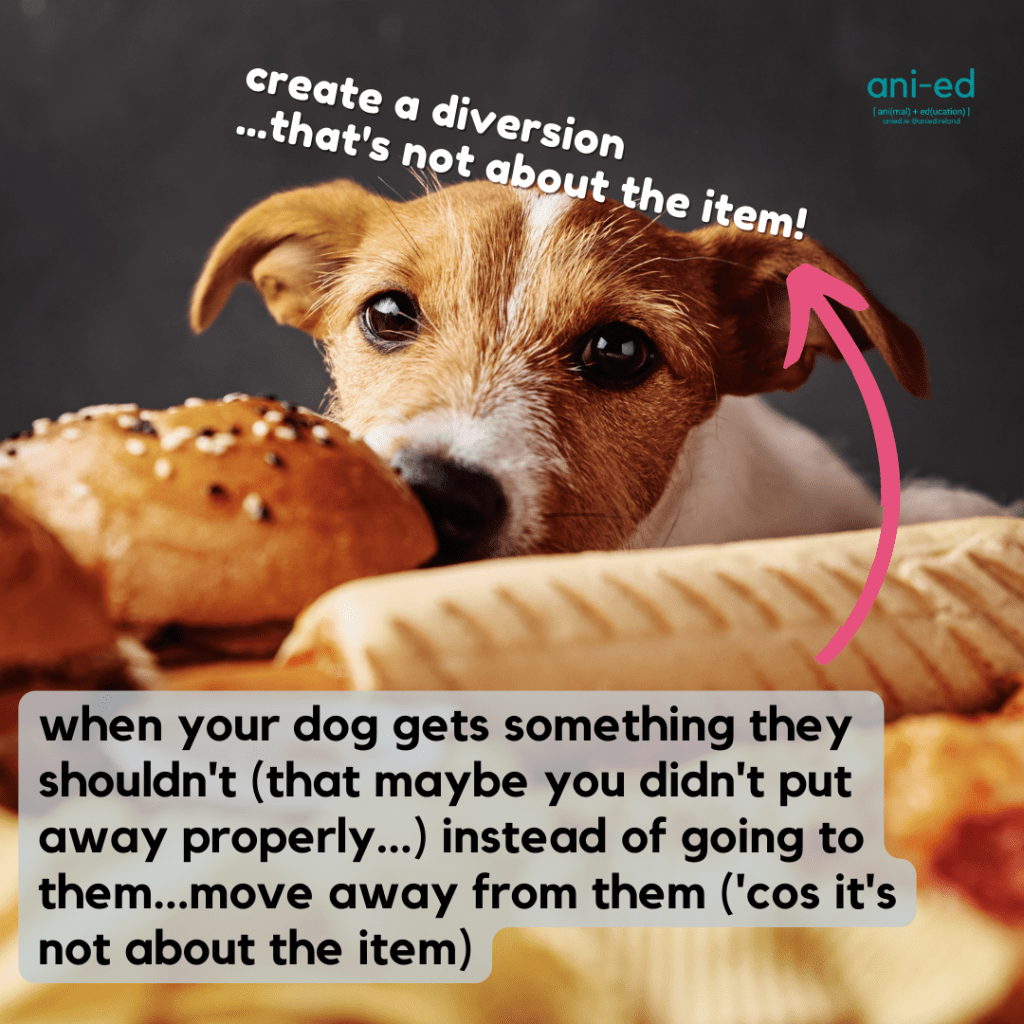
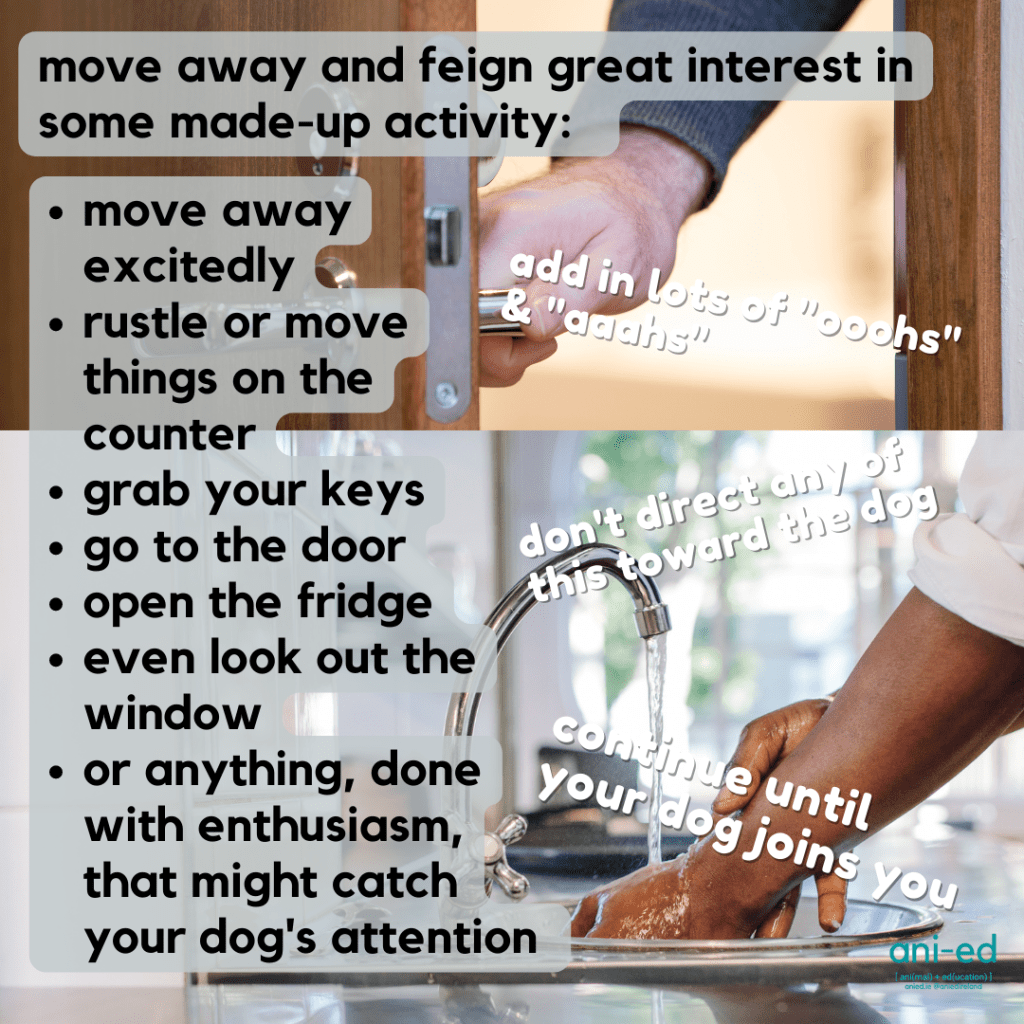
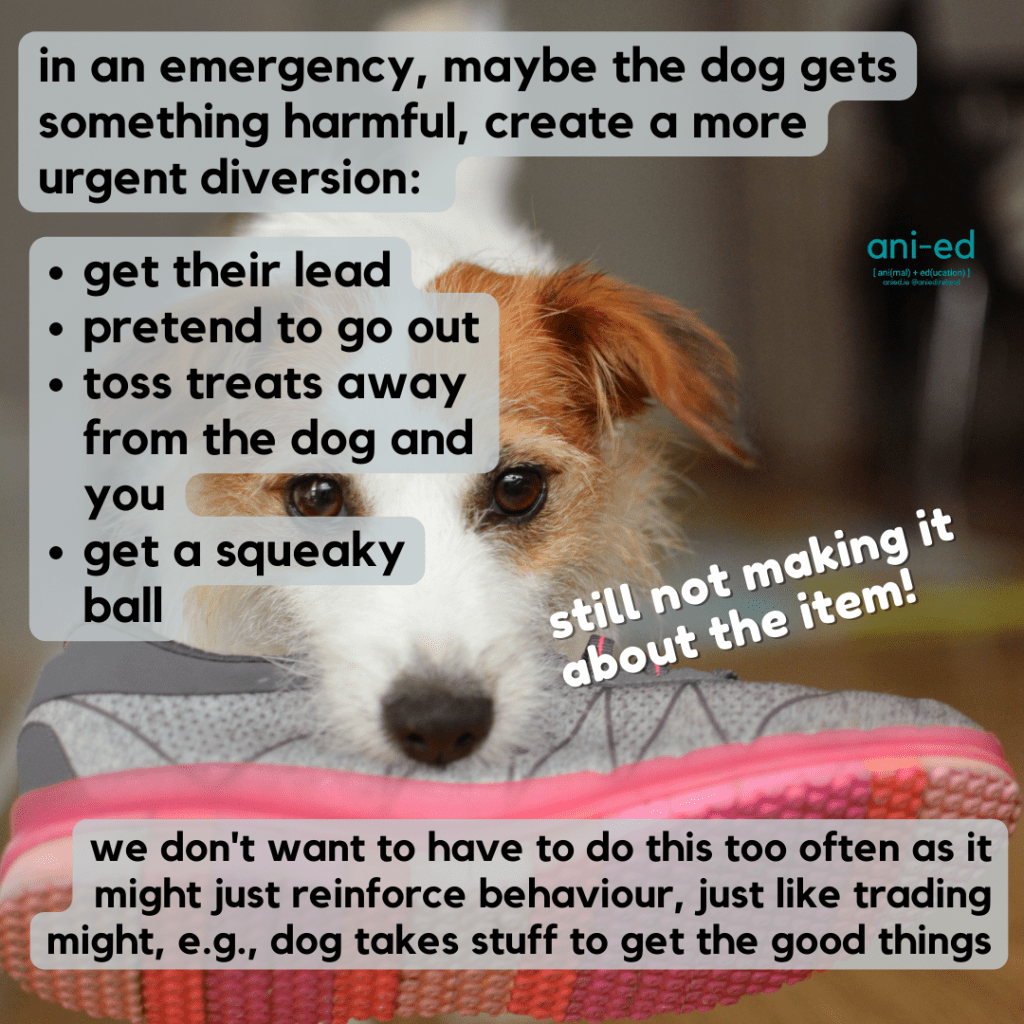
Not only is this fun and relationship building for you both, but also a simple way to redirect your dog’s attention from goings-on that might be stressful. Turning them away and engaging in an enjoyable activity can help to manage their behaviour, and help prevent and recover from stressful interactions.
Lots of practice when there’s nothing going on, and just for fun, helps to change your mindset, in participating with your dog. And shows your dog that you won’t be nagging them to move on or ‘pay attention’, and instead that you’re their team-mate and partner in exploring your world together.
No one tool ‘works’ for every context, and sometimes it’s not possible or safe to use environmental redirection. But when it is, try the What’s This?! game, even if just for fun
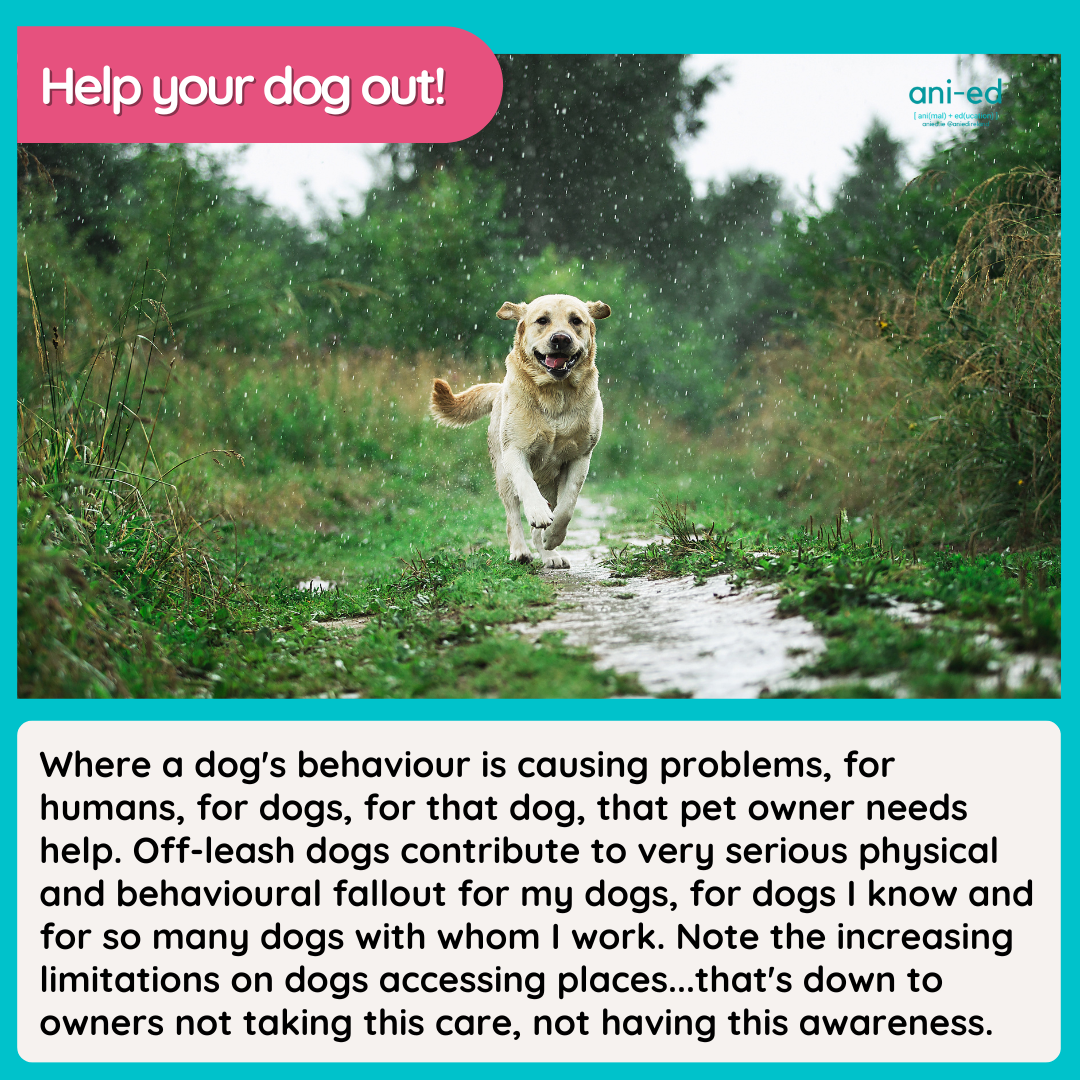
In response to our recent post about ways to help other dog owners out, the resounding difficulty people reported was the behaviour of off leash, out of control dogs. We agree, this cultural oddity is a scourge, for sure.
While you might think or like to think that your dog is being ‘friendly’, nobody else needs to interpret that behaviour that way. Indeed, that’s because it’s not “friendly”. Imagine unfamiliar people running up to you, unsolicited, trying to touch you or engage you in an interaction. Would that be considered friendly? Nope…and possibly unlawful.
It’s not even friendly dog-dog behaviour. But because it’s become normalised, the wider dog owning public might think it’s ok or acceptable, and not recognise the need to provide their dog with help, support & guidance.
Recently, Decker, who is 11, was jumped on, from behind and unexpectedly, by a large adolescent dog whose owner was several hundreds of metres away. This young dog landing on my older boy’s lower back has resulted in some stiffness and tightness, particularly to his TTA knee which is fully recovered and in great shape other than some minimal arthritic change, as to be expected. He’s been on pain relief and appropriate rest so it isn’t exacerbated. While there will be no behavioural fallout for Decker from this, if this had happened to the dog I was working with just after this incident, it would have sent us backward at least six months in our program.
Allowing this to happen, is not “socialisation”, it’s not benefitting your dog, and it’s most certainly damaging to other dogs and their humans. If your dog can’t manage the distance or situations at which you expose them to other dogs without lunging, pulling, staring, running up to, getting excited or anything other than some glances, some sniffing and information gathering and moving on, your dog needs help.
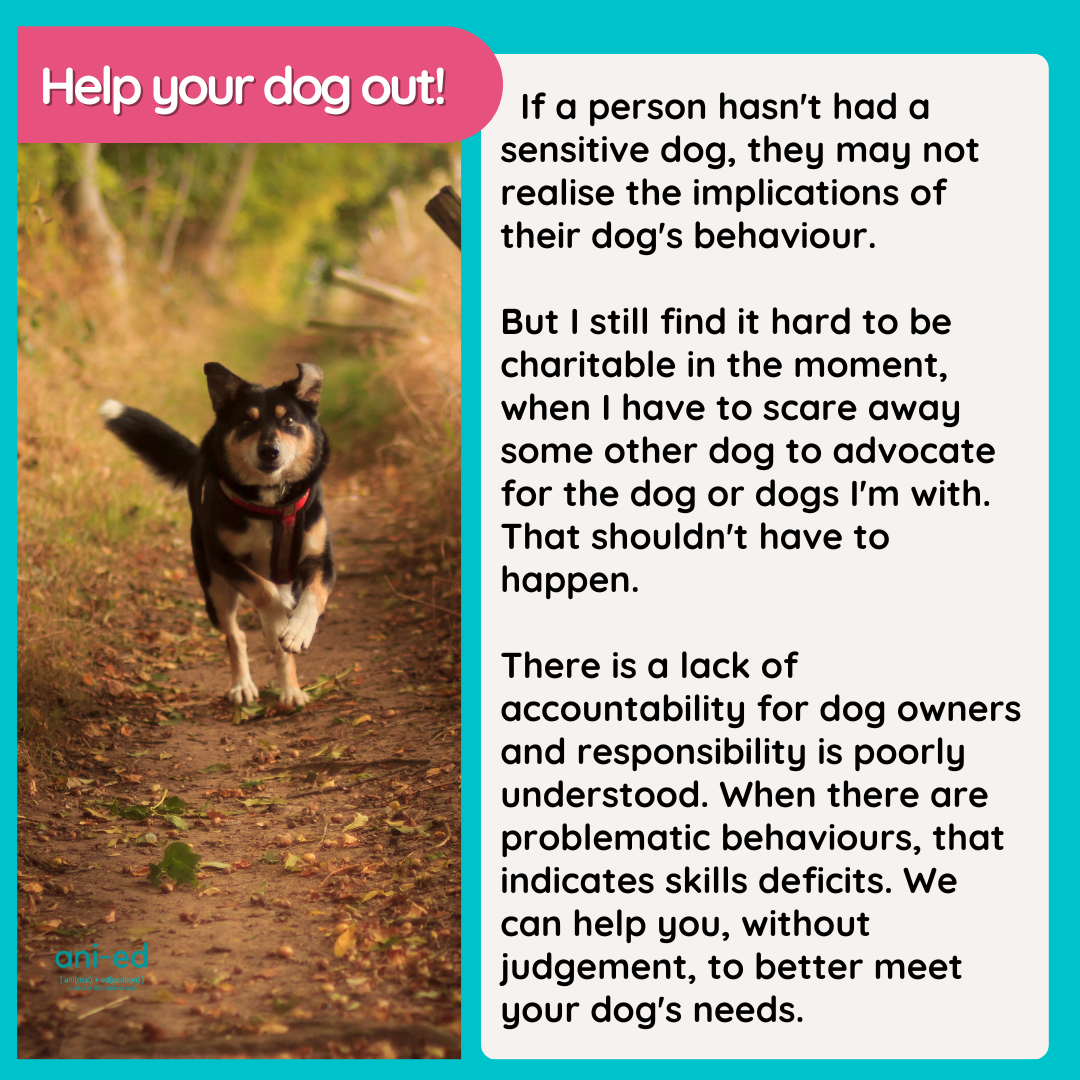
You might not be aware and that’s ok. But, you need to understand that there are physical and behaviour implications to your dog’s behaviour…and for your dog.
If your dog approaches another dog, and that dog snarks, that’s on you and that tells you that your dog’s approach was inappropriate. The other dog is allowed to say NO!.
Even if your dog is a ‘puppy’, even if the other dog is off-leash, even if you own a “friendly” breed (that’s not a thing!), if you are allowing your dog to approach other dogs when that other dog did not solicit that interaction, your dog’s behaviour is the problem. And may put them at risk too. It’s up to you to step up, and you can, of course, do this to help your dog.
Another dog just being present isn’t license for you to allow your dog to approach. If your dog can’t just go on with their lives in the presence of other dogs, it’s up to you to put measures in place to control your dog, prevent them being a nuisance, to keep them safe…at a minimum.
Here’s the bottom line. We have disrupted dog-dog relationship development to suit us which means we have to take on extra responsibility in ensuring they have appropriate social guidance. It’s part of your meeting their needs.
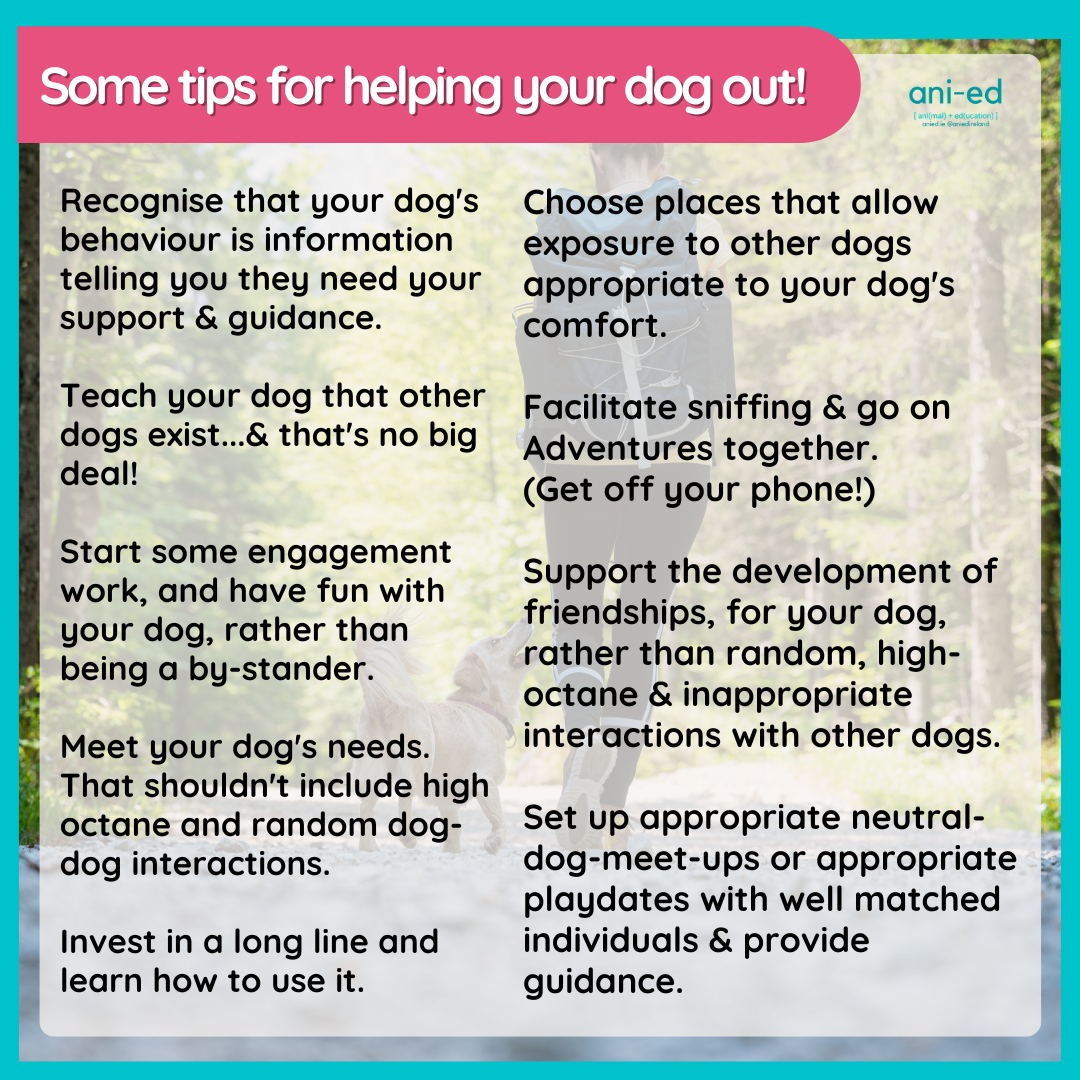
Help your dog out!
Recognise there’s an issue and that your dog’s behaviour is telling you they need extra support & guidance.
Learn to use a long line and think carefully about where you bring your dog to better meet their needs.
Meet your dog’s needs and that shouldn’t include high octane and random interactions.
Get engaged with your dog, get off your phone and have fun together. Be the fun, make the fun happen, nurture your relationship.
Teach your dog that other dogs exist…and that’s no big deal! For puppies, teach them that other dogs are “look, no touch” and teach adolescent & adult dogs that other dogs are none of their business.
Support your dog developing stable friendships with appropriate buddies, rather than random, high-octane and casual interactions.
Go Adventuring! Facilitate lots of sniffing and lots of dog-led fun.
Set up regular and appropriate neutral-dog-meet-ups and/or playdates with well-matched individuals. Provide guidance to nurture their developing social skills.
Get help!
We can help you help your dog in developing more appropriate social skills and in you meeting your dog’s needs, social and otherwise.
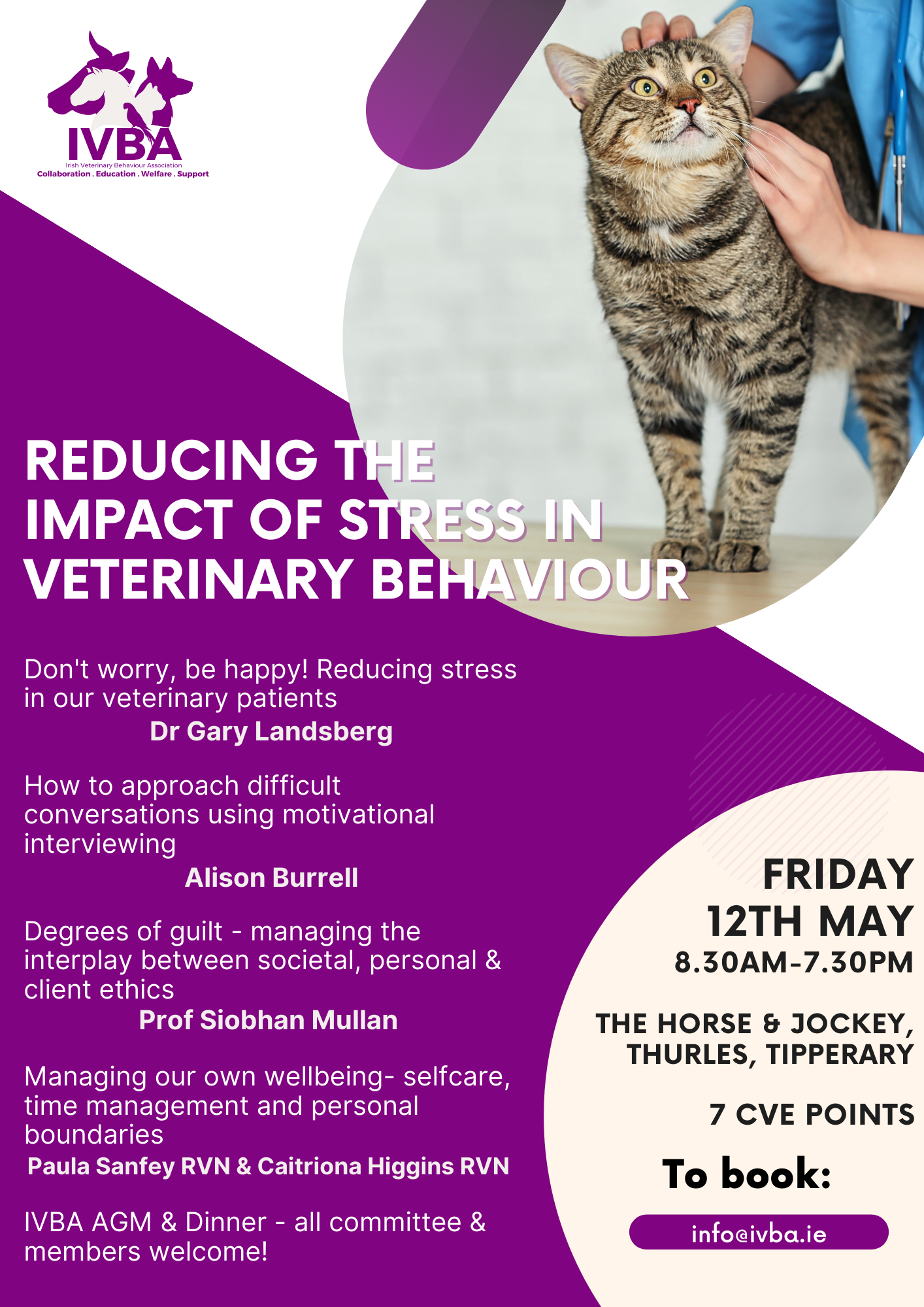
Anne from AniEd is the vice-chair of this exciting and young organisation. We can’t wait for this wonderful event, all about stress!
While we are always concerned about the stress experienced by the animals with whom we work, and we are covering that, but we are also looking at ways to improve our own management of stress in our work.
We have been tricked into thinking that “self-care” means jacuzzies and massage, and while those may certainly form part of your self-care provision, it’s really about your workplace.
Self-care starts with our workplaces; being paid properly, taking out breaks, establishing personal and professional boundaries, improved working conditions, skills and knowledge to cope with stressful situations. We’ve written about this before and really try to live it (here).
And that’s what our CPD day is for! We are exploring the management of stress in our animals, but also stress management skills for ourselves!
This is a great opportunity for all in veterinary and behaviour to come together, network and collaborate on gaining valuable skills relating to stress management.
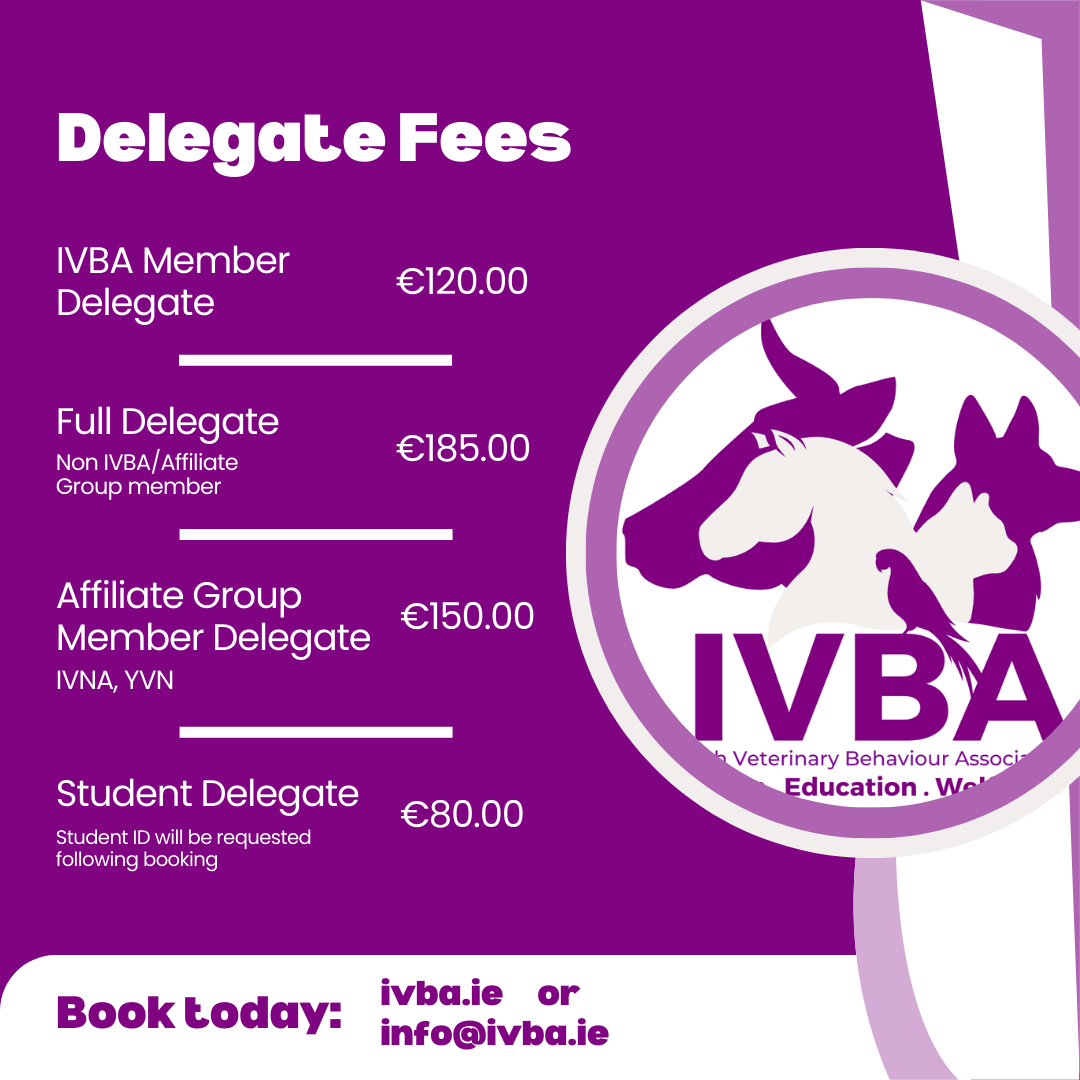
Download the event brochure here, and share with all those who may be interested.
Promoting IVBA is important for the animals of Ireland and the veterinary and behaviour industries. Help us spread the word!










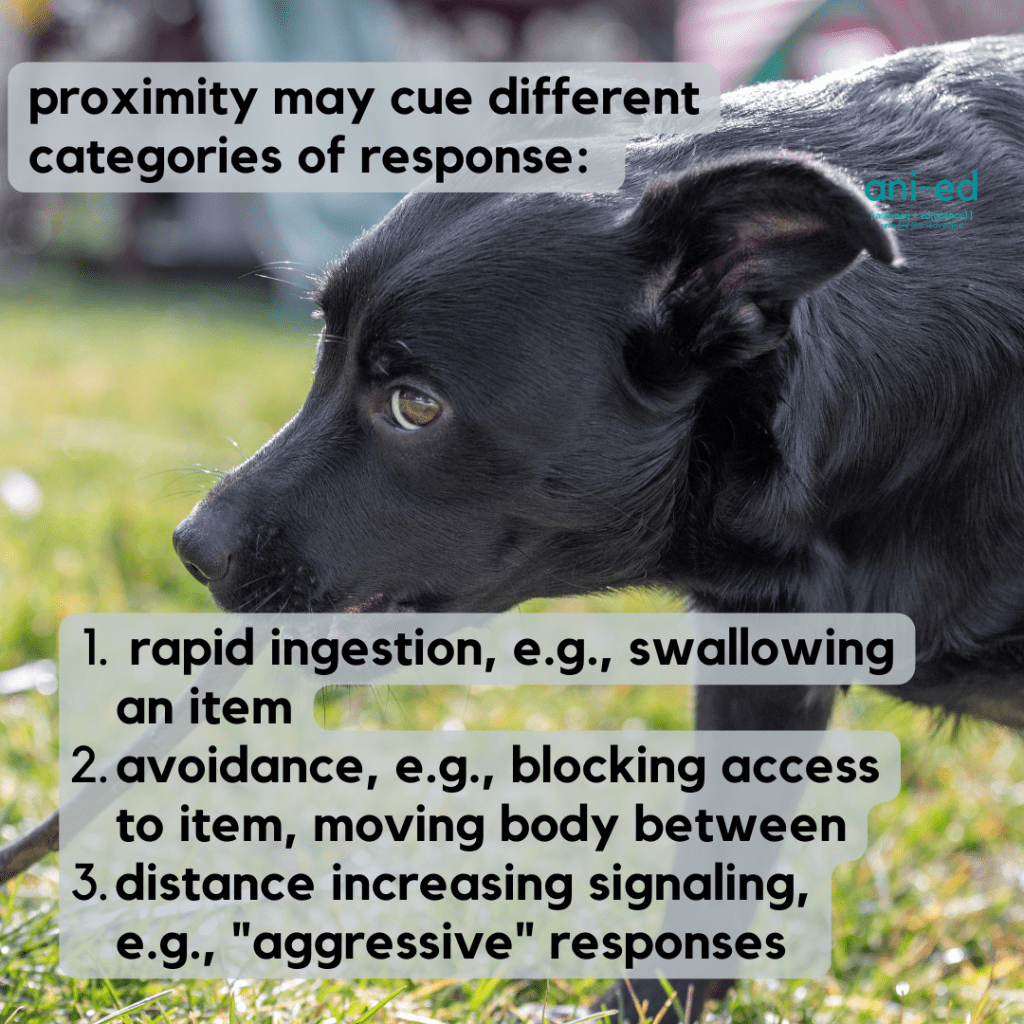
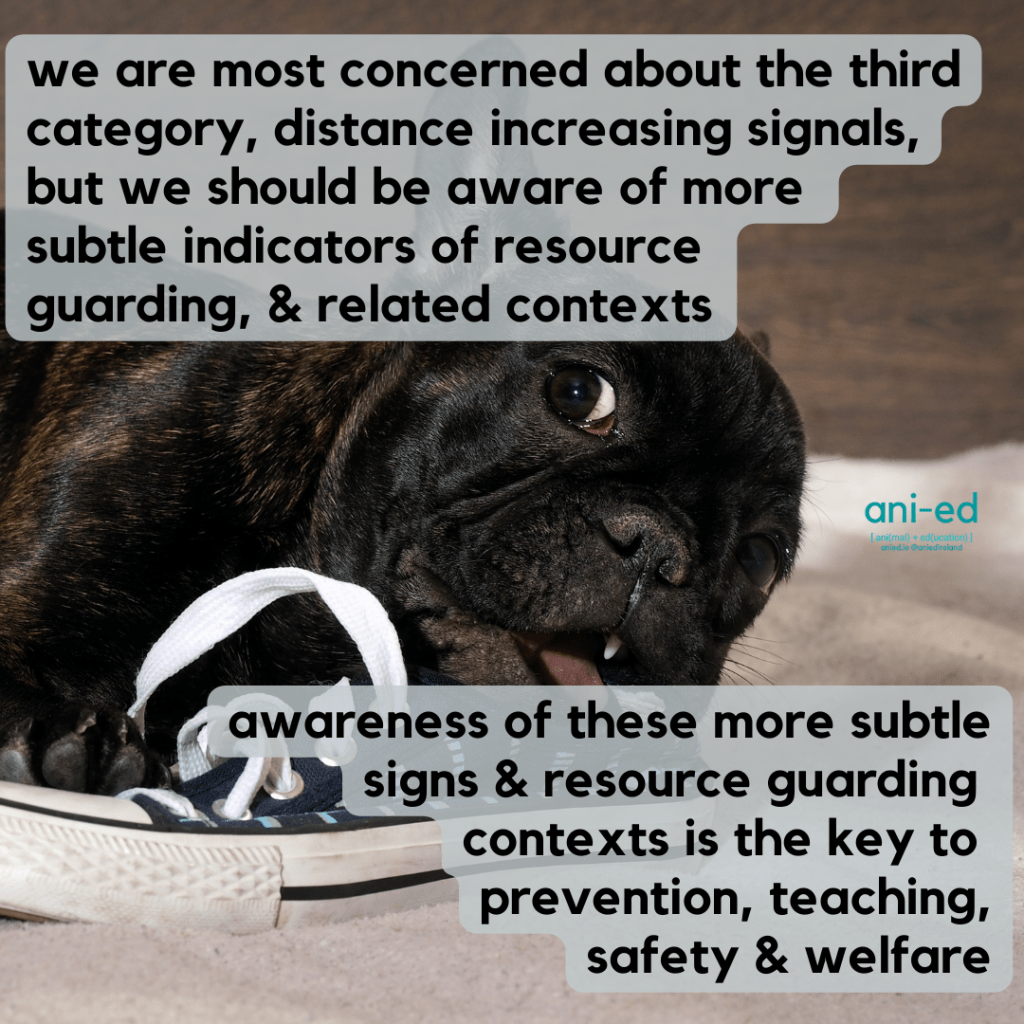
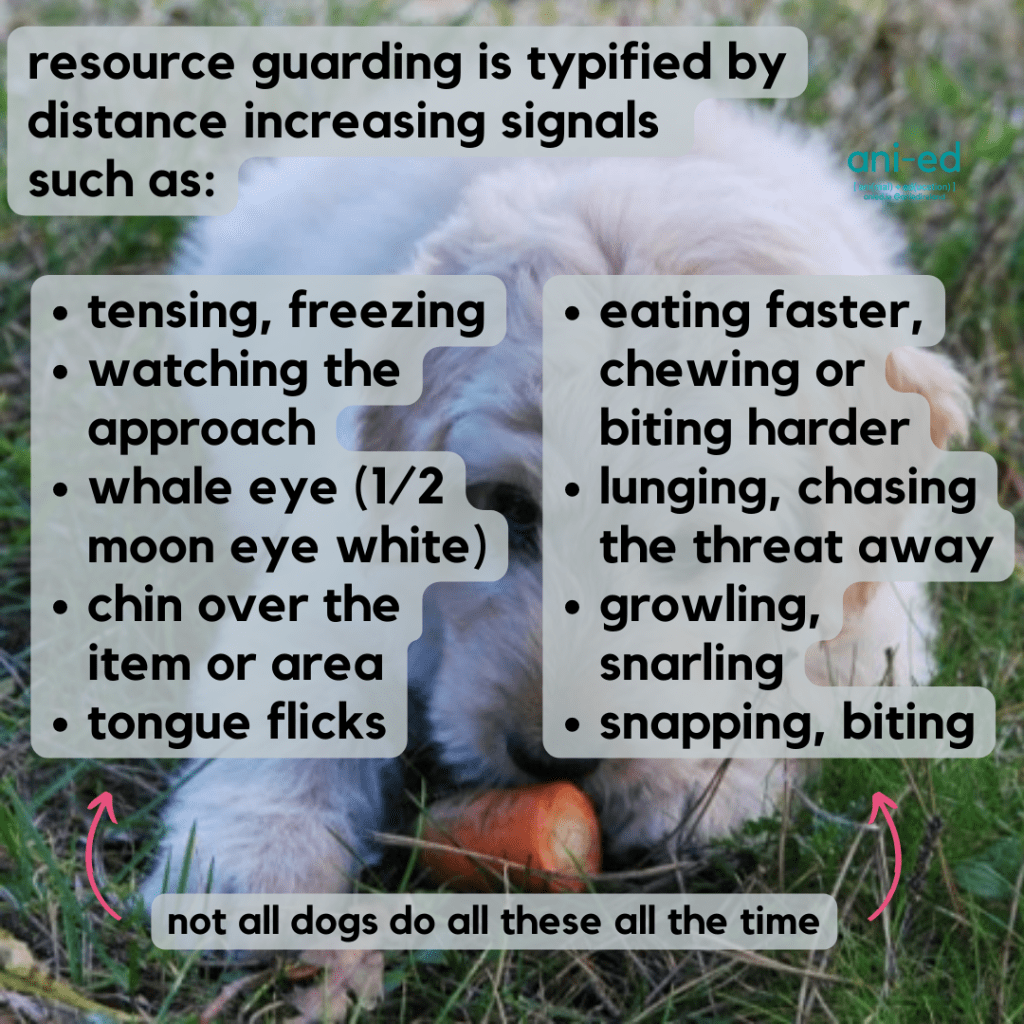
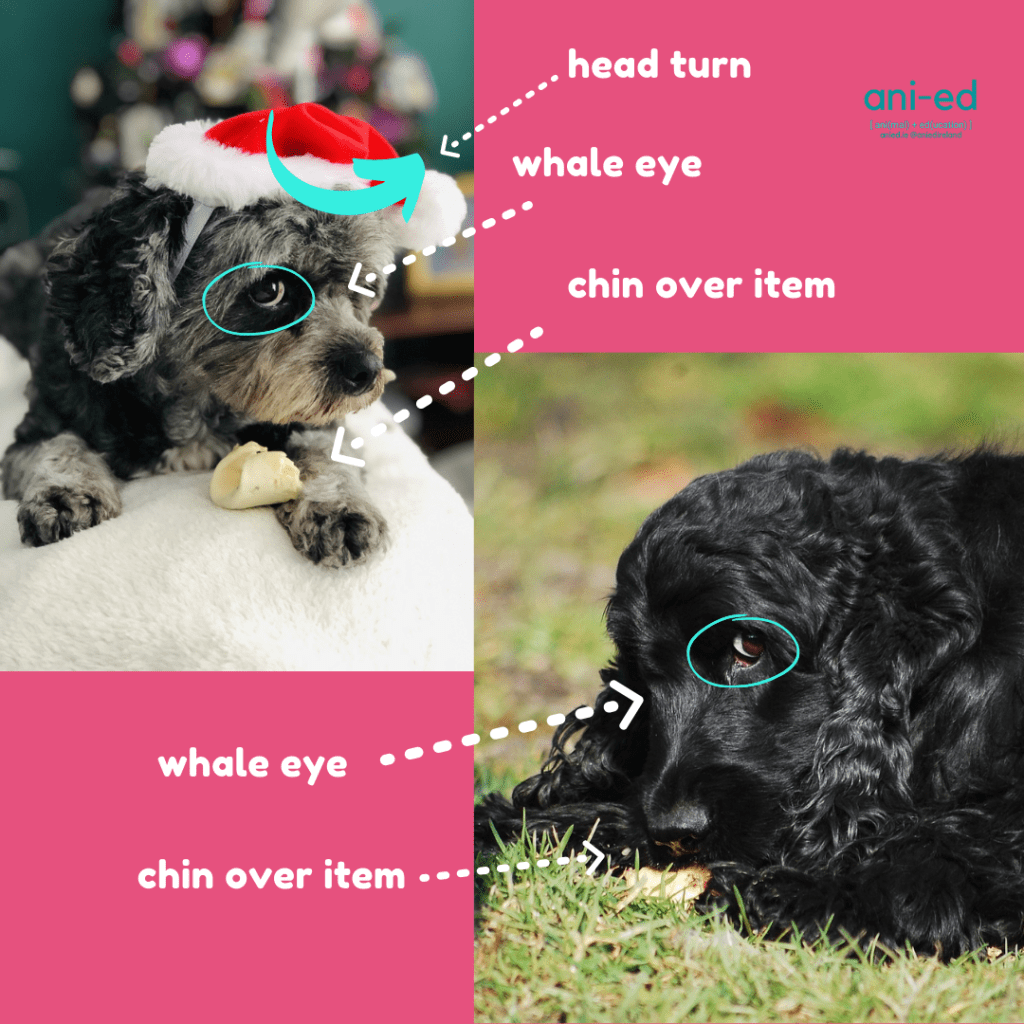




















 . I am a proud user of food, as reinforcers and otherwise, in a lot of my teaching and interactions with others. But sometimes, it can feel more effective to downplay food use, at least a little, in some contexts when attempting to get our message across.