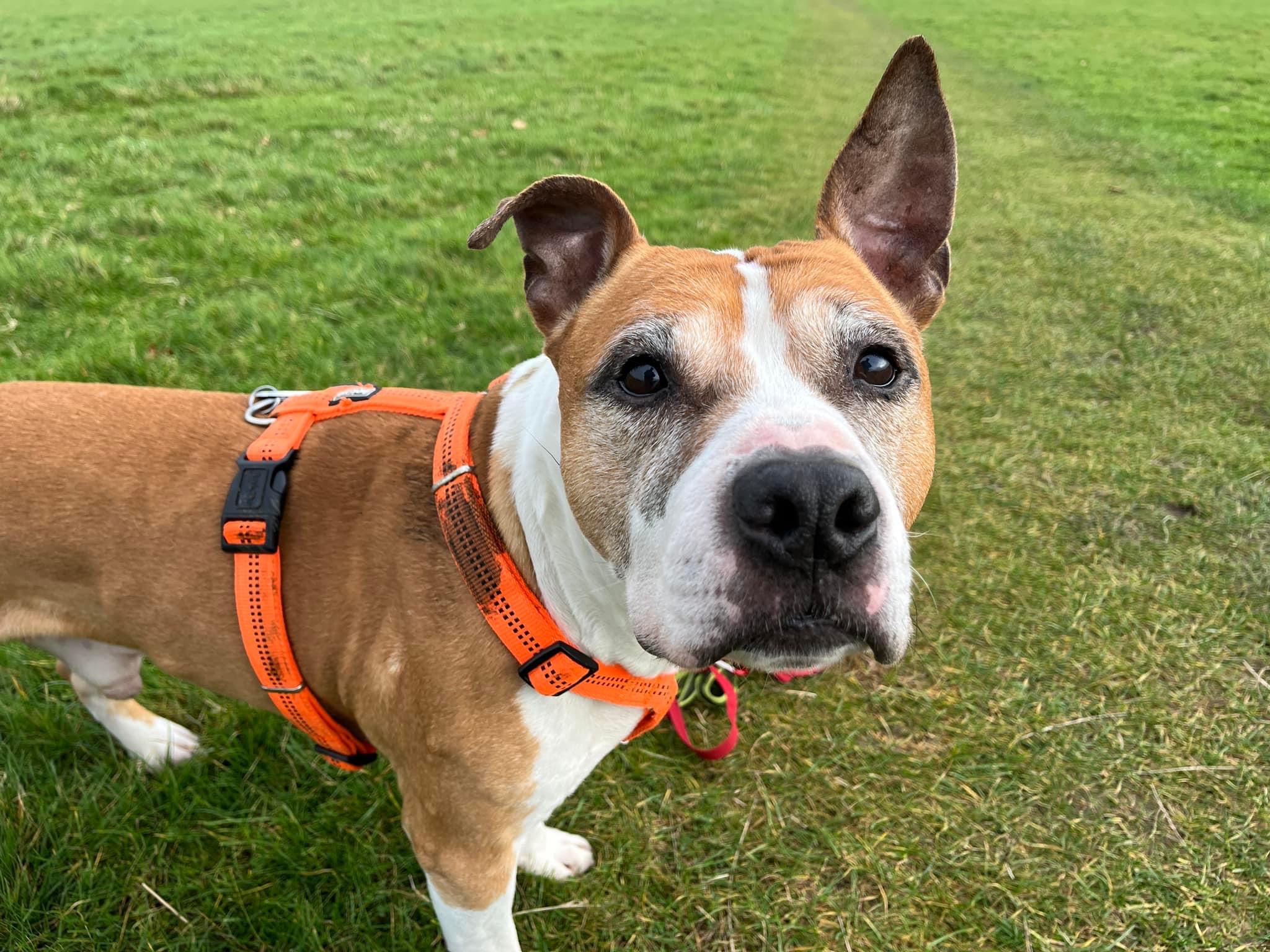
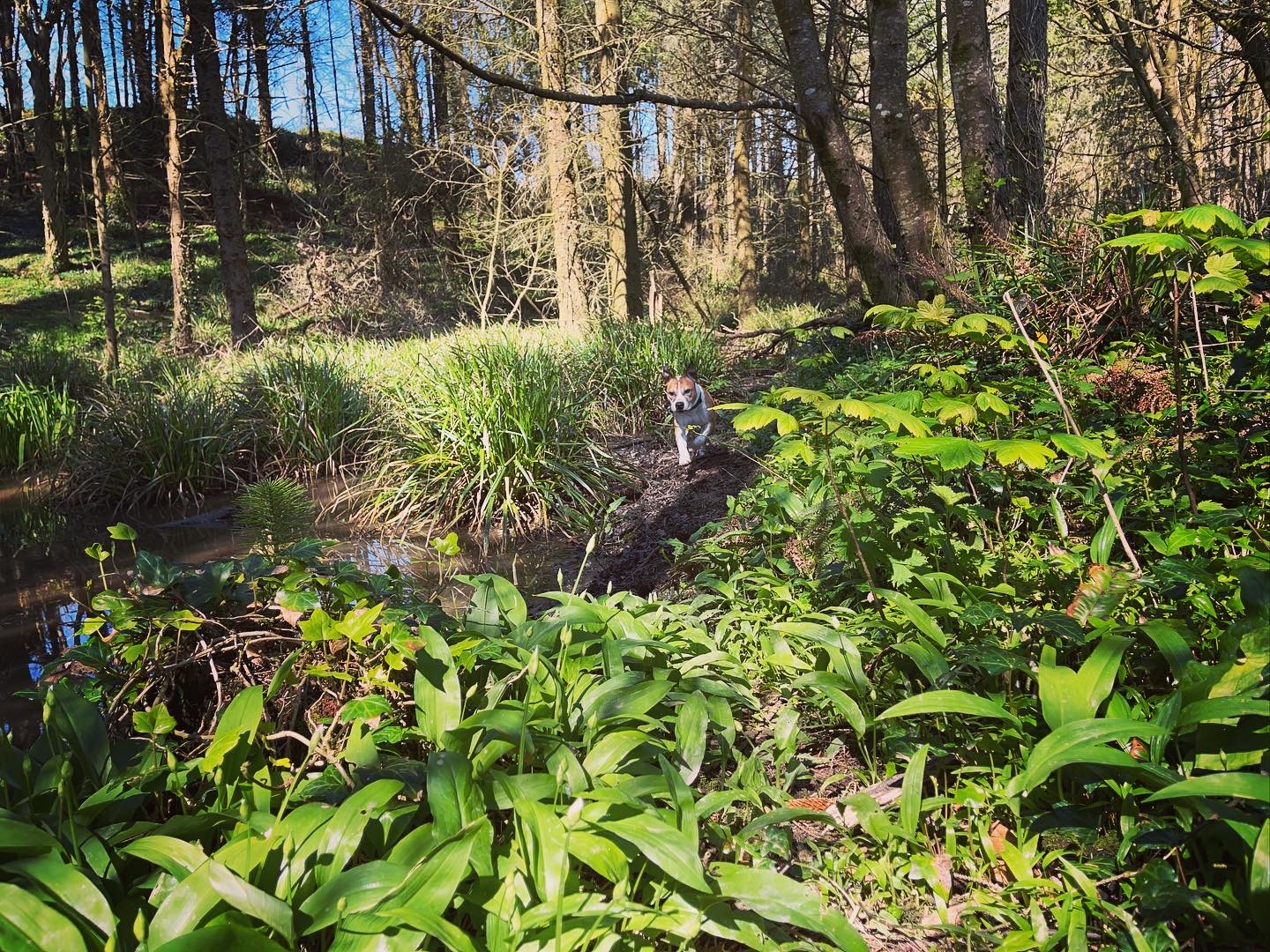
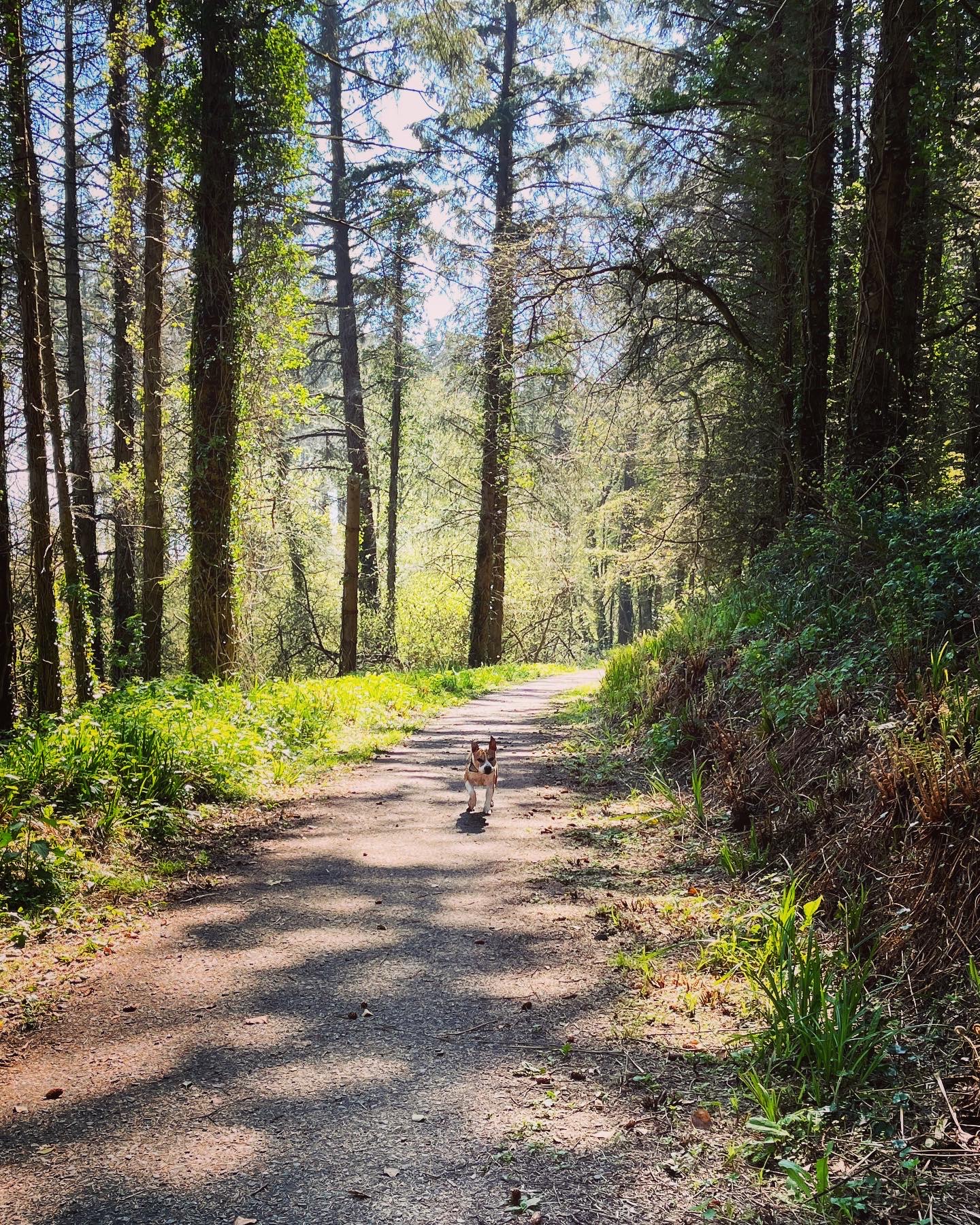
Recently, Deck & I took a detour for some adventuring in a new spot that we had never been to before. We found the beautiful Kiltennel Bay & forest walk, with a beach, lots of forest trails, streams and pond.
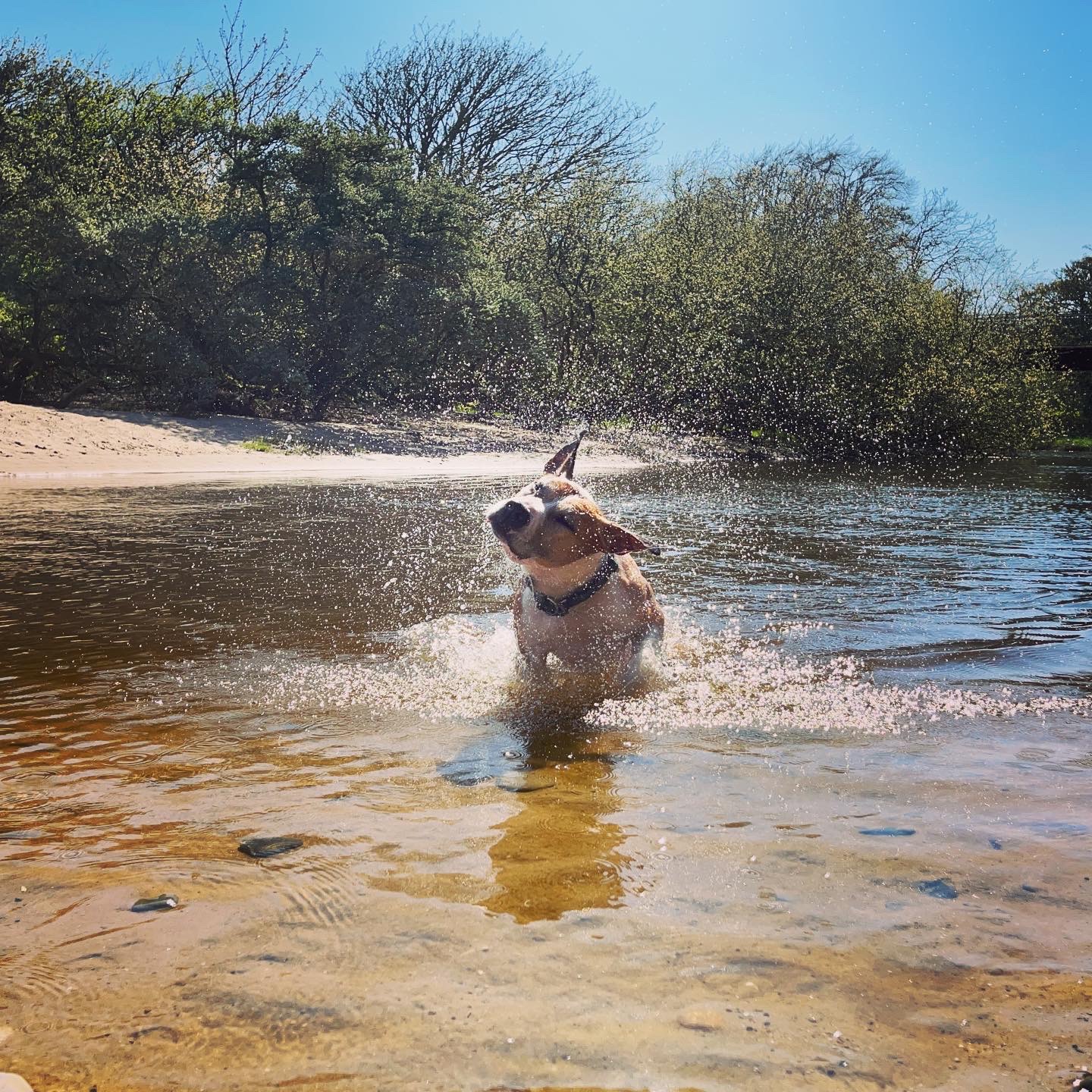
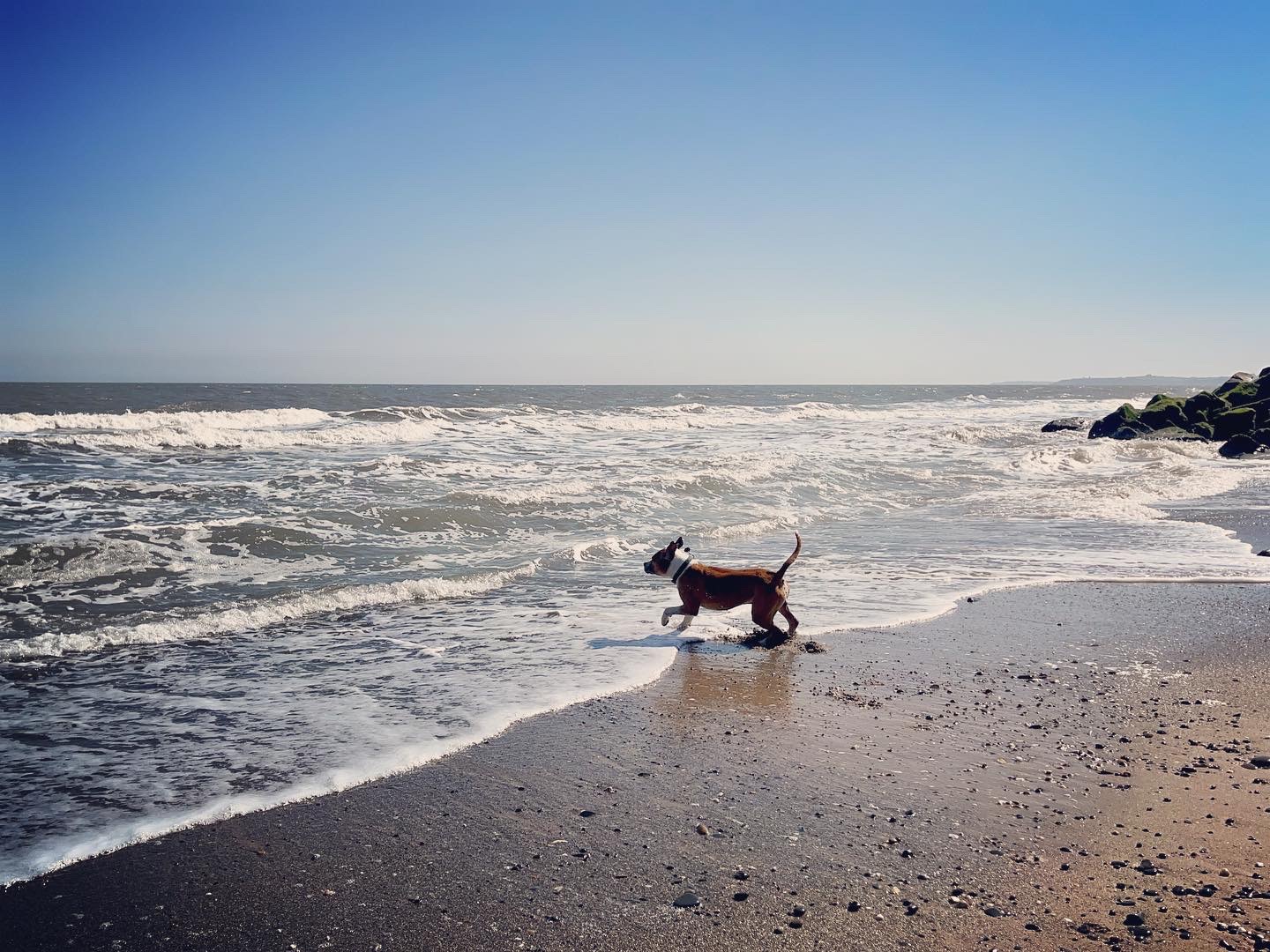
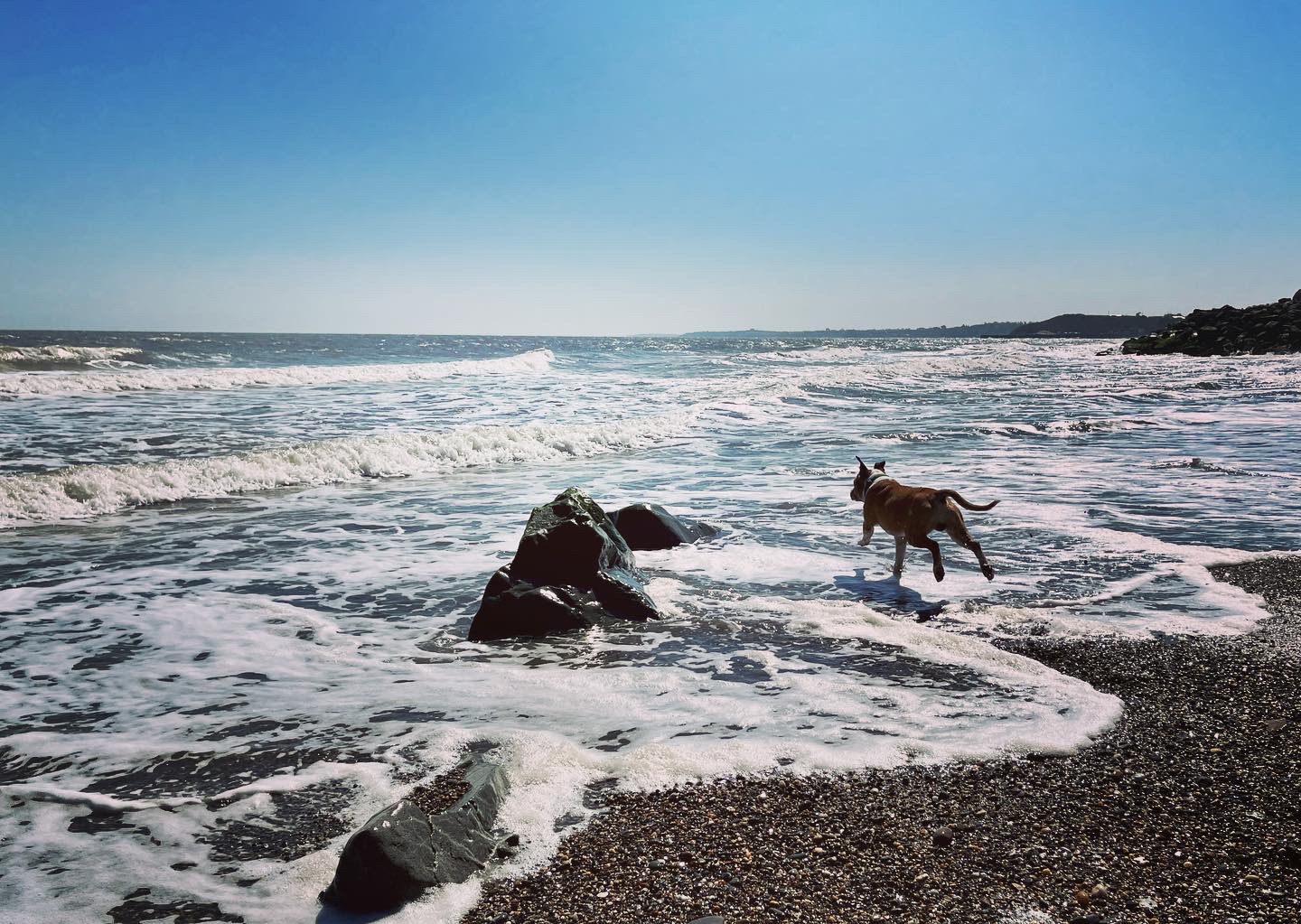
Decker sampling all the surf & turf!
When we go to an unfamiliar place, I take care with Decker’s access to water until we better understand his swimming comfort. And we also take care to get to know the dog walking and handling culture in a new area.
Decker is very environmentally sound and super-neutral with other people, dogs, animals and goings-on, so that’s not really my concern. But I want to advocate for his comfort so that we can maximise our enjoyment of this natural beauty spot. We don’t approach or harass anyone else, and don’t allow anyone else do that to us. We just want to fun in our world together!
As we wandered around for a couple of hours, we met lots of dogs out with their humans. And who could blame them?! Such a wonderful adventuring destination!
When another dog, person or anybody appears, that’s a cue for Decker to return and engage with me.
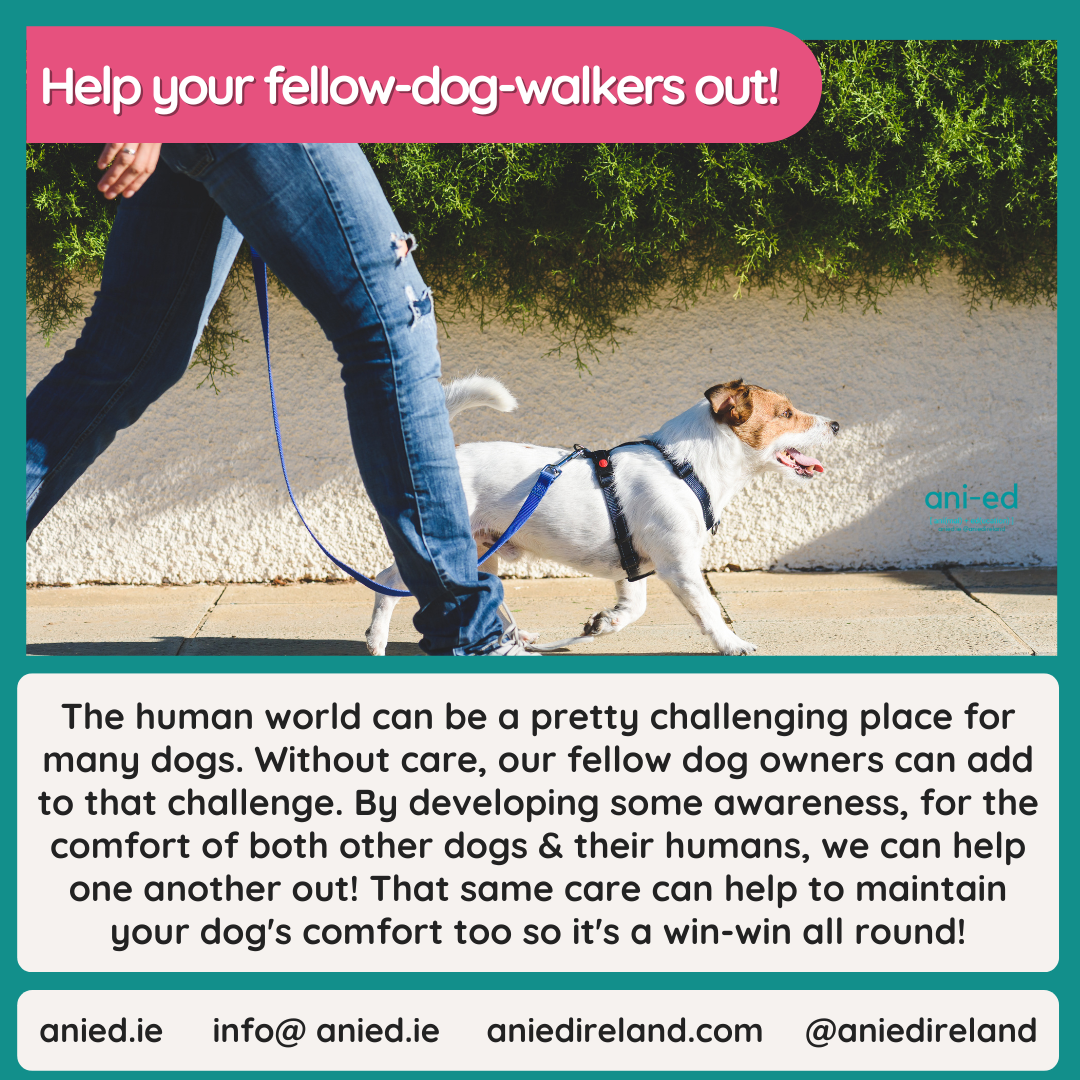
To help maintain the comfort of others, when another dog appears, he returns and we leash up. And then we politely move aside or make it as easy for the other dog to pass by in peace.
Some of the trails were just a couple of metres wide so making space wasn’t always possible.
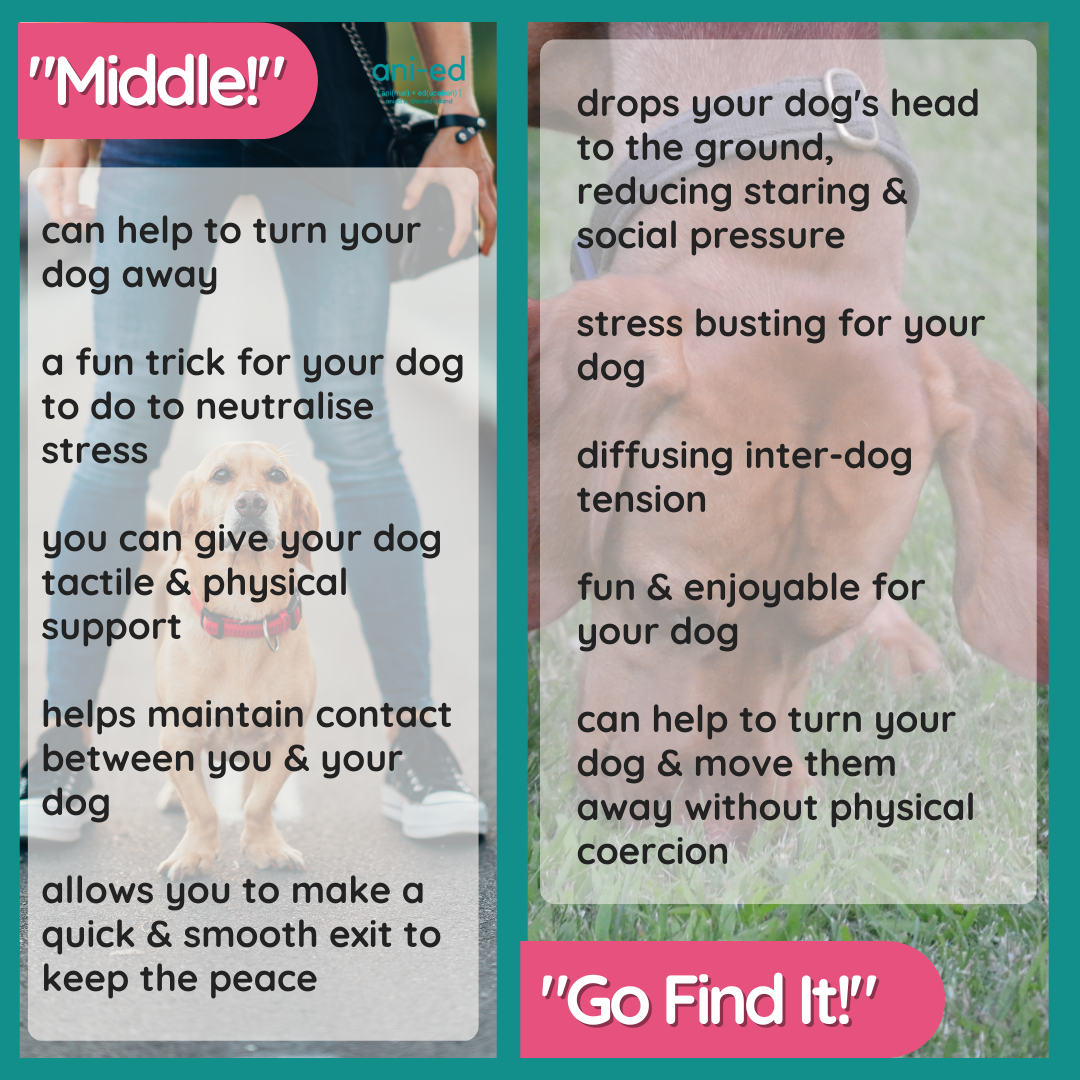
As a group of walkers approached with a little dog, Decker returned to me and they leashed their dog. I cued “Go Find It!” and tossed a couple of treats into the ditch, turning Decker’s back so the dog could pass.
The little dog’s owner commented, in surprise, that her little dog didn’t make a sound. The little dog quietly passed, glancing at Decker’s back end, and their human continued to marvel at her dog’s performance.
I cheered them on and wished them well, and was happy that our polite-dog-routine helped this little dog out.
And we can all help one another out!
By developing some awareness in how we can help one another out, without judgement, we can maintain everyone’s comfort.
Behaviour isn’t “good” or “bad”; behaviour is information from the dog telling us about their experience of the situations to which we expose them.
Judging other pet owners is a go-to in real life and online. But it doesn’t have to be that way. The notion that “there are no bad dogs, just bad owners” is inaccurate and damaging. Dogs, and their people, are responding to environmental conditions and other dog walkers and passersby are part of that too! By changing our own behaviour, and attitudes, toward other dog walkers, we can help everyone experience improved comfort while out and about.
There are lots of ways to help, be polite, and most of all, be kind.
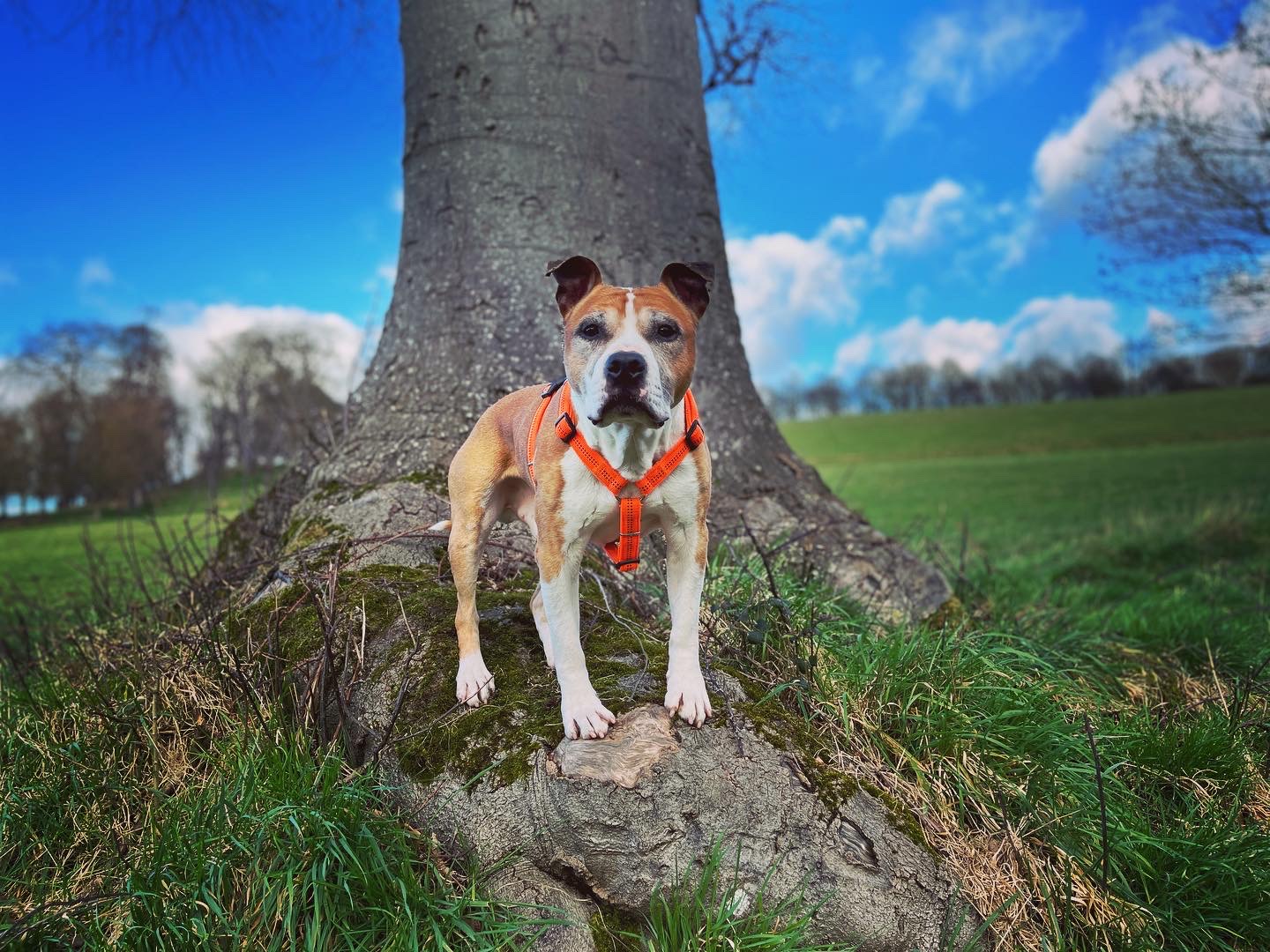
Asking your dog to jump up on a higher surface, such as this ditch can create space for others to pass.
Teach your dog these behaviours when there are no distractions around, so that your dog learns the patterns when they’re most comfortable.
Practicing lots to establish “middle” and “Go Find It!“, and then cueing those games each time a distraction appears, will have your dog orienting to you cued by the appearance of another dog or distractions.
We can be polite even when out without our dogs. Our behaviour can have a big impact on other dogs’ comfort.
With a little compassion and less judgement, plus some behaviour change, we can support and encourage other dog owners. We’re all in this together and, we never know when we might need that same compassion, support & kindness.
As someone who owns a very special and much loved senior dog, the promotion of improved enrichment for seniors is near and dear to my heart.
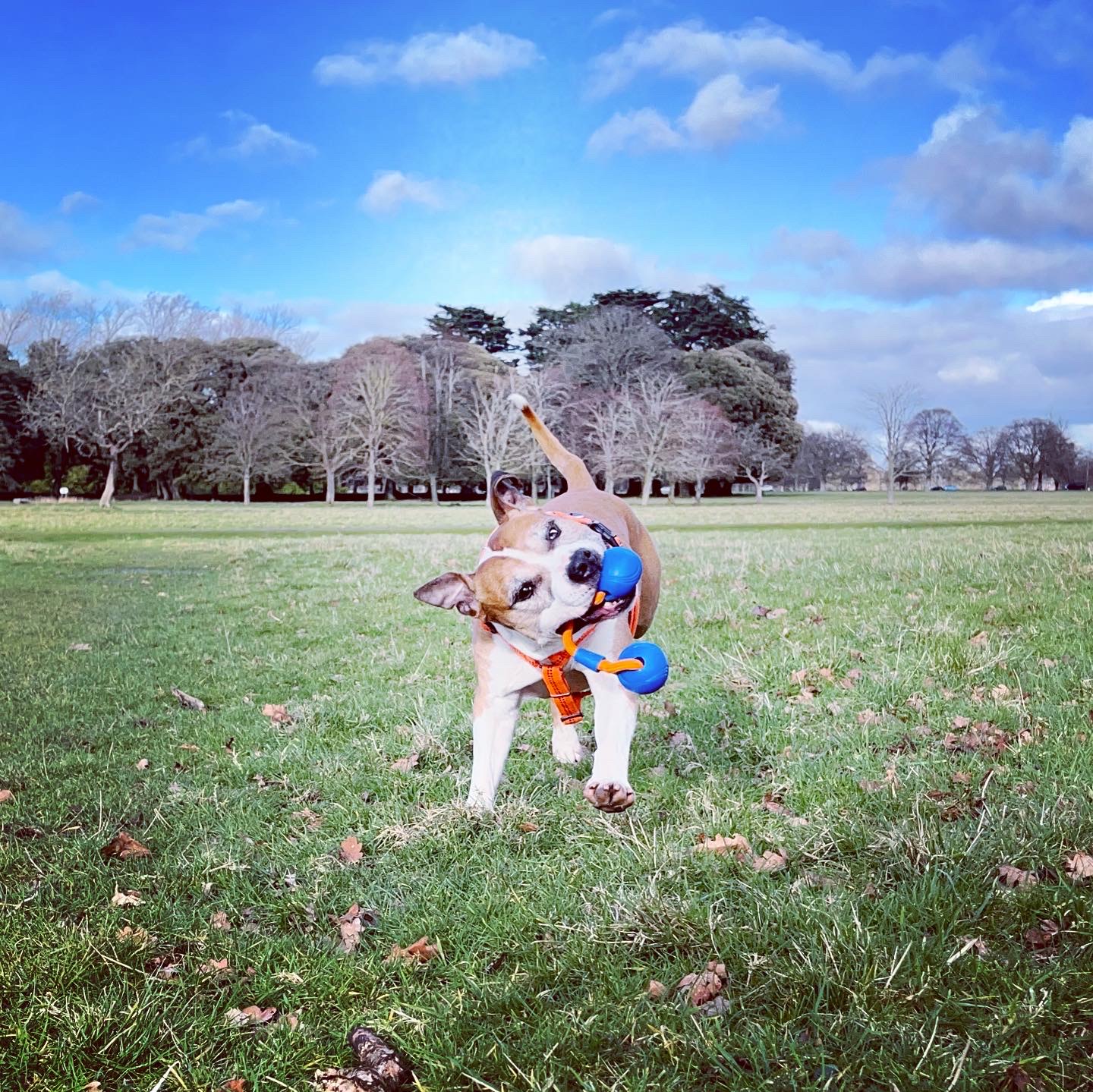
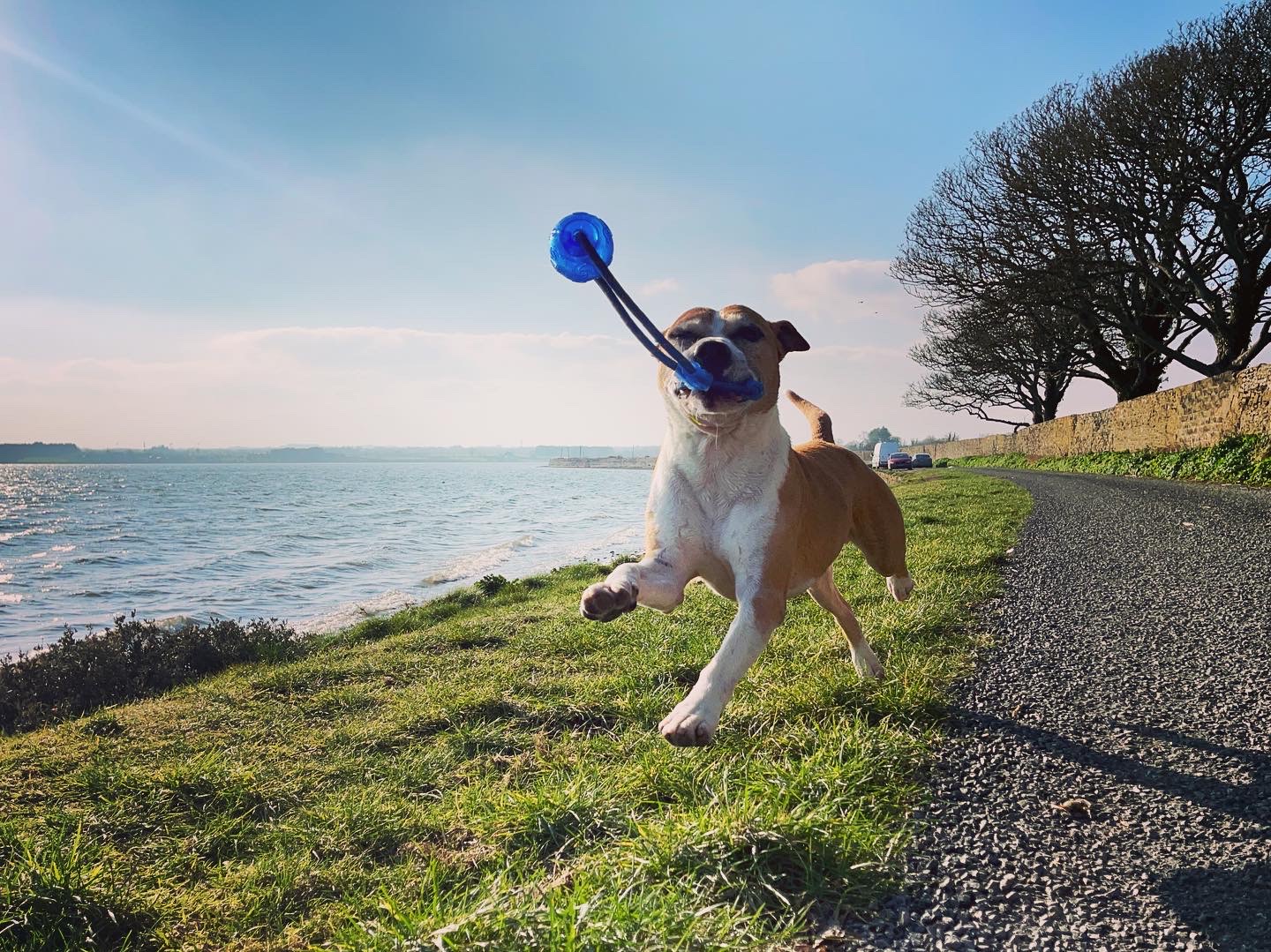
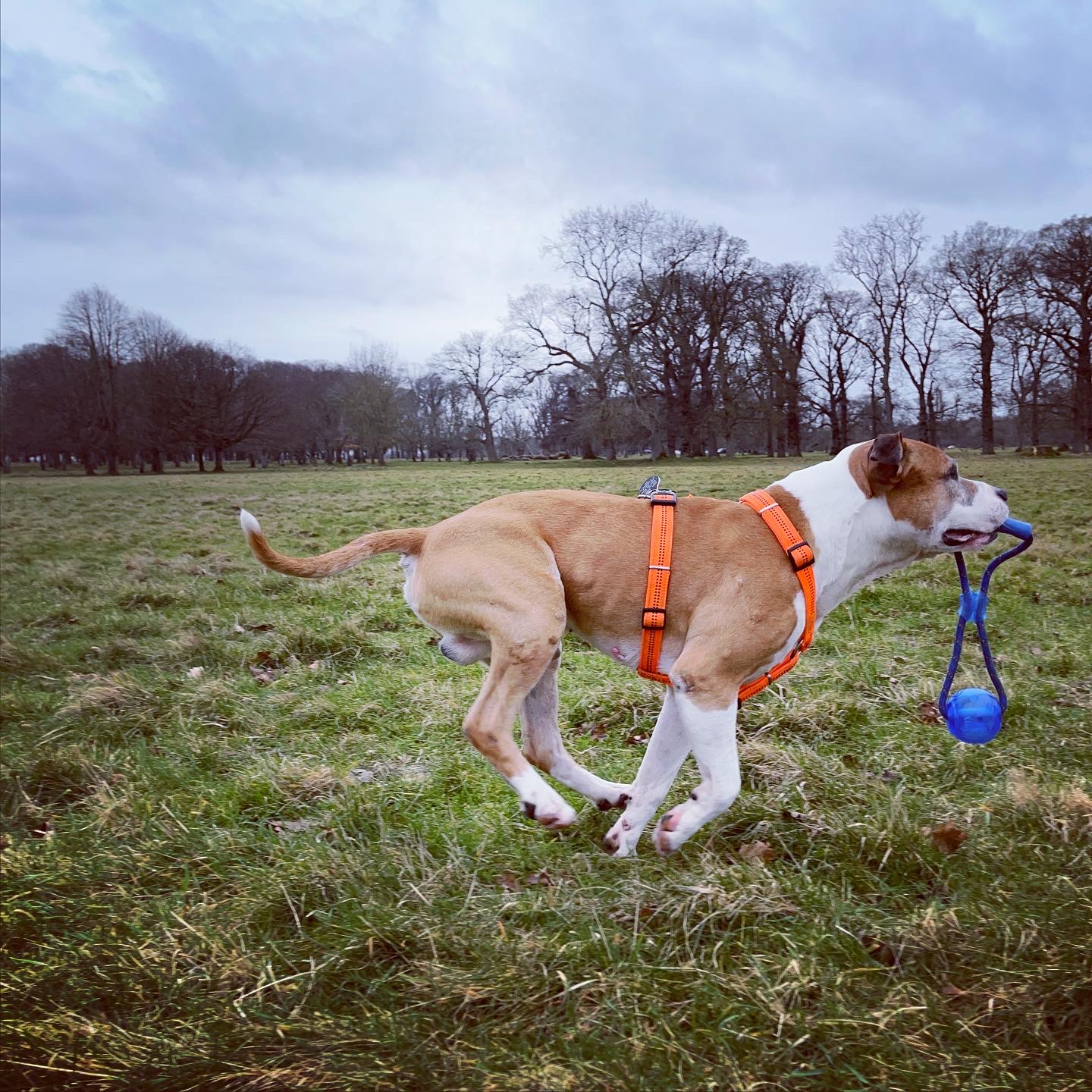
My silly senior. 11 years old, which is pretty old for his breed, but he continues to be nutty…long may that last!
I feel it’s important that we don’t pathologise aging or our aging dogs. While there is certainly discussion as to how far we treat aging as disease, I don’t want my default to helping them be the assumption that they are frail and failing.
The dog’s behaviour is information, including that of our aging dogs.
Aging is a multifactorial process, leading to decline right around the body, it is an individual process, requiring individual interventions.
Just like enrichment.
While dogs appear to be living longer lives, they are still here for a good time, not for a long time. Let’s make it a GOOD time!
Effects of aging such as the dog slowing down, sleeping more, appearing stiffness, are often normalised. Just because the dog is aging, doesn’t mean they should be in pain or experience discomfort.
It goes without saying that older dogs should be comfortable, living an enriched life, without pain!
Senior Dog Behaviour Matters too!
The current canine lifestage guidelines define senior dogs as those in the last quarter of expected lifespan (Creevy et al, 2019).
Healthspan refers to the period of good health across life. Little is known about maximising canine healthspan.
Pet owners often recognise the common physical signs of aging, such as a greying muzzle, but subtle behaviour changes may be the first indicators of cognitive aging and be more challenging for us to spot (Landsberg et al, 2011).
In research, quantifiable measures of healthspan are not consistently established or applied. Often assessments of liver, brain, heart, muscle, kidney & endocrine organ health, and of cancers, are included.
Cognitive performance, behaviour & QoL must be considered too…right?
Future proofing
While future proofing is important, and often an automatic consideration, for puppies and young dogs, behaviour markers are still relevant to appropriately adjusting conditions to support older dogs.
We can prepare dogs for what’s to come, while also making sure that we don’t age them via our attitudes toward them.
Sensory and cognitive changes occur over life, and declines are particularly associated with aging. Early diagnosis, and appropriate action and treatments, are important to maintaining the QoL for older dogs experiencing cognitive decline.
Keep a diary or log of your senior dog’s daily habits, behaviour and abilities. It’s tricky to spot changes in your dog, with whom you interact and see everyday. Reviewing your log every week or two allows you to make more objective observations.
To help them, we might be implementing plenty of changes according to their current and future needs.
As they age, dogs become increasingly sensitive to change and day to day stressors (Fast et al, 2013).
Providing them with predictability and controllability, while creating change in tiny increments, will allow for better coping.
Develop predictable routines.
This doesn’t mean everything happens at the same time each day, but rather, that sequences of events have predictable outcomes for the dog and they can choose how they interact with that event.
When the dog does behaviour, there are predictable outcomes. Their behaviour matters and they have some control over what happens to them.
Feeling helpless and out of control may be experienced by aging humans, their behaviour becoming less meaningful often as result of good intentions on the parts of others (Minichiello et al, 2000) (Salarvand et al, 2007).
Along with changes we might be making, seniors dogs often experience changes that might impact daily routines.
For example, toileting routines. Older dogs may need more regular toileting opportunities. Make toileting more accessible and safe. Monitor them carefully so that you can get them out efficiently.
For example, change to eating patterns. Feed smaller and more frequent meals, warm food and choose food dispensers that allow for the dog to comfortably pick up food. Older dogs might require more palatable food so choosing softer feed might more yummier and more comfortable to eat.
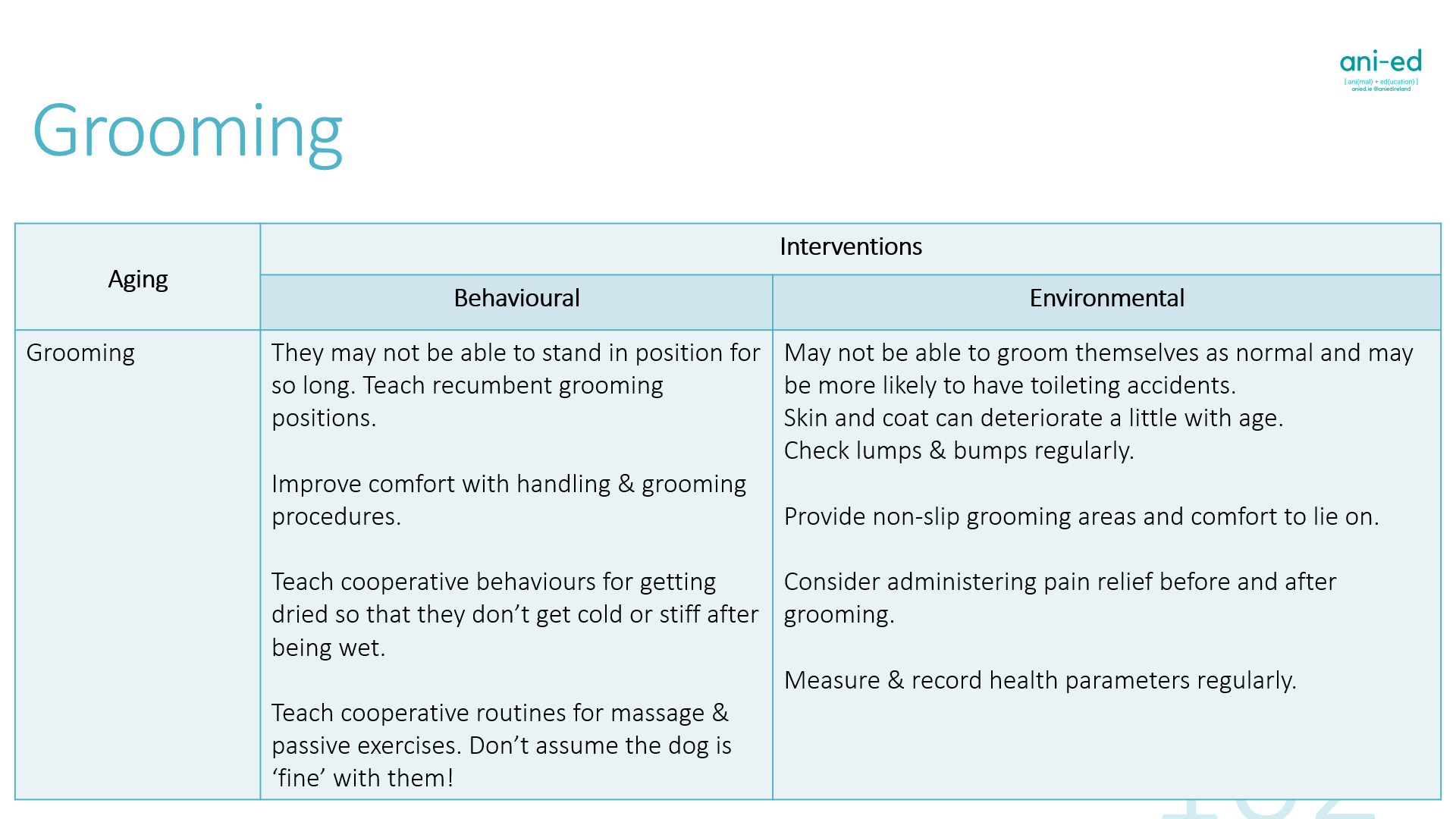
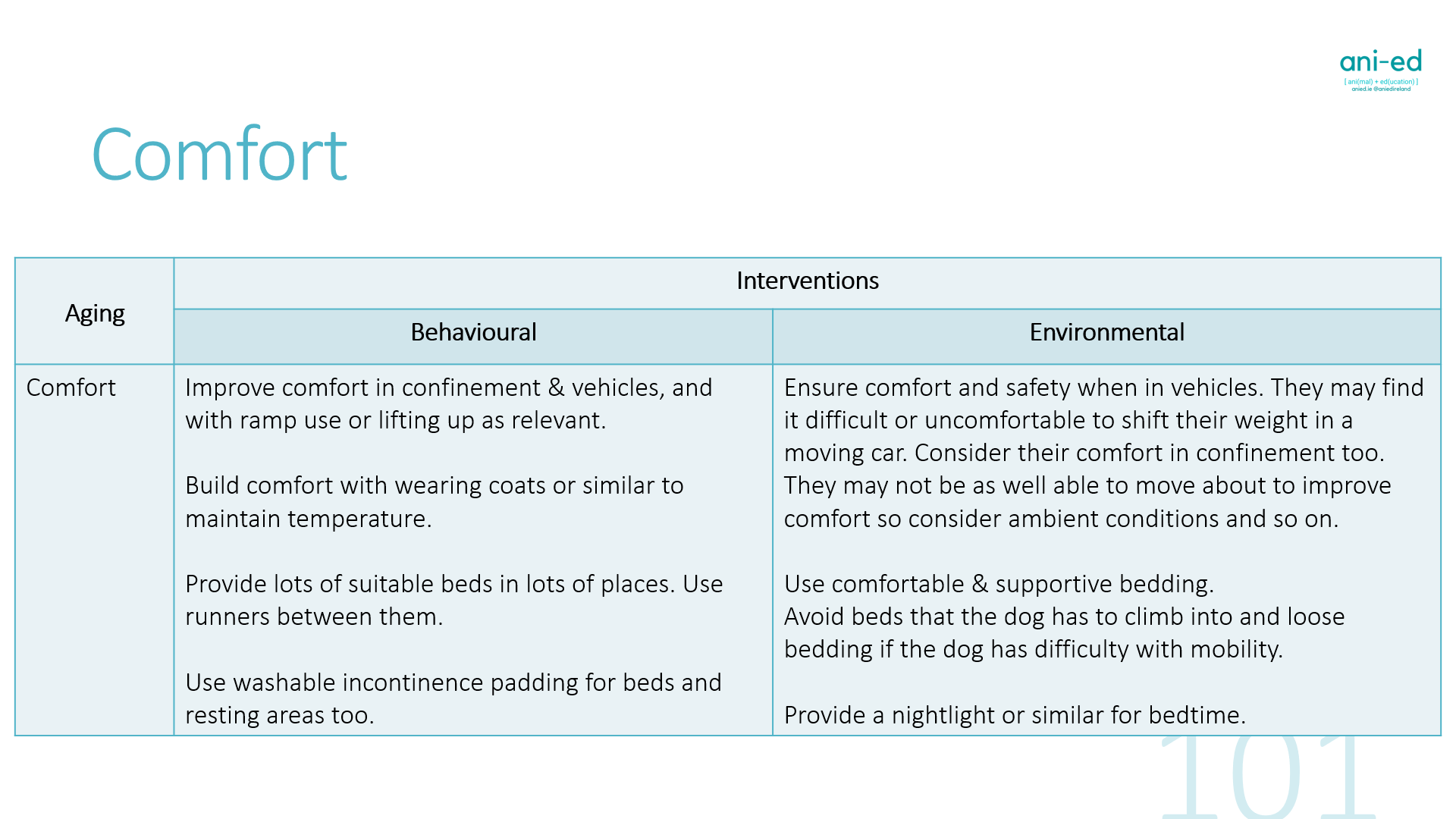
Think “puppy proofing”, but for seniors.
Audit your car, home and garden, and consider places you take your dog, for accessibility and safety.
(These images are screengrabs from our webinar on senior dog support, for training/behaviour pros.)
Senior dogs need more, not less
Senior dogs are often presumed to not do so much, to be lower maintenance, and to not need a lot of walks.
Enrichment provision, for any and all dogs, must be so much more than mere walks, and indeed may not include walks at all. So even if walks need to be adjusted, that doesn’t mean we’re off the hook!
Because pet owners often report their senior dogs sleep more, they believe less exercise, interaction and enrichment is required. Not true!
Aging certainly leads to changes to sleep/wake cycles, with senior dogs sleeping more during the day. They tend to wake more over night and wake earlier in the morning (Takeuchi & Harada 2002).
Indeed none of this means they need less of anything…there now needs to be more consideration for making sure they have good sleep, and that all the components to good sleep are provided appropriately.
Senior dogs need more consideration for enriched sleeping & resting.
Consider more choices for resting and sleeping locations, for bedding, and for comfort. They benefit from clear bedtime routines.
Facilitating safe and comfortable resting spots close to their humans during day to day routines helps with relationship building and comfortable resting.
Many older dogs may seek distance and seclusion, so provide comfortable & enriched choices for them.
Make observations about your senior’s resting choices and then provide an array of suitable options.
Senior dogs require more emotional support and assurance.
Provide seniors with more social interaction according to their preferences. That doesn’t mean that we coerce dogs into interacting…it means we be with them as they like it.
Talk to them more, hang out close to them more, bring them more places, do more things with them and close to them. All according to their comfort.
Aging dogs must have more appropriate challenge & enrichment in their lives!
They need more to maintain and improve their physical and cognitive health.
100 Days of Enrichment is absolutely suitable for aging dogs…for all dogs! Adjustments are individual, not age related.
Think about some of the behavioural and cognitive changes we might expect as dogs age and adjust challenges according to each individual.
More sniffing for seniors!
Aging coincides with cognitive and sensory decline. Olfaction tends to be the least and last affected, so sniffing can facilitate cognitive work-outs and encourage exploration into old age.
Cognitive decline, more so than age, is associated with reductions in exploratory behaviour (Rosado et al, 2012).
That’s why sniffing is a lifeblood for seniors.
Teach them sniffing games and make sniffing happen every day, many times a day.
It doesn’t need to be elaborate or complex. Here I simply toss food rewards into long grass for Ollie (from A Dog’s Life) to snuffle.
Dogs are not too old to learn and be taught. But adjustments to how we teach them and what we teach them will be necessary…the dog’s behaviour is information (no matter their age!).
They might need more reps and finer splitting of criteria…ya know…better teaching from us….
Dogs may become less efficient at responding to cues that are delivered by sound or sight, and might find it hard to locate reinforcers on the ground, closer or further away.
This is no big deal, it just means we have to adapt and be better teachers.
Keep ’em lean!
Weight management is one of the most effective factors in mitigating age related changes and effects on health.
Obesity compounds aging in dogs, presenting as a form of accelerated aging (Tam et al, 2020). Being overweight shortens the life of dogs because it causes the production of many of the same metabolic abnormalities associated with age (Salt et al, 2018).
Caloric restriction, ideally through life, and maintaining healthy body condition extends lifespan and healthspan for dogs (Lawler et al, 2007) and other species too (Kaeberlein 2015). Maybe even giving us about two years more with our dogs (Kealy et al, 2002) (Lawler et al, 2008)…now that’s priceless!
Keep ’em moving!
Appropriate physical exercise slows body damage due to aging by influencing metabolic dysfunction (Gremeaux et al, 2012). It helps to maintain lean mass, strengthen and tone, and provide behavioural outlets.
Aging dogs require physical exercise (Pop et al, 2010) appropriate to their health.
As for all dogs, their responses and behaviour are information about what they need. Recognise the effects of physical exercise and adjust accordingly.
Consider adding supportive physical therapies to the aging dogs’ routine too. I recommend Canine Conditioning Coach, and she has an excellent senior program.
Pet Owners Need Support too!
Many challenges affecting the human-dog relationship are presented as humans and dogs age.
Culturally, we have funny attitudes to aging. The relative rapidity with which dogs age not only provides us with an understanding of aging, but reminds us of what lies ahead for ourselves!
Senior dogs show greying hair, loss of body condition, reductions in activity and changes in attitude to their world. They may show increases and changes to vocalising behaviour, toileting, appetite and may appear confused at times.
These changes, and the rest, can exert considerable pressure on the human-canine relationship, leading to significant requirements in terms of emotional and financial resources on the part of owners.
Monitor your senior pet’s health & behaviour. CAM provides a useful guide to monitor changes here; although relevant to OA, is also useful in monitoring other age related changes.
For a further understanding of the impacts of age on the human-canine relationship, McCune & Promislow, 2021, provide a lovely overview of mutual aging among our species’.
“Care-giver burden” has been identified in owners of dogs with chronic illnesses, using models designed for human patients and their carers, (Spitznagel et al, 2019) (Spitznagel et al, 2019) (Spitznagel et al, 2017) as the strain or load borne by carers of aged and/or chronically ill loved ones.
Maximising healthy aging in dogs is not just good for dogs, but also contributes to improved quality of life for their humans.
Why sniffing?
Sniffing ticks so many boxes for dogs and they already do it really really well. We don’t have to teach them to sniff, or teach them to life it. It’s kinda their thing!
We might need some adjustments to make sure it works for the individual, but we’re doing that for dogs of all ages anyway.
Here we have sniffing and snuffling on some soft, non-slip blankets for senior, Benny:
“We don’t stop playing because we grow old; we grow old because we stop playing.”
— George Bernard Shaw
Keep ’em young
Aging is inevitable. But how they age, doesn’t have to be. Keeping them active, lean, challenged and their world enriched helps to keep them young.
Don’t get caught in pathologising their age, or mourning for times gone by. Start increasing sniffing games and opportunities today. Add more not less for your senior.
Almost all the photos in this post, of Decker, are since his 11th birthday and all the rest are since he was 10.5. Am Staffs are not long lived (average 10-12yo) so I’m conscious we are living on borrowed time. He remains very active; hiking off leash for 6-10km 3-5 times a week and swimming 30-60 mins in the ocean 3-5 times a week. He busted his cruciate in a traumatic injury when he was nine, then suffered intussusception & impaction soon after so has never recovered his original fitness or condition, likely due to age. So while he’s fit for his age, he probably would have been better without that drama. I am making sure he lives every day to the fullest so if today is his last day, it was such a good day, filled with all his absolute favourites and absolutely no regreats.
We have two courses available to apply and book right now!
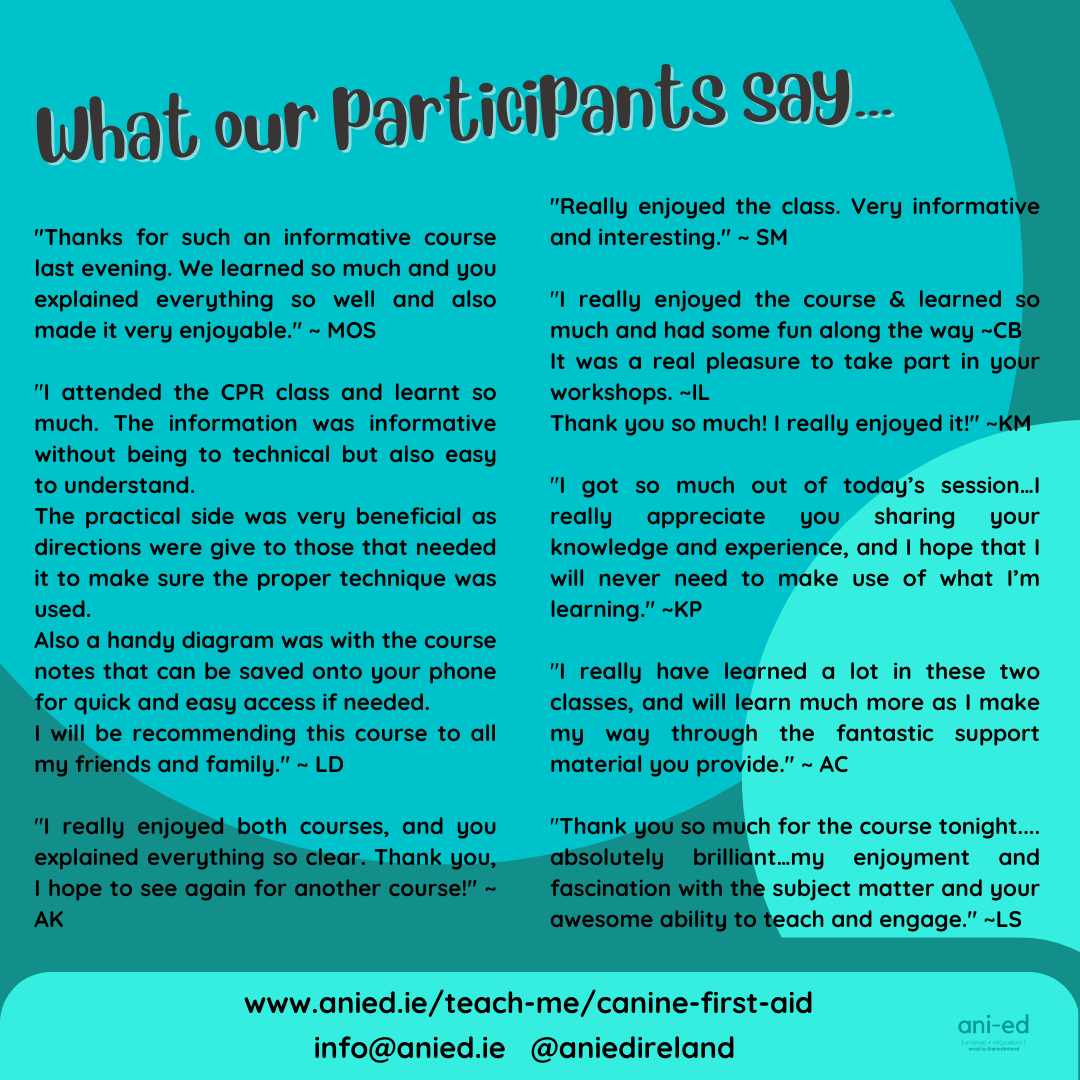
Our new Safe Dog Handling & Interactions online course plus our very popular Online Canine First Aid course is back for another run, starting later this month.
We have lots of other courses that you can start any time too! More here.
Safe Dog Handling & Interactions online course
We are excited to get started with this new format and now applications are open!
This is one of our most popular programs ever and it’s back for another run, starting at the end of April.
You might wonder how this works in an online format, and truth be told, we were worried about that too. But, there was no need to worry at all as it has been overwhelmingly successful with wonderful and full participation and feedback from our participants.
This two part online workshop is packed full of vital information, discussion & questions, and lots of practical demonstration and practice. Yep, we practice skills even though we’re not in the same room!
Our next start date is Saturday 22nd April for Part 1, followed by Part 2 on 6th May.
Please do get in touch should you have any questions about our courses. We would love for you to join us and certainly, every pet owner and pro needs to do our Online Canine First Aid workshop!
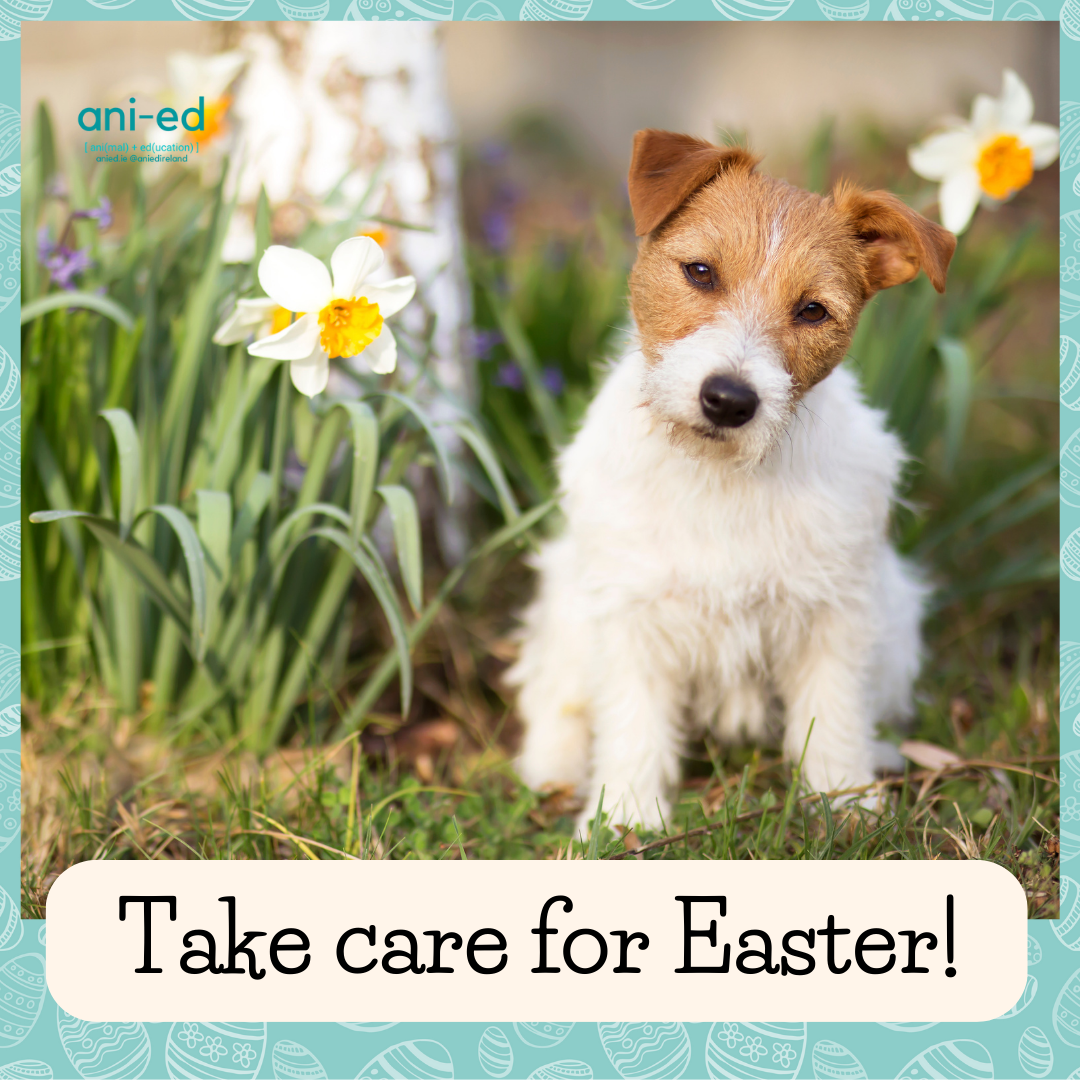
Human holidays often present extra risks for dogs simply because humans are distracted and busy, routines are out of whack and management often slips through the cracks.
All completely normal but can lead to pretty serious issues for dogs, and other pets too.
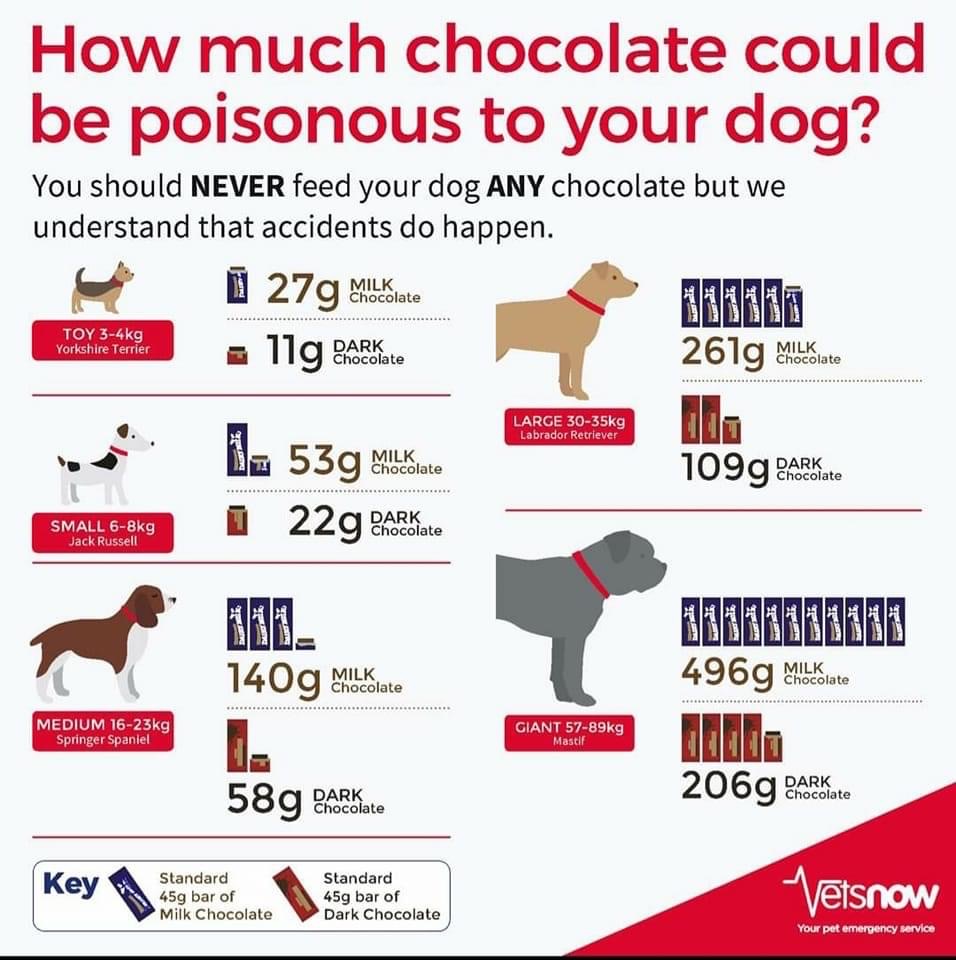
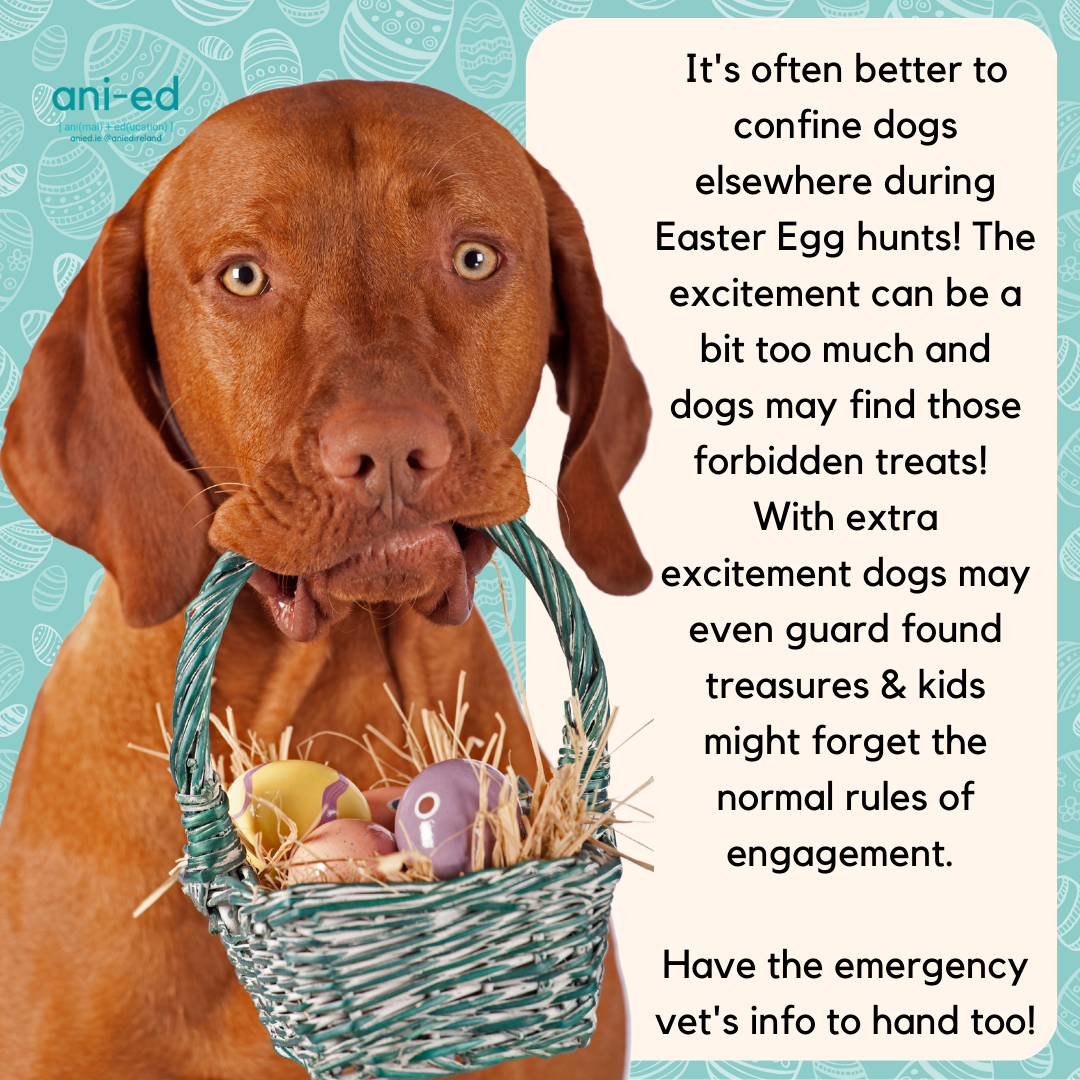
Veterinary personnel continue to be over-run with emergency chocolate ingestions all weekend, with so much emesis induction and a lot of chocolatey messes to clean up! Despite this being such a well known hazard, the extra excitement of the Season, and our entire approach to hiding chocolate eggs before the day, and on the day, leads to lots of accidental exposure.
Of course, we can’t really expect to be able to hide anything as yummy as chocolate from our dogs’ noses so much extra care is required when we think we are putting them away from prying eyes. Think about those prying noses too!
While chocolate is certainly star of the show, raisins/sultanas in hotcross buns, lilies (all part of the plant) and Easter treats and decorations can be dangerous if ingested. Have your emergency vet’s details to hand this week!
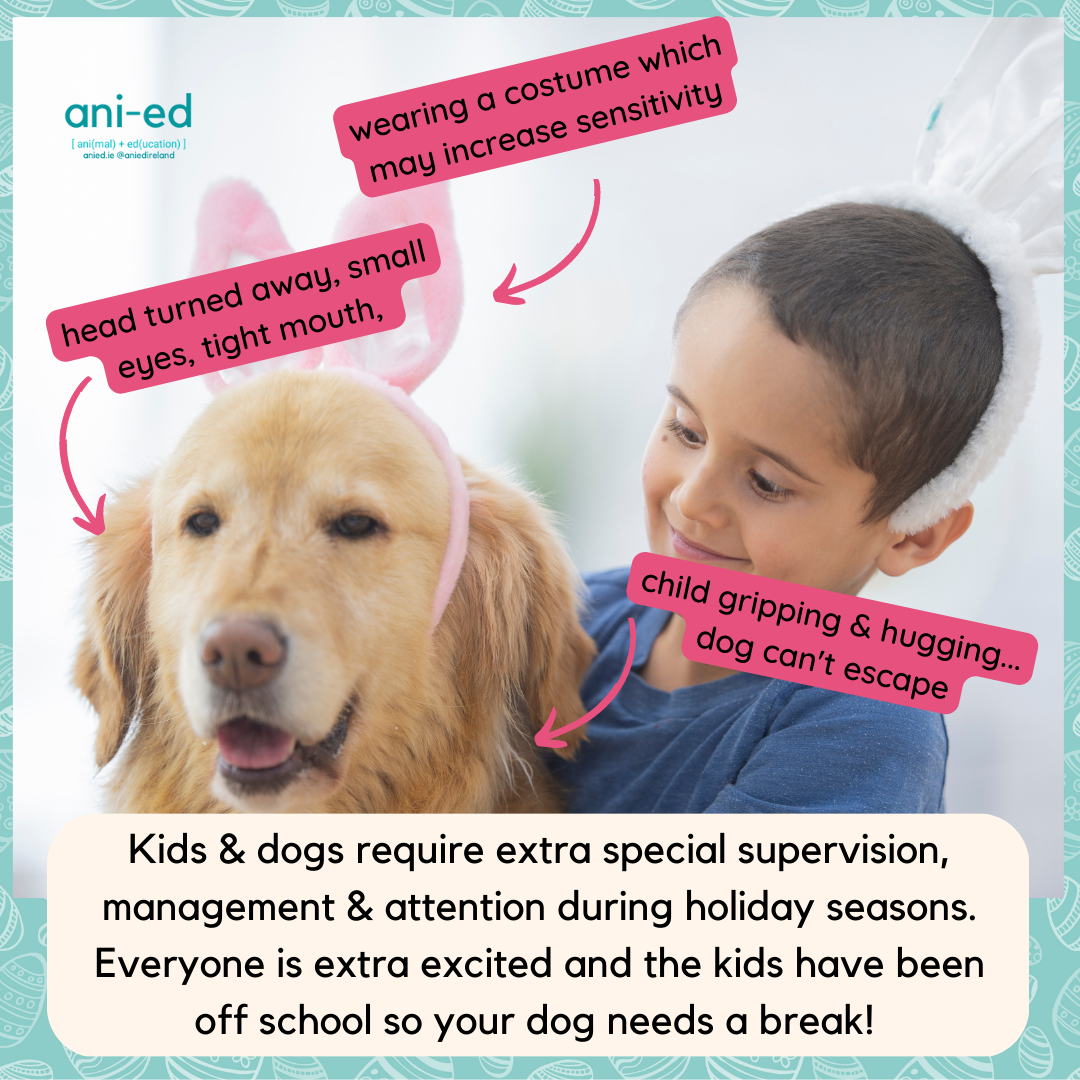
Extra excitement, and a general raised background level of stress that so often comes with human celebrations (particularly ones involving so much chocolate!), requires extra attention to child-dog supervision and management.
More separation before there’s tension is best for Easter!
Dogs don’t need to participate in Easter Egg Hunts, given that excitement and the ‘hiding’ of possibly dangerous chocolate treats.
Costumes and pressure to pose can ramp up the pressure even more, increasing dogs’ sensitivity and discomfort.
Think about using emojis and filters instead to create those perfect snaps!
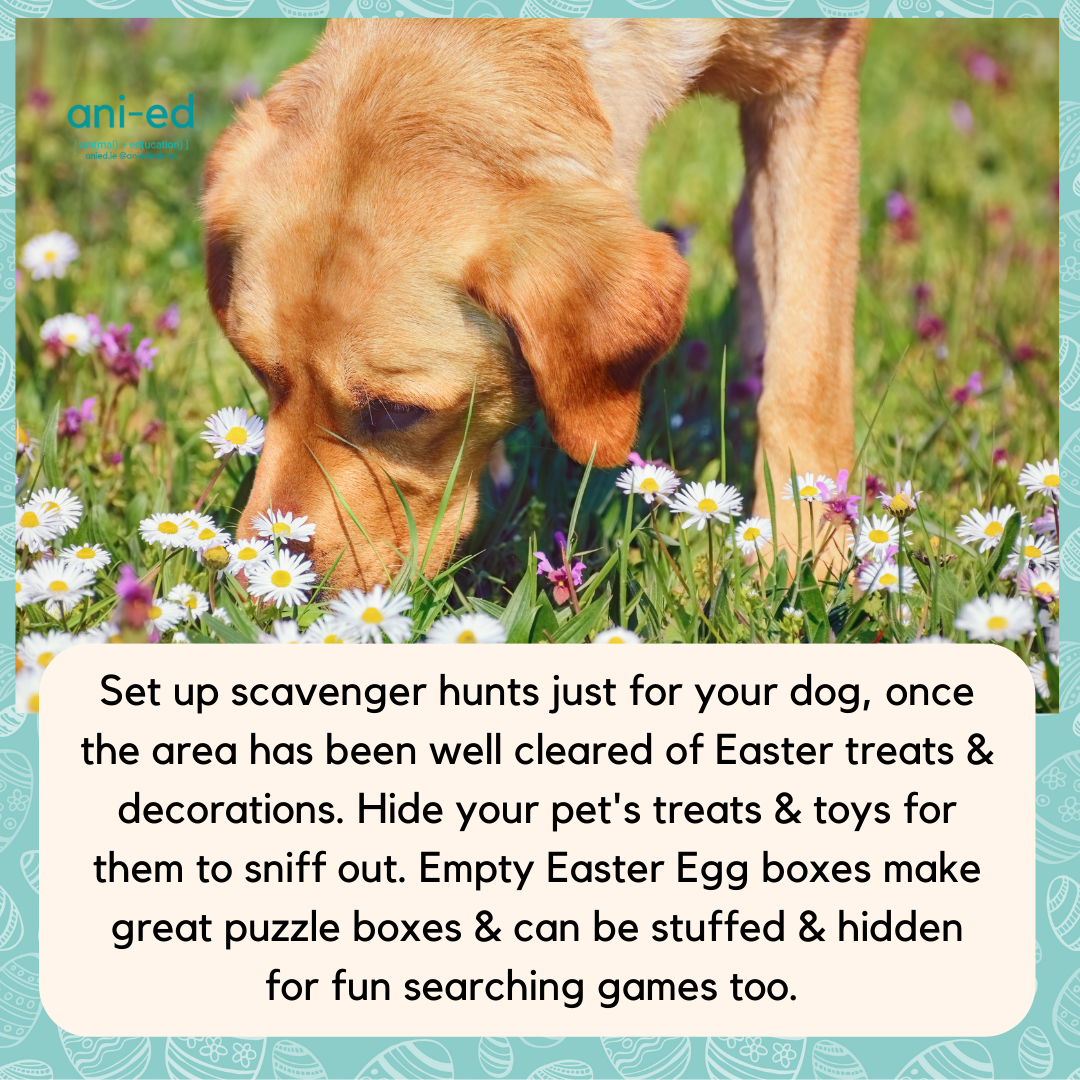
You can have doggie fun for Easter too! Scavenger hunts are great fun, even without chocolate eggs! Hide their favourite treats and toys.
Don’t forget Easter Egg boxes; they are great for puzzles!
As much as we love dogs, we must recognise that they can inflict serious injury, especially where our goals and theirs are in conflict. Developing an awareness for how we interact with and handle dogs, particularly unfamiliar dogs, is vital for our safety, and also the welfare of dogs for whom we care. Dogs who display behaviour we may feel is unsafe, or behaviour that presents risks to human safety, are most often experiencing strong responses relating to stress or fear, for example. And those behaviours are usually in response to ours.
Register here or email info@anied.ie and we will add your name to the list.
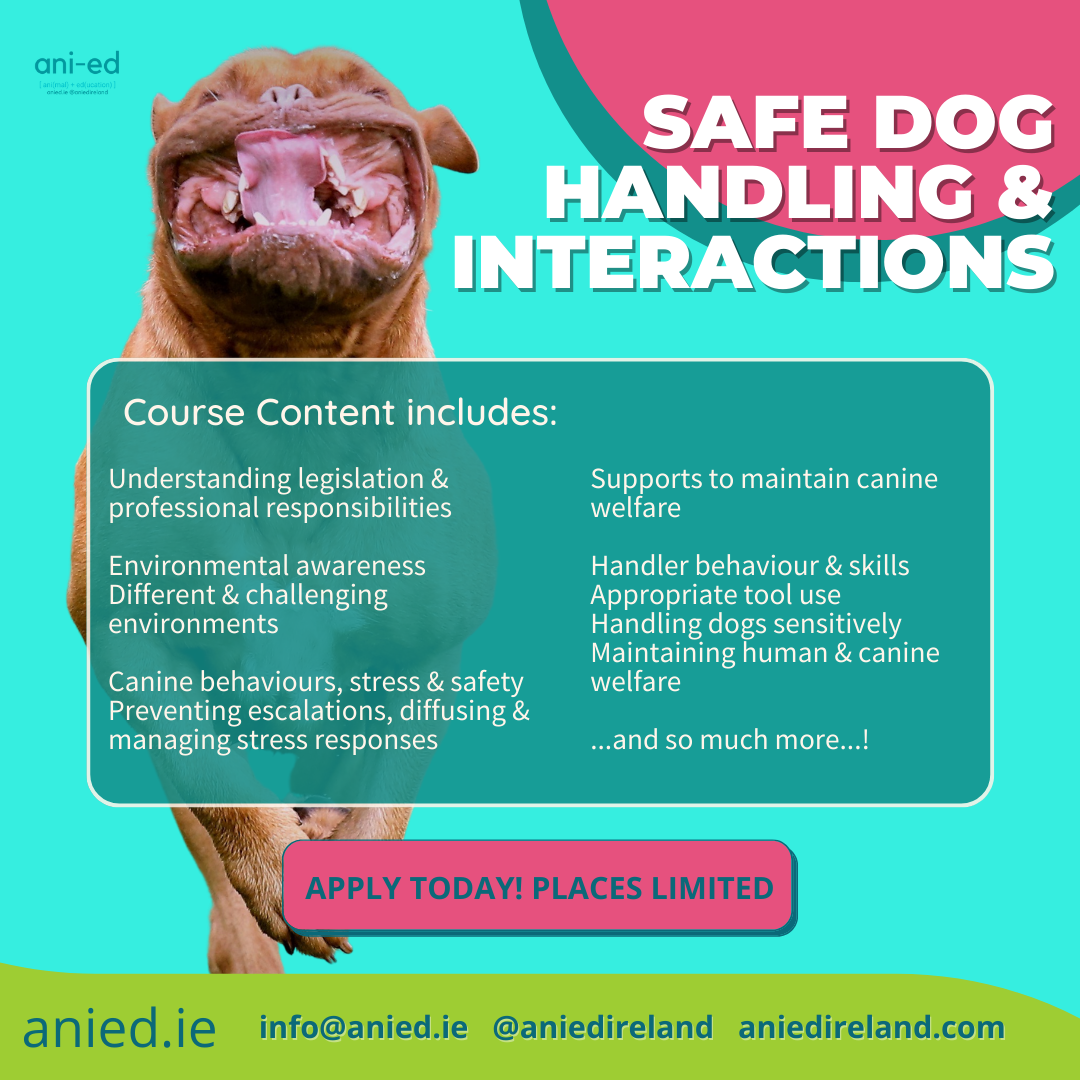
Our new online Safe Dog Handling & Interactions course emphasise developing a good understanding of canine stress related behaviours, which are commonly misinterpreted, so as to reduce their stress, improve welfare and maintain safety.
We have offered this in-person workshop to County Councils, dog wardens, pound staff and park wardens, as well as lots of dog-pros, around the country for many years, and continue to do so. And now, we have an online course too to make it more accessible and convenient!
Right now, we are taking registrations and places are limited. We prefer to keep our groups very small so everyone gets all the support and guidance needed, that are an integral part of our courses.
Register here or email info@anied.ie and we will add your name to the list. Once applications open, in the next week or so, we will send out application information to all those registered.
Goals of this course:
develop knowledge, skill & awareness to devise policies and procedures relating to safe handling and interactions with dogs
understand the relationship between canine stress behaviours and human safety
recognise environmental contributors to changes in canine behaviour
build on awareness of the dangers associated with handling and interacting with dogs
emphasise awareness of our own behaviour in maintaining safety & comfort
use tools and strategies to prevent causing canine aggressive responding and in diffusing aggression
maintain safety and avoid serious injury
build safe behaviours and procedures in interactions with dogs
maintain canine comfort to avoid escalations in stress responses through environmental modifications, awareness of your own behaviour and the application of appropriate tools & techniques
become empowered with skills and understanding that contributes not just to personnel safety, but also health
prioritise maintaining canine welfare and human safety
You get:
24/7 access to the course online area, from anywhere, for six months
multi-media learning resources for viewing and downloading
all content presented as mini-lectures (written presentations for reading) covering a wide array of related topics presented in small-ish bites so that you can take time to process and analyse
video demos so that you can view and practice practical skills regularly
comment facility at the online course area for participation, enquiries, interactions
access to a private Facebook group for real-time feedback and guidance
regular live online meetings
ongoing online interaction with fellow-students and your tutor as we take this journey of discovery together
tons of tutor feedback, guidance and support
Register here or email info@anied.ie and we will add your name to the list. Once applications open, in the next week or so, we will send out application information to all those registered.
Course Details:
When?
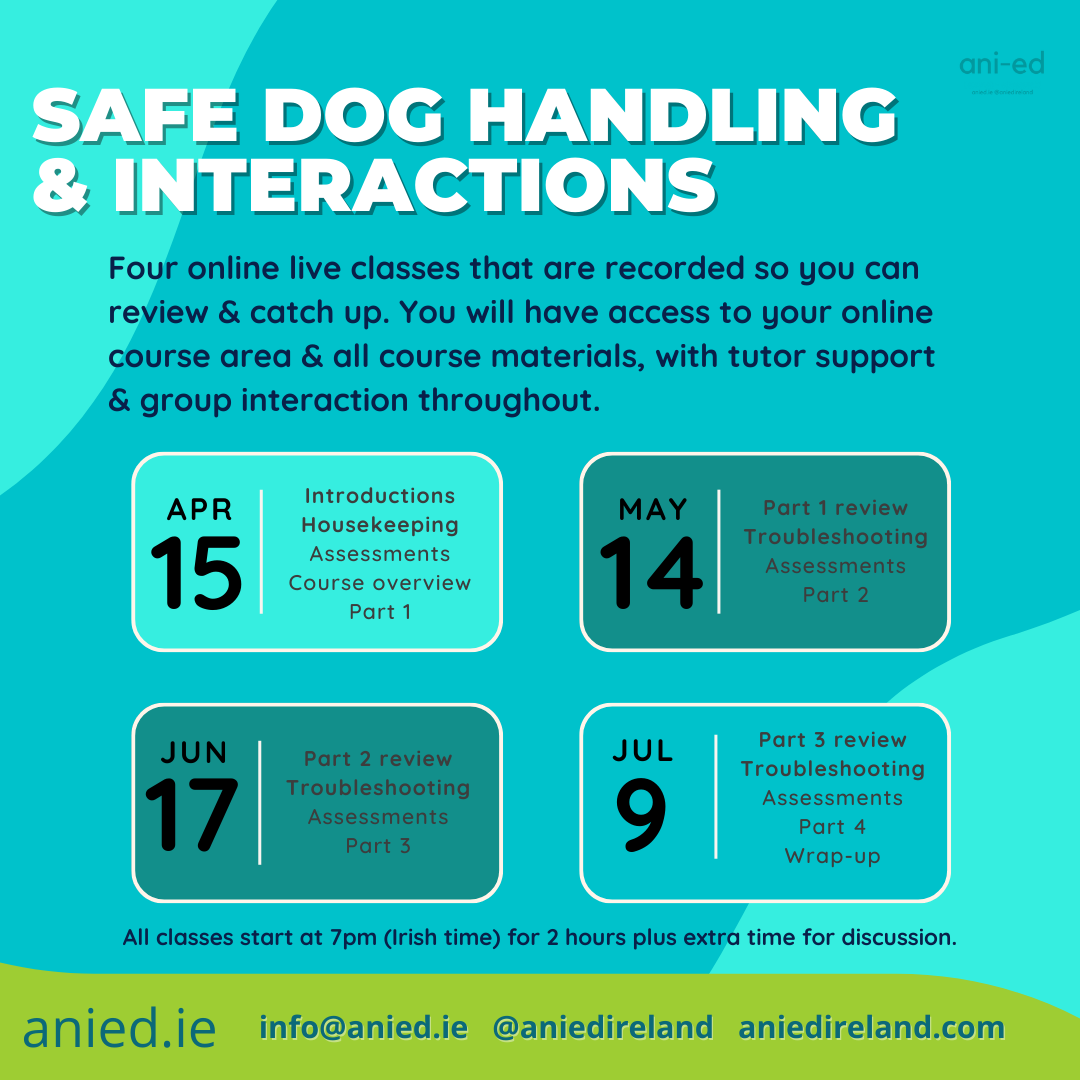
Our new Safe Dog Handling & Interactions online course starts on Saturday 15th April, at 7pm. There are four online meetings on this course, and each meeting is recorded for review. You are encouraged to attend live, particularly to the first meeting to get the best value from course content. Dates for the four class meetings:
Saturday 15th April, 7pm
Sunday 14th May, 7pm
Saturday 17th June, 7pm
Sunday 9th July, 7pm
Each class is two hours long but will run longer with questions and discussion. All times are ROI (Republic of Ireland) times.
Where?
All classes are online so you can participate from anywhere!
Who?
This really is vital information for ALL dog pros including trainers, behaviour pros, groomers, walkers, sitters, boarders, day-carers, kennel carers, rescue folks, petshop peeps…everyone who works with or hangs out with dogs! Pet owners and dog-hobbyists will also benefit, developing a thorough understanding of canine comfort and of our behaviour in maintaining their welfare. It’s accessible for all, it’s sustainable and most of all, you can participate from the comfort of your own home, with your pets by your side.
How long?
Each online class is two hours long and will run longer with discussion and questions. Assessment work will be discussed and started after each live class, and then reviewed during our next meeting. This gives you about a month to work on starting relevant assessment and then troubleshoot when we meet. After our online meetings have ended, you will have until 2nd September to complete your assessment portfolio and submit. While deadlines are important to provide guidance, we appreciate that individuals may find that daunting. Please don’t worry about these timelines as we will work with each learner flexibly to support you in gaining the most from course work (and for some, that might not mean the completion of formal assessment work!).
How much?
The full course costs €180.00 which must be paid in full before the first meeting. Payment plans are available and you are encouraged to discuss your needs with us.
What will I learn about?
relevant legislation & professional responsibilities
policy & procedure development
environmental assessments
professional & challenging environments
home environments
public settings
recognising & understanding canine stress & its effects on behaviour, welfare & safety
understanding the conditions under which stress-related behaviours occur
environmental supports to maintain & improve the welfare of dogs in your care
handler behaviour & skills
interacting with dogs safely & sensitively
maintaining human and canine welfare
considerations for human mental health
practical handling skills & tool use
Assessment work is compiled as a portfolio of works that are directly applicable to interactions with dogs. You will include works in your portfolio relevant to your areas of interest.
Please see more about studying with AniEd here. You will be asked to agree to terms & conditions at application, and before you pay. Please get in touch should you have any questions about this course.
Register here or email info@anied.ie and we will add your name to the list. Once applications open, in the next week or so, we will send out application information to all those registered.
Puppies are not supposed to be “obedient”, focused, patient or calm…that’s a houseplant you’re thinking of…
Different areas of the brain, so different abilities, develop along different timelines in young puppies. Puppy’s behaviour can provide us with insight about how development is proceeding. For the brain to develop normally, it must be challenged, experiencing appropriate feedback from puppy’s world. (Stolzlechner et al, 2022)
But here’s the problem. These processes are time dependent. The brain must be exposed to certain types of challenge, providing feedback from their world, at particular developmental stages. (Hubel & Wiesel 1970)
The puppy’s behaviour informs of where they are in terms of development, and we must respond accordingly with appropriate challenge to support and enhance that development.
While teaching and learning are certainly important for young puppies, concentrating on our human constructs and expectations, such as ‘obedience’, is not a good use of our time. We have limited time to make sure we support puppy in developing complex skills and tendencies through appropriate exposure. (Cutler et al, 2017)
There are many contributors to these processes, including puppy’s genetic background, and related effects, early exposure, particularly that in puppy’s first five weeks, and clues from the behavioural tendencies of related individuals.
This early work we implement in puppy’s first weeks and months are among the foundations upon which your dog’s adult behaviour is built. We get the payoff months and years later. (Puurunen et al, 2020)
We take an enrichment approach to behavioural development, which is often different from “socialisation” lists, puppy classes and play groups.
Just like children, puppies need time early on (their first weeks) to develop skills that will support them throughout life (McEvoy et al, 2022). Prioritising ‘academics’ at this time misses the mark.
If you were hoping to have a patient, obedient, focused, non-biting, appropriate toileting and chewing, calm wee-beastie, a puppy may not be for you …and if you wish for those things in an adult dog, prioritising behavioural development with appropriate challenge, social & environmental exposure in their first weeks is where you start.
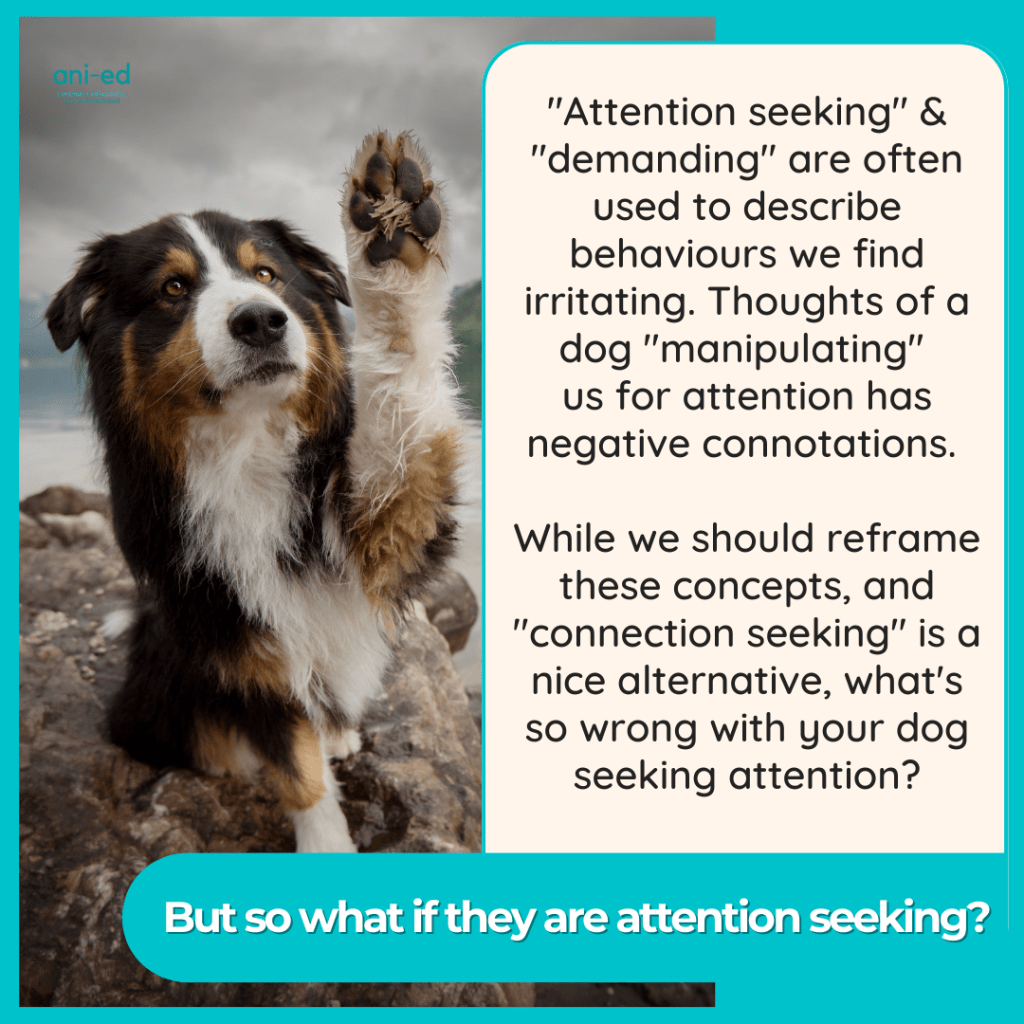
I regularly have discussions with dog owners about their dog’s behaviour being demanding, or attention seeking, as opposed to their behaviour expressing some physical need, such as needing to go out to toilet.
And so called ‘attention seeking’ behaviours, whatever that means, are commonly listed as behaviour problems by pet owners, potentially affecting their relationship with their dogs (Hoffman et al, 2013).
Behavioural needs are just as important as physical and should not be viewed as some luxury dogs only get upon our whims.
Framing behaviour as “attention seeking” or “demanding” is a human hang-up! Behaviour functions, as in, dogs, like other animals, do behaviours that work. If you reinforce behaviour, such as sitting, by feeding your dog, does that make sitting “demanding” or “begging”? It’s just behaviour, whether you like it or not!
Indeed, we have selected for attention seeking behaviours, communicating with us (Persson et al, 2015).
Behaviour works!
A lot of the behaviours that work for dogs are directed at us. They are communicating with us, communicating their needs. They are not “manipulating” us to get what they want; there’s no need for negative connotations or sensitivity.
Dogs have no ways of providing for their own needs. WE control everything.
Be trainable.
I LOVE when a dog becomes an even better human-trainer and indeed that’s what I strive for…to become really easy for my dog to teach.
We learn together, we develop a dance of communication, we build a relationship.
What’s so wrong with your dog seeking attention? (Nothing!)
While I do quite like a reframing of these concepts as “connection seeking”, for example, what’s so wrong with your dog seeking attention?
Connection, contact, interaction, acceptance and yes, attention, are all fundamental needs of social creatures. We live for it!
There’s nothing ”wrong” with seeking attention. Of course, there’s no “bad” behaviour at all but WE are the demanding ones…seeking to command & control.
Your dog’s behaviour is information. Your dog only has you. You are their world.
Their attempts at communicating should not be ignored or dismissed. They have limited means to inform us of their needs and meet them for themselves.
Give Attention. Freely.
You might not always be able to attend to your dog. That’s ok. I am not coming down on you because you have other things to do, or simply don’t want to engage right at that moment. You’re human.
And sometimes, if you dog isn’t able to settle themselves, isn’t able to be ok without your attention, they might need some extra support.
You can always get in touch should you be concerned.
Try:
What do the pictures involving ‘attention seeking’ behaviours look like? Identify those pictures.
give so much attention, freely, in every other picture Your dog doesn’t have to earn your attention, interaction, connection or affection.
Learn to recognise their requests. Do they need your time, attention, contact, food, your help? Are they asking to go out, come in, be comforted, for play & fun…? All are legitimate needs that must be met.
In which pictures do these behaviours occur? Predict & prevent!
Provide your dog with alternative outlets for their needs before this picture/context starts. Help them work through these contexts so that they can engage in more independent behaviour.
It’s OK to not be able to provide all the attention all the time. Make lots of fun, attention & interaction available at other times.
Actively teach your dog to JUST BE Your dog doesn’t need to be doing things all the time. They need time and space to be bored, to muse, to stare into space.
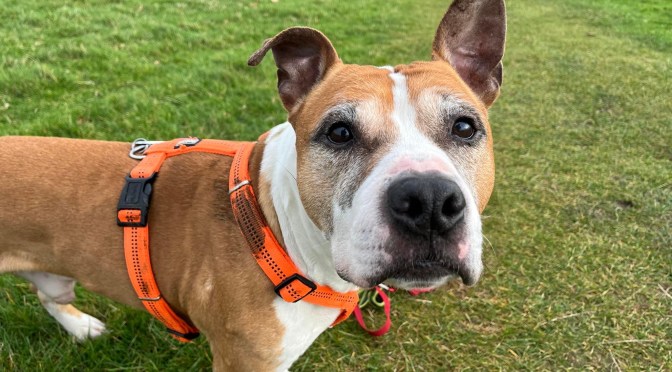
Decker is a poop-connoisseur He very much likes to adorn his body with the smelliest and enjoys a poop nibble from select samples.
This is, of course, gross to us but pretty normal canine behaviour, and I am not pushed about redirecting this behaviour
I figure that dogs must inhibit their very dogginess in a lot of life with humans so if there are gross-but-normal dog things, that can be done safely, I’m not going to get too worried about it.
Another pet owner may differ…I can imagine that if he had long hair that was tricky to maintain, I might not be so casual about poop rolling
However, there are probably lots of behaviours that seem strange, unnecessary and even disgusting to us, that are perfectly normal and enjoyable for our dogs, for which we can make concessions.
When we ask our dogs to be in our world and behave according to those expectations, it’s vital that we provide so many outlets for DOG stuff (once safe) …even if it seems totally abhorrent to us!
It’s time, again, to be a little less human and a little more dog
Do you and your dog do #100DaysOfEnrichment? You know you can do it, any time, for free, right?


























 …and if you wish for those things in an adult dog, prioritising behavioural development with appropriate challenge, social & environmental exposure in their first weeks is where you start.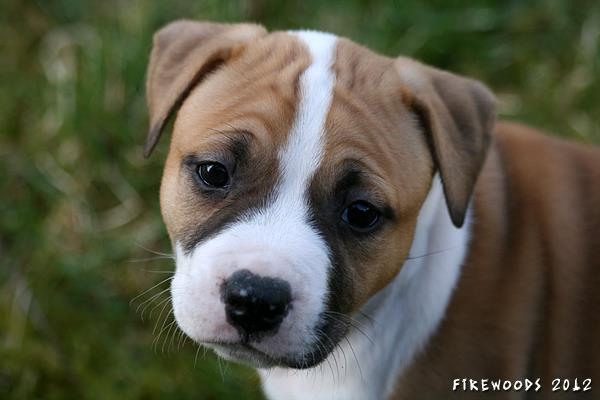


 He very much likes to adorn his body with the smelliest and enjoys a poop nibble from select samples.
 but pretty normal canine behaviour, and I am not pushed about redirecting this behaviour