Such a busy week with lots of excellent dog-related resources from all over the web!
Spring is finally here and lots of us may wish to get more active with our dogs. Take care before you start putting your dog under any extra exertion though and only ask your dog to participate in exercise they are able for: Jogging with your dog improves overall fitness and health
We often meet resistance when we ask pet owners and indeed, vets, to have the dog fully examined, including any relevant diagnostics, before or as we engage in behaviour work. This case illustrates the importance of such awareness: When the only symptom is behavior change
Teaching a great recall isn’t about the type of dog you have, or just about having your dog come back when you call – it requires quite a bit of investment but is well worth it: The Secret to a Recall
And if you really want to teach your dog, better learn how they best learn: How Dogs Learn from Urban Dogs and How Dogs Learn from Dr Yin
We’ll miss all our new friends that helped our learners develop their mechanical skill.
Awesome Pets & their People
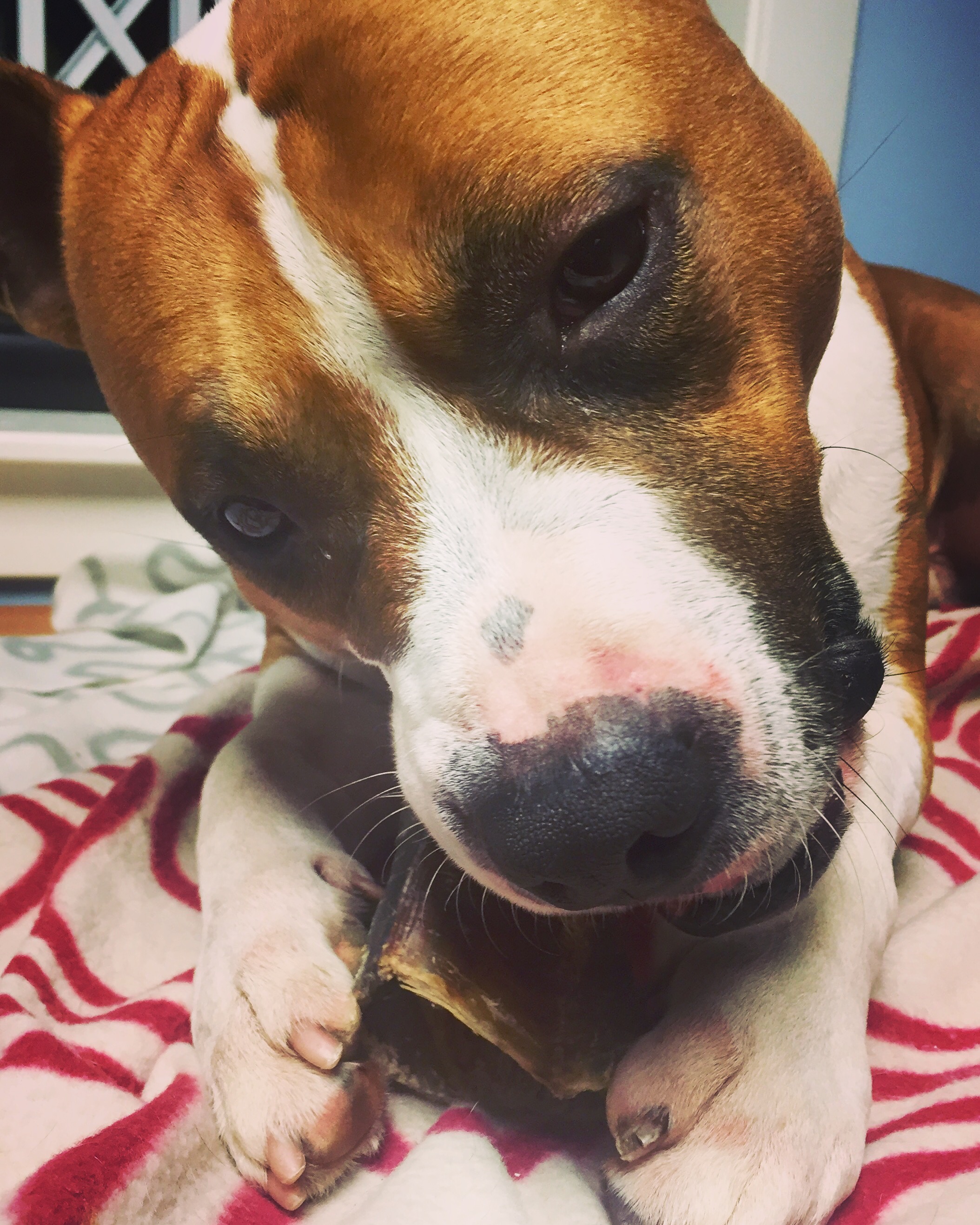
This handsome fella is Opie, who we have known since he was a puppy. Well, he’s certainly all grown up now, weighing more than 30kgs!
He came back for some revision and to really get a handle on loose leash walking. Now that he’s a full on teenager it’s important that we are emphasising appropriate physical exercise, lots of calming mental exercise and tons of work on self-control. Opie is lucky to have an awesome person!
Opie knows that dog trainers can’t resist doggie-head-tilts – they are our kryptonite!
Molly came for Daytraining
A daytraining program is an intensive program for your dog. It starts with a one to one session with the pet+ owner to discuss the issues they are experiencing, and we begin by putting some foundation exercises in place.
We schedule a number of daytraining sessions where your dog comes to spend the morning or afternoon with us and we begin working through a comprehensive program that we all design together.
This gives the dogs some better skills so helping to support their pet owner as the humans learn the training exercises.
We have had some excellent success with daytraining programs, particularly for on-leash behaviour. Molly came for some help with pulling on leash, self-control and to help reduce her stress and vigilance while out.
Here’s what happened during her first daytraining session:
Molly is a little concerned at being in a strange place with new people so to help her we start simply by teaching her that she can train humans!
We start just marking with a YES!, any approaches toward us, and we toss salami away each time. As she becomes more comfortable we can begin to mark and reward her giving eye contact.
Soon Molly is offering sits, YES! and we toss a reward. She learns that these humans are easy to train and her learning that her behaviour controls the environment around her is confidence boosting. Molly soon becomes more and more comfortable as she learns how to learn.
This exercise can be progressed too so that it not only helps with confidence boosting but also with her learning how to greet more politely and even control herself when she’s excited:
By getting Molly excited and then waiting for her to immediately calm herself she can begin to develop better self-control and self-calming skills. Yay Molly!
All this has been pretty taxing for Molly so far so we take a brain break – time for a sniffing course. This helps to relax Molly by allowing her to do a favourite-doggie-past-time, sniffing, and helps her grow in confidence as she explores novel and weird items.
She even chills out at this stage to have some fun with plastic cone decoys too!
Because Molly is such a professional-leash-puller and has trouble focusing we are going to start really really easy but not by moving forwards, rather we are going to start by going backwards…
Molly is learning that focusing and following the dancing humans is great fun!
We can begin to add a little sideways movement too as we slowly build to moving forwards. Molly just learns to walk in a nice position and we simply dance around her…
In this program we are going a lot of work on our backwards movement and that’s because we will use it in different ways, not just for loose leash walking…
When faced with distractions we can back-up to quickly get Molly out of the situation and get her re-focused on her human.
This can also be used in teaching and practicing loose leash walking out & about, where Molly may find it hard to eat food rewards. This backward movement is exciting and we are associating with lots of praise, fun and food rewards!
Notice how this time Molly is much more relaxed and less unsure of what her job is in this game.
We are so impressed with Molly’s progress that we even begin to work just a little bit outside. We start right outside our centre in the carpark to the front where there are lots of comings and goings, sights and sounds.
We start with some passive focus – she can check out all the goings-on and as soon as she chooses to reorient we can mark and reward. But soon she is able to practice a little of our auto-sit exercise too.
To help bring Molly down after all the excitement, we worked on some matwork which her people have started with her at home. We use a high rate of reinforcement, really regular treat tossing, because there are some noises and voices outside spooking Molly. Over time, with the help of lots of rapid rewards, she can relax more and more even with these great distractions – she even makes a little nest for herself!
We are thrilled with Molly’s progress during her first session and we can’t wait to get working with her again next week!
People Training
We welcomed a new Canine Nutrition group – this is a three month part-time course and we were joined by six learners from all around Ireland on their journey to learn more about canine nutrition for physical and behavioural health.
This course starts with a look at the functioning of the canine digestive system, how that system processes nutrients and the fads and trends in canine nutrition.
We emphasise the development of critical thinking skills, applying that to the broad area of canine nutrition that is often filled with myth, anecdotes and misinformation. A tall order!
We ended our first day spending lots of time analysing commercial feed labels; learning about labeling tricks, energy content and evaluating food quality. Their heads were well & truly buzzing after all that!
Decker has heard it all before so chose to play lookout instead!
CBTT6
This weekend, we had CBTT6 in for their second weekend. We’er finding it hard to believe that they are almost halfway through their tuition already – time flies when you’re having fun!
This weekend, their second, we covered Domestication & Selective Breeding on Saturday and Canine Nutrition & Dietary Requirements on Sunday so they have all headed home this evening exhausted!
Well done CBTT6 for getting this far – keep up the great work!
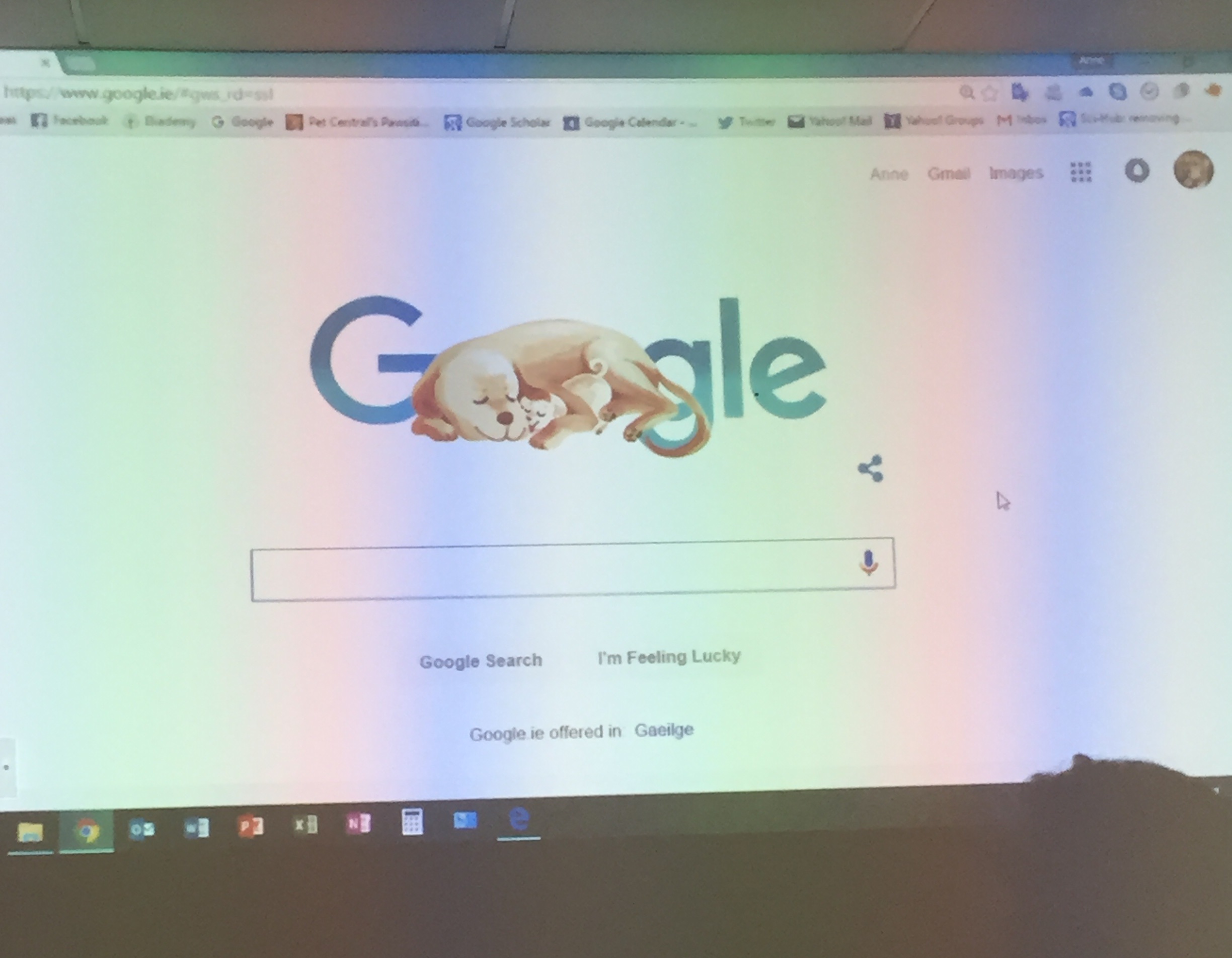
Check out the Mother’s Day Google Doodle that we had for CBTT6 today, of course projected – very fitting for all the dog lovers in the room:
AniEd Dogs
Decker and Boomer had a busy week helping out the humans, while Zac wrapped up…
Here’s another great, straight-forward piece on canine signaling: Dog Body Language
Always, always, always keep medications, supplements and other similar bits and pieces well away from pets and remember that dogs can chew through safety bottles and containers so even more care should be taken. A recent threat to dog safety but one we need to be aware of: Are E-Cigarettes Dangerous to Pets (Hint: YES!)
With dogs living longer and longer due to better care, we are seeing more and more old age disease such as canine cognitive dysfunction.
A dog showing fearful responses already feels pretty lousy about the world at that moment, so adding a scary, painful or intimidating interaction on top of that is not going to help because it makes no sense to punish a fearful dog!
Off leash dogs storming your dog, who may not welcome the space-invasion, is a common complaint and a common contributor to your dog’s discomfort; here’s one strategy to try when you can’t get away.
And there is no more important application of an understanding of canine signaling, than when children and dogs interact. Here’s what to do: I Speak Doggie and here’s How not to greet a dog
Part 3 Think Outside
Just-Taking-Your-Dog-for-a-Walk
We’ve been looking at thinking outside the conventional when entertaining your dog here and here already; now we are going to think far outside food-based enrichment to providing sensory, physical, cognitive and social challenges to help keep our dogs happy and healthy.
When you think of entertaining or exercising your dog, you probably have taking your dog for a walk on the list – perhaps that’s the main form of entertainment and exercise your dog gets.
But what if you consider, that just like food-bowls, taking your dog for a walk may be more of a human convenience device than entertaining for your dog.
Human/Dog Divide
Going for a walk for humans and going for a walk for dogs are very different experiences, even when there is one human and one dog, together on the same walk.
It will not be news to you that dogs love to sniff and although we recognise their love of all things smelly, we are often too wrapped up in the human end of the walk to facilitate sniffing for our dogs’ entertainment.
That may be because the preferred human past-time is walking while talking and taking in the sights – we live to take in visual information and that requires walking at not much more than a strolling pace.
Recently, Patricia McConnell shared this interesting paper looking at ways of improving animal welfare by recognising the importance of olfaction in impacting the lives of animals in our care. Scents are invisible and undetected by us, but their importance in our dogs’ lives cannot be underestimated.
Pounding the Pavement
Asking our dogs to walk with us, at our two-legged-sightseeing-pace, on a loose lead is a pretty tall order. Not only do dogs need to move faster so as to take in lots of smells, they also have twice the number of legs that we do so are very efficient at covering distance.
Not only is walking up, down, back and forth on suburban streets difficult for your dog (at human pace), it’s also probably pretty boring for them too.
To top it off we use devices that restrict their movement even further, sometimes painfully.
Sheesh! this walking-malarky is becoming more and more like a military drill…
See ya – Decker’s done with military style walkies
Human/Canine Compromise
What are you getting out of walkies?
healthier lifestyle
physical exercise
fresh air
social interaction
chats with friends
meeting & greeting
see your local world
time with your dog
a quiet dog, afterwards
With all this in mind, what’s your dog truly getting out of walkies…?
This might be his only opportunity to be exposed to something other than the same four walls so we gotta make it worthwhile!
Your dog didn’t choose this more limiting lifestyle, and indeed has probably been made for something much more exciting, so how can we make walkies-time the best-time?
Variety is the spice of walkies
You have one walk, maybe only one hour (or even less), let’s cram as much enrichment into that time as we can to boost the value of every walk, every outing and every activity.
Check out the human list of experiences – it pretty much covers our four categories of enrichment that our dogs need added to their daily lives. We can come up with ways to tick those boxes for our dogs too.
Sensory challenges:
Turn every walk into a sniff – choose locations, routes and times when you and your dog can devote a good chunk of each outing to just sniffing.
Dogs find almost every area smelly, but particular favourites are those where other dogs have contributed, where wildlife or livestock frequents or where there’s plenty of traffic of different species.
Novelty is interesting for many dogs – bring your dog new places that will provide them with different sights, sounds, smells, textures, substrates and conditions.
Take care and make sure that it’s not sensory overload.
Rotate the experience – if you are lucky enough to have access to varied landscapes, try bringing your dog to different places on different walks.
Woodland, grassland, beaches and waterways all provide very different sensory experiences, especially when you factor in seasonal changes too.
Set-up sniffing challenges – you can introduce new and exciting smells for your dog, and what’s more this can be done at home too.Introduce new herb plants that interest dogs (and that are also safe) and by planting them in pots you can rotate them, hide them or arrange them so that they encourage curiosity and investigation.
Some informative resources here, here and here.
Use hunting scents (from different animals, available from hunting and gundog outlets online) and rotate these, set up trails or add to a special toy that you can hide and play with.
Scent work games will always be popular with your pet, no matter what you practice finding like food, toys, other items and specific scents – it’s what your dog was made to do!
Don’t forget to teach your dog to “Go Sniff!” on cue so that you always have a handy reward (that your dog loves) and so that your dog can get all his sniffing jollies:
Dogs are super efficient at burning energy (that’s why they are so easy to overfeed!) so for most dogs, if they are just trotting along beside you on a pretty military-style walk, they are probably not getting a whole lot of physical challenge out of it.
Change your pace – stroll, walk, trot, jog, sprint and then back to trot and up to sprint again and mix & match so that your dog (and you) need to adjust and compensate.
Warm up and warm down – make sure your dog has plenty of time at the beginning and end of activity to walk and trot, to loosen up and stretch before the real physical challenges begin.
Speak to your vet or veterinary physiotherapist about the sorts of conditioning and warm-up exercises that would work best for your dog and activity.
Balancing exercises – introduce balancing on unstable objects to really get your dog’s muscles and body awareness working; but as always talk to your vet or veterinary physiotherapist so that you can match the best exercises for your dog.
Levels, substrates and terrains – rotate and vary the levels your dog must climb, the substrates he must cope with and the terrain he must negotiate as regularly as possible so that your dog gets to exercise different muscles and body awareness skills.
Play – teach your dog to play games with you and with you and toys and bring this on the road. This will help you to introduce varying challenges on each walk, changing pace and directions.
Tug, fetch, jogging with you, flirtpole and chasing with you will bring lots of fun and games to your daily grind.
Remember, always teach the rules of games first and make sure to help your dog warm up and warm down.
It doesn’t always need to involve walking – drive your dog to a safe spot for games or scent work, bring your dog for a swim or a paddle or enroll in a dog-sports class such as agility.
Cognitive challenges:
Puzzles – don’t have to be elaborate or too complicated, just enough to cause your dog to pause and think a little.
Why not bring a frozen Kong on each walk and have some downtime in the middle? This is an excellent tool for training better settling behaviour and a great way for you to catch up on sightseeing or just relaxing and chatting.
Training exercises – when is a better time to practice training exercises than in the very situations you are going to need those cues?
Start by working in really quiet locations using really really high value rewards to build up some reliability and set your dog up for success.
Passive focus – teach your dog valuable focus with lazy dog training techniques.
Just stop and wait for your dog to get distracted by something. Allow him to watch it but don’t move. As soon as he turns away from the distraction immediately reward with high value food rewards. Soon you, and this game, will become more valuable!
If your dog has trouble looking away and back toward you, try moving further away, using super-dooper rewards and working for very short times (30 seconds).
Social challenges:
SNIFFING – it really is that great to and for your dog and it’s probably one of the main ways that dogs interact socially with other dogs in modern life.
Play-dates – we are not big fans of out-of-control-play at dog parks, daycares, group walks or just random meetings and find it much better for you and your dog to meet up with another like-minded duo to hang out with.
Meeting people – gentle introductions to a range of people types can be very pleasant for most dogs. Bring treats and work on polite greetings at the same time!
People-watching – sitting back a bit from the action and just watching the comings and goings can be really beneficial for many dogs, especially those who find being in the thick of it, a bit too much.
Just hang-out – you are the most important entity in your dog’s life. Hang out with him, do fun stuff together, just be with one another. Ultimate joy of living with and loving dogs!
Let your dog be the guide
Help your dog choose – free-choice exercise is probably more beneficial for mental health than addictive adrenaline-junkie-inducing activity.
Take some time out of each walk to allow your dog dictate the flow. I’ll bet his choices will involve sniffing at some point…!
Thinking beyond an everyday walk
Although walkies is traditionally considered the way to exercise dogs, this might not work for everyone and that’s ok too.
Bringing your dog out in the world can be great for lots of reasons but for some dogs alternatives may be even greater.
There are special considerations for puppies and growing dogs when it comes to physical activity. Check out this fantastic piece from Puppy Culture.
Older dogs or dogs recovering from or with injuries or surgery may benefit from much more controlled exercise such as physical therapy, just pottering around the house, hydrotherapy or gentle play.
Intense, regular walking on concrete is probably not terribly beneficial for anyone – another excellent reason for lots of variety in your daily activity.
Dogs who are fearful, reactive or highly distractible may be pushed beyond their coping abilities when brought out and about. Until some work can be put in place with a suitably qualified behaviour professional it may be better to limit exposure to too much, until they have some help with coping better.
Hey! Be more dog. And make sure your dog is too.
Daily dog walks are not the be-all-and-end-all – dogs need daily activity, enrichment, entertainment and exercise, not necessarily in the form of walks.
Try and mix it up and add and rotate different challenges into your daily adventures.
But always remember to strike that balance between mental and physical exercise, with plenty of downtime and calming thrown in for good measure.
This week has been super-dooper busy as CBTT5 have been in everyday, for their last week of tuition.
CBTT-ers
The Canine Behaviour & Training Technician course is the big one! It’s for those who want to become serious, make-a-difference, professionals in canine care, training and behaviour.
It’s delivered over about one year, with learners attending for tuition for two separate block weeks (bookending the course) and four separate weekends. They complete 15 units (subjects) and to successfully graduate must achieve at least 80% in each unit.
To say that this is a tough course is a bit of an understatement so just surviving to their last week is in and of itself a MAJOR achievement. Our learners are amazing!
CBTT5, their last week
Decker is ready and waiting to greet the learners on their last week with us for tuition!
We started with Domestication & Selective Breeding, developing an understanding of the effects of our past and current breeding practices has on dogs, their health & behaviour.
The canine genome was mapped in 2004 and since then, our understanding of canine genetics has grown and grown. Dogs are currently ‘cool’ in science right now, and we couldn’t be happier with the wealth of knowledge that is becoming available everyday.
Dogs are an amazingly diverse species, more so than any other, yet dog breeds have become closed gene pools. These very small gene pools can cause a range of problems for modern dogs and only through awareness and education can we see incremental change in improving canine welfare.
We looked at a range of works studying the genetic health of canine populations, the related causes and effects, breed and behaviour, better breeding of modern dogs and we truly challenged our minds illustrating the true complexity of canine genetics.
Next we worked on Advanced Canine Behaviour discussing temperament evaluations, enrichment, the emotional impacts of training & behaviour procedures and principles of behaviour change programs.
Using clips and examples we can work out the causes of and reasons for behaviour – this goes a long way to us developing programs to help pets and their people.
In the clip above, what behaviours do you see? You might see behaviour/s that the dog is doing or maybe that the human is doing.
What causes that behaviour to happen? Looking at what happens just before the behaviour can give us a good idea of what makes that behaviour happen. This tells the animal (dog or human) when to carry out the behaviour.
What happens just after the behaviour? This gives us the reasons for the animal (dog or human) doing the behaviour. This is the why of behaviour.
We use this tool, functional assessment, to help us analyse the things that cause and maintain behaviours including those that might cause problems.
Nobody said this dog training business was going to be easy…!
On our last day we looked at the Biology of Behaviour & Cognition. This complex unit looks at the behaviour from the brain up, starting with studying brain and how it functions to allow animals to carry out behaviours and to learn about their world.
Again, there has been an explosion in studying dogs in terms of their cognitive abilities and we can take full advantage of that to learn as much as we can.
We end our discussion of these vast topics with a look at canine play and the way in which dogs use play signaling in many complex and varied ways.
Play has always puzzled science, labeling it apparently functionless behaviour but play is way more than that. Besides, play is about having fun and that’s often reason enough; just like these happy campers:
With all this studying, analysis and scientific thinking, we sometimes need a reminder as to why we got so immersed in the first place. Because dogs are AWESOME!
So, we spent some time looking at all the reasons that dogs are amazing, all the tremendous highs they bring us and the often, terrible, lows that come from living with and loving dogs:
As part of working on their Advanced Canine Training unit, the fabulous people at Tayto Park give our CBTT learners access to their zoo so that we can spend two days working with other species in a new and challenging environment.
Learning applies to all species (capable of learning) so to really test how well CBTT5 can apply this, we practice with prey species like goats, pigs, sheep, donkeys, guanaco and fowl.
Craig, one of the Tayto keepers, spent some time with our learners (thanks Craig!) demonstrating the applications to our training work there. He is working with their female Amur Tiger showing her presenting on cue (when asked), different parts of her body through the fence, for checking and routine care such as vaccination and blood testing. No restraint, force or sedation required!
At all times in this work the animals choose to participate. They are well-fed so will and do move away when they feel like it – this is why we work on the other side of the fence (not just for safety) to ensure that the animals can leave it they want and we can’t really do a lot about it! Ever tried to force a tiger to do something?!
These same techniques can be applied to our pet animals to reduce the need for restraint, force and distress during routine grooming, medical or husbandry care. Just because we can force them, doesn’t mean that we should…
Targeting
Using targeting to get behaviour is a little like luring, but more complex. We must first teach the animal a targeting behaviour – in this case touching their nose to the wooden spoon. Once they readily offer this targeting behaviour, we can use that to teach further behaviours.
Targeting can be used to hold animals in position without restraint, move them to observe for lameness, for example, move them so that they can be transported or change their position, it can be used to guide the animal up or down so that we can check various processes, and to teach other behaviours.
Donkeys will work for…
When we are working with these animals, finding the right motivator is often challenging as these animals are well fed with a range of foods, have access to their buddies and can move away any time.
It is the learner who decides what they are willing to work for and it’s up to the teacher to work that out!
Here our CBTT5 learners work out that these donkeys will work for grass (picked from close to their enclosure) and scratches to the neck!
From there, they will reward successive approximations until the animal is offering a bigger, better behaviour, increment by increment. Freeshaping allows for the teaching of some complex behaviours.
Starting out we capture the goat lifting her foot to put it on the fence and by timing our click correctly we can reward the goat for just lifting her foot, then holding it up.
You can see that this is not a linear process – the learner writes the plan for you and the trainer directs the process by rewarding relevant behaviours that the learner chooses to offer.
Check out how much this momma-goat gets the game – at the end you will see there is a delay as we chat about planning – the goat, not getting rewarded for lifting her right goat begins to lift her left foot instead to see if that also works.
Now that’s a learning goat who gets how to operate her environment – the goal of teaching YAY!
By capturing the Guanaco’s look-around-the-other-side-of-the-pole behaviour, we can freeshape a game of peek-a-boo.
Rewarding her looking at the other side of the pole over and over, soon she will begin to offer that behaviour consistently.
Then we can begin to reward this behaviour at our side of the pole and soon the Guanaco will move back and forth, playing peek-a-boo!
Using the bars on the fence we can measure our progress with this Guanaco, teaching her to lower her head more and more.
To put that on cue CBTT5 learners keep practicing until the Guanaco is consistently offering the behaviour.
Just before she bows, we can add our cue (a human bow!) and only reward her bowing behaviour if offered after our cue.
Donkey Head Lift
Freeshaping a head lift behaviour by rewarding the donkeys for lifting their head a little further.
We can use the bars of the fence to measure our progress and reward and build.
With the head lift behaviour we can add our own twists to get some very sweet behaviours.
By rewarding a higher head lift we have taught the donkey to give a kiss on cue (“gimme a kiss”) and use our kissy noise as the marker (instead of the clicker) and then reward with some yummy grass.
By beginning to reward a slight head turn when the donkey lifts her head she is soon offering a head tilt. A human head tilt is used as a cue for this very cute behaviour.
Dogs will help us a lot in our training, making up for deficits in mechanical skill. Working with animals who can take-us-or-leave-us, in an environment where we have less control really helps us to identify and perfect any areas that need improvement. We all really appreciate teaching dogs after that!
We are so lucky to have such fantastic support from the Tayto Park team, who open their doors and accommodate us, even though the park may be closed, undergoing renovations and the staff all very busy.
We always have a great time and our learners really benefit from this unique experience.
Just for fun…
…here’s 30 seconds of five day old baby Pygmy Goats frolicking:
Reward based training isn’t about pushing-cookies, it’s about applying what we know about how dogs learn to teach dogs in an effective and efficient manner (works for all learning species too!): The truth about positive reinforcement
Never presume that a change in your dog’s health or behaviour is ‘just age’ – have a chat with your vet, even if it is a normal part of aging, there may be excellent treatments available that can greatly improve your dog’s quality of life, including with arthritis: So your dog has arthritis
Although manners training (e.g. loose leash walking, recall, stay etc.) is a great start and very helpful, some dogs and some behaviours need more help, and generally regular training classes won’t be the way to help them: “Needs Training”
This is a thought provoking piece – neglecting to look after a dog’s behavioural, training, social and environmental needs can and does certainly impact its welfare: Poor Little Rich Dog
More on University of Lincoln’s work looking at our dogs’ pretty amazing capacity for appreciating human (and canine) emotion: Dogs can read human emotions
(Warning: tissues may be required) What we do for them at the end, says a lot about how we loved and lived with them: The Last Meal I Gave My Dog
We love the ScienceDog blog; here’s a great covering of some work on dog-dog social learning: Doggie See, Doggie Do?
Physical exercise is great, but don’t forget you need to match it with mental exercise too. Here are a couple of really puzzling challenges for your dog to get his brain working hard: Problem Solving Game and Fun with a shape sorter box!
Training is not just about teaching cute behaviours, like this amazing Irish dancing sequence, (even though that has lots of benefits too) but also preparing your dog for more difficult times – like maintaining open channels of communications – Choice & Control
A socialised person, like you, doesn’t need to approach, greet or touch other people while out and about; indeed to do so would be weird and a little creepy. Well, socialised dogs are the same – that’s what being socialised is, it means you can ignore stuff because it’s not a big deal. Most adult dogs are DINOS and the rest probably need to develop a little more self-control in learning about polite greetings, even if their people think they are just being friendly: “My dog is friendly!” A public service announcement and a funny spin on this here.
Unemployed dogs soon become self-employed so the easiest, quickest, most efficient and enjoyable way to get your dog working is by having him use some of those in-built skills to earn his food, everyday.
Food is Currency
To dogs, food is like currency, euros and dollars. So, if you are to employ a dog, you gotta get them working for their food.
Last time, we looked at the sorts of predatory and feeding related behaviours that dogs come with as part of the package.
We can safely offer our pet dogs outlets for behaviours like the following, using your dog’s dinner:
tracking
chewing
dissecting
And we can safely provide more appropriate outlets for some of this behaviour, through the use of games and play:
stalking & chasing
grabbing & biting
Don’t let “domestication” fool you!
Domestication has done lots of things to dogs that has made them better pets and companions, but this process has also done a couple of things that mean getting your dog working for their food is even more important.
This process continues to ensure that dogs live closer and closer to humans and the more time the dog spends in the human world, the less time it gets to spend on doggie pursuits.
Domestication has certainly seen a dilution of some more serious predatory traits, but has amplified these traits across various breeds.
Each component of the predatory sequence is exaggerated in some dogs, but played down in others, according to their job or breeding history.
A lot of breed history is mythic but if we look closely at the early roles for many dogs, we can get some clues as to the activities they may love most.
But saying that, teaching your dog to carry out any and all of these behaviours will provide them (and you) much joy regardless.
Choose chews for your dog carefully and know your dog’s chewing style. Your dog chewing anything may be potentially harmful in a particular situation so be aware of ways to reduce the risks.
It’s never a good idea to give your dog cooked bones or very hard bone (e.g. weight bearing bone, heavy antlers etc.) as these can cause damage either when ingested or during chewing to teeth.
Natural chews are generally best but always check and monitor their condition. Look for signs of splitting or splintering, and keep an eye on their size appropriate to your dog.
Chews such as gullets, ‘pizzles’ and scalp have become more widely available.
Cheaper rawhide type chews can be dangerous if swallowed so if choosing rawhide look for chews that are constructed from one piece of hide, that are not bleached or coloured and keep a close eye on your dog as he chews them.
If in doubt, ask your qualified veterinary healthcare team before allowing your pet to chew!
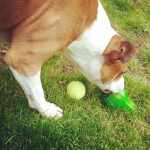
Give the Treat Launcher a go, especially for those dogs less inclined to chase a ball – they might chase this though!
Grabbing & Biting
Tug is one of our favourite doggy games because if it’s played with appropriate rules we can teach dogs so much with this game, all dressed up in pure fun!
And for the DIY inclined why not consider building a springpole for your tug-addict: How to make a springpole
Enrichment comes in all shapes & sizes
We can give our dogs all sorts of jobs that challenge them in different ways. Giving them outlets for natural behaviour might include providing them with :
We’ve had quite the admin week in preparation for super-busy times next week!
Smiles from Uno
Next week…
CBTT5 will have their last week of tuition, starting Monday. That’s five FULL days of canine science, training & behaviour – all day, every day (that’s heaven to us!).
Two of those days will be spent in Tayto Park zoo (send us good weather wishes please!) working with different species – no dogs – to really test our mechanical skill and training planning skills. We will soon realise how much we LOVE working with dogs!
We will have lots of pictures and clips from our work there but here is some of the good stuff from our trip there last year as CBTT4 wrapped things up.
We met some great new dogs this week, along with there fab families!
This handsome fella is Buddy – check out those amber eyes! His family adopted him just a week before his appointment and were keen to get everyone off on the right paw.
How brilliant is that? Proactive owners wanting to get started with training early to offset any problems from developing and making sure this addition to the family will fit right in – we love that!
Buddy did really well considering he is just finding his feet in all this; he loved learning how to work Kong toys, while the grown ups talked, and to earn treats for polite behaviour.
This happy wee girly (blurry tail!) is Molly and she came for some training with her entire family. They have done really well with her training so we are going to put in place some extra help with self-control and loose leash walking.
Hopefully we will be seeing lots more of Molly soon – we love her!
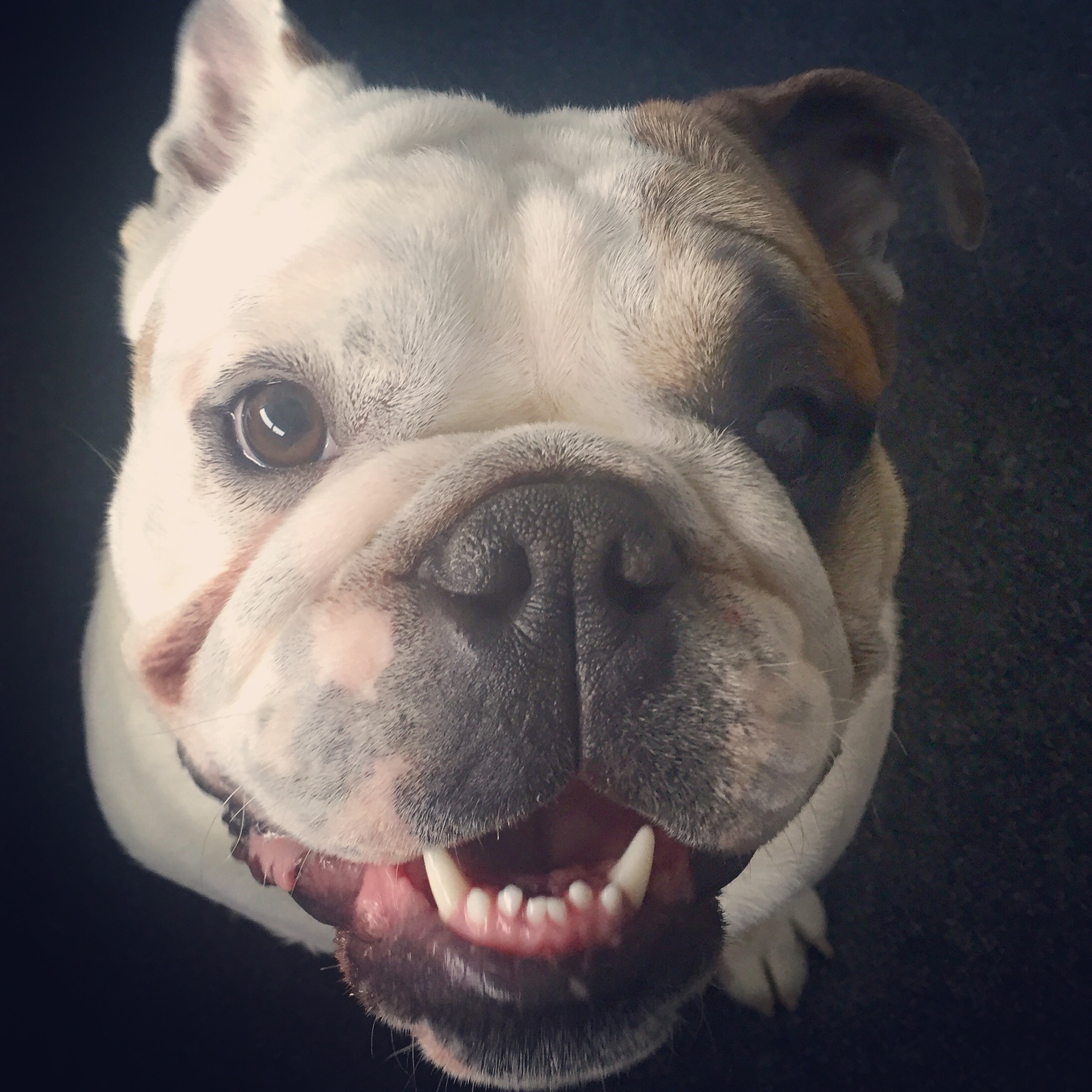
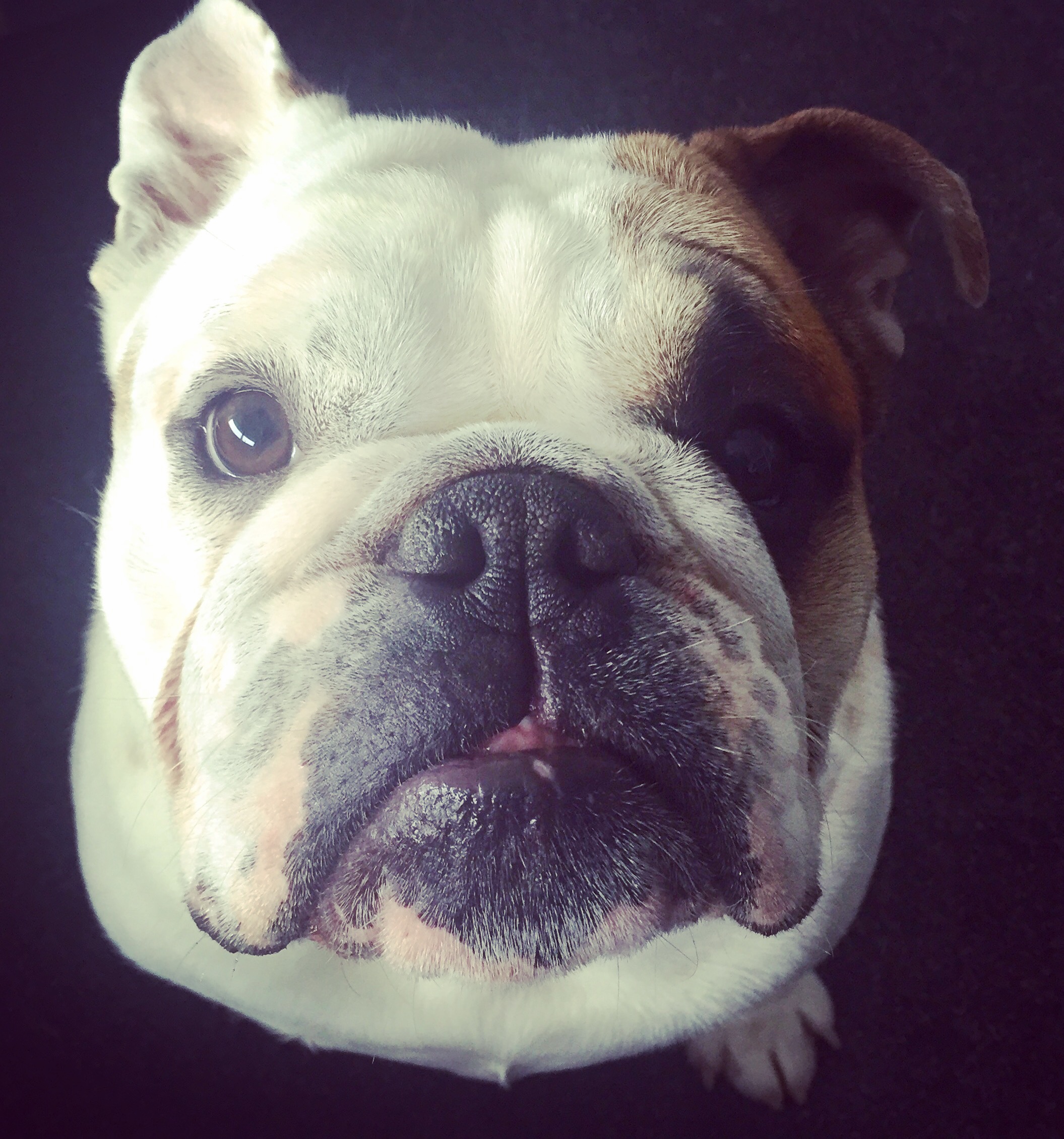
This cutie-patootie is Uno, a teenage Bulldog. We have lots of work to help this fella cope with a stressful time recently but he has an awesome family to help him!
We had lots of fun at our first session and we will be seeing him soon too – yay!
We’re on Instagram!
Why not join us and follow our new Instagram account – we’ll follow you back too!
This weekend we welcomed a new Canine Studies – Foundation (CSF) group. This course is designed for those working as or starting out as pet sitters and dog walkers so that they can get started with basics of canine health and behaviour.
This is a six month course comprising two units (subjects): Introduction to Canine Behaviour and Canine Health & Disease.
We also cover business practice and management, insurance, professionalism and the canine care industry – nine new learners who are about to get very busy, and love every minute of it!
AniEd Dogs
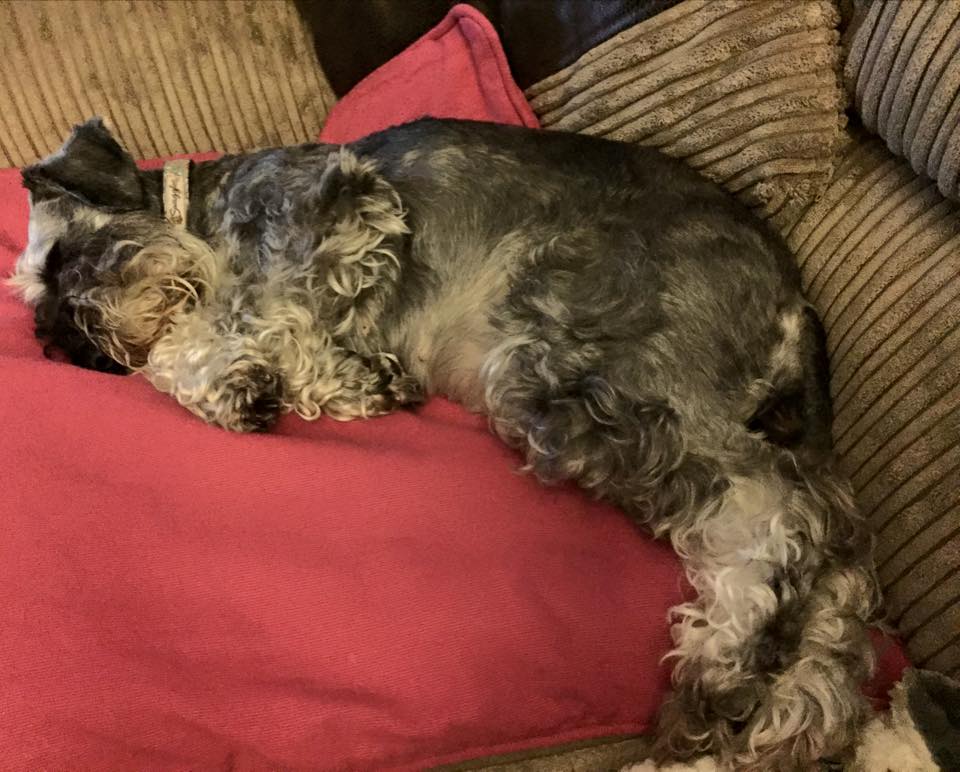
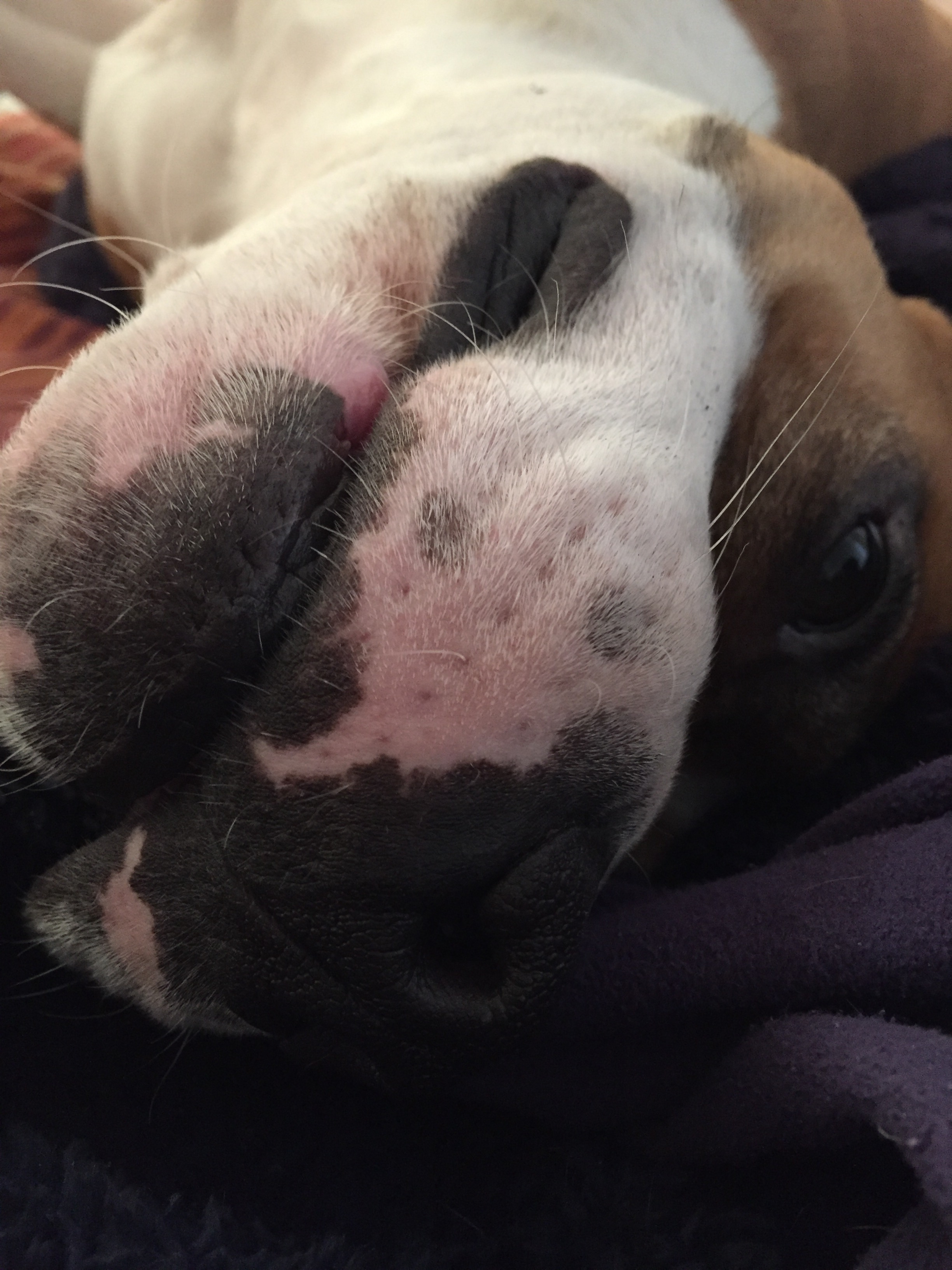
It was lazy week for the three AniEd Dogs #donotdisturb #zzzzzz