Thanks to all our FB supporters – you guys helped us get over 2500 Likes this week! Keep clicking Like and sharing so that that number keeps going up.
This week we sent you pieces about choice in dog training and new microchipping legislation in Ireland – the countdown is on! (We have updated that piece as new information became available amidst plenty of confusion!).
Awesome Pets & their People
Another short week so we just had a couple of consults this week with some great dogs, and committed owners.
Stunner Roxy came back for another follow-up and we went out and about to help her people help her when out in the big bad world. Roxy is a fearful girl, who spent the first 8 months of her life in an almost feral state. Now she has awesome people who have made amazing progress, and her confidence and social skills grow by the day.
Here’s a playlist of some of our work, during our walk around:
The very handsome Teddy came for a first consult; he has been in his fab new home for a very short time so we are working on building his confidence, settling in and increasing his responsiveness. He is off to a great start already!
Lottie came back to do some stooging with Decker and is learning that she can just be, when close to another dog. Doesn’t have to love him, doesn’t have to play, doesn’t need to aggress…can just be.
And next week we will be launching the next run of our CBTT program, CBTT7!
Many of our qualified CBTT-ers have developed or are developing their training businesses, so if you need a pet dog trainer, look no further: Our Dog Trainers.
AniEd Dogs
A look back with a nostalgic shot of Boomer & Zack (before Decker was even born!):
And Decker has an Easter balloon hunt, and is very excited about it:
This is the last week during which you can get you and your dog compliant with Ireland’s new microchipping laws; more here.
I’m afraid there’s no chocolate for you two beggars!
Biting is normal, natural, necessary dog behaviour but when it happens (and it is a when and not an if) it is very distressing at many levels. Understanding biting and related dog behaviour is a pretty good step toward preventing it: Why Dogs Bite, Part I and Part II.
A common cause of bites in pets, is pain and they are pretty good at hiding their pain and discomfort. Download a straight forward poster here and here.
Pain may mean a trip to the vet’s and unsurprisingly many dogs find this upsetting and distressing. Not only that many pet owners appear unable to assess their pets’ distress, given that many of the signs can be pretty subtle and easily misinterpreted: Canine Stress in the Vet’s Waiting Room.
This piece gives an in-depth run down of stress and things that can be done to help reduce your dog’s distress: Fixing their bones, but breaking their brains.
More and more veterinary practices are becoming aware of ways to reduce dogs’ distress before, during and after procedures; here are five tips for handling dogs and cats in a caring manner – it’s a poster that you can download and share 😉
We can work together to improve your dog’s comfort, not only with the vet team working to reduce stress, but at home preparing our dogs for handling with two simple of ways of helping your dog enjoy this type of contact in this clip.
With Easter only a few days away and the temptation of chocolate too much for some dogs, let’s avoid that vet visit by being aware and careful of poisons that you dog might ingest:
Even we though we might not have too much self control around all that chocolate, our dogs can: Clicker Training Doggie Zen exercises!
Doggie Zen exercises are some of our favourites, and even though this is an older resource it never really gets tired!
Congratulations to Purin the Beagle for her new Guinness World Record: fastest 10m on a ball by a dog!
Again, we are appealing to people to give chocolate bunnies rather than real ones. But if you are thinking about getting a rabbit pet, watch this clip before getting one…
Or maybe just watch this somewhat terrifying clip…
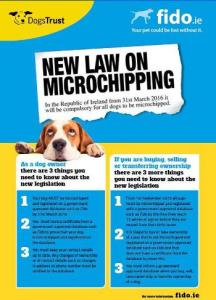
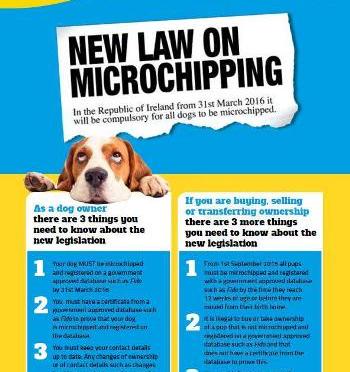
As part of the Animal Health & Welfare act, 2013, microchipping is set to become compulsory for all dogs from the end of this month in Ireland; Microchipping of Dogs Regulations, 2015.
This is great news in terms of tracking dogs and their owners, holding owners responsible for their dogs’ behaviour and reuniting lost/stolen dogs. But before we reap some of the benefits there are going to be some hurdles to jump first.
What is microchipping?
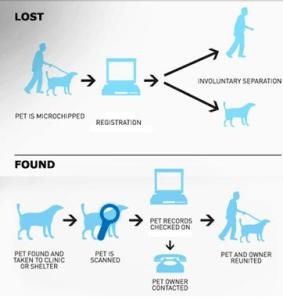
Mircochipping involves implanting a tiny microchip (a little bigger than a grain of rice) under your dog’s skin, usually in the shoulder area.
The chip contains a unique barcode number that can be read with a scanner. The details linked with the barcode are recorded on a database that can be accessed.
Having the chip implanted certainly doesn’t seem to be comfortable as the needle used is larger than those used for vaccinations or blood samples.
Sometimes if a dog is being anaesthetised for another procedure the vet will chip then too, but for the most part the dog is conscious.
Holding the dog calmly against your body and providing him with a Kong toy lined with pate while this is going on will help. Here’s more on lining and stuffing Kongs, ideal for such procedures.
Once chipped the implanter will check the location and functioning of the chip by scanning over the dog’s back and shoulders.
You can also check your dog’s chip at Maxizoo stores around the country – this is a good idea as chips can move so knowing where your dog’s chip is can be recorded too.
Microchipping legislation…the story so far
Since September 2015 all puppies must be be chipped by the age of 12 weeks, or before leaving their birth home.
This has become one more way of identifying more responsible breeders, as those who put lots of other things in place plus make sure that each puppy they produce is chipped.
It became illegal to acquire or supply a puppy without a chip and certificate of microchip registration.
To collect and record all this microchipping data the department has approved FIDO as the first database.
Apparently, other databases will also be approved.
Microchips must only be implanted by vets, vet nurses or lay implanters who have a Unique Identifying Code (UIC) and the chips they use must meet specific technical standards.
Approved chip implanters will have completed specific training.
What’s next?
By 31st March, 2016 all dogs must be microchipped with an appropriately compliant chip, the dog’s details recorded on an approved database and the owner hold a Cert of Microchip Registration.
To help with this lots of different organisations have help microchipping events such as various SPCAs, Dog’s Trust and local rescue organisations, along with vets. Many offer reduced price and even free microchipping.
When bringing your dog to be chipped the owner must provide photo ID and proof of address too so that those details can be recorded with the dog’s chip.
So, first thing’s first, get your dog microchipped NOW!
My dog is chipped…?
This is where it gets a bit complicated. If your dog was chipped previously you may have had a cert printed out from the FIDO website, which previously acted as a database for reunification of lost/stolen dogs. This is no good any more.
Chipping prior to this legislation (so first half of last year or before) means that you probably didn’t get the required Certificate of Microchip Registration – you need that now, regardless of on which database your chip details are held.
FIDO, as the first approved government database, requires that you go here so that they can check all your details and make sure everything is in order according to the new legislation.
FIDO check your details and for €4.50 (correct as of last year) will send you the legally compliant certificate. Keep that safe!
On your cert will be a PIN that you can use to log into the database and check your details, keep contact details up to date or register change of ownership.
The details must be kept updated by law.
If your dog has not previously been registered with FIDO, you will need to return to the database that your chip is registered to, to get your cert. This may be AniMark, IKC or the Irish Coursing Club – all recently approved databases (we couldn’t find reference to it on the AniMark or Irish Kennel Club websites though!).
Unfortunately, none of these organisations seem to have done a whole lot to inform their clients and pet owners in general so this has been shrouded in confusion.
If you prefer you can re-register your chip with FIDO and request a cert that way. This costs €15.00.
Should you not know which database your dog’s chip is registered with or it’s not registered with one of the approved four, you will need to register with an approved database as soon as possible.
You can check Europetnet to see where your chip is registered. You will need your dog’s microchip number – if you don’t have that, go to your vet who can scan your dog and help you.
You can get a chip check card from your vet or Dog’s Trust and mail that to FIDO for further help also. Yes, snail mail…
From April, if you acquire any dog, of any age from any source the dog must be microchipped and you must receive a cert registering you as the dog’s owner.
The onus, for all of this legislation, is on the owner of the dog to comply.
References to choice, and emphasis on giving the dog choices are pretty common in dog training right now – empowering the learners through choice is where it’s at but how do we actually do that, and how does it actually help?
Yay! for Choice
Lots of choice sounds wonderful – our culture is particularly enamoured with choice, studies have shown that animals find having options rewarding and offering a choice of bedding, substrates, foods and other conditions improves the welfare of lab animals – that’s three for three, right?
Well, it’s a little more complicated than that…
Training reduces choice
Dogs make choices all the time and training is really about increasing the probability that they will choose the behaviours that we prefer…
I even say it regularly: “manage the dog’s environment so that he chooses the desired behaviour…!” What I am saying here sounds lovely, but if we examine this closely I am limiting the dog’s choices.
In reward based, welfare-friendly training (or whatever label), the sort that we do, we recommend:
teaching new behaviours in a low distraction environment so there are fewer options
use HIGH value rewards so those other options are less appealing
put environmental management in place to prevent the dog carrying out undesired behaviours – limit the dog’s access to other reinforcers
Behaviour is predictable
Well, certainly the probability that a particular behaviour will occur in a specific situation is pretty predictable – reinforcers strengthen behaviour (more likely to occur) and punishers weaken behaviour (less likely to occur).
Dogs will be more likely to choose behaviours that are reinforced, that are reinforced pretty rapidly and that are reinforced with high value reinforcers.
When you make reinforcers available in training you are tipping the scale in your favour that the dog will choose the option you would like him to.
(It happens if you use punishers too, but the dog is choosing which behaviours to avoid…)
A trained dog has more choice
Once a behaviour has been reliably reinforced (strengthened) the dog is more likely to carry that one out over others – that’s right, the dog is more likely to choose our choice over one of his own.
We train dogs not to be so much dog, so that we can live with them.
Choice interferes with training
Let’s face it, we probably don’t want dogs to get to choose their own behaviours, most of the time – normal dog behaviours range from destructive to disgusting to downright dangerous.
Decker gives my hairbrush the Am Staff treatment
Your dog’s choices are very likely to interfere with training, especially where acceptable outlets for all that management have not been provided.
Getting to chase small furries, digging, rolling in poop, chewing things, barking, and ripping stuff up are all behaviours that dogs find intrinsically rewarding.
This means these behaviours are strongly reinforcing, so even if you offer a trained alternative – these behaviours are worthy competitors.
Not all choices were created equal
Dogs are not robots, they are responsive to the world around them so always have choices. They just might not always choose the options that you present.
Dogs do what works – they will choose reinforcing behaviour, over and over (that’s what makes it reinforcing!).
It can be pretty difficult to offer our dogs open choice in everyday life, even if we think that’s what we are striving for – giving them access to a large range of options may not be safe or possible.
We might be better aiming to offer them more limited choices, narrowing down their options. This is largely what management and training do.
Even though your dog might very much like the idea of having more open choice in terms of the behaviours he gets to carry out, having more and more choice is not always helpful.
Having choice and not being clear on which option is best may cause a dog to exhibit conflicted behaviour, presumably experiencing a level of stress in trying to cope with the choice.
Providing choice, and balancing that with providing both predictability and control will reduce any distress. Giving choice must be done with care.
When is choice important?
Choice is especially important when it comes to things we do to dogs, that they might not like, that they might find uncomfortable or scary.
Dogs choose which behaviour they, as individuals, find rewarding. The learner chooses the reinforcement.
And that might mean that they choose to stick with a behaviour because it gains them access to things they like, or choose a behaviour that allows them relief from a situation.
Either way, it’s our job to listen to him. Knowing that he can leave, knowing that he can just take a moment and knowing that he can gain a little relief helps boost a dog’s confidence and comfort in an interaction.
Decker doesn’t like parasite-treatment application:
This along with helping to make the situation a more rewarding option with things he likes will help the dog learn to love the interaction and find it more enjoyable.
We can offer those two options in most interactions with our dogs.
How is choice helping?
The pet-dog-contract doesn’t have choice built in and as much as our dogs love us, they didn’t choose to come live with us, they didn’t choose their lifestyle and certainly have not made any informed choices about how they get to live day-to-day.
Dogs are super tolerant of human behaviour and human choices, thrust upon them. We have selectively bred dogs to be this tolerant and compliant and therefore, we assume that our pets like what we like and that they like what we do to them.
Having choice might not be a reinforcer in and of itself. This is a hard thing to test – we would need measurements of the behaviour with access to individual reinforcers Vs access to a choice of reinforcers. And even then, the variables may loom large.
Whether something is reinforcing or not is retrospective; we need to review our work and see if behaviour was strengthened or not, and contingent on the reinforcement.
EileenAndDogs asks “Is it a choice of behaviours? Or is it a choice of consequences?” in her choice challenge.
Maybe the dog having choice is more a desired quality of reinforcers or perhaps it’s having a more classical or even cognitive effect on learning.
I have certainly observed in dogs that if they get to choose to participate in a particular experience it may be a pleasant (and reinforcing) experience, whereas when they are lured, forced or coerced into that same experience it appears to be aversive.
In this clip Molly, who is highly distractable (we’re working on it!) is choosing between distractions (which are anything and all things) and focus.
And in this clip (later on in our program), we add a little more complexity to focus work by waiting for eye contact and a loose lead to gain access to distractions, and then when she’s ready, more eye contact to come back in and play flirt pole:
We are not asking her to do anything. She chooses when to tune in and out.
Allowing her to look away again may be reinforcing if we had set it up so that we traded focus for access to distractions; but her choice allows her to remove herself from social pressure, allows her to feel safer through vigilance, reduces frustration and probably helps her feel better about the training set-up.
If anything it might be reinforcing (strengthening) looking away and checking out EVERYTHING.
Every dog needs a fish bowl
It’s not a question of either offering all the choices or no choices at all – it’s about what choices we can offer our dogs, and what they get to choose between.
Just any old choice isn’t necessarily better than no choice at all. The choices must be meaningful to the individual – that is, they have chosen them.
And I, as the human, am responsible for the potential effects of those choices. That means, that as much as possible I must know how this will pan out, regardless of which option is chosen.
You, the human, are free to choose on behalf of your dog so take heed…
If a dog is constantly being put in situations where they must choose between their safety and danger, this isn’t good. (Remember the dog gets to decide if they feel safe.)
We need to step back, work at the dog’s pace and build through progress more gradually.
Giving dogs a say
A reasonable level of choice is good, with conditions – that we keep the dog safe, that the choices we offer don’t lead to deterioration in training or behavioural health and that they are actually chosen by our dogs.
learn to read canine signaling so that you can ‘listen’ to them
think like a dog so that you understand which natural behaviour they might need outlets for
observe – what does your dog do with his ‘free’ time?
There may be clues there as to what sort of behaviours he chooses to engage in.
Look for repetitions as this means something is reinforcing that behaviour. Can we use it (control it) for training and/or allow him more free access to it?
Less is more
You might not need or provide all of these, but try to find one safe, appropriate way to give your dog a choice each day.
Provide a choice of beds, bedding, bed-positions, access to beds.
This may be especially important where your dog is exposed to different temperatures and conditions over the day, so a bed in the sun and in the shade is a good idea, for example.
Bring him to a safe environment that allows him to choose activities – bring him to a fenced area, or have him on a long line and allow him to do doggie things such as sniffing, rolling, chasing, playing, hanging out, digging, doing dog-stuff.
This is a great opportunity to observe (just watch him, don’t interact) your dog to see what he really likes to do – HINT – he will be doing it!
Allow him to choose the route on exercise, allow him to set the pace, allow him to stop and sniff.
Stand in the middle of a safe area and just let him be a dog. Don’t encourage any specific behaviour, let him choose how to spend this time.
Wait for him to choose what game to play, which toy to use, and provide options to allow him to end the game, switch activities or just take a break.
Allow him to keep the toy, leave the door open, provide a bed to rest in or a chew to work on.
Offer lots of enrichment options – how would your dog like to earn his meal today? Which behaviours would your dog like to engage in?
Be imaginative with food reward options in training.
Not only which foods, but how he might like to be rewarded – catch the treat, search for the treat, chase the treat and so on.
Allow your dog to say that he would rather not interact that way, right now – allow him to choose space over contact.
Pet, groom, or handle the dog on the side closest to your body so that it’s easier for him to move away if and when he wishes.
In interactions, wait for the dog to approach. Interact for a 3-count, withdraw and ask your dog if he wants to continue.
Avoid physical manipulation, intimidation, social pressure, and ‘corrections’.
Improve the value of reinforcers that you do control so that your dog chooses them over all the other stuff. Use functional rewards – the things that your dog already does behaviours to gain access to.
Work on boosting the value of food rewards, ideally your dog’s regular food.
Teach your dog to be a good human-trainer so that he knows that behaviours he chooses will result you allowing him access to the things he likes.
Use management carefully to help your dog choose more acceptable behaviours.
Reinforce choices that you like, with functional rewards where possible.
Use more powerful reinforcers to train more acceptable behaviours to replace those you don’t like.
If you manage (reduce choice), look to ways that you can provide your dog with acceptable outlets for those behaviours you are preventing (limiting).
Choose choice
Adding some choice carefully is a good thing. Watch carefully for the choices your dog makes – what do those choices tell you about how he experiences the world?
They are always telling us something, we just need to learn to listen.
How do you provide choice for your dog? How does it help?
With the festivities surrounding St Patrick’s Day (and this being Ireland) we have had a short week this week and another short week next week, with Easter!
Awesome Pets & their People
Monday was a day filled with behaviour consults and we started with Bueno!
This guy spent most of his life confined but has now found a great new family who are doing lots to help him grow in confidence and to learn about the world.
Dogs like Bueno who are shy, reserved and take time to explore their world are most likely this way because they missed out on vital exposure and social experience early in life. Puppies who, in their first 3-5 months don’t have TONS of positive interactions and experiences will probably experience behavioural and emotional issues their entire lives.
People will often presume that they behave this way because they had bad experiences, were abused or neglected, but it doesn’t even require that. Simple lack of experience can be really damaging to a dog, and the effects will be felt for that dog’s entire life.
We got started with lots of foundations and introduced a way to help him learn how to control interactions, feel safe and boost his confidence:
Next up was PingPing who is named after a Panda!! And he has a sister called SingSing – also named after a Panda 🙂
We did lots of work on increasing responsiveness around other dogs and decreasing excitability.
We started with some great foundations and began to teach him that looking at another dog (at such a distance that we wasn’t getting wound up) means yummies and soon, when PingPing sees another dog he looks back to his person (hey! where’s my treat!?). Him playing the game tells us that he is becoming more comfortable too!
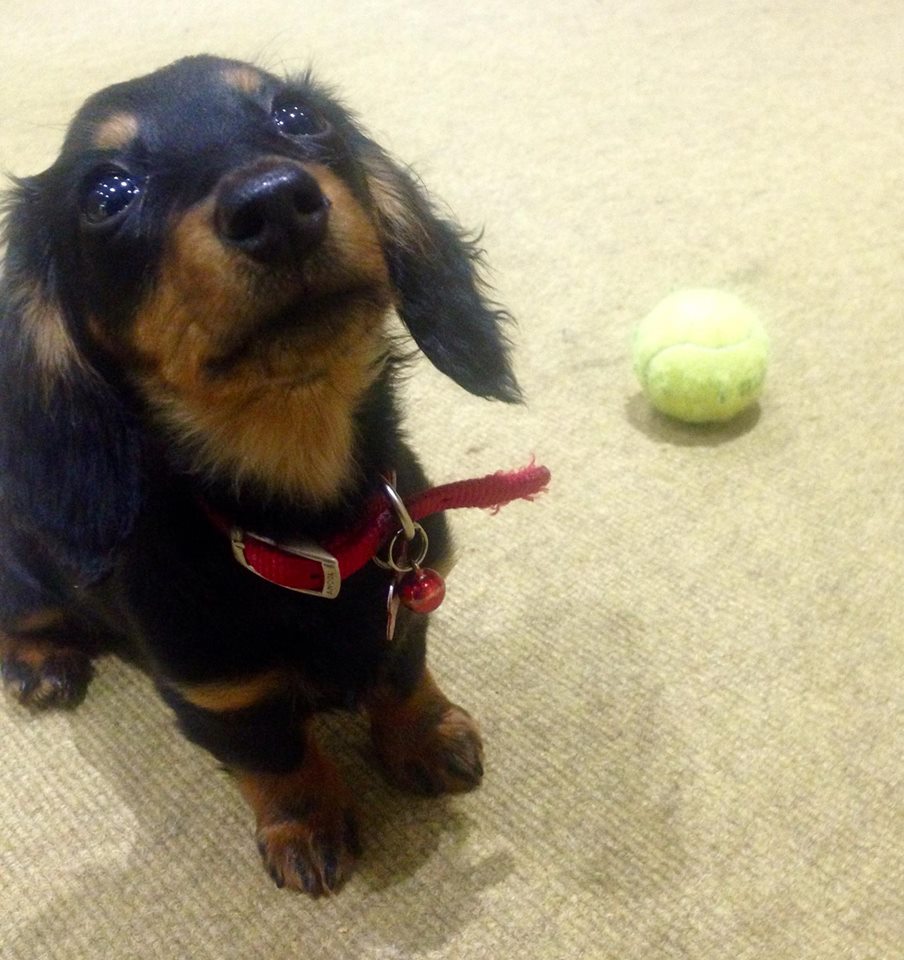
Next up for a consult was little Benny, who brought his tennis ball with him – the most important part!
This fella had been wandering as a stray but soon he found his new family and has really landed on his paws! With the help of his love of play and his awesome people this fella will be growing in confidence in no time!
Tuesday meant it was daytraining-with-Molly-time!
We got lots done and made some incremental improvements with her distraction and focus levels. We slowly introduce distractions and work at a level with which she can cope.
And our last consult was with this cheeky little chappie, Joey.
He was adopted just before Christmas and is growing in confidence more and more. Now with some great foundations in place along with a little work in some other areas, he will be an even more cracking little dog!
People Training
We have two new and excellent courses coming up soon and there are a couple of spaces left on each.
Teaching Puppies is probably one of our most important courses on offer. Puppy classes offer the most important education for puppies and their new people, helping to get everyone off on the right paw.
What’s most worrying is that anyone can offer puppy classes and they are routinely delivered by those who have no or very little education in training and behaviour! Beginner trainers will often attempt puppy classes as they appear the most straight forward, but this couldn’t be further from the truth.
Read more about this course here and share the info with people whom you think will benefit!
The Helping Rescue Dogs looks at what happens when the dog-human relationship hasn’t worked out and what we can do to improve that, with dogs’ welfare in mind.
We look at everything from the dogma in rescue to canine behaviour to assessing and improving the welfare of canines in various stages of the rescue process.
To improve the plight of rescue dogs we need educated, skilled and knowledgeable people on the inside, building it up from within. This course is designed to help make that difference.
Read more about this course here and share the info with people whom you think will benefit!
Wohoo! CBTT4
And more great news this weekend for our CBTT4 group who have completed all their work and are now fully-fledged Canine Behaviour & Training Technicians!
They have worked so hard over the last year and have completed over 90 credits worth of work – each credit equals about 10 hours of the learners’ investment…yep, that’s over 900 hours of studying, reading, analysing and practicing, practicing, practicing.
We can’t be more proud of our ever growing CBTT-family!
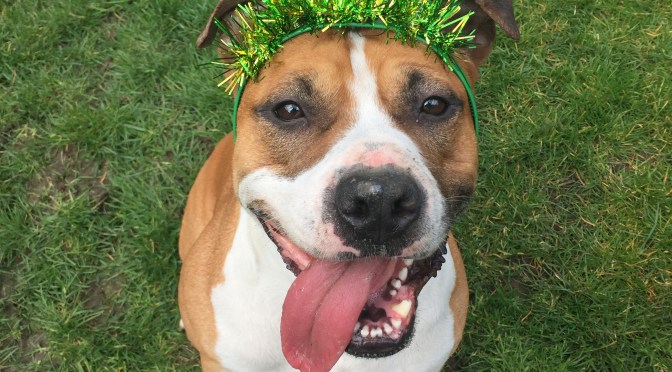
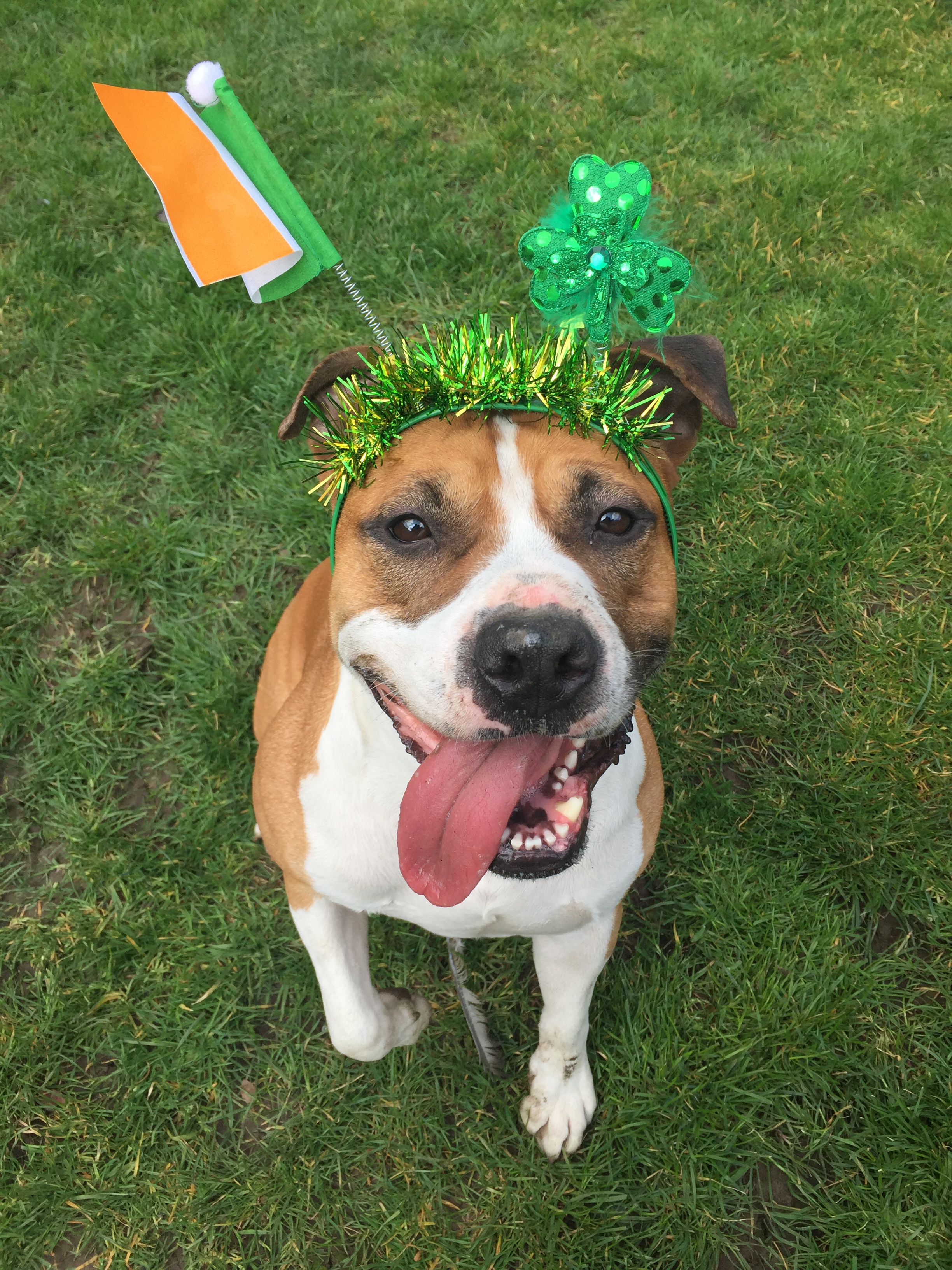
Hope you had a great St Patrick’s Day – even the Swedish American Staffordshire Terrier was Irish for a day:
There’s been quite a bit of canine related drama around the web this week…
Crufts always inspires much internet uproar. Almost 30,000 dogs attended to compete and the vast majority experience a pretty good standard of welfare but the intense coverage of this show highlights where progress must be made in terms of breeding practices, selecting for anatomical extremes and temperamental qualities.
A very sweet, young Westie called Devon won Best in Show and lots of fun was had by many hundreds of thousands of competitors and spectators.
One of our favourite moments was this Freestyle routine from Irena & Layla, which, believe it or not, took third place in an obviously highly competitive International Freestyle competition:
Controversy surrounding Cesar Millan and his dog whispering ways have catapulted him and his actions into the headlines again, after a period of relative peace and quiet. This time things have got serious with he and his team being investigated for animal cruelty relating to the treatment of a pig involved in one of his “dog rehabilitation” pieces. A LOT of social media pieces have appeared, some can be found here: Cesar-Gate and Beyond Cesar Millan.
No other dog-person inspires so much controversy and so many polarised views points. Discussion is good and this piece is a nice summary of this particular situation and links to further information.
Old dogs are a joy but getting older ain’t easy: It’s Only Money
And living with an older dog often means considering that most difficult of decisions; some advice here if dealing with canine dementia in your older dog: Dementia in Senior Dogs
Such a busy week that the blog was left a little behind but we have big plans for the next couple of weeks so stay tuned!
Awesome Pets & their People
We had lots of amazing dogs with us this week for behaviour work, training and rescue evaluations.
Monday started off with this happy chappie, Dante:
Dante came for a follow-up to our initial consultation to help him get ready for a big move with his family to Switzerland!
Sweet, soft Rebel also came for some behaviour work – he was just happy to discover that pate goes into Kongs and it’s delicious!
Bacchus came for a behaviour appointment too before he set off for Crufts 2016.
He did really well, placing 5th in a puppy class with very stiff competition. Wohoo Bacchus!
Daytraining:
Molly came back for her second session and we worked on lots and lots.
Part of our plan was to introduce flirtpole play so that we can have some good exercise that will take some emphasis off lead walks, which can be a bit of a problem, and so that we can raise her arousal a little so as to narrow her focus – Molly is big on getting distracted.
We didn’t anticipate that she would be super scared of it though…
Introducing both predictability and controlability to a situation allows the dog’s confidence increase greatly so soon we were teaching her the rules of this high-energy game:
We added more and more challenge to our loose leash walking work – still not ready to go right out into the big bad world with that one but improvements in all areas:
We work with A Dog’s Life and help out with training & behaviour support for their dogs and volunteers, advising on policies in relation to fostering and adopting dogs and developing programs to help their dogs become the most adoptable dogs they can be!
We see the issue from all sides – rescue dogs going out into the community and the training and behaviour support some rescue dogs might need when out in the community. It is our priority to emphasise the placement of safe, suitable companion dogs that won’t mean a life long project for their new owners, who will be excellent representatives of what rescue dogs are and who will be loved and treasured family members. No pressure then!
We had visits from two of these dogs this week and got to spend a couple of hours with each one to get to know them a little better, evaluate their behavioural tendencies and outline the best next steps for them.
First up was this gorgeous gal, Jessie:
We are eagerly looking for a suitable foster placement and forever home for this girl so if you think you can help, please contact A Dog’s Life directly.
Both of these are cracking dogs who will make excellent family companions and wonderful additions to their new people. We look forward to seeing them again soon, once they have settled into their new homes, for their post-adoption follow-up!
People Training
This weekend we welcomed a full group of dog professionals, walkers, trainers & groomers, for another Canine First Responder course. It was a great day and all happily achieved certification for another two years, before they need to renew again.
Would you know what to do in a canine emergency? Register your interest for our next course by sending an email to info@anied.ie if you would like to learn more 🙂
BIG Summer Event
We are very excited to have Helen Zulch back after a very successful and booked out weekend workshop last year.
Helen is a veterinary surgeon, clinical animal behaviourist and a highly skilled clicker trainer.
She is best known for her work with Lincoln University and the Life Skills for Puppies program. Helen is a senior lecturer in Lincoln University on the Clinical Animal Behaviour under and post grad degrees. She is also a consultant at the University of Lincoln Animal Behaviour Referral Clinic.
The Canine Training/Behaviour Skills workshop will take place at our centre in Glasnevin in Dublin. We have a great weekend planned:
Day 1: Saturday, 4th June 2016
This day will concentrate on building clicker skills, covering more advanced skills in precision clicker training. Participants for this session will be those who have some experience in training their own or others’ dogs and have shaped behaviours with clicker training.
Spectators of any background will really benefit from this session and it will be especially helpful if you are new to clicker training or preparing for clicker training assessments such as the CAP program,
Day 2: Sunday, 5th June 2016
This day will be seminar style (no dogs!) and will look at a topic that is rarely discussed in our field, but one that is highly relevant. Helen will examine, with the help of case studies and interactive discussion, the relationship between canine health and behaviour. She will cover ways to integrate these concerns into our dog training, developing meaningful relationships with veterinary and healthcare professionals.
This will be a valuable topic for anyone working or interested in training/behaviour fields and those working in veterinary too.
Pricing:
Participant Saturday – €150 (with a dog who is suitable and comfortable working in a managed workshop environment)
Spectator/seminar one day- €90
Spectator/seminar both days – €160
Participant one day and spectator one day – €220
If you would like to book a spot we encourage you to register and pay ASAP so as to secure your spot (there are limited places). To book please copy and paste the following, along with your responses into an email to info@anied.ie :
Name:
Contact Number:
Email Address:
Day/s of attendance (please specify as many as are relevant: Spectator Day 1, Participant Day 1, Spectator Day 2):
(Where relevant) Dog’s name:
Type/Breed:
Age:
Chosen method of payment:
Better get your skates on as places are limited and booking up fast!
AniEd Dogs
Boomer and Decker reluctantly share – Boomer’s queen bee and Decker is just trying to steal a corer of his bed!
And Zack had something yummy…but then everything is yummy to Zack!
Such a busy week with lots of excellent dog-related resources from all over the web!
Spring is finally here and lots of us may wish to get more active with our dogs. Take care before you start putting your dog under any extra exertion though and only ask your dog to participate in exercise they are able for: Jogging with your dog improves overall fitness and health
We often meet resistance when we ask pet owners and indeed, vets, to have the dog fully examined, including any relevant diagnostics, before or as we engage in behaviour work. This case illustrates the importance of such awareness: When the only symptom is behavior change
Teaching a great recall isn’t about the type of dog you have, or just about having your dog come back when you call – it requires quite a bit of investment but is well worth it: The Secret to a Recall
And if you really want to teach your dog, better learn how they best learn: How Dogs Learn from Urban Dogs and How Dogs Learn from Dr Yin
We’ll miss all our new friends that helped our learners develop their mechanical skill.
Awesome Pets & their People
This handsome fella is Opie, who we have known since he was a puppy. Well, he’s certainly all grown up now, weighing more than 30kgs!
He came back for some revision and to really get a handle on loose leash walking. Now that he’s a full on teenager it’s important that we are emphasising appropriate physical exercise, lots of calming mental exercise and tons of work on self-control. Opie is lucky to have an awesome person!
Opie knows that dog trainers can’t resist doggie-head-tilts – they are our kryptonite!
Molly came for Daytraining
A daytraining program is an intensive program for your dog. It starts with a one to one session with the pet+ owner to discuss the issues they are experiencing, and we begin by putting some foundation exercises in place.
We schedule a number of daytraining sessions where your dog comes to spend the morning or afternoon with us and we begin working through a comprehensive program that we all design together.
This gives the dogs some better skills so helping to support their pet owner as the humans learn the training exercises.
We have had some excellent success with daytraining programs, particularly for on-leash behaviour. Molly came for some help with pulling on leash, self-control and to help reduce her stress and vigilance while out.
Here’s what happened during her first daytraining session:
Molly is a little concerned at being in a strange place with new people so to help her we start simply by teaching her that she can train humans!
We start just marking with a YES!, any approaches toward us, and we toss salami away each time. As she becomes more comfortable we can begin to mark and reward her giving eye contact.
Soon Molly is offering sits, YES! and we toss a reward. She learns that these humans are easy to train and her learning that her behaviour controls the environment around her is confidence boosting. Molly soon becomes more and more comfortable as she learns how to learn.
This exercise can be progressed too so that it not only helps with confidence boosting but also with her learning how to greet more politely and even control herself when she’s excited:
By getting Molly excited and then waiting for her to immediately calm herself she can begin to develop better self-control and self-calming skills. Yay Molly!
All this has been pretty taxing for Molly so far so we take a brain break – time for a sniffing course. This helps to relax Molly by allowing her to do a favourite-doggie-past-time, sniffing, and helps her grow in confidence as she explores novel and weird items.
She even chills out at this stage to have some fun with plastic cone decoys too!
Because Molly is such a professional-leash-puller and has trouble focusing we are going to start really really easy but not by moving forwards, rather we are going to start by going backwards…
Molly is learning that focusing and following the dancing humans is great fun!
We can begin to add a little sideways movement too as we slowly build to moving forwards. Molly just learns to walk in a nice position and we simply dance around her…
In this program we are going a lot of work on our backwards movement and that’s because we will use it in different ways, not just for loose leash walking…
When faced with distractions we can back-up to quickly get Molly out of the situation and get her re-focused on her human.
This can also be used in teaching and practicing loose leash walking out & about, where Molly may find it hard to eat food rewards. This backward movement is exciting and we are associating with lots of praise, fun and food rewards!
Notice how this time Molly is much more relaxed and less unsure of what her job is in this game.
We are so impressed with Molly’s progress that we even begin to work just a little bit outside. We start right outside our centre in the carpark to the front where there are lots of comings and goings, sights and sounds.
We start with some passive focus – she can check out all the goings-on and as soon as she chooses to reorient we can mark and reward. But soon she is able to practice a little of our auto-sit exercise too.
To help bring Molly down after all the excitement, we worked on some matwork which her people have started with her at home. We use a high rate of reinforcement, really regular treat tossing, because there are some noises and voices outside spooking Molly. Over time, with the help of lots of rapid rewards, she can relax more and more even with these great distractions – she even makes a little nest for herself!
We are thrilled with Molly’s progress during her first session and we can’t wait to get working with her again next week!
People Training
We welcomed a new Canine Nutrition group – this is a three month part-time course and we were joined by six learners from all around Ireland on their journey to learn more about canine nutrition for physical and behavioural health.
This course starts with a look at the functioning of the canine digestive system, how that system processes nutrients and the fads and trends in canine nutrition.
We emphasise the development of critical thinking skills, applying that to the broad area of canine nutrition that is often filled with myth, anecdotes and misinformation. A tall order!
We ended our first day spending lots of time analysing commercial feed labels; learning about labeling tricks, energy content and evaluating food quality. Their heads were well & truly buzzing after all that!
Decker has heard it all before so chose to play lookout instead!
CBTT6
This weekend, we had CBTT6 in for their second weekend. We’er finding it hard to believe that they are almost halfway through their tuition already – time flies when you’re having fun!
This weekend, their second, we covered Domestication & Selective Breeding on Saturday and Canine Nutrition & Dietary Requirements on Sunday so they have all headed home this evening exhausted!
Well done CBTT6 for getting this far – keep up the great work!
Check out the Mother’s Day Google Doodle that we had for CBTT6 today, of course projected – very fitting for all the dog lovers in the room:
AniEd Dogs
Decker and Boomer had a busy week helping out the humans, while Zac wrapped up…
Here’s another great, straight-forward piece on canine signaling: Dog Body Language
Always, always, always keep medications, supplements and other similar bits and pieces well away from pets and remember that dogs can chew through safety bottles and containers so even more care should be taken. A recent threat to dog safety but one we need to be aware of: Are E-Cigarettes Dangerous to Pets (Hint: YES!)
With dogs living longer and longer due to better care, we are seeing more and more old age disease such as canine cognitive dysfunction.
A dog showing fearful responses already feels pretty lousy about the world at that moment, so adding a scary, painful or intimidating interaction on top of that is not going to help because it makes no sense to punish a fearful dog!







































 AniEd Ireland